Admin

AFMAN Kano elects new leaders

By Habibu Maaruf Abdu

The Arewa Film Makers Association of Nigeria (AFMAN) Kano chapter has elected new executives to pilot its affairs for the next two years.

The ten-member exco were elected unopposed in an uncontested election held on Saturday, December 3, 2022, at the Social Welfare Centre, Court Road, Kano.

Captain Musa Gambo emerged as the union’s new chairman, succeeding Jamilu Yakasai who had been holding the position since 2019.

Other members of the new exco include:

Mansurah Isah – Vice chairperson

Mustapha Anwar – Secretary

Abubakar Adamu G. Boy – Treasurer

Hassan Maiwada – Financial secretary

Zaharaddeen Muhammad – Press secretary 1

Abubakar Alaramma – Press secretary 2

Ali Worth Me – PRO 1

Rahama M.K. – PRO 2

Maimuna Muhammad (Wata Yarinya) – Welfare officer

CBN reduces cash withdrawal to N100,000 weekly, introduces new charges 

By Muhammadu Sabiu

As a step toward implementing the naira redesign strategy, the Central Bank of Nigeria, CBN, has released a new cash withdrawal policy that states withdrawals over N100,000 and N500,000 will now be subject to 5% and 10% fees, respectively.

The apex bank also said that going forward, only denominations of N200 and lower will be accepted at ATMs.

All Deposit Money Banks, other financial institutions, primary mortgage banks, and microfinance banks received a letter on Monday from the director of banking supervision at the Central Bank of Nigeria (CBN), Haruna Mustafa.

A third-party check for more than N50,000 would not be accepted for payment, per the letter cited with the BSD/DIR/PUB/LAB/015/069. The daily cap for over-the-counter, OTC, and ATM withdrawals is N20,000.

The letter reads, “The maximum cash withdrawal over the counter (OTC) by individuals and corporate organizations per week shall henceforth be N100,000 and N500,000, respectively.

“Withdrawals above these limits shall attract processing fees of 5% and 10%, respectively; third-party cheques above N50,000 shall not be eligible for payment over the counter, while extant limits of N10,000,000 on clearing cheques still subsist; the maximum cash withdrawal per week via Automated Teller Machine (ATM) shall be N100,000 subject to a maximum of N20,000 cash withdrawal per day; Only denominations of N200 and below shall be loaded into the ATMs; The maximum cash withdrawal via point of sale (PoS) terminal shall be N20,000 daily and in compelling circumstances, not exceeding once a month, where cash withdrawals above the prescribed limits are required for legitimate purposes, such cash withdrawals shall not exceed N5,000,000 and 10,000,000 for individuals and corporate organizations.”

Man sues Lagos Governor, claims he is his father

By Ahmad Deedat Zakari

A young man identified as Emmanuel has dragged the Lagos State Governor, Babajide Sanw-Olu, to court over claims that the governor is his father and has refused to acknowledge paternity.

Emmanuel’s lawyer, John Aikpokpo-Martins, revealed this in a Facebook post on Tuesday. 

According to Aikpokpo-Martins, his client had approached the Delta State High Court claiming that the governor is his biological father. He noted that his client requested the governor to waive his constitutional immunity to undergo a DNA test to confirm the claim. 

He further stated that the governor had filed court processes refusing to waive his immunity and undergo a DNA test. As a result, the court has adjourned the case to January 17, 2023, to hear the objection of the governor. 

In the court processes seen by the Daily Reality, Emmanuel sought the following orders : 

“A declaration that the Defendant is the biological father of the claimant begotten from Madam Grace Moses of Oleri, Delta State.

“An order directing and compelling the Defendant to acknowledge and accord the claimant all the rights of a son in accordance with all the laws applicable whether customarily, statutorily or constitutionally.

“An order of perpetual injunction restraining the defendant from further denying the parenthood of the claimant”

The film industry in Nigeria: A two-left-legged maiden

By Zailani Bappa

I read a post by someone who expressed his worry about the lack of unity of purpose (in fact, he said, unity of everything) among the Nigerian people. He was writing about the movie industry. He said Hollywood had been a household name for a country as vast as America. So also Bollywood for a country as big as India. Both countries are bigger and more economically prosperous than Nigeria.

However, despite the existence of Nollywood, we still have the Kannywood in Nigeria. He believes the existence and progression of Kannywood are retrogressive to the Unity of purpose in the industry in Nigeria. I reason with him. However, that is only when the matter is viewed from the surface. Scratch the surface a little, and you’ll see the bigger picture.

Both Nollywood and Kannywood emerged in prominence in the 1990s. Nollywood comes in English, pidgin, Igbo and Yoruba. The Kannywood comes mainly in Hausa and a few times in English. Looking at the Hollywood and Bollywood industries as both business and national projects, both Industries tend to project National Unity, National Pride and National dignity of their respective countries. And the business does not discriminate in the selection of protagonists.

However, in Nigeria, tribal, sectional and religious stereotypes continue to influence the industry, which makes it even more difficult to have a unified industry. To date, egg-heads of the Nollywood industry find it difficult to accept the fact that the industry needed to diversify and be all-inclusive in sourcing for their resource. For instance, African-Americans in the US are arguably the lowliest rated race in the US. However, the Hollywood industry does not believe so. The Industry became all-inclusive and explored for talents instead of being led by stereotypes. Now the negros are almost the best actors in the industry. That is how it grew to excellence.

In Nigeria, however, Nollywood, with the advantage of producing in English first, metamorphosed most of the vernacular protagonists into English productions but unwittingly limited the train to those from the South-East of the Country who saw themselves as the owners of the industry. For instance, the far Northern Nigerian does not deserve more than the role of a gateman in Nollywood films. If at all you hear the name Musa, Usman, or  Bala, then, it’s the guy employed to look after the gate or wash the cars of Obinna, Ifeanyi or Chibuzo. The Lagos-based Industry is not making any genuine efforts to integrate with the Kannywood industry, even as the latter continues to grow in influence and affluence in the North and elsewhere.

However, the Kannywood, with its vast audience across the Hausa-speaking communities across the globe, also failed to grow in its intellectual capacity. It instead gets stuck to its money-making trash productions in the name of soyayya themes, which, apart from the sheer entertainment it provides, literally promotes empty value to the morale, capacity and quality of lives of the audience, not to even talk of national value, pride and dignity.

In Nigeria, the film industry has no idea or focus on National project but purely exist for business reasons. Hollywood has developed over time to become an agenda setter for the United States policymakers and implementors. It has now become a platform and potent avenue for increasing the influence of the United States over other nations and peoples worldwide. The Indian Industry also helps that country placate the outside world with its numerous internal crises and contradictions by promoting a clean, prosperous and happy India.

In Nigeria, Nollywood promotes less national dignity and unity but corruption, indecency, cultism and disunity. It exposes more of the weak and bad sides of the country, its institutions, leaders and people instead of strengthening their good sides more. Why? Because they make better money doing that since their productions appeal more to the wrong side of humanity in us. The Kannywood, with its empty intellectual value, is simply vain. So, as the two continue to grow side by side like that, we may have to do with the fast growth of a two-left-legged maiden of an industry.

Zailani Bappa wrote from Bauchi State via zailanbappa@gmail.com.

I admire Kwankwaso’s stand on LG funds

By Aisar Salihu Musa

Dr Rabi’u Musa Kwankwaso clearly stated that, if elected as the president of Nigeria in the forthcoming 2023 presidential elections, the Local Government funding (LG Funds) will come directly from the Federal Government’s treasury without passing through the hands of the state governors. However, some people are now making noise about it, maintaining that Kwankwaso was the one in Kano who initiated that LG funds must pass through his hand before going to LG chairmen.

My worry now is; what is wrong in having a second thought? What’s wrong? We do have second thoughts on many things but that’s not a problem. To some, the problem is for Kwankwaso to have it. This your obsession or rather hatred with anything Kwankwaso will cause you serious problem. Adjust, please.

Politician decamp with you from one party to another, that’s not a problem. They come with their trial and error policy, it is not a problem. Clerics change fatwas, it is not a problem. You run from one girl to another, it is not an issue. The problem is for Kwankwaso to change a stand. Guys, what’s your problem? You should know that, Kwankwaso is still the best among all the contenders by whichever form of parameter you choose to judge and assess. He is just the best of all of them in terms of everything.

In the beginning, Kwankwaso saw how LG administrators were recklessly embezzling LG funds without any meaningful projects that will better the lives of their people. In order to solve that problem, he said LG funds will remain in the account of the state government, not his personal account. Any LG administrator with a project should write to the state government and request funding for its execution. I think at that time it was a good decision from him and it was purely out of good intention. Now that things have changed and he thinks giving them their money directly is better than entrusting it in the hands of the state governments, I think is something we should commend him about.

Lagos announces readiness to comply with apex court hijab-judgement

By Ahmad Deedat Zakari

The Lagos State Government has announced that the State is ready to comply with the Supreme Court judgement on the use of hijab by female pupils and students in Lagos schools.

In July 2022, the Supreme Court had dismissed an appeal by the Lagos State Government and upheld the use of hijab in Lagos schools.

Lagos State Head of Service, Hakeem Muri-Okunola, announced the state’s readiness through a circular he issued and signed on behalf of the government on Monday, December 5, 2022.

“It’s hereby notified for general information that the supreme court judgment SC/910/2016 delivered on the 17th of June 2022 on the use of Hijab as it affects pupils/students in Lagos State schools has delivered that the students should be allowed to wear the hijab if desired,” the circular read in part.

Mr Muri-Okunola stated that a comprehensive guidelines on the use of hijab will be issued to all agencies of the government in due course.

He added that, “you are to note that the judgement is binding on all schools in the State.

“As a law-abiding administration, all accounting officers are to note the contents of this circular for immediate compliance and give it the deserved service-wide publicity,” He said.

Ex-Speaker, Dogara dumps APC, returns to PDP

By Muhammadu Sabiu

Yakubu Dogara, the former speaker of the House of Representatives, has rejoined the main opposition party a few days after endorsing the Peoples Democratic Party’s Atiku Abubakar for president. The defection is the latest political move by the lawmaker in his consistent opposition to the same-faith ticket of the ruling All Progressive Congress (APC).

On Monday, the former legislator was welcomed into the party at a rally in Lagos State for the presidential race.

Note that this is coming just 48 hours after Dogara and several irate northern APC officials expressed their support for the former vice president’s presidential candidacy.

This is not the first time the former speaker changed his party, as it’s less than a year since he dumped PDP for APC at the Presidential Villa Abuja.

Aliyu Tilde resigns as Bauchi State Education commissioner, gives shocking reason

By Ahmad Deedat Zakari

The Bauchi State Commissioner for Education, Aliyu Tilde, has resigned from the Bauchi State Executive Council.

Mr Aliyu Tilde announced his resignation as the State Commissioner for Education in a Facebook post on Monday.

According to Mr Tilde, the Governor of Bauchi State, Bala Muhammad, has approved his letter of resignation and same have been communicated to him through the Secretary to the Bauchi State Government.

Stating his reason for resignation, he said he resigned in order to attend to a call of an associate who direly needs his services.

Part of the statement reads : “A few minutes ago, Today, 5 December 2022, I received a letter from the Secretary to the Government conveying my release by His Excellency.

“In it, the Secretary conveyed ‘the appreciation of the Executive Governor for your contribution to the Education Sector and wish you well in your future endeavor…’”

“With this, my tenure as Commissioner of Education has come to an end. I am happy to see the peaceful ending of what have been very exacting but fruitful years and will ever remain grateful to God who stood by me until the last minute.”

The dynamics of prepositions in relation to meaning

By Hamza Wankari

Meaning, which technically translates as semantics, plays a fundamental role in communication between a speaker and a listener. Without meaning, human activities would have been on a great decline, or worst, come to a halt, for at the heart of civilisation lies in language and meaning.

No doubt, some English words have a few prepositions with which they collocate in different contexts to convey different meanings with ease. If this is the case, then there is a need to study all the various prepositions associated with the words in our vocabulary for effective communication.

Prepositions indicate time, location, direction, etc., in relation to words. More precisely, in English language contexts, determine the prepositions to be used alongside words. In default on using apt prepositions, there may be adverse consequences. 

In light of this, this treatise attempts to shed some light on the different meanings as produced by the different prepositions germane to the word “market”.

According to Oxford Advanced Learner’s Dictionary 10th Edition, “market” is an occasion when people buy and sell goods; the open area or building where they meet to do this.

How, then, can the word (market) be deployed with different prepositions to make effective meanings?

IN the market

AT the market

ON the market

Examples

I am in the market. (Non-standard)

I am AT the market. (Standard)

Meaning:

I’m physically present AT the market.

I am IN the market for a new English dictionary. (Standard)

Meaning:

I’m interested in buying a new English dictionary. However, I may not be physically present AT the market.

My phone is IN the market. (Nonstandard)

My phone is ON the market. (Standard)

Meaning: My phone is up for sale to anyone interested.

Summary of the treatise

IN the market (to be interested in buying something).

AT the market  (to be physically present at the market).

ON the market ( to be up for sale).

Hamza Wankari wrote via ibrahimhamzawankari@gmail.com.

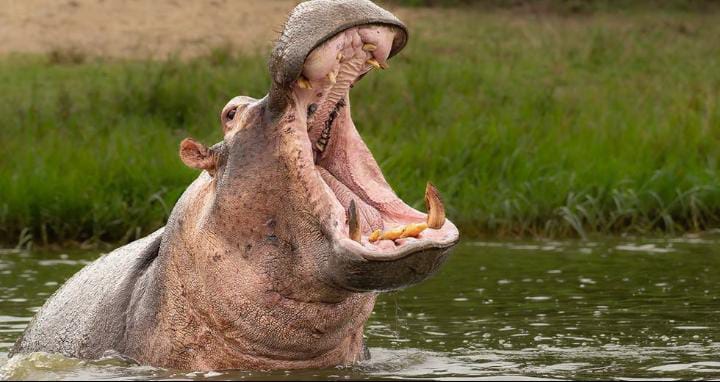
When humans turn animals: a cruel, evil treatment of animals at ‘Yanshanu abattoir, Jos

By AbduIlslam, Abdulsalam, Rukaiyah, & Rabiatu

This year, Sentient Media reveals that every 60 seconds, one animal suffers abuse. One afternoon, I counted 483 drops of blood on the ground and lost counting to empathy of, what blood is it? But what really transpired?

A wounded cow (with blood flowclose to the eye) was being paraded to the slaughtering ground which is about a mile and half (sometimes farther) from the livestock’s market of ‘Yanshanu in Jos. Added to the feeble state of this animal was respiratory mucosa effect, yet a reckless herder (sometimes a guy/boy) hit the cow with a goad on the eye wound because at some point, the cow didn’t move or moved slowly (its front legs were tied together) –immediately the cow fell to the ground due to the brutal and merciless hitting. This was repeated until the destination was reached. Such oppression is irrefutably done daily. This is simply because it is an animal! What a pity.

This scenario conforms to the argument of Peter Singer, author of Animal Liberation that “it would first be necessary to transform people’s attitude towards animal” Over 40 years ago, animal abuse was referred to as intentional act which causes pain to the animals. It sometimes brings too much suffering and even death. It comes in behaviors like beating, starving, choking etc., however, these maltreatments are rationalized in the ill and senseless feeling of ‘they’re animals’. But those acts beat conscience.

Yanshanu Livestock Market is a place where buying/selling of livestock are made daily. However due to its commercial string, most of the activities of dealers inflict severe suffering on the animals. Malam Suleiman Ahmad, Chairman Conflict Resolution ‘Yanshanu Market defended tucking livestock in a crevice space all in the name of transportation from villages to the market or from market to some destinations “we’re here for profits, [so] creating such fantasized comfort for animals will cost much [and] I know people don’t want meat costly.”

And on the issue of market herders inflicting unnecessary pain on the livestock while parading them out to eat or when marching them to the slaughtering ground, Malam Suleiman agreed that the herders sometimes overdo-it “let me be clear on something, due to unrest in our villages, they [Fulanis] protect their animals with several traditional methods and these sometimes remain even after sale – that’s why we use leather [plastic] to choke them when they refuse to stand up. However, we caution our boys on mishandling the animals as it is even un-Islamic and we put them in check with sanctions, but don’t forget, animals don’t understand you, to the good ones, it is the only language they understand, plus there are stubborn ones amongst them.”   

Admittedly, the African methods of animal husbandry values the goad, but the question here is, is it the most effective means of communication to animals? The answer is a capital No! This powerful oppression surely affects the health conditions of the livestock, so Malam Alkasim Ishaq, a vetinary outside the ‘Yanshanu Market condemned the recklessness reflecting that those keeping pets starve, let them stray and the cruel soul even beat, not to even mention some of the heartless dealers. He opined; “these people [dealers] are just here for business and time is money for them. Often, we vets around condemn their cruelty towards animals but you know our society [you become a black sheep for trying to better the system]. However, those hard beating and unreasonable tying affect the overall psyche and health of the animals.”

Whilst the vet expressing his concern, an individual who identified himself as member of Nigeria Livestock Association, Plateau State branch, lamented about his plight on unreasonable tying of animals and torture, because it stops the blood flow which explains the animals’ awkward behaviors sometimes.

It’s expected that such vast cruelty by humans should’ve been curbed by the government, but Malam Suleiman lamented that bad practices should’ve checked with government and Non-governmental organizations’ intervention. “We have written letters to the government but no response, so we can only do what is within our reach. In serious nations, they have abattiors and pay workers, no reckless beating and rush to make much money as we do.” He lamented.

However, going by the global animal husbandry, the vet and his friend pointed out that reforms need to start from the ordinary (not learned) members that made up of the animals’ bodies and organizations. And Mustapha Suleiman, a Vetinary Medicine student of Usman Danfodio University said; denial to understand the psychological condition of these guys [as he preferred to call animals] is what brought about abuses in our localities. He believed that if we pay good attention, we wouldn’t need to inflict pain on the animals with our traditional techniques.

But, it’s worrisome what the harshness of the herders on the animals is costing the host community – ‘Yanshanu. The livestock market is located in full residential area. Often, the maltreatment gets the animals wild – they end up going chaotic for about for over half an hour, smashing and aiming at everyone.

This discriminating treatment persists because humans fail to realize other living things’ response to stimuli – sometimes they’re feeble, they like, dislike; they feel hunger, anger, sick, even want to rest, but only when all these are understood. We should know that it is wrong to inflict suffering on other beings, even if not our own species. But attractive legislation on the subject matter is a priority.

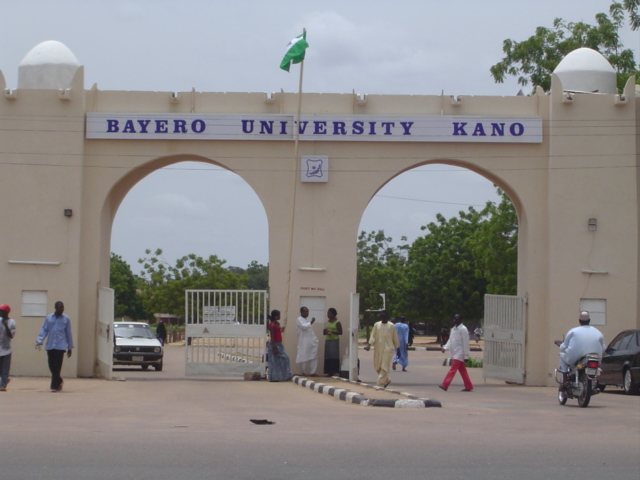
AbduIlslam Kamaldeen Muhammad writes from Bayero University, Kano, together with

Abdulsalam Zikirullahi (SS3 Class) Alhaqq Comprehensive Private School Jos,

Rukaiyah Muhammad (SS2 Class) Alhaqq Comprehensive Private School Jos,Rabiatu Abubakar (SS2 Class) Alhaqq Comprehensive Private School Jos.