Admin

Tinubu swears in George Akume as SGF

By Ahmad Deedat Zakari

President Bola Ahmad Tinubu on Wednesday administered oath of office to the newly appointed Secretary of the Government of the Federation (SGF), Senator George Akume

Senator George Akume, a former senator and governor of Benue State, was appointed to serve in the role barely a week into Tinubu’s administration.

The new SGF took over from Boss Mustapha, who preceded him in office.

The brief event was held at the Presidential Villa and had the Vice President, Kashim Shettima, Senate President Ahmad Lawan; and some serving and former governors in attendance.

The President also took to his verified social media platforms to eulogize the new SGF, whom he described as a distinguished public servant whose services in his new role will benefit Nigeria.

He wrote:

“It was with great pleasure that I, today, administered the Oath of Office and Allegiance to Senator George Akume to mark his official assumption of office as the Secretary to the Government of the Federation.


“As a distinguished public servant who has demonstrated exceptional leadership qualities and a deep understanding of the workings of government, I have no doubt that Senator Akume’s service in the new position will be to the benefit of our nation.”

Book Review: The Lebanese in Kano

By Dr Shamsuddeen Sani

I thought The Lebanese in Kano: An Immigrant Community in a Hausa Society in the Colonial and Post-Colonial Periods merely contained a handful of newspaper tales. I was mistaken! Within its pages lies a meticulously researched body of work, a testament to the cultural heritage of Kano that begs to be savoured and preserved for generations to come. It has profound glimpses into the very foundations of Kano’s societal evolution as it illuminates the paramount role played by the Lebanese community in the rich Kano’s historical traditions.

This book, published in 1995 and authored by S.A. Albasu, unfolds with an intricate chronology of eight captivating chapters. As the introduction sets the stage, the initial chapter gracefully delves into the existing body of literature on migration, skilfully intertwining it with the historical fabric of West Africa and Nigeria. Embracing a tangent in the second chapter, Albasu illuminates the emigration of the Lebanese into Kano, beginning in the mid-19th century.

However, a pivotal juncture in Lebanese history within Kano emerged in 1920, a defining moment marked by profound geographical and religious divisions among the Lebanese migrants. The historical catalysts propelling Lebanese emigration into Nigeria were meticulously examined within this segment.

It becomes apparent that prior to the 1920s, the Lebanese immigrants in Kano predominantly belonged to the Maronite Christian community. It is only after this period that a demographic shift occurs, welcoming the arrival of Muslim Lebanese, particularly those of the Shiite sectarian extraction hailing from southern Lebanon. The book exposes the reader to the sociocultural intricacies of the Lebanese community’s towns of origin and unravels the fabric of their society, dispelling prevailing myths.

The entire Lebanese migration into Kano is thoughtfully categorised into four distinct phases, each meticulously explored with great detail: 1890-1903, 1903-1912, 1912-1920, and the 1930s during the tumultuous period of the great depression. Each of these phases represents a significant milestone in the history of the Lebanese community within Kano, as well as its impact on the city’s socioeconomic development.

Subsequent chapters of this book delve into the physical establishment of the Lebanese community, intricately entwined with crucial historical policies such as colonial taxation, the indirect rule system, and segregation policies.

Chapters four, five, and six embark on an exciting journey, covering the consolidation of the Lebanese community within Kano’s vibrant business milieu. From the thriving cattle trade to the realms of Kolanut and groundnut businesses, the book unfurls the profound influence of factors like colonial intervention, the upheaval of the Second World War, Nigeria’s independence, and the burgeoning national consciousness. The book has revelations of ground-breaking nature, leaving you enlightened and astounded, and for me, every piece seamlessly falls into place now.

A glimpse into Abdulhamid’s exceptional, short life

By Adamu Muhammad Burga

As I scrolled down my Facebook newsfeed on Thursday, 11th May 2023, I came across a post that reads, “Indeed we belong to Allah, and to Him we shall return”, and another one that reads, “Losing a good friend like Abdulhameed leaves a scar in the heart that never wanes,” and lots more. They left me agape and confused. Why? They were all attached to the same photo, Abdulhameed’s photo. My shock amplified when I checked my WhatsApp status updates to realise the same thing was happening. I know how death news sounds in peoples’ hearings and hearts, but mine couldn’t believe what I saw. It all seemed to be like a dream to me. 

Yet I called a friend out of sheer confusion to verify whether what I read was true, to which he answered in the affirmative and consoled me. I had one minute of silence before I moved on with my daily routines, still thinking that the news could be a fake one or maybe was mistaken for someone not Abdulhameed. Or perhaps it would later be retracted. ‘How could this be true about someone I visited a few days ago?’ is the question I had been asking myself for a while. 

It had also come to my notice on the day he passed away that a river miles away from my residence claimed a boy’s life. The devastating news saddened me, and why wouldn’t it? The boy was drowned on the day WAEC exams commenced, of which he was a candidate. He even had the wherewithal to sit the exam in the morning before he ‘answered the call of his Lord’. However, I was more shocked by the former’s demise than the latter’s. 

Friends and friends are two categories of people your life can never be devoid of. With the little I know about Abdulhameed’s life, I can conclude that the number of his friends and allies outnumbers that of friends. And this is one of the whys that made me pen this tribute to give a mere exposure to this great personality and exemplary icon — Rahimahullāh.

Abdulhameed was one of the unusual ones. He was resilient. Diligent. Jovial. Religious. Hardworking. A man in whose veins kindness flowed. A true optimist. An exceptional conservationist. 

Abdulhameed was so many different things. A teacher. A student. A Hafidh. A brother. A tech. An exceptionally proud member of the MSSN who served almost at all levels. And a great, a truly great man at diplomacy. And he was most likely a lot more than that. 

But there was one thing Abdulhameed wasn’t. And that’s afraid. Abdulhameed wasn’t scared of his challenges. Of being judged by people. He wasn’t afraid of friendship. A good laugh. He was never scared of a good time. A hard time. Or consequences of his good actions. Or of an impossible task. Or any kind of danger on the right course. And he certainly wasn’t afraid of doing the right thing. Ever.

No matter how hard life was for Abdulhameed, Abdulhameed loved life back. He embraced it without reservation, regret or remorse. And that’s rare, very rare among people of his time.

I wish more people were kind-hearted, diplomatic and easy-going like Abdulhameed. They’re the things about him I’ll miss the most besides his smiles. And I hope it’ll be some time before all my memories of him start to fade.

I remember the last time I visited him. I remember the smiles. I remember his beaming countenance, which told me I’d miss him when he passed. Little did I know that he was bidding me farewell. I wish I had bidden my final adieus to my friend as he bade me his before he left. But, unfortunately, I couldn’t. I failed. 

Having heard different stories of the deceased from other people from different angles, I believe that I’m not having a ‘single story’ of him, as put by Chimamanda Ngozi Adichie, nor am I satisfied with my only story of him. 

These few lines may not richly tell who Abdulhameed was, as they are, but what I have been able to gather from personalities and territories reachable to me. It’s just the tip of the iceberg. And I’m pretty sure there’s more to come—in sha Allah. I pray that Allah forgives his imperfections, provides him with a unique dwelling in Jannah, and gives fortitude to the bereaved.

And after all, ‘we’re all not here for a long time. We’re here for a good time’. May Allah make our ending a good one. 

Adamu Muhammad Burga writes from Bauchi and can be reached via or at abuzharrin212@gmail.com.

Subsidy Removal: A welcome development for Nigeria and its people

By ImamMalik Abdullahi Kaga

The removal of fuel subsidies has been a hotly debated and controversial topic in Nigeria for many years, especially now that President Bola Ahmed Tinubu has made the pronouncement. For the longest time, fuel subsidies represented a significant portion of government expenditures, and many Nigerian leaders refused to remove them for fear of political backlash from their citizens. However, President Tinubu’s bold decision has been a critical step towards transforming the Nigerian economy and helping the poor.

The Nigerian government spent an average of  $6.2 billion annually on fuel subsidies, and despite this, the country’s economy did not improve significantly. The fuel subsidy was primarily a means of subsidising fuel prices for Nigerian consumers, and the government aimed to keep the domestic fuel prices low, which, in turn, would help fight inflation and improve the economy. However, the fuel subsidy did not achieve this goal; instead, it distorted the market, leading to corruption, smuggling, and inflation.

Furthermore, fuel subsidies are often perceived as socially unjust because it benefits wealthier individuals more than the poor.  Studies have shown that the richest 10% of Nigerians receive up to 60% of the subsidy, while the poorest 10% only receive 1%.

It is well-known that the country’s wealthy motorists and industries benefit most from the subsidy, not the poor. Hence, the benefit did not trickle down to the poor but only helped the rich acquire fuel more cheaply. However, since most of the poor Nigerians are not benefitting from the fuel subsidy, it’s a commendable effort that the president made.

The removal of the fuel subsidy will create jobs in the downstream sector, increasing the availability of fuel and reducing smuggling, which will contribute significantly to the Nigerian economy’s growth.

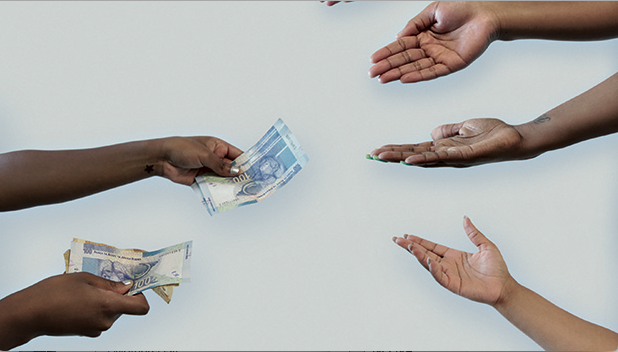
Moreover, the government’s removal of the fuel subsidy will allow it to redirect the average amount, $6.2 billion, towards investing in critical sectors such as education, healthcare, agriculture, security, and infrastructure, which will help reduce poverty levels and create employment opportunities for Nigerians. The government’s commitment to investing in these critical sectors will reduce the dependency on oil, the country’s primary source of revenue, and make the economy more resilient to oil price fluctuations.

Tinubu’s fuel subsidy removal will also reduce government corruption, a significant problem in Nigeria. With the fuel subsidy, many government officials’ fraudulently inflated the amount allocated to the subsidy scheme, which was further used to enrich themselves. Removing the subsidy will prevent the exploitation of government funds by corrupt individuals, which will be an essential step toward improving the Nigerian economy.

I urge Nigerians to be patient and prayerful as Tinubu Administration has a lot in store for us– poor Nigerians.

Subsidy removal: Kwara announces three-day workweek

By Ahmad Deedat Zakari

Kwara State Government has reduced workdays to three days for the state public servants. 

The Chief Press Security, Office of the Head of Service, Murtala Atoyebi, revealed the development in a press statement on Monday. 

According to Mr Atoyebi, the action became necessary owing to the need to put measures in place to cushion the effect of the removal of fuel subsidy on workers in the state.

Part of the statement reads:

“The State Head of Service, Mrs Susan Modupe Oluwole announced today that the State Governor, Mallam Abdulrahman Abdulrazaq, has directed that the workdays be reduced from five days to three days per week for every worker.

“Mrs Oluwole directed all Heads of Ministries, Departments and Agencies (MDAs) in the State to immediately work out a format indicating the alternating work days for each worker under them.

The Head of Service however, warned the workers not to abuse the magnanimity of the Governor, stressing that the regular monitoring of MDAs by her office would be intensified to ensure strict compliance.”

Company seeks N10bn in compensation from Kano gov’t for demolishing property

By Muhammad Abdurrahman

Lamash Properties Limited demands N10 billion in compensation from the Kano state government for demolishing its property.

The firm said it entered into a public-private partnership (PPP) with the government of Kano to redevelop the Daula Hotel.

On assuming office, Abba Yusuf, governor of Kano, ordered the demolition of “illegal property” built by the former administration of Abdullahi Ganduje.

In a statement on Sunday, Hassan Yusuf Baba, the firm’s executive director, said it was a “gross injustice” because they were not notified of the demolition exercise.

“Our bid, like every other bid submitted, went through all the processes including going before the state executive council after which we won the bid,” Baba said.

“We were issued the letter of award and we signed a PPP contract agreement with the Kano state government after which we began work on the project.

“The value of the land being the equity contribution of the Kano state government into the project plus the agreed profit share of the state government all in the sum N2,297,016,622.89 only was converted into the hotel and its ownership was given to the Kano state government as its share into the project under the PPP arrangement.

“On May 27, 2023, the immediate past governor of the state, Abdullahi Umar Ganduje, performed the commissioning ceremony of the hotel and it was handed over to the state government as its share in the project.

“To our utmost surprise, we received a call around 2am on Sunday June 4, 2023, that officials of the state government led by the new governor Abba Kabir Yusuf, have mobilized to the site of the project with bulldozers and were tearing down all the buildings on the land including the already completed 90-room 5-star Daula Boutique Hotel, the 90 percent completed commercial area (malls) as well as the ongoing residential apartments.

“We have instructed our legal team to institute legal actions against the state government to claim compensation to the tune of N10 billion already invested in the project and to stop the state government from further taking actions that will negatively affect us based on the PPP contract agreement we signed with it.”

Iconic Zlatan Ibrahimovic retires from football

By Muhammadu Sabiu
 
Iconic Swedish international Zlatan Ibrahimovic announced his retirement from football after a very long career.
 
He started his senior career at Malmo FF in 1999 after subsequently going to Ajax, Juventus, Inter Milan, Barcelona, AC Milan, PSG, and others.
 
Fabrizio Romano, via his social media handle, said, “Zlatan Ibrahimović has now decided to retire from professional football with immediate effect”.
 
Zlatan finally retired at AC Milan in the midst of the club’s fans waving good-bye at him.

Kailani cautions Tinubu on ex-governors

By Uzair Adam Imam

Engineer Kailani Muhammad, an All Progressive Congress (APC) chieftain, has urged President Bola Ahmed Tinubu to discard former governors roving around his administration.

He stated that the president should not appoint any of the former governors as they are bad people that his administration should not engage.

He also urged the president to discard ex-senators and ministers that did not perform well in previous administration.

He stated that “Those lobbyists are not good people and we don’t want them on the stage again. We have been circulating this crop of people every time.

“Let the President bring new people who have not stolen”, he advised.

Kailani is the National Chairman of Tinubu Support Network and Director-General of Amalgamated of APC group.

On the fuel subsidy issue, Engineer Kailani said, “This is the right decision because the immediate past administration shifted it. We have been postponing the evil day. A time has come for this country to measure up with the comity of nations.”

18 Kano passengers burnt to ashes in auto crash

By Uzair Adam Imam

An auto crash in Kano has led to the death of at least 18 persons, a development that brought tears to the eyes of their loved ones and relatives.

The traumatic incident reportedly occurred along Kano-Ringim Road in the Gabasawa local government area of the state.

The sector Commandant of the Federal Road Safety Corps (FRSC), Ibrahim Abdullahi, had confirmed the journalists about the accident.

He stated that the accident involved a total of 35 passengers in two buses, out of which 18 were burnt beyond recognition while 12 others sustained serious injuries.

“We received a call about the accident at about 8:35 p.m. on Friday and dispatched our personnel to the scene to rescue the victims,’’ Abdullahi said.

He further stated that some of the deceased were given mass burial at the accident scene, and others were handed over to their relatives.

Ibrahim said the injured victims were taken to Murtala Muhammad General Hospital, Kano.

Return to Forever: African Studies in Europe

By Prof. Abdalla Uba Adamu

Frankfurt, Germany. 3rd July 2013

The German immigration officer looked at me and gave the usual clenched-mouth smile. I did the same. I am used to it. He flipped through my passport and then looked up.

“How many days are you staying THIS time.” Emphasis on THIS.

“Two days in Cologne”, I replied. “Today, tomorrow, and the day after that, I am off.”

He stamped the passport without asking for the usual – return ticket, invitation, hotel booking – all of which I had. He wished me a pleasant say and waved to the next person behind me.

I was then in Cologne to attend the valedictory retirement conference held in honour of the woman who mentored me and virtually adopted me as her son – Heike Behrend, who was retiring from the Institute of African Studies, University of Cologne, Germany, where she was the Director. She created the research category of “Media and Cultural Communication”, and I was the first African to be invited to deliver a lecture at the cluster. The Immigration Officer’s reference to the length of my stay was in response to the numerous times I had been to Germany – and never stayed beyond the time necessary for whatever it was that brought me.

The week from Tuesday, 30th May to Sunday, 4th June 2023, I returned after ten years. This time, the occasion was to attend ECAS2023: 9th European Conference on African Studies, with the theme of “African Futures.” It was hosted by the University of Cologne. “African Futures” explores the continent’s critical engagements with the past, present, and future of Africa’s global entanglements. ECAS is the largest and most visible single event under the AEGIS umbrella. AEGIS is an expression of a much wider and dynamic set of African Studies connections, collaborations, activities and opportunities within and beyond Europe. The conference, lasting four days, had over 70 panels involving hundreds of papers and speakers. All were efficiently coordinated through the various classes at the University of Cologne.

Earlier in the year, I and colleagues from Germany and US had submitted a panel, “Digital/social media and Afrophone literature”, for consideration at ECAS 9. It was accepted.  The conveners were me (BUK), Uta Reuster-Jahn, Umma Aliyu (Hamburg) and Stephanie Bosch Santana (UCLA). Before submitting our panel to ECAS, we first held an online symposium which was preceded by a call for papers. Despite sending the CfP to various universities and the Nigerian Academy of Letters (NAL), the response was pretty poor. The symposium was titled Social Media as New Canvas, Space and Channel for Afrophone Literatures. It was eventually held online at the University of Hamburg, Germany, on 22-23 February 2023. The participants then were from Germany (Uta Reuster-Jahn, Umma Aliyu Musa), Nigeria (Abdalla Uba Adamu, Zaynab Ango, Ado Ahmad Gidan Dabino, Nura Ibrahim, Asabe Kabir Usman, Isyaku Bala Ibrahim), Tanzania (Hussein Issa Tuwa, Zamda Geuza), Ghana (Nikitta Dede Adjirakor), Stephen Ney (Canada), US (Stephanie Bosch Santana).

After the symposium, we submitted a panel for the ECAS 9th edition. Our panel was accepted, and all the participants of the online seminar were issued official letters of invitation to process their funding for the conference in Cologne in June 2023. As a panelist, I was fully funded to attend by Deutsche Forschungsgemeinschaft (German Research Foundation, DFG). Umma and Uta were able to sponsor themselves from Hamburg. Unfortunately, only Nikita from Ghana was able to come from the others who could not get any funding. As a result, our panel, held on Wednesday, 31st May 2023, had only four speakers. It was déjà vu all over again – after almost 24 hours of flying and waiting at airports (Kano, Abuja, Doha), I was given only 20 minutes for the presentation.

My paper was “From Kano Market Literature to Kano Social Media Literature: The Reincarnation of an Afrophone Literary Genre.” The paper traces the trajectory of the genre from print media to its liberation in online media, with a specific focus on Facebook, Wattpad and APK files on Google Play. The paper uses netnographic methodology to harvest the dominance of and reaction to the newly reincarnated genre, which, far from being dead and buried, is more than ever before, alive and kicking in other spaces – beyond censorship or any form of criticism. In the process, the paper explores the freedom gained by the authors in unrestricted storylines that cross boundaries of identity, gender and alternative sexualities.  The Journal of African Literature Association (curated by Taylor and Francis Group) has agreed to publish the papers of the Symposium in 2024. We will have to ask for more contributors.

Another dividend for me was that I was approached by a representative of Lexington Books in the US for the possibility of publishing my paper as part of a book on Hausa media cultures if I have something like that. As it happened, I have almost completed such a project titled “Hausa Cinema” (to complement Jonathan Haynes’s book, “Nollywood”) which was to be published by the Ohio University Press in 2010, but things went southwards! Now Lexington Books is providing an opportunity, and I am excited about it.  

Our panel was lively, though, and I even met a fan! He was Jos Damen, Head of the Library and ICT Department of the African Studies Centre at the University of Leiden. While I was making my presentation, he took my picture with his phone and uploaded it to my Wikipedia page (itself created by another fan)! Later he told me I needed to have a picture there, and he took that responsibility. So it was kind of him!

The conference attendance was a fantastic homecoming for me because although Heike Behrend had retired back to Berlin, where she came from (and where I visited her in 2015 had a wonderful dinner when I was a guest of the Haus der Kulturen der Welt, Berlin), Muhsin Ibrahim is now in the same institute. Both Muhsin and I were from Bayero University Kano. Muhsin was teaching Hausa at the Institute.

I first came to Cologne in 2004 – at the invitation of Heike Behrend when I met her in Kenya. At that time, I had an invitation to participate in an African Literatures project at Johannes Gutenberg University, Mainz. Heike asked me to reroute my itinerary to stop at Cologne, teach a Postgraduate class and give a public lecture. I did both on Monday 15th November 2004. Since then, I have almost lost count of the times I visited Germany – Berlin, Freiburg, Hamburg, Leipzig, and the wonderful Cologne with its incredible, massive and stupendous cathedral – the largest Gothic church in Northern Europe. It was in Cologne in 2004 that the foundation of my ethnographic foray into critical media studies was laid. Unlike in Nigeria, where many saw me as an ‘interloper’ (as they murmur, ‘After all, he is a Biologist, isn’t he?’), here it is not what you study but what you can contribute to any discipline. I have been to Colone four times and other cities several times – all on the same mission of promoting Hausa media studies.

ECAS 2023 started wonderfully with Muhsin meeting me at the Koln Hauptbahnhof and helping me drag my luggage through various concourses to the trains that would take us to his flat: a very lovely well-furnished, and very spacious space. Upon arriving and freshening up, a massive mountain of uncharacteristically fat masa was waiting for me. Even the masa looks like a ‘Bajamushiya’! The soup alone could feed a family for a week! It was a truly delicious welcome. Once I got rid of the hunger, he took me to my hotel, IBIS Centrum.

Breakfast in the morning at the hotel saw a meeting of Who-is-Who in African studies – both diasporic Africans, home-based Africans and European and American researchers. It was indeed a wonderful gathering. In addition, I had a chance to reconnect with one of the most promising diasporic Hausa African Studies experts – Musa Ibrahim.

Musa is based in Ghana. He travelled there through South Africa and Japan, ending up in Bayreuth, Germany, where he obtained his doctorate. We met at Leipzig in 2018, and I collected his CV with the hope of getting him employed in our Information and Media Studies department, Bayero University Kano. However, the university was not interested. Before you knew it, he was grabbed by the University of Florida, Gainesville, where he spent about three years before getting another appointment at the University of Ghana. Such rich and varied experience would have been valuable to us in Kano, but the parochialism of our university system did not factor in multidisciplinarity.

The following day saw dinner at Muhsin’s house, and this time, Umma Aliyu, originally from Bauchi, joined us. Umma now lives and teaches in Germany at the University of Hamburg (after her studies at Leipzig). Like Muhsin, she also teaches Hausa at Hamburg, where she took over from Joe McIntyre (Malam Gambo), who retired some time ago. During dinner, we brainstormed the idea of two book projects – which, for me, was one of the significant takeaways from ECAS9.

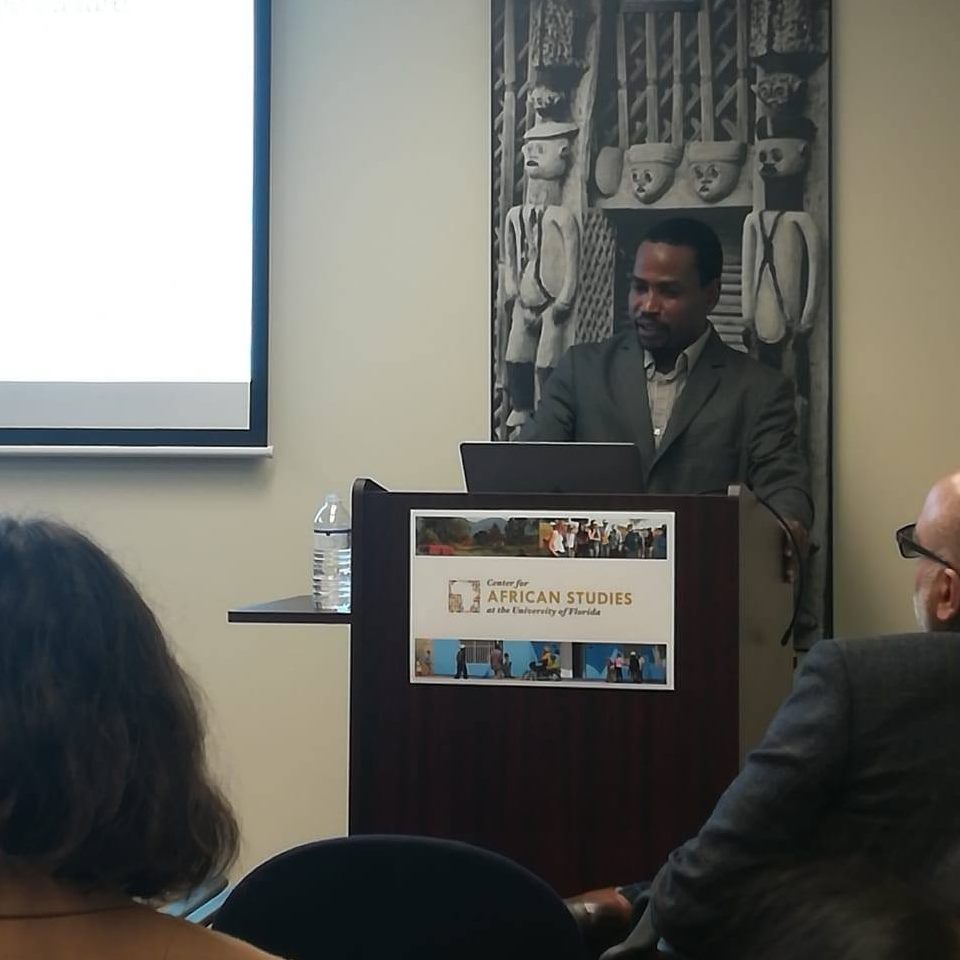
Muhsin, Abdalla and Musa at ECAS9, Cologne

The first book project would be tentatively titled “Hausa Studies in European Diaspora: Experiences and Perspectives.” This will be a collection of chapters written by Hausawa living and working permanently in various European universities, either teaching Hausa or other disciplines.  The objective is to demonstrate how internationalised Hausa scholarship is. We started with about five in Germany alone.

The second book project would be a post-Boko Haram narrative. So far, the Boko Haram literature has focused on the human disaster of the insurgency – virtually all books written were from the governance, security and disaster perspectives. Yet, much success has been and is being recorded in the war against terror in the form of surrenders, deradicalisation and reintegration. Yet, no one is looking at this. Using ethnographic field data, the book project will provide another side of the war on terror in Nigeria. We were excited and promised to work on various draft proposals before embarking on the works, which we hope will be completed by 2025.

The Conference’s overwhelming focus on the multidisciplinarity of African Studies was an eye-opener—no room or time for a narrow perspective on scholarship. No one cares about what your degrees are in – what matters is what you are bringing to the table NOW and how it impacts the knowledge economy of African societies and contribute to the decolonisation narrative.

For me, Cologne is a Return to Forever – the beginning of an endless loop of research and investigation.

My deepest thanks to Muhsin for being such an excellent, graceful host.