Admin

NBA Ungogo hails appointment of Sulaiman as acting chief registrar

By Uzair Adam

The Nigerian Bar Association (NBA), Ungogo Branch, has congratulated Mr. H. H. Sulaiman on his appointment as the Acting Chief Registrar of the High Court of Justice, Kano State, describing the development as a well-deserved recognition of excellence.

This was disclosed in a statement signed by the Chairman of the branch, Ahmad Abubakar Gwadabe, on Monday.

He said the association is pleased to celebrate Mr. Sulaiman, whose appointment reflects “unwavering dedication and administrative competence in the justice sector.”

According to the statement, Mr. Sulaiman has built a reputation for professionalism through years of service at the Kano State Ministry of Justice, where he last held the position of Director of Public Prosecutions (DPP).

Gwadabe explained that the new Acting Chief Registrar is widely respected for his integrity, discipline, and commitment to duty.

“He has consistently demonstrated hard work and exceptional leadership qualities, which have earned him admiration within and beyond the judiciary,” Gwadabe was quoted as saying.

The association expressed confidence that Mr. Sulaiman’s experience will further strengthen the efficiency and progress of the state’s judicial system.

It also extended its best wishes to him, praying for success as he assumes his new responsibilities.

BUK squash club hosts Kano championship, pushes for revival of sport in Kano

By Uzair Adam

The Bayero University Kano (BUK) Squash Club has hosted the first-ever Kano Squash Championship, bringing together top clubs from across the state to promote sportsmanship and revive the sport.

Abdulhamid Yahya, Chairman of the Audit Committee of BUK Squash Club and one of the event organizers, said the championship was designed to unite all major squash clubs in Kano.

He stated that, “In the spirit of one Kano, we brought together BUK Squash Club, Kano Squash Club—formerly Officers’ Mess—and Adobe Aero Squash Club for the first Kano Squash Championship.“

The tournament featured active, veteran, and super veteran categories, and while prizes were awarded, the main focus was on promoting sportsmanship and community engagement,” he added.

The Daily Reality reports that winners also emerged in the veteran and super veteran divisions.

Yahya emphasized that the championship aimed to grow love for the game and strengthen the squash community in Kano.

He highlighted challenges facing the sport, including low popularity, limited facilities, and lack of sponsorship.

He further added that, “Squash is not as popular as football, and even internationally, access can be costly and difficult.

“We need more tournaments, equipment, and community engagement to encourage participation,” he added.

Representing university management, Deputy Registrar and Head of Digital Media, Nura Garba, who spoke on behalf of Registrar Dr. Haruna Aliyu, called on stakeholders to develop squash from the grassroots.

He stated that, “Many young people today don’t even know what squash is. If we promote it from primary, secondary, and university levels, graduates will carry the game into society. Grassroots development is key to reviving the sport.”

Engr. Ado Haruna, Head of Mechatronics Engineering at BUK and an active club member, stressed the role of squash in promoting peace and social cohesion.

He said that, “Sports brings people together. Through sportsmanship, youths learn discipline, respect, and how to be their brothers’ keepers. This can strengthen peace in society.”

Haruna also cited sponsorship as the biggest challenge.

“This year’s tournament was largely funded by a colleague and a few supporters. “It would be good if industries in Kano take more active roles in sports development,” he further added.

He added that while government support is appreciated, the private sector must also contribute.

The inaugural Kano Squash Championship marks a renewed effort by BUK and partnering clubs to develop squash, nurture talent, and expand the sport’s reach across Kano State.

Brigadier general’s abduction, killing by ISWAP confirmed despite Army’s earlier denial

By Sabiu Abdullahi

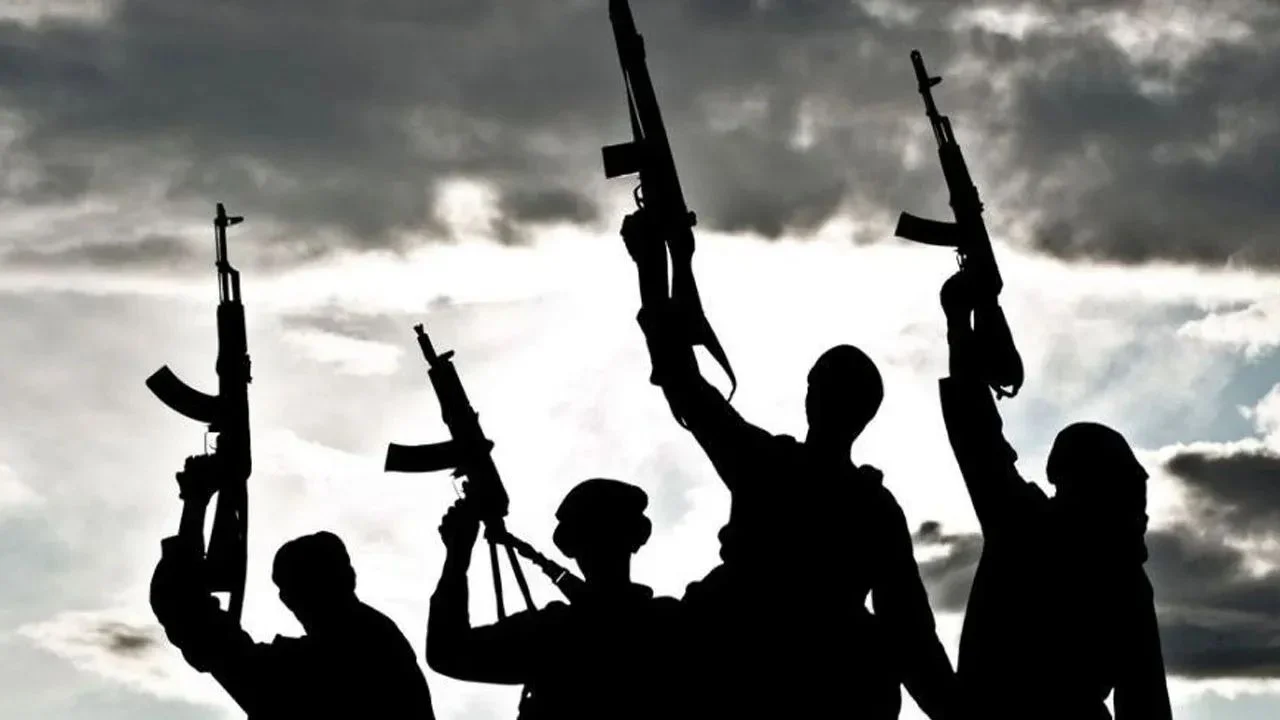
Fresh details have confirmed that ISWAP terrorists assassinated Brigadier General Yu Uba during an attack in Borno State, even though the Nigerian Army initially rejected reports about his capture.

Uba was travelling in a convoy with troops and members of the Civilian Joint Task Force near Sabon Gari in Damboa Local Government Area on Friday when insurgents launched a heavy assault at about 5 pm.

Two soldiers and two CJTF operatives were killed in the ambush.

Shortly after the incident, the army dismissed early reports about the abduction. One of those reports was published by HumAngle.

On Saturday, Appolonis Anele, director of army public relations, issued a formal rebuttal.

His statement said in part, “The Army Headquarters also wishes to debunk the fake narrative going round some media platforms online alleging the abduction of the Brigade Commander. The general public is hereby advised to disregard the fake news regarding the incident while praying for the continuous success of our gallant service men and women.”

Following this statement, several online pages circulated claims that the senior officer had safely returned to base.

That narrative shifted on Monday when ISWAP released a photo of Uba in their custody and declared that they had killed him afterwards.

Sources within the military told FIJ that the image was genuine.

They explained that the denial issued on Saturday was premature.

One of the insiders said, “Uba had taken videos to show he was alive and on his way back from the ambush. However, he never made it. These videos were what we relied on originally, but nobody waited to see him first before going to discredit.”

Another source confirmed that insurgents captured the senior officer only minutes after the initial attack.

Uba is now the highest-ranking Nigerian military officer ever taken by ISWAP since the group’s emergence.

Taraba Speaker, 15 house members dump PDP for APC

By Anas Abbas

The Speaker of the Taraba State House of Assembly, Rt. Hon. John Kizito Bonzena, has officially dumped the Peoples Democratic Party (PDP) and joined the All Progressives Congress (APC).

Alongside him, 15 other PDP lawmakers.The 15 lawmakers announced the defection in a submitted letters of defection, according to a statement by the Speaker.

The defectors include high-ranking figures such as Deputy Speaker Hamman Adama Abdullai (Bali 2), Majority Leader Jethro Yakubu, Wukari 1.

However, and othe representatives from key constituencies: Tafarki Eneme (Kurmi), Akila Nuhu (Lau), Musa Chul (Gassol 1), Josiah Yaro (Wukari 2), Tanko Yusuf (Takum 1), Veronica Alhassan (Bali 1), Anas Shuaibu (Karim Lamido 2), Nelson Len (Nguroje), Umar Adamu (Jalingo 1), Joseph Kassong (Yorro), John Lamba (Takum 2), Happy Shonruba (Ardo-Kola), and Zakari Sanusi (Ibi).

Bonzena noted that the decision was not personal but driven by what they believe is in the collective interest of Taraba State.

“Our people should not misinterpret this decision … It is for the interest of the state,” he said.

With the mass defection, the Speaker announced that all 24 members of the House of Assembly are now APC members, effectively eliminating the minority party presence in the chamber.

Welcoming them, former Speaker Peter Diah, now with the APC, described the move as a hopeful new beginning for Taraba.

Bonzena, for his part, expressed his optimism that the shift would mark a fresh era for the state, aligning with the vision of President Bola Tinubu.

The messiah-villain binary: A trap in democracy

By Oladoja M.O

In the grand, often tumultuous, theatre of African politics, a deeply entrenched and insidious narrative persists: the Messiah-Villain Binary. This simplistic, yet devastating, framework casts political leaders not as fallible public servants, but as either divine saviours or malevolent destroyers. It’s a binary that suffocates nuance, stifles accountability, and, in a continent desperate for democratic maturity, acts as a corrosive cancer on the body politic. We must call this what it is: a dangerous delusion that has shackled Africa’s progress for far too long.

This orientation, a relic of post-colonial strongman politics, reduces the complex art of governance to a moral melodrama. Citizens, conditioned to see their leaders as larger-than-life figures, become spectators in a perpetual battle between good and evil. When a new leader emerges, they are instantly elevated to the status of a messiah, the one chosen to slay the dragons of poverty, corruption, and instability. Any opposition is, by default, cast as the villain, a saboteur working against the people’s will. This is not just a rhetorical device; it’s a profound psychological trap that prevents a healthy, critical relationship between the electorate and those they elect.

Look no further than the story of Robert Mugabe in Zimbabwe. In the euphoric dawn of independence in 1980, Mugabe was the indisputable messiah. He had led the liberation struggle, promised the people a new land, and was seen as the architect of a new, prosperous Zimbabwe. But as his rule solidified, dissent grew. His staunchest supporters did not see his brutal suppression of the Gukurahundi massacres and his increasingly authoritarian tendencies as the actions of a flawed leader, but rather as the necessary evils required to defeat the ‘villains’—the opposition, foreign agents, and internal critics. This narrative allowed him to dismantle democratic institutions and cling to power for nearly four decades, all while his country’s economy imploded. The messiah had morphed into a tyrant, but the binary, with its pre-assigned roles, kept many from seeing the reality until it was too late.

A similar pattern can be seen in Rwanda, albeit with a different trajectory. Following the 1994 genocide, Paul Kagame was hailed as the man who pulled his nation from the brink of total annihilation. He is undeniably a messiah figure for many Rwandans, credited with bringing stability, order, and remarkable economic growth. Yet, this messianic status has made it incredibly difficult for a genuine political opposition to emerge. Critics, journalists, and political rivals who question his iron grip on power are often swiftly silenced, accused of undermining national unity or of being sympathisers of the genocidal past. 

The messiah’s narrative, while perhaps initially justified, has become a tool to legitimize the suppression of democratic pluralism. The ‘villain’ is no longer the genocidal regime, but anyone who dares to challenge the man who defeated it. This is a profound danger: when a leader’s infallibility is tied to a nation’s salvation, dissent becomes tantamount to treason.

The messiah-villain binary is a disease that festers in the heart of African electoral politics. It’s visible in the fervent, almost religious, rallies where supporters see their candidate not as a political leader with a manifesto, but as an oracle. The 2017 Kenyan election and the subsequent crisis offered a stark illustration. Both Uhuru Kenyatta and Raila Odinga were cast as messianic figures by their respective supporters. For Odinga’s base, he was the long-awaited liberator, the man who would finally lead them to a promised land of social justice. For Kenyatta’s supporters, he represented stability and continuity, the man protecting the country from the ‘villainous’ forces of instability. This emotional fervour, fueled by tribal and regional loyalties, led to a deeply polarised society where compromise became impossible. The result was not just political gridlock, but a cycle of violence and deep-seated animosity that continues to haunt the nation. The election wasn’t a contest of ideas; it was a crusade.

This issue is not just a problem of the past; it remains alive and well today. In Nigeria, the perennial politics of ‘saviour’ and ‘enemy’ plague the electoral landscape. From the military regimes to the current democratic dispensation, every election is framed as a life-or-death struggle against forces of darkness. A new candidate emerges, promising to sweep away the corruption of the past, and is instantly elevated to a messianic pedestal. Yet, once in power, the same old patterns of patronage and unaccountability emerge. The people, having invested their faith in a person rather than in institutions and processes, are left disillusioned, only to repeat the cycle with the next messiah figure. This prevents the building of strong, independent institutions, a free press, an impartial judiciary, and a non-partisan civil service, because the entire political system revolves around the individual, not the rules.

The messiah-villain binary is a trap, a narrative cul-de-sac from which genuine democratic progress cannot escape. It’s a cancer because it preys on hope, exploiting the legitimate frustrations of the populace for political gain. It turns citizens into blind followers and opponents into sworn enemies. This dangerous orientation must be dismantled. We must stop looking for messiahs. There are no magical saviours.

There are only men and women who are fallible, flawed, and accountable to the people they serve. We must demand a politics of substance, not spectacle. We must judge our leaders not by the promises they make on the campaign trail, but by their respect for democratic institutions, their commitment to the rule of law, and their willingness to be held to account.

The true liberation of Africa as a continent and Nigeria as a nation will not come from a single hero, but from a critical and engaged citizenry that understands that the power to govern belongs to them and that no politician, no matter how charismatic, is a god. It is time to retire the messiah, to dismantle the villain, and to embrace the hard, unglamorous work of building a true and lasting democracy.

Oladoja M.O writes from Abuja and can be reached at: mayokunmark@gmail.com.

Vice principal killed as bandits abduct students in Kebbi school raid

By Sabiu Abdullahi

There was a lot of panic in communities of the Zuru Emirate of Kebbi State after armed bandits attacked Government Girls Comprehensive Senior Secondary School, Maga, in the Danko/Wasagu Local Government Area.

The assault claimed the life of the Vice Principal and resulted in the abduction of an unspecified number of students.The Vice Principal, Malam Hassan Yakubu Makuku, was said to have confronted the attackers in an attempt to protect the students.

Residents described his death as a heavy blow to the school and the entire community.

A local resident, Murjanatu Hassan Gishiri, confirmed the attack and said the gunmen moved into the school without any obstruction.

She said the community was plunged into fear as the bandits unleashed violence on the premises.

“It is a heartbreaking tragedy that has thrown the entire region into deep fear and mourning,” she lamented.

The number of students taken away has not been officially disclosed.

Families have expressed deep concern as they await updates from authorities.

Security agencies have yet to release an official statement on the incident.

Meanwhile, residents are urging the federal and state governments to intervene quickly to rescue the abducted students and strengthen security in schools across the region.

Customs steps up crackdown on fuel smuggling in Adamawa

By Sabiu Abdullahi

The Nigeria Customs Service has intensified its campaign against the illicit movement of petroleum products. Its latest operation led to the interception of more than 108,000 litres of Premium Motor Spirit (PMS) on the River Benue, close to the border with Cameroon.

Officials described the seizure as one of the most significant breakthroughs recorded in Adamawa State in recent months.

The early-morning raid took place on Thursday, 6 November 2025, under the supervision of the National Coordinator of Operation Whirlwind, ACG Kolapo Oladeji.

According to him, the breakthrough followed days of intelligence gathering that focused on Ribadu Loading Bay, a route long associated with smuggling activities.

ACG Oladeji explained that a tactical team maintained a hidden position near the location until the suspected smugglers began loading the product onto a vessel.

“As the smugglers began transferring the products onto the vessel, the Customs team advanced and issued commands for them to halt,” the National Coordinator said.

He noted that officers had to act cautiously because of the difficult terrain.

He added, “Given the terrain and visibility challenges, operatives prioritised securing the contraband and preventing the boat from escaping across the international waterway.

”A wider search of the area, supported by the North-Eastern Marine Command, led to another discovery. A second wooden boat was found packed with drums and jerrycans filled with petrol.”

The two vessels were subsequently taken to the Jimeta waterside in Yola. Their contents were transferred into trucks and moved to a secured Customs location for proper documentation.

A full examination later confirmed the scale of the seizure: 485 drums of 220 litres each and 83 jerrycans of 25 litres each, which amounted to 108,775 litres of PMS.

“Given the volatile nature of the product, prompt conduct of a public auction in accordance with established guidelines was recommended to NCS, Headquarters,” he highlighted.

The National Coordinator stressed that the operation shows the Service’s strengthened determination to disrupt cross-border fuel smuggling, safeguard the economy, and enforce rules that control fuel movement in border communities.

He added that the illegal ferrying of PMS through Nigeria’s northern and eastern waterways continues to pose serious threats to national energy security because smugglers transport the product in huge volumes into neighbouring countries for profit.

Navy officer who clashed with Wike escapes suspected assassination attempt

By Uzair Adam

A Nigerian Navy officer on Sunday evening narrowly escaped what appeared to be an assassination attempt in Abuja after he was reportedly trailed by unidentified men dressed in black and riding in two unmarked Hilux vans.

Military sources said the incident occurred around 6:30 p.m. when the officer, who recently had a confrontation with the Minister of the Federal Capital Territory over a disputed land site in Gaduwa, noticed the vehicles following him from the NIPCO Filling Station off the Line Expressway to Gado Nasco Way.

He was said to have carried out a tactical maneuver that enabled him to evade the suspected assailants.

According to the source, the matter is being investigated with the “seriousness it deserves,” while further information is being withheld to avoid jeopardising the process.

The development follows a tense encounter earlier in the week involving Lt. A.M. Yerima and FCT Minister Nyesom Wike during a demolition exercise in Gaduwa District.

The clash, which was captured on video, triggered nationwide reactions and compelled the Presidency to halt the operation.

After the incident, military veterans condemned the minister’s verbal attack on the officer and rejected calls for disciplinary action against him.

Spokesman of the Coalition of Retired Veterans, Abiodun Durowaiye-Herberts, warned that ex-service members would occupy the minister’s office and residence if the officer was punished, stressing that military personnel owe allegiance to the nation and not to individual public officials.

He insisted that Wike must apologise for his remarks.

Minister of Defence Mohammad Badaru Abubakar has since reassured service members that no officer acting within the law will face sanctions over the confrontation, noting that the government remains committed to protecting personnel performing their duties responsibly.

Veterans had earlier vowed to mobilise and occupy the FCT Ministry should any action be taken against Lt. Yarima.

DSS apprehends suspected arms dealer in Plateau State

By Hadiza Abdulkadir

The Department of State Services (DSS) has announced the arrest of Musa Abubakar, believed to be a major supplier of arms to criminal groups in Plateau State and northern Nigeria. The operation was based on intelligence reports leading to his detention on November 12, 2025.

A DSS source confirmed that Abubakar admitted to producing and distributing high-calibre weapons and ammunition used in violent attacks across Plateau and neighbouring regions.

The arrest followed a targeted raid on his weapons manufacturing facility in Mista Ali, Bassa Local Government Area, Plateau State. Authorities reportedly found Abubakar with IED components, chemicals, and manufacturing equipment, all seized by DSS operatives.

This development comes days after the recapture of Abdulazeez Obadaki, alias Bomboy, a prison escapee linked to the Owo and Deeper Life Church attacks. DSS headlined recent successes in counterterrorism efforts, including the detention of nine high-profile suspects involved in incidents in Plateau and Benue states.

Among those detained is Timna Manjol, 46, who pleaded guilty to firearms charges related to the attacks, according to court documents. Manjol is affiliated with First Baptist Church in Mangu, Plateau.

Security analysts view these arrests as part of the DSS’s ongoing crackdown on violent extremism in the region.

Psychiatrist raises alarm over rising mental health crisis among journalists

By Uzair Adam

Stress and worsening mental health challenges have been identified as escalating threats to the journalism profession in Nigeria and beyond, a leading psychiatrist has warned.

A Consultant Psychiatrist at the Aminu Kano Teaching Hospital (AKTH), Dr Aminu Ibrahim Shehu, sounded the warning while presenting a paper titled “Pressure Amid Deadline: Psychiatric/Mental Health Precautions” during the 2025 Retreat of the Kano Correspondents’ Chapel of the Nigeria Union of Journalists (NUJ), held at Pyramid Hotel, Kaduna.

He explained that the fast-paced and pressure-filled nature of journalism has exposed many practitioners to chronic stress, trauma, depression and other psychological disorders.

“Journalists are stressed and always under pressure to meet deadlines and break the news. What can we do about it? Even though stress is always around us, the only place you stay without stress is the graveyard,” he stated.

Dr Shehu noted that journalists often witness tragic and disturbing events first-hand, which can gradually weaken their mental stability.

He observed that, like military personnel, reporters frequently find themselves at scenes of violence and tragedy, making them highly prone to trauma.

He warned that unless journalists begin to take mental health seriously, the profession may continue to lose members to depression, suicide and stress-related illnesses.

The psychiatrist advised journalists to seek medical and emotional support whenever they feel overwhelmed, develop healthier work routines, identify stress triggers early, and ensure adequate rest and sleep.

He also cited cases of journalists who died by suicide or from untreated depression, stressing that psychological wellbeing should be given the same level of attention as physical health.