Month: September 2022

Again, Nigeria ineligible to submit film for 2023 Oscars

By Muhammadu Sabiu

The Academy of Motion Pictures, Arts and Sciences’ Nigerian Official Selection Committee (NOSC) stated that no film would be forwarded for the 2023 Oscars.

Nigeria will not be submitting a film to the International Feature Film category of the Oscars for the second consecutive year.

The committee’s chair, Mrs Chineze Anyaene-Abonyi, apologized to the Academy of Motion Picture Arts and Sciences (AMPAS) for not being able to locate a film that satisfied the requirements for the International Feature Film category.

“Although the committee received three epic films following its call for submissions in August, it turned out that none of them will advance to the next stage owing to the voting patterns of members,” she said.

The voting, which took place on the 3rd of September 2022, amongst the 15 members of the committee, had a voting chart of 8, 5, 1, 1, with “No Film is Eligible” taking the lead.

The 15 members of the committee voted on September 3rd, 2022, and the voting chart was 8, 5, 1, 1, with “No Film is Eligible” receiving the most votes.

“Nigerian films had, no doubt, improved significantly as the awareness of the requirements has since grown among filmmakers, and potentially soon, we just might be bringing this award home in succession,” Anyaene-Abonyi also said.

To gain the necessary international exposure and position our films in its acknowledged level of creative debate, she advised filmmakers to become more familiar with Oscar-nominated movies in the International Feature Film (IFF) category.

The movie “The Milkmaid” was submitted in 2020. However, after passing the eligibility test for the first time, the Desmond Ovbiagele-produced film was disqualified because it did not make the category’s initial selection.

The Oscars disqualified Genevieve Nnaji’s “Lionheart” in 2019 for failing to meet the non-English conversation requirement.

TETFund charges institutions to comply with BPP processes

By Muhammad Aminu

The Tertiary Education Trust Fund (TETFund) has charged higher education institutions that benefit from its interventions to ensure strict compliance with the public procurement process to prevent corruption.

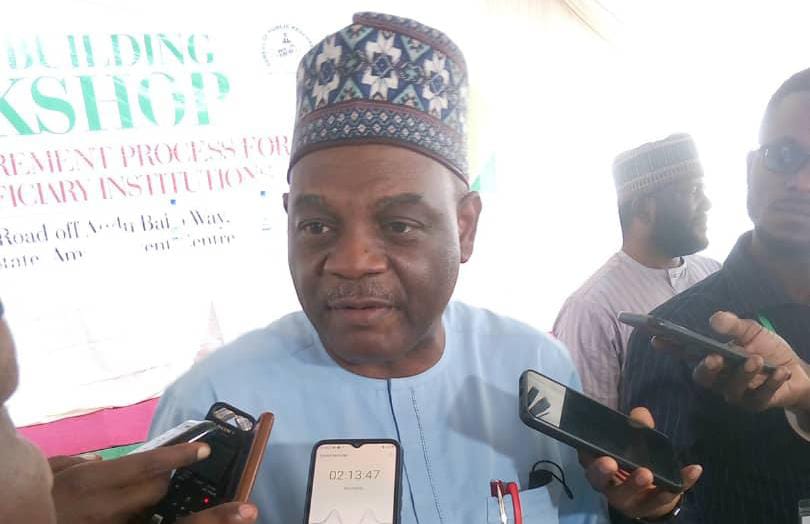
TETFund Executive Secretary, Architect Sonny Echono, disclosed this while opening a three-day capacity-building workshop on the public procurement process for TETFund beneficiary institutions organized by TETFund in collaboration with the public procurement Bureau (BPP) in Kano.

He said the training was for the institutions from the Northwest and Northeast subregions of the country to get equipped with the procurement processes to curtail corrupt practices in the agency’s projects.

He noted that the training would serve as a refresher training for desk officers of TETFund in the 246 enlisted beneficiary tertiary institutions across Nigeria.

Echono further called on the participants to utilise the opportunity and enhance their knowledge in public procurement law to achieve the desired objectives.

In his presentation, the Director General of the BPP, Mamman Ahmadu, said the workshop that intends to ensure attaining the provision of the public procurement Act came at the right moment.

”We are here today to build the capacity of accounting officers, principal officers, public officers and other key players in the procurement value chain.”

He said BPP would ensure that all provisions of the procurement act are strictly adhered in procurement in the Nigeria’s tertiary institutions.

Nigeria: Understanding flood and the outbreak of infectious diseases

By Adam Mustapha, PhD

Floods are natural disasters that occur globally, destroying lives and property, especially in developing countries like ours. As a natural disaster, it is caused by climate changes and human activities which distort the balance of environment, hosts and pathogens. Factors such as high sea level rise, urbanization, destruction of river banks, and deforestation increase the risk of flood disasters.

Flood results in the disturbance of the epidemiological triangle; environment, host and infectious agent, and as such, it could result in the emergence of new agents or re-emergence of infectious agents that previously existed. Therefore, the potential outbreak of infectious diseases is a matter of great concern, and urgent intervention is needed to break the chains of transmission.

Flood is known to increase the global burden of various infectious diseases, mortality, social and economic disruptions and displacement of people, which can result in both physical and psychological trauma. Of great concern is how flood causes the outbreaks of infectious diseases, as germs can easily be transported and contaminate drinking water sources, which will provide a conducive environment for the completion of the vector life cycle.

Like other developing countries, flooding has become an annual event in Nigeria, and many towns and cities are vulnerable and susceptible to it. This year, the Nigerian meteorological agency (NiMet) warned some states that they were at high risk of flooding in its yearly prediction of rainfall. Therefore, it was unsurprising that flooding hit many such states, states like Jigawa and Yobe have significantly been hit. In contrast, others such as Borno, Adamawa, Gombe, Kebbi, Kano, Kaduna, Lagos, Kogi, Niger, Delta, Rivers, Zamfara, Taraba, Ogun, Osun, Ondo, some parts of Ekiti, Edo and FCT are affected from moderately to low levels.

Flooding can cause waterborne diseases such as cholera, non-specific diarrhoea, typhoid and viral diarrhoea caused by Rotavirus. These diseases are known to peak after flooding as the pathogens such as bacteria, viruses, and parasites can be transported. In addition, the crowded nature of displacement camps can potentially result in and aggravate the outbreak of respiratory diseases.

The crowded nature of displacement camps can potentially result in the outbreak of respiratory diseases of different etiological agents. Wastewater is a breeding ground and carrier of infectious diseases. For instance, wastewater has the potential of spreading viruses, as they are known to be good-chance takers of a flood, which take days after flooding to meet their incubation cycle. Viral diarrheal diseases, such as hepatitis A and E, vector-borne viral diseases such as Yellow fever, and many others are also some diseases that could potentially spread after the flood.

The genome of some viruses, such as SARS-CoV-2, are known to be detected in community wastewater and this call for concern as it can be disseminated during a flood. Another agent to worry about due to flood is Naegleria fowleri, a brain-eating amoeba causing primary amoebic meningoencephalitis (PAM). As water level and temperature rise, such a situation could fuel the growth of the agent. Environmental contribution to the development of infectious diseases is a significant public health concern that should not be ignored. Antibiotic-resistant bacteria and antibiotic-resistant genes are quickly disseminated in environmental wastewater, which could be further transported into the water system, which calls for concern.

Furthermore, the vector-borne disease can occur as a result of a flood because the development cycles of vectors are provided. For instance, mosquito-borne diseases such as malaria and West-Nile fever tend to increase after floods. Rodent-borne diseases also expand during flooding because the flood increases contact between rodents and humans, resulting in outbreaks of such diseases. Common rodent-borne infectious agents due to flooding include Leptospirosis, Hantavirus pulmonary syndrome, Hemorrhagic fever with renal syndrome etc.

Health interventions

 First, public health measures are essential in preventing infectious diseases due to floods. Therefore, preventive measures should be taken before, during and after the flooding.

Second, the provision of crucial intervention. The critical intervention is an active early warning system that can alert governments to prepare for possible outbreaks and send signals for evacuation of people at risk.

Third, the activation of rapid emergency response is also a necessity. This includes the provision of basic materials and health care services.

Fourth, after the flood, the activation of an effective surveillance method is mandatory for the early detection of an outbreak.

The key intervention is active early warning systems which can alert governments to prepare for possible outbreaks and send signals for evacuation of people at risk. At this stage, all stakeholders and the public must act on time. However, compliance is low due to a lack of an alert system or people refusing to abide by the warning system. Furthermore, risk assessment is needed to ensure that no basic amenities are disrupted due to floods.

Moreover, there is a need for vector control after the flood to break the chains of transmission. There is a need for collaboration among all public health stakeholders. Public enlightenment and outreaches are equally essential intervention measures.

Finally, provisions of clean water, sanitation and hygiene after the flooding to prevent infectious disease outbreaks are also very significant.

Adam Mustapha, PhD, is a clinical and medical microbiologist. He wrote from the Department of Microbiology, University of Maiduguri, via adadmustapha@unimaid.edu.ng.

Nigeria’s economy in chain since the start of Ukraine war – Minister

By Uzair Adam Imam

The Federal Government has said that the adverse effects of the war in Ukraine and the ongoing security challenge in Nigeria have contributed to the aggravation of the fragile economic situation in the country.

At the start of the war, the Organisation for Economic Cooperation and Development (OECD) warned that the world economy would pay a “hefty price” for the war in Ukraine, encompassing weaker growth, stronger inflation and potentially long-lasting damage to supply chains.

In Nigeria, inflation is already hitting living standards and reducing consumer spending as business owners become less optimistic about production.

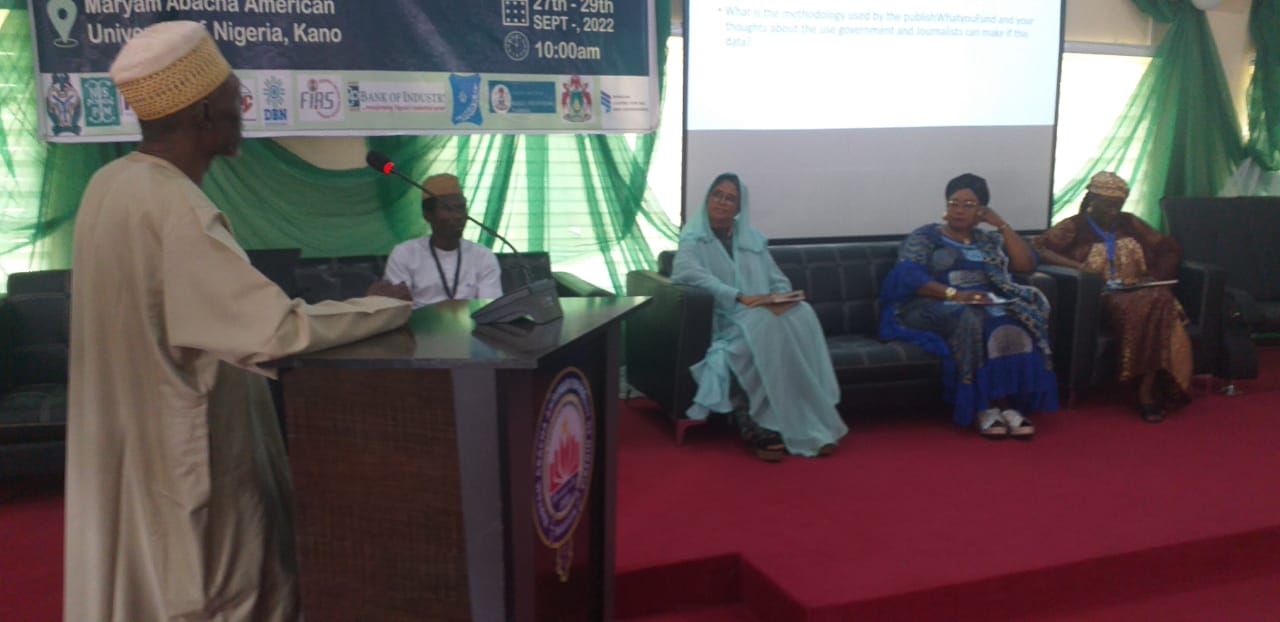
The Minister of State, Budget and National Planning, Prince Clem Ikande Agba, disclosed this Tuesday at the 63rd National Conference of Nigerian Economic Society. 

The 3-day conference, which started Tuesday at the Maryam Abacha American University of Nigeria, Kano, was themed “Fiscal Sustainability and Policy Response for Economic Recovery in Nigeria”.

The Minister, represented by the Director Macro Economic, Mr Felix Okonkwo, said fiscal discipline is what Nigeria needs to build a stable and inclusive economy.

Agba stated that the Federal Government is focused on addressing the revenue issues, which it considers essential to the economic and financial health of the country.

He added that insufficient revenue was why Nigeria could not contain its fiscal deficit after the recession, meaning that the country’s capacity to continue to support and raise capital expenditure has not been improved.

He said, “The adverse effect of the War in Ukraine, insecurity, global food crisis, oil theft in the Niger Delta, rising energy prices, massive depreciation of the naira exchange rate, high fuel subsidy and increasing inflation as well as insufficient fiscal buffer aggravated the fragile economic situation in the country.”

The chairman of the occasion, Shamsuddeen Usman, said the conference aimed at providing possible ways to restore the country’s economic stability through enhancing fiscal policies.

The President of the Nigerian Economic Society, Prof. Umma Jalingo, who organized the event, said the association was founded three years before Nigeria’s independence and was aimed at enhancing the country’s economy.

Kidnapped mother, 4 children rescued alongside 3 others in Kaduna

By Uzair Adam Imam

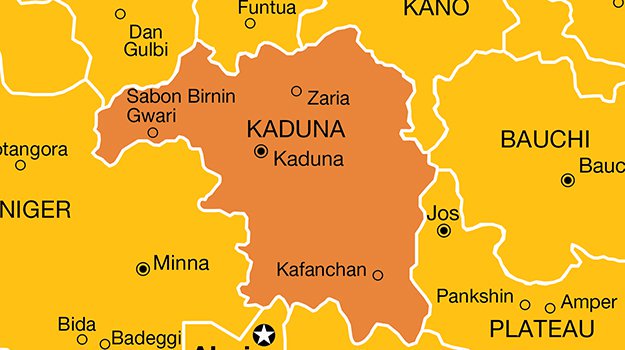
A kidnapped mother and her four children, alongside three other people, were rescued from bandits along Birnin Gwari and Chikun LGAs.

Samuel Aruwan, the Commissioner for the Ministry of Internal Security and Home Affairs, disclosed this in a statement issued on Tuesday.

He said the victims were rescued during a patrol in the areas by the Troops Operation Forest Sanity.

It was reported that the troops came under fire from the bandits while on patrol along the Birnin Gwari-Gayam-Kuriga-Manini axis.

However, after the troops returned the fire, the bandits fled into the forests, leaving behind the captives in their custody.

Aruwan said, “The seven victims have been reunited with their families.”

He identified the victims as Gloria Shedrack and her four children named Jimre Shedrack, Jonathan Shedrack, Angelina Shedrack and Abigail Shedrack. While the adults freed were Joseph Ishaku and John Bulus.

The Government of Kaduna State commended the troops for their brave efforts in rescuing and reuniting the victims with their families.

2023 Election: How Fintiri-Binani ‘clash’ will look like (I)

By Zayyad I. Muhammad

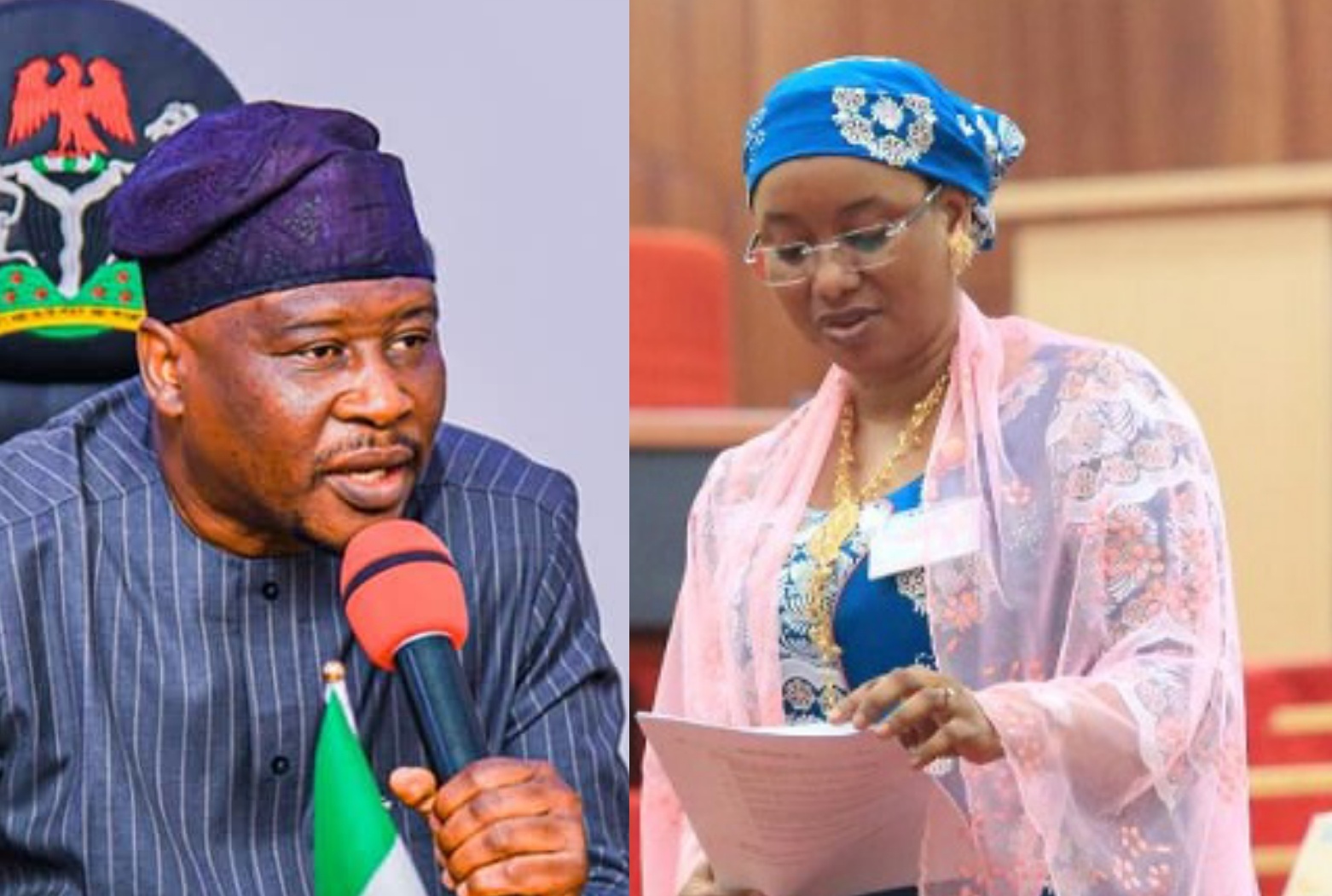
Governor Ahmadu Umaru Fintiri, the Peoples Democratic Party (PDP) governorship candidate, and Aishatu Dahiru Ahmed– Binani, the All Progressive Congress (APC) governorship candidate, have one similarity associated with their tickets- both are being challenged in the court of law.

Ambassador Mohammed Jameel Waziri is challenging his illegal exclusion from the May 22nd, 2022, Adamawa PDP Gubernatorial Primary Election, while Mallam Nuhu Ribadu is challenging Binani’s victory in the APC’s May 26th, 2022, Gubernatorial Primary Election, because of the alleged over-voting.

Senator Binani won the APC Gubernatorial Primary Election with 430 votes, Nuhu Ribadu came second with 288 votes, former governor Bindow got 103 votes, Abdul Razak Namdas scored 94 votes while Wafari and Mustapha got 21 and 39 votes respectively.

The Fintiri-Binani game promises to be interesting, just as it appears to be a zero-sum one. It will be the first time a woman will be a big force to reckon with in the governorship race in Adamawa state. And, from all indications, Binani’s candidacy has altered many political calculations, including sending shivers down the Fintiri-Team’s spine- Finitiri has been forced to pick a woman as his deputy so as to face Binani’s threatening challenge.

Binani is coming to the race with many advantages over Fintiri, while Fintiri is coming into the race with few advantages over Binani, plus a lot of political baggage, that Binani will use to her own advantage.

While Fintiri heavily relies on 2 fulcrums- incumbency and war chest, Binani will rely on 5 fulcrums- sustained local empowerment, the ‘center’, smart political calculations, and enormous and clever application of war chest, including the very strategic youth and women grassroots support.

The women folk will for sure stand for her- for instance, during the APC gubernatorial primary election- Aishatu Dahiru Ahmed Binani came to the race with assured votes in her ‘handbag’- women constitute nearly 40% of the delegates. When Binani entered the voting arena, the entire women among the delegates welcomed her with a melodous nasal sounds (Guɗa). That was a big signal to her opponents that she was ready for the game.

Another Fintiri’s weak point that Binani will capitalize on is his poor relationship with many PDP stakeholders- Binani will easily negotiate with them to get their ‘covert’ support. During the 2019 presidential and national assembly elections, Binani was able to get votes from PDP supporters in the central zone – she smartly negotiated her way- she even secured more votes than Buhari!

Binani always plays the ‘Mintzberg Political Games’- Building her influence and political structure through attaching herself to those who can help her in the future- the masses. The strategy is that- the lower-down people’s support will pressurize the higher-up people to give her the needed support when the time comes.

In a nutshell – Fintiri will heavily rely on the very important incumbency and massive war chest, while Binani will deploy her unprecedented strong grassroots support from women and youths, enough war chest, and capitalize on Fintiri’s errors and mistakes.

Notwithstanding the court cases associated with both candidates’ tickets- if elections were to be conducted today, Binani will beat Fintiri.

Zayyad I. Muhammad, is a Public Affairs analyst and he writes from Jimeta

The trend of bleaching among Kano people

By Usman Usman Garba

Taking good care of the skin among females has been an age-old desire and culture for years. Consequently, they develop various skin care practices to look beautiful and attractive. Girls of all generations, past and present, have been involved in this art, in which one area of focus recently may be skin bleaching, which seems to have become trendy among Kano ladies.

Skin bleaching is considered purposefully and deliberately an act of changing one’s skin colour by applying substances or solutions on the skin, with the sole intent of making the skin colour look lighter and brighter.

Research has shown that the idea of “Fara ko mayya ce“, which literary means “even if a lady is a witch”, by Kano male citizens has drastically driven females into the habit of bleaching their skin to look more attractive, fashionable, elegant and adorable.

According to some, women bleach their skin to remove skin imperfections such as rashes, dark spots and pimples and make or maintain softer skin. Some can meet the westernized standard of beauty, make themselves look “more attractive” in the eyes of their potential partners, and impress or meet their friends’ approval.

It is hard within Kano today to see a group of females without seeing one or some of them bleaching her or their skin. Unfortunately, it has become a tradition that even light-skin females bleach themselves in the sense that their bride price will be high or their class will increase in courtship or marriage.

Wives, too, are not left behind in this act. They engage in it to maintain their husbands out of fear that those ladies that bleach might snatch them away and in another way round, to help them maintain their marriages.

Men, too, are not excluded. They engage in it to become attractive to their female counterparts and celebrities or to copy local and western musicians and actors.

Before, when a male person bleached his skin, he did so because he was effeminate, but today, he does so to become a celebrity or popular and respected.

Others use pills to steam themselves while others use steaming drugs which remove their skin to be light as society considers white as beauty. They ignore that bleaching, as research has shown, has no benefits but harm.

Economically, instead of spending their hard-earned income on something beneficial, they end up squandering it on harmful bleaching products. 

The situation has become so bad that many women now have disturbing discolouration, contrasting colours and dark spots. The knuckles, knee caps and elbows are not spared as they carry different colours.

As disclosed by Dr Shamsudden Haladu, a dermatologist at Yadakunya General Hospital known as Bela Hospital, skin bleaching creates significant health problems for the users. Sadly, in Kano, its use had become widespread due to easy access to various brands of bleaching creams at multiple markets and shops.

A body that has been bleached becomes very light, fragile and tears quickly. Bleaching also leaves spots on the skin after being scratched or hard hit by an object. Such spots make the skin look rough and unattractive.

The doctor reveals that people differ in colour based on the five layers that human beings have: stratum corneum, stratum lucidum, stratum granulosum, stratum spinosum and stratum basale.

The basale layer, which is the last, has some cells called melanocytes, which make melanin and give our skin a dark colour.

All human beings have the same melanocytes. The only difference is the amount of melanin that melanocytes produce.

Skin bleaching has been established to have severe side effects. It has also been identified as the source of serious health-related issues among users, especially those who subject their bodies to creams formulated without proper safety precautions regarding chemical contents used in their production. 

The use of skin bleaching has also been reported to be responsible for skin cancers, skin discolouration, and depression among users leading to negative outcomes. Other risks include skin damage and severe depigmentation.

According to Dr Haladu, one should contact a dermatologist or visit a hospital before using any bleaching cream or soap. If possible, one should eat fruits as they contribute more to treating and whiting skin than any cream product.

Usman Usman Garba wrote from Kano via usmangarba100@gmail.com.

Emir of Zazzau bags national honour, gets CFR rank

By Sumayyah Auwal Ishaq

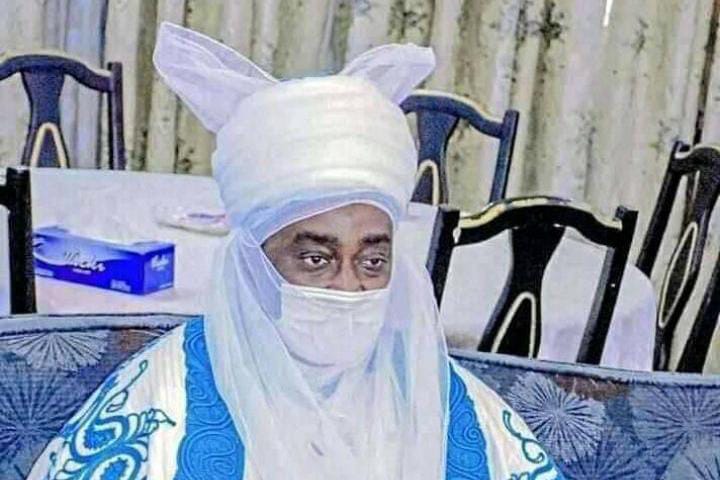
President Muhammadu Buhari, GCFR, will confer a national honour on the Emir of Zazzau, Ambassdor Ahmad Nuhu Bamalli, in the rank of CFR (Commander of the Order of the Federal Republic).

The appointment was contained in a letter from the Federal Ministry of Special Duties and Inter-Governmental Affairs, signed by the minister, Senator George Akume.

The letter reads in part: “I have the honour to formally inform you that the president of the Federal Republic of Nigeria, His Excellency, Muhammadu Buhari, GCFR, had approved the conferment of the National Honours on you, in the rank of CFR (Commander of the Order of the Federal Republic).

Emir Bamalli succeeded late Alhaji Shehu Idris, CFR, the 18th Fulani emir of Zazzau who reigned for 45 years before his death on September 2020. Until his appointment, the monarch had served as Nigeria’s ambassador to Thailand, with concurrent accreditation to Myanmar.

He has been a permanent commissioner in the Kaduna State Independent Electoral Commission in 2015. He has worked in banking sector and as Executive Director and later acting Managing Director of the Nigerian Security Printing and Minting Corporation.

He was a staff of the Abuja Metropolitan Management Agency before a stint as head of Human Resources at MTel, the mobile communications arm of the old Nigerian Telecommunications Limited (NITEL).

Nigerian gov’t reverses directive for reopening universities

By Muhammad Sabiu

The National Universities Commission, on behalf of the Federal Government, today rescinded the circular that earlier instructed vice-chancellors, pro chancellors, and governing councils to reopen federal universities.

Recall that it was early on reported that all vice-chancellors, pro chancellors, and chairmen of governing councils of federal universities received a circular with the subject line NUC/ES/138/Vol.64/135, directing them to reopen their institutions.

However, the commission reverses the directive few hours later, in a subsequent circular with the reference number NUC/ES/138/Vol.64/136, which was also signed by Sam Onazi, the NUC’s director of finance and accounts.

Without categorically stating the reason behind the U-turn, the letter tagged, “withdrawal of circular NUC/ES/138/Vol.64/135 dated September 23, 2022” noted, “I have been directed to withdraw the NUC Circular Ref: NUC/ES/138/Vol.64/135, and dated September 23, 2022, on the above subject.

“Consequently, the said circular stands withdrawn. All pro-chancellors and chairmen of governing councils, as well as vice-chancellors of federal universities, are to please note. Further development and information would be communicated to all relevant stakeholders.

“Please accept the assurances of the Executive Secretary’s warmest regards”

ASUU Strike: FG orders VCs to re-open campuses, restore all operations

By Uzair Adam Imam

The Federal Government Monday has ordered the universities’ vice-chencellors to re-open schools to allow students to resume lectures.

The FG gave the order through the National Universities Commission (NUC) on Monday, September 26, 2022.

The directive was contained in a letter singed by the Director, Finance and Accounts of the NUC, Sam Onazi, on behalf of the Executive Secretary of the commission, Professor Abubakar Rasheed.

NUC instructed that all vice-chancellors; Pro-Chancellors and chairmen of governing councils of federal universities should re-open schools.

The instruction reads: “Ensure that ASUU members immediately resume/commence lectures; Restore the daily activities and routines of the various University campuses.’’

It could be recalled that, with the deadlock in negotiation between the FG and ASUU members, the federal government went to court to challenge the action of the association.

In its latest session on the case, the National Industrial Court, through Polycarp Humman, the presiding judge, granted the federal government’s application for an interlocutory injunction to restrain ASUU from continuing with the strike.

Recall that ASUU has been on a strike since February 14, 2022. The university lecturers have down tools to press their demands home on issues that boarder on improved work environment, facilities, and upholding of various agreement entered between the union and federal government.