Month: February 2022

Tribute to the man I was born to be

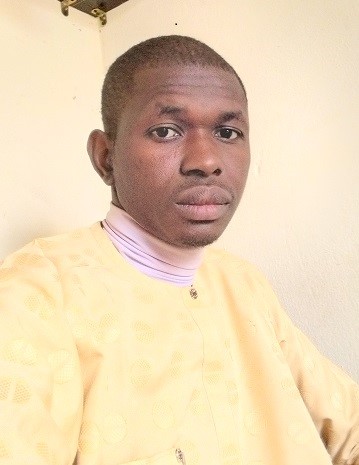
By Umar Sani Yakubu

My parents or father, to be specific, see someone in me. Who is that person? I was not privileged to meet someone because he was called to glory years before I was born. This is a story I traced for myself, and I will share it with you. But wait, you must not tell anyone because it is my little secret. A secret nobody tells me, and until I discovered it for myself, I doubted if someone was even ready to tell me.

Well, my father might have kept it so dear to himself. Unknown to my father, if there is anyone’s gesture I understand so quickly, it is his. Thus, I know this among other gestures of his, and I will tell you how.

When I was first registered for my elementary school in 2001/2002, my father smartly registered me as ‘Umar Yakubu’, omitting his name ‘Sani’ as my surname. A development I fought even with my then little age. It happened that anytime my class teacher called me Umar Yakubu in the attendance register, I would keep mute. To the best of my belief, I had reasons to do that because I have repeatedly warned that that wasn’t my name. And correct it as Umar Sani.

Consequently, my struggle for self-defence grew to the level that the class teacher and the headteacher couldn’t tolerate any longer. Finally, the school invited my father, and they settled the case. I was eventually renamed “Umar Sani”.

However, growing up around stage 4 (primary 5), I began to think and reason with my dad’s earlier decision. It was clear that his love for the name Yakubu knew no bounds. And unfortunately, till then, I was his only son among my sisters. For that, I decided to put a smile on his face by adding Yakubu to my name, which I did, thereby making it Umar Sani Yakubu. I wrote that on all my notebooks. Although not the way he wanted it, I knew he was happy this time.

Now the secret: that man wanted to name me Yakubu. He has never told anyone, not even my mother, his wife. I think this is a secret only he and I share because I snatched it from his looks and maybe action just like the story above. But why did he name me Umar? I will tell you that too.

The combination above of ‘Umar Yakubu’ is two in one. Combination of a father’s name and his son’s. Umar is the last child of Yakubu. A younger brother who was so dear to my dad. After his death on April 22, 1995, followed by my birth on July 17, 1996, my father felt the joy of his life. It was the day he held on his hands his first child, who seemed to come with the confusion of his life.

This is because he wholeheartedly wanted to bring his father and his brother back to life. But, unfortunately, I am a twin to none. I am just me and one. So he had to choose between the two who to immortalise first. A confusing choice to make, he decided on Umar to console his mother for the immediate loss. Do you now see the reason for his combination of Umar and Yakubu? He wanted me to be two in one.

Enough for that story.

Now the question is: Am I even brave enough to bear the name Yakubu?

According to stories I gathered, Yakubu Danladi, as the name implies, was indeed the return of many bearers of the name before him, the likes of Prophet Yakub (may God be pleased with him) and in our recent past Yakubun Bauchi, Late Emir of Bauchi. He was brave, hardworking and kind-hearted.

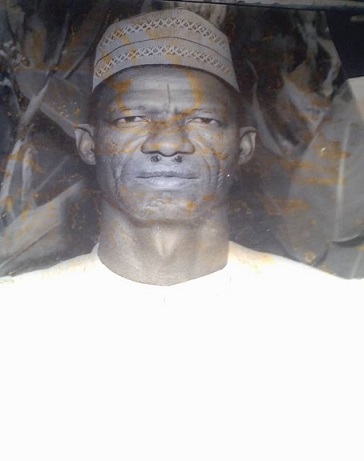
However, from a decent background, Yakubu was born a farmer who turned out to be the best in the history of our locality through conversing his local experience with the civilised way he later acquired. Until his death, his love for agriculture and farming spoke for itself on the size of his farmland.

Taking about his service as a civil servant, he had gone around the country even before Bauchi was made a state. He wandered from Kano to Maiguduri to Mubi (where he gave birth to his first child Sani (my father)). He later went for an agricultural-related course in India and then back to Nigeria to Azare in Bauchi State.

He was once transferred to his local government (Dass) as Sole Administrator in 1987, a development that later led to his political participation. He contested and was voted for the office of local government chairman in December 1987 and till August 1989.

Obviously, Mr Chairman is my grandfather I never met. Still, as G.K. Chesterton once mentioned, “People who make history know nothing about history. You can see that in the sort of history they make.” I doubt my father knows many people that have offered me seats and told me about Mr Chairman. They tell me how it was sitting around him, being in his caravan of leadership, and even pointing to me things that make them remember him, which are their children they named after him.

According to them, he was a reformer who came and provided their basic needs at the right time. Mr Chairman constructed the first town bypass road, built feeder roads for villages, built all the village head houses, built numerous village dispensaries,  awarded to the youth the first football trophy, “Barde Laya Memorial Cup”. To date, he remains the only local government chairman to have a sitting president, Ibrahim Badamasi Babangida, to commission his project in Dass.

Sadly, as I write this, it is thirty years since he left the family, the community and the world, which occurred on January 30, 1992, and headed to heaven, in sha Allah.

Tellingly, I never had the privilege to meet him, but I used to have that mist-eye that he would have been a caring grandfather. May his soul continue to rest in peace, Amin Ya Rabbil’alamin.

Finally, father, I am not named after you. In fact, I now have a nephew who is so lucky to be. But, I believe, like you, I am strong. I am my kind of Umar. And be as it is, we feel your company in us. Your spirit is strong, and it follows everywhere we go. Also, I want to tell you that your family, even with eventual here and there, is still strong, and together we will go beyond a reasonable doubt to make sure that your generation lives till the end of time. Thus, the family miss you. So, continue to sleep well, father.

Sani writes from Dass, Bauchi and can be reached via saniumaryakubu@gmail.com.
X-raying Hon. Usman Bello’s representation in Akko

By Kabiru Danladi Lawanti

In a liberal democracy, political representation is a straightforward concept. In Nigeria, every four years, there are elections where citizens pause and turn back to see what their political representatives did to them during their four-year tenure. In a defined geographic area or constituencies, the citizens choose from a range of candidates—themselves citizens living in (or near) that same area—and elect a few to sit in the national assembly as representatives of the people of these constituencies. Yet both theoretically and in practice, it is far more complicated.

While representative democracy is often poetically described as government ‘of the people, by the people, for the people,’ it is not only the people who are represented: political parties, ideologies (in this sense religious and ethnic), business, urban and rural people — to name but a few—are also represented. Furthermore, even the very notion of ‘the people’ is amorphous as a representative cannot possibly represent the full diversity of ‘the people’ and all their divergent and conflicting interests.

Since the return of democracy in Nigeria in 1999, many representatives have been sent to Abuja to represent their constituency at the national level. These constituencies comprise a group of local government areas in a particular state. In some states, the constituencies are formed of a single local government area. For example, in Gombe State, there are six federal constituencies: Akko, which covers the Akko LGA, Balanga/Billiri that covers Balanga and Billiri LGAs, Dukku/Nafada that comprises Dukku and Nafada LGAs. Others are Gombe/Kwami/Funakaye, which contains Gombe, Kwami and Funakaye LGAs; Kaltungo/Shongom, which covers Kaltungo and Shongom LGAs and lastly, the Yamaltu/Deba federal constituency that covers Yamaltu/Deba LGA. These constituencies have sent representatives since 1999. Of particular interest to me is the Akko Federal Constituency, where I came from.

Politics, they said, is a network of no permanent foes but only connected interests. In the last 22 years, the constituency has had six representatives. Of this six, two remained the longest-serving representatives – Bello Suleiman and Usman Bello Kumo. Bello Mohammed spent only one tenure in the National Assembly, from 199-2003. In contrast, Umaru Barambu and Samaila Mu’azu Kashere spent two years each in the hallowed chamber after a court sacked Umaru Barambu in 2017.

To be fair to the reps mentioned above, each tried to develop the area in his way. However, a careful analysis of what came to the constituency in the last three and a half years cannot be compared to any in the previous 22 years. The level of human and capital development witnessed is unprecedented in the entire northeast. The only representative that can match the level of human and capital development brought to the constituency by Usman Bello Kumo (UBK) is Mukhtar Betara. This is obvious, knowing that Betara is Chairman House Committee on Appropriation.

A consummate and highly experienced politician, Usman Bello Kumo has a deep commitment and unrivalled passion for grassroots development. For instance, in his second coming alone, 2019 to date in the National Assembly, he has attracted infrastructural development in many areas of human development like education, health, water, roads, electricity, youth and women empowerment all over the constituency for the betterment of their economy and improved standard of living.

As Chairman, House Committee on Police, Hon UBK was able to also send more than 100 youth into the Nigeria Police Force. One thing is clear, UBK has always stood out among other politicians of his calibre. He has never allowed the trappings and grandeur of office to stand between him and his avowed goals of lifting his people from the shackles of poverty, hunger, disease, homelessness and mass unemployment.

As 2023 approaches, we shall soon be inundated with a mix of the serious, the incredible and sprinkles of the comical as political parties jostle to promote candidates of varying capabilities. These include those who appear to have genuine intentions for service to the people and aspirants who seem pretty content with no more than having their faces splashed around on party banners. Already, we have seen some campaigns of calumny against his person when some rabble-rousers, fighting for recognition, working under the instruction of politicians are sponsoring political jobbers to say many things against the man. This, they do discredit him in the eyes of his teeming supporters. One thing is clear; it seems UBK is not even distracted with these political mudslingers.

Holding onto his mission – an intense zeal for total political, economic and social liberation of his people, Hon UBK has always seen his primary vocation in the political arena as being one of service, duty, benevolence and charity towards his constituents. In this regard, he has abided by his campaign promises of using elective office to improve a lot of his people. This is the direct opposite of what his detractors are doing. His opponent definition of representation is that of trying to use political office to feather their nest, irrespective of the economic fortunes of the electorate that voted for them in the first place.

Notwithstanding these outstanding credentials and track record of success, we must remind Hon UBK, as stakeholders and indigenes of this area, that rural areas need his attention. Most of us in the rural regions of Akko, especially villages like Lawanti, Malam Jamo, Gamadadi, Akko and surrounding towns, are currently facing an acute shortage of water never seen in more than thirty years. My last visit in December 2021 to my home town made me pity the dwellers of these areas. Most have to travel many kilometres to get drinking water. Others use water from streams, competing with their animals. It is a pitiful scenario.

There are also allegations that his empowerment programmes are not all-inclusive. Recently, some communities in Gona District have a cause to go to press to complain that his empowerment programmes were only targeted at Kumo, his hometown. 

As a political maestro, who can be taken literally for his words, Hon UBK needs to pause and turn his attention to these people and listen to their complaints, even if they come from a minority voice. We have no doubt, considering the excellent job he did to his constituency in his first coming 2011-2015 and now, his words, as the proverbial saying goes, can be taken to the bank.

As we approach 2023, politicians, including Hon UBK, understand the importance of an alliance. There is no better time to do this than now. And I am sure he needs the rural areas to launch his return to the National Assembly.

Kabiru Danladi Lawanti wrote from the Department of Mass Communication, Ahmadu Bello University, Zaria, via kblondon2003@yahoo.com.

Don’t stereotype people for their kinsmen’s ‘fault’

By Muhammad Isyaku Malumfashi 

People nowadays cease to understand that everything in this life is ‘do me, I do you’. Nonetheless, very few people have the discretion of paying good for the bad input. 

On several occasions, I have heard people complaining about why others don’t treat them as they had treated them or relate with them politely. But, unfortunately, even my humble self is not an escaped or sacred being to that temptation, to be honest. 

People want to be treated more kindly than they treat others. But we often forget that life is “reciprocal”. We don’t get in return more than what we do give. However, the clean-minded people would always do good even if otherwise was done to them and vice-versa. 

I recently witnessed fascinating neighbourly scenarios, which will be the foundation of this piece.

An elder brother from a distancing place narrated a heart-touching story between him and the community members in one of the states in the West. He lived there for a while as a civil servant. He left on transfer to another workplace.

That brother is a northerner who was lucky to have come from parents who nurtured good parental upbringing to their children so that they could live with others even when the parents are no more, and the children might still be young. 

His transfer announcement threw the entire mosque to sombre as if life was about to be lost. Now, come to think of it. This man was transferred from North to West for public service. Still, he understands that despite the seeming differences in culture and religion to some extent. We’re all humans and citizens of this beloved country, so we can still live in peace and harmony. And that was the secret behind his love by those people.

Similarly, a female Christian neighbour in our school’s postgraduate hostel was robbed on her way back home to  South-South from school for Christmas and New Year season. The news shocked us. We were all disturbed for not reaching out to her to sympathize because the phones were confiscated during the robbery, plus other valuables.

As a mature woman, she always takes precautions while interacting with us to maintain the opposite sex. You know North is very sensitive about religion. However, her friendly attitude made us so open to her. We once had a total blackout at the hostel for three weeks due to the theft of some expensive fuse from the transformer. This woman collected our laptops and phones down to the school’s clinic to charge. She still did that though their law didn’t allow anybody outside the clinic to charge there. Then, sometimes unknown to us, she would cook and take it to our rooms and plead with us to bless the food. 

Another case study was a female Christian corp member serving in our school. The corp member hails from West, but she’s that kind of person one could describe as snobbish. She stays in the PG hostel with us too, but you hardly see her talking or greeting people. Her case was not a familiarity issue as many females in the hostels socialize far better than many males.

Her fate came during Christmas and New Year seasons. I’m a living witness because I didn’t travel earlier for that break until I submitted my chapter three to my supervisor. One day, when coming from the town, I overheard her complaining to someone on the phone that she’s tired of this Katsina, adding that the people are not as hospitable and accommodating as being alleged. Nobody wished her Merry Christmas except those calling on the phone from distant places. She added that some people even frowned at her when they met as if they wanted to fight her. The submission came to me as a shock!

More so, a respected former corp member and brother from North Central who served in my local government area recently unfolded his ordeal on how some of our people maltreated him during his national service. Even though he deserved to be retained but nepotism didn’t allow it. 

Furthermore, I witness many such scenarios where in one way or the other, someone falls victim to “not being our tribe person or just for me been a Muslim and Hausa in the South”, but I never used that to stereotype the southerners. Because if some hurt me, I was accommodated and loved by others of the same tribe. Thus, every society has the good, the bad, and the ugly. 

May we be the reason why others will anticipate our race.

Muhammad Isyaku Malumfashi sent this via muhammadisyakumalumfashi@gmail.com.

A letter to my Fulani brothers and sisters

By Abdallah Jalo Abba

Dear Fulanis, I am writing this fully aware that this might never get to the Fulani herders journeying in forests. That is why I’m precisely writing in English instead of Fulfulde, hoping the educated amongst us will accept my message and join hands as we push to help our nomadic brothers.

Rest assured, I know we like to talk about nomadic cattle herding in glowing nostalgic terms. Still, over the years, this practice has only exposed our nomadic brothers and sisters to agony and a harsh lifestyle in their attempt to live an impossible 17th-century life in the 21st century. Sincerely, this isn’t bravery but naivety. 

Nomadism harms our Fulani cousins more than anyone. I won’t talk about the needless loss of lives this archaic practice has caused since almost everyone is aware of that. I will instead concentrate on the health and socio-economic dangers this primitive practice has brought to our brothers.

As I write this, more than two million of our tribespeople are illiterates and do not own a house due to their lifestyle. However, this isn’t surprising since a nomad cannot own a home or go to school if he’s always on a perpetual journey from Borno to Enugu.

Hitherto, our nomadic brothers die of snakebites, infectious diseases and fever. They live in the rain and under the scorching sun and naturally cannot vote during elections. They sleep out in open areas or in rare situations in thatched makeshift accommodation (for the lucky among them), both of which expose them to tsetse flies and mosquitoes. When they get sick, they lack access to medical care like you and I, thereby risking losing their lives because of their chosen lifestyle.

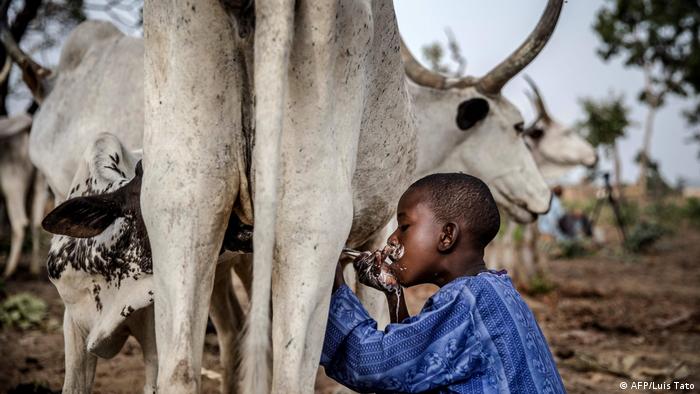
The nomads drink from polluted water sources contaminated with human faeces; the raw milk they drink carries dangerous bacteria, leading to food poisoning. In addition, they get respiratory diseases because of the dust they inhale while travelling in bushes and unfairly get extorted from security agencies.

Their children are born and raised under impoverished circumstances. They get driven from one place to another by fellow humans or natural forces. Often, this results in the loss of their lives or that of members of their family and/or their cattle.

Selfishly, sedentary Fulanis who live in cities and enjoy housing, electricity, decent water and healthcare like myself are the proponents of nomadic cattle-herding today. How convenient.

So, this same Town-Fulanis who send their kids to school want children of nomads as young as seven years old to continue chasing cows from Sokoto to Enugu and get paid N6000 every month. I know some of you may think this is mere exploitation, but I know slavery whenever I see it.

Obviously, nomadic cattle-herding in Nigeria is impossible. A country with a fast-growing population dependent on farm produce for sustenance cannot accommodate this practice because of the pressure on land and other resources.

A cattle route followed by a herd moving from Northern Nigeria to the South during the dry season is already filled with farmlands come rainy season, making it impossible for the same pack to return to the North via the same route. The problems are too many.

Indeed, it is northern states that have land for cattle grazing. So, it’s astonishing that our brothers choose to travel south where they’re desperately hated and where land is relatively scarce in search of greener pasture they already have in abundance in the North.

Undoubtedly, the land is the most precious of commodities, and land is what the North has and what the South lacks.

Borno state with a surface area of (70,898Km. Sq.) is 11 times the size of Abia state (6,320km. Sq). Niger state with a land area of (76,363km Sq) is 22 times the size of Lagos (3,345 km. Sq). 

The entirety of Ondo state and its forest reserves that Governor Akeredolu has been losing sleep over is only (15,500 Km. Sq), meaning you can remove four Ondo states and four Lagos states in one Niger state. In fact, the entire southeast boasts of only (41,440Km. Sq).

So, can anyone calmly explain to me why cattle herding is more viable in Ondo and not Niger or Borno states? 

This nomadic lifestyle has only brought hardship and suffering, turning our cousins into cheap and easily disposable labour, which has left them in extreme poverty of millennial dimensions and with no access to decent water, electricity, housing and healthcare.

Against this backdrop, the privileged and educated amongst us should advocate for the settlement of nomads, so they and their children can also attend school, watch TV, sleep in a conducive environment like ours and generally achieve economic emancipation. 

Doing that will improve literacy and reduce disease burden among our cousins, thereby freeing up more land to farmers and generally solving the problem of farmer-herder conflicts permanently.

When we do all that,  children of the retired nomads will become doctors in our Medical Centers, Engineers in our factories and lawyers that’ll represent us when people from other social groups seek to malign our loved ones or us.

Like it or not, we cannot disconnect ourselves from the advancement of the 21st century and peacefully coexist with people of this age. So, the earlier we abolish this archaic and primitive practice of chasing cows from pillar to post, the better for everyone – and more so for our landless tribe members.

Abdallah Jalo Abba is a Fulani and Engineer from Yola. He sent this article via hammedadam2@gmail.com.

Abba Kyari forced me to accept being a kidnapper, Evans tells court

By Ahmad Deedat Zakari

The alleged kidnap Kingpin, Chukwudimeme Onwuamadike, alias Evans, said his confession was obtained under duress and threat to his family by the embattled suspended Deputy Commissioner of Police, Abba Kyari and his team.

Speaking during his hearing at Ikeja Special Offences Court on February 4, 2022, Evans made the allegations against the suspended police chief.

Evans said, “One day at the IG Guest House, the police brought some documents and asked me to sign. I asked what the documents were for, but they didn’t answer me. They said if I didn’t cooperate with them they would kill me.

They killed about six persons in my presence and I signed the document, I was not allowed to read it. I think it is the document that was used to bring me to court.”

He was also asked why he was looking undisturbed and he said, “The police told me to laugh and smile in the video. You do not know what I encountered in the hands of Abba Kyari and his boys. My eyes saw hell.”

Evans is presently standing trial on a four-count charge of kidnapping and unlawful possession of firearms alongside a dismissed soldier, Victor Aduba.

The case has been adjourned until March 11 for the continuation of the trial.

N-Power Beneficiary: A letter to the Honorable Minister of Humanitarian Affairs

By Aliyu Baraje

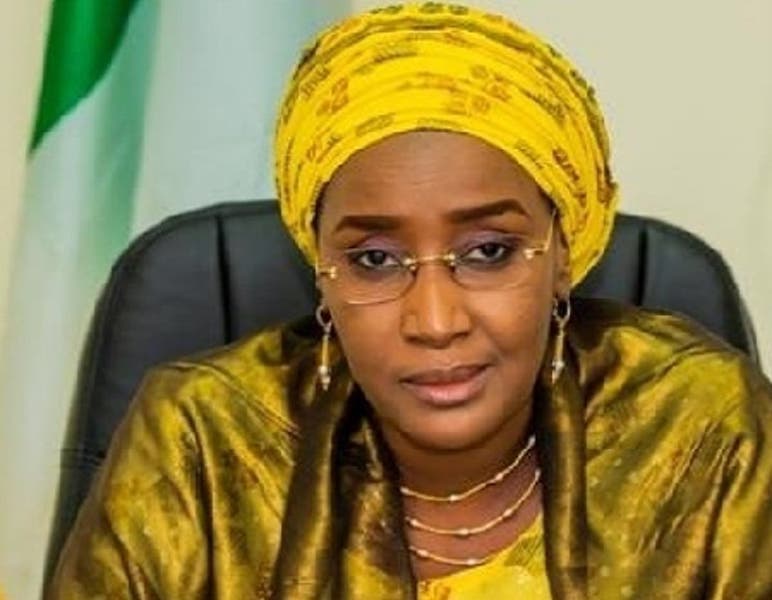
Dear Ma,

Your efforts in addressing unemployment in the country are commendable and well acknowledged. Your ministry has taken bold steps to achieve the primary purpose of its creation. Honourable minister, I write to thank you for fulfilling your promise of ensuring that the exited N-power beneficiaries will not be left to continue roaming the streets of Nigeria jobless, especially now that the country battles with various security threats.

Your assistant, @annekaikem1, on her Twitter handle on January 29, 2022, announced that the exited N-power beneficiaries should dial a certain code (*45665) to verify and confirm their availability for an N-exit loan training from February 1 to 4th 2022. The N-power Twitter handle also affirmed it by posting the same information on February 1.

My main worry now is that most beneficiaries have been experiencing difficulty verifying and confirming their availability for the training. As a result, tens of thousands of eligible beneficiaries are on the verge of giving up. This is due to the technical problems they’re experiencing during the application processes. Beneficiaries have been dialling the code since day one but to no avail. Others have started but were timeout before completing the task.

Given the above, I, on behalf of the hundreds of thousands of N-power beneficiaries that are grateful for your commitments to ensure they have a better future, plead with you to consider the following:

1) Extend the deadline for the verification and availability.
2) Increase the seconds for a timeout while a beneficiary is connected to the server.
3) The honourable minister should also consider creating and sharing another code for the beneficiaries to quickly complete the tasks if the glitches were due to congestion on the server.
4) The honourable minister should also refer beneficiaries to their dashboards since it is already there. This would reduce the cost of the charges on them.
5) And if service providers cause these difficulties, the ministry should kindly reach out to them before the deadline.

With due respect and appreciation, I write this to call your attention. If the situation is left to continue as it is, hundreds of thousands of applicants are likely to be deprived of this great opportunity.

I have complete confidence the honourable minister would urgently look into the matter to proffer a solution. However, I was discouraged when I found out that in two local governments, which I had firsthand information on, not even ten beneficiaries had completed the task. Moreover, the responses I saw on social media handles of the N-power minister’s assistants, beneficiaries’ groups and blogs are very alarming.

Although this is supposed to be the first batch, we hope the honourable minister would do the needful to address the technical problems so that the subsequent ones would be more successful.

Thank you.

Aliyu Baraje can be reached via glitzinkreviews@gmail.com.

Katsina: Smugglers plot with insurgents to attack us, Nigerian Customs raise alarm

By Muhammad Sabiu

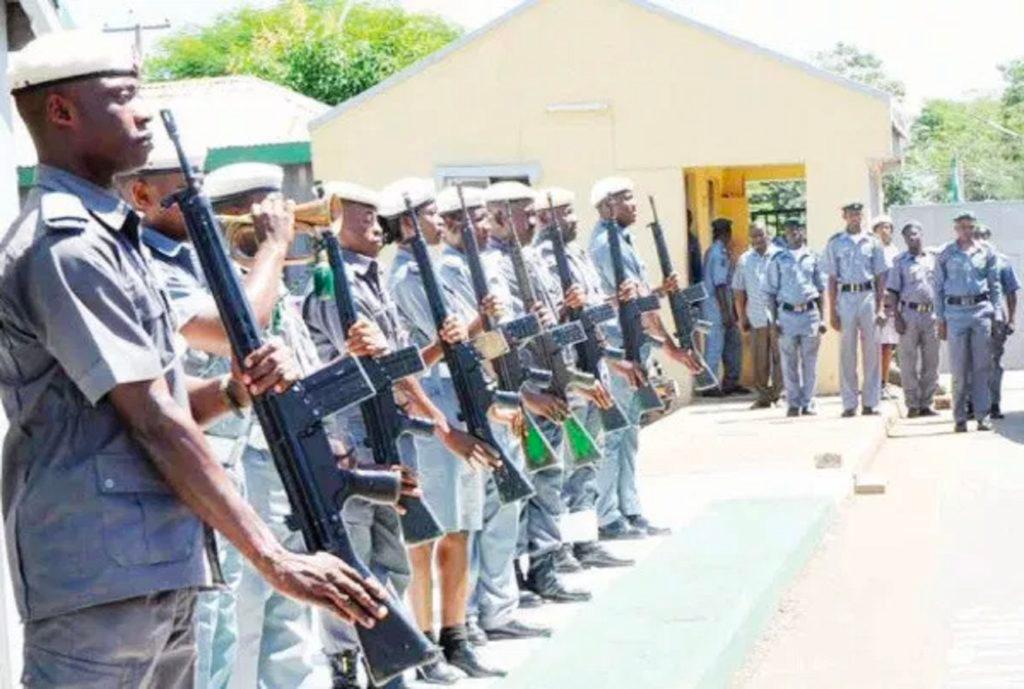
Smugglers are now conspiring with terrorists to attack operatives stationed in border settlements across Katsina, according to the Nigeria Customs Service’s Katsina Area Command.

Dalha Wada Chedi, the Katsina Area Commander, revealed this to reporters on Thursday during a Customs/Community Consultative Forum.

Chedi explained that desperate smugglers now partner with bandits to assault us, resulting in casualties among our men.

He further said that certain members of the community are hell-bent on blackmailing customs officials by making false accusations and spreading rumours.

Chedi, on the other hand, warned the smugglers to stop doing so and find a lawful and sustainable business to engage in, stating that no matter what tactics they use, the law will catch up with them sooner or later.

Suspend principal, probe attack on protesting Muslim students – MURIC

By Muhammad Abdurrahman

Muslim students of Baptist High School, Ijagbo in Oyun Local Government of Kwara State, who were protesting for the right to use hijab were reportedly attacked by hoodlums and security agents yesterday, Thursday, 3rd February 2022. Four people were allegedly injured while one has been hospitalised.

As usual, the Muslim Rights Concern (MURIC), has reacted to the incident by condemning the attack on the protesting students.

MURIC’s condemnation was contained in a statement issued by its director, Professor Ishaq Akintola, on the afternoon of Thursday, 3rd February 2022.

MURIC said:

“Muslim students of Baptist High School, Ijagbo in Oyun Local Government of Kwara State, who were protesting for the right to use hijab were reportedly attacked by hoodlums and security agents today, Thursday, 3rd February 2022. Four people were allegedly injured while one has been hospitalised.

“Although it was rumoured that one person was killed, we prefer to be silent over that until we receive more details from our Kwara branch (https://tribuneonlineng.com/police-nscdc-quell-hijab-protest-in-kwara/https://www.ekohotblog.com/2022/02/03/breaking-hijab-many-injured-as-peaceful-protest-turns-violent-in-kwara-photos/). We will update our statement immediately we have a full report.

“We strongly condemn this attack on innocent and underaged children. It is irresponsible, barbaric and inhuman. The protesting girls were not violent. It was a peaceful protest and a peaceful protest is a legitimate tool for the expression of grievances, particularly when it is peaceful.

“MURIC singles out the principal of the school for insubordination, willful disobedience and disrespect for constituted authority. This is in view of his high-handedness and his refusal to recognise the state government’s circular which approved the use of hijab.

“In the meantime, and in the interest of peace, we make the following demands:

1.     The school must be shut down immediately to forestall further breakdown of law and order.

2.     The school principal must be summoned to the Ministry of Education to personally collect his quarry letter for insubordination, willful disobedience and disregard for constituted authority.

3.     The school principal must be suspended with immediate effect.

4.     Government should decide other disciplinary action or actions to be taken against the school principal for disobeying the government’s circular which approved the use of hijab.

5.     A probe must be instituted into the circumstances surrounding the commotion.

6.     All those injured should be treated at the expense of the state government.

7.     In case of death from injuries sustained during the attack, full compensation should be paid to the parents of the victim or victims.

8.     Expenses incurred by the government in handling this case should be deducted from the principal’s gratuity on his retirement.

9.     The state government should add its identity to the names of all schools in the state, e.g. Oyun Baptist High School should become ‘Oyun Government Baptist High School’.

Subsidy Removal: Is Nigeria on the verge of collapse like Lebanon?

By Sa’adatu Aliyu

In August 2020, the Port of Beirut came under explosive attacks, which shook the country’s very foundation. After many reports came in after that, it was said that another attack to have shaken the country with such intensity was that which killed the then Prime Minister Rafik Hariri in 2005.

Before the explosion, however, Beirut had been struggling with its economy, thanks to its widespread corruption. That already had it standing at the doorstep of the World Bank begging for financial relief. It also saw many of its populace unemployed, uncertain of the future.

Therefore, for a country already grappling to pay its citizens their salaries, with families finding it increasingly hard to feed their children or send them to school, the explosion added fuel to the fire. After much investigation, it was gathered that the port officials had been indirectly responsible for the incident, which killed and injured many. This is because the large amount of chemicals initially bound for Uganda was instead stashed up in the Beirut port, left without any safety preservative precautions taken to prevent an imminent attack.

After that, Beirut was indeed to see itself knocking at the gates of the World Bank, yet again-if once silently and with patience – then now it was with desperation for help. It would, in fact, at this point turn its hands to accept any offer coming in from any country but most importantly, the Saudi government with which it maintains a close political tie.

What makes me liken the Nigerian state to the status quo in Beirut is its corruption and the most recent proposition by the government on the possible removal of fuel subsidy. For a country whose system is heavily built on corruption and even more so we can say still thrives because of it, I am afraid to say that I hope we, too, do not one day wake up to the smokes of our country in flames with everyone running helter-skelter in search for safety.

Beirut’s reality stares Nigeria in the face. The trudging of its imminent collapse is ever so closer. Abject poverty remains the order of the day with the larger part of the population living below one dollar; price for education forcing worry heaves and sighs out of its largely lower-middle-class population, price of food items costing twice more than before. To make matters worse, the state of our country’s security has never been so fragile and then to have life becoming more difficult by the removal of fuel subsidy by a government on which many have placed the hope of a better living condition is to assert to the population that the government lacks any sense of good direction.

I don’t want to sound pessimistic. However, with the country’s challenges rising every day and a government that focuses more on enriching themselves and their families, I cannot see a brighter future for us either.

With the drama in display and the Nigerian state calmly maintaining its dance on the tracks of lagging-behind countries, and as we face yet another upcoming election next year, I pray we do not wake up to the scorching burns of increased crime rate, escalating terrorism, among other ills.

One thing that doesn’t require divine telling is that Nigerians have never felt more apathetic towards the system. We are all bracing for what lies ahead.

Sa’adatu Aliyu comes from Kogi state. She is a graduate of English Language from Ahmadu Bello University, Zaria and a Masters student in Literature at the same institution. Her email is saadatualiyu36@gmail.com.

The quest for riches

By Abba Muhammad Tawfiq

Most religious and social felonies are committed solely to nurturing the sown seeds of an insatiable desire for money, materialism and mundane accomplishments, reinforcing the Biblical notion that “the love of money is the root of all evil”.

On the ground of moral virtue, no religion in the worthiness of its sanctity nor a firm believer and practitioner of any faith can complement or plead devotion to whatever form of major and minor despicable moral misconduct.

There is nothing wrong with striving to make a beautiful living through the means sanctioned by religions and society. However, the aftermath of the strong inclination to live a high life at all costs, even through ways that defy basic rules and breach fundamental human civilization, is what we terribly testify to today.

The conviction of the culprit teacher and his accomplices that abducted, mutilated and buried the stiff of his naive and innocent student despite having the three million naira ransom at his disposal sparked bitter feelings of every soft conscienced individual in the country. But for the sake of money and worldly gains, this dirty act is not the ever-existing cruelty that hurts the dignity of our religions and community.

Talking to an extreme length, the deficit of love, compassion, and trust in the quest for affluence and fame have seismically cleaved even familial alliances and bonds.

On January 8, 2022, the crime bulletin aired by Neptune Prime was that of a 25-year-old Niger boy who paid an assassin the sum of N110000 to help send his father on an excursion to the land of his ancestors so as to inherit his possessions.

Similarly, on January 13, 2022, a 52-year-old Enugu father and 32-year-old Lagos elder brother allied with mum were reportedly arrested on the charge of taking malicious delight in murdering three offsprings and a  sibling. All in the common interest of ritual money.

Our lack of contentment and the unwillingness to live within the ambits of our earnings give a proper insight into the pervading tragic circumstances of easy money-making. Everyone is desperate for shortcut success, power and fame–riches, expensive attire and mobile phones, and owning mansions with exotic vehicles. Thus,  choose to pay that price even via ways that incur the Godly wrath on us.

May the merciful and forgiving Lord save our souls from indulging in mischievous acts, ameen

Abba Muhammad Tawfiq is a 500L Medical Rehabilitation student at the University of Maiduguri.