Month: December 2021

El-Rufa’i names new Governing Council for KASU, other state institutions

By Sumayyah Auwal Ishaq

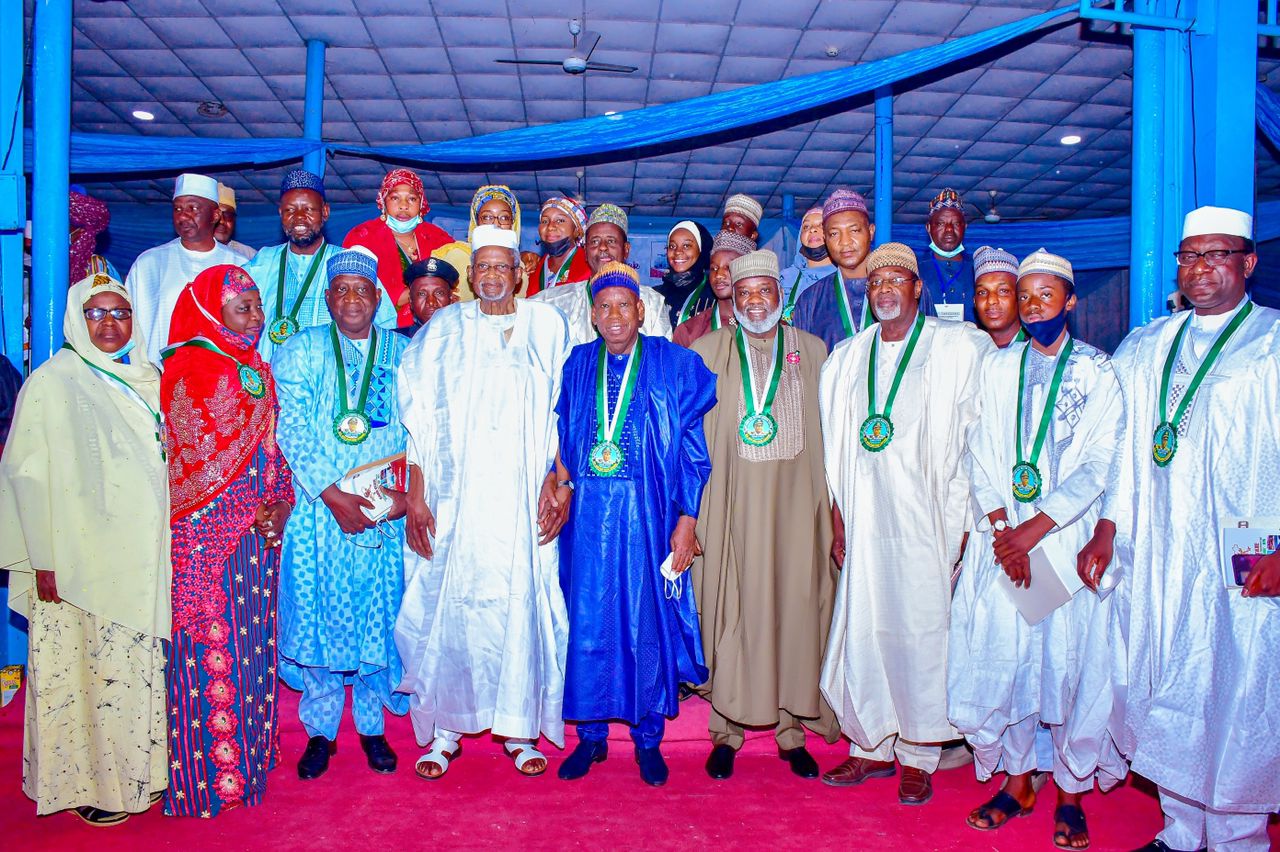
The Governor of Kaduna State, Mallam Nasiru El-Rufa’i, has approved the appointment of new governing councils for the Kaduna State University (KASU), Nuhu Bamalli Polytechnic, College of Education, Gidan Waya, College of Nursing and Midwifery, and a board for the Barau Dikko Teaching Hospital.

The Special Adviser to the Governor on Media and Communication, Muyiwa Adekeye, said on Tuesday in a statement that “Hussaini Adamu Dikko is appointed chairman of the Governing Council of KASU, with Ismail Sanusi Afieza representing the organized private sector, and Dr Tanimu Muazu Meyere, Habiba Sani and Charity Shekari.”

“Other members of the KASU Governing Council include the Vice-Chancellor, the Deputy Vice-Chancellor, Executive Secretary of the National Universities Commission, two representatives of the KASU Senate, one person appointed by the Congregation, one person appointed by Convocation, the Permanent Secretary of the Ministry of Health, the Permanent Secretary of the Ministry of Finance, and the Registrar as secretary of the Council” the statement added.

He further stated that “Dr. Ishaya Dare Akawu will chair the Governing Council of Nuhu Bamali Polytechnic, Professor Binta Abdulrahman was named the chairman of the council of the College of Education, Gidan Waya, and the council of the College of Nursing and Midwifery has Prof. Andrew Suku as chairman.”

You may recall that The Daily Reality had exclusively reported how the absence of Governing Council in KASU was creating ripples in the selection of the new Vice Chancellor for the university. However, the latest development is believed to ease the tension at the university.

Learn to listen more, talk less

By Amara Sesay

History is replete with cases of people who listened and excelled as well as those who rebelled. In any case, there was always an exchange of content, and there was a reaction, too.

If anything has mattered over the last 15 or 20 years, it is the shortage of listeners. We have an economy that encourages speed more than anything, and in such cases, the first thing that is suspect is the patience to be calm, which is essential to listening.

And because it’s a lot of hard work to listen, people can only pretend and get away with it. So instead of the total body, which includes listening with the ears, heart and limbs, most people only listen with the tongue. And truth be told, the worst form of ignorance in the world stems from the inability to listen.

To listen with the tongue is to assume you don’t need to hear what others have to say and that you are only quiet out of a false sense of courtesy. It means you already have a lot to contribute, and no new information will be crucial to you. It means you are “loaded.”The problem with such an assumption is that it leaves you with something more dangerous than ignorance; it’s the delusion of knowledge.

Many individuals and civilizations would have made it to the promised land if only they had listened and obeyed. But, unfortunately, most people found delight in their ability to rebel.

While questioning the status quo is neither intrinsically wrong nor evil, the act of listening, even when an enemy is involved, is critical to success.

My advice to the younger generation is: listen more and talk less. That’s the best way to celebrate the gift of two ears and one mouth.

Amara Sesay wrote from Lagos. He can be reached via amarasesay.amir@gmail.com.

Fulani: The endangered species of Nigeria (II)

Ahmadu Shehu, PhD.

The first part of this essay published here highlights the necessary ingredients for genocide which are vividly in the advanced stage in Nigeria against the Fulani, one of the largest ethnic groups in the country. The socioeconomic and sociopolitical conditions that preluded genocide in various countries worldwide have been well documented in history books. Therefore, the worst anyone could do is to fail to see the looming disaster in Nigeria.

Decades ago, some political leaders had set the ball running when Bola Ige, a prominent Yoruba leader, called Fulani the “Tutsis” of Nigeria. Threatened by Fulani leaders’ socioeconomic and political clouds, politicians across the country who saw the Fulani not just as rivals but as a threat to their desired political hegemony borrowed a leaf from Ige’s playbook.

Those were the framers and promoters of diabolic stories against the North and northerners, especially the region’s political leadership. The narratives of “owners of Nigeria”, “northern oligarchy”, “Kaduna Mafia”, and such epithets as the cabal, northern domination, Islamization agenda and the completion of Danfodio jihad were given persistent, often aggressive, currency in the Nigerian public domain.

Another set of narratives to debase the intellectual competence and meritocracy of the North is put behind the federal character, with any northerner attaining success being assumed to be a beneficiary of some affirmative action, sheer luck or even the corrupt Nigerian system, regardless of their proven intellectual and mental capabilities.

This constant and persistent brainwashing has blindfolded a large chunk of southerners to the extent that many of those I meet believe that being Hausa-Fulani, even the richest black man on earth – Alh. Aliko Dangote – did not actually earn his wealth. So some of them would ask if I got some favours to be able to obtain a PhD from Europe, or question my academic job in Nigeria even when I teach them in Hamburg, Cologne or Vienna.

An average southerner has been made to believe that a northerner is an empty shell, a dullard, an illiterate who is incapable of any mental or physical success. Of course, these deliberate, false narratives are geared towards maligning and disorienting the North. But, the North is one large, diverse, but culturally interwoven community that cannot be beaten as a whole. There is, therefore, the need for a scapegoat.

Indeed, the orchestrators of this scheme got a few points wrong, but one thing they got right was the point of attack, i.e. the Fulani. Yes, Fulani, because they are the traditional rulers. They are the religious leaders. They are the political leaders. They have become Hausa-Fulani, and therefore the focal point of unity. The cultural war of the ’70s has failed to disunite the North simply because the Fulani historical and cultural orientation was left intact.

However, an opportunity presented itself when the media stereotyped the Fulani as herdsmen in all the reportage around herder-farmer conflicts – a stone-aged human resource conflict that has existed for ages – but only to be used as a tool for demonization and stereotyping of the Fulani people.

Populist politicians ala Ortom, Darius and their cronies in the North and South of the Niger seized the moment to first and foremost cover up their asses against the glaring failures of their administrations and to complete the agenda for the social, if not geographical, disintegration of the North. It was yet another tool for fighting a perceived Fulani president.

Throughout 2015 – 2019, the electronic, print and social media was flooded with the “Fulani herdsmen” stories. Headlines, editorials, columns, opinions, misinformation, disinformation, fake news – the word “Fulani” became the vogue in the media.

Today, this stereotyping has taken us a step closer to the looming genocide. Displaced Fulani herders in the northwest have become easy targets for recruitment into banditry and kidnapping. While arms dealers, informants, financial collaborators from other ethnic groups have established a business cartel in robbery, banditry and kidnapping, young, impoverished Fulani herders have become the foot soldiers that carry out these physical acts of crime.

Their knowledge of the forests and ecological terrain, their military-like lifestyle, bravery, coupled with the excruciating economic conditions, have made these unsuspecting lads easy prey of the city-based cartels. These are nomads who knew nothing, had nothing, and depended on nothing other than livestock, which is no longer a dependable source of livelihood, as indicated in the first part of this essay.

Millions of nomadic and sedentary herders’ continued destitution provided a vast army for crimes and criminalities we see today. This fact has been confirmed by research and is attested to by the governments. For example, in a recent in-depth study of banditry in northern Nigeria, Dr Murtala Rufa’i of Usman Danfodio University shows that bandits are victims of circumstances and tycoons from all other ethnic groups in the country.

Although this has been a known fact, have we ever heard of Igbo arms dealer, Hausa kidnap kingpin, Bagobiri kidnapper, Kanuri Boko Haram, Nupe informant, etc.? Do we know of Hausa yan-sa-kai, Bagobiri yan banga, etc.? How many people know that bandit Turji is actually ethnically Bagobiri and not Fulani? Why do we hear of “Fulani kidnappers” or “Fulani herdsmen”?

The implications for this sweeping criminalization of a whole community are as dangerous as they are numerous. Firstly, it has set the most united, cohesive ethnic groups, Hausa and Fulani, on each other’s throats. This is the arrow that might break the camel’s back in the scheme of setting the North on fire.

Secondly, it has criminalized the most important northern ethnic group in the sociopolitical front, making political cohesion impossible. Thirdly, it legitimizes crime and criminals by ascribing them to ethnicity or other human value systems. Fourthly, and sadly, that is the last bus stop on the road to Kigali.

When a whole community, ethnic group or society is viewed as criminal, worthless and or dangerous, the natural reaction is a sweeping, conscious and deliberate elimination of the community. Their elimination becomes a duty as the larger society feels unsafe in their presence. And yes, these feelings are illusions but have been entrenched in people’s minds to the extent that restraint becomes impossible.

Today, people (including Fulanis) consciously or subconsciously talk of killing the “Fulani” in Zamfara, Sokoto or Katsina. But then, in reality, when you kill Turji or his lieutenants, you do not kill Fulani. Because when you killed Shekau, you did not kill a Kanuri, neither did you kill Igbo by killing Evans. You have, in reality, killed a blood-thirsty criminal.

Now, why is the Fulani case different? Why are the media and various sections of this country bent on demonizing millions of Nigerians in the bad light of a few rugged criminals? At the risk of sounding conspiratorial, I will give my take in the next part of this essay.

Book Presentation: Audu Bako the best Kano State governor ever – Dantata

By Ibrahim Siraj Adhama

A prominent Kano elder statesman, business mogul and philanthropist, Alhaji Aminu Dantata, has described late Audu Bako as the best governor ever in the country. Dantata was speaking at a book presentation as one of the only two surviving members of Audu Bako’s cabinet, the other being Alhaji Tanko Yakasai, who was absent due to health challenges.
The book titled “Kano State Under the Administration of Audu Bako, 1967 – 1975” was written by Dr A’isha Ni’ima Shehu of the Department of History, Bayero University, Kano.
Alhaji Dantata, who served as Audu Bako’s Commissioner of Economic Planning, said Kano owed its development to the purposeful and visionary leadership of late Audu Bako, whom he described as honest, foresighted, God-fearing and prudent in the application of resources. He said if all leaders were like Audu Bako, Nigeria would have long passed its current level of economic development.
Blaming external influence for Nigeria’s slow development, the elder statesman stated that the country would have been better if it were to be allowed to develop at its natural pace. He added that Northern Nigeria is much more endowed with natural and mineral resources than the Southern part of the country. However, he bemoaned how those resources remained largely untapped.
The book reviewer, Dr Tijjani Naniya, commended the author for writing the book. He said it contains an assessment of Audu Bako’s laudable achievements in education, infrastructure, administration and economic development.
Extolling the man he dubbed as a lover of education and agriculture, Dr Naniya said Audu Bako’s projects are too numerous to mention. He identified Tiga and Bagauda dams, Gidan Murtala, Audu Bako Secretariat, Kano Zoological Garden, Bagauda Lake Hotel, Murtala Mohammed Way, Falgore Game Reserve, Daula Hotel as some of the projects done by Audu Bako.
He mentioned others include Kundila and Gwammaja Housing Estates, WRECA, and hundreds of primary and post-primary schools. He said when late Audu Bako established the College of Arts, Sciences and Remedial Sciences, alias CAS; many governors emulated him by establishing similar colleges in their states.
Earlier in his welcome address, the Vice-Chancellor, Bayero University, Kano, Professor Sagir Abbas, who hosted the event, said the University was always willing to be part of similar scholarly efforts aimed at preserving history for upcoming leaders.
Chairman of the occasion, Alhaji Isyaku Umar Tofa, who was also one of the youngest staff of Audu Bako, said the first military governor approached leadership with great determination and that no honour can compensate for what late Audu Bako did for Kano.
On his part, Kano state governor Dr Abdullahi Umar Ganduje announced a donation of ₦10m and pledged to support the reproduction of more book copies for use by schools and libraries in the state. He lauded the visionary leadership of the first-ever Kano state governor. He commended him for the numerous projects he undertook, many of which are not only still in use but have continued to serve as the foundation for many developmental projects up to this moment.
Other donors include Alhaji Aminu Dantata with ₦5m and another ₦15m to the family to do a project in Audu Bako’s memory.
The event attracted participants from among members of the academia, politicians, traditional rulers, business community, media, as well as members of late Audu Bako’s family.

We will review our intended industrial action—ASUU

By Muhammadu Sabiu

The National Executive Council (NEC) of the Academic Staff Union of Universities (ASUU) said although the federal government refused to honour the two parties’ 2009 agreement, it would have to review the next possible action to take.

The union made the disclosure in a statement titled “ENOUGH OF THE BLACKMAIL” after it held an emergency meeting at its Festus Iyayi National Secretariat University of Abuja, on Saturday, 18 December, 2021.

Recall that ASUU had vowed to embark upon industrial action to strongly protest and air its grievances due to government’s failure to honour the many agreements they made years ago.

The Nigerian academics’ body acknowledged “that government has failed to satisfactorily address all the issues raised in the 2009 FGN-ASUU Agreement and subsequent MoUs and Mos”, adding that it has “resolved to review the situation at a later date with a view to deciding on the next line of action.”

It also lamented how some agents of the government were mischievously reducing the demands of the union.

“NEC was worried by the spirited efforts of government agents to reduce the demands of ASUU to a regime of intermittent payment of watered-down revitalisation fund and release of distorted and grossly devalued Earned Academic Allowances (EAA),” the body says in the statement.

Why we must eradicate the menace of campus prostitution

By Lawi Auwal Yusuf

Prostitution is a global phenomenon and not particular to one society. However, it’s a worsening problem in tertiary institutions as female students take it as a means of livelihood and accomplishing their academic objectives. Moreover, extravagant lifestyles, peer-group influence, and drug addiction are also reasons for such deviance in academia.

This is the business of providing relatively indiscriminate lustful services to another person who is not a spouse in exchange for immediate payment, valuables, or a contracted favour. The absence of deep emotional liking is an essential element of passionate relationships.

These students readily accept these benefits in return for services to virtually everyone willing to pay, with few exceptions of relatives. Hence, the basis for engaging in the act is the reciprocal material benefit or favour while the male partner participates for pleasure.

The immoral students provide these illegitimate services to nefarious staff, co-students and off-campus lovers. They exhibit themselves enticingly to get undeserved favours like altering the marks of their failed courses to pass, upgrading their CGPA, divulging examination questions and other confidential information or giving admission to unqualified candidates. Moreover, their indecent and seductive dressing, revealing sensitive parts of their bodies, is an open invitation to lure men.

It is incredible to see how boisterous female hostels are at dusk and the splendid cars that pick up girls to hotels, nocturnal occasions, jamboree parties, clubs, and other joyous night entertainment. Affluent clients are supplied with enough quantity to satisfy their amorousness as simple as pressing a button. Similarly, tourists, especially those travelling from foreign countries, also patronise them. These harlots are also hired for politicians at the expense of taxpayers.

The effects of this illicit trade are enormous. It should not be perceived just as a victimless crime. It leads to other heinous crimes and unpredictable consequences. Corruption, favouritism, infidelity and the spread of venereal diseases are also repercussions of prostitution. Similarly, it contributes to the precarious state of education and the nation at large.

Higher institutions churn out these incompetent graduates who are employed into various positions to provide services to the public which require expertise. Today it’s so sad that jobs are given to the highest bidders or these strumpets who engage in the wicked services with employers before they are recruited. Lack of specialisation leads to rendering poor services. Thus, meritocracy as a core principle of bureaucracy and a catalyst for Nigeria’s advancement is at its lowest ebb.

The proliferation of brothels is noticeable in the neighbourhood of most schools. Student-whores find men on campus and in town whom they may never meet again and contact STDs. They subsequently infect several others, which may include innocent wives or husbands. These dangerous or fatal ailments are impediments to a healthy and productive population. Furthermore, the used paraphernalia not correctly disposed of are potentially hazardous to public health.

Violent crimes are also perpetrated on campuses as prostitution attracts anonymous visitors and criminals who rape, assault, dupe or even slay their lovers and other students. These criminals also engage in drug dealing and addiction. Crime is so dangerous when rates of victimisation are high because communities become dismembered. People become distrustful of one another and prefer to stay indoors. This will make students and staff uncomfortable and hinder teaching and learning.

Prostitution facilitates corruption and favouritism in government whereby politicians and civil servants steal public funds or make unmerited favours in exchange for the services. Policing also worsens extortion and bribery as it creates opportunities for police and college guards to engage in unethical conduct like collecting bribes in exchange for non-enforcement.

Furthermore, it is a nuisance to uninvolved people. Legitimate businesses lose customers who avoid the area due to inconvenience and traffic congestion, affecting the local economy. In addition, married people engaged in these promiscuous activities seem lackadaisical about the consequences when their spouse realises. Indeed, they run the risk of separation, resulting in higher divorce rates and broken families.

The untainted students can develop an interest in prostitution by intermingling with tainted ones, especially intimate groups and friends. The senior prostitutes influence those close to them in the environment and serve as the source of learning for new ones.

Moreover, such activities give room for ungodly male students and staff to sexually abuse innocent female students. They put them under duress or undue influence to concede and give in.

This makes numerous parents and husbands apprehensive and reluctant to let their daughters and wives pursue further education. In addition, some hate and stereotype Western education, which causes significant setbacks to girls’ education and gender equality.

Many of these erring personnel are apprehended and their appointments terminated while others are prosecuted. Unfortunately, this punishment seems to have no appreciable effect because it is becoming more rampant nowadays.

Finally, I hope this article will attract the attention of all the stakeholders more to make concerted efforts to exterminate this menace from our campuses.

Lawi Auwal Yusuf wrote from Kano, Nigeria. He can be contacted via laymaikanawa@gmail.com.

Be your neighbour’s keeper

By Adamu Isah Babura


“Baban Khalifa”, Hafsat called me.

I don’t like this Baban “father of” appellation. Since the tradition demands that she, as my wife, should not call me “Muhammad”, which is my name, why not something like “Sweetheart”, “My Love” and so on that she used to give me before we were blessed with children? Khalifa is the nickname of our first child. He too has his real name hidden. I named him after my eldest brother, Abubakar. As another tradition requests, we should not call him by that name. It would look quite disrespectful.

“Baban Khalifa,” she repeated, now a bit louder, interrupting my thoughts.

“Yes,” I responded and looked at her with rapt attention. I knew she wanted something, a request or a favour, I guessed. I would grant her wish, regardless of the difficulty, I said to myself. The setting and timing could not be better.

It was on a peaceful Sunday morning. It had been raining since dawn. The rain began soon after we finished the early dawn prayer (Subh) at the mosque, which was behind our street. We barely reached home when it became so strong. Most likely, those faithful staying behind after the prayer for Zikr could not make it home without getting drenched. Or, they could extend their stay in the small, poorly ventilated mosque, especially as its single door and two tiny windows had to be closed to prevent the rain from coming in. Whatever it was, I was back at home. I slept until after 8:00 am when Hafsat woke me up for breakfast. As usual, she had already arranged everything and more, for she had put on one of her best clothes. There was scented air blowing beautifully from a lighted incense. Moreover, the electricity company had brought back power, which went off during the rain. It is their habit always to take it off whenever it rains. Almost everyone now expects power outage as soon as it starts raining. Quite unusual of my wife today, she insisted that we listen to my favourite music by Nura M. Inuwa. I agreed.

The children were still asleep. After all, nobody would wake them up this early for any reason on a Sunday morning. On the weekends, their Islamic school opens at 2:00 pm. For now, the house was ours, Hafsat and me. I was expecting her to ask for something pricey or a complex task, but she came up with a question I was not ready to answer. No, I could explain it there and then, but I did not want to revisit that unfortunate event that had shaped my life forever.

“I want to know you better,” she uttered with a serious yet smiling face. That was quite uncharacteristic of her. “Tell me, why are you so dovish?” she asked and then added that she had never seen a man like me who, as others, including my friends and hers, told her, acted like a spineless woman. We had never had a little argument since our marriage seven years ago.

Well, I did not know where to begin. Marcus Aurelius, a character in the famous Gladiator movie succinctly said, “Waste no more time arguing what a good man should be. Be one.” Quite early in my life, I started doing exactly that. Additionally, I expected others to do the same, not only for themselves but also for the sake of humanity. I envisioned a world where peace and understanding exist and reign in all quarters. You may call it El-Dorado on earth. I was well aware that some close friends jibe me on that, saying that this world could not be what I wanted and that I was simply an idealist. I never argued further, for I considered myself a pragmatist. Therefore, engaging them in a debate would be futile. None of us was willing to believe with the other, and that would contradict my principle.

People could be born like that, but I was not. I then narrated to Hafsat a life-shaping incident that happened during our childhood to a neighbour called Tijjani. It left an indelible mark on my personality. Since then, I agreed with the Hausa maxim that says “Mutum rahama ne”, meaning “a human being is a mercy”. Before the unfortunate incident, Tijjani never cared to talk to anyone in the community. The most shocking fact about his antisocial behaviour was his being poor. Often, it was the rich that looked down on the low-income individuals. That was not the case here. However, his wife was somehow unlike him as she used to visit one or two friends in the neighbourhood before he forbade her. In short, no one knew anything about him and his family.

On one fateful day, Tijjani, who lived in Hotoro, a suburb of Kano city in those days, took his wife to their house in the metropolis. That was their routine whenever he was travelling. However, quite unusual f their schedule that day, the wife returned to the home in the evening. With a phone in one hand, she picked up a piece of stone and knocked at their door repeatedly, loudly. As she later revealed, he didn’t answer or return her several calls since they parted in the morning. Therefore, she suspected that he might have abandoned the idea to travel and came back home. But, the house was still locked. She frantically called his phone number, again and again, no response. She gave up and went back home.

Days and almost a week passed, nobody heard of Tijjani. All efforts to trace his whereabouts proved in vain. His wife, whose name I cannot recall, could not ask anyone around, for she very well knew that her husband did not interact with anyone. She resorted to reporting the case to the police who later came and forcibly opened the house. To everyone’s sheer shock, they found an almost decomposed body of Tijjani inside their bedroom. No doubt, people in the neighbourhood had been complaining of a strange smell recently. He was gagged, both hands and legs bound with curtains, and his stomach ripped. The house was almost empty, and everything had been packed away. Upon investigation, people in the neighbourhood could only recall seeing some unknown individuals with a truck carting away property from the house. Nobody asked them why, how or anything whatsoever. The few eyewitnesses interviewed by the police thought that Tijjani was simply relocating to another area.

Hafsat’s eyes were already filled with tears. She gently argued that that was the highest form of I-don’t-care attitude on the neighbours’ part and prayed to Allah to rest Tijjani’s soul in peace, and for the punishment of his cruel murderers. Although I said “Amin,” I didn’t agree with her entirely. It takes two to tango. We should be our neighbours’ keepers. Both our religion and culture teach us to do that, for inevitably, we reap what we sow.

Adamu Babura is a lecturer at the Department of English and Literary Studies, Bayero University, Kano. He can be reached via adamubabura@gmail.com.

Civilian JTF: A remedy the Northwest needs

By Adamu Bello Mai-Bodi

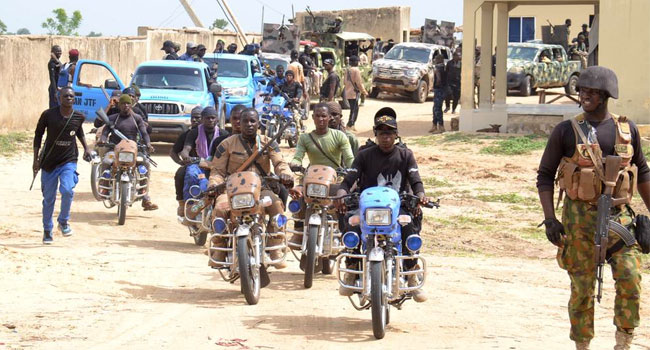
The success stories emanating from the Boko Haram epicentre in Nigeria’s north-eastern states, particularly Borno and Yobe, must not be separated from the combination of unwavering military operations and the assistance given by the tactically planned Civilian Joint Task Force (CJTF). CJTF is a local group founded in 2013 to support the Nigerian military’s operations against extremists and defend local populations from attacks like the ones currently taking place in Kaduna, Niger, Sokoto, Zamfara and Katsina.

Recent events in Nigeria reveal that the region’s indigenes primarily carry out terror activities. The Northwest is no exception. To put an end to this brutality, the authorities in the Northwest should take a page out of Borno State’s book and organize a local militia to work alongside the military. Locals know their communities’ lows and highs, nooks and crannies way better than military personnel. Therefore, involving them would boost the chances of conquering non-state actors and their partners in crime.

The people of Hausa land have a history of bravery and, if given a chance, many will volunteer to work in the task force to bring respite to and rid their community of murderous bandits. On this note, Nigerian authorities should give Northwest people a chance to work with the military and salvage the region. In addition, the loose group should possess basic weapons and must have female members to help with handling women and children. When this is done, I’m optimistic about having Borno-esque results.

The going is now rough in the Northwest, and the people are willing to fight back, but the constituted authorities don’t allow that. This region is densely populated. Every state can recruit at least thirty thousand vigilantes and pay each member a twenty-thousand naira incentive per month. Notwithstanding, authorities should be very observant during the recruitment of this recommended vigilante group to avoid engaging the bandits’ Trojan horses.

Gathering intelligence would be easier with the CJTF in place. The locals hired would quickly identify criminals and their enclaves, resulting in more successful security operations. Apart from increasing security, another positive aspect of the CJTF concept is that it provides people with temporary jobs to keep them occupied and provide food for their families. Instead of governments and individuals paying large sums of money as ransom to bandits, the money could be utilized to pay vigilantes a monthly stipend.

Adamu Bello Mai-Bodi writes from Azare, Bauchi State. He can be reached via admabel86@gmail.com.

Bandits kill 20 people, farms, houses, vehicles set ablaze

By Sumayyah Auwal Usman

Suspected bandits reportedly killed 20 people during attacks on several villages of Kauran Fawa, Marke, and Riheya in Giwa Local Government Area of Kaduna State.

The Kaduna State Commissioner for Internal Security and Home Affairs, Samuel Aruwan, disclosed that houses, trucks and cars were also burnt along with agricultural produce at various farms.

“The identities of the victims will be published once further details are confirmed by the Kaduna State Government. In the meantime, security agencies have sustained patrols in the general area,” he added.

Details later…

Police apprehend couples for selling their one-month-old baby

By Uzair Adam Imam

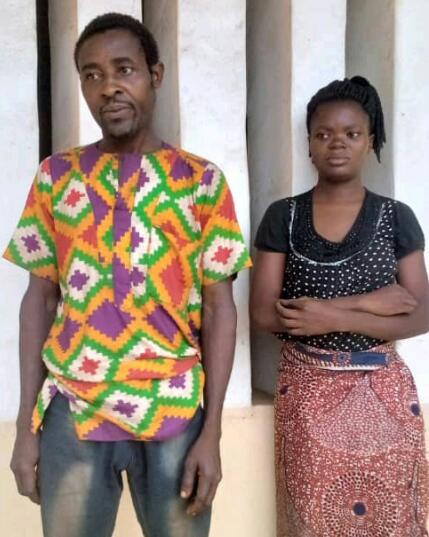
The Ogun State Police Command has announced the arrestment of the couples for allegedly selling their one-month-old baby at the sum of N50,000.

The couples, Eze Onyebuchi and his wife Oluchi Eze reside at the Ilara area of Ode Remo, in the local government area of Ogun State.

DSP Abimbola Oyeyemi, Public Relation Officer, Ogun State Police Command, disclosed.

The woman who bought the baby was not known to the couples. And since then, the woman was at large.

Oyeyemi said that the couple were arrested on the 16 of December 2021, following information received by policemen at Ode Remo divisional headquarters that the couple who live at Ayegbami street Ilara Remo willingly sold their one-month-old baby.

“Upon the information, the DPO Ode Remo division, CSP Olayemi Fagbohun, detailed his detectives to the area where the couple was arrested and brought to the station,” he said.

The suspects explained to the police how one Mrs Ruth Obajimi directed the yet to be identified buyer to them.

They added that the woman told them that she was from the human rights office and would help them foster their child.

“The woman then gave them the sum of fifty thousand naira, and we handed over the baby to her despite not knowing her from Adam,” the couples stated.

DSP Abimbola said that: “The effort is on top gear to apprehend the said woman with the view to recovering the baby.”