Month: August 2021

Police confirm killing of 22 Muslim travellers in Plateau

By Muhammad Sabiu

At least twenty two Muslim travellers have been confirmed dead after an attack on a convoy of their buses on Saturday in Rukuba Road along the Jos-Zaria road in Jos North Local Government Area of Plateau State.

Confirming the attack, Plateau State police spokesman, Ubah Ogaba, said, “At about 0928hrs (08:28 GMT) the Plateau State Police Command received a distress call that a group of attackers suspected to be Irigwe youths (predominantly Christian)… attacked a convoy of five buses with Muslim faithful.”

“Twenty-two persons were killed and 14 injured in the attack,” he added

However, according to Channels TV, “a local government representative said the toll was higher.”

“Twenty-five people are now confirmed killed,” said the state government representative Danladi Atu, who visited a hospital where victims have been admitted.

In a statement released by Governor Lalong’s spokesperson, Makut Simon Macham, the governor condemned the attack and said, “security has been beefed up around the area.”

Plateau State is known for ethno-religious violence, which leaves people in large numbers dead and injured.

The cow is not Fulani

By Ahmadu Shehu, PhD.

There is this misleading argument that the government should not support cattle breeding and animal husbandry and that public funds cannot, and must not be invested in any way, to develop the livestock sector in Nigeria. The protagonists of this opinion argue that livestock production is a private business, and as such government should not invest “taxpayer money” to develop the sector. They hold that other citizens provide everything to run their businesses, often citing examples with shop owners, mechanics, transporters, etc. Therefore, in their minds, livestock producers – and millions of Nigerians engaged in the sector – should not receive any form of incentives from the government – financial or material – to enhance their businesses. Well, I know that for most dispassionate and well-meaning Nigerians, the faults in this line of argument are crystal clear. However, as illogical, naïve and vividly absurd as this argument sounds, there’re still Nigerians who believe in and are continuously promoting it, hence the focus of this article.

The whole argument advanced in this line of thought is often faulty, funny, and absurd. For instance, the people fighting against this would be found complaining severely of the government’s failure to provide enabling environments, such as electricity, convenient shelters, and other critical facilities necessary for their trades and businesses. But, the same people deliberately refuse to accept that it is equally the responsibility of the same government to provide enabling environment for all sectors of the economy – including livestock – to thrive. That is the extent to which the Nigerian public discourse is polarised.

Such people feign ignorance of the fact that government spends billions of naira to subsidise and support crop production, which is in the same category as animal husbandry. For decades, the federal government has been sinking billions in fertiliser and agrochemical subsidies and providing single digit loans to farmers and stakeholders in the crop production sector. It is common knowledge that these sub-sectors complement each other and that they are not mutually exclusive. The serial failures of successive governments’ agricultural policies may not be unconnected with the dislocations caused by this partial approach, as the livestock sub-sector heavily influences the Nigerian agricultural sector. Interestingly, however, the self-acclaimed defenders of the free market do not agitate against the government involvement in a “private business” of farming, as if all the farms in Nigeria belong to the government.

Moreover, our darling oil and gas industry is, unfortunately, one of the cruellest beneficiaries of government interventions and subsidies. For many decades, Nigeria has provided a conduit for oil marketers to make billions out of public funds in the name of oil subsidy, without recourse to the economic (dis)advantage it portends. Similarly, the industrial sector engulfs billions under the Bank of Industry and CBN interventions, where producers, factories and businessmen and women are supported to do business. Similarly, the aviation industry consumes billions from the government every year and uses airports and facilities provided 100% from the public purse. Moreover, all Nigerian ports and rails on which business people feed fat are provided and maintained by the taxpayer money. We can go on and on. 

I assume that people adamant on this argument are not actually against the government’s intervention in any economic sector. Their actual grievances are the particular target sector and the perceived beneficiaries of such investments in Nigeria. It is motivated by the social ills of hatred, provincialism, ethnic, religious and regional chauvinism that define the Nigerian social space and the highest form of ignorance. If the hatred is for the cattle, the livestock sector is not all about cattle. Similarly, if the envy and malice are towards the Fulani – the perceived cattle owners – the cows are actually not Fulani. This line of thought is also evidently illogical, uninformed and oblivious of what an economy is all about. That is because it fails to recognise that a sector of an economy cannot exclusively benefit only a section of the population. It may be true that cattle are the central concentration of the Nigerian livestock and that they are identified mainly with the Fulani, but the truth of the matter is that the Fulani are not the most significant economic beneficiary of cattle. They are, in fact, at the bottom of the list. I will explain.     

The Fulani might be the initial owners of the cattle (assuming they are not just employee-herders), but they are not the dealers at the cattle market. While they had spent years growing cattle, day-in-day-out, a dealer trades off the cattle and earns a decent living. Another dealer buys and transports it to other parts of the country, such as the southeast, and makes a profit upon selling it to local cattle dealers, who also earn their living by selling to consumers. The Fulani do not own the trucks that transport these cattle; neither are they the drivers, or other employees working in the transportation sector, all of whom are beneficiaries of the cattle value chain.

The Fulani are not the local butchers whose livelihood depends on the cattle produced by the Fulani that they love to hate. While cattle are the source of the multibillion-naira leather industry in Nigeria, a Fulani has no business being a tanner, skin dealer or exporter. The Fulani produce cattle, but they do not sell bones, blood and other minerals derived from cattle. They are not the owners of the local companies in Port Harcourt, Warri, Enugu or Lagos that use the beef, dungs, skin and other raw materials extracted from cattle. In the dairy sector, the Fulani may produce milk and even sell it out, but they are not the owners of the dairy companies littered all around this country.

Yes, the Fulani love the cow, but they do not own the businesses within the cattle economy. They are unaware and genuinely do not care who makes what out of the cattle they spend many years growing. But for bigotry and subjectivity, these facts are not difficult to grasp. The whole scenario should not be too difficult to understand. Still, let me borrow the language of the cynics to boldly say that given the raw material and mineral resources inherent in cattle, and the role of the Fulani in cattle production, several sectors of the Nigerian economy as well as the billionaires controlling those sectors depend on the Fulani to thrive.

Furthermore, the Fulani provide a whole chain of employment, from the herders to the traders, transporters, butchers, restaurants, and other giant industries. Yet, they are erroneously assumed to be the only beneficiary of this endless economic chain. I do not know a single ethnic group in Nigeria that could match this contribution, and at the same time, bear the brunt of negligence, alienation and even aversion from the society they serve and the economy they support.   

When people argue against investing taxpayers’ money into this sector, I wonder what tax they are precisely talking about. If this is a result of ignorance, let me highlight the tax chain obtained within the livestock value chain. Apart from the taxes paid during herding, cattle are taxed at all markets by the governments; the cattle transporters pay taxes; butchers, tanneries, factories, etc., that deal in the value chain pay heavy taxes to the governments. There are very few sub-sectors that generate this kind of taxation within the Nigerian economy. Therefore, to argue that the livestock sector cannot be funded by “taxpayers’” money is to betray logic.

The preceding discussion shows that even though the Fulani are in love with the ancient traditional human occupation of herding, they do not do so because they are the biggest economic beneficiary of the trade. If anything, the Fulani subsidise the beef and dairy markets, create and sustain millions of jobs, and maintain an extensive value chain, which is crucial to the Nigerian economy. Therefore, if you hate the Fulani, please know that the cow is not Fulani. 

Dr Ahmadu Shehu is a nomad cum herdsman and an Assistant Professor at the American University of Nigeria, Yola. He is passionate about the Nigerian project.     

Skills Beyond School (II)

By Najib Ahmad, PhD

Some remote jobs require intermediate or advanced skills, such as machine learning, computer vision, and natural language processing. These need you to have a good understanding of some areas in mathematics to solve computational problems. Design and analysis skills in Electrical, Mechanical, Civil, Building and Architectural disciplines also require one to have adequate skill in learning-related software such as Matlab, Simulink, Ansys, Autodesk AutoCAD, StormCAD and ArcGIS, 3D Studio Max, Blender, among others. Besides all these, adequate knowledge of computer programming skills is essential. Always utilise the opportunity for an internship or industrial training or student industrial work experience schemes assigned by the school because they are good places for learning and engagement.

Skills acquisition does not only stop in science and tech-related areas, as I earlier mentioned. Whatever major you study in school, there is a skill to gain in it! So grab the opportunity while you still can. Everyone you admire now started somewhere. For instance, if you major in social sciences or arts and related disciplines, acquiring effective communication skills, excellent writing skills, and outstanding data analysis skills can take you to places you never anticipated.

And most importantly, from any discipline, you need to possess sound knowledge synthesis and critical thinking skills. There are good websites to look for a job that matches your skills, such as www.fiverr.com, www.upwork.com, www.freelancer.com, and www.flexjobs.com. The point is: whatever you study, there is a skill to add to it! Just be damn good! The ways to learn them are lengthy yet straightforward. For some, you may need up to six months of dedication or even a year or more to master a particular skill. What matters is, put your best effort as you usually do to pass your university/school courses exams.

In some cases, some people want to advance their careers, and these are all for you. And always remember that age does not matter in this journey. Even if you find yourself somewhere in mid-life, it’s not too late. So many people have had a rethink about their choices and goals in life much later and still make it.

Earlier I remarked that these skills are for everybody who wants to do good for himself. School education (higher education) and skills acquisition are not mutually exclusive; you can blend and achieve both at once. You may have seen that some people argue about which is better between the two, especially in times of uncertainty like now when jobs are scarce. Their point can only be substantiated when the goal was to compare learning a particular skill for a single purpose through extensive training or vocational training education and the school education system in Nigeria. However, you can begin to craft different skills at any level of your study because the current curriculum limits and is not in tune with the current reality about jobs. Hence, I titled this piece ‘Skills Beyond School’.

Arguably, most people wrongly perceive that skills, perhaps largely if not all, are intended only to be technical (Tech skills), and it is for technical people. That is a wrong, misleading impression. ANYONE can learn and master a skill in (or out of) their field of study. It is not rocket science. The energy you use elsewhere – or on social media – can be channelled to where you would surely benefit, even if not for financial gain, but knowledge gain.

For instance, anyone can learn entrepreneurial skills. But, in this case, do not seek short-term rewards! Even the owners of Microsoft, Google, Tesla, and Apple and most likely other ‘big names’ in this field you hear in your locality started their entrepreneurship journey by learning computer programming and other skills. So, begin something somewhere; no matter how little it might be, the change would surprise you one day.

And as you are reading this, I know you are thinking about the possibility of acquiring the skill desirable to get these kinds of jobs and finally be able to work for someone who didn’t even know you, especially outside Nigeria. The fear is normal – many people have shared this doubt at the beginning. I have friends (yes, my friends) who are currently doing remote jobs and cashing out monetary rewards in different fields of skills! Huh, I sound very promising. Because I believe you can also do it. One of these friends is managing a big project remotely. Isn’t that interesting? Imagine in this economic phase, and you have an extra job that provides you with additional benefits, considering that they are all employees of other sectors. FYI, students or graduates like you in southern Nigeria have been enjoying these remote jobs for ages. So, wake up.

What if you believe that everyone doing an online remote job is a potential criminal? In that case, the thing is, you are deceiving yourself. It is particularly irritating for me to see that we like to excuse our premeditated and comforting laziness (pardon the word). Besides, learning some skills can even give you an upper hand in applying for a master’s or PhD scholarship worldwide.

Finally, to reduce the gap or, in other words, to balance the economic growth between men and women, particularly in the North, we need to encourage girls to join the do-it-yourself kinds of skills acquisitions right from secondary school. If I am to be candid, I would tell you that we are left behind in everything. However, it is not too late for us to change the situation for the better. Don’t forget that life goes on even if you do nothing, and it is up to you to catch up. Just wake up!

Dr Najib Ahmad is a Postdoctoral Researcher at Shandong University, China. He can be contacted via namuhammad03@gmail.com.

Nigeria shuts UK High Commission as official test positive for COVID-19

By Muhammadu Sabiu

The office of the Nigerian High Commission in the United Kingdom has been shut following suspected cases of coronavirus infection at the building.

In a statement released on Thursday by the Commission, the office would be closed for ten working days.

“The Head of Immigration Section and two other officials went for a meeting at the Home Office.

“At the entrance, Coronavirus test was administered on them, and one of them tested positive to COVID-19. The affected officer immediately isolated while the other officials, who tested negative, will also isolate for the next 10 days.”

The Commission further indicated that all officials of the Mission would be compulsorily tested for COVID-19.

In the statement, it added, “In line with COVID-19 regulation and the need to adhere to the rules and regulation of the host country, the Mission will close down for the next 10 days, in order to observe the mandatory isolation of those who were in contact with the affected officials.”

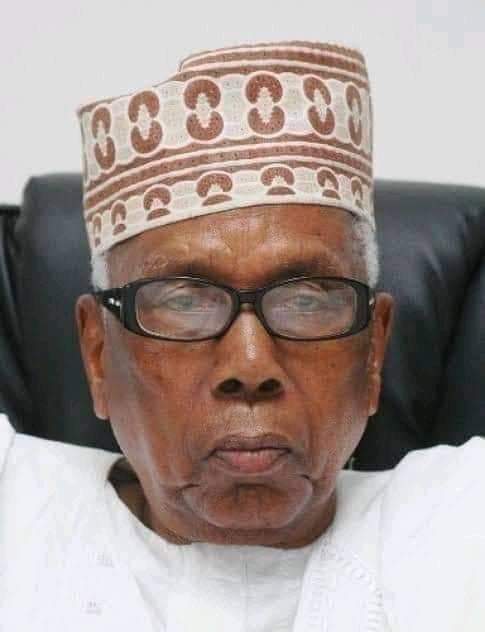
Just-In: Renowned Nigerian administrator, Ahmed Joda is dead

Ahmed Joda, an elder statesman, was one of the finest administrators who held several positions in the Northern regional government and later, the Federal government of Nigeria.

Ahmed Joda, OFR, CON, CFR, rose through the administrative cadre of the Northern regional government and then the federal civil service. He retired as Permanent Secretary at the Ministry of Industries.

During the administration of the youthful General Yakubu Gowon, Malam Joda was considered to be among a group known as super Permanent Secretaries.

Details soon.

Skills Beyond School (I)

By Najib Ahmad, PhD

Thanks to the existing curriculum in Nigerian schools (its directions, objectives, and preferences), students who wholly rely on this system hardly possess any tangible skill, which would prepare them to become self-directed or independent or job providers. They can also barely avoid queueing the assembly of youths whose over-dependence on the government-provided jobs is noticeable countrywide. Any thoughtful country that cannot provide jobs for its youth population knows the gravity of its future, which may be bleak. Fortunately, this is not a lonesome fight for Nigeria. It is a common challenge bedevilling the world today from the Far East, West to the far South Mediterranean countries, including developed and developing parts of the world.

There is a lack of adequate jobs everywhere, possibly for several divergent reasons. It is shared treachery, especially with the continuing world’s economic meltdown due to many seen and unseen factors. So, as a Nigerian, please do not take it hard or shudder; imbibe water and relax a trifle because we are not alone in this mess. There may be an advantage to every saddle moment.

Since the beginning of Covid-19, some countries have imposed total or partial lockdown–longer or shorter. These changes in our lives have handicapped the economy of nations and shattered peoples’ economic stability. On and off, many countries are still struggling with lockdown, which eventually forces people to work from home. From reports, you can say that the pandemic exposes the profound weaknesses and causes alarming panic in many countries previously seen as organised and the superpowers (aka God’s own nations). As a result, many people lost their jobs even in those powerful countries. Schools, universities, laboratories, markets, factories, and businesses were all closed, places of work and worship across the world were abruptly shut.

Consequently, different governments and policymakers have realised how vulnerable conventional job systems are. Thus, they are implementing strategies and gradually understanding the need for robust, better approaches to tackle these unprecedented changes. Policymakers have recommended and implemented novel ideas to impact schools, business owners, and entrepreneurs in countries affected by this negative development to make the economy viable and uphold the economic stability of their citizens.

For instance, several schools and universities have switched to remote instruction, in other words, digital learning. Due to the compelling need for endurance, human beings are social creatures who resiliently adapt and quickly learn to familiarise themselves with any given circumstances. People with different essential skills grabbed advantages from the emergent changes. They include but are not limited to computer skills that allow you to carry out remote jobs–working from non-typical office space. Besides, they are the kinds of do-it-yourself skills; they are not the specific skills you can learn from the traditional vocational training school. Suppose the government has plans to train people in such specialisation through vocational training school. In that case, it is a potential task and could easily invigorate people’s economic stability and prepare youth for the path of independence.

Here are a few examples of remote jobs that you can do from any place: (a) Computer programming/Coding; (b) Web development/design and Android or iOS developer; (c) Data science; (d) Content writing, copywriting, copyediting, transcription, and translation; (e) Graphic design; (f) Digital marketing; (g) Video editing; and Virtual assistant, and so forth. Of course, these jobs existed before COVID-19. However, they took a new turn and became enormously popular since the onset of the outbreak, thanks to their necessity and worth in our everyday lives. Thus, the everlasting need cannot be trammelled.

And every person who has no prior computer science/technology diploma or degree can master these skills. It does not matter whether or not one is from science or non-science-based disciplines. All you need is an android/iOS phone, while some require a desktop or laptop computer. Above all, you also require determination in learning and mastering any of these skills. And the good thing is, they are now taught in many online learning platforms for free or for a cost as either certified short courses or nano-degree programs.

The paid access courses are not very expensive if you compare them with the value of what you will learn and its advantages afterwards. Sponsored by the tech giant companies and other government sectors like Microsoft, Google, European Commission, and Universities, platforms such as Udacity, Udemy, FutureLearn, and Coursera offer massive open online courses (free).

YouTube is similarly often graded as the best platform for learning anything; you can use the platform to learn any skill you wish. So if you are a book person, look for the best ones in your field, learn, and practice. Even some establishments from Nigeria are taking part in this skills acquisition training program for the youths, but you hardly see these opportunities discussed in northern Nigeria’s cyberspace. Recently, I encountered another scholarship announcement for a Nanodegree scholarship in many essential skills in varieties of disciplines, which Access Bank, Nigeria will sponsor.

Dr Najib Ahmad is a Postdoctoral Researcher at Shandong University, China. He can be contacted via namuhammad03@gmail.com.

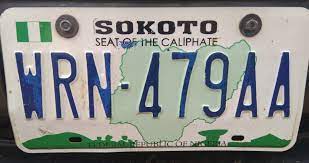
FG increases the price for Drivers License, Number Plates

The Federal Government of Nigeria increases the price of Drivers License and Number Plates on the vehicle owners in Nigeria.

A statement from the Joint Tax Board obtained by TDR states that a drivers license of three years duration would now be obtained at the rate of N10,000 as against its previous price of N6,000. This excludes bank charges. Drivers license for five years is now N15,000 from its former price of N10,000 while motorcycle/tricycle driving license (with three years validity) goes for N5,000 from N3,000 while the one for five years will now be N8,000 from N5,000.

Private and commercial number plates would now go for N18,750 as against the old rate of N12,500. Fancy number plate, which was N80,000, is now N200,000; motorcycle number plate is N5,000 from N3,000 while articulated number plates (three plates) attract N30,000 from N20,000. For these rates, the minimum increase is 50 per cent.

Out of series number plate has also been revised to N50,000 from N40,000 while government fancy number plate is N20,000 against the former N15,000 rate. The decision for the increment was taken at the 147th meeting of the JTB, which was held in Kaduna on March 25.

A letter by the JTB titled ‘Implementation of the revised rates for vehicles number plates and driver’s licence in Nigeria’, dated July 30, 2021, and signed by the board secretary, Obomeghfe Nana-Aisha, has directed various federal and state agencies to commence the implementation of the rates.

The letter reads:

“You may wish to recall that at the 147th meeting of the Joint Tax Board held in Kaduna, Kaduna State on March 25, 2021, the board approved revised rates for the sale of vehicle number plates and driving licence in line with the recommendations of Appraisal and Technical Committee of the JTB.

In the light of the foregoing, we wish to inform you that the Chairman, JTB, has approved Thursday, August 1, 2021, as the commencement date for the implementation of the new rates.”

Are Funtua communities this vulnerable?

By Umar Haruna Tami

We have already lost count of how many times kidnappers came and abducted people from different locations in Funtua. Still, the ease with which they carry out their operations day by day is alarming. The two successful kidnappings that occurred in the past weekend – Saturday’s in a single house near GRA, Sunday’s in mass in Sabuwar Abuja – symbolise the fragility of the security agents that are meant to protect the town and its people from these monsters.

The security agents and the residents of almost every community have already been defeated through fear. Even a rumour of kidnappers’ presence sends fear around the town and that with a single gunshot, everyone would end up running for their life. Even the “‘Yan Karota” volunteers’ confidence to confront the monsters has since been defeated upon realising that the machine guns the kidnappers carry cannot, in any way, match the plug-bulleted ones they have. Thus, they too run for their lives, even though what they do defines good citizenship.

So a city as big as Funtua, with routes linking it to many towns and villages from East, West, South and North, is under security threat. These links make it easier for the kidnappers to make away with whoever they have successfully carried with little chance of being tracked and attacked. This also makes their operations tricky to thwart in poor-populated areas.

They failed to conduct only two operations that targeted Rabe Sale’s children and that of NAK’s family. But the abortions of these two kidnap attempts have anything to do with the connection between the would-have-been victims and the reserved soldiers brought to the town for special operations simply because they are aristocrats.

But what would be the fate of community members that have already been defeated by the fear of being potential victims of kidnappers even when they shut and lock their doors but have no connection to the soldiers for emergency aid and one of those elites happens to not live among them? The latest kidnap of over ten people in Sabuwar Abuja at only 10 pm — thank God that the captors released them — signifies nothing bolder than the community’s vulnerability and the limited chances the sophisticated security agents have to abort their operations or exchange fire with them. But, on the other hand, they now have the assurance that it wouldn’t cost them much to do whatever they want and at any time!

What Funtua communities need now, just as the other Northern communities need, is making available the reachable lines of those special forces for emergencies. Second is the provision of more of these agents—both the soldiers and policemen — with weapons they can use to repel the kidnappers’ attacks in areas not far from where their help could be needed in time. Third we, the community members, need to reduce the extent of our collective fear for the kidnappers that we can stand up to them, not always run away. It is time for us to start being responsible for where our political choice has landed us.

Umar Haruna Tami wrote from Funtua, Katsina State. He can be reached via umartami1996@gmail.com.

PSG: Lionel Messi gets partly paid in cryptocurrency

By Muhsin Ibrahim

The Argentinian star’s bonus contains $PSG Fan Tokens, a cryptocurrency created by and dedicated to the club. The French League 1 club, Paris Saint-Germain (PSG), signed Lionel Messi after a long, successful career at FC Barcelona.

PSG did not clarify what percentage of the deal included the chips. However, reports indicate that they received a “large number” of them. Socios.com issues the token.

According to Le Figaro, a famous French daily newspaper, fan tokens are a cryptocurrency that allows holders to vote on mostly minor decisions related to their clubs.

Kaduna: Government to conduct competency test for primary school teachers

By Sumayyah Auwal Usman

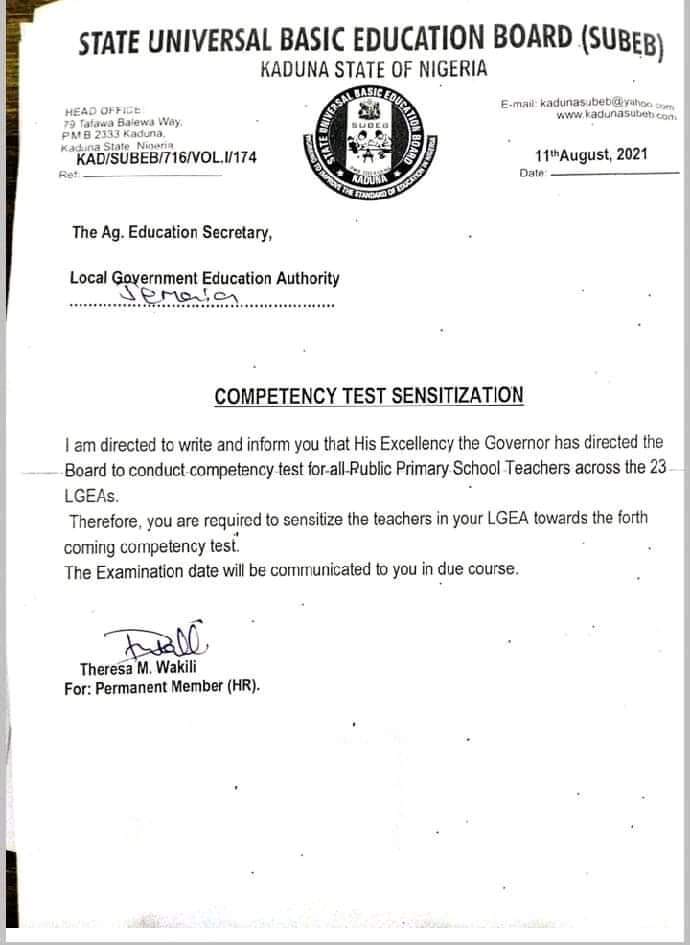
The Kaduna State Government says it will conduct another competency test for all public primary school teachers across the 23 Local Government Areas in the state.

The State Universal Basic Education Board (SUBEB) Permanent Member, Human Resource Management, Christy Alademerin, announced this through a memo to the Local Government Education Authorities (LGEAs) in the state.

It will be recalled that the state government had in September 2017 conducted a similar test for the over 30,000 primary school teachers in the state, following which 21,780 who failed to obtain 70% pass mark were sacked and replaced with newly recruited 25,000 teachers.

The date for the competency test has not been slated, but LGEA’s were urged to sensitise teachers in their local governments about the forthcoming exercise.