Month: August 2021

There was no attack on luxurious buses in Jos—Plateau gov’t

By Muhammad Sabiu

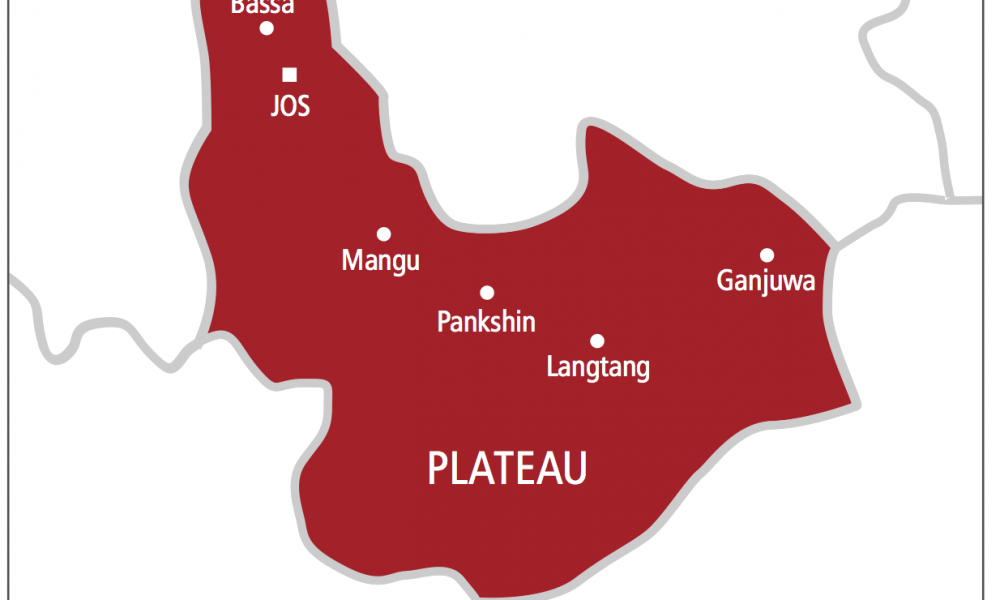
The Plateau State government has debunked reports making rounds that two luxurious buses had been set ablaze in Jos.

The report indicated that 2 luxurious buses conveying about 156 Igbo passengers had been set on fire.

This is coming a few days after violence erupted, which saw about thirty people killed.

The violence led to the imposition of a 24-hour curfew in the Plateau State capital, Jos.

Debunking the purported story, Mr Lalong, in a statement signed by his Director of Press and Public Affairs, Dr Makut Simon Macham, said it“is purely the handiwork of crises merchants mischief-makers who want to create panic and instigate violence and fear among the people.

He added: “For the avoidance of doubt, the security situation in Plateau State is very much under control as security personnel have been deployed to all parts of Jos to enforce the 24-hour curfew still in force, as well as to ensure compliance with the dusk to dawn curfew in Jos South and Bassa LGAs.”

Prophetic treaty as blueprint for peace in Nigeria and beyond

By Abdullahi Adamu Faggo

There is nothing which, indisputably, guarantees peace and harmonious existence than justice. Justice alone can end banditry, kidnappings, communal clashes and ethno-religious crises, amongst others. A lack of it espouses the notion of reprisals, retaliation, and jungle justice within the affected areas. It allows marauding hoodlums, bandits and thugs to unleash an onslaught on equanimous, meek and defenceless communities. 

Islam promotes justice, provides practical solutions to lingering and inexorable brawls in different communities. Therefore, I expect that any perspicacious and sagacious leader/follower will accept that justice is the only mechanism that protects the inalienable right of everyone, guards against the plundering of properties by brigands and prevents the inviolable souls from being attacked. 

Further, most incessant attacks on various communities continue to linger because the culprits, accomplices, and syndicates usually go scot-free. For example, the recent attack on innocent Muslim commuters in Rukuba, Jos, where suspected disgruntled Christian militias killed about 28 of them in cold blood, unchallenged. The incident has portrayed the level of lawlessness and injustice in our society. Likewise, atrocities committed by some Muslim/Christian herders on both Christian and Muslim communities are also part of the examples of dominant and pervasive injustice by our leaders for deliberately refusing to bring the malefactors to book for justice to prevail.

In contrast, the system of justice, which was both advocated by Jesus and Muhammad (may Allah be pleased with them both), ensures proper retribution for the wronged, the subjugated, the oppressed and defenceless citizens. Exultantly, this system was the one that Prophet Muhammad (SAW) used to end the sustained hostility and animosity between Al-Aws and Al-Kazraz, who happened to be the archenemies of one another.

Thus, when Prophet (SAW) migrated to Madina, he signed a treaty between them (Aws and Kazraj), Muhajirun (immigrants) and even non-Muslim allies. This had provided lasting solutions that brought about peace and harmony between them. Below is part of the treaty they gave credence to in the presence of SAW, as contained in Ar-Rahiq Al-Maktoum:

1. They should resist and stand against injustice or seek to appropriate something unfairly, encroaches upon or causes mischief among believers;
2. They all should stand against one who does so even if he were one of their offspring;
3. If one kills a believer intentionally and there is evidence for that, he will be retaliated in like, unless the family of the slain person pardons him;
4. All believers are to take a stand against him;
5. A believer is not allowed to advocate or give shelter to an initiator of evil or troublemaker. 

If our society today will adhere to these teachings, extrajudicial killings will indubitably come to a standstill.

Abdullahi Adamu Faggo is an academic staff at the Bauchi State University, Gadau. He can be reached via abdullahiadamufaggo@gmail.com.

China’s Reward of Enlightenment: A lesson for Nigeria

By Najib Ahmad, PhD.

Beyond doubt, you may have by now discerned that nearly everything you are using in your households, offices, and places of worship were made-in-China. A few weeks ago, I had a conversion with my friend and confidant, who told me that this China-made domination is manifested worldwide, even in Europe, where he lives. Hence, he no longer blames Nigeria for clinging to China-made products.

On another occasion, some German professors visited our research group (in China) two years ago. During lunch, one humorously told my former program supervisor that he thought even his shirt was made-in-China. We all laughed and continued eating. Unless you don’t know Germany, the European economic powerhouse, and the history of its industrialisation, this will startle you. Indeed, Germany is still technically capable and well industrialised, but Chinese products are ubiquitous there.

The question you may ask is: How did China achieve all this? I guess you are curious to have an insight into their progress. And how they catch up – sometimes even overtake or compete – with the most industrially advanced countries whose supremacy in this area was matchless within a short time? Their quest for financial power started ages ago, after the country’s opening-up in the 1970s by the then leader, Deng Xiaoping, otherwise known as the principal architect of China’s reform and significant foreign policy changes.

A former Emeritus Professor of Social Sciences at Harvard, Ezra F. Vogel, described the leader in his book, Deng Xiaoping and the Transformation of China, as the “man who most influenced China’s modern trajectory.” The central idea of his reform plans was nothing extraterrestrial. He only ensured that the ordinary Chinese population was enlightened (or educated) to the level they could create their path in a lifetime. He also superbly promoted China from “an agrarian society to the industrial powerhouse” (or manufacturing hub of the world). Beyond the shadow of a doubt, his projections have prospered in making China where it is today. The most important resolution was massive enlightenment. These resolutions have markedly shaped the trajectory of his policies to where they are today.

Provision of adequate and essential reading, writing, and good numeracy skills was the quintessence of the primary phase in their development journey. Thus, presently, you hardly encounter an older person who can neither read nor write or consider using a calculator for basic arithmetic summation (remarkable, right?). Although some reports show a few others are illiterates, especially in villages, it is a small percentage compared to the over a billion people who can. Moreover, there are all-women-operated shopping centres as the reform structure targeted women to prepare them for exceptional jobs. Many women work in hospitals now, especially in women-related matters.

The government of China sponsored children of low-income farmers and city workers to study in elite American and European universities. Some of these students specialised in sciences, applied sciences, technology, and other critical areas for China’s development. This scheme shaped the education development in China. At the same time, some of them remained in their newfound home. Today, five out of ten research papers from the European and American universities will have Chinese-sounding names. They are also in many places working on state-of-the-art science and technology. This was part of the product of the policies made on education about a century ago.

Many others joined various newly founded public universities and colleges all over China to teach and train young students. According to Statista, as of 2019, China has the largest education system globally, with 2688 public universities and colleges, a mixture of central (or federal), provincial (or state), and local government-owned institutions. Out of these institutions, 1,423 are higher vocational colleges. According to reports from the Chinese Ministry of Education, privately owned vocational colleges reached about 300 in 2021. Yet, they looked for more to provide jobs and ultimately boost the country’s economy.

In retrospect, you can see that China’s quest for economic supremacy started with excellent policies favouring education. It continues to this day. New policies were implemented and sustained in educating the society, for example, policies like a free nine-year compulsory quality education for primary and junior secondary schools.

Again, one of China’s leading, perhaps secret, ingredients for unprecedented technological developments is its total commitment to vocational education training at all levels. Vocational colleges (higher institutions) and vocational schools (secondary schools) have undoubtedly contributed to the record economic growth in China. They are the fundamental and out of sight driver and catalyst of their economy. They have produced craftspersons with skills that supported the country in job specialisations such as electrician, mechanic, computer technician, carpenter, tailor, beautician, chef, welder, fabricator, product designer, bus driver, and electric train driver, among others.

The government’s commitment to funding and sustaining vocational training schools have vastly invigorated the manufacturing capacity you see in China today. Subsequently, most foreign brands like Apple, Unilever, Nike, Zara, Mercedes-Benz, General Motors, and many more produce China-made products. The availability of highly-skilled workforce is another reason those brands go to China, among other benefits. Unfortunately, time and space will not permit me to mention them here. However, the reward of sound policies on enlightenment to a society and its propensity is ostensibly enormous. And above all, the government has significantly reduced poverty among its people and improved their livelihoods.

We can learn from the above that enlightening everyone, at least, to the level that they can read and write and get numeracy skills, even if it is in their native language. So doing is vital for the prosperity of society and the country at large. Sometimes, not everyone could have profound education. Suppose everyone you meet in the market, other places in Nigeria could read and write in their native languages. Undoubtedly, our growth and development as a society would be in a better direction than our current condition. Lack of these skills for everybody contributes to our lack of progress, absence of skilled workers, failure of industries, among other ills bedevilling our societies in Nigeria.

As the government is founding new universities year-round, they should consider establishing vocational colleges. As I see these days, the National University Commission (NUC) issue license to many private universities nationwide. Individuals can similarly step in to establish private vocational training colleges. It is not always that everything rests on the shoulder of the government. We need to take these few but critical steps to reset the collective societal future of Nigeria. Implementing them could set a new stage for self-directed youths equipped with the required skills to assist Nigeria’s economic growth, particularly at one of the worst phases of the country’s financial crisis, thanks to the coronavirus pandemic and poor governance.

Dr Najib Ahmad is a Postdoctoral Researcher at Shandong University, China. He can be contacted via namuhammad03@gmail.com.

Gov. Ganduje frees 3,717 inmates from Correctional Centres in Kano

By Abdullahi A Alkasim

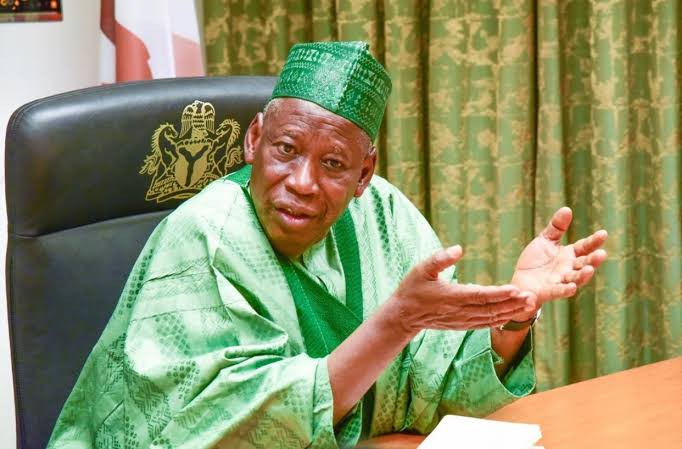
Governor Abdullahi Umar Ganduje of Kano State frees 3,717 inmates of Correctional Centres in Kano from 2015 to 2021, all in an effort to decongest these Centres, as requested by President Muhammadu Buhari a few years back. The President urged state governors to help decongest Correctional Centres nationwide.

He made the disclosure when he received, in a courtesy call, members of the Presidential Committee on Correctional Centres Reform and Decongestion, at his office, Thursday, under the Chairmanship of Justice Ishaq Bello.

“President Muhammadu Buhari thought it right when he called for the decongestion of our Correctional Centres. Looking at the happenings in those Centres. That, we should respect life and we should have hope in our inmates,” he stated.

He disclosed that “We adopted two major strategies to answer the call of President Muhammadu Buhari, for decongesting Correctional Centres.

We put in place the Committee on the Prerogative of Mercy, under which we release inmates two times a year. All during Sallah festivities. Sallah-El-Fitr and Sallah-El-Kabir. So far we have released 3,717 inmates from 2015 to date.

We paid for them, fees they were not able to pay that landed them in those Centres. We also give them transport money after they regained freedom. We recruit some of them in the state civil service.

We are also keen on the administration of justice. Many at times it is not all about releasing those inmates, but we still have a greater percentage of those in these Centres as awaiting trials individuals.”

Justice Bello, who led the Committee, commended governor Ganduje’s “…demonstration of interest and passion when it comes to issues of justice.”

Explaining to the governor, “We have gotten into files and received cases today when over 28 people regained freedom.”

“Furthermore it is crucial to mention that with the support of the Kano state government, the Committee was able to secure the release of about 368 inmates from various correctional centres in Kano state at the of the first visit,” he disclosed.

Taraba at 30: Unflinching march to greatness

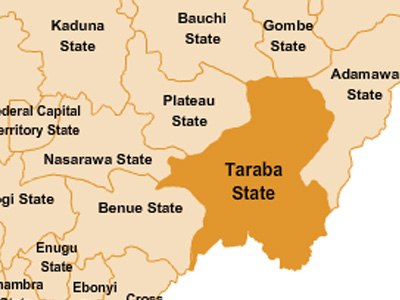
On a day like this, three decades ago, Taraba State was created from the defunct Gongola State. Unarguably, one of the most promising states at the time of creation.  Being the third-largest state in Nigeria in terms of landmass, most of it being overly fertile. There is hardly a crop that grows in Nigeria that does not grow well in Taraba. In fact, many thrive best here.

While I cannot call myself an Agriculturist, I certainly know one or two things about farming being someone who is very proud of this profession and has had experiences that will forever remain green in my mind because of Agriculture. I am extremely passionate about Agriculture. I know the potentials that we have in Taraba. Unfortunately, states with far fewer potentials than Taraba have harnessed theirs and not Taraba for one reason or the other. 

Taraba state has tourist potentials that are unmatched in this country. It is aptly described as “Nature’s gift to the Nation”. As a result, we have some of the most beautiful places anyone can contemplate or dream of visiting in Nigeria. Travelling from: Sardauna to Zing, Ibi to Karim Lamido, Ussa to Yorro, Kurmi to Gassol. In fact, across the length and breadth of Taraba, all one sees is one of the most breathtaking scenery you can find in Nigeria.

The lush green countryside, amazing mountains, wonderful waterfalls, and sonorous birds give sounds that you may not be wrong to call music. Since my elementary music teacher taught me that music is the arrangement of sounds that are pleasant to the ears. On a serious note,  you have to fall in love with nature once in Taraba State; of course, I have done that. One has to. Taraba is that special: you can’t escape it.

Sadly, this has not translated to much development. I weep whenever I visit towns, villages, and hamlets in Taraba. I weep not only for the abundant natural resources being exploited but that should and would have been utilised for the benefit of all and the growing distrust and polarised nature of my dear state. Here are people who have refused to unite to defeat their common enemies: poverty, violence, unemployment, underdevelopment, drug abuse, kidnapping, etc. This shouldn’t be our reality.

Whoever fans the embers of disunity is not a good human being, to begin with, let alone being a good and responsible Taraban whether one is: a traditionalist, a Muslim, or a Christian. For God’s sake, we have all suffered for our failure to rise above prejudice, hate and do the needful for our dear state. We disappointedly all continue to play blame-games, while everything is ruined before our very eyes. Tarabans have to think and rethink whatever approach we have been using over the years have left a lot to be desired.

The truth is that we are all in this together. I know this for a fact because I get to mingle with Tarabans from all walks of life. My friend Jerry in Jalingo is no less a victim than my friend Ado in Yelwa, Sardauna local government. The old man I met in Dakka, Bali, local government struggling even at old age to feed his family is not different from the ones I meet in my hometown or any place I visit in Taraba.

The public primary schools in Jalingo, the state capital, don’t look much different from the ones in Borno Kurukuru, in Bali local government; the ones in Pantisawa In Yorro LGA and the ones in Kufai, Gassol local government, or anywhere in Taraba state. The difference is that some of our teachers do extraordinary things to nurture children that can become responsible citizens against all odds. So today, I pay tribute to our teachers and all those who defy all odds to develop our state. Thank you so much for your sacrifice and service to our dear State. 

The plain truth is that we are all victims in one or the other. Whether we agree or not, whatever faith we profess or the party we support. A selected few benefit in any state that constituted authorities have failed to live up to their responsibilities, and most of the time, even those that benefit the pleasure are ephemeral. 

We still have the opportunity to stem the tide and chart a new course for the only State we have and one that some of us love unconditionally. To change things for the better. But, we cannot do it alone. We must do it together: Christians, Muslims, and traditionalists. Until we unite, leaders or rulers will continue to exploit us and set us against one another. It is high time we commenced the building of a Taraba where merit matters and all Tarabans matter. A Taraba where things work and all that work hard within the ambit of the law can prosper without hindrance. A Taraba where the glass ceiling will be completely shattered. 

Happy 30th anniversary to my dear State, Taraba. You will be great despite all the apparent obstacles to stop that from coming to fruition no matter what happens. We will keep on trying until we get it right.

We today live in a state far more divided than ever. But I find solace that we still have good men and women from all parts of the state and of all religious beliefs who are sincerely ready to see a complete revamping of our dear State. These Tarabans give me hope. For just like me, most of them do not have a bean and have no political goals to pursue rather a whole state, and indeed, nation to build. 

I see hope boldly written on the face of my friend Jerry, a barber whose dream is to one day be a big employer of labour despite his financial constraints today. I  find strength in the words of my friend Abdulhamid who supports his family with the little that he has while working relentlessly with little dependence on the government.  

I know God willing things can and will change when Caleb, an ex-drug addict who has turned over a new leaf, advocates for peace and works towards our unity. Likewise, I believe we can change for the better when Zakiru freely works to better society and seeks success against all odds. Yes, Zakiru with even some hilarious jokes to it. 

I have no reason to believe things will continue the manner they are today, forever because of the realities of the moment. I know we can change. Although, the time is entirely dependent on how ready we are for that to happen as Tarabans. 

Today, I urge us all to mull over our challenges as a state. I plead with you all to reflect sincerely and see how we can all join hands to build the state that should be the envy of every state in the country because of our resources, which I know, once we get it right, Taraba will be the perfect example of how to move Nigeria forward being a state that can correctly be described as a mini Nigeria, with all that is inherent therein Nigeria. We must not fail our dear state as Tarabans; we have to stop failing this beautiful State now. 

Happy 30th anniversary Taraba State. God bless Taraba State, and God bless the Federal Republic of Nigeria.


Abdulrazak Iliyasu Sansani wrote from Turaki B, Jalingo, Taraba State.

Tuition hike: Fire from Kaduna to Niger

Ibrahim Yahaya

A proverbial Hausa dictum states that ‘If you see your neighbour’s beard go in flames, you should wet yours’. For instance, this can be simplified to mean that if you notice the car in front of you crash because of high speed, you should apply the brakes. Emphasis is on being cautious and proactive at all times. But that was not the case with the people of Niger State, at least in terms of action as Kaduna went ablaze.

When news broke out about the hike in tuition fees in Kaduna State, the internet went agog, followed by public uproar and protests. And…. as you would expect, nothing more than grouses here and there as parents were forced to comply with the increment or keep their wards outside the walls of the varsity.

The decision stood, despite the opposition, protests, and ‘aluta gra-gra‘. But, like an infectious disease, it has now spread its tentacles to the neighbouring Niger State. So much for solidarity, eh?

In the cold hours of Wednesday, 4th August 2021, another shocker hit the public space. This time, Ibrahim Badamasi Babangida University, Lapai, Niger State, followed suit in the tuition hike competition, with a staggering increment somewhat above 150%!

Where do we go from here?

The students are confused. The parents and guardians are even more so. There is fear that there would be a repeat of Kaduna State which appears to be the vanguard in the hiking tournament.

Agreed, education is expensive. But the same ought to be made affordable in the interest of social growth and development. No society prospers on gargantuan illiteracy, and none ever will. So, isn’t it ironical that a region (North) already struggling with many out of school persons and abject under-development is striving so hard to make education unaffordable? Does it make any sense?

For the umpteenth time, where do we go from here?

How can a state deem it fit to impose above 150% increment in tuition fee where the same state is struggling to meet the minimum wage mandate? For a while now, this same state has failed to pay 100% salary, for God’s sake. Look at Borno State, for instance; it is a region blighted by insecurity, yet they pay wages in full when due and equip their educational institutions with state of the art facilities without resorting to milk the lot on educational grounds. So what is wrong with Niger State, please?

It wouldn’t be long before conspiracy theories begin to fly here and there, justifiably. And, don’t be shocked to see the lot argue that an agenda is being pursued to deny the poor access to education despite it (education) being a fundamental human right. It is bad enough that graduates roam the streets without meaningful jobs. But, I hate to think of a scenario where those roaming the streets are aggrieved students compelled to drop out of school due to ill-advised policy/policies by those in the corridors of power.

Now that the fire has reached Niger State, our neighbours should better wet their “bear-bear” by supporting them to help persuade the government to reverse this increment.

This fire should be extinguished here and now!

Yahaya Ibrahim can be reached via yahayaibrahim006@gmail.com.

Fulani as Endangered Species in Nigeria (I)

By Ahmadu Shehu, PhD.

It is generally considered an impossible hyperbole when the current trajectory of ethnic profiling against the Fulani people in Nigeria is linked with the road to Kigali. But, except something drastic is done, for most dispassionate observers, this is as sure as the sun rises from the east. Therefore, as Mbororo (i.e. a herdsman), I write from experience to call the attention of Nigeria and the world to the danger facing not only the Fulani but also millions of Nigerians who look like them. With this article, I hope to save the world from escapism and blame-game when our negligence eventually allows the deed.

Let me quickly disabuse the minds of my audience. I do not stand for any criminal, regardless of ethnic, religious or regional background. I do not also hold excuses, whatsoever, for any form of criminality. However, the world needs to understand that the unfolding events in Nigeria are beyond ordinary and are very alarming, even intimidating for every Fulani person of whatever background and socioeconomic status. We are all sinking into a dark hole, scared of what tomorrow may hold for our children or us for simply being Fulani and herders.    

The Rwandan, Bosnian and Burmese genocides, and indeed the worst human tragedies in history, such as the Holocaust in Europe, are all events no one anticipated as possible outcomes of “simple” stereotypes, ethnic and social profiling. For instance, when the Rwandan actors of genocide characterised the Tutsis as cockroaches, not even the victims of that profiling imagined that they were meant to be crushed and eliminated like cockroaches without a drop of human sympathy. But such is the power of language. Its control over our minds and worldviews means that our emotions and worldly experiences are conceptualised, i.e. conceived, and coded, i.e. expressed, based on metaphors that underlie our bodily experiences. This is the subject of Conceptual Metaphor theory[1]

The world looked on as the influential media of Nazi Germany propagated hateful stereotypes against the Jews, poisoning the minds of the majority, providing a fertile ground for the emergence of one of the most despicable men in history, Adolf Hitler, as the Chancellor of Germany. Coming to power under these circumstances, Hitler had all he needed to implement his long-desired goal of “cleansing Europe” from the Jews.

It began by implementing bigoted policies, such as boycotting Jewish businesses and isolating the Jewish population in segregated ghettos, followed by the policy of extermination fondly described as “the solution to the Jewish question” in Europe. The so-called “Jewish question” tells you that Jews were objectified, problematised and removed entirely from the human society of Europe. It went to the extent that most people saw them as a nuisance, a source of their problems, and therefore, unsympathetic to their course. Today, there is seemingly a sad “question of the Fulani problem” in Nigeria, on which the dubious media and politicians thrive.

Today’s Nigeria is to a Fulani what Rwanda of the 1990s was to a Tutsi. The prerequisites for the looming disaster have been met and are consistently, persistently and comprehensively being propagated, promoted and disseminated. Of this, the world must not claim ignorance. Despite their historical contributions to the Nigerian and African civilisations, the economic value chains they have helped sustain and subsidise for centuries, the scholarship they have institutionalised on the continent, and their passionate, patriotic contributions in the creation and growth of this entity called Nigeria, the Fulani are today being commodified and dehumanised in deliberate ethnic profiling.

Like the Jews in Europe, Fulani folks are the herders of Nigeria, holding the largest share in the country’s livestock sector. Unfortunately, this cultural means of livelihood has fallen under persistent attacks and other bigoted attempts to impoverish the herding population. Once the most prosperous, most self-reliant and wealthy in northern Nigeria, millions of the Fulani people have become destitute, impoverished by the twin evils of bad governance and climate change. The results of this are apparent: many have turned to criminality as means of survival. Instead of treating the root causes of this menace, the Nigerian governments at all levels have resorted to criminalising every Pullo and whoever that looks like “them”.  

At every checkpoint of the Nigerian security agencies, one demography is a primary target: The Fulani. The state that has deliberately refused to educate and enlighten them, despite being the highest tax-paying single ethnic group, has turned its security agencies into lions that hunt and extort these vulnerable citizens without discrimination. Police stations, prisons and other detention centres around this country are filled with innocent, young Fulanis without being charged or tried.

The results of this indiscriminate maltreatment are blanket distrust, anxiety and hopelessness that eventually provide the basis for these people to see no reason to abide by the law. Such people are hardened and no longer fear the law, for whatever the law was to do against them for being criminals have been meted against them as innocent citizens. They have lost their livelihood and now their dignity. They have nothing to lose for being a criminal or even a terrorist. This natural law of social injustice applies to all human beings, regardless of ethnic, religious or other backgrounds. 

Similar policies to those deployed to ensure the exclusion of Jews and their final settlement into ghettos designed for their final extermination have long been propagated in Nigeria. It is no coincidence that ethnic warlords who gained political power in Plateau and other middle-belt states in 1999 orchestrated the indigene–settler dichotomy deeply rooted in the hatred for peace-loving neighbouring ethnic groups, perceived as prosperous minorities.

False stories of dominance have been normalised and entrenched in the minds of unsuspecting innocent citizens for political purposes. This deliberate and dangerous xenophobia have plunged these areas into endless ethnoreligious crises, animosities and restlessness. The far more dangerous outcome from this is the reactionary tendencies that have continued to be the basis for the emergence of ethnic chauvinists and bigots as leaders, ala Jonah Jang and that buffoon called Samuel Ortom, the governor of Benue State.

The decades of cattle route blockades across the country has confided herders, who are mostly the disadvantaged category of the Fulani people, to the deserts. More than anyone else, livestock herders cannot do without water and green vegetation. Those are the only sources of livelihood for their stock and subsequently their only means of subsistence and culturally the essence of their lives. But, of course, a country such as Nigeria that cannot help cater for its human population may not be expected to care for its environment – forests, waterways, trees, vegetation have all disappeared, leaving us on drylands. These social and ecological factors have pushed millions of Nigerians whose livelihoods depend on the livestock to possible extinction. I will show you how.

My father had three herds of cattle and two of sheep. Each pack was around 70 to 80 heads of cattle. Each cattle would approximately sell for 80 – 100 thousand naira. Do the math. From the late ’80s to the early 2000s, less than ten cattle were left in my extended family. Add this to family growth and needs. Now you can imagine! Our family had moved thousands of kilometres through these years, from Maini in Niger to Dapci in Yobe, up to the Mambilla Plateau, down to Banyo, Doualayel in Cameroon, and finally Mamukan in Jada LGA, all in search of pastures to nurture the cattle.

With everything lost to the criminal state actors, ethnic discords, climate change and economic instability, an ever-growing family of four is now over twenty and can no longer sustain its only means of livelihood. Sad as this may sound, my story is humane and less tragic than what the herders go through today. The rate at which herders lose their means of subsistence is alarming. By a stroke of a police pen or at gunpoint by cattle rustlers or kidnappers, a Fulani may lose everything he ever worked for to escape detention or rescue himself or his loved ones. Why are we surprised at the natural consequences of this cruelty?       

What has been discussed so far may seem to be based on the unintended consequences of a dysfunctional state, corruption, population explosion, climate change, and the failure of the Nigerian state to implement developmental and social programs for its citizens, which arguably affect all citizens, albeit disproportionately. However, the resulting crises have provided fertile ground and ample opportunity for bigoted politicians to seize power and deliberately formulate and implement desperate, dangerous, racist, chauvinistic policies aimed at ethnic cleansing of the herders’ population. Mind you, herders, not Fulani population, for now, because the road to Kigali is systematic. This is the subject of the second part of this essay.        

Dr Ahmadu Shehu is a nomad cum herdsman, an Assistant Professor at the American University of Nigeria, Yola, and is passionate about the Nigerian project. You can reach him at ahmadsheehu@yahoo.com.


[1] If you are interested in the details of this theory, read Lakoff & Johnson, 1980.
Who is behind the NDA invasion?

By Abdulhaleem Ishaq Ringim

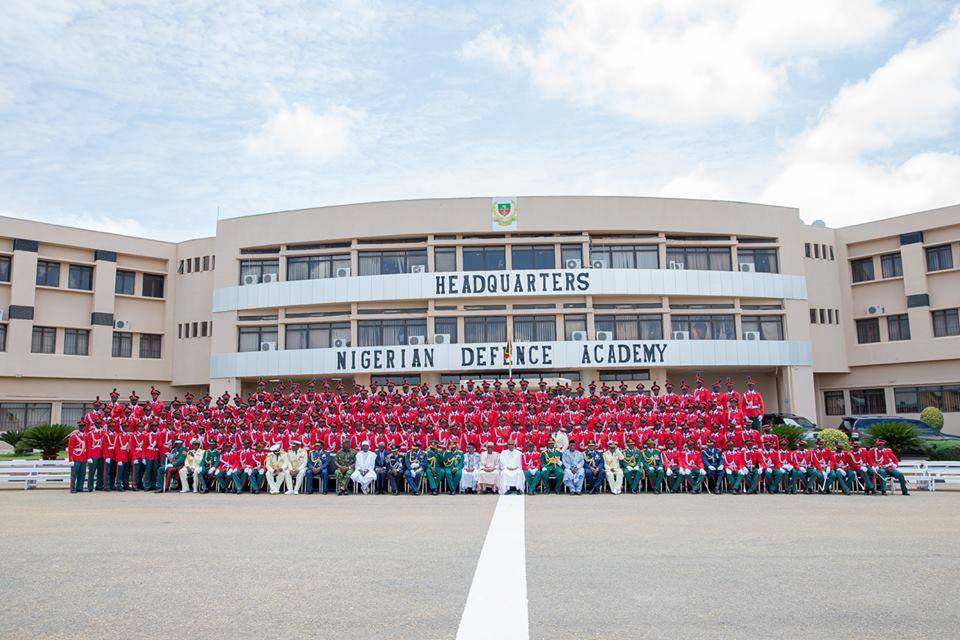
The invasion of the Nigerian Defence Academy (NDA) is indeed embarrassing and extremely unsettling. But what is more unsettling is the fact that this high-level security breach is said to be orchestrated by “bandits”. While I had never underestimated these bandits’ lethality and offensive capacity, I still find it hard to believe they planned this attack. 

And here is why: 

Although most of us are unaware of the very nuanced categorisation of bandit groups operating in Northwest and Northcentral Nigeria, still, whenever we hear the word “bandit”, our minds go to the Fulani militias that have been meting out mayhem on innocent civilians. 

Channels TV reported that “The bandits who came in a vehicle were said to have passed through the security gate into the academy, disguised in military uniforms, after which they proceeded to the officers’ quarters.”

And this is where the question mark is. 

A Fulani person is the most recognisable of all the ethnic groups in Nigeria by his physique, phenotype and accent. And with the high level of stereotypes and profiling of members of this ethnic group as even innocent Fulanis on the streets get harassed, it makes it hard to believe that a vehicle full of bandits (of Fulani extraction) passed through the gates of NDA without being recognised and raising the suspicion of the guards. The press statement released by the academy also described the invaders as “Unknown Gunmen” instead of “Bandits”. 

However, this is not only the reason that informs my suspicion. 

The Nigerian terrorism network has been very volatile lately owing to the recent escalation of the rift between the two major terrorist organizations in Nigeria —the late Shekau-led Jama’tu Ahlis Sunna Lidda’awati wal-Jihad (JAS) and Al-Barnawi-led Islamic State in West Africa Province (ISWAP) — who were initially a single entity until they split in 2016 due to certain ideological differences and have been fighting each other since then. This rift, escalation of which has been attributed to the Nigerian Armed Forces Operation Hadin Kai spearheaded by the late Chief of Military Defense Brig. Gen Abdulrahman Kuliya was what consumed Abubakar Shekau in May 2021 and rendered his faction rather defenceless. 

Following this incidence, it was reported that more than a thousand JAS fighters have surrendered to the Nigerian Army – a gesture most people believe to be a positive sign and a product of enhanced military offensives against the terror groups. 

However, that is hardly the case, for, after Shekau’s death, ISWAP received some JAS commanders and fighters that pledged allegiance to their leader Al-Barnawi and then issued an ultimatum to those who refused while assuring them of continuous attacks. This is actually what motivates them to surrender to the Nigerian Army to leverage on the Nigerian Government’s amnesty program, the Operation Safe Corridor, and escape ISWAP’s wrath. But even before this incidence, defection from JAS to ISWAP was common among commanders and fighters, as in the case of Adamu Bitri in 2019. 

In December 2020, I explained in an article titled “Insecurity in North-West: Armed Banditry or Boko Haram Expansionism” the operational dynamics of all the three terrorist groups — JAS, ISWAP and Ansaru — in the Northwest and the possibility of them executing expansionist agenda in North-West Nigeria through infiltration, training, assimilation and arms supply. Before the fall of Shekau, reports suggested that the JAS and Ansaru groups had closer ties with bandit gangs in North-West. Adamu Bitri, for example, while he was with JAS, was instrumental in forging an alliance between JAS and bandit groups. He later moved to ISWAP before he died. It is believed that he might have shifted the allegiance of some of the bandit gangs he was in contact with to ISWAP. 

With Shekau’s death and the subsequent carpet-crossing of his commanders (some of whom are the keepers of the link between JAS and the bandit gangs in the North West just as Adamu Bitri) to the ISWAP side, there is a high possibility that bandits who were initially aligned to JAS are now under ISWAP’s control. Also, some JAS fighters who refused to surrender to both ISWAP and the Nigerian Army might consider joining bandit gangs in the northwest, just as it was the case for some fighters who fled ISWAP to join bandit groups before this recent incident. 

With the possible control ISWAP might have gotten over a greater number of bandit groups in the North-West due to recent events, the NDA invasion makes me wonder if it is just ISWAP’s way of signalling their newest expansionist achievement and presence in the North-West by staging such an operation in usual “bandit” territory perhaps with the help of the bandits, for the attack was done in usual ISWAP style of attacking military bases. And whether it is indeed purely a “bandit” affair or ISWAP’s or both, it signals a failure of our government, a serious increase in security vulnerability in the country and calls for renewed strategic action against bandits, the broader terrorism network in Nigeria and their expansionist tendencies. 

Abdulhaleem Ishaq Ringim is a political and public affairs analyst. He writes from Zaria and can be reached through haleemabdul1999@gmail.com.

Ronaldo agrees to move to former club, Manchester United

Juventus forward Cristiano Ronaldo has today agreed to move to his former EPL club, Manchester United, after being in Juventus since 2018.

This is contained in an official statement released by the EPL giant on their website.

The statement reads: “Manchester United is delighted to confirm that the club has reached [an] agreement with Juventus for the transfer of Cristiano Ronaldo, subject to agreement of personal terms, visa and medical.

“Cristiano, a five-time Ballon d’Or winner, has so far won over 30 major trophies during his career, including five UEFA Champions League titles, four FIFA Club World Cups, seven league titles in England, Spain and Italy, and the European Championship for his native Portugal.

“In his first spell for Manchester United, he scored 118 goals in 292 games.

“Everyone at the club looks forward to welcoming Cristiano back to Manchester.”

Media as watchdog: foe to government, friend to masses

By Ishaq Habeeb

The media serves as the fourth estate, or the fourth arm of government, that works to ensure that the rights and privileges of Nigerian citizens; rights such as freedom of expression, freedom of information, among others, are well protected and granted under the provisions of the constitution of the Federal Republic of Nigeria.

The media carry out the daunting task of holding the government accountable for their deeds, misdeeds, actions or inactions, by informing and educating the citizenry about the state of the nation, which motivates people to insist that the government keep its campaign promises and are sticking to the rule of law in ways that wouldn’t tamper with the lives and well-being of the citizenry.

In present-day Nigeria, however, practising balanced journalism is arguably one of the most demanding jobs, as Journalists are torn between two dilemmas. On the one hand, they have to own up to their responsibility of informing the people of daily happenings and state of the nation, being as informative and as accurate as possible while at it.

While on the other hand, they can’t do that now without inadvertently giving criminal elements, e.g., bandits, unmerited media popularity. This subsequently encourages them and their heinous activities, plus undermining government efforts in tackling the state of wanton insecurity, currently bedevilling us in Nigeria.

Take today, for example, virtually every news media platform in the country is carrying a headline detailing reports of bandits’ attack on the Nigerian Defence Academy (NDA) in Afaka, Kaduna state. In the attack, two or so officers were reportedly shot dead and one other allegedly abducted.

Recently, rumours were that the APC government, in its autocratic fashion, attempts to gag Nigeria’s media from reporting successful terror attack stories. It is part of its efforts to demoralise the terrorists, instead of emboldening them with catchy news headlines by the media, especially about such embarrassing attacks on key federal facilities as NDA and/or it’s personnel, whenever there’s any.

The policy, undemocratic as it may seem, may not be entirely misplaced. However, if there’s strong political will, the government can do a lot better in handling the insecurity problem than just gagging the news media for simply doing their job legitimately.

As i penned this, the bandits that attacked, killed and kidnapped Nigerian army personnel today, at their strongest base, are probably out there somewhere right now, reading the trending news headlines, gloating, having a house party and perhaps, promoting their daredevil commandants behind the brazen attack on Nigeria’s strongest military facility, for their dare devilishness.

Now you can see how the media, by simply doing their job, are inadvertently giving the bandits undeserved media popularity, which is what the government was thinking – in their narrow approach – when they moved to regulate the way media reports such news, which is, of course, morale-depleting for the security operatives and morale-boosting for the terrorists.

Ishaq Habeeb is a pubic affairs analyst and a freelance journalist; he writes from Nigeria and can be reached through simplyishaqhabeeb@gmail.com.