Month: August 2021

Boko Haram: hundreds of fighters surrender

By Muhammad Sabiu

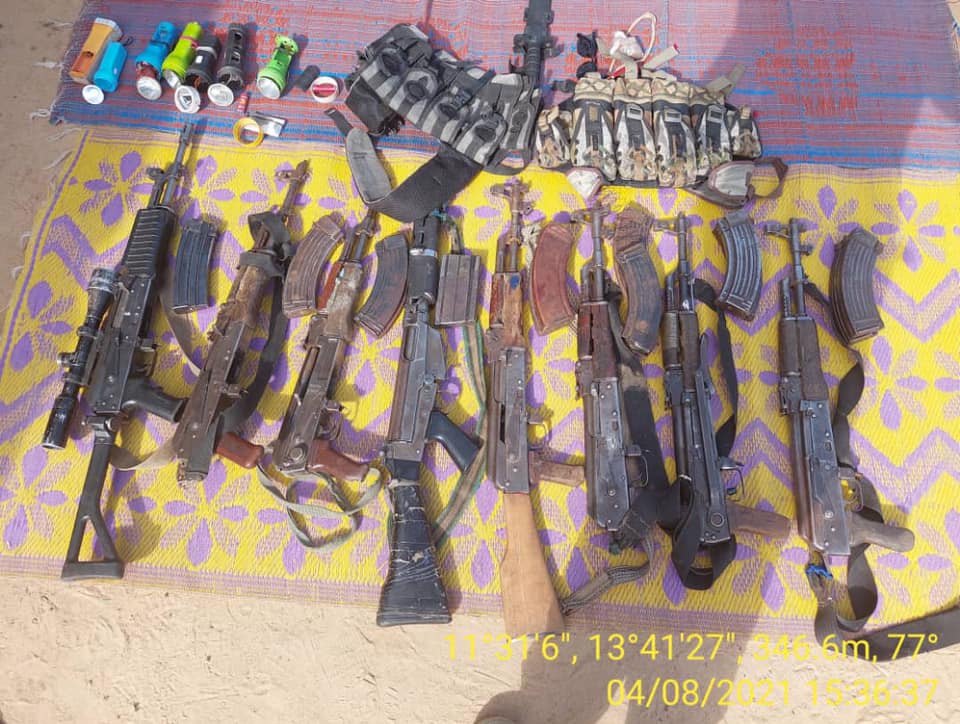
Reports have indicated that about 605 repentant Boko Haram members have laid down their arms and surrendered to the Nigerian military in recent weeks.

According to PRNigeria, a top intelligence officer in the know of the issue said that the exercise for the repentant terrorists and their families conforms with the “international laws and best practices, relating to enemies willing to surrender.”

The senior officer said that some of the repentant terrorists were afraid they could be eliminated if they “surrendered but were persuaded by their spouses and parents.”

“Surprisingly, their parents and wives gave them encouragement that they would stand by them if they surrender to troops.

“The intelligence efforts are invisible but manifesting in current outcomes. The Chief of Army Staff, Lt. Gen Faruk Yahaya, encourages a mixed technique of kinetic and non-kinetic operations that are humane in nature as he instructed that while we accept those willing to surrender, we should not spare the stubborn one by sending them to where they belong.

“The sustained and well-coordinated military operation has exerted pressure on the terrorists who have deserted their various hideouts and camps, while their members who felt being misled are surrendering with their families to the Nigerian troops.

“During profiling, some of the Commanders who surrendered to troops admitted that their various enclaves are bedevilled by hunger, disease, and the perpetual fear of military offensives.

“The media are key to shaping the troops’ resolve to continue their aggressive posture, while the citizens maintain their confidence on the military efforts on Counter-Terrorism,” the officer said.

The Boko Haram insurgency has led to the killing of thousands of people and the displacement of many in the northeastern part of Nigeria.

Let’s avoid reckless driving in wet weather

It is no longer news that ghastly car accidents have led to the death of innumerable people, which could be attributed to improper driving in the rainy season. However, you may find out that the primary factor that caused some accidents is driving in wet weather without abiding by safety precautions like exceeding the speed limit in the rain.

However, driving in the rain, whether a sprinkle or a heavy downpour, can be one of the most challenging driving situations which some, if not all, drivers encounter. Rainy conditions are directly associated with higher accidents rates. No matter what part of the country you live in, it is almost certain that you would be required to drive your vehicle in the rain at some point. Knowing how wet roads and reduced visibility affects how your vehicle handles will help you drive safely in rainy conditions.

More so, drivers should be reminded that reducing their speed limit and turning on their headlamps are two of the simplest and most effective ways of reducing the chances and prospects of an accident caused by wet weather. Likewise, maintaining a safe distance between your vehicle and the car in front of you. Stopping your vehicle will be more difficult when driving in the rain. Therefore, maintain a distance of several car lengths between your car and another.

Regarding car equipment, make sure that your car’s equipment is in working order before encountering rainy weather. For example, check your headlights, taillights, and windshield wipers to ensure that they will work well when needed. Also, check the tread of your vehicle’s tires. Balding tires can severely reduce traction on wet roadways.

Furthermore, most states require drivers to turn on their vehicles’ lights while driving in the rain. Even if it is only misting, turning on your vehicle’s headlights will increase both your visibility and other drivers’ ability to see your car on the road.

Conclusively, concerning the above driving etiquettes, while raining, private and commercial drivers should whack their possible best to meticulously ensure that they follow all driving instructions provided to them to prevent the risk of being crushed.

Staying safe while driving in the rain is simple if you make a conscious effort to employ these safety precautions.


Mallam Musbahu Magayaki writes from Sabon Fegi, Azare.Bauchi State. He can be contacted via musbahumuhammad258@gmail.com.

Tokyo 2020 Olympics: 5 lessons from the Men’s Football Tournament

By Aliyu Yakubu Yusuf


The curtains have fallen following yet another gripping edition of Olympic football games. Brazil has successfully defended the crown they won at home four years previously. The vanquished Spanish team fought back valiantly in the second half after going behind in the first. But with the game teetering towards a dreaded penalty shootout, Brazil’s substitute, Malcolm, delivered the decisive knockout blow that put paid to Spain’s quest for the gold medal. Here are the five things I learned from the tournament:

  • Brazil are worthy winners

Ever since the first ball was kicked about two weeks or so ago, it was apparent that barring any surprises that are characteristics of football games, the team that’s going all the way is either Brazil or anyone that overcomes them. Unlike most of the other big guns, Brazil takes this tournament seriously. After a disappointing ending at the Copa America, Brazil was keen to win this tournament to restore some sort of pride as the undisputed biggest footballing superpower. Brazil was, at times, irresistible in the group stages. Their triumphs over Germany and Saudi Arabia, which were sandwiched by a scoreless draw with plucky Ivory Coast, saw them play some scintillating football, with Everton striker Richarlison scoring five goals. Although the goals somewhat dried up in the knockout stages, the Selecao were never really troubled by any of their opponents en route to clinching the trophy.

  • The evergreen Daniel Alves still has it

It would be a crying shame to talk about Brazil without talking about the mercurial Dani Alves. Alves is the best right-back I have ever seen. And that’s a massive compliment because even Brazil alone had had the likes of Cafu and Maicon. The sight of Alves terrorising hapless opponents alongside Lionel Messi at Barcelona was a joy to behold for most football aficionados. So I wasn’t surprised at all when Brazil named him as one of their three overaged players. After all, this is a man who can do whatever it takes—fair or not—to win. Little wonder he’s the most decorated footballer in the whole history of football. This trophy is just another feather to his impressive cap. Even at the ripe age of 38, Alves is still one of the best players in his position. Brazil’s captain fantastic still has it.

  • Traditional heavyweights failed at the first hurdle

While Brazil sailed through the tournament, other traditional big countries badly underperformed. Argentina, Germany and France all failed to get past the group stages. For Argentina, it was just business as usual. For a country that won this very tournament consecutively at both 2004 and 2008 editions, it was a colossal failure not to have qualified for the knockouts for the second Olympics tournament running. The fact that they couldn’t qualify from a pool that contains Spain, Egypt and Australia tells you all you need to know about how bad this team had been. Like Argentina, France and Germany also failed to give a good account of themselves. Ever since a diabolical first half that saw them went 3-0 down in the first game against Brazil—and eventually lost the game 4-0—Germany never recovered. Although they defeated Saudi Arabia 3-2 in the next match, they huffed and puffed in their final group game but failed to see off the sturdy Ivory Coast. And that was their tournament done. As for France, the little said about them, the better.

  • The host country has so much to cheer about

Japan performed quite admirably in this tournament. Despite being drawn in a scary-looking group including France, Mexico, and South Africa, Japan qualified with maximum points. They scraped past New Zealand via penalty shootout in the quarter-finals before succumbing to Spain and Marco Asensio in the second half of the extra time in the semis. Although they went out in a cruel fashion, Japan can take courage from their outstanding performance. Despite being the host country, no one expected them to be the fourth-best team before the kick-off. However, in Takefuso Kubo, who is already at Real Madrid, Japan has a gem for whom they can dare to dream.

  • African countries flatter to deceive… again

For African countries, it was a case of one step forward, two steps backwards. Apart from South Africa that conspired to lose all their group games, Africa’s other two representatives began the tournament on positive notes. Egypt’s defeat is somewhat understandable as they went out to the eventual winners Brazil by the narrowest of margins. That’s after qualifying from a pool featuring both Spain and Argentina. The ouster of Ivory Coast, however, is pretty much frustrating for any fan of African football. After qualifying from the group that contains both Brazil and Germany, they were within a hair’s breadth of knocking out Spain before they inexplicably bottled it. They scored what looked like a winning goal in the 91st minute of the quarter-finals only to manage somehow to give up an equaliser in the 93rd minute before shipping three further goals in the extra time. That was some way of going out of a tournament. For Africa, Nigeria’s 1996 and Cameroon’s 2000 victories are but fading memories.

Aliyu Yakubu Yusuf is a lecturer at the Department of English and Literary Studies, Bayero University, Kano. He can be reached via aliyuyy@gmail.com.

The North, the Media and the Way Out

By Ahmad Shehu, PhD.

In recent years, Nigeria, particularly the northern part of the country, has gone through a series of debilitating crises that have become existential threats to the region and the entire country and even the West African sub-region to some extent. The Boko Haram insurgency in the northeast, the herder/farmer crises in the north-central, the kidnapping and banditry in the northwest, the ethnic clashes in the middle-belt have all spilt over across other regions of the country, causing chaos, social instability and economic devastation.

Governments at all levels have tried hard to contain these menaces through conflicting policies, strategies and approaches. But, evidently, none of these has succeeded, yet, as these crises grow and engulf more Nigerian lives and properties daily. With the troubles raging, the regional economic and social fabrics go down the slope. Farmers have abandoned their farmlands; herders are on the run, business people are on a massive exodus to urban centres. Schools, hospitals, and other social services are no longer obtainable in many places across the region. These are serious but not insurmountable challenges.

Despite its effects on livelihoods, physical destruction can easily be reversed in a relatively short period. The political history around the world teaches us this basic fact, with Germany, Poland, Russia and even Rwanda as cases in point. Left in rumbles decades ago, these countries provide development models for the world to follow today.

On the contrary, a society whose social fabrics are destroyed is more difficult to rebuild, for a nation grows in and flourishes from the minds of its citizens – their beliefs, dispositions, attitudes, education, etc. Sadly, the proud, significant historical antecedents of northern Nigeria are maliciously challenged on all fronts, with destructive narratives, or what my friend Dr Samaila Yandaki calls “falsification of history” being pushed against the people, culture and sociopolitical freedom of the region. This, as far as statecraft is concerned, is more dangerous to the corporate existence of the area and indeed Nigeria in the long run than the physical challenges we are currently battling. Here is why.  

For many decades, northern Nigeria and its people have endured a consistent assault on their historiography, heritage and sociopolitical status. At the expense of sounding conspiratorial, I believe it is safe to state that the constant ethnic and regional profiling of the North and its people is a deliberate, well-planned assault aimed at breaking the very social fabric that held people together. The orchestrators fully understand the natural advantages and disadvantages of the region at equal proportions.

In today’s Nigeria, the North has been stereotyped in the most dangerous way. In the Nigerian sociopolitical scheme, northern leaders have been systematically stigmatised, with all the evils and ills of the country being falsely but persistently attributed to the failures of the North, even though history proves to the contrary. Some people propagate this antagonism without equal acknowledgement of the good tidings, sacrifices, patriotism and contributions of northern leaders and northerners in the Nigerian project. The bitter, unbiased truth is that the problems and prospects of the Nigerian state are Nigerian, with all regions, ethnicities and religious identities contribute their fair share in making or marring the country.

Similarly, the Nigerian media has worked hard to regionalise or ethnicise all kinds of human criminalities against the North. The media ascribe all sorts of criminal acts to northern folks or, precisely, Fulani, without recourse to the dangers these kinds of ethnic and regional profiling pose to the ordinary northerner. Conversely, criminal gangs, armed robbers in all southern states, notorious kidnappers, internet fraudsters and corrupt public officials would pass as mere criminals if, at all, they get reported. There won’t be a mention of the regional, ethnic or religious identities of those criminals. Unlike the former, we all share the criminal’s misdemeanour as humans and Nigerians. They are now “Nigerians”, not southerners, Igbo, Yoruba, Ijaw, etc. The hypocrisy is stinking.

Furthermore, today’s public discourse in, about and on Nigeria is a mere comparison between a supposedly ‘wealthy, educated’ south versus a supposedly ‘poor, illiterate’ north. This narrative gained traction by consistent and persistent reportage, which went unchallenged for too long. It is indeed true that all you need to validate a narrative is to keep saying it. While the ills caused by the utterly disgusting failure of the Nigerian leadership obtained in the North are reported or tagged as northern, the similar or worse scenarios obtained in the south will not belong to the southern region but the Nigerian federation. For the common audience, this kind of deliberate misrepresentation of information has caused deep-rooted mischief and hatred against northerners.

The dangers this stereotyping portend for the region’s future is, in the long run, worse than its current physical challenges. For one, the political leadership required to solve the physical problems will be entirely messed up in ways never seen before. Secondly, the communal consensus that gave the region the upper hand in the political scheme of the country will be dismantled, leading to distrust, disharmony and possible internal disintegration. Thirdly, young Nigerians constantly fed these venomous, hate-filled narratives are prepared to antagonise their northern counterparts, a situation that will affect their participation in the Nigerian project. The tail end of this debacle is not a story I would like to predict. We have seen examples in Nazi Germany and Rwanda.

The good news, however, is that the solutions to this seemingly intractable problem are not farfetched. It has been said that if you want to use a mirror, buy your own. People are made by their history; their minds are shaped by their stories; while their future is dependent on their world views, their dignity and respect depend on how others view them.

Indeed, the animosity and distrust between the major ethnic and religious groups in Nigeria are as old as the country itself. Among the major culprits in fanning the embers of this powerful but devilish attempt to demonise the North is the Nigerian media which has deliberately and consistently pushed stereotypical narratives against the region.

However, one of the reasons the campaign is succeeding is the total lack of counter-narratives that would eventually challenge the misinformation churned out by the Nigerian media against the region. If this is the case, then the only way out for the North is to speak out, provide content and information, counter-narratives and reliable, factual evidence that will eventually challenge the calculated attempts to demonise its history and hamper its progress. To do this, the region’s intelligentsia, political and economic leaders must be dedicated to and invest heavily in the media. It is only then that the North and its people will be fairly represented.

PS:

I celebrate the courage and dedication of the young men and women who started this medium, The Daily Reality. It is indeed one of the success stories of the North in 2021. Congratulations.

Ahmadu Shehu is an Assistant Professor at the American University of Nigeria, Yola. He writes from Yola, the capital of Adamawa State.
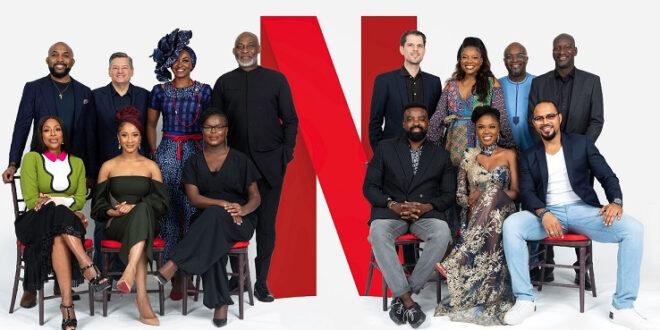
Dear Netflix Naija, there are films and filmmakers in northern Nigeria

By Muhsin Ibrahim

Nigeria’s diversity cuts across many things, chiefly cultures, ethnicities, religions and regions. Although several commentators consider the northern part more Islamic and the southern one more Christian, Muslims and Christians, followers of traditional belief systems and non-religious folks may be seen everywhere. Due to these complexities, the country is home to two significant film industries – Kannywood and Nollywood – with many smaller ones operating under these brands.

Kannywood, the name given to the “local” Hausa film industry with Kano State as its epicentre, is a distinct and autonomous film industry in northern Nigeria. Nollywood has its roots in the South, has mainly Christianity and Western-influenced motifs as themes and produces films primarily in English or other southern Nigerian languages. For Kannywood, however, Islam is arguably the trademark, and the East remains their vital source of influence and inspiration. Nonetheless, many people and institutions, including Netflix, see Nollywood as “the default” Nigerian film industry.

Lumping Kannywood and Nollywood or seeing the former as merely a Hausa branch of the latter is problematic. Hence, a prominent Kannywood scholar, Carmen McCain, points out that “In most scholarly discussions of Nollywood, Hausa films are footnoted as an ‘other’ to Nollywood.” The implication of this is enormous. It, among other things, leads audiences and potential investors like Netflix into failing to see and understand Kannywood films in their peculiar socio-cultural and religious contexts. But, yes, Kannywood operates differently from and is independent of Nollywood.

On the one hand, Nollywood, now the second-biggest film industry globally, succeeds because it faces little or no challenge from its audience or any censorship board. On the other hand, despite being arguably older than Nollywood, Kannywood struggles a lot. Kannywood was inaugurated in 1990 with a film entitled Turmin Danya(dir. Salisu Galadanci). Two years later, in 1992, Living in Bondage (dir. Chris Obi Rapu) began what became known as Nollywood.

Subsequently, the editor of Tauraruwamagazine, Sunusi Shehu, coined the name ‘Kanywood’ [with a single “n” before several authors later on added the second “n”, the version that is more recognised globally today]. It appeared in the magazine’s August 1999 issue. “Nollywood” appeared for the first time in a New York Timesarticle titled “Step aside, Los Angeles and Bombay, for Nollywood” by Norimitsu Onishi in September 2002. The Nigerian newspaper, The Guardian, republished the article a few days later. The rest, they say, is history.

Moreover, the “local” Hausa language has more users than any other West African language. The possible shortage of professionals in Kannywood is due to a lack of support from the government, other stakeholders, and investors. Despite all these and more challenges, the film industry stands on its feet, and I believe a little more push will catapult it to the promised land.

Delineating the glaring yet ignored differences between Kannywood and Nollywood is only part of the aim here. The primary objective is to remind Netflix Naija that for “Africans [to] take charge of African stories”, the message its parent Netflix emphasised when launching the local franchise, all Africans – and, of course, all Nigerians – deserve to be carried along.

Nigeria’s entertainment industry is a lot like India’s. Mumbai-originated Bollywood does not represent all films produced in the vast country. Netflix India understands this truth early on and thus accommodates that diversity so beautifully in its rich library collection of Indian films. There are arguably several exciting films from all India’s nooks and crannies on Netflix today. We earnestly wish the same to happen in Nigeria.

Of course, Netflix Naija may argue that Kannywood’s films are generally below their standard. No one can dispute that adequately. However, there are exceptions. Thus, they should get in touch with those exceptional productions. An anonymous top-notch Kannywood director told me some producers have already approached Netflix Naija. Quite regrettably, they have been, at best, told to go and fix this and that, which they did and, at worst, summarily snubbed.

Another way to embrace all is via commissioning movies. Netflix Naija can engage Kannywood filmmakers to see if it is possible to sponsor films or series. Northern Nigeria is rich with stories, perhaps more than other parts of Nigeria, thanks to its fantastic mixture and, admittedly, unfortunate incidents like the Boko Haram insurgency. The famous films Voiceless and The Milk Maid are only two examples based on a single event – Boko Haram’s abduction of Chibok schoolchildren in the northeast. Netflix can and should have originals from northern Nigeria. I bet that will be a commercial success.

Filming in the North is different from telling Northern stories. Thus, having films set in that region is not the same as having filmmakers from the area telling their stories. I am not an agent of division, not at all. Instead, I advocate fairness and inclusion of all, regardless of their culture, ethnicity, region, or religion, among other diversities. Therefore, northern Nigerian filmmakers and their films should equally be aboard the ship Netflix captains in Nigeria.

Muhsin Ibrahim is a PhD student and staff at the University of Cologne, Germany. He can be reached via muhsin2008@gmail.com.

Five people killed in fresh Zangon Kataf violence

By Muhammadu Sabiu

Reports have indicated that no fewer than five people have been killed in the recent violent attacks launched on some Zangon Kataf communities of Kaduna State.

This was stated in a statement made available to journalists on Saturday by Samuel Aruwan, Commissioner for Internal Security and Internal Affairs. He said that among those killed is a 10-year old by unidentified persons.

Confirming the unfortunate incidents, Mr Aruwan said, “The boy (identified as the son of one Alhaji Dare Mato) was attacked while herding cattle. The corpse of the young herder was recovered and buried.

“An attack was also reported in Kurmin Masara along Bakin Kogi in Atyap Chiefdom.

“One resident, Philip Magu, was killed during the attack before the assailants were repelled by a combined team of Operation Safe Haven and Police Special Tactical Squad.

“Furthermore, gunmen attacked the Jankasa general area around the Zangon Kataf/Kaura LGA boundaries. Troops also repelled the assailants, but one resident (identified simply as Haruna) was shot dead in his farm by the fleeing miscreants.

“The troops also repelled an attack in Ungwan Rana in Zonzon District, after a fierce exchange of fire with bandits. One resident, Bitrus Kauna, sustained serious gunshot wounds during the attack and eventually died in hospital.

“Finally, one Samson Sunday was killed by unidentified persons on his farm in Ungwan Gaiya.

Mr Aruwan added, “Following the disturbing cycle of violence, the Kaduna State Government has appealed to all residents to embrace recourse to the law, and break the brutal cycle of killing and reprisal, to adequately support Government’s peace-building efforts in the area.”

Kaduna State is a northwestern state known for ethno-religious violence, kidnappings and killings by suspected gunmen.

2020 Tokyo Olympic: Brazil wins men’s soccer

By Muhammad Adamu

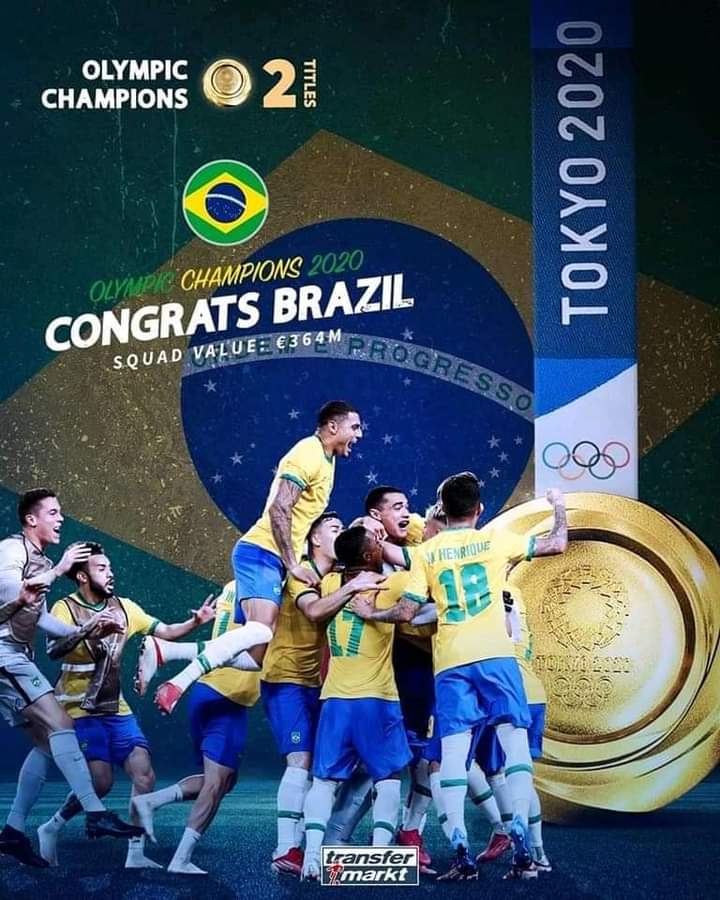
Brazil have the Olympic men’s soccer gold medal after a 2-1 victory over Spain in extra time. Brazil’s medal comes on the same pitch that it won the 2002 World Cup.

Brazil are now the second nation after Argentina to have won back-to-back Olympic gold medals after building on their 2016 success at these Tokyo Games.

Mikel Oyarzabal cancelled out Matheus Cunha’s opener after Richarlison missed a penalty, but Malcom ensured Brazil took home the gold medal with his goal in the 108th minute.

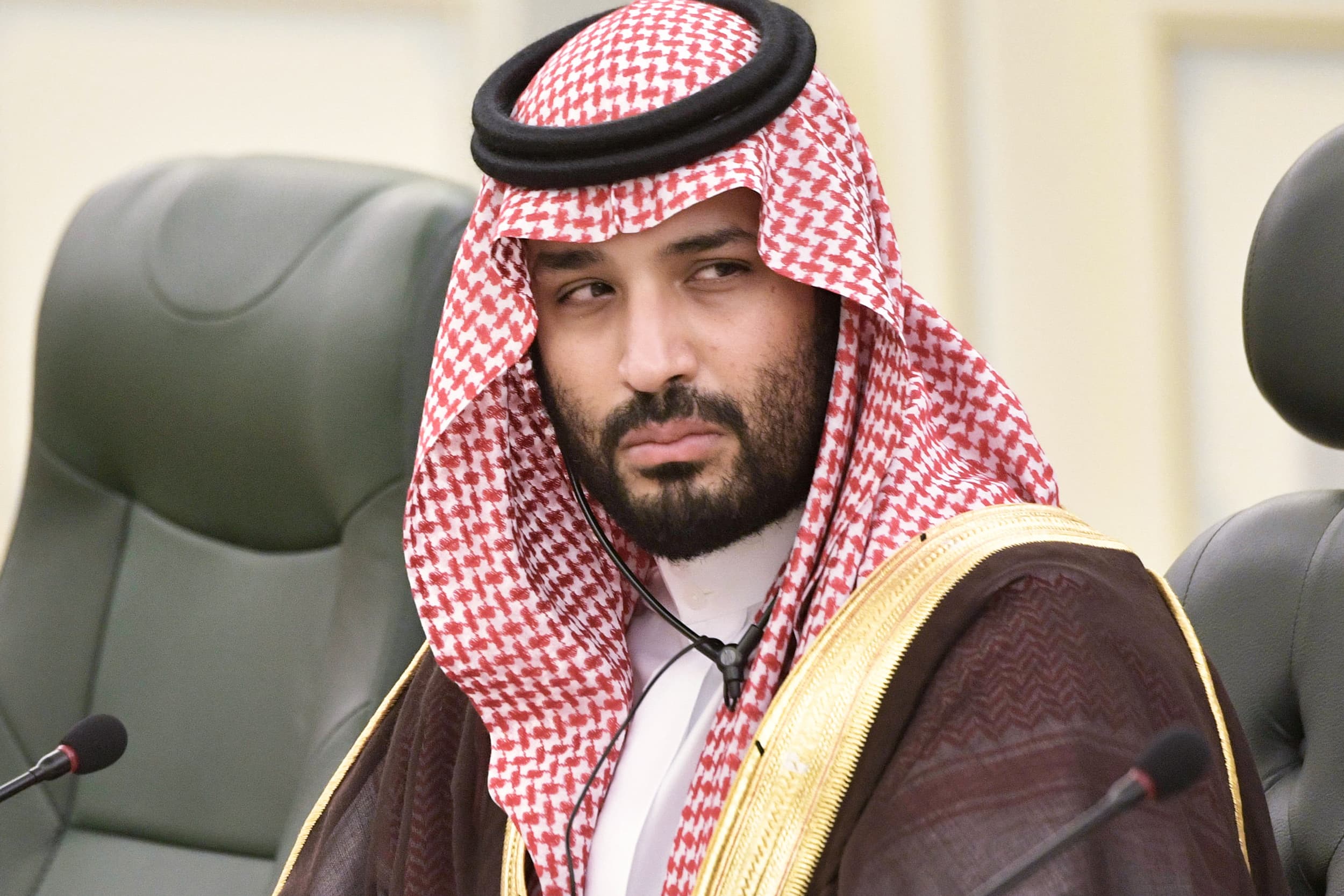
Saudi Crown Prince MBS’ clampdown on clerics continues

The 35-year-old Saudi Crown Prince Mohammed Bin Salam, alias MBS, initiates more radical changes in the kingdom hitherto known for its conservatism and strict adherence to Sharia.

In addition to barring loudspeakers from amplifying prayers and sermons at mosques and turning down the volume during calls to prayer, the Saudi government announced that shops, restaurants and other enterprises do not have to close anymore during prayer times. A government was reported to have declared that “Those days of inconvenience are now over.”

The MBS initiated liberalisations continue to reverberate around the kingdom while dissents are silenced.

According to two Saudi human rights groups, “When a little-known religious leader penned an online article criticising the decision by the Ministry of Islamic Affairs, he was arrested, and his once-active Twitter account went silent.”

It is also reported that the government fired “many” Imams for not following an official directive to preach against the Muslim Brotherhood, which MBS-led Saudi Arabia has designated as a terrorist group.

A year ago, the government stripped the religious police of their powers to arrest people. Around the same time, women were granted the right to attend sporting events while removing gender segregation at restaurants, other events.

Sarah Dadouch of The Washington Post concludes thus, “Mohammed is rewriting the longtime power-sharing arrangement between the ruling family and the clerical establishment — a partnership that created the kingdom. Islam has remained a cornerstone of Saudi identity; the kingdom is the birthplace of the religion and hosts its two holiest sites in Mecca and Medina. The king’s official title is the custodian of the two holy mosques.

In some quarters, fears abound that the fabric of the kingdom is now 4unravelling. But those fears are rarely shared anymore, lest there be more arrests.”

Sheikh Zarbaan Al-Gamidi is dead

By Ibrahim Siraj

A renowned Islamic scholar and Chief Imam of the historic Qubaa Mosque in Medina, Sheikh Muhammad bin Abdallah Zarbaan Al-Gamidi has been reported dead. He died Friday, according to sources familiar with the development.

Sheikh Zarbaan was a teacher, mentor and father figure to all Nigerian graduates of the prestigious Islamic University of Medina. He was instrumental in the admission of hundreds of Nigerian students into the prestigious University through the Daura intensive training he coordinated for several years since the inception of the programme in Nigeria.

Prominent among Sheikh Zarbaan’s students are the late Sheikh Ja’afar Mahmud Adam, Drs Muhammad Rabi’u Umar, Bashir Aliyu Umar, Abubakar Muhammad Sani, Ibrahim Ilyas, Ibrahim Jalo Jalingo, Isa Suleiman, Muslim Ibrahim, Sheikh Abdulwahab Abdullah, Professors Mansur Sokoto and Abdallah Saleh Pakistan, to mention but a few.

He will be remembered for his special attachment to his Nigerian students, whom he mentored up to his final moment on earth. Every year, he would call some of them during the annual Ramadan Tafsir to pass a message of goodwill and encouragement.

He recently donated his entire book collection for the benefit of Nigerian scholars. The books were received through Dr Abubakar Muhammad Sani and will be kept in a library in Dutse for access by the public.

He was a friend to many prominent Nigerian scholars and philanthropists such as late Sheikh Aminuddeen Abubakar, late Halifa Sheikh Isyaku Rabiu and Alhaji Aminu Dantata. May Allah have mercy on him and make Aljanna his final abode, amin.

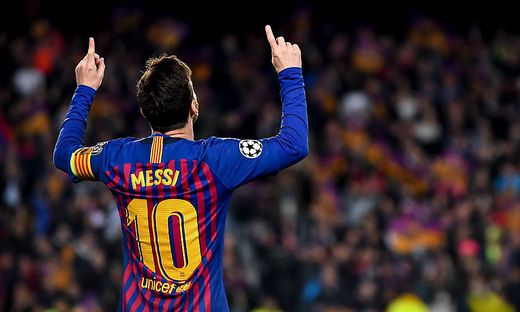
Messi: He came, he saw and he conquered

When former Barcelona Director of Football, Carles Rexach, signed Lionel Messi on a napkin paper at the turn of the current millennium, little did he know that he had just unearthed possibly the greatest ever footballer. Barcelona have just announced the departure of their boy wonder, the messiah and the plea, after 17 years of joy and anguish, highs and lows, successes and failures. Countless goalscoring records have tumbled at the majestic feet of the boy from Rosario in Argentina. He holds the records for playing more games for Barça in La Liga, UCL and El Clasico.

To even attempt to list Messi’s accomplishments in this short thread would be foolhardy. Nevertheless, many accomplished pundits, coaches and players mesmerised and enchanted by his magic wand have showered plaudits to the little genius. After trouncing Arsenal in 2010, the then Arsenal coach famously remarked that “Messi is a PlayStation player”, effectively testifying to the impossibility of being Lionel Messi. Similarly, Pep Guardiola, who is the coach that helped nurture the talents of Messi, once said that “To compare Lionel Messi with any other player is unfair… on them”. Jorge Valdano, a Maradona teammate in the victorious 1986 World Cup-winning Argentina side, added that “Messi is Maradona every day and even Maradona wasn’t Maradona every day”.

Rodrigo De Paul, Messi’s teammate in the Argentina national team, said, “If Messi is your captain, you would want to go to war for him”. The recently departed ex-Real Madrid captain Sergio Ramos also confessed that “Messi will always have a place in my team”. This is just off the top of my head. The list of current and retired players who idolise Messi contains the creme-de-la-creme of the footballing world.

A longstanding mantra has it that ‘records are meant to be broken.’ If these Messi’s records are ever to be broken, it will take an exceptional player.

1. Winning four consecutive Ballon Dors.

2. Winning 6 European golden shoes.

3. Scoring 91 goals in a calendar year.

4. Scoring 75 goals in a league season.

5. Scoring in 21 consecutive league games.

6. Scoring 50 league goals in a single season.

7. Winning three player of the tournaments in international tournaments.

8. Scoring 40 or more goals for nine consecutive seasons.

9. Scoring/Assisting 50 or more goals for 13 consecutive seasons.

10. Winning four man of the match awards in a single World Cup.

As for Barcelona fans all over the world, the dreaded day has finally come. Most of them can still remember the scrawny, shy 17-year old Messi who scored his first-ever professional goal against Albacete via Ronaldinho’s assist. Very few people thought that that watershed moment was passing the baton from one generational talent to another. However, the future isn’t that bleak for Barça. For one, young, exciting talents are emerging from the academy. The likes of Fati, Collado, Trincao, Gavi, Pedri, Puig, Mingueza, Araujo and Dest have shown great promise. Together with the old guards such as Pique, Griezmann, Alba, Busquets and Aguero, they may just paper the gaping cracks that Messi’s sudden departure will inevitably leave.

Messi alone is capable of covering a multitude of sins for coaches and fellow players. Good luck trying to replace such a player.

As for the man himself, this is a perfect opportunity to silence his diminishing number of detractors that he can cut it away from his comfort zone — whatever that means. Of course, Messi isn’t getting any younger, but I would bet my bottom kobo for him to fare well at any league in the world.

Aliyu Yakubu Yusuf is a lecturer at the English and Literary Studies Department, Bayero University, Kano. He can be reached via aliyuyy@gmail.com.