Zamfara State

Over 75 Zamfara secondary schools shutdown over insecurity

By Uzair Adam Imam

Over 75 secondary schools in Zambara State were closed due to the menacing security challenges bedevilling the area over the years.

A permanent secretary in the Ministry of Education, Alhaji Kabiru Attahiru, made the disclosure Saturday in Gusau while reading a goodwill message during a two-day meeting.

It was gathered that the meeting was held to sensitise the National Policy on Gender in Education (NPGE) and was organised by the state’s Universal Basic Education Board in partnership with UNICEF.

He stated that the schools had been closed since September 2021 following attacks on two girls’ schools in the state.

He added that the state government is working very hard to ensure the reopening of the schools that were shut down due to threats by bandits.

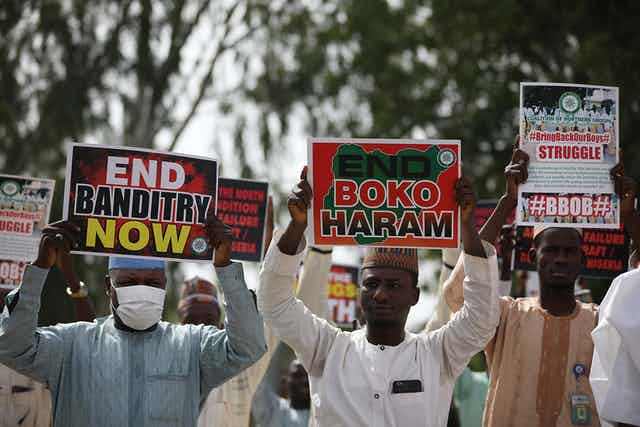
Zamfara has become the epicentre of banditry and kidnapping, the development that widowed many and orphaned thousands of kids.

Insecurity: A bomb capable of blowing into civil unrest in Northern Nigeria

By Abdullāhi Muhammad

Sadly, the issue of insecurity is becoming somewhat politicised. The danger lurking behind this, however, is alarmingly disarming. The problem is multifaceted. While some criminals do so to make end meets, many indulge in crime due to conflict of interest. Be that as it may, the government’s inadequate measures to tackle security is a lurking bomb capable of blowing into civil unrest.

In a documentary by BBC in Zamfara, Fulani Bandits frequently invade villages, abduct inhabitants and slaughter anybody who resists. They also raid roads, shoot passengers and drag drivers out of their cars. In a somewhat passionate yet disarming effrontery, Fulani Bandits have gone beyond the camera reach as they film each other, showing obsession with guns and frequent drug-taking.

Speaking to one of the bandits’ warlords, Ado Alero, BBC reported that Alero considers his action to be a means to attract the government’s attention. Alero is one of the most feared warlords in Zamfara, whose behest police had put the bounty of 5 million Naira considering his rule in a recent massacre. He was recently turbaned in one of the bandits’ villages.

In another interview with one of the leading bandits’ commanders who led an attack and abduction of nearly 300 school girls in one government girls’ secondary school in Jengebe, Abu Sani confirmed to BBC that they had collected 60 million from the government to release them. They used the money to buy more riffles. Abu Sani said they did that to destabilise the government and keep her from intervening in the parrying. In another attack launched by the bandits, more than 200 people, including women and children, were reportedly killed. Further, they threatened to kill 120 Hausas at the behest of any single Fulani lost to Hausas.

This follows the sorry state the Fulani had been subjected to. They were abandoned, extorted and apprehended for so long. Their cattle were also rustled. They’re made worthless; no hospitals, no schools, and nobody cares to listen to their cries. Thereupon, they take guns to protect themselves.

In response, the Hausa, on the other hand, organised vigilante militias who went on a rampage and attacked Fulani Hamlets, killing any Fulani their eyes could meet.

Hassan Dan Tawaye (Hassan the rebel), a Fulani, who was reported to have first brought AK-47 to Zamfara, explained to a BBC correspondent that each side of the warring parties was at fault. When bandits attacked the Hausa community, Hausa militias were quick in reprisal and, in the process, killed many innocent lives. 

Hassan Dan Tawaye, having laid down his guns to pursue peace, has returned to armed conflict. Hassan said they could not endure the levity of getting killed and were tired of waiting for the government to intervene. Therefore they have taken guns.

At this point, the Zamfara state government is in a dilemma and forced to negotiate with the bandits. However, Abu Sani said that each side benefited from the insurrection. He further noted that the polity’s increased insecurity politicised the problem. Things deteriorate because any of the parties, from top to bottom, needs money.

Dishearteningly, while Northwestern Nigeria is on fire, governments both at the federal and state level are becoming insensitive and lack the audacity to tackle the menace adequately. This has led to the bandits getting more enamoured and the victims being pesticide. The worst is how the state government asked the citizenry to buy guns so that they could depend on themselves. However, this is not the answer to the situation on the ground and would not provide the garment possible enough to stampede insecurity within the polity.

On the other hand, it’s interesting how the National Assembly’s impetus to impeach the president over the long-endure insecurity issue in the nation. The National Assembly had on Wednesday given the president six weeks ultimatum to resolve the issue of insecurity in the country or risk impeachment. This has relieved the citizens but is not good enough to suppress their fears of the criminals who sworn hell-bent on countering peace in all ramifications and bringing the nation to its knees.

It’s indeed of great concern and fear to see the centuries-old, good relationship between Hausas and Fulanis deteriorating. We, therefore, urge the government to deploy numerous tactics to tackle the insecurity issue in northwestern Nigeria and other parts of the country. More military bases should be built in and across various states with insecurity problems, and there should be sufficient military equipment for proper and successful operations. Finally, both sides should be demanded to lay down arms, concede for peace, and reconcile a trust.

May Allah bring back peace in Zamfara, Northwestern Nigeria and Nigeria in general, Amin.

Abdullāhi Muhammad lives in Azare, Bauchi state, and can be reached via abdullahimuhammadyalwa02@gmail.com.
On the emerging narratives of Hausa/Fulani animus in the Northwest

By Dr Raji Bello

The past few years have witnessed a gradual emergence of references in public commentary and social media to a potential or actual rupture of relations between Hausa and Fulani groups in the Northwest geopolitical zone of Nigeria. Prior to this, the two groups had enjoyed a largely harmonious relationship for much of their history which was only punctuated during the period of the establishment of the Sokoto Caliphate.

Since Nigeria came into being at the turn of the 20th century, conflict between the two groups was limited to occasional farmer/herder disputes. While the region has distinct Hausa (majority) and Fulani (minority) communities in the rural areas, the urban centres tend to have mostly mixed populations united by the Hausa language and Islam, which eliminates the possibility of ethnic conflict.

The idea of Hausa/Fulani antagonism began to emerge several years ago in the commentaries of individuals from outside the North like Femi Fani-Kayode and Nnamdi Kanu who relished in promoting it as a potential tool for undermining northern hegemony, as they saw it. But recent developments in the Northwest like the emirship succession in Kano and Zazzau, and the violent conflict between rural Fulani and Hausa vigilante groups as well as the wave of banditry against local communities by Fulani elements has created narratives of Hausa/Fulani conflict among northerners themselves.

As we acknowledge this new reality, it is also important to recognise that there are two strands of these narratives out there and the motives of those who articulate each of them are different. I will group them into non-extremist and extremist narratives.

Non-extremist narratives

These are propagated by ordinary Hausa citizens who are concerned by what they see as the continued suppression of Hausa identity and prestige as well as threats to the security of Hausa communities in parts of the Northwest as a result of banditry. They hold an unfavourable view of the existence of exclusively Fulani traditional ruling dynasties in Hausa-dominated emirates like Kano, Katsina, and Zazzau which were established when the Sokoto Caliphate came into being over 200 years ago. They object to the references that are often made to the Fulani heritage of the emirs (although I believe that this is not done out of ethnic chauvinism but because of a need for historical accuracy). These are concerns that the state governments in the Northwest can engage, with a view to introducing reforms that would assuage negative feelings and lead to a more harmonious society.

Traditional institutions play a vital role in preserving our heritage but for some segments of society, they may also be permanent reminders of an unpalatable past. It is the responsibility of modern day governments to ensure that they strike a balance between the two i.e. preserving heritage while not alienating some segments of society.

Reforms could be introduced that would formally recognise and integrate the legacies of the pre-Caliphate Hausa emirs. Like a contributor Aliyu Ammani has suggested in a Daily Trust article, Hausa ruling houses could be included as contenders during succession to the emirships; our governors are fond of creating new emirates where they didn’t exist before and therefore, they should not find it difficult to create new ruling houses within the existing emirates. The Sokoto state government may also consider elevating the status of the Sarkin Gobir of Sabon Birni – the ancient Hausa kingdom of Gobir being the epicentre of the Sokoto Jihad.

Governments have a duty to recognise and preserve heritage holistically; the heritage of some segments of society should not be elevated over those of others in a post-Caliphate and post-colonial nation state. This is a recipe for entrenching communal tension and possible conflict. The Northwest governments should collectively nip these emerging issues in the bud and not allow them to fester and grow into major problems in the future.

I expect some readers to either say that these suggestions are too radical or that they will be impossible to implement. I’m used to hearing this from reform-shy Nigerians who like things to remain just as they are even when the existing situation is pushing us towards the edge of the cliff.

The second cause for concern is, of course, the ongoing wave of banditry against local Hausa communities in many parts of the Northwest in which Fulani elements are major actors. However, this is not primarily an ethnic conflict; if communities that have lived in peace for generations are now locked in violent conflict we need to scratch below the surface to find the actual causes.

The banditry is a symptom of the failure of governance at various levels. Even a report commissioned by the Zamfara state government (the MD Abubakar-led committee) has alluded to that by indicting former governors, top government officials, traditional rulers and members of the security services. There are chronic issues with agricultural land management, law enforcement capacity, corruption and maladministration by local officials and traditional rulers.

The lack of a long term plan by successive federal and state governments for transitioning nomadic pastoralists to modern and sustainable livelihoods is itself an evidence of leadership failure. While people are entitled to show concern about the apparent ethnic divide in the conflict, it is clear that it is not fundamentally an ethnic one.

Extremist narratives

These are deeply inciting and apocalyptic portrayals of the state of Hausa/Fulani relations in the Northwest which are propagated on the internet by people with no apparent desire for peaceful co-existence. Their aim seems to be to incite a major upheaval in order to undermine the fabric of society. They are a faceless mix of anarchists, genocide entrepreneurs and probably, people with a religious agenda. They often start their narratives by depicting the arrival of the Fulani in Hausa land hundreds of years ago as an invasion, then portray Usman Danfodio as the original Fulani bandit leader before dwelling on their favourite topic of interrogating the validity of Hausa-Fulani as a descriptive term for a segment of the population of the Northwest. They hide behind a veneer of seductive Hausa ethnic nationalism but their true agenda is to engineer maximum disruption in the Northwest which they hope would serve their interests.

There is a YouTube site and a Facebook page dedicated to the project (yes, it does appear to be a well-funded project) and I have viewed a few of their videos. Some of the voices on the videos bear distinct Nigerien accents (with French-influenced pronunciations) and some of their messages give a hint that they are non-Muslim Hausas. One of the voices called for unity among Hausa people of all faiths – Muslim, Christian and pagan to confront the Fulani threat, as they saw it. From my knowledge of northern Nigerians, it is very unlikely that a Hausa Muslim Nigerian would call for unity between Hausa Muslims and Hausa pagans considering how paganism is viewed in Islam. A Hausa individual who makes this call is likely to be a non-Muslim. And if those behind the extremist messages on the internet are non-Muslim Hausas, the question arises about whether they are working for a religious agenda or not. By saying “non-Muslim Hausas” I’m not necessarily alluding to the Hausa Christian community; there are also a small but assertive number of Hausa atheists and modern day pagans who are not necessarily enamoured of the prevailing order in Northwest society. If anyone feels that I’m being alarmist here, they should visit the YouTube channel of Jaruma Hausa Tv and listen to the messages themselves.

Conclusion

Authorities in the Northwest need to face the new reality of tension and misgivings between the hitherto harmonious communities of Hausa and Fulani. There are issues that are germane (the exclusivist Caliphate traditional dynasties in some of the Northwest emirates and the ongoing banditry) behind the new unease in ethnic relations which need to be actively addressed, in order to re-establish harmony. But it should also be recognised that not all those who are currently pushing narratives of Hausa/Fulani conflict or Hausa nationalism on the internet are working for peaceful co-existence. Some of them are merely exploiting contemporary issues in the Northwest to achieve their own dark agenda.

Zamfara: We flee our communities as bandits are now in control, residents lament

By Muhammadu Sabiu

Residents living in the Mada district of the Gusau Local Government Area, Zamfara State, have lamented that gunmen operating in the area have now taken complete control of the region.

According to available information, the district’s residents had abandoned their communities as a result of the men of the underworld’s relentless terror strikes.

A source states that numerous peasants have set up camp along the route between Kotorkoshi and Mada town as refugees after the robbers defeated the security personnel.

“We have not taken our baths for some days now because the notorious bandits have hijacked the entire area as they have overpowered the security operatives.

“As I am talking to you now, I don’t know the whereabouts of my two wives and children and I don’t know whether they have been kidnapped or they escaped to another area.

“We have no other means of livelihood except farming but we have been banned from our farming activities by bandits. The only wife and children with me now have entered Kotorkoshi village to beg for food for us to survive,” a resident identified as Mallan Ibrahim Mada was quoted as saying.

Recall that the Zamfara State government through its commissioner of information, Hon. Ibrahim Magaji Dosara and that of Security and Internal Affairs confirmed that Mada district has been witnessing incessant terror attacks.

This forced the government to close all the markets and gas stations in the affected areas due to the increasing frequency of banditry operations in the axis.

“The State government is aware of the plight of the people due to banditry activities bedevilling the entire area; we, therefore, decided to shut down all the markets and filling stations to reduce the incessant terror attacks in the axis.

The incessant attacks appear to be one of the reasons the Matawalle-led administration seeks the Federal Government’s approval to legalise the use of firearms by residents of the affected communities.

The commissioner said, “We engaged the Federal Government into dialogue so that it can approve our request for everyone that is qualified to be carrying weapons for self-defense to reduce the tension.”

Terrorist bandits launch brutal attacks on Zamfara communities, kidnap many

By Muhammad Sabi’u

Gunmen have carried out another horrific attack in four Zamfara State towns, killing dozens of residents. According to an eyewitness, the number of villagers slain could not be determined yet, but the bandits took several of them, leaving four individuals with varying degree of injuries.

According to reports, the villages are Gidan Dan-Inna, Gwaji, Karoka in Kwai-Kwai District, and Faru, in Bungudu and Maradun local government districts.

Some eyewitnesses reveal that, majority of those killed were members of a local vigilante group who were protecting the communities, and some of the community members were attacked on their farms.

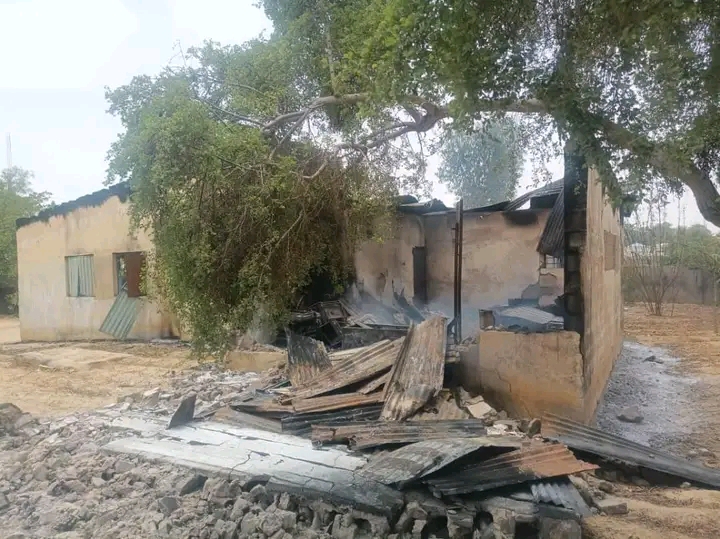
Terrorists with powerful weapons were claimed to have assaulted the villages, killing and rustling animals. The communities were reportedly attacked on Sunday evening and early Monday morning, destroying properties worth millions of naira.

When contacted, the State Police Command Spokesman, SP Mohammed Shehu, confirmed the tragedy, adding that twenty people were slained in three villages in Bungudu Local Government and five more in Maradun Local Government Areas of the State.

Armed operatives have been dispatched to the affected and surrounding areas to protect people and their properties in the axis, he said.

Zamfara: Fire destroys Kauran Namoda INEC office

By Ibrahim Nasidi Saal

The Resident Electoral Commissioner for Zamfara State, Professor Sa’idu Babura Ahmed, reported that a fire gutted the Kauran Namoda Local Government Area office of the Commission.

The tragic incident occurred around 11.00 pm on Monday, May 2, 2022. No casualties were reported while critical materials such as Permanent Voters’ Cards (PVCs) and registration machines for the ongoing Continuous Voter Registration (CVR) exercise stored in fireproof cabinets were saved. 

However, the building was extensively damaged. Several fixed and movable office furniture were destroyed despite the best effort of the Zamfara State Fire Service and the spirited efforts of good Samaritans to contain the inferno.

The attention of the Nigeria Police has been drawn to this incident. Together with the Fire Service, they have commenced an investigation to ascertain the cause of the fire.

Four abducted female students regain freedom 

By Uzair Adam Imam 

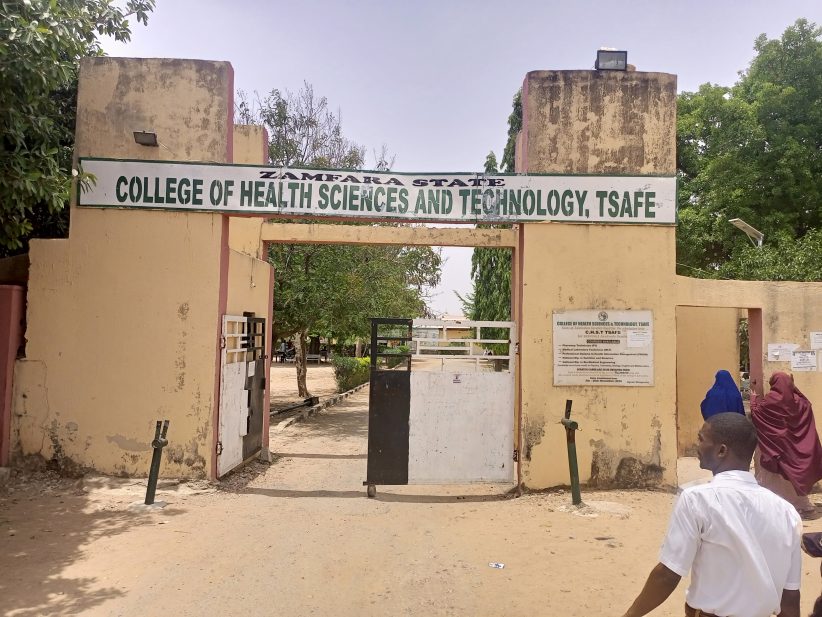
Four abducted female students of the College of Health Science and Technology, Tsafe in Zamfara State, regained freedom Thursday, April 14, 2022.

The Deputy Provost of the college, Jamilu Lawal, made the disclosure, adding that the students were released unhurt. 

He added that the four female students had been taken to the hospital for medical screening.

The Daily Reality learnt that no ransom was paid to the bandits for the release of the students. 

The students were reportedly abducted last Tuesday night in Tsafe town.

An unpopular view of the post-conflict dilemma in Sokoto and Zamfara

By Khairat Suleiman Jaruma

I sat down in the car, slightly annoyed that the Corolla 2003 didn’t have a Bluetooth connection. I love to listen to music when travelling and I was tired of using my AirPods. I was travelling from Kano to Kaduna, and the driver had stopped at Zaria to pray. We parked inside an obsolete filling station.

I was getting bored in the car, so I decided to get out and stretch my legs. So, I walked to the roadside; many people were standing. They seemed to be waiting for travelling cars, so I went closer and figured they were all going to Abuja. Considering the road condition, especially these days, I wondered why someone would be heading to Abuja from Zaria by 4 pm. Anyway, I walked back to the car and sat down, and the driver came, and we continued our journey.

We kept on seeing more people that would scream “Abuja” if the car slowed down. Finally, I could not hold it anymore, so I decided to ask the driver since he travels a lot. I asked him why there were so many people (mostly youths) desperately going to Abuja at this unsafe hour. He said they were all “yan cirani,” meaning unskilled “migrants”.

I kept quiet for a moment, then I went ahead to ask him where they were migrating from, and he said most of them were youths from Zamfara and Sokoto who had lost their families and means of livelihood. Some were even students who could no longer afford to pay tuition fees or even feed themselves. I felt a sharp pain in my heart.

But then, I was wondering why Abuja? We all know the cost of living in Abuja is high; why not Kaduna or Kano? Unfortunately, I have not been able to answer these questions. The main point here is that you will agree with me that there are no jobs for these people in Abuja. The number of people I saw was alarming, and I was told by the driver who plies the road every day that sometimes there are even more people than this number. These people are most likely to become a nuisance to society if they eventually arrive in Abuja and are forced to face the reality of unemployment.

Another sad part is that these are youths that are expected to push this country forward with their innovative ideas. These are the young people we want to see as part of governance. But these young people have been failed and abandoned by their government. So while trying to end insecurity, it is imperative that the government addresses unemployment and creates an effective post-conflict reconstruction for affected areas. Prevention, they say, is better than cure.

Khairat Suleiman Jaruma wrote from Kaduna via khairatsuleh@gmail.com.

Zamfara deputy governor impeached

By Muhammad Sabiu

Reports coming from Gusau have it that Mahdi Aliyu Gusau, the state’s deputy governor, has been impeached by the Zamfara State House of Assembly.

The members ousted Mr Gusau from office on Wednesday during plenary after 20 out of 21 voted in favour of his removal.

Following the submission of a panel report by the state’s chief judge, Kulu Aliyu, to investigate alleged impeachable offences against the deputy governor, the parliamentarians quickly voted.

Insecurity: Reengaging ‘Yan Sa-Kai and the need for caution in Zamfara

By Suleman Ahmad Tudu

One of the immediate decisions of Gov Bello Matawalle’s administration was disbanding the vigilante group popularly known as Yan Sa Kai as one of the conditions for dialogue with bandits in his efforts to bring a solution to the decade of bloodshed in Zamfara state. The dialogue has recorded some early successes in almost a year of its initiation.

Unfortunately, despite being given this ample opportunity for the bandits to completely lay down their arms and embrace a lasting peace, some of them refused to subscribe to the dialogue. They continue launching and intensifying their deadly attacks on communities—killing, kidnapping and rapping women unabated, taking advantage of the vacuum created by disbanding their sworn enemies, the Yan Sa Kai.

Some negative implications of disbanding the Yan Sa Kai are that many communities that gallantly resisted bandits before the disbandment have now submitted to them. Palaces that were no-go-areas to bandits before have now become accessible to them. As a result, the morale of many vigilante members has been killed. The bandits have also taken advantage of the dialogue to deceive the government and get many resources. They kidnap many people, including school children, for ransom to procure more arms.

But we can honestly understand the justifications behind the disbandment of Yan Sa Kai in the first place as a sine qua non for dialogue to thrive. The activities of this group have fuelled the crisis for their jungle justices—extrajudicial killings and ethnic profiling of criminals. All Fulanis are bandits to the Yan Sa Kai, which is wrong!

Now that Gov Matawalle has reversed his decision to reactivate the Yan Sa Kai in the fight against terrorism (banditry), which is very good, there is a need for a caution in the recruitment, administration, and operations of the about to be born-again group. We need Yan Sa Kai guided by rules of engagements, monitored by security forces and coordinated by established authority. We need Yan Sa Kai with some basic military training and improved weaponry, not the locally fabricated, non-cartridge guns, bow and arrows that cannot match the arsenal of the terrorists.

Achieving this requires efficiency right from the recruitment process. Government should not simply dust off the list of the previous members without scrutiny to fish out those whose morale has been killed or no longer believe in the course of the group. Liaising with traditional institutions will be an effective way only if those who have cases to answer are side-lined in the process. Government should also not mistake recruiting members of the born-again vigilante group from the communities that were adjudged to have wholly submitted to bandits before or during the dialogue initiative. These measures could help avoid enlisting bad eggs who would compromise or sabotage the group’s activities.

Training of the carefully selected and thoroughly profiled members of the group will go a long way in shaping their mindsets and inculcating in them the rules of engagements, discipline, command, control and coordination. It will also mend their relationship with the security forces with which they should work together as a team. This can be possible within at least a month of rigorous training.

Granted that Yan Sa Kai knows the bandits, their collaborators and hideouts better than the security forces, yet storming weekly markets in the name of hunting bandits or their collaborators is a flawed strategy that has to be changed. They used to carry extrajudicial killings during such operations that sometimes affect innocent people. This time around, the group’s approach should be offensive by jointly reaching out to the bandits’ enclaves together with security forces now and then. And if the group has to defend and hunt, the defence should be restricted to every member’s immediate community while the hunt should be on the checkpoints to be placed in strategic places. 

While NO suspect deserves to be (extrajudicially) killed but arrested and prosecuted accordingly, I can command that any civilian seen wielding an AK-47 rifle should be “shot at sight” as ordered by President Muhammadu Buhari!

May Allah grant us everlasting peace in Zamfara and Nigeria at large. Amin.

Suleman Ahmad Tudu wrote from Nasarawa Mailayi of Birnin Magaji local government, Zamfara state. He could be reached via suleatudu@gmail.com.