Yoruba

Behind every negative human tendency is an enabler

By Dr Raji Bello

Last Tuesday, I listened to a panel on AIT’s morning programme discussing the increasing weaponization of ethnic and religious identity in Nigeria, particularly during the current election cycle. The discussants were particularly alarmed by the developments surrounding the governorship election in Lagos state, which has witnessed threats, intimidation and violence against voters of a particular ethnic group. The politicisation of ethnic and religious identity in this election cycle is, of course, not limited to Lagos.

Religious identity was a major issue for the APC presidential ticket and some governorship tickets like that of Kaduna state. Religion was a major issue in the Taraba governorship contest, and the issue of indigene vs settler reared its head during the Kano governorship election. There is even a Facebook group which is committed to getting candidates with pure Hausa blood elected into the governorship posts in the Northwest states. Nigeria may be on a slippery slope towards eventual implosion. 

What I have noticed about the AIT discussion is the same thing that I have observed about other similar discussions – they are limited to expressions of sadness followed by appeals to Nigerians to change their behaviour. There is very little discussion on why Nigerians do what they do and if there are any enablers for those tendencies. In my personal reflections, I have tried to answer these questions.

Most negative human tendencies have things which enable them, and rooting out the enablers is an important part of the measures for suppressing these tendencies. Anyone who is familiar with Islamic theology, for example, knows that there is little tolerance for things which are deemed to be enablers of vices. The prohibition of the consumption of alcohol is an example; alcohol intoxication is regarded as an enabler for many vices, which has necessitated a full prohibition of it.

Likewise, the encounter, in isolation, of two eligible and unmarried members of the opposite sex is regarded as an enabler for sexual vices. In the secular world as well, drinking and driving are prohibited in many countries because it is an enabler of fatal road accidents. Relationships between academic instructors and students are prohibited or restricted in many American institutions because they could be enablers for abusive relationships and conflicts of interest.

If Nigerians have come to the conclusion that toxic identity politics is harmful to the corporate well-being of the country, they must find the enablers for such politics and uproot them. Issuing passionate appeals is bound to be ineffective because human beings do not always respond to reason or appeals to stop a negative behaviour, especially when there are things which incentivise such behaviour. In my view, there are two enablers for the weaponization of identity in Nigeria:

1. There is no punishment for it. There are either no laws against toxic identity politics and incitement against ethnic and religious groups in Nigeria or they are never enforced. The result is that offenders almost always get away with their actions. This lack of accountability is a powerful enabler for similar behaviour by the same individuals or others.

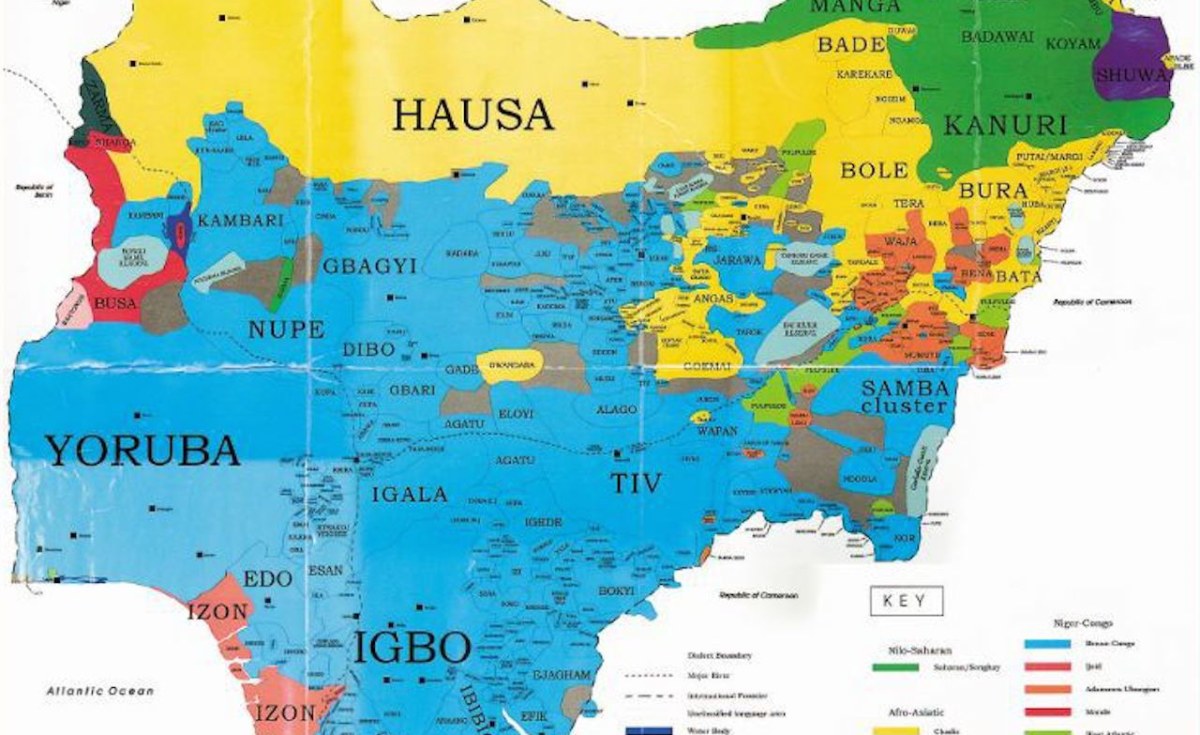
2. There is a reward for it under our federal system. Our current constitution provides for semi-autonomous federating units (states) which are loosely coterminous with ethnic and religious identities – for example, Imo State is Igbo and Christian, Katsina is Muslim and Hausa-Fulani, Niger is Nupe, Gbagyi and Hausa, Ogun is Yoruba etc. The federal system has also granted these federating units the power to elect their own leaders (governors and LGA chairmen), unlike in unitary states where these leaders are often appointed by the central government.

Since elections are competitive and every state is identified with certain ethnic and religious identities, the possession of these identities by any individual becomes an advantage towards winning elections. This is why Nigerians have learnt to hold on to these identities and even to flaunt them. Being a Tiv is a huge advantage in Benue state, just like being a Kanuri is in Borno state. It’s not hard to imagine that when electoral competition becomes very stiff, these identities will be weaponised. There is no way to stop Nigerians from engaging in toxic identity politics as long as these two enablers are in place.

Our country was founded on the basis that it has diverse and irreconcilable ethnic and religious communities. Our founding fathers wanted it that way, and they chose a federal system which they thought was best suited to manage our diversity (although most of the major federal states in the world are not so diverse internally). While countries like Ghana took off with the mantra of unity in diversity and did everything to build a united nation, our founding fathers did not even pretend that the country was united. Each of them had regional priorities higher than Nigeria’s unity.

We started with three federating units and have now grown to thirty-six plus the FCT, and the more we created states and LGAs, the more identity fault lines we created. The country is now balkanised into 37 identity enclaves (states), and 774 LGAs and each citizen is marooned inside their own enclave and is entitled to few formal privileges in others – even neighbouring ones.

In the First Republic, this divisive effect of federalism wasn’t up to what we have now because the federating units were much bigger, and they functioned as unitary states internally. The former Northern Region, for example, had thirteen or so provinces whose administrators were appointed rather than elected, and a northerner from one province could be posted to work in any of the other provinces. The provincial boundaries did not keep northerners away from each other, and as a result, the people of the region saw themselves as one because they were indeed one in practice. 

The Northern Region alone has now evolved into 19 federal states and hundreds of LGAs, each with a rigid boundary which separates it physically and functionally from other federating units. This has made intercommunal relations to be worse than they were in the old Northern Region. The late former SGF Alhaji Gidado Idris, who was from Zaria, was once a divisional officer in Benue, Adamawa and Sardauna Provinces, but his grandchildren cannot work for the Benue State Government in today’s Nigeria. They may even struggle to gain admission into state-owned schools in Benue State.

Mr Selcan Miner, a former secretary to the government of Benue-Plateau State, was once an administrative officer in Sokoto Province, and he still has fond memories of his stay there, particularly his close relationship with Sultan Abubakar III. But in the present day, the government of Sokoto State may not grant privileges to Mr Miner’s grandchildren because they are not “indigenes” of the state.

The late chief of the Mbula people in Adamawa state Joram Fwa, who was a US-trained educationist, was the pioneer principal of Ramat Technical College in Maiduguri under the then Northeastern State. He was entrusted with the assignment of establishing the college and was made its pioneer head. The college has since grown to become Ramat Polytechnic and belongs to the Borno State Government. I will not be surprised if, in the present day, the application of Mr Fwa’s grandchildren for entry into the polytechnic is turned down on the grounds that they are not from Borno state. I have used the examples of these three Northern elders to illustrate what we have done to ourselves over the years through our so-called federal system.

Not too long ago in the 1990s, the governor of Lagos state was a military officer named Buba Marwa, a native of Adamawa State. He was appointed under the military government’s unitary style, and he was well-received in the state because the people knew that that was the system in operation then. At a different time before that, a native of Lagos State, Bode George, was appointed the governor of Ondo State. From all indications, Marwa had performed well in Lagos in terms of infrastructure and crime fighting.

If we do a cost-benefit analysis of the process of appointing Marwa as governor and that of the re-election of Governor Sanwo-Olu in 2023, we would see that the former didn’t cost any significant amount of money and didn’t involve any fracture in relations between major ethnic communities in Lagos while the latter had cost the federal government a lot of money in election expenses and has led to flaring of inter-ethnic animosity, intimidation and violence. In the end, both governors are capable of doing a lot of good for Lagos, the difference in the nature of their appointment notwithstanding. This is why we need to ask ourselves if we really need to have elected governors and LGA chairmen as provided in our current federal constitution or we could simply have them appointed and monitored by the central government.

In the late 1960s and 70s, the governor of Kano State was Audu Bako, a police commissioner and native of present-day Kebbi State. He was appointed by the government of General Yakubu Gowon, and from all historical indications, Kano State has had it so good under him. His appointment didn’t cause any inter-communal upheaval in Kano, and there was no violence. Compare that to the re-election of Governor Abdullahi Umar Ganduje in 2019 or the election of Abba Kabir Yusuf in 2023, which were both marked by communal tension and violence. Why should we keep using this costly option of election and risk so much when Kano can have good appointed governors just like Audu Bako and Sani Bello? Only a small number of democracies around the world have elected sub-national chief executives as we have, and countries which don’t have them are not deemed to be less democratic than us.

Sometimes Nigerians view unitary systems negatively because they equate them with military governments, but there is nothing that stops us from having a unitary democracy like many countries in the world. The appointed governors and LGA chairmen under this system are going to be civilians, maybe even members of the ruling party at the centre, just like in the system in Ghana, whose 16 regions are all governed by appointed regional ministers who, at the same time, are elected members of the national parliament.

The other fear that Nigerians have about a unitary president becoming too powerful is also misplaced. Ghana’s presidents are not regarded as dictators, and opposition presidential candidates have even won elections there. In any case, parliament is always there as a check on the powers of the president. Unitary systems are cheap, can minimise toxic identity politics, guarantee harmony in the pursuit of developmental priorities and provide better coordination in fighting insecurity. It’s a better system to have than our current federal system, with its unaccountable and politically autonomous governors whose elections are now driving our ethnic and religious communities further apart and threatening the stability of our country.

Whoever brought this American-style federal constitution and gave it to our African tribal groups to implement has not served us well. It’s time we found the courage to abandon the farce. What Nigeria requires is a unitary democratic system with an element of rotational leadership at the centre to ensure its various groups of inclusion.

Dr Raji Bello wrote from Yola, Adamawa State.
On Southern Nigeria’s selective outrage

By Suleiman Ahmed

In Nigeria, an election period is like watching a classic Series for the umpteenth time. You know how it’s going to play out, but it doesn’t make it any less fascinating. The most entertaining episode, of this Series, after the presidential election, of course, is the debate leading up to the Lagos gubernatorial election.

Firstly, the Yorubas must perform a ritual of agonisingly re-iterating the exact same thing: that Lagos is not a “no man’s land.” This is quickly followed by an outcry from the non-Yoruba, Lagos-based (mostly southern) Nigerians. They argue that, as Nigerians, every inch of land in the country, belongs to all Nigerians. That any attempt to deprive them of this right is ethnic bigotry. But how true is this? And do they practise what they preach? Let’s go down memory lane.

A few years ago, when the federal government suggested to some (southern) state governors to provide grazing lands to cattle farmers (who’re predominantly Fulanis) to grow their herds; to control herder-farmer clashes in parts of the country, many of the governors rejected this proposal. (Mostly) Southern Nigerians also took to social media to applaud the governors for refusing fellow Nigerians access to Nigerian lands.

Dangerous words like “invaders” and “take over” were recklessly deployed to stoke ethnic tension. No one cared to remember that these people, too, were Nigerians and therefore were entitled to own land and do business anywhere in Nigeria.

Now, in 2023, it’s election time again, and this same divisive rhetoric is being deployed, albeit in different circumstances. The same people who once championed an anti-Fulani campaign that ensured their fellow countrymen from the north couldn’t get lands in their own country are now complaining of being othered by Yorubas in Lagos. So, I’m asking: why is it ok for them to own lands and freely do businesses, have some influence on who becomes governor in “another man’s land,” but at the same time, see no contradiction in telling northern Muslim cattle farmers to return to the north, to look for land, because “the south does not belong to them?” Why are you concerned that the Fulanis “will take over your land” but are now getting triggered because the Yoruba people feel the same way towards you?

They wanted the land for free

When I first shared my thoughts on this topic on my Facebook Page, some interlocutors argued that the reason for the southern governor’s pushback was that the federal government wanted the land free of charge.

“Free,” in this context, is debatable. When an industry such as cattle farming wants the land for its activities, it’s not usually a mere hectare or two. A reasonable size would be hundreds to thousands of hectares. The size and complexity of such a project is not something private individuals can execute without support from the government.

Therefore, it was not out of order for the federal government to step in to help with things like making the land available and then building the infrastructure needed for the place to function properly. After which interested parties can be invited to come in and rent/buy spaces to set up shop. These farmers were clearly going to pay taxes to local authorities and generally operate the same way market stall owners do in places like Kano, Lagos or Aba.

Having said that, let’s say, for the sake of argument, I agree that the federal government wanted the state government to give “free” land to the cattle farmers; why was the response not: “bring more money!” Or “let’s have a better financial agreement?” We didn’t hear of any such request — of a better (financial) offer, from the southern governors. Instead, what we got from them, and many southern Nigerians, were: “the Fulanis should go back to the north and ask for land there,” “this is a plan by the Fulani government to take over our land and hand it over to their people,” and many other unpleasant, divisive comments. The protest from the south was a clear message to those cattle farmers from the north. It was made known, loud and clear, that their land was in the north and not in the south. What happened to being a Nigerian citizen with full rights anywhere in Nigeria?

We can’t be comfortable with othering and divisive languages when it involves the Fulanis and then suddenly become appalled when they’re deployed against a different group of people. It doesn’t work that way. We cannot, on the one hand, say things like Idoma land, Ijaw land, Tiv land, Igbo land, or Niger Delta land (or Niger Delta oil) and then throw tantrums when Yoruba people say Lagos is Yoruba land. You’re clearly not appalled at any injustice. You’re only now concerned because you are at the receiving end of it. What you’re practising is Selective Outrage (apologies to Chris Rock), and it is hypocritical.

Suleiman Ahmed is a writer and the author of the socio-political novel, Trouble in Valhalla. He tweets from @sule365.

Your language is your superpower: My stand on using local languages in schools

By Maryam Augie-Abdulmumin

With the approval of the National Language Policy by the Federal Executive Council (FEC), instruction in primary schools within Nigeria will now be done in the mother tongue. As with every other issue of importance in this country, the policy was greeted with passionate arguments, both for and against. The Government’s decision to promote language learning for greater learning outcomes has been in the making for many years, especially at the lower primary levels. The Federal Government may have officially made it compulsory for the primary mode of instruction to be in the mother tongue. However, this policy has been in practice in most remote communities, especially in the North.

Whilst some arguments against the idea (which we shall review shortly) were valid, it is worth considering the fact that Nigeria is currently facing what is akin to an education emergency. In this regard, whatever little effort is made, especially at the policy level, should be greeted with some positivity whilst exploring ways to augment the effort in the non-governmental and private sectors.

Having said that, it is equally important we explore reasons why this policy might not work. This is because it is only when we clearly understand the hurdles ahead that we will be sufficiently prepared to effectively nurture the policy seed that the Federal Government has planted. Below are three strong reasons advanced against the policy:

The Financial Implication of Educating Children From 500 different ethnic groups.

Without mincing words, I agree with those who say it is unrealistic and unachievable to educate children from over 500 ethnic groups. This is especially true considering that education has always been at the low end of budgetary allocations. Let’s face it, the current economic profile of the nation does not look promising for a radical overhaul of this nature. However, in order to take advantage of this policy and benefit from what technologically advanced countries like China, Germany, and Russia have benefited from for many years, we can start with the low-hanging fruits. By this, I mean let’s start with the three dominant languages – Hausa, Yoruba and Igbo.

These languages already have advanced international media backing (BBC Hausa, Yoruba, Igbo, for instance) and a copious body of knowledge accessible through search engines like Google. There is a possibility of easily scaling beyond the three languages by leveraging the data and lessons learnt at this phase of the implementation.

The dearth of Qualified Teachers and Instructional Materials

Closely related to funding is the challenge of the dearth of teachers and the availability of adequate instructional materials to implement such a grand overhaul. The truth is even the current system is grappling with the same challenges, so it is an open secret that any change will mean more challenges. However, with what is available through scientific research on the benefits of children receiving instructions through their local languages, it is clear that it is only a matter of time before this issue becomes the front burner of national discourse. And although we don’t have it all figured out, we have to start with what is available. The NCE curriculum makes provision for every college of education in the Federation to have departments of Hausa, Igbo, and Yoruba and some provision for the language of the immediate community.

Community ownership, NGO, and private sector support will go a long way in ensuring effective implementation. It is also important to note that whilst the Federal Government makes policies, the responsibility of implementing basic education lies with State Governments. Thus, the onus of ensuring this success will vary from state to state. If, for example, northern governors believe this policy will serve their interest most, they should do everything within their powers to ensure the success of this policy at the state and regional levels. The same may not be a priority for the southern region. What is significant here is how we make this policy work in the best interest of Nigeria’s peace and prosperity.

Favouritism and the Challenge to the Fragile Peace in Nigeria

Viewed from the historical context of education in Nigeria, it is obvious that English is more accessible, learnt and understood in the southern part of Nigeria than in the dominantly Hausa-speaking North, where the region has always relied on the Hausa language for the mass dissemination of information. In such a situation, it is obvious that a policy of this nature will find more fertile ground in the north compared to other regions of the country. But let’s face it, the earlier we speed up access to quality education through whatever medium possible, the better for our country’s peace and prosperity.

The data available on the out-of-school population in Nigeria is disproportionately in the north, and the earlier we bridge this gap, the better for our developmental outcome. In the final analysis, this policy might actually make it more cost-effective and efficient to educate a Nigerian child than the current western-based model.

In conclusion, whilst a radical policy of this nature is bound to be confronted with many obstacles, research and comparative curricular studies have proven that our nation gains from a policy favouring our local languages over foreign languages.

It is true that the English language gives us a platform to compete globally, but the spice is in what is truly ours, our local languages, which tell the stories of history and survival. Let’s not forget that nobody says our own languages cannot gain global dominance under the right circumstances, and it all begins with the curriculum.

Mrs Maryam Augie-Abdulmumin is the Founder and  Executive Director of Illmi Children’s Fund. She can be reached via: info@illmichildrensfund.org.

Nigeria at 62: Which way forward?

By Habibu Maaruf Abdu

Nigeria gained independence from Britain in 1960. That’s 62 years ago. Unfortunately, however, the country has made no significant advances since then. In my opinion, it takes the collective efforts of all Nigerians to change the story. Nigeria’s ethnically diverse people must agree to unite and develop a sense of working together to move the country forward. In other words, Nigeria must first be united to reach its destined greatness.

To achieve a united Nigeria, the government of the federation must endeavour to command a ‘national loyalty.’ That is, to get support from the people of every part of the country. The government could get this if it gives members of all the parts an equal opportunity in the government and its agencies. This will send a sense of belonging and satisfaction to them. The government should also treat all Nigerians equally, regardless of their regions, religions, tribes, and political affiliations.

Another thing that can bring Nigeria together is leadership rotation across the six geo-political zones. This should be regarded considering the reality in the southeast today. There are grumblings, and even mass agitations, from the southeasterners, mainly because they have never produced a president since the second republic. This fact makes them feel as though they are treated as outcasts in the country and therefore agitate. When leadership rotation is implemented correctly, such agitations will unlikely arise again. Also, the federal government should ensure that no region is envious of the other by making fair zoning of capital projects and equal distribution of resources across every part of the country.

For the peaceful coexistence of ethnically and religiously diverse Nigerians, all ethnic and religious groups must reject their prejudices against one another. They must also understand their differences genuinely. This is necessary for them to have a common ground for respecting and tolerating their differences (cultural, ethnic and religious). It will also help them to live in harmony and build a society with strong human potential and economic progress.

‘Discipline’ and ‘patriotism’ are also areas of emphasis. No nation can be great without these values instilled in the psyche of its citizens. This is why many countries, like china, have a whole ministry for national orientation. Nigeria should copy these countries and launch a massive and consistent campaign for the ethos of civic behaviours and responsibilities in Nigeria. This will help to build discipline, respect and love of the country, as well as national pride, in the society. When these values are present in society, the people will uphold discipline and patriotism. They will reject corruption and all other harmful habits that could cripple their dreams and inhibit their country’s development.

On another side, economic diversification should be considered to put Nigeria on the right track. The country’s economy is, at present, heavily reliant on the revenue derived from the export of crude oil. This leads to low economic growth, which, in turn, favours poverty as there is no room for massive job creation. But the diversification of the economy will certainly change the story. Therefore, Nigeria should diversify into areas like agriculture and industrialization. The agricultural sector, which was the mainstay of the country’s economy before the discovery of oil, has a long value chain. And a firm industrialization policy can create thousands of manufacturing jobs for people.

Nigeria should also make policies that will attract more foreign investors, especially those who produce different kinds of products and machines. This, together with reasonable provisions for private enterprises, will go a long way in reducing unemployment and alleviating poverty in the country.

Notwithstanding the above, Nigeria should do better for the education sector. The saying, “No country can really develop unless its citizens are educated,” cannot be more correct. Unfortunately, Nigeria spends very little on education (less than 8% of its total GDP). The number of out-of-school children is high, and universities remain closed for over seven months due to an indefinite strike by the Academic Staff Union of Universities (ASUU). To save education from this mess, Nigeria should increase its expenditure on the education sector; map out a plan for revamping it, and see the plan through with maximum commitment.

At this juncture, I want my fellow Nigerians to remember that; all the developed countries we currently admire have, at some point, been where Nigeria is today. It’s therefore valid to believe that Nigeria can equally develop. Fortunately, the country is blessed with both material and human resources to facilitate the process. However, it is rightly said that Rome wasn’t built in a day. Progress is made with sustained effort over time. Therefore, we need to unite, do our patriotic duties, uphold discipline and get professional and morally upright leaders to drive the country.

I will conclude by quoting Chinua Achebe in his book The Trouble with Nigeria, published in 1983, where he opined that “Nigeria can change today if she discovers leaders who have the will, the ability and the vision. Such people are rare in any time or place. But it’s the duty of enlightened citizens to lead the way to their discovery and to create an atmosphere conducive to their emergence. If this conscious effort is not made, good leaders, like good money, will be driven out by bad.”

It takes our collective efforts to move Nigeria forward.

Habibu Maaruf Abdu wrote from Kano, Nigeria, via habibumaaruf11@gmail.com.

Till death do us part

By Dr Abubakar Mohammed Gombe

It is interesting to understand the divine marriage between a country and its citizens, specifically between Nigeria and Nigerians. In such a marriage, no amount of lives lost puts asunder. The mysterious marriage keeps producing low-quality products who believe eliminating half brothers will better their lives. Nonetheless, the marriage produced the golden voice of the continent that was, however, eliminated by the products of his mother.

The first army General who coordinated the marriage affair was also eliminated by the same products. Many more military coordinators in charge of the Nigerian marriage were eliminated. The latest were the homemade healthy transition of General Sani Abacha GCON; the prison made transition of MKO Abiola with General Shehu Musa Yaradua, and the contagious transition of President Umaru Musa Yaradua GCON. Yet, the marriage stands. It was only death that did them part.

A three-year civil war could not put asunder. The Ojukus were forcefully retained for the survival of the marriage of interest that occasionally accepts religious and tribal killings and hailing such acts by pardoning popular champions like General Zamani Lekot of the Zangon Kataf crises by the IBB regime and rehabilitating others for communal reintegration by the Buhari regime. These are sincerely done to sustain the cracked marriage until death.

The emergence of popular movements like Boko Haram, IPOB, Kidnapping, Cattle rustling, Herdsmen, Bandits, and Terrorism move to ensure the marriage failure. Still, the lifetime Unity in Corruption among the children of the marriage, which recently pardoned Joshua Dariye and Jolly Nyame, is stronger than the distraction of the popular movement groups that also exploit brothers of the same marriage.

While Unity in Corruption ensures poor education for brothers and sisters of the same marriage, BH went on destroying primary and secondary schools. They also vandalized electricity supplying poles and transformers to complement Unity in Corruption’s idea of rural electrification. IPOB, in its territorial states, declares Monday as an additional weekend while Kaduna officially declares Friday as the beginning weekend. In their territorial states, Bandits know all the army free zones where they peacefully operate without stepping on army toes. Cattle rustlers also know where there are no cattle, and so, instead of taking away cattle, they take the lives of entire villages that provoke them by not keeping cattle, their needs.

Nigerian lives are not safe on the road, on rail and at the airport. One finds it difficult to comprehend a passage in which children of the same mother kill within the home. Yet, the marriage stands and keeps producing children. Everyone identifies with the mother in a polygamous family and blames half brothers. In the Nigerian case, there is only one mother with several tribal lands. It seems only the Fulani have no land. Yet, the Fulani also join the powerful elites’ movement of Unity in Corruption. Under the same mother, the socio-political and economic status becomes the dividing line. The certified children that form Unity in Corruption blame the Almajiri for retrogression.  

Then, the most disturbing effort of closing universities to seek the attention of the I Assure You Regime by the educated class that formed ASUU appeared with the support of their supporting staff of SSANU and NASU to seek revitalization. ASUU believes closing universities and sending brothers and sisters home will pain Unity in Corruption. It indeed doesn’t. Instead, ASUU complements Unity in Corruption in denying access to university education and actualizing BH’s mission while in self and family hunger. While most state universities in the north religiously observe the ASUU strike, some state universities in the south graduate students. Yet, the marriage stands till death do us part.  

Considering the time, the response of the previous regimes, the regime of assurance with less action, and the possible incoming regime, ASUU ought to have a comprehensive retreat, call off its hunger strike, restrategize and declare regime change in Nigeria with the support of SSANU, NASU, Colleges, Polytechnics, NUT, students, parents and good citizens.

All Nigerians are deeply involved, and all political and armed movements are sponsored either to sustain Nigeria’s marriage for sponsors’ personal gain or to put asunder. With all the prophesies, projections and armed movements, the marriage of amalgamation remains. What Nigeria needs is the game-changer, and that changer can be found in ASUU. Nigeria needs focus and determination. ASUU must go into governance en mass. Otherwise, one or two members hardly make a meaningful impact.

ASUU should simply declare for the office of the Federal and State University Visitors, Senatorial Districts, Federal and State Houses of Assembly in the 2023 general elections and work with SSANU, NASU, Colleges, Polytechnics, Monotechnics, NUT, students, parents and good citizens. Nigeria must be saved. We remain Nigerians till death do us part. 

ASUU must retain its strong UTAS team and set in motion its national planning and enforcement team, policy enforcement team, economic team, company revival and creation team, employment creation team, national security management team, education monitoring team, patriotism enforcement team, salary and pension enforcement team, manufacturing promotion team, local and international lobby team, Crude oil and refinery enforcement team, action or resignation enforcement team, among others,  

Let’s use our hunger to save our country. With ASUU, SSANU, NASU, Colleges, Polytechnics, Monotechnics, NUT, students, parents and good citizens, Nigeria can be saved.

Let’s save Nigeria till death do us part.

Dr Abubakar Mohammed Gombe wrote from Gombe State University. He can be reached via amgombe2@yahoo.com or +23408060839578.

Unification of Nigeria: Incidental blessing

By Habib Korede

Restructuring has been a topic on Nigeria’s news headlines for decades, and as the 2023 general election approaches, ‘restructuring’ is one optics for political campaigns. However, the unification of Nigeria, which has continually stirred this debate, results from the colonials’ avarice but has fortunately been a blessing.

Before the colonials, Nigeria was home to over 300 ethnic groups, with Hausa in the North, Igbo in the South-East, and Yoruba in the South-West, as the three dominant ethnic groups. These ethnic groups operate under various separate entities such as ethno-religious, geo-regional, and political nationalities under caliphate, kingdoms, and empires,

The colonials amalgamated these entities through divide and rule policy on 1 January 1914, following Frederick Lugard’s recommendation. The colonials take full advantage of their exploration of the country by sternly concentrating power at the centre to favour their political and imperial interests instead of laying a good foundation for nation-building. This has become a puzzle for Nigeria in the post-colonial era. 

Struggles for inclusion at the centre and resource allocation have resulted in many heated controversies, distrust, compromise, and violent conflicts. These include the crisis that emanated in the 1959 and 1964 federal elections, the January and July 1966 coups, the three years civil war of 1967–1970 when the Igbo region wanted to secede into Biafra, followed by several bloody coups and counter-coups.

The unity of Nigeria has also been threatened by various ethno-religious conflicts resulting from bad governance, such as the Kaduna State Zangon-Kataf crisis in 1987, 12 June 1993, Moshood Abiola’s presidential election annulment crisis, and return to the military junta in November 1993.

The return to the democratic system of government under the leadership of Gen. Abdulsalami Abubakar, which gave birth to the presidency of Obasanjo in May 1999, led to a rapid paradigm shift in Nigerian political history.

Deterioration in the governance of the country sparked several protests. Protests like the 2012 fuel subsidy removal and the 2020 #EndSARS that resulted in the death of protesters are only a few examples.

From 1999 to date, every region of the country has shown dissatisfaction with the status quo. This dissatisfaction has led to several agitations and overheating of the country’s polity, which metamorphosed to ethno-religious and inter-communal crises, such as the year 2000 Kaduna crisis, the 7–13 Sep. 2001 Jos crisis, and so on.

These crises triggered the formation of several ethno-militia groups such as the Oodua Peoples Congress, Indigenous People of Biafra, Movement for the Emancipation of the Niger Delta, Niger Delta Avengers, the Boko Haram insurgency, banditry and the coordinated Fulani/Herdsmen-Farmers conflict. These militias are agent provocateurs that simultaneously unleash terror in the country to disrupt governance, leading to several national conversations, such as restructuring, decentralisation, creation of state police, and separation. 

The rising agitation for a restructured Nigeria results from perceived marginalisation, discouraging national leadership, identity crisis, ethno-religious intolerance, the concentration of power at the centre, and lack of patriotism.

However, different scholars have interpreted the word ‘restructuring’ differently, and both the antagonists and protagonists for a restructured Nigeria dissent on its meaning. Though, I see restructuring as ‘using an efficient medium to restore a collapsing building to save everyone in the building.’  

From 1914 to 2014, eleven constitutional conferences were held to strategise the most favourable federal system and resource sharing policy to keep the regions satisfied and united. However, the 2014 national conference confirmed inequality in the demand of all the country’s parts. Each region demands a policy for their vested interest even when it disfavours the unity and progress of the country. 

The Southern region suggests the country should revert to the regionalism of the 1963 constitution. Still, this suggestion was frayed by the fear of dominance and marginalisation of the minorities from future governance of the majority in these regions. 

Besides, the founding fathers of Nigeria were more selfless and patriotic than the current group of leaders, and the country’s population is higher than it was; these will make regional governance in contemporary Nigeria impracticable. 

Decentralisation of power and the emergence of state police, as suggested by many, will aid in the production of a pool of authoritarian state governors whose misuse of power will decline the country’s democracy. But, as mentioned by the former president of Nigeria, Goodluck Jonathan, ‘the stronger the boat of (democracy), the more it is able to meet the challenges of its voyage and deliver on its promise to citizens.’

Notwithstanding, the Northern region focused on creating additional states and power rotation among the six geo-political zones. Obviously, creating more states will further deteriorate the already weak economy because of the unnecessary administration cost. 

It is noteworthy that the clamour for creating a new state is not for developmental reasons but political purposes. This will abet the emergence of unproductive parasitic state elites, lead to the agitation for creating additional states, and eventually actuate the aggressive Balkanisation of Nigeria. Like Yugoslavia, East Timor, the former Union of Soviet Socialist Republics, and South Sudan. 

The systemic restructure of Nigeria will be insurmountable. The 1999 constitution stands as a considerable constraint to the systemic and resource restructuring because of the intricate processes involved in amending the constitution. This is one of the reasons the 2014 national conference ended in a stalemate; Nigerian leaders benefit from the current state of affairs in the country. They manipulate the system for their selfish interests. These leaders capitalise on the gullibility of the average Nigerian by using ‘restructuring’ as a campaign strategy to divide Nigerians, to amass votes at the polls after every four years. 

Because Nigeria has remained an indivisible entity for over 100 years shows the unity of the country. The many challenges Nigeria is facing arises from the selfishness of the leaders and the mindset of the citizens. It is eminent that Nigerians should recognise the power in population and diversity before it is too late. Thomas Malthus explains that: ‘The power of population is indefinitely greater than the power on the Earth to produce subsistence for man’.

Nigerians yearn for a prosperous Nigeria, and Nigerians need to know that prosperity comes with unity, sacrifices, and patience. ‘The cost of disintegration (of Nigeria) is higher than the cost of being together. We have everything to gain by being united than disunited,’ as stated by the former President of Nigeria, Olusegun Obasanjo.

The perennial agitation for restructuring and separation ensues from bad governance, corruption, insecurity, nepotism, and ethnic intolerance.

Achieving two concurrent goals will solve these problems: the first will be to intensify the country’s social structure, which will aid in reconciling Nigerians and redefine the perception Nigerians perceive Nigeria. The second will be strengthening the central government by building robust institutions where no one is above the law and where meritocracy always supersedes mediocrity.

Social restructuring of Nigeria is achievable under different progressions: by prioritising civic education and history at the basic education level; refurbishment of unity primary and secondary school across the country; the national youth service corps should continue to aid the youths of the country to explore the diverse cultures and enhance pragmatic multicultural solutions to the country’s problem; there should be an effective orientation agency that will be responsible for sufficient enlightenment of the masses, particularly on peace and unity of the country; and investing in intercultural dialogue.

When there is an unarguable socially restructured Nigeria, patriotism will augment, and every other thing will fall into place.

Most of the 36 states governors are doing a lot of things wrong. Still, the centre always receives the blame because of the rising weakness in the capacity of the central government to sanction the misappropriation of resources and bad governance by the state government adequately. Building powerful autonomous institutions will strengthen the central government.

Powerful institutions will enhance check and balance in the activities of the other arm of the government, which will help filter the best candidate for the leadership position in the public sector, and will unquestionably prosecute the guilty ones.

Powerful institutions will promote democracy and credible leaders. In the words of Chinua Achebe, ‘Nigeria is what it is because its leaders are not what they should be.’

Nigeria, a country with the fastest growing economy in Africa, the highest GDP on the continent, and the sixth most populous country globally, has all the potential required to become the world superpower. Good governance will enhance an excellent economy, peace, stability, and prosperity.

According to Ibrahim Index of African Governance, good governance is ‘the provision of the political, social and economic goods that any citizen has the right to expect from his or her state, and that any state has the responsibility to deliver to its citizens’.

Therefore, when the citizens are getting all the social and economic values they are expecting from the government, no region will have the urge to clamour for restructuring or separation of the country. However, there cannot be good governance when there is no equity, equality, transparency, inclusiveness, accountability, justice and responsiveness in the country’s activities

Habib Korede is a BEng (Hons) Civil Engineering graduate and a writer. He authored Propelling Success, and The Kalahari Review has featured his work. He can be reached via habibkorede247@gmail.com.

Don’t stereotype people for their kinsmen’s ‘fault’

By Muhammad Isyaku Malumfashi 

People nowadays cease to understand that everything in this life is ‘do me, I do you’. Nonetheless, very few people have the discretion of paying good for the bad input. 

On several occasions, I have heard people complaining about why others don’t treat them as they had treated them or relate with them politely. But, unfortunately, even my humble self is not an escaped or sacred being to that temptation, to be honest. 

People want to be treated more kindly than they treat others. But we often forget that life is “reciprocal”. We don’t get in return more than what we do give. However, the clean-minded people would always do good even if otherwise was done to them and vice-versa. 

I recently witnessed fascinating neighbourly scenarios, which will be the foundation of this piece.

An elder brother from a distancing place narrated a heart-touching story between him and the community members in one of the states in the West. He lived there for a while as a civil servant. He left on transfer to another workplace.

That brother is a northerner who was lucky to have come from parents who nurtured good parental upbringing to their children so that they could live with others even when the parents are no more, and the children might still be young. 

His transfer announcement threw the entire mosque to sombre as if life was about to be lost. Now, come to think of it. This man was transferred from North to West for public service. Still, he understands that despite the seeming differences in culture and religion to some extent. We’re all humans and citizens of this beloved country, so we can still live in peace and harmony. And that was the secret behind his love by those people.

Similarly, a female Christian neighbour in our school’s postgraduate hostel was robbed on her way back home to  South-South from school for Christmas and New Year season. The news shocked us. We were all disturbed for not reaching out to her to sympathize because the phones were confiscated during the robbery, plus other valuables.

As a mature woman, she always takes precautions while interacting with us to maintain the opposite sex. You know North is very sensitive about religion. However, her friendly attitude made us so open to her. We once had a total blackout at the hostel for three weeks due to the theft of some expensive fuse from the transformer. This woman collected our laptops and phones down to the school’s clinic to charge. She still did that though their law didn’t allow anybody outside the clinic to charge there. Then, sometimes unknown to us, she would cook and take it to our rooms and plead with us to bless the food. 

Another case study was a female Christian corp member serving in our school. The corp member hails from West, but she’s that kind of person one could describe as snobbish. She stays in the PG hostel with us too, but you hardly see her talking or greeting people. Her case was not a familiarity issue as many females in the hostels socialize far better than many males.

Her fate came during Christmas and New Year seasons. I’m a living witness because I didn’t travel earlier for that break until I submitted my chapter three to my supervisor. One day, when coming from the town, I overheard her complaining to someone on the phone that she’s tired of this Katsina, adding that the people are not as hospitable and accommodating as being alleged. Nobody wished her Merry Christmas except those calling on the phone from distant places. She added that some people even frowned at her when they met as if they wanted to fight her. The submission came to me as a shock!

More so, a respected former corp member and brother from North Central who served in my local government area recently unfolded his ordeal on how some of our people maltreated him during his national service. Even though he deserved to be retained but nepotism didn’t allow it. 

Furthermore, I witness many such scenarios where in one way or the other, someone falls victim to “not being our tribe person or just for me been a Muslim and Hausa in the South”, but I never used that to stereotype the southerners. Because if some hurt me, I was accommodated and loved by others of the same tribe. Thus, every society has the good, the bad, and the ugly. 

May we be the reason why others will anticipate our race.

Muhammad Isyaku Malumfashi sent this via muhammadisyakumalumfashi@gmail.com.

Tinubu and the dilemma of the 2023 presidency

By Ismail Hashim Abubakar

Although the articulation of the presidential ambition of Bola Ahmed Tinubu (if actually this his real name) is seizing the attention of the public these days, Tinubu’s psyche might have likely become fraught with political confusion since 2020 when Mamman Daura gave the popular BBC interview on competence as the chief criterion for Buhari’s succession, rather than regional or ethnic consideration. 

This time around, the greed of  Bola Ahmed Tinubu seems even to surpass that of Atiku Abubakar. The man is using every channel to realise his (of course, legitimate) ambition while at the same time subjecting himself to more public shame. The man has become too wild in his bid to realise his dream of emerging as President, and there is a strong indication that he can go to any length to achieve his goal.

However, Tinubu is in a very disadvantageous position occasioned by the mixture of his ethno-religious and geographical inclination. The man is a Muslim, no one doubts, but of course, a very nominal Muslim who favours ethnic proclivities more than religious brotherhood and solidarity.

Based on clear historical evidence, to Tinubu, a Yoruba Christian is far better than a Muslim of any linguistic extraction. However, his hatred for the Hausa is beyond any human quantification. The series of brutal massacres of northern Muslims by government-backed OPC in the Southwest, especially Lagos when Tinubu was governor, still evokes gory memories in the minds of many Muslims, and this will play well as Nigeria approaches the general election in 2023.

Nevertheless, the shaky religious credentials of Tinubu, besides the status of his wife as Christian and his Christian handlers, do not at all make him a Christian or outside the fold of Islam. If that is the case, if, for example, he is nominated to contest for President, CAN and Nigerian Christians will never accept him as their representative, lest it means his running mate can be a Muslim.

Moreover, for most Muslims, especially in the North, Tinubu does not have enough moral credentials to be nominated as a Muslim candidate with any (northern) Christian candidate. Many northerners, in fact, will prefer a Christian from the South and a strong Muslim from the North to be paired to contest for the big office rather than Tinubu.

Tinubu’s visit to Kano a few days ago and his meeting with important and influential clerics in the city would not likely be sufficient to make his ambition sellable. Likewise, the many (courteous) praises showered on him by some Muslim scholars during the visit will not help him either.

So far, this is the dilemma that Tinubu has found himself in. My biggest fear, which I pray situations will not lead to that, is if all the above peculiarities tend to remain the huge stumbling block in the way of Tinubu to the Villa, and he may be left with no option but one: to publicly proclaim to accept Christianity. This decision will then mark his burial in the cemetery of Nigerian politics.

Ismail Hashim Abubakar wrote from Rabat and can be reached via ismailiiit18@gmail.com.

JOKE: When mother tongue betrays…

By Aisha Abdullahi Bello

As the principal of a renowned private school here in Kano, I am saddled with many responsibilities, from managing the school’s activities to attending to visitors, sometimes from the ministry, other times parents of our students. This goes on and on and on throughout the term till the end.

On one of such tiring occasions, after the day’s work, I was trekking home as usual (I don’t have a car) when I saw some middle-aged men, most probably in their late 30’s conversing. At first, what they were discussing was incoherent. But as I walked closer to where they were seated, I began to get a grasp of what they were arguing about.

The conversation goes thus: you ‘Ausa’ (Hausa) men don’t know ‘au’ to pronounce English words, says one of the two men who looks just like a Yoruba man. This word ear (here) is ‘ferry’ and not ‘berry’, he adds with all seriousness.

The other guy, who is undoubtedly a Hausa man, then replies by saying,’ you are the ones who do not know how to fronounce (pronounce) English words correctly. Look, says the Hausa man, the word is pronounced ‘berry’ and not ‘ferry’.

As curious as I am, maybe due to my position as a teacher, I went close to them demanding to see the word which is the bone of contention that resulted in the heated debate. Lo! And Behold! The actual word they were all referring to is ‘Very’🤣🤣🤣

Aisha Abdullahi Bello teaches English at Kuntau Science Academy, Kano. She could be reached via: aishaabdullahibello@gmail.com.

Towards achieving unity in Nigeria

By Lawi Auwal Yusuf

The amalgamation of the protectorates in 1914 predetermined a united state for multiple precolonial chiefdoms. Highly diverse Nigeria featured by a rainbow of cultures is deeply fractioned along ethnic and religious lines.

Imperial misrule left a bad legacy for national unity. Regional devolution caused intense tussles among regional forces over the powerful central authority, which was the basis for post-independence sectarian disputes.

Thus, six-year-old Nigeria witnessed a catastrophic separatist war that took the lives of many heroes. Since the aftermath of the bloodletting, the country has been bedevilled with lingering ethno-nationalisms coupled with regular fatal brawls between the tribes. This was due to extreme polarization and segregation of the heterogeneous groups with no sense of togetherness, community cohesion and dovishness. 

Deeply ingrained tensions have been the order of the day. Igbos accuse Northerners of their grief and impeding their chances of realising the apex power. The Northerners equally see the Igbos as power maniacs. Yorubas feel discontented with the status quo, while minorities have the impression of a roughshod ride over them.

Tribal and religious absolutism are awful threats as multiculturalism has failed, and communities have become ever more fragmented. Patriotism has eroded, and Nigerians are less tied by the bond of nationality. They are no longer one united people and do not regard themselves as national brothers with a sense of shared identity. Hence, there is an absence of the desired unity in diversity, tolerance and integration.

Politicians must develop the impulse and genuine commitment to national unity. They must believe that this is a dire task that transcends beyond cultural exhibitions, festivities or even wearing traditional attires of host communities during political rallies. Instead, it requires solid whims, sacrifice and effective policies.

Technocrats are required to accomplish this task efficiently. They must design policies that ensure equitable treatment of the ethnocultural groups alongside the creation of space for all the divergent voices to be heard. Everybody must have a say in society. Moreover, they must devise ways to live together harmoniously, without prejudice or malice.

Integration is so effective in ensuring peaceful coexistence between fractious groups. Therefore, increased contact across the nation should be emphasised, and Nigerians should increasingly intermingle with one another. This will allow people to live closer to one another, work amicably, and ensure that relations remain peaceful. Therefore, disputes will vanish obstinately.

This can only be realised if there is an honour for individual cultural preferences in public life. All institutions must make special provisions for all Nigerians’ choices and cultural needs. So, everybody will develop a worthy stake in the social order. Policies must be put in place to accommodate the values, diet, dressing, spiritual convictions, and practices respectably.

We need to facilitate multilingualism by encouraging people to learn several native languages. Speaking one another’s languages diminishes suspicion, tensions and conflict. This will also build trust, honour and understanding across all cultures.

Social exclusion creates deficient opportunities for disadvantaged/minority groups suggesting that they don’t have equal rights. As a result, they are treated as second class citizens, hindering cohesion and egalitarianism featured by social inclusion and pluralism. Moreover, it leads to distress to the abandoned groups, which poses a persistent threat of disharmony. However, institutions must make efforts to meet the needs of all communities and not tilt towards the needs of a particular section.

Regrettably, the tribes have distorted perceptions of each other. Malevolence aggravates because of misleading histories and myths falsifying the reality and typically portraying others as diabolic. They hold malicious convictions and stereotype each other based on their previously treated beliefs. Any trivial provocation warrants the impression and becomes a basis for vengeance. The exasperation of hostilities by IPOB, ESN, Afenifere and others are clear examples.

It is needful to enact a statute outlawing attitudes of these tribes calling one another with derogatory or slur names that denigrate or demonise others. Ethnicities hardly unite if they are abusing one another.

The present mass idleness must be evaded alongside the creation of decent jobs. Graduates happen to be jobless long after they have left school. Similarly, numerous unknowledgeable youths remain redundant. Ethnic and religious skirmishes intensify every day due to hardships encountered by youths in their efforts to have a lawful means of subsistence. Many of them have the requisite skills and qualifications but found them not helpful in securing employment. They have fallen victim to anxieties, delays, and disparagement and developed a strong feeling of despair, oppression, and unfairness. Hence, they engage in crimes or sectional clashes to counter the injustice and avoid the distress of poverty.

With such dissimilarities in all parts of society, tolerance is indispensable if Nigerians want to live in peace. The capacity to live in a plural society will secure a harmonious future for multiethnic Nigeria. However, Martin Luther King Jr. once said to Americans at the peak of racial segregation that “we must learn to live together as brothers or perish together as fools.”

Lawi Auwal Yusuf wrote from Kano, Nigeria. He can be reached via laymaikanawa@gmail.com.