Yoruba

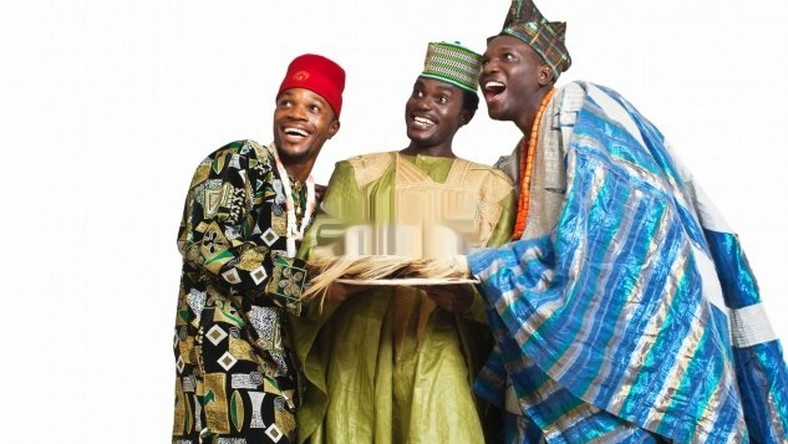
Yoruba group orders removal of non-indigene posters, demands Lagos political exclusion

By Abdullahi Mukhtar Algasgaini

The Yoruba Conservative group has issued a directive demanding its members remove all non-Yoruba political campaign posters sighted across Lagos, denouncing their presence as a “disrespect to Yoruba natives.”

In a strongly-worded statement released today, the group declared that non-indigenes should be barred from contesting political office in Lagos State altogether.

The group argues that the principle of reciprocity justifies this stance, claiming other Nigerian states like Anambra, Kano, and Kaduna already restrict major political offices to their own indigenes.

“It is a disrespect to Yoruba natives for foreign posters to flood its street,” the statement asserted.

“If anyone want[s] to contest, let them go to their various state to do that… But you can’t do that on our soil because you won’t also allow us to do the same on your soil.”

The group explicitly rejected the concept of “One Nigeria” in the context of political participation within states, stating: “If ONE NIGERIA doesn’t work in your own state, then it shouldn’t work in my own state too. You can’t reserve your resources for yourself and come to share in my own. That’s impossible!”

According to the statement, the Yoruba Conservative has already taken steps to enforce this vision.

They claim to have “consulted some top Lagos Politicians to stop giving a political ticket to non Yoruba” and have “sent letters of resignation to some foreigners holding political positions in Lagos to resign and vacate the seat as he or she is occupying a post meant for Yoruba people.”

The group dismissed comparisons to diverse democracies like the UK or US, insisting Lagos should only be compared to other Nigerian states where, they allege, a Yoruba person would not be allowed to contest and win.

“Therefore why should I say YES to you in my own state?” the statement questioned.

While describing themselves as “peace loving people,” the group issued a stark warning: “If you come to us in [a] violent manner, be rest assure[d] you will face the unforgivable consequences.”

This declaration highlights rising tensions over indigene-settler politics and access to political power within Nigeria’s diverse states, bringing a controversial and exclusionary stance to the forefront in Lagos.

June 12 and the lopsided narrative: How Yoruba elites hijacked a national struggle

By Salisu Uba Kofarwambai

The annulment of the June 12, 1993, presidential election by General Ibrahim Babangida stands as one of the most consequential events in Nigeria’s political history. What began as a tragedy for democracy soon became a powerful weapon of political repositioning for the Yoruba elite, who skillfully leveraged national sympathy to strengthen their grip on Nigeria’s democratic evolution.

This singular incident opened the doors for the Yoruba to produce three heads of state—an achievement that might never have occurred under normal political circumstances. Ironically, this is the same political milestone that the late Chief Obafemi Awolowo, the revered father of Yoruba nationalism, spent his entire life trying to attain but could not.

Sadly, many who ultimately benefited from the June 12 crisis were not even supporters of Chief M.K.O. Abiola during the election. Instead, they emerged later as political opportunists—vultures who hijacked the struggle, turned it into a sectional movement, and weaponized it for political dominance.

It is important to recall that the North overwhelmingly voted for Abiola over its own son, Alhaji Bashir Tofa. But following the annulment, the Yoruba intelligentsia cleverly shifted the blame from the military, a national institution, to the North, creating a narrative that painted the region as the villain of democracy. This deflection became a foundation for the Yoruba to assert political superiority, while the North unknowingly fell for the narrative.

In the aftermath, Chief Ernest Shonekan—a Yoruba technocrat—was installed as head of the Interim National Government. Later, in 1999, the North once again conceded power to the South-West, with Chief Olusegun Obasanjo returning as a civilian president. However, Obasanjo’s tenure is remembered by many in the North for economic policies that led to the decline of the region’s industrial capacity. Many northerners believe these policies were deliberate, politically motivated, and economically harmful to the North.

Today, with President Bola Ahmed Tinubu at the helm, the North’s frustration appears to be deepening. Recently, a ₦16 trillion infrastructure project was allocated to the South, while liberal economic policies continue to disproportionately impact northern states, compounding existing inequalities.

This growing sentiment of marginalization was reinforced by President Tinubu’s Democracy Day national address. During the broadcast, a list of recipients of national awards was unveiled to honour those who fought for democracy. Yet, the list revealed a clear bias. While individuals like Professor Wole Soyinka—who went into exile during the military era—were honoured, many who stood their ground and bore the brunt of military repression were ignored.

Where are the names of Abubakar Rimi, Abdulkarim Dayyabu, Sule Lamido, Gani Fawehinmi, and M.D. Yusuf—figures who paid a heavy price for resisting military rule? Most of them were imprisoned under General Abacha and only released after his death. Yet, these sacrifices appear forgotten, excluded from a national recognition that should be inclusive.

Even the institutionalization of June 12 as Nigeria’s Democracy Day under the Buhari administration has continued to project the day as a Yoruba affair—further entrenching the idea that the Yoruba were the sole victims of the annulled election. This skewed narrative continues to sideline other critical voices and regions, especially the North, which was deeply invested in the democratic struggle of the 1990s.

As we mark June 12, the North must soberly reflect on how much has been lost—from the annulment of 1993 to the current political dispensation. The region must also begin to ask tough questions about its place in the national project and how to reclaim a fair share in Nigeria’s democratic future.

June 12 was a national tragedy and should be a national symbol of resilience—not a sectional emblem of victimhood. Until this is fully acknowledged, the spirit of June 12 remains only partially honoured.

A letter to all Nigerians

Dear Nigerians,


May God have mercy on you! Your country’s name reminds me of abundance — the ceaseless and abundant flow of the River Niger. The great resource that is ever willing to serve Nigerians and non-Nigerians, like me, and countless others. It does not stop there; myriad resources – human, natural, and other— are scattered all over the “Niger-aria” that force the envy and admiration of many people who were not blessed with Nigerian citizenship.


Yet, here we are shedding tears in recognition of the waste it has suffered in the hands of those who have mismanaged it. The teardrops force their way out even more when we consider how ignorant the Nigerian youth is of the resources around him. Who are the successors to this great wealth called Nigeria?


The aspiration, needs, values and beliefs of the young ones are the key focus of every effective national curriculum. Youths should be more useful to their societies than mere patient seekers of white collar jobs. When values and character escape the curriculum, how will dignity and progress not escape the people? The hope of Nigeria is in its curriculum. If Nigeria is to present to the world those great nation-builders it once won the world’s attention with, it should be reflected in what is happening in the schools presently. The worst kind of slavery a country will ever suffer is to leave its abundant resources in the hands of ignorant successors.


What wrong could the people of Nigeria do to their blessed nation if they restrain themselves from those destructive desires that will ruin their owners and the country? Will Nigeria lose anything if it loses all its corrupt citizens? It is common knowledge to the corrupt and those who are not that nobody gains from harming fellow human beings. Surely, the criminals are running from the evil consequences of their crimes. What do we gain when all we have toiled and killed for is left in the hands of our enemies, and the only thing left with us is our graves? If we turn our backs on all opportunities for reform, what use will an enormous and deformed nation have in our modern world?


Despite the problems and conflicts Nigeria endures as a nation, no sane mind can deny that Nigeria holds great potential if its people cooperate in development and nation-building. When people become good neighbours to one another, they won’t suffer and perish in the midst of abundance.


I dream of a Nigeria that will no longer be Nigeria (in the sense that the word Nigeria is synonymous with crime and corruption) I dream of a Nigeria that will ever be Nigeria (in the sense of its blessings and beauty) When the people beautify their beliefs and character, they will achieve their aims, by God’s permission. Let the brave ones among the good-doers come forward wherever they are. Let the people’s hope reflect in the young ones’ willingness to embrace reform. There is great hope for Nigeria, and nobody should say there is no hope for Nigeria. Let it not be a cause of despondency to those sincere and diligent Nigerians that things are not going well in their beloved nation. Let them rejoice that nations with more problems than Nigeria have risen to great heights in the past. Let this awareness motivate them to start work at once. 

Weak minds say: “There is no hope”. The strong and wise minds reply, “We have been appointed to a new office, and there is a lot of work to do” Nigeria is the office of every Nigerian. Its progress should be the concern of every worker, and whoever has good intentions for Nigeria has already entered his office; instead, he has begun receiving his remuneration. Why should we shed tears when we have all the resources to avert the pain and frustration? Is it not this same Nigeria that has served as the nourishing mother of many great minds in diverse fields and life endeavours?


I have spent what I consider to be the best of my life on earth in Nigeria. During this period, I have seen many things that signify hope for the future of Nigeria. As a student, I have encountered many young, intelligent, and morally upright Nigerians. As a neighbour, I have never encountered a situation that makes me feel like returning home; rather, everyone around me has done their best to make Nigeria a home away from home for me. 

As a member of society, I have seen men with vision and energy to reform Nigeria. As a friend, I have met very kind and sincere Nigerians. As a teacher, I have seen students who have the potential of being nation builders, if provided with aconducive environment. In brief, there is a lot of good locked within the Nigerians we see around. All they need is somebody to awaken them and tell them, “Yes, you can”. Somebody to inspire and motivate. Are you the one?

If you are the one, then be patient about proving your worth. Do not let anger or frustration lead you to violence, lest you destroy the very lives you stood up to defend. Do not cry even when you feel powerless to reform society, and do good things for your people. Keep the good dream, and one day, you shall wipe away the tears of your people with your utility and services to them. Praise Him who made you a Nigerian, reform yourself, and be patient about bringing reform to society. Don’t let up, just go on! 

It may take a long time to see the desired change, but your efforts will never be wasted, even if all the circumstances point to that effect. If you can change a single Nigerian, then we can’t quantify the benefit you would have brought to the world through that change. If you can’t change anybody and find people who are obstinate in crime and corruption, never give up.


Your goodwill, endurance, kindness and sacrifices are inspiring to the very people that have caused you so much pain. Also, your efforts are a strong foundation for those who will tread the path of reform after you. No doubt! You did not lose anything. Instead, you gained a lot and left a lot for others to gain from. So don’t give up! Continue to educate your people on what they stand to lose by not being upright nation builders. The people are not as bad as you think; they are just ignorant of the consequences of their evil actions. So educate them.


Mass Quality Education/Awareness, not violence, indifference, or migration, is the answer. If the people are enlightened, they will learn lessons from all the war-torn countries around them. Look around Africa and see where violence has led nations. In the end, somebody like me, born and bred in Sierra Leone, a war-torn country, realised that war, in most cases, means wasting All Resources.


Also, you can’t run away from what you have. You run, run and run, yet one day you will realise the need to return home. Take note and ACT NOW.

Amara Sessay can be reached via femohsesay@googlemail.com.

60 million Yoruba people ready to leave Nigeria – Prof. Akintoye

By Abdullahi Mukhtar Algasgaini

The leader of the Yoruba Self-Determination Group, Professor Banji Akintoye, has reiterated that the group will not back down from its pursuit of creating the Yoruba nation.

According to Akintoye, around 60 million Yoruba people, including those residing at home and abroad, support his cause for establishing the Yoruba nation as an independent country.

“We will not retreat. We must leave Nigeria, or our country will face serious problems.

“Don’t you hear our voices in the streets? The Yoruba nation is moving forward. There is no turning back.

“We are referring to the Yoruba people in Nigeria, who number about 55 to 60 million. We want to establish our own country. Nigeria will cease to exist if we establish our own nation. But if others want to continue to remain as Nigeria, that is fine,” he added.

Why our people attract less fortune in Nigeria: A personal experience

By Saifullahi Attahir Wurno

I had the privilege of working in a private firm during a long break from medical school. It’s like a dream, being versatile and getting the opportunity to work as a marketing officer instead of holding a scalpel and stethoscope. It would allow me to enhance my communication skills and human relations, increase my networking, and learn to be more responsible and accountable.  

Indeed, it’s teaching me how to be more assertive and aggressive, unlike my initial shy character. I had to learn to sell my product, pressure people to pay me back, and say no to fraudulent transactions. Indeed, I am learning that there is a larger world outside of the hospital.

I had a firsthand experience of the reason why the ‘major’ Northern Nigerian tribes lag in terms of competitiveness in business, science, athletics, and education compared to our Southern counterparts and even the ‘minority’ tribes from the North. This is a sad reality and a bitter truth. I stand humbly to be corrected if my statement is far from fact.

I began this work not more than three months ago, but their level of humility and respect toward the bosses was something I had never seen. These people always greet their boss with respect. They respect their colleagues at work irrespective of their level. They attend to customers with courtesy and gentility. 

They have this attitude of taking their job seriously no matter how meagre their pay is. I have never heard any of them complaining about their pay despite having heard of numerous complaints from ‘my people’. Although I tried to arrive at the office at least 3 minutes before 8 a.m., thanks to my medical professional training, those people always arrived 15-20 minutes earlier. I observed this from the attendance record in front of the Security man.

This story was about our security man from the South-East. I used to see him working in the hospital where I lived (since I reside in the medical students’ hostel). He used to work with a private security company in Dutse, Jigawa State, working a shift daily between 8 pm and 5 am. I have known about this man for the past year. 

Surprisingly, we met in this company, too, working between 8 a.m. and 5 p.m. daily. When I enquired more about him, I discovered he was even managing a small trader kiosk in front of his house with his wife. The most astonishing part was that this same person has a National Diploma (ND) in Public Administration and is currently doing his part-time HND at Jigawa Polytechnic during the weekend studying Criminology.

It’s hard to instil this attitude of resilience in our people, who have families to feed while juggling two lowly-paying jobs that take up most of their daily lives and are also studying for personal development.

There was this teenage girl who was also of the same South-eastern origin. She was just out of secondary school. She was the company cleaner and one of the lowly paid staff. But this Lady took her job with every seriousness, coming out daily earlier before all others arrived, sweeping and cleaning the environment neatly, and even using pleasant deodorants. She would not disappear after all this but remain in the office until 2 pm if something arises.

This young lady preferred to come out every morning and do a lowly paying, menial job of cleaning the toilet and mopping floors to be paid ₦30,000 monthly to help her parents financially and felt proud of her achievement instead of sitting down at her mother’s room all day, wasting time of social media.

The spirit of humility and looking after one another was mind-blowing and pathetic whenever I remember ‘my people’ who constantly brag about good culture and religion. There was a time when this young cleaner was sick, and all the staff arrived one morning ready for work. So, we realised she was ill and, thus, absent. We were in this dilemma of what to do; what I saw next was astonishing: there was a group of about five young and classic ladies, all of whom were graduates of the university and among those highly paid in the office. 

Without delay, these ladies volunteer to bring out all the cleaning equipment and do the job wonderfully. Without telling, this thing happened in front of about three of the same young ladies from ‘my people’ despite being Diploma holders and one with even a secondary school certificate.

During my stay, I observed that these people were not very involved in office politics, gossiping and abusing bosses. They were not in the habit of making silly excuses just to move around. I have never observed anyone attempting to involve himself in any fraudulent act to cheat a customer or act against the established rules of company ethics.

From this alone, I have come to draw the answers to why most of the reputable private investment in this country is dominated by ‘those’ people. I have discovered why they dominate our banks, the FinTech, and most prominent organisations. I have seen the reason why they dominate our science and technology establishments. I have seen why they even dominate our athletes and sports sector.

The answer is relatively straight. It is simply character and nothing else. It is about our character, perception of life, and attitudes. It is all about their attitude of resilience, respect, humility, gratitude, and discipline.  Let’s learn and not use excuses or blame games.

Saifullahi Attahir Wurno wrote via saifullahiattahir93@gmail.com

Democracy Echoes: Tinubu’s anthem and the unfinished legacy of MKO Abiola

By Haroon Aremu

On a peaceful Sunday afternoon, I found myself immersed in the music of Dr. Sikiru Ayinde Barrister, a pioneer Fuji maestro known for his deep and meaningful lyrics that reflect Nigeria’s socio-political landscape. As I listened to a track titled “Adieu MKO,” which began with Nigeria’s newly adopted anthem, I was inspired to delve deeper into MKO Abiola’s legacy in relation to President Bola Ahmed Tinubu’s presidential journey and the adoption of the new anthem, as I began to wonder if all this could be a strategic message to Nigerians.

Sikiru Ayinde Barrister, a renowned Fuji musician, frequently added societal issues into his music, notably addressing the life and contributions of MKO Abiola. Barrister’s songs portrayed Abiola with admiration, acknowledging his philanthropy, political influence, and commitment to democracy. Barrister shared personal anecdotes, portraying Abiola as a humble figure despite his wealth and influence, creating a multifaceted portrayal of the Nigerian icon.

According to Historical research, Moshood Kashimawo Olawale (MKO) Abiola began his journey from humble beginnings. Born into a low-income family in Abeokuta, Ogun State, he started earning money at a young age by performing odd jobs, including singing and drumming at events. His exceptional intelligence earned him a scholarship to attend the prestigious Baptist Boys’ High School in Abeokuta. Later, he received a government scholarship to study at the University of Glasgow in Scotland, where he earned a degree in accountancy.

Beyond his political aspirations, Abiola was a successful businessman who built a vast business empire with interests in telecommunications, oil, and banking. He founded the telecommunications giant ITT Nigeria and was also involved in the publishing industry, owning newspapers like Concord Press. His philanthropy earned him the title of “Aare Ona Kakanfo of Yorubaland,” a highly esteemed traditional title.

Abiola is most famous for his presidential bid 1993, which is widely believed to have been the most free and fair election in Nigeria’s history. Despite winning, the election results were annulled by the then-military government led by General Ibrahim Babangida, leading to a significant political crisis. After declaring himself the rightful president of Nigeria, Abiola was arrested in 1994 by the military regime of General Sani Abacha. He remained in detention for four years and died under suspicious circumstances on July 7, 1998, the day he was due to be released.

Despite the controversies surrounding his death, Abiola’s legacy as a champion of democracy in Nigeria is honoured. In 2018, President Muhammadu Buhari posthumously awarded him Nigeria’s highest honour, the Grand Commander of the Federal Republic (GCFR), and declared June 12 as Democracy Day in recognition of his contribution to Nigeria’s democratic struggle.

Abiola was also a cultural figure with deep connections to the Yoruba cultural renaissance and promoted Nigerian culture globally. His influence extended beyond politics and business, impacting social and cultural spheres in Nigeria. He maintained extensive international connections in business and politics, improving Nigeria’s relations with other countries.

MKO Abiola embodied the patriotic spirit that “Nigeria, We Hail Thee” represented. As a businessman, philanthropist, and political leader, Abiola’s efforts were always aimed at uplifting Nigeria and contributing to its progress and unity.

The newly adopted anthem’s lyrics, emphasising unity and patriotism, reflect Abiola’s vision for Nigeria. He consistently advocated for a united Nigeria, free from the divisions that plagued the country. His presidential campaign in 1993 was a significant demonstration of his commitment to national unity and democracy.

Abiola’s contributions to Nigerian culture and his promotion of the Yoruba cultural renaissance align with the pride and national identity celebrated in “Nigeria, We Hail Thee.” He supported cultural initiatives to foster a sense of pride and belonging among Nigerians.

The anthem’s call to serve the nation resonates with Abiola’s extensive philanthropic activities. He invested in education, healthcare, and community development, reflecting the anthem’s spirit of dedication to the well-being of Nigeria and its people.

The period during which “Nigeria, We Hail Thee” was the national anthem corresponds with a formative time in Nigeria’s political history, including the early years of independence. Abiola’s political career, especially his role in the 1993 presidential election, continues the struggles and aspirations encapsulated in the anthem.

With some sense of factual comparison, President Bola Ahmed Tinubu’s relationship with MKO Abiola reflects a shared commitment to democracy, justice, and the advancement of Nigeria. Both leaders believed in the country’s potential and actively worked towards its progress. Tinubu and Abiola were influential figures in Nigeria’s political landscape, with Abiola’s 1993 presidential bid resonating with Tinubu’s political aspirations and being associated with the Social Democratic Party (SDP). Abiola’s leadership qualities, philanthropy, and vision for Nigeria deeply inspired Tinubu, who likely admired Abiola’s ability to connect with the masses and his unwavering dedication to democratic ideals. 

Like many other pro-democracy activists, Tinubu supported Abiola’s mandate and condemned the annulment of the June 12, 1993, presidential election, forging a bond rooted in shared democratic principles. Tinubu continued to champion democratic values, electoral reform, good governance, and the rule of law, echoing Abiola’s vision for a democratic Nigeria. 

Furthermore, both leaders have been actively involved in philanthropic activities and community development initiatives, aligning with Abiola’s legacy of social responsibility. The Fuji icon King Wasiu Ayinde Marshal has sung about Tinubu following Abiola’s legacy, highlighting their enduring connection and further reinforcing the significance of Abiola’s impact on Nigeria’s political landscape. 

Considering the recent anthem change by the president, one could perceive it as a message of togetherness and an assurance of following Abiola’s legacy, given the similarities between Abiola and Tinubu, including their association with Muslim-Muslim tickets and other shared values.

To President Bola Ahmed Tinubu, I implore all citizens to wish and pray to God to grant him insight and foresight. Imight (strength) need to realise the democratic journey that Abiola envisioned.

Haroon Aremu Abiodun is a youth Corp Member with PRNigeria centre, Abuja and wrote in via exponentumera@gmail.com.

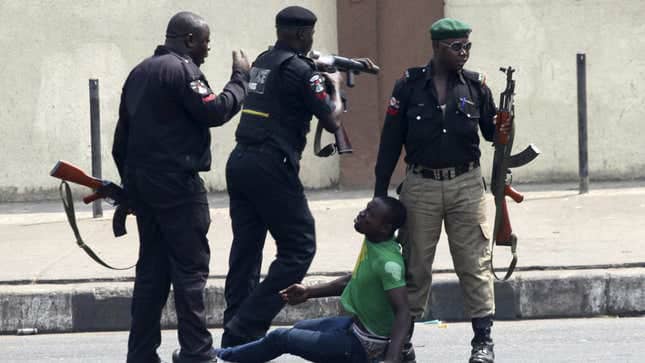
Yoruba Nation: Police arrest 18 over attempt to seize Oyo Assembly

By Uzair Adam Imam  

A brazen attempt to seize control of the Oyo House of Assembly by individuals suspected to be affiliated with the Yoruba Nation movement was thwarted by police forces yesterday. 

At least 18 individuals were apprehended in connection with the incident, which unfolded just meters away from the Oyo State Government Secretariat. 

Reports indicate that the perpetrators, masked and clad in Army camouflage, armed themselves with rifles and strategically positioned themselves within the Secretariat’s vicinity.  

Some stationed themselves at the entrance of the Governor’s Office, while others were spotted near the state House of Assembly’s gate and the main entrance. 

The sudden incursion sparked panic in the area, prompting security operatives to respond with tear gas and arrests.  

The arrival of officers from the state Police Command and other anti-crime agencies, accompanied by sporadic gunshots, added to the chaos, forcing motorists to reroute and residents to seek safety. 

Efforts by the Executive Assistant to the Governor on Security, CP Sunday Odukoya (retd), to defuse the situation proved futile as the masked individuals remained adamant about hoisting their flag within the Secretariat premises. 

However, the arrival of soldiers from the 2 Division of the Nigerian Army shifted the dynamics, causing some of the agitators to flee.

The soldiers, described as stern-looking, reportedly pursued the remaining suspects. 

Meanwhile, the state secretariat’s main entrance was sealed off, and businesses in surrounding areas quickly shuttered as a precautionary measure. 

In a related development, a video surfaced featuring a woman identifying herself as Modupe Onitiri-Abiola, claiming to speak on behalf of the Yoruba Nation movement.

She declared the establishment of the Democratic Republic of Yoruba, asserting sovereignty and dissociating from Nigeria. 

Notable Yoruba Nation proponents, including Professor Banji Akintoye and Sunday Adeyemo (Igboho), disowned the attack, denying any involvement and stating their commitment to peaceful advocacy.  

Akintoye attributed the incident to individuals he deemed not to represent the authentic Yoruba Nation Movement. 

The State Police Public Relations Officer, SP Adewale Osifeso, disclosed that 18 suspects were arrested in possession of an array of weapons and paraphernalia.  

He condemned the incident as criminal and unpatriotic, pledging a thorough investigation and decisive action against those responsible.

AFCON 2023: Who divides Nigeria?

By Sani Bello Hamza

When Ola Aina, the Super Eagles fullback, missed the penalty during the semi-final of AFCON 2023 against South Africa, someone close to me uttered an abusive word in the Hausa language. He said, “shege Bayarabe.” From the way he voiced it, you could tell it was not intentional. He was unconscious, as we all were, and it came out of his subconscious mind. That is a typical example of what Nigerians are and how we hate one another.

A South-easterner feels isolated and does not want to be associated with the North. A Northerner also feels the South-easterners are “arna” and sees no need to relate or intermingle with them. I once came across someone who is happy and thanking God for the blessing of not visiting a particular region. You will sometimes think hatred is naturally instilled in us.

Malam Nasir El-Rufai was once seen on air lamenting how Nigerians from various parts of the country react to his social media posts. Whenever he posts an update, no matter how small, the Northerners would be there to hail and applaud him. While his counterparts from the South would abuse and curse the former governor. Why is this the case? Is it because he is from the North?

Anyway, what made me happier after the penalty shootout was not only the fact that Nigeria advanced and made it to the final, but how I saw my fellow students, regardless of their gender, age, religion, social class, and political affiliation, celebrate the significant win for our dear country. It was one of the joyous moments of my life.

Not only at ABU, I came across videos of students from other universities and communities celebrating the great win. Others went ahead to celebrate with the family of our unbeatable keeper, Nwabali. They refused to let anyone stop them.

The same thing happened during the final when we all turned up at various locations to support and cheer the Super Eagles. Even though we did not clinch the title, the outcome of the final will be a topic for another day.

Okay, back to the subject matter.

After the jubilations were over, a question popped into my mind. I said to myself, “Who is dividing Nigeria and Nigerians? Who is spreading hatred among Nigerians? Who is fueling and igniting the fire of hatred among us?”

An Igbo man is always looking for an opportunity to curse a Hausa man, and a Hausa man is always scouting for an opportunity to unleash his abusive prowess on Igbos or Yorubas for the slightest reason.

How come do we sit under the same umbrella, supporting and praying for the Super Eagles to win? Who then is creating these divisions in our country?

To answer the question above, I believe that the root of our division in Nigeria lies in rumors and mere speculations. Most of the people fueling the fire of hatred are those who have either not traveled outside their jurisdiction or refuse to open their minds to accommodate people from other regions. They limit their thinking to their regions and consume whatever they find in the media.

The above answer may not be sufficient, but as people living in the same region, if we do not speak the same language or wear the same attire, we share the same history and are meant to be together—this is undeniable. The richness and strength in our diversity are stronger than the weaknesses. So why should we opt for the weaknesses? Come on, fellow compatriots, think!

We must learn from the lessons of the 2023 AFCON: to shun our peculiarities and differences if we must progress as a nation. Our diversity should be a source of pride, not the opposite.

Sani Bello Hamza is a Law student at Ahmadu Bello University Zaria. He writes from Zaria and can be reached via sanibellohamza@gmail.com.

My dream of a united and prosperous Nigeria

By Usman Muhammad Salihu

As a citizen of this great country, my dream of a united and prosperous Nigeria is not merely a wish but a vision that I believe is soon to become a reality. 

Nigeria’s diversity is one of its greatest strengths. With over 250 ethnic groups, various languages, and a vibrant tapestry of cultures, our nation possesses immense potential for creativity, innovation, and resilience. I firmly believe embracing and celebrating this diversity is vital to unity.

As a giant of Africa, Nigeria has abundant natural resources, including oil, minerals, and arable land. Our economy has the potential to thrive, create jobs, and improve the standard of living for all Nigerians. To realise this dream, we must invest in sustainable development, diversify our economy, and ensure that the wealth generated benefits all citizens.

Furthermore, A united and prosperous Nigeria must prioritise education and innovation. Our population is a valuable asset, and by providing quality education, vocational training, and support for research and development, we can unlock their potential and drive economic growth.

To achieve prosperity, we must demand transparency, accountability, and good governance from our leaders. A united Nigeria requires leaders who prioritise the welfare of the people, uphold the rule of law, and work tirelessly to eliminate corruption.

Security is a fundamental prerequisite for prosperity. We must address security challenges, promote peace, and foster an environment where businesses thrive, and citizens can live without fear. 

Investing in infrastructure, such as roads, healthcare facilities, and power generation, is essential for our nation’s progress. This improves the quality of life, attracts investments, and creates job opportunities.

Active participation of citizens in the democratic process is crucial. We must engage in dialogue, vote responsibly, and hold our leaders accountable for their actions to ensure that our collective dream is realised.

Together, we can build a Nigeria where every citizen enjoys the fruits of unity and prosperity and our nation stands as a beacon of hope and progress for all of Africa.

Usman Muhammad Salihu writes and can be reached via muhammadu5363@gmail.com.

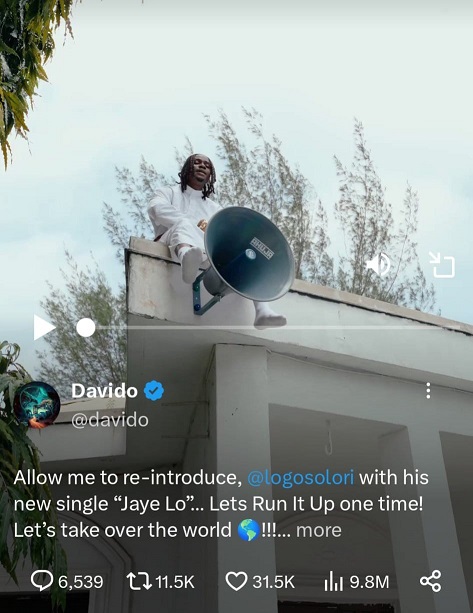
A socio-religious analysis of Davido’s protege, Logos Olori ‘Jaye Lo’ video

By Hassan Idris

Discussing trending and contentious topics has never been my preferred inclination, not because of a lack of opinions or the ability to articulate them but rather due to the potential conflicts it may engender with those who hold me in high esteem. Nonetheless, today, I shall delve into the trending and contentious subject matter that has generated a whirlwind of discourse on social media, polarising individuals along sectarian, regional, and religious lines and culminating in mutual vilification.

Specifically, I aim to scrutinise the 45-second video released by the Nigerian music sensation David Adeleke, famously known as Davido. In this video, men donned in white jalabia and caps dance boisterously in front of a mosque immediately after partaking in prayers. Adding further intrigue, Logos Olori, Davido’s protege, occupies a prominent spot atop the building’s roof.

Notably, even though the singer makes mention of the phrase ‘Alhamdulillah’ (praise be to God), the video and the accompanying song have been met with severe disapproval from many Nigerians and fans, particularly among the Muslim community, who perceive it as an affront to Islam. They vehemently demand an apology, accusing Davido of disrespecting their religious practices by intermingling sacred rituals with song and dance.

Despite the mounting pressure, Davido finally relents and takes down the video after two days of receiving criticism, opting for a predominantly silent stance and refraining from issuing formal apologies. Notably, Professor Wole Soyinka, in a surprising twist, urges Davido not to apologise for releasing the ‘Jaye Lo’ video, asserting that dancing in front of the mosque does not possess the provocative connotation purported by some.

Among the voices calling for an apology from Davido are prominent Muslim faithful such as Ahmad Ganga, Ali Nuhu, Ashraf Yaman, Ayaat Saeed, Basira Ugochi, and numerous others. Conversely, some Muslims have countered this demand, contending that the singer’s lyrics and actions did not overtly denigrate the Islamic faith. Furthermore, they argue that the video was not intended to ridicule Islam but reflected a cultural norm in Yoruba society.

Additionally, they highlight the existence of Islamic sects, such as the Tijjaniya and Shi’ite, in the northern region, who employ the Mandiri drums as part of their worship practices, thus, indicating that some Muslims themselves engage in similar expressions of religious celebration, with no objections from the community. Before delving into the sociological perspective of religion, it is imperative to recognise the profound significance of religion, particularly in Africa. For many Muslims, it is not merely the song or the jalabiya donned in the video that raises concern, but rather the potential mockery of prayer, a cornerstone of Islam, considered sacred and inviolable. It stands in stark contrast to profanity and warrants utmost respect.

Comparatively, other musicians like Naira Marley may espouse diverse perspectives, yet their words do not evoke similar anxieties. For instance, Naira Marley’s song proclaims, ‘God is the driver, while the Prophet (SAW) is the conductor,’ which, despite its unconventional nature, does not overtly trivialise prayer. Indeed, if Naira Marley had ventured into such territory, he would likely have faced a similar backlash. In response to the contention that some Islamic sects might engage in activities akin to the video’s content, it is essential to discern that while various expressions of worship exist, dancing during prayers remains absent from any Islamic sect. Moreover, the significance of the mosque, as elucidated in the Qur’an, holds paramount importance for Muslims, who regard it as the most sacred and cherished space in their lives. Thus, actions that appear to contradict the mosque’s sanctity are naturally met with vehement objection.

As for Professor Wole Soyinka’s intervention, his failure to fully grasp Nigeria’s religious and multicultural fabric, coupled with his atheistic beliefs, may have influenced his hasty entry into this contentious issue without considering the multifaceted perspectives. Thus, there seems to be an underlying layer of ethnocentrism at play, though it is crucial to clarify that this observation is not intended to belittle Soyinka in any manner.

Turning our attention to Durkheim’s Elementary Forms of Religious Life, the philosopher Charles Taylor’s elucidation of religion as a comprehensive system of beliefs and practices encompassing human existence and its relation to the ultimate conditions of being and other human beings presents a multifaceted framework for analysis.

Durkheim’s seminal work contends that religion is not confined to individual beliefs and practices but rather constitutes a sociological phenomenon that both shapes and is shaped by society. Central to his argument is the concept of ‘collective representations,’ which denotes shared symbols and ideas that foster cohesion among individuals, binding them together in a collective community. Collective effervescence, a cornerstone of religious experience according to Durkheim, entails the shared emotions and sense of unity that emerges when people unite for a common purpose, often manifested in rituals and communal activities.

Furthermore, Durkheim’s delineation of the ‘sacred’ and the ‘profane’ elucidates the fundamental distinction between holy or special elements (the sacred) and the mundane aspects of everyday life (the profane). The video in question seemingly breaches this sacred-profane dichotomy, incorporating elements considered sacred within a context that may trivialise their significance. To elucidate the connection between Durkheim’s ideas of the sacred and the profane, the concept of totemism emerges as an essential component of his thesis.

Totemism encompasses groups of individuals coalescing around a common totem, an emblematic object or animal that symbolises the collective community. The totem, imbued with sacredness, serves as a focal point in rituals and ceremonies, forging a shared sense of identity and unity within the group. By drawing this parallel, the video can be perceived as appropriating religious attire and symbols, potentially attenuating their original sacred import.

Moreover, Durkheim’s concept of ‘mana’ merits consideration of the video’s content. Mana constitutes a spiritual force or energy believed to inhabit sacred objects or spaces. Often linked to animism, the notion that objects and locations possess spirits or souls, ‘mana’ illustrates how the sacred imbue objects and places with special significance. Here, the video’s portrayal of dancing immediately after prayers may be construed as desecrating the sacredness associated with the mosque. As Durkheim transitioned his focus to modern societies, the idea of ‘mechanical solidarity’ comes into play, wherein traditional societies cohere through shared values and beliefs among relatively homogeneous groups.

Comparatively, ‘organic solidarity’ characterises contemporary societies, wherein specialised social bonds form through the division of labour, with various individuals and groups performing distinct functions. The video, juxtaposing modern entertainment (the dance) within the context of a sacred religious space, potentially mirrors the fragmentation and diminished shared values observed in present-day society, evoking notions of anomie.

As a sociologist and poet, I believe some may perceive the Muslim community’s response to Davido’s music video as an overreaction. While concerns are warranted, approaching the issue with knowledge and wisdom, as instructed in the Qur’an, would have been more constructive. Addressing Davido’s actions maturely and knowledgeably could have fostered a more amicable resolution. However, amidst the controversy surrounding the video, it is crucial not to lose sight of the pressing issues in the North, such as kidnapping, terrorism, and poverty, which demand urgent attention and resolution. Calling for uniformity in addressing these challenges alongside the concerns over the music video could have a more significant impact in addressing social issues and fostering a sense of collective responsibility.

Furthermore, it is essential for everyone, regardless of their religious background, to respect and understand the beliefs and cultures of others. Ethnocentrism and a lack of cultural relativity can perpetuate societal misunderstandings and divisions. Respect for all religions, and their sacred practices, should be upheld, emphasising the need for mutual understanding and harmony among diverse communities.

In conclusion, when scrutinising Davido’s music video from a Durkheimian sociological perspective, many potential issues concerning the sacred and the profane in religion emerge. The video’s portrayal of dance immediately after prayers and its use of religious symbols may be perceived as disrespectful and culturally insensitive by some Muslim community members. Moreover, its potential impact on social cohesion and integration in Nigeria’s diverse and multicultural society warrants introspection. Both sociologists and individuals must remain cognizant of religious sensitivities while striving for a profound understanding of different religious practices, fostering mutual respect and harmony within society.

While the controversy surrounding Davido’s music video persists, individuals and communities must engage in constructive dialogue, foster mutual respect, and address societal challenges with collective responsibility. Religion is paramount. It should be treated with reverence, regardless of the particular faith. Let us strive to uphold the principles of knowledge, wisdom, and cultural relativity in our interactions, aiming for a more cohesive and harmonious society. May we all be guided right in our actions and decisions.

Hassan Idris is a Sociologist & Poet and can be contacted via idrishassan25@yahoo.com.