X

AI disruption: Why Africa is missing from the conversation

By Abdulhameed Ridwanullah

This week, the article titled “Something Big Is Happening” was published on X by AI entrepreneur Matt Shumer. It became viral with around 80million views, 36k retweets, 105k likes and 5.7k comments at the moment of this writing. The virality stems from the central thesis of the post – AI disruption of white-collar jobs within years. Days later, the CEO of Microsoft AI, Mustafa Suleyman, while granting an interview to the Financial Times, claimed that the tasks undertaken by white-collar workers will be automated within 12 to 18 months (watch the details in the video). Previously, Dario Amodei predicted that up to 50% of entry-level white-collar jobs would be automated within one to five years in his January 2026 essay.


All week, the debate has been whether AI will take your job. The discourse is loud. Spoiler alert! The discourse is almost entirely about the West. The Global South is often an afterthought. So, when I read Shumer say, “the experience everyone else is about to have,” or Suleyman say, “most tasks fully automated in 18 months”, I ask: Whose experience? Automated for whom?


The West debates whether AI will take their jobs. Much of Africa is still waiting for the jobs AI is supposedly coming to replace.


Most importantly, studies have shown that automated AI moderation barely works in the Global South (read the CDT study by Mona Elswah and her colleagues here). In my PhD research, I study how AI content moderation systems fail in Nigerian languages. The failures are systematic, not incidental. Moreover, there are over 2000 languages in Africa. AI moderation seldom works in 3 major Nigerian languages. There is a wide gap between what Silicon Valley promises about AI and the deliverables to the world population. That is the story.


Moreso, this doomsday discourse about new technology is not new. The pattern is real. Connor Boyack’s rejoinder (AI isn’t coming for your future. Fear is) beautifully captures by invoking Bastiat’s insight about the “seen and unseen” changes brought by new technology. The debate all week has been focused on the “seen”, but the “unseen” invoked by Boyack are the new industries and possibilities that emerge when technology reduces costs and eliminates drudgery. No doubt, every major technology disruption has eventually created more than it destroyed. If anything, Africa’s unofficial content creation economy is a pointer to such an opportunity. 


However, the challenge is that the benefits are never evenly distributed. They are concentrated where infrastructure exists, languages are resourced, and capital flows. The boom and doom are not the same for a worker in London or Boston and someone in Cape Town, Lagos, Kano or Nairobi. One pays $20 ChatGPT subscription and enlists AI as a co-pilot. But the other is faced with the unseen failure of AI moderation, wreaking havoc in their community. This inequality runs in both directions: who benefits from AI’s capabilities and who is harmed by its failures.


So, the future of AI is not one story. It is two. While professionals in well-resourced economies leverage, adapt, upskill and thrive, billions of people in low-resource economies remain in the blind spot of a technology that was never designed for them.  


The real question is not whether AI will take your job. It is whether AI will equally serve everyone or continue to perpetuate historical inequality.
This is the conversation we should all be having.

Abdulhameed Ridwanullah is a doctoral researcher working on AI and platform studies in Nigeria at Media for Empowerment and Impact Lab, Northeastern University, Boston. He can be reached at olaitanrido@yahoo.com

Billionaire entrepreneur, Elon Musk, says money cannot guarantee happiness, sparks heated debate

By Sabiu Abdullahi

Elon Musk has stirred debate across social media after declaring that wealth does not automatically bring happiness, despite his position as the richest man in the world.

The Tesla chief executive made the statement on Thursday in a post shared on X, the social media platform he owns.

“Whoever said ‘money can’t buy happiness’ really knew what they were talking about,” Musk wrote.

The post quickly gained traction online. As of the time this report was filed, it had recorded more than 51 million views, about 56,000 reposts and thousands of comments. Reactions remained divided.

Some users supported his view. They argued that financial success does not protect people from emotional struggles or personal difficulties. Others disagreed. They maintained that money improves living standards and creates access to opportunities that can enhance well-being.

Musk did not add details or clarification to his remark.

The billionaire entrepreneur has spoken in the past about the weight of leading global firms, the scrutiny that follows his public role and the demands of running multiple companies.

His fortune has experienced major swings in recent years. Much of the movement has been tied to Tesla’s stock performance and wider market trends.

Beyond Tesla, Musk heads SpaceX and several other ventures. His influence continues to expand across technology, regulatory debates and political discussions in the United States.

Data from the Bloomberg Billionaires Index shows that Musk became the first individual to attain a net worth of $638 billion on December 16, 2025. The index also indicated that his wealth rose by 42.7 per cent within one year from December 2024.

On October 28, Musk, who founded xAI, revealed the introduction of Grokipedia, an online encyclopedia connected to his artificial intelligence projects.

His latest comment has again placed him at the centre of conversations surrounding wealth, fulfilment and the true value of financial success.

French authorities raid X headquarters, summon Elon Musk for questioning

By Sabiu Abdullahi


French prosecutors have raided the Paris headquarters of Elon Musk’s social media platform, X, and summoned the tech billionaire and the company’s former chief executive for questioning as part of an expanded cybercrime investigation.

The Paris prosecutor’s office confirmed the development in a post on X on Tuesday, stating: “A search is under way by the cybercrime unit of the Paris prosecutor’s office, the national police cyber unit and Europol.” The office added that it would no longer publish content on the platform.

In a separate statement, prosecutors said Musk and former X chief executive Linda Yaccarino had been invited for voluntary questioning “in their capacity as de facto and de jure managers of the X platform at the time of the events.” Yaccarino stepped down from her role in July last year.

According to the prosecutor’s office, investigators are examining “alleged complicity” in several offences linked to activities on the platform. These include the spread of child abuse images and sexually explicit deepfakes, the denial of crimes against humanity, and the manipulation of an automated data processing system within an organised group.

The investigation began in January last year after a complaint was filed by a centre-right French MP, Éric Bothorel. He alleged that biased algorithms on the platform may have distorted its data processing system and influenced the type of content recommended to users.

Bothorel had earlier raised “deep concern” over “recent algorithm changes” and “apparent interference in [X’s] management” following Musk’s takeover of the company in 2022. Other complaints claimed the changes triggered an increase in what was described as “nauseating political content.”

Prosecutors later widened the scope of the inquiry after reports criticised the conduct of X’s artificial intelligence chatbot, Grok. The reports alleged that the chatbot engaged in Holocaust denial and circulated sexually explicit deepfakes.

X was approached for comment following Tuesday’s raid. The company had previously stated last summer that it did not plan to comply with the demands of French authorities linked to the inquiry, which it described as “politically motivated.” It also rejected claims of algorithm manipulation and “fraudulent data extraction.”

The platform further argued that the investigation was “distorting French law to serve a political agenda, and ultimately restrict free speech.” It said it remained committed to “defending its fundamental rights, protecting user data and resisting political censorship.”

FG sues Sowore, Meta, X over alleged cyberbullying of president

By Abdullahi Mukhtar Algasgaini

The Federal Government has filed a criminal lawsuit against activist and politician Omoyele Sowore, as well as the parent companies of Facebook and X, for the alleged cyberbullying of President Bola Tinubu.

The suit, marked FHC/ABJ/CR/484/2025, was filed at the Federal High Court in Abuja on Tuesday by the Director of Public Prosecutions, Mohammed Abubakar, on behalf of the Federal Ministry of Justice.

According to the five-count charge, Sowore, the publisher of Sahara Reporters, is accused of making a false claim against the President by referring to him as “a criminal” in a post on his X (formerly Twitter) account.

The specific charge alleges that on or about August 25, Sowore used his handle, @YeleSowore, to publish a message that read: “THIS CRIMINAL @ OFFICIAL PBAT ACTUALLY WENT TO BRAZIL TO STATE THAT THERE IS NO MORE CORRUPTION UNDER HIS REGIME IN NIGERIA. WHAT AUDACITY TO LIE SHAMELESSLY!”

The prosecution contends that Sowore knew this message to be false and posted it with the intention of causing “a breakdown of law and order” among Nigerians with divergent views on the President.

The charges are brought under Section 24 (1) (b) of the Cybercrimes (Prohibition, Prevention, etc) Amendment Act, 2024.

The lawsuit follows a recent request by the Department of State Services (DSS) for the social media platforms to remove the post in question.

Both Meta (Facebook Inc.) and X Corp. have been joined as defendants in the case.Sowore was the presidential candidate of the African Action Congress (AAC) in the 2019 and 2023 elections.

Nigerian poet Zaynab Iliyasu Bobi awarded Cave Canem Fellowship

By Sabiu Abdullahi 

Nigerian poet Zaynab Iliyasu Bobi, known as @thee_black_sylvia on X (formerly known as Twitter), has been awarded the Carolyn Micklem Scholarship by Cave Canem, a prestigious organization dedicated to fostering Black poetry.

The news was announced on February 29, 2024, via Bobi’s X account.

Bobi expressed her deep appreciation to Cave Canem and everyone who donated to her fundraising campaign, which ultimately reached $4000.

These donations and the scholarship will enable her to attend Cave Canem’s fellowship retreat in Pittsburgh, United States.

Cave Canem is a renowned organization with a rich history of supporting Black poets.

The fellowship program offers a unique opportunity for aspiring poets to develop their craft in a nurturing community.

Bobi’s success story is a testament to the power of collective support on social media, and determination on the poet’s part.

It highlights the importance of organizations like Cave Canem in providing resources and mentorship to underrepresented voices in the literary world.

Nigerians call for the sack of Betta Edu

By Ahmad Deedat Zakari

Following the allegations of corruption in the Ministry of Humanitarian Affairs and Poverty Alleviation, Nigerians on the micro blogging platform, X, are calling for the removal of its minister, Dr Betta Edu.

In a document which has now gone viral and purportedly signed by the minister, she wrote to the Office of the Accountant-General of the Federation and directed the disbursement of N585.189 million into one Bridget Mojisola Oniyelu’s private account.

The minister had made clarifications on the allegations, she explained in a statement released on Friday that the controversial payment followed due process.

However, many Nigerians are not convinced by her explanations and are demanding that President Tinubu should relieved her of her job.

According to Farooq Kperogi, the allegation presents an opportunity for the Tinubu government to do the right thing and not tolerate corruption like the previous administration.

“This is a momentous moment for Tinubu. If he does not fire Edu forthwith and bring her to justice, he has already lost the moral high ground to try Buhari’s corrupt honchos.”

A human right lawyer, Inibehe Effiong, said she ought to have resigned immediately.

“Has Betta Edu been interrogated by the EFCC yet? When is she tendering her resignation letter?” He wrote.

“If Betta Edu still has a job by tomorrow morning, then we will know that Bola Ahmed Tinubu is not ready to lead this country. You cannot be swift in suspending Halima Shehu while Edu Betta, who has suspicious academic records and serious allegations against her, still has a job. Suspend her now and allow @officialEFCC to invite her for interrogation” an X user, simply identified as Sarki, posted.

Thousands of Nigerians and civil rights organizations are calling for thorough investigation and her removal.

Twitter changes own logo

By Muhammadu Sabiu 

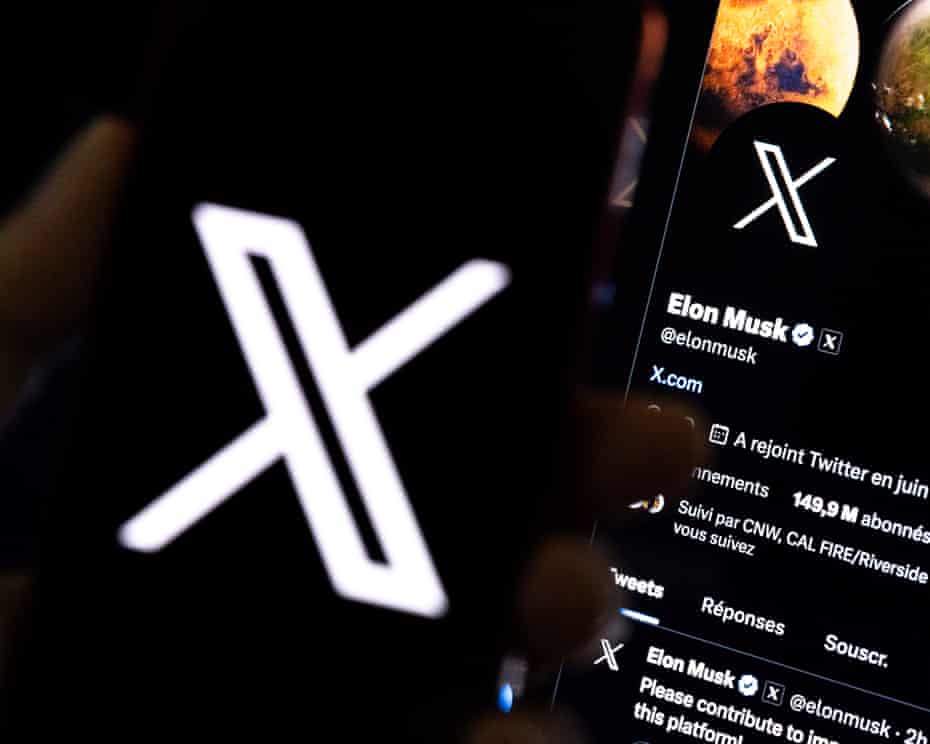
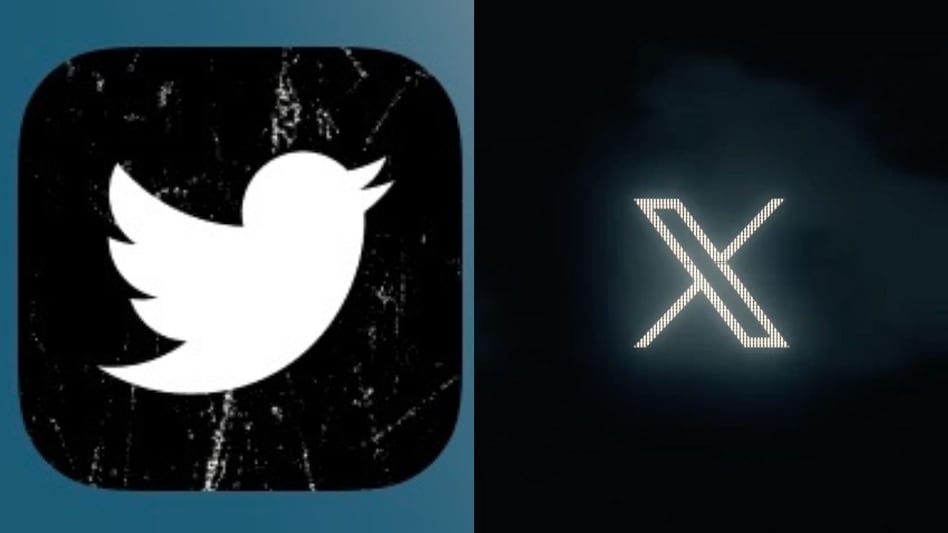
Elon Musk, the owner of Twitter, and its new CEO announced on Sunday that the social media platform would get rid of its bird emblem, change its name to X, and soon enter the payment, banking, and commerce sectors. 

According to the design website Creative Bloq, Twitter, which was founded in 2006, gets its name from the sound of birds chirping. 

The firm has used avian branding ever since purchasing a stock symbol of a light blue bird for $15. 

Late Sunday night, Twitter CEO Linda Yaccarino tweeted a photo of the company’s new logo: a white X on a black background. She wrote, “X is here! Let’s proceed. 

Later on the same Sunday, Musk also updated his profile image to the business’s new logo, which he dubbed “minimalist art deco,” and his Twitter bio to “X.com,” which now reroutes to twitter.com. 

“If a good enough X logo is posted tonight, we’ll make (it) go live worldwide tomorrow,” Musk tweeted.