Women empowerment

Let’s talk about empowering Arewa women

By Aminu Mohammed      

It is no longer a secret that we have many single ladies and divorcees in search of elusive husbands to marry in the North. This has become worrisome not only to the women but their parents, who are tired of seeing them at home. The increasing incidence of poverty and idleness among our women may not be unconnected to a lack of skills and capital to embark on a meaningful trade or vocational training. Most women in the North are further impoverished following the death of a husband or incapacitation due to the loss of a job. In some instances, the family suffers if the breadwinner becomes sick over a long time.

Although appreciable progress has been made in increasing female enrollment in secondary schools and tertiary institutions across Northern states, even at that, the region is lagging in terms of education. We still have a highly marginalised segment of the society peopled by an armada of illiterate and disempowered women.

Have we bothered to question the rationale behind the increase in social vices, especially sexual immorality, in our society? Have we pondered the root cause of poverty and inequality in our midst? Do we still think that poverty is spiritual and caused by our actions and misdeeds? The fact is that we have marginalised our women and do not see the need for them to excel and go after their passion and dreams. Instead, we believe that women should just stay at home and take care of the kids while the man goes out to look for means of sustenance.

It is pertinent to note that parents spend a lot of money preparing for their daughters’ marriage ceremonies by buying all sorts of assorted kitchen wares and household items without prioritising the education and empowerment of their daughters. Many parents do not see the need for their daughters to have the requisite training or education to become self-reliant. That is why most women in the North become a burden to society in the case of divorce or the death of a spouse.

Have we asked ourselves why we have so many idle women living in squalor and deprivation due to divorce or the death of a spouse? What can we do to empower our women so that they can live meaningful lives and achieve their dreams? Most of these idle women have goals, dreams and innate talents that could be harnessed for societal progress. Of course, cynics and chauvinists may argue that women are fickle-minded and should not be allowed to chart the path to self-reliance. This is due to fear that they may not be submissive to their husbands. However, that is not always the case in concrete terms.

Of course, I believe in female empowerment for societal development, even though I am sceptical about the feminist utopia. However, I am indeed aware that an empowered girl-child through education and vocational training is a pride to her parents and the community. Thus, an empowered woman will ensure an excellent educational upbringing for her children.

I believe that parents should focus on allowing their female children to acquire vocational training and practical skills before marriage to support their families in one way or the other. The focus should not be only on marriage rites and traditional practices, to the detriment of her future wellbeing. The clothing materials, especially “lefe” and many boxes of clothing materials that we dissipate energy in gathering for the wedding activities, will never translate into wealth in concrete terms.

Parents should realise that marriage is not a poverty alleviation scheme and that giving away their daughter to a rich person does not guarantee her happiness. Some families even go to the extent of incurring colossal debt to procure the needed wedding materials to impress relatives, friends, and society, which leads to anguish and regret.

I must reiterate that disempowered women are a burden to society. Therefore, I believe that skill acquisition programmes should be inculcated in our women, especially those who are not fortunate to acquire tertiary education. Of course, those with tertiary education should also learn entrepreneurship to fend for themselves due to the limited job opportunities in the country.

Islam does not prohibit women from education, mercantilism and trade. Even the prophet’s wife, Khadija (RA), was an independent woman and a merchant. So, there is no basis for the argument that women should be locked at home without any meaningful enterprise only to serve as a tool for satisfying their husbands’ sexual needs.

It is not enough to marry off your daughter to a man without adequate skills for survival. Parents who do not see the need to educate their female children should make sure that they acquire a vocational skill or trade before marriage. This ensures their economic survival in case of a spouse’s death or loss of job. We cannot run a society where a large segment is marginalised and lack the wherewithal to participate in any meaningful economic activity. That will not augur well for the progress and development of the Northern region.

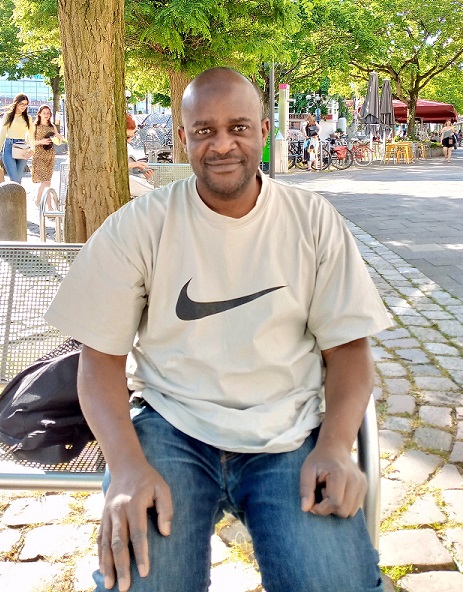
Aminu Mohammed is at the school of Sustainability, Christian- Albrechts- Universität zu Kiel, Schleswig Holstein, Germany. He can be reached via stu219013@mail.uni-kiel.de or gravity23n@gmail.com.
Gombe: Zakah and Waqf Foundation empowers women

By Nabeela Usman El-Nafaty

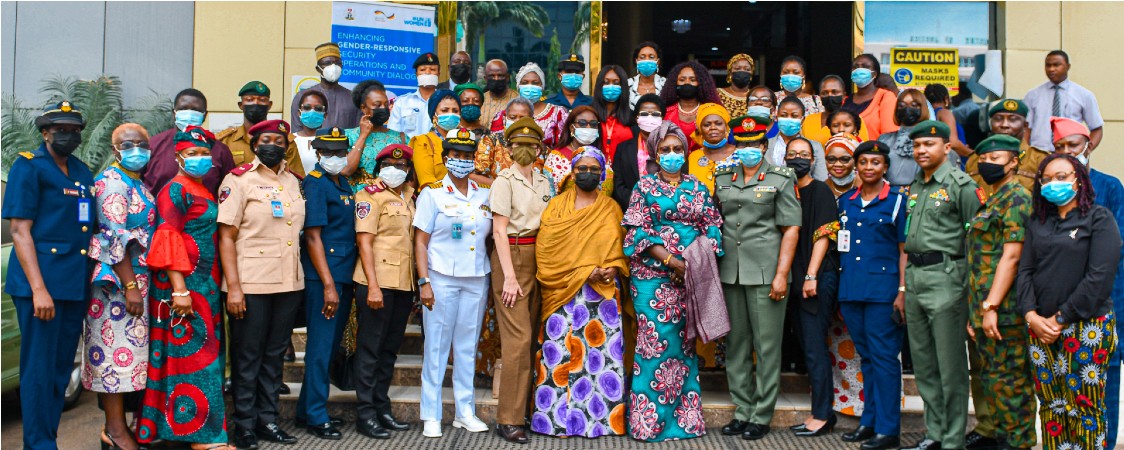
The 5th set of the beneficiaries of the Women Empowerment Program under the Zakah and Waqf Foundation, Gombe, have undergone a semi-final graduation ceremony on Sunday, March 13, 2022. The main graduation ceremony and inauguration of the new empowered (6th Set) is expected to hold after Ramadan.  

The beneficiaries who were inaugurated on February 14, 2021, numbering 88, were each given N10000 start-up capital. Those who reached the finish line were about 40. The ceremony had the attendance of the Chairman of the Foundation, the Heads of Women Empowerment, Education and Training, and the Chairperson of Wadata Multipurpose Cooperative Society (WAMCOS), among others. 

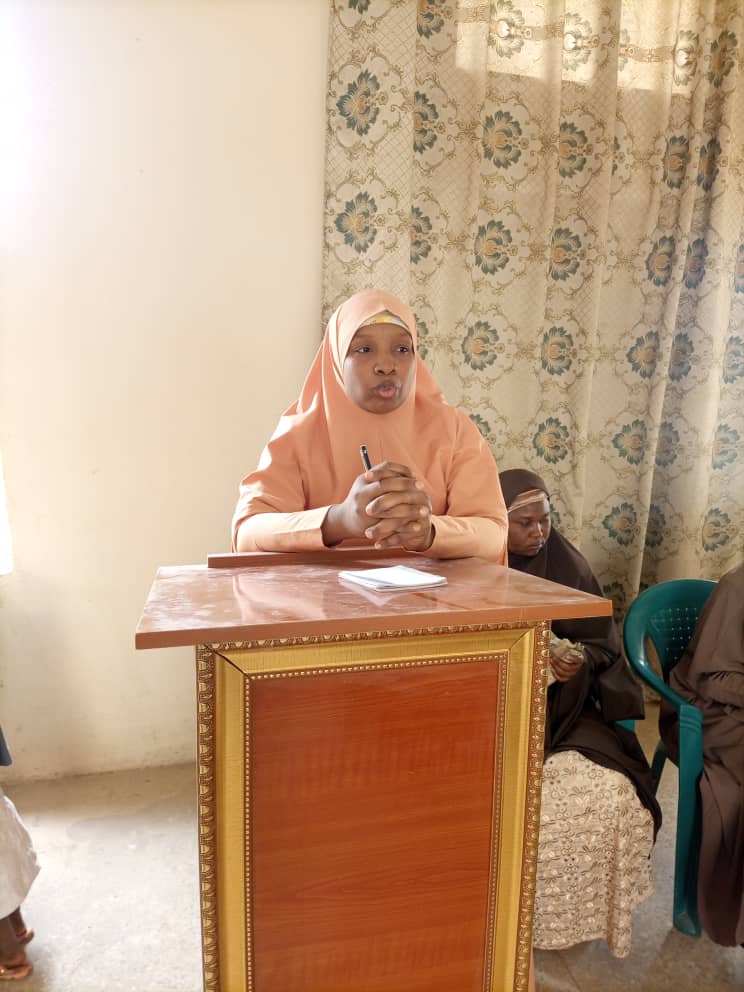
Malama Maryam Yaya, the Head of Women Empowerment, gave the welcome speech. She thanked the beneficiaries for their doggedness in completing a full year of biweekly meetings, savings and enlightenment, as they saved close to N1,200,000 since February 28, 2021.

The Chairman of the occasion, Vice-Chairperson of the Foundation, QS Ahmad M. Kabir, prayed for the Foundation and thanked its head for her tireless efforts to keep the program alive and functioning.

The VC’s speech was followed by the keynote address by the Chairman of the Foundation, Ameer Abdullahi Abubakar Lamido. He gave a detailed speech about the next level of their empowerment, including joining the WADATA Women Cooperative Society.

The Chairperson of WAMCOS, Malama Hanne Abdullahi, was the next on the podium where she welcomed the successful beneficiaries into WAMCOS. She emphasized the need to come to monthly meetings and make monthly savings regularly. She also introduced to them the idea for ‘special savings’, which is usually for long-term plans like the wedding of a daughter, registration fee of kids, hajj savings etc. 

The event’s highlights were feedback from the beneficiaries about how the Empowerment Program benefitted them in ways beyond measure. One of the beneficiaries, Kulu Muhammad, from Tudun Wada of Gombe, said that the programme was “like a person on a standstill in total darkness, and then someone comes with torchlight and shows him the way out of the darkness.

Another highlight of the event was the presentation of gifts to the most outstanding beneficiaries in performance, determination, frequent attendance to meetings, and savings. 

The beneficiaries were allowed to come and pick from items of their choice, including food flasks, clothes, kids’ wear, Hijabs, and shoes donated by some officials and volunteers of the Foundation. No one among the attendants of the graduation went home empty-handed. There were smiles everywhere and prayers to the Foundation for more success and greater heights.

Nigerian women and the national security discourse

By Mukhtar Ya’u Madobi

In a heterogeneous society like Nigeria, where security threats are rising daily, the vital role of women in contributing to peace and security ought to be recognised and harnessed effectively.

Women are often viewed as victims of conflict. But this view masks the essential roles women play as leaders, especially in helping end conflict, developing post-conflict reintegration efforts and economic life, and even in leading the organisation of camps for internally displaced persons.

Recognising that sustainable security is not possible without the involvement of women, the United Nations in October 2000 passed Security Council Resolution 1325. The resolution calls for increased representation of women at peace negotiations and all levels of decision making regarding security. It also calls for women inclusion in post-conflict reconstruction efforts and disarmament, demobilisation, reintegration efforts; increased protection from sexual violence; and an end to impunity for crimes affecting women.

Additionally, in his words, Lene Espersen, Denmark’s minister of foreign affairs, “We are fortunate that the unique role of women as key contributors to peace and security is growing, and we already possess substantial knowledge about the critical importance of women in the prevention and resolution of conflicts and in post-conflict reconciliation and reintegration.”

That UN resolution was the first to recognise the disproportionate and unique impact of armed conflict on women and girls, acknowledge their contributions to conflict prevention, peacekeeping, conflict resolution, and peacebuilding, and highlight the importance of their equal and full participation as active agents in peace and security.

Security pundits noted that the key areas in which women could foster security include: peace decision making and peacekeeping, reconciliation, reintegration, the rule of law, and economic development. Therefore, the government of every country should recognise them with these roles and create an enabling environment for them to participate.

A report by the UN Secretary-General shows that there are a growing number of inspiring examples of women, peace and security in action across regions, but overall progress remains slow and uneven.

Meanwhile, in Nigeria, history revealed that many women had made remarkable security impacts in their desire to provide stability to their respective societies. Notable among include; Inkpi, the Princess of Igala royal family who buried herself alive to save the Igalas from the stronghold of the Junkuns, Moremi of Ile Ife, who allowed herself to be captured by the Igbos during a clash with the Yorubas. In addition, Queen Amina became the Queen of Zazzau in 1576 not because there were no strong contenders, but she emerged as the most suitable successor to the office. She proved herself a capable leader both on the home front and on the battlefield.

Under gender sensitivity and security, the National Security Strategy (NSS, 2019), a policy document designed by the Office of the National Security Adviser (ONSA), says, “Nigeria recognises that development is endangered if it is not engendered. Therefore, gender sensitivity and security will be mainstreamed into public policy to create opportunities for the advancement of women and children’s rights as well as gender equality.

“It is imperative to engage women as agents of development to ensure social inclusion, sustainable peace and the security of all segments of the society.”

Given the above, the country has already made a plan of action towards incorporating women into participation in preventing and resolving conflicts, peace negotiations, and humanitarian response, among others.

“Nigeria developed a National Action Plan (NAP) built on five important pillars; prevention, participation, protection, promotion and prosecution. These are important pillars that would strengthen gender-responsive conflict management and prevention frameworks in Nigeria,” the NSS stated.

However, the reality is that women are largely excluded from many formal peace processes. In the terrorism affected states, women and children constitute the largest internally displaced persons and refugees across the border.

Also, it is noted that women are not just victims of war; they are also agents of peace. Thus, it was stated in the NSS 2019 that appropriate legislation would be adopted to enhance gender security to promote inclusiveness across various sectors of the economy.

On its part, the United Nations has identified priority areas to “accelerate progress” on the Women, Peace and Security (“WPS”) Agenda. These include “increasing the number of women in uniformed services in peacekeeping missions and national security services.” The inclusion of these priority areas signals an important shift towards recognising that advancing women in national security services, in addition to peacekeeping operations, is critical to the broader WPS mission. To accomplish the goal of closing the women’s participation gap in uniformed and non-uniformed national security efforts, new policy planning must begin with a conversation with girls as to how they understand, define and interpret security.

It is a fact that women are the bedrock of every society, as they are involved actively in food security, economic security and political security. Thus, there should be a change in attitudes and behaviour. Individuals should learn that women are effective and should be incorporated fully and equally into participation at every decision-making level in positions having to do with peace and security issues. Furthermore, mainstreaming should be integrated into a whole-of-government approach to reform justice and security.

Mukhtar Ya’u Madobi wrote from Kano via ymukhtar944@gmail.com.

How I started my own business with zero naira

By Zainab Ahmad Dantsoho

Most people believe that one cannot start a business without huge capital, but that is absolutely wrong. So let me first define what capital means according to economics.

Capital is anything that increases one’s ability to generate value. It can be used to increase value across a wide range of categories, such as financial, social, physical, intellectual, etc. In business and economics, the two most common types of capital are financial and human.

But I will like to give my definition because the most neglected is the Human Intellectual faculty.

In the 21st century, capital is the ability of an individual to think using the intellectual capacity to make money in the absence of little or no resources.

I want to stick to my definition because based on analysis, our economic index can be weighed by the standard of living and income expenditures, but I come from the North where according to the average statistics of people living in poverty as of 2020 holds 87% of Nigeria’s poverty rate – World Bank

So, are there resources in the North? Of course, YES! But the problem is intellectual capital.

In a community where people can’t even feed properly and begging seems to be a way out, how do we end poverty in families and our communities? I have asked this question to myself a lot of times.

Our northern community would be great if only our brains can think about starting a business with zero naira or little or no capital. And this makes me think that in the absence of money and basic resources, the only value any society could have is thinking skill because that’s the best way to beat poverty!

Let me take you through my journey of 1 kobo.

At a point in my life, I just decided to start my own business, make money in a halal way, take care of myself, and help the people close to me and my community at large. So I asked myself, “Zainabu, what about the capital? Where will you get the required amount to start the business?” Of course, this immediately came to mind, but then I remembered capital doesn’t necessarily have to be money.

Thus, I started going to some perfume shops, taking pictures and samples of the perfumes, showing friends, advertising on my social media platforms. Then, when someone asks for it, I’ll quickly go back to the shop and get what they wanted while adding a little profit for myself. This continued for months, and I was able to save some money!

So, I realised that the only capital I have in the absence of resources is my intellect, the ability to think and make money. So, these are a few basic things I had my eyes out for when starting my one kobo business.

  • Location – Where can I sell this product?
  • Demands – Is the product highly consumables, highly used in my environment?
  • Standard of living – this is where I have to think critically. Can they afford it? If they can, at what cost, and what’s my profit because nobody wants to start a business losing. It’s a win-win goal.

Then when it comes to branding – since I have no resources and capital of my own, whenever I want to make more profits, I usually meet the producers and negotiate with them. They make it, but then it carries my business name and agrees on percentage without losing anything but gaining. Most traders into cosmetic products typically agree with this since it offers mutual benefits.

Now, let’s talk about mind poverty, also known as mentality poverty. Mentality poverty is not the absence of cash and resources. It’s simply our way of thinking and behavioural pattern.

And I also think our average mentality is poor, and that’s why poverty in African societies seems to be inherited. We have resources, yet we are poor. It’s time to shift from the cash flow method of capital and currency to its intellectual flow because, that way, our community will grow.

If we were to cut down the amount we spend on our phones, clothing, accessories, cosmetics, etc., we would be surprised at how much we will save.

One may wish to know the advantages of this type of business. Don’t stress yourself. I will help you with some basic information.

1.  It empowers you

2. It eradicates poverty

3. It`s easy to access

4. You earn without deposit

5. You can advertise from your home using your social media handles.

If you aren’t on social media, you can do Door to Door, attend events or places where you can meet many people, and take advantage of friends to friends marketing strategies.  Especially for those that don’t go out.

But here are some of the challenges you will face with this type of business:

1. People may want to take credit from you, and you can’t give it out since the items don’t particularly belong to you; for me, it’s even risky giving and selling items on credit.

2. You may need more time and patience to get customers.

3. Sometimes such items may be out of stock, so that means you need to know or keep contact with the store, to what’s available and what’s not available

4. You may need one or more stores to patronise, if you want quick profits and if it’s worth the energy!

My advice to our young entrepreneurs is that we should always avoid perishable goods, except if the areas we live in have a high demand for those particular items.

Lastly, with the way our economic system is currently running, it is still possible to start a business with zero or little income. So don’t wait for significant capital. You can save and think, spend wisely, and Allah will certainly help you.

I hope you will find this article very helpful and join our one kobo community to start your business and get substantial information from us.

Why not make a move and be your boss with zero naira today?

Zainab Ahmad Dantsoho is a graduate of the Federal University, Gusau and an entrepreneur. She writes from Kaura-Namoda Town of Zamfara State. She can be reached at zainabahmaddantsoho@gmail.com.

Why we need to empower women

By Salisu Yusuf

There’s an established cultural practice of female social exclusion in the Muslim North that’s partly patriarchal and partly a cultural construct fuelled by religious misinterpretation, especially on business transaction issues. 

Many people wrongly and unfairly assume that women must not participate in business dealings because men cater for their needs. However, instances from Islamic history and established ahadith corroborate women’s active role in market-oriented activities, especially during the caliphate of Sayyid Umar bn Khattab (RA). I have a story to tell which will convince you that our women should, or even must, be allowed to transact.

A close, affluent friend of mine died two years ago. He left behind four wives, children and millions of naira. Fortunately or not, the deceased’s male relatives could not handle the proceeds of the orphans properly. And even if they could handle the wealth well, most people nowadays are morally lax in handling trusts, especially inheritance. Only a few handle it sincerely, while many others betray the trust given to them. So, the widows became carers and guardians; in other words, the bulk of wealth is handed over to them.

Those who had never transacted (only two out of the four) became businesswomen in their life. They are both fathering and mothering the young orphans. Although single parenting is a difficult task, the women brace up, take care of the children efficiently, conduct business aspects, get profits, provide daily bread, support the children’s education, and other basics such as clothing. I am deeply impressed by the women’s resolve to forget their differences, shun their rivalries, burry their wounds, pick up the pieces and continue to survive in the absence of the best husband and father. 

Two years after their husband’s death, the entire house fares very well, managing to survive despite the harsh realities of the Nigerian socio-economic milieu. When last I visited the family, they told me of the difficulty in combining business dealings with parenting and guidance. One widow told me how lucky they were to learn to trade even before their husband’s death because he had numerously given them startups to learn to earn a living. She said if they had not been this fortunate – under a caring husband who had so much empathy and understanding, they would have been left in the cold, would have devoured the money and would have been left at the mercy of a hostile public as beggars.

Two years since their breadwinner’s death, the women turned men survive because they can hold their heads, transact, guard and guide the young orphans.

Salisu can be reached via salisuyusuf111@gmail.com.