West Africa

Patriotism over foreign flags in Nigeria’s protests

By Rabi Ummi Umar

The protest in Nigeria has taken a tragic turn with the display of foreign flags by some Northern youths as a demonstration against the government. This action undermines Nigeria’s sovereignty and raises concerns about the changing dynamics in the world.

As the Punch editorial pointed out, the flag-waving campaign shows that Nigeria should be wary of foreign interference, as witnessed in the crises in some West African countries that led to undemocratic military takeovers. There are speculations that some protesters were sponsored to raise the Russian flag as a deliberate attempt to provoke the military into intervention.

While Nigerians can express their grievances over economic hardship, they should do so through legitimate and peaceful means. Resorting to violent demonstrations that result in loss of life and destruction of livelihoods is counterproductive.

It is concerning that underage protesters and youths were the ones mostly flaunting the Russian flags, forcing security agents to clamp down on them. The government should be compassionate in dealing with these minors, as they may be ignorant of the implications of their actions. Rather than facing harsh punishments, they should be sent to remand centres for civil education and skills training.

The media have reported the loss of lives and an estimated daily loss of N400 billion due to the protests. This raises the question of whether the demonstrations were truly worth the cost.

The government should be open to dialogue and engagement with citizens to address their challenges. The security services, too, should be vigilant and professional in handling protesters, especially the young ones.

The Nigeria Immigration Service has a crucial role to play in checking the influx of foreigners with ulterior motives, as there have been allegations of illegal immigrants participating in the protests.

Religious and community leaders should admonish their followers on the consequences of unbecoming behaviours and appeal to the government to address the citizens’ concerns.

Despite the hardship, Nigerians must remain patriotic and respect their country’s sovereignty. Raising flags of other countries and seeking their intervention in domestic affairs is a treasonable offence.

The government should realize that the majority of the citizens are against the protest, not because they are not feeling the pinch of hardship, but because they believe the issue can be resolved through other peaceful means. The government should, therefore, take appropriate actions to address the citizens’ concerns.

Nigeria will overcome this challenge, but change begins with us.

Rabi Ummi Umar wrote from the Department of Mass Communication, Al-Hikmah University, Ilorin. She can be reached via rabiumar058@gmail.com.
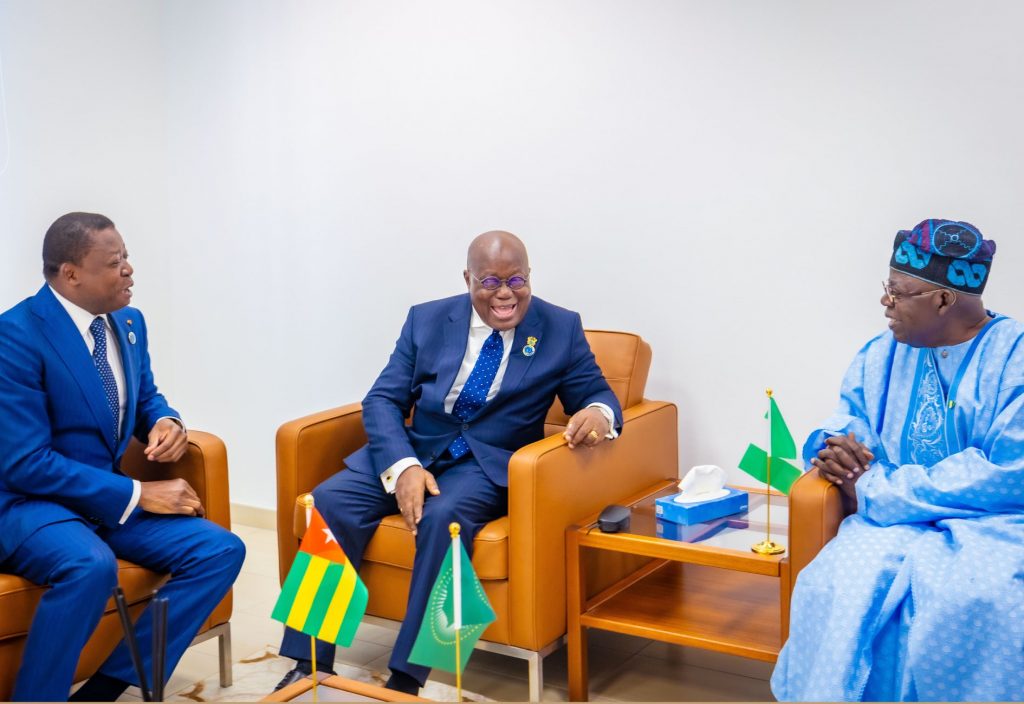
Tinubu calls for regional counter-terrorism centre to combat terrorism in Africa

By Sabiu Abdullahi

President Bola Tinubu has urged African leaders to establish a regional counter-terrorism centre to tackle the growing threat of terrorism on the continent.

Speaking at the African High-level Meeting on Counter-Terrorism in Abuja on Monday, Tinubu noted the need for a comprehensive approach to combating terrorism, addressing not only military might but also the root causes of poverty, inequality, and social injustice. 

“The international community has both the moral and legal obligation to help in this cause because it is external finance, not African money, that fuels these illegal operations. We shall be knocking on the door of the international community to answer this call for justice, peace, and fair play,” Tinubu said. 

The President stressed the importance of cutting off financial lifelines that fuel terrorist activities, such as ransom payments and illegal mining operations.

He noted that billions of dollars that should be used to provide education, healthcare, and food for citizens are instead spent on weapons and responding to mayhem. 

Tinubu called for the urgent establishment of a fully operational Regional Counter-Terrorism Centre, while also strengthening existing counter-terrorism structures.

He expressed the need for a regional standby force with a mandate to tackle terrorism, despite funding, legal, and logistical complexities. 

Stating Nigeria’s efforts, Tinubu stated that the country has taken bold steps forward in safeguarding the nation and the wider region.

He commended the courage and dedication of Nigeria’s security forces in the fight against terrorism and stated the need to halt the proliferation of Small Arms and Light Weapons on the continent. 

The Regional Counter-Terrorism Centre would serve as a hub for intelligence sharing, operational coordination, and capacity building throughout Africa, aiming to combat terrorism and address its root causes.

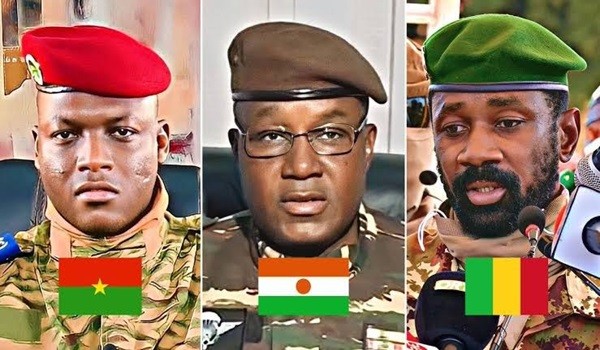
The decision of Burkina Faso, Mali, and Niger on opting out of ECOWAS

By Tijani Abiola

Burkina Faso is a landlocked country located in West Africa. It shares boundaries with six countries: Mali to the north, Niger to the east, Benin to the southeast, Togo and Ghana to the south, and Côte d’Ivoire to the southwest. As of the last knowledge update in January 2022, the total population of Burkina Faso was 21 million people. The country’s official language is French, which is spoken alongside different indigenous languages.

Economically, Burkina Faso is mainly an agricultural country, though there is also a very strong presence of gold mining. However, this country is troubled by poverty, drought, and political instability.

Mali, on the other hand, also in West Africa, shares borders with Algeria to the north, Niger to the east, Burkina Faso and Ivory Coast to the south, Guinea to the southwest and Senegal and Mauritania to the west, with a population of about 20 million people. The official language is French, and Bambara is also widely spoken.

Political instability, ethnic tension, and conflicts with extremist groups positioned mostly in the northern parts of the country have also challenged Mali in the years past. It lies in the region bordered by Libya to the northeast, Chad to the east, Nigeria and Benin to the south, Burkina Faso and Mali to the west, and Algeria to the northwest. It has a population of about 24 million people. 

The official language is French, and many indigenous languages are spoken. Niger is largely an agrarian society, with subsistence farming forming a very critical part of the economy. Uranium mining is also a very important industry. The country faces challenges such as poverty, desertification, and food insecurity.

All three have diverse cultures and histories, and all have unique challenges. The Sahel region, including the northern parts of Burkina Faso, Mali, and Niger, has seen a particular outbreak of security issues, including conflicts with jihadist groups and ethnic tensions.

Meanwhile, in the years 2020, 2021 and 2023 in Mali, Burkina Faso and Niger, respectively, there were successful military coups which still reign to date.  The Economic Community of West African States (ECOWAS) turned an eye to their decision and style of new leadership of the bloc’s member-states. Efforts towards national reconciliation have been in vain. 

The Economic Community of West African States is a regional political and economic union comprising fifteen countries located in West Africa, of which the above-mentioned Countries are members.

Burkina Faso, Mali, and the Niger Republic have all in recent times expressed intention to part ways with ECOWAS bloc bodies. That decision has been a climax and a very big bottleneck for ECOWAS, as the trio of these countries are some of the most resourceful countries which shoulder a huge part of the yearly ECOWAS budget and yet one of the poorest countries on the African continent. After their decision to leave the West African regional bloc of ECOWAS, what effect will this have on ECOWAS?

This country represents almost 20% of the ECOWAS population – that is 66 million out of 420 million people. As mentioned above, cotton, gold, and uranium ore are precious resources for Burkina Faso, Mali, and Niger, respectively.

Is ECOWAS blind to these facts?

I will say no, but will they have intensified negotiations before now? Yes. Their belief may be that they will soon get tired and comply or call for help after being deprived of some amenities benefited from nearby ECOWAS countries. Yet, they still remain adamant about their decision. For such countries to make such decisions looks like a threat to other ECOWAS countries.

ECOWAS should know this is no joke. The pumping question is: what if they excel in their decisions and their leaders are able to change their countries and become the best in years to come? What will happen to other ECOWAS countries whose corruption still influences their development?

Is dumping ECOWAS best for Burkina Faso, Mali, and the Niger Republic?

This decision will not only restrict their access to large international markets for foreign exchange and development provided by ECOWAS but also international partnerships that help in country development. Also, the free visa for all ECOWAS states is another big opportunity they might be deprived of from ECOWAS countries.

Though their decision has not been formally in writing to ECOWAS, they may be nursing second thoughts in the decision or calling for attention to negotiation stylishly. The poking questions are;

Is this the best idea for these three countries?

Will they stand without ECOWAS?

Won’t they be a threat to other ECOWAS countries if their decision is granted?

Does ECOWAS need to let them be?

Africa is a blessed continent with all its natural resources, but a continent with the highest rate of poverty and a corrupt leadership style needs to be resolved.

Tijani Abiola wrote via abiolatijani001@gmail.com.

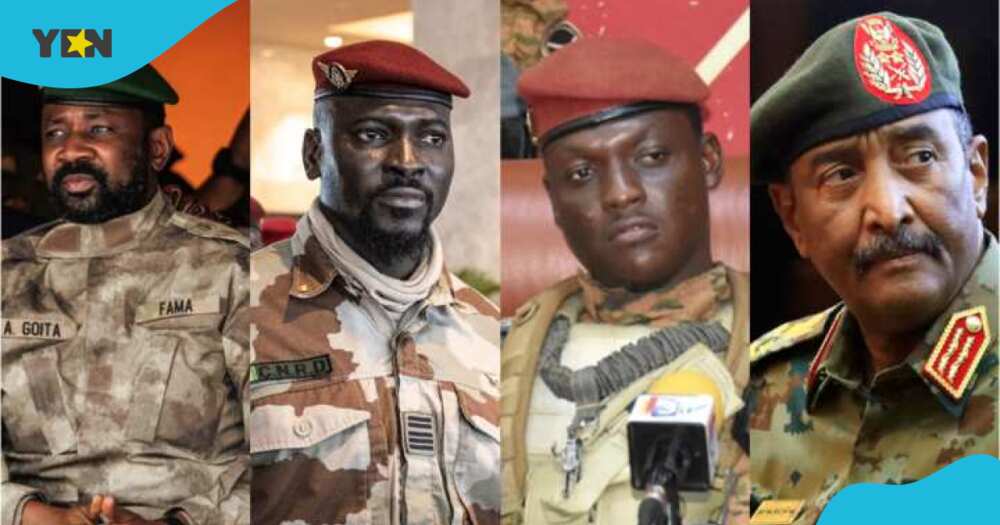
The military juntas in Africa

By Bilyaminu Abdulmumin

In the year 2021, when the gale of coup d’etat appeared to be fast resurfacing, it triggered revered columnist Mahmud Jega to title one of the columns “Fast Forward to the Past” to take us back to the period of the coup harvest, when the coup occurred as a competition in Africa. 

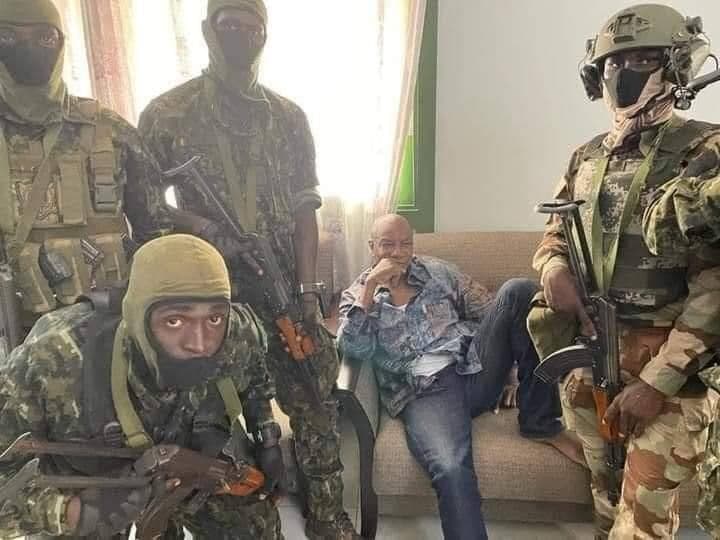
Within the 2021 year, three coups were carried out in Mali, Sudan, and Guinea Conakry. Conakry’s ousting of President Alpha Condé garnered a lot of media sensation. One reason that made it so was how the president was captured in the viral video in a state of disbelief, dressed casually, and the coup orchestrated by the commander of his supposed forces, a hitherto submissive commander, Mamady Doumbouya.

In the following year, 2022, there were two coups in Burkina Faso within eight months. The first one took place in January, with Lieutenant-Colonel Paul-Henri Sandaogo Damiba taking over as interim; after eight months, Damiba was, in turn, ousted by another military (installing Captain Ibrahim Traoré as transitional president).

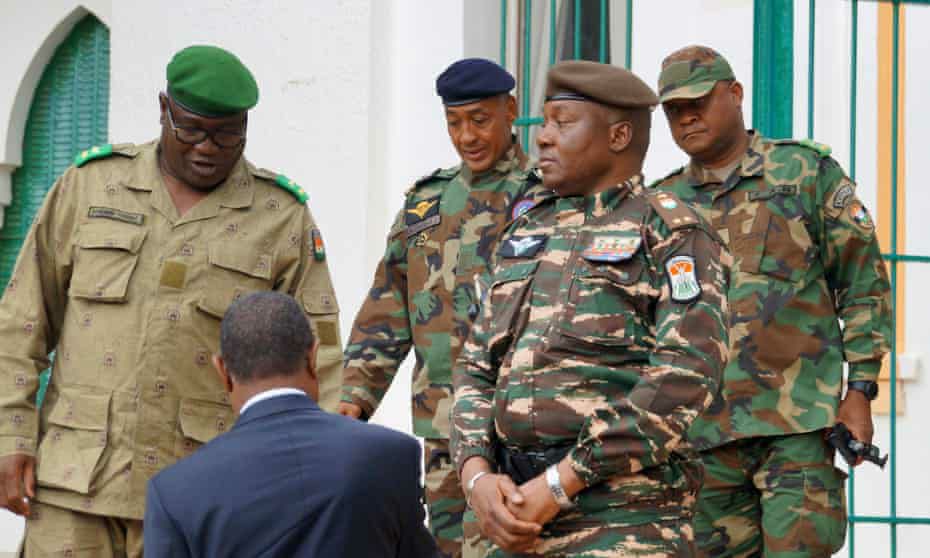
It was even 2023 that has taken us ever faster than in the past. The news of coup d’etat or rumours about it broke almost daily. First, it was Niger, where the military guarding President Bozoum ousted him as simply as going to the park.  Similar to Conakry’s, the Niger coup drew a lot of attention, and the Nigeriens threw their weight behind the junta. Both the public and the junta kept the anti-French kite flying, paving the way for the shift in allegiance to socialist Russia- an alternative superpower block to which all the aggrieved countries with West meddling turn. In addition, the row that ensued between the Junta and ECOWAS has also added twists to the matter. 

Months after Niger, the Gabon military struck to oust Ali Bongo, which brought to an end the Bango dynasty of 53 years. Drama ensued when Ali Bango, who was declared winner of the Gabonese presidential election barely an hour before, appeared on recorded video, appealing for help from the international community: “I, Ali Bongo, president of Gabon, aim to send a message to all my friends all over the world to tell them to make noise, people here have arrested me, my family and son are somewhere right now I don’t know what is happening… I’m calling on you to make noise, to make noise really, I am thanking you” This reminds me of Colonel Muhammed Gaddafi in 2011, when the NATO-enforced rebels came ever closer, toppling him as they approached Tripoli, the capital of Libya, then the self-described “king of the kings” buckled down crying for help.

 The Niger and Gabon coup shook the African continent. It appeared the coup was sweeping the whole continent, and the writing was all over the horizon as the next coup seemed to be a matter of when, not if. This development has triggered several sit-tight leaders to do something. Both President Paul Kagame of Rwanda and Paul Biya Cameroon reshuffled military positions. President Umaro Sissoco Embaló of Guinea Bissau dissolved the country’s legislature and appointed a new prime minister weeks later. Hausa says Mai kaza aljihu baya jimirin ass (he who has a skeleton in his closet gets frightened at the slightest provocation)

One thing that has been a tradition for the coup plotters is to elongate their stay or convert to democracy and orchestrate their indefinite stay, for instance, the failed Sani Abacha attempt or the successful attempt by Yahya Jammeh of Gambia, Yoweri Museveni of Uganda, Mathiew Kerekou of Benin or the late Chad president Idriss Deby. 

Some of these sit-tight African leaders even taken their stay to another level: dynasty form, where children or family members take turns to preside over their respective countries like Mahamat Deby Idris taking after his father Idriss Deby, Joseph Kabila from his father Laurent-Désiré Kabila, Museveni’s son is currently heating up, the Robert Mugabe wanted to impose his wife. No one embodied this sentiment like The Nguema family of Equatorial Guinea. They didn’t surpass 53 years of the Bango family alone but showed no sign of relinquishing the power.

You see, it is not that there were not good reasons on the ground for the junta to intervene. For instance, the corruption was said to be unprecedented when Muhammadu Buhari intervened, the economic hardship was also on the equal scale when Ibrahim Babangida intervened, insecurities currently bedevil the Sahelian countries of Mali, Burkina Faso, the excuse for the toppling of the government in those countries. In addition, it is not that the Junta didn’t have good intentions to make things better for their respective countries, but somehow along the line after taking power, the situation became ‘Jiya iya yau’, (the more things change, the more they remain the same) sometimes even worse. Africa, where does the problem lie?

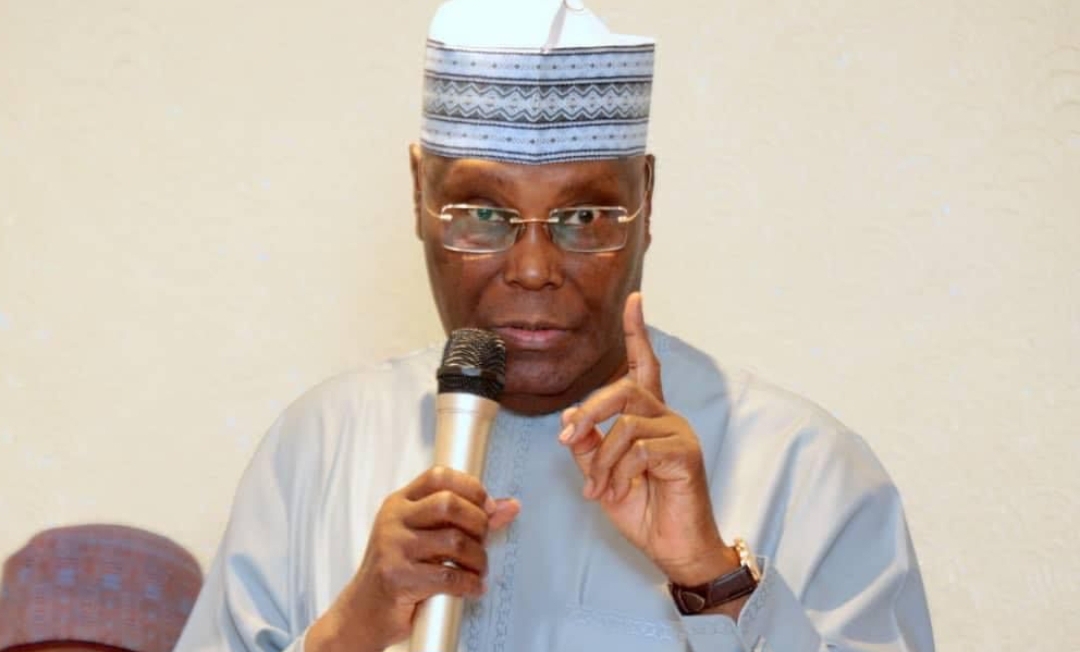
Atiku warns against using military force to resolve Niger unrest

By Muhammadu Sabiu

Atiku Abubakar, a former vice president of Nigeria, has cautioned the Economic Community of West Africa (ECOWAS) against using military hostilities to resolve the Niger Republic’s leadership obstacle.

Following coups in neighbouring Mali and Burkina Faso, President Mohamed Bazoum of the Niger Republic was deposed on July 26 by his own guard in the third putsch in the region in as many years.

After the coup in Niger, the regional economic bloc threatened military action.

Atiku criticised the strategy in a tweet on Thursday night, stating that deploying military techniques may make the situation worse.

He contends that the situation calls for diplomatic efforts, which implies that open lines of communication are essential.

Nigerians warned against travelling to Niger Republic amid imminent tension

By Muhammadu Sabiu

Nigerians have been advised against visiting the Niger Republic by Mustapha Sani, the NIS Comptroller in Charge of the Jibia Special Border Command, Katsina State.

This is because the Niger Republic is currently experiencing a crisis as a result of a coup d’état. Sanctions have been imposed on West Africa as a result of the event.

On Thursday, he addressed a joint celebration for the NIS’s Katsina State Command and the 60th anniversary of the service.

“Nigerians should stay at home and not attempt to go to the Niger Republic until the embargo is lifted. And we are determined to return any Nigerien we catch who is planning to come to this country,” he said.

He noted that the Service is deploying its officers to take care of the Katsina border to help curtail illegal movement from the Niger Republic.

“Despite the fact that we are divided by colonial masters, we share certain things in common like religion and culture, and that doesn’t guarantee them to enter Nigeria without valid documents,” he added.

“We have already put our officers on alert, and we have already deployed some to go and man the orthodox routes through which some of the foreigners use to enter into Nigeria and from what we have on the ground, we know it will be impossible for them to enter into Nigeria.”

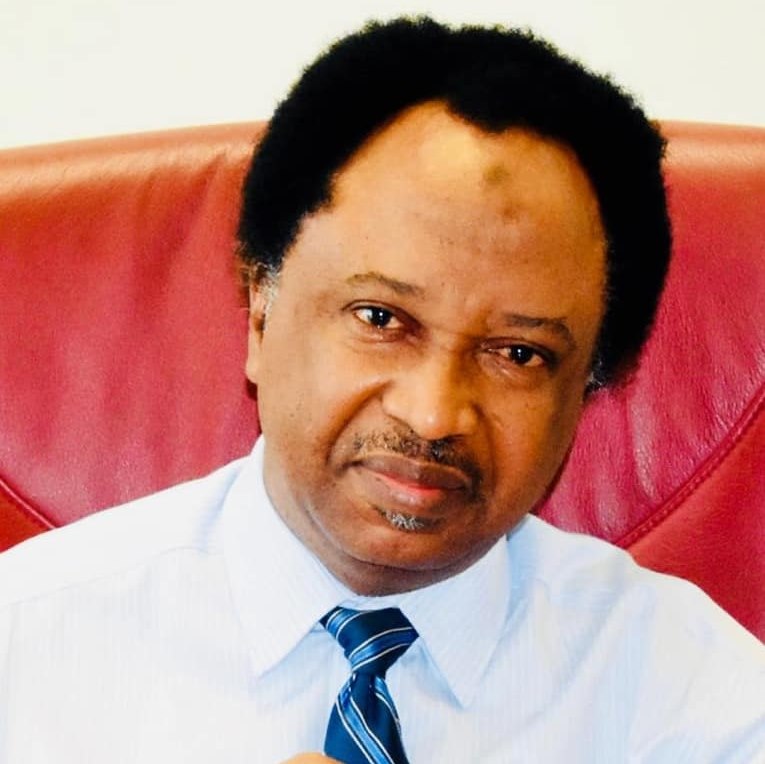
Shehu Sani condemns military coup in Niger Republic

By Uzair Adam Imam

Shehu Sani, the former Kaduna State lawmaker, has condemned the military coup in the Niger Republic.

Sani stated this Thursday on Twitter, adding that “military rule can not be the solution.”

The coup took place on Wednesday when members of the Presidential Guard detained President Mohamed Bazoum.

He added that although he understood the disappointment and the political clash, the military coup could not be the alternative.

Sani stated, “Military rule must be totally rejected and resisted in West Africa. Our democracy is not perfect, and there is no perfect democracy anywhere. Military rule is not the solution.

“I’m surprised to read comments on social media, it appears that many young people are now in support of it. 

“I understand the disappointment and the frustration with the political class. It’s still better we continue to struggle to make our democracy better until we get it right,” Sani added.

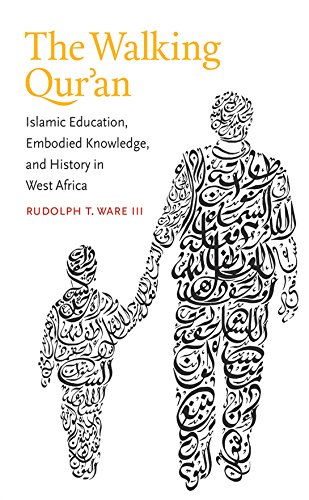
Book Review: The Walking Qurʾan: Islamic education, Embodied Knowledge, and History in West Africa

  • Book time: The Walking Qurʾan: Islamic education, Embodied Knowledge, and History in West Africa
  • Author: Rudolph T. Ware III.
  • Date of Publication: 2014
  • Number of Pages: 330
  • Publisher: The University of North Carolina Press
  • Reviewer: Shamsuddeen Sani

After recently reading a book about Quranic Schools in Northern Nigeria, I was left hungry for a less Western way of presenting the subject matter. So I serendipitously laid my hands on this book, and knowing that I have read about the author in the past, I didn’t hesitate to devour it.

Following a broad introductory section, the book delves deeply into an interdisciplinary examination of the knowledge philosophy underlying Quranic education. This required an in-depth historical ethnography of the institution in modern-day Senegambia, which lays the way for comprehension of the conceptualization and transmission of knowledge. It also strengthens the case that internalizing texts, even by swallowing them, was crucial to understanding and remembering the material. This book’s central concept represents the embodiment and actualization of Islamic knowledge.

Importantly, these early chapters look at the emergence and long-term evolution of a native West African clerisy. Ware underscores how these African Islamic instructors and thinkers were the primary agents of Islamization in a continent unperturbed by the early Islamic conquests. In order to avoid rulers (and maintain their independence), they established a unique framework for the interactions between political and religious powers. It also emphasizes both moral and political economies of studying and teaching the Qur’an throughout the 18th century focusing on how the growth of the Atlantic slave trade led to the breakup of this model of pious distance from power.

As we near the middle of the book, Ware thoroughly explored the historical account of the enslavement of ‘huffaz’ in Senegambia from the 1770s until the advent of the French colonial rule in the late 19th century. With clerics viewed as embodied exemplars of the Quran, such incidents of enslavement were perceived as more than just violations of Islamic law, but as desecrations of the Book of God.

The book meticulously illustrates the chronological narrative of Senegambia’s revolts, rebellions, and even revolutions inspired by the enslavement of “the walking Qur’an.” Without going further into spoilers, these historical happenings culminated in the climactic radical movement by African Muslim clerics and their disciples, with a cascade of events leading to the overthrow of hereditary slave-owning kings in 1776, the abolition of both the Atlantic slave trade in the Senegal River Valley and the slavery institution itself.

These narratives would lack crucial context if they did not include the efforts of formerly enslaved people and other oppressed groups to use the legal abolition of slavery in the French colonial state to assert their dignity through the dissemination of the Qur’an in the early 20th century. They fought to transform their very selves through Islamic education while doing so from within the epistemology of embodiment and in opposition to regional traditions that stigmatized their bodies because of their social standing. The establishment of mass Sufi organizations and the emergence of new French and Muslim teaching forms were only two of the many changes in colonial Senegal’s political and educational landscapes fueled by this knowledge-sifting process.

This outstanding work profoundly serves as the first step for anyone interested in learning about Qur’anic instruction in West Africa. A significant chunk of detail about Quranic education in West Africa jumps right off the page, you can feel the author’s passion, and as he claims, this is the narration from within. The writing style is genuinely simple and engaging and has a powerful sense of atmosphere. It gives you a lot to chew on and is one of those books that it would not feel right if you didn’t give it the five stars it deserves.

Rudolph T. Ware III is a historian of West Africa at the University of California, Santa Barbara. He formerly taught at the University of Michigan and then at Northwestern University. His work aims to confront and dispel Western misconceptions about Islam.

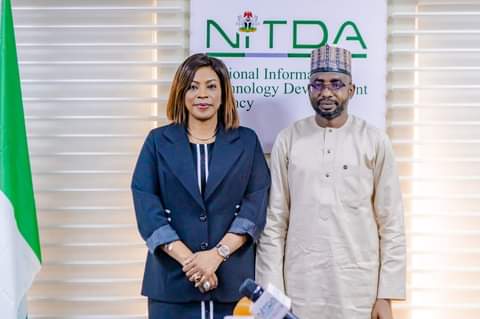
NITDA strengthens relationship with Google

By Ahmad Deedat Zakari

The Nigerian Information Technology Development Agency, NITDA, strengthens its relationship with Google West Africa. 

The NITDA Director-General, Kashifu Inuwa, made this known on Friday, April 8, 2022, while playing host to the Google West African Director, Juliet Ehimuan, in Abuja.

“If we can come together to strengthen the collaboration, we will eliminate duplication of efforts and working in silos,” He said.

 Mr Inuwa emphasized the importance of a good relationship between the two organizations and the aim of governmental regulations. 

“Together, we can achieve greater results. Governmental regulations are not to stifle or be an obstacle to your business; rather, it is to enable and unlock more opportunities and protect your business and our citizens,” He stated

Mr Inuwa also commended the effort of Google in the capacity building of Nigerians with a plan to train about five million Nigerians.  

Ehimuan, in her remarks, thanked NITDA for being one of Google’s major partners in the public sector with precedence of a great working relationship.

She confirmed the fact that Google has invested in a lot of capacity building over the years.

“Our initial estimate is to contribute directly and indirectly to create about 1.6 million jobs over time and work around device financing in partnership with telcos to make sure that people have access either through infrastructure or device data to gauge the digital world”, she disclosed.

According to Ehimuan, they will be about 300 million more internet users in Africa in the next five years, which will translate to more jobs and an enormous contribution to Nigeria’s Gross Domestic Product (GDP).

Soldiers ‘reportedly’ oust President Conde of Guinea

By Muhammad Sabiu

Guinea Conakry’s octogenarian president, Alpha Conde, has reportedly been overthrown by the country’s military.

The BBC has reported that an unverified video, which had gone viral, shows the president in the hands of soldiers.

Subsequent reports coming from Conakry, Guinea’s capital, have indicated that there was heavy gunfire in the city.

President Conde won a third term in a controversial election last year, which had ignited mass protest in the country.

There are still no details as to how the coup was staged.

Details follow…