Vladimir Putin

Putin calls European leaders “little pigs” as he vows Ukraine war goals will be met

By Maryam Ahmad

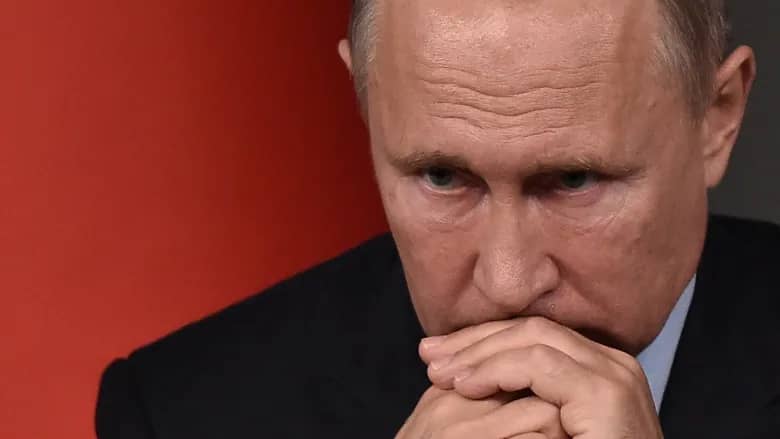
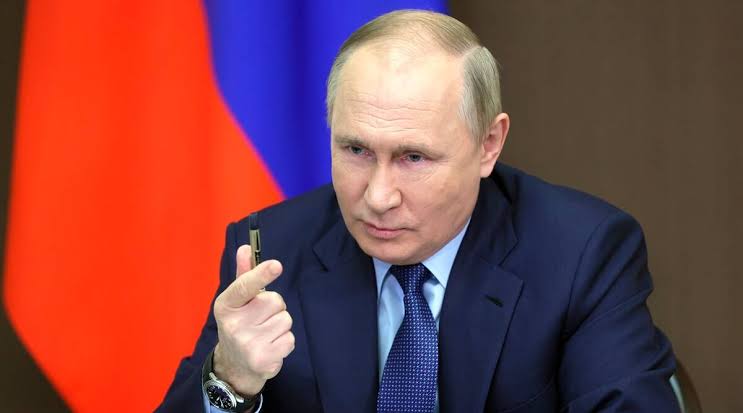
Russian President Vladimir Putin struck a defiant tone in a speech to his defence ministry, insisting that Russia’s goals in the war in Ukraine “will undoubtedly be achieved,” either through diplomacy or by “military means.”

While signalling openness to what he described as “substantive talks” with the United States, Putin dismissed European leaders in crude terms, referring to them as “little pigs” as they discuss proposals to increase funding for Ukraine.

The comments come as diplomatic activity intensifies in Europe. Ukrainian President Volodymyr Zelensky is expected to join European Union leaders in Brussels on Thursday, where discussions will focus on continued political, military and financial support for Kyiv amid the protracted conflict.

Russia convicts deceased LGBTQ travel agent of extremism

By Sabiu Abdullahi

A court in Moscow has delivered a posthumous conviction against an LGBTQ travel agent who died in custody one year ago, intensifying concerns about Russia’s clampdown on people it claims oppose “traditional” values.

The ruling, issued on Friday, declared 48-year-old Andrei Kotov guilty of extremism. His death was reported in November 2024 after he was found lifeless inside his cell at a Moscow pre-trial detention facility.

Kotov, who operated a travel company named Men Travel, had previously told the court that officers assaulted him on the night of his arrest in November 2024, stating: “Fifteen people came to me at night, beat me, were punching me in the face.”

Despite his death, authorities continued prosecuting the case.

Rights groups said this decision was intended to instil fear within the LGBTQ community, which has faced escalating pressure under President Vladimir Putin.

Reports from Mediazona indicated that the Moscow Golovinsky Court found Kotov guilty of engaging in “extremist activity” and of allegedly involving minors in pornography.

His lawyer said in December 2024 that investigators informed her the cause of death was suicide.

Human rights advocates argued that the government used the case to send a message. Russia has intensified legal and social restrictions against LGBTQ individuals, especially since its military campaign in Ukraine, which pushed the country further into strict conservative policies.

Putin has long criticised anything he believes contradicts “traditional family values,” describing such influences as foreign and un-Russian. In 2023, the Supreme Court outlawed what it referred to as the “international social LGBT movement” and labelled it an “extremist organisation.”

Human Rights Watch said that decision “opened the floodgates for arbitrary prosecutions of individuals who are LGBT or perceived to be, along with anyone who defends their rights or expresses solidarity with them.”

Although LGBTQ people have never experienced broad public acceptance in Russia, activists say conditions have worsened sharply in recent years, with increased risk and intensified state hostility.

Nigerian protesters wave Russian flag amid economic hardship, sparking controversy, arrests

By Uzair Adam

There is growing concern over the recent actions of protesters in Nigeria, particularly in the north, where aggrieved youths were seen waving the Russian flag during demonstrations against hunger and starvation in the country.

The Daily Reality reports that the “EndBadGovernance” protest began on August 1st and saw a large turnout. Many youths and women took to the streets to voice their worries amid worsening economic hardship.

However, the protests took an unexpected turn when demonstrators were seen waving the Russian flag and chanting slogans, asking for Russia to come to their rescue as the biting economic hardship exacerbated with each passing day.

Political Analysts React

Political analysts suggest that waving the Russian flag may stem from ignorance of global politics, describing the situation as an incredible display of “unpatriotism” by the aggrieved youths and women.

Russia as the Last Hope

The protesters argued that they knew exactly what they were doing and viewed their actions as a passionate plea to the Russian government to rescue the Nigerian masses from their devastating challenges. 

The youths, who perceive Russia as a “freedom fighter” for African countries, said they would never seek help from England, despite its historical ties to Nigeria, as they believe England harbours bad intentions against the country.

A group of youths told our reporter that they are pleading for Russian intervention since England remains silent on Nigeria’s problems. “America, too, will not speak because it is in the same boat as England,” they argued.

Ibrahim Muhammad (not his real name) said they were waving the flag to frustrate the federal government and clarify that they no longer cared for a country that had ignored their concerns. 

“I am waving this flag to make President Bola Ahmad Tinubu sad. These people don’t care about our problems and do whatever it takes to make us angry,” he stated.

Another protester, Isma’il Usman, said Russia is the only country they should now turn to for help, “especially looking at its recent interventions in some African countries.”

When Ignorance and Unpatriotism Shake Hands

According to analysts who spoke to The Daily Reality, the waving of the Russian flag by the youths is a demonstration of both ignorance and unpatriotism.

Professor Kamilu Sani Fagge, a lecturer in the Department of Political Science at Bayero University Kano, noted that while youths lack an understanding of global politics, certain individuals may have lured them into doing so. 

“There could be some people behind this movement, and people were pushed to the wall in this country, which could also be why they accepted to wave the flag during the protest,” he stated.

“However, the government is to blame for all this because it should have taken action to stop the protest by addressing these problems, but it refused. Now that President Bola Ahmed Tinubu has addressed the nation, there is still no hope,” Professor Fagge added.

An Invitation to Neo-Colonialism

Another analyst, Malam Sulaiman Muhammad, a lecturer at Aminu Kano College of Islamic and Legal Studies, argued that government negligence has deteriorated the situation, leading to more unpatriotic youth in the country. 

He warned that by pleading for Russian intervention, the youths are ignorantly inviting a new form of colonialism.

“I think the youths are not seeking intervention from England and France because England colonised Nigeria and the latter colonised Nigeria’s sister country, Niger. However, they forget that pleading for Russian soldiers’ presence in Nigeria is another form of colonialism,” he stated.

Disappointment as Russia Distances Itself

In a statement on Monday, the Russian Embassy in Nigeria issued a strong denial of any involvement with the group of protesters who were seen carrying the Russian flag and chanting slogans in support of President Vladimir Putin. 

The embassy stressed that Russia respects Nigeria’s sovereignty and does not interfere in its internal affairs, a statement that may not please the Russian flag-waving protesters. 

The statement described the protesters’ actions as personal choices that do not reflect any official Russian government policy.

However, one of these aggrieved youths said they would only stop pleading with the Russians once their voices were heard by the Russian President, Vladimir Putin.

Arrest of Tailor Sewing Russian Flags

However, the tailor who sewed the Russian flags for the protesters was reportedly arrested by security personnel on Monday. 

A picture seen by The Daily Reality showed the youth, whose name was not identified, being arrested with some of the flags he had sewn and his sewing machine.

Defense Chief Condemns Protesters’ Actions

Nigeria’s Chief of Defense, General Chris Musa, condemned the protesters’ actions as treasonable and warned they would face the full force of the law.

Vladimir Putin blames West over death of Russian journalist in Ukraine

By Uzair Adam Imam

The Russian President, Vladimir Putin, has blamed the Western powers over the death of Russian journalist in Ukraine.

Putin described the death of the journalist as “a heinous, premeditated crime” committed by Western powers and Kyiv.The Russia’s foreign ministry on Saturday vowed a decisive “response” against the perpetrators.

The Daily Reality reports that Russian military announced that Rostislav Zhuravlev, a war correspondent working for the state RIA Novosti news agency, had been killed. He died as a result of a Ukrainian strike in the southern Zaporizhzhia region on Saturday.

“As a result of a strike by the Ukrainian army using cluster munitions, four journalists were wounded in various levels of severity,” the Russian army said in a statement.

“During an evacuation, the RIA Novosti journalist Rostislav Zhuravlev died from his wounds that resulted from the cluster munitions exploding.

“Everything indicates that the attack on the group of journalists was not carried out by chance,” the Russian foreign ministry said.

“The competent international organisations prefer, as before in such cases, to turn a blind eye to this heinous crime”, it added.

According to the ministry, “the journalists were gathering material for a report on the bombing by the Kyiv regime militants of settlements in the Zaporizhzhia region using cluster munitions banned in many countries around the world.”

Russia-Ukraine War: British PM honours Ukraine’s President

By Ahmad Deedat Zakari

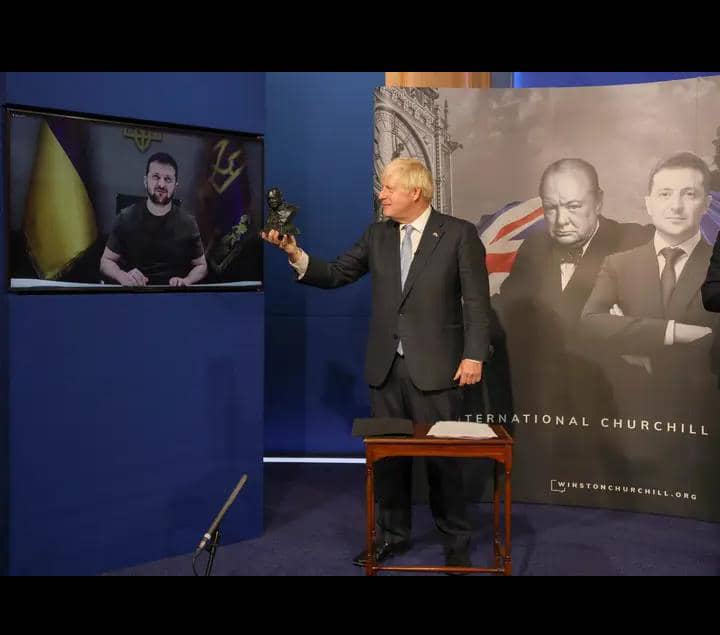
British Prime Minister, Boris Johnson, has honoured Ukraine’s President, Volodymr Zelnesky, with the Winston Churchill Leadership Award.

This was disclosed in the UK Prime Minister’s verified Facebook page on Tuesday, July 26, 2022.

“Today Prime Minister Boris Johnson presented President Zelenskyy with the Winston Churchill Leadership Award for incredible courage, defiance and dignity in the face of Putin’s barbaric invasion. ” The post reads.

The Prime Minister also said the UK would always stand with Ukraine.

On February 24, the world woke up to Russia’s invasion of Ukraine, which has thrown the two countries into war.

Russia’s invasion: Ukraine is not the target

By Sulaiman Badamasi (Mahir)

Russia of today is not the same as Russia yesterday. Russia used to be the Soviet Union, a superpower that sometimes acted with the West. The war of 1973, when the Zionists wanted both sides of the conflict taken to a draw and in 1954when Russia (Soviet Union) transferred the Crimean Oblast to Ukraine have said it all. Now, it is a post-Soviet Union Russia who toiled when the Soviet Union sagged, but within the breath-span of twenty-something years has grown now to a grandeur position.

The Western world has been ruling over humankind for the past 300 years or more, changing regimes worldwide, especially in the south and central America, which the famous Monroe Doctrine described as “America’s Backyard”. The West has been changing regimes after regimes all over the region. But have we ever asked why they have never changed the regime in Venezuela? America has done everything it could to change the Venezuelan government but to no avail because this can only be achieved through military intervention, and any move of such would mean facing Russia. They do not want to confront Russia. NOBODY WANT TO FACE RUSSIA because Russia is not Libya, Yemen, Somalia, Palestine, and of course, not Iraq.

What seemed to have convinced the world further to accept Russia’s predatory position was the tremendously dangerous step it took to intervene in Syria. This could have led to a nuclear war. Russia also took the world by surprise in 2014 when it took over or took back(?) Crimea in just two weeks. It seems like Russia is defeating the West in silence and stylishly repositioning itself back to the Soviet Union’s throne.

For the West to reduce the margin, it swiftly paid back with a regime change in Ukraine in 2014 in what was termed as “The Revolution of Dignity”, which saw the impeachment/replacement of the then Ukrainian (of course Russian loyalist) elected president, Viktor Yanukovych, and Petro Poroshenko (pro-West) became the president, who immediately began with leading the Russo-Ukrainian war in February 2014.

After three months, he forbade any cooperation with Russia in the military sphere and later signed the “Ukraine–European Union Association Agreement in June 2014.” Five months later, in president Poroshenko’s speech to the new parliament in November 2014, Poroshenko stated, “we’ve decided to return to the course of NATO integration” because “the nonalignment status of Ukraine proclaimed in 2010 couldn’t guarantee our security and territorial integrity”. Russia perceived all these, coupled with the ouster of Viktor Yanukovych, as a series of threats right at its closest border.  

Why does Russia detest/is against/is afraid of Ukraine’s alignment with NATO?

If Ukraine becomes a NATO member state, then Russia would have NATO on its very border, which means it will have its military bases a few distances away from Russian borders, where missiles could hit Moscow in minutes. Hence Russia does not seem to accept this security option. It could be said that Russia does not want to invade Ukraine because a full invasion MIGHT provoke a military response from the West (only time could tell, though). But certainly, all parties involved (Russia, Ukraine, and the West) hope the chaos ends through diplomatic means rather than war. Maybe Russia has a military strike as the only option for now?

Territorial control and elimination of perceived possible dangers around borders have become a norm or a widely practised approach by states nations. Let us digest in the following to shade more light:

Cuban Missile Crisis/Missile Scare: when the Soviet Union started installing nuclear missiles in Cuba in 1961 after reaching an agreement with Fidel Castro of Cuba, the Kennedy administration decided that this was too big a security threat to be contained. They put a “quarantine” (a station where weaponry logistics were searched) so that no nuclear missile could be shipped and demanded that all missiles in Cuba be taken back to the Soviet Union.

Syria and Israel: with Russia and Iran as Syrian friends and Israel sitting just 569.17 kilometres away from the Syrian border, it is not a surprise if Israel and her friends (America, Saudi, and Turkey) feel threatened or expect that the worst happens from Israel’s neighbourhood. The military campaign that aimed at toppling the Russia and Iran backed Assad’s government by the Saudi, Turkish and American backed rebel group, which began in March 2011 as an anti-government protest and later escalated to a full-scale war, could be understood as an effort to eliminate an enemy’s friend whose territory can be used to attack an immediate neighbour. Could America and Saudi afford to lose Israel?

Muslim Brotherhood and Israel: when Mohammed Morsi (may Allah have mercy on him) was sworn in as the first democratically elected president of Egypt on 30th June 2012, he expressed dissatisfaction with the country’s 1979 policy which declared that it stands as a mediator between Israel and Palestine and determined to reset his country’s orientation to one of active support, not for a ‘self-governing authority and ‘autonomy’ in the West Bank and Gaza Strip, but the attainment of an independent sovereign Palestinian state with Jerusalem as its capital and the right of the Palestinian refugees to return.

In Morsi’s one year in office before his removal through a coup d’etat, he ordered the Egyptian authorities to open the Rafah Crossing, the only gateway that connects Palestinians to the outside world. This means Palestinians can travel any time without really passing through strict measures imposed on them by the Israeli government, and different kinds of support could reach them without obstacles. Trade began to flourish between Palestine and Egypt. The Israeli siege on the Palestinian land was eased. He became the first Egyptian president to declare rejection of Israel’s assault on Palestine since 1979. Israel and her friends felt threatened by the closest neighbour, and the result was his forceful ouster, imprisonment, the unjust killing of his supporters. The coup that ended Morsi’s regime has not been justified yet. Why was it done then? To eliminate a nearby perceived enemy.

Saudi and Houthi: the Houthi rebel group, which champions Yemen’s Zaidi Shia followers, took over Sana’a in 2014 and forced the then Yemeni president, Abdurrabbu Mansur Hadi, in March 2015, to flee the country. To many people, “a rebel group has taken over Yemen,” yet to Saudi and her allies, “Iran has succeeded in extending its proxy-war/proxy influence to the Saudi border.” There is no need to emphasise that implication on Saudi, thanks to the firing of ballistic missiles to Saudi Arabia and UAE. Swiftly came a fierce joint reaction from Saudi-led coalition of eight(?) countries with logistics and intelligence support from America and France with Iran backing the Houthi rebels leading to the ongoing multilateral civil war.

Turkey and ISIS in Iraq: another interesting episode in the quest to defy near-border threats is having Turkey, a NATO member-state, fighting ISIS in Syria while ignoring the danger that the same ISIS poses in Iraq. Turkey has so far chosen to sit out the war to allow ISIS to fight the Kurdish militia group in Iraq. Turkey considers the Kurdish militia who craves a breakup to carve out its own country, Kurdistan, a more harmful enemy. Kurdistan encompasses southeastern Turkey (Northern Kurdistan), northern Iraq (Southern Kurdistan), northwestern Iran (Eastern Kurdistan), and northern Syria (Western Kurdistan). Some definitions also include parts of southern Transcaucasia. Certain Kurdish nationalist organisations seek to create an independent nation-state consisting of some or all of these areas with a Kurdish majority, while others campaign for greater autonomy within the existing national boundaries. Do you see? The same struggle to protect territorial integrity is seen at its peak here.

Iraq invasion and Iran: this is the same reason that encouraged Iran’s interest in Iraq after the US and its allies removed and killed Saddam Hussein. Despite having a not-so-friendly relationship with the West, Iran was in total support of the strike against Iraq (Saddam) in March 2003 when the US, under Gorge W. Bush, led a coalition of the UK, Poland, and Australia to invade Iraq.

This has remained part of history for centuries and means that Russia is not necessarily fighting Ukraine as Ukraine but trying to send a clear signal to whoever wants to near her border in any form of disguise.

Will the war be taken further? I do not think Russia could be smart enough to launch a full-scale war yet. However, if it continues, there is a slim chance of having NATO respond militarily, which could further lead to an unimaginable end. It is to the world’s knowledge that if external forces intervene to support Ukraine, it could mean facing Russia, China, North Korea, Serbia, Iran, Syria, Venezuela, Belarus, etc.

Are we about to witness another World War? We pray for the best.

Sulaiman Badamasi (Mahir) sent this article via sulaimanmahir@gmail.com.

Just In: Violence erupts in Ukraine’s second-largest city

By Muhammad Sabiu

As Russian troops entered Ukraine’s second-largest city, Kharkiv, street violence erupted.

According to Synehubov, the head of the Kharkiv Regional State Administration, residents of the eastern city should stay in shelters and avoid travelling as Russian vehicles invaded Kharkiv on Sunday.

He was quoted as saying, “The Russian enemy’s vehicles advanced into the city of Kharkiv. Including the central part of the city. Warning! Do not leave your shelters!” Governor Synyehubov said in a Facebook post Sunday.

“The Armed Forces of Ukraine are eliminating the enemy. Civilians are asked not to go out in the streets.”

For the previous three days, Ukrainian forces have been able to keep Russian troops out of the city, but Synehubov claims that this has suddenly changed, with the battle taking place in the city’s core.

Ukraine-Russia crisis: What should Nigeria do?

By Salisu Uba Kofar-Wambai

Nigeria’s foreign policy of nonalignment is on the right track. Thus, I commend how we keep mute and only call for peace in this ongoing face-off and altercation between Ukraine (backed by Western powers) and almighty Russia under President Putin.

Nevertheless, any attempt to side with one of the warring parties can be a big blow to the international relations prowess we have been displaying over decades. History had it that Russia supported Nigeria during the Biafra civil war. Reportedly, Malam Aminu Kano served as a bridge and intermediary embodiment between the Nigerian government and Russia in arms purchase, which positively impacted winning that war.

Aminu Kano’s Communist stance captivated Russia. Therefore, he successfully had that bilateral thing with them. It was a critical moment for Nigeria when France was solidly behind Biafrans.

However, even our much-talked-about project expected to shoot Nigeria into the league of technologically oriented countries – Ajakuota Steel project – was Russian technology. As a result, many of our technocrats were and continue to be trained in Russia.

Despite the shift in our foreign policy from the East to the West and now to Asia, Russia still maintains fantastic and fine bilateral relations with Nigeria. So supporting Ukraine to please Western powers will not do us better.

We better keep to our callings for peace and leverage primarily on this soaring of oil prices in the international oil market, evacuate Nigerians caught up there. We shall continue to run with the hare and hunt with the hounds.

Salisu Kofar-Wambai wrote from Kano. He can be reached via salisunews@gmail.com.

Ukraine: Boris Johnson describes Russian invasion as ‘catastrophe’ for Europe

By Muhammad Sabiu

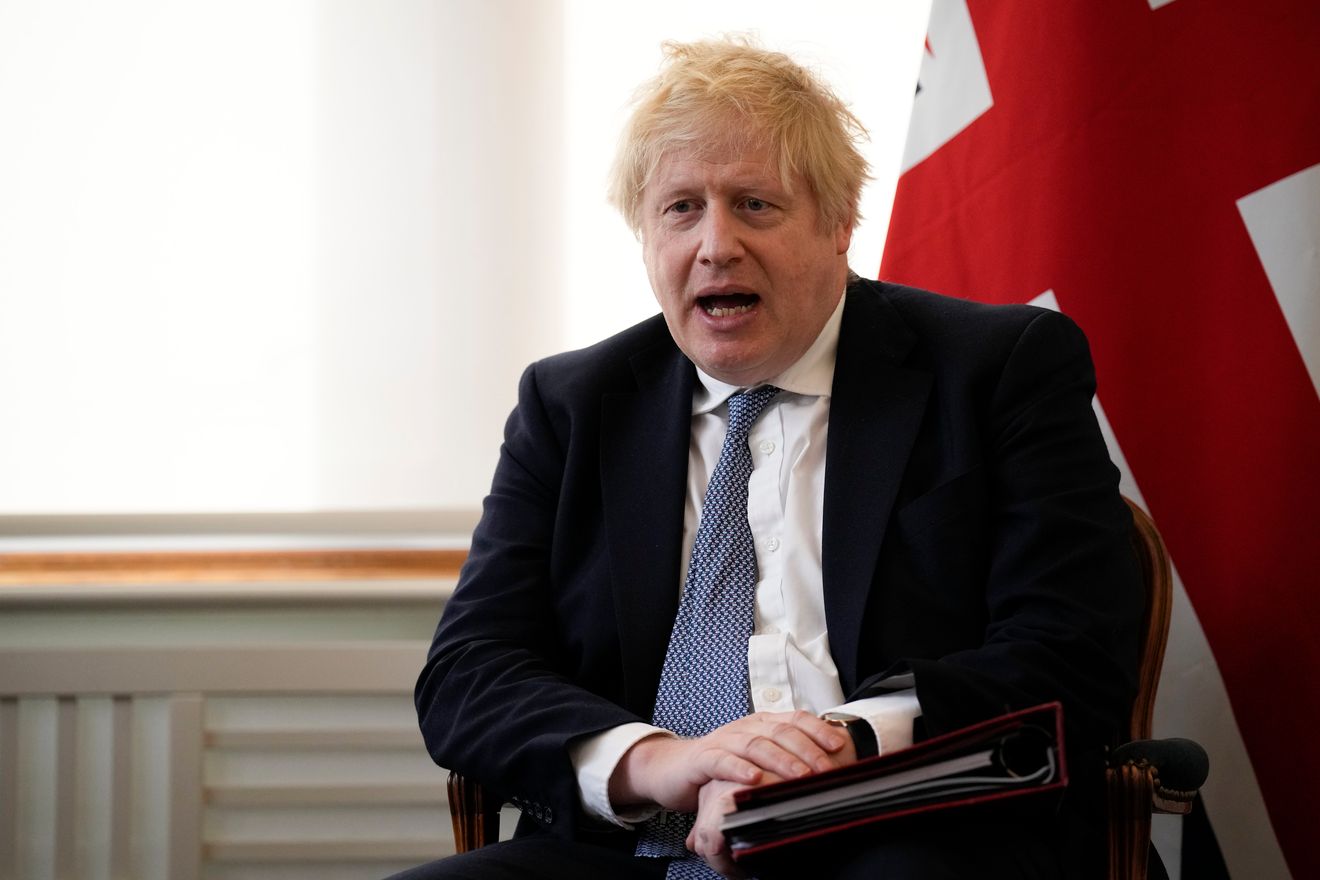
The invasion of Ukraine by Russia is a “catastrophe” for Europe, according to British Prime Minister Boris Johnson, who has asked for an emergency summit of the NATO military alliance led by the United States.

He was quoted as saying on Twitter: “This is a catastrophe for our continent.”

Mr. Johnson added that he would make a national address on the developments.

“I will also speak to fellow G7 leaders and I am calling for an urgent meeting of all NATO leaders as soon as possible,” he said.

President of Ukraine Volodymyr Zelenskyy calls on citizens to fight

Zelenskyy has appealed to all civilians who are willing to protect Ukraine against Russian soldiers to come forward, stressing that Kyiv will provide firearms to anyone who requests them.

Ukrainian President Petro Poroshenko also urged Russians to resist Moscow’s plan to invade their country’s neighbour.

Recall that Russian President Vladimir Putin has ordered the launch of attacks on parts of Ukraine as part of the move to support intending breakaway regions in the Eastern part of the country.

The attack has caused outrage and condemnations from world powers as citizens flee Kyiv, the Ukrainian capital city, although Putin stated that the attacks were not targeted at unarmed civilians.

Ukraine claimed that it had shot down fighter jets belonging to the Russian forces stationed in the unresting part of the country.

Russia to support Nigeria fight terrorism

By Uzair Adam Imam

The Russian president, Vladimir Putin, has promised Nigeria his support in fighting terrorism and countering religious extremism.

Receiving the Nigerian Ambassador to Russia, Professor Abdullahi Y. Shehu, the president gave his words.

President Putin made the assurance to Nigeria adding that a “very promising expansion on substantive dialogue on topical issues related to maintaining stability in the world hydrocarbon markets, combating terrorism and countering religious extremism.”

He stated that Russia was open to mutually beneficial partnership with all countries without exception.

Putin declared that “Russia is ready for multifaceted interfaces for mutual interests with the countries that their new envoys have come to represent in Russia.”