Nigerians Lose Estimated ₦75bn Annually to Visa Fees and Rejections – Report
By Sabiu Abdullahi
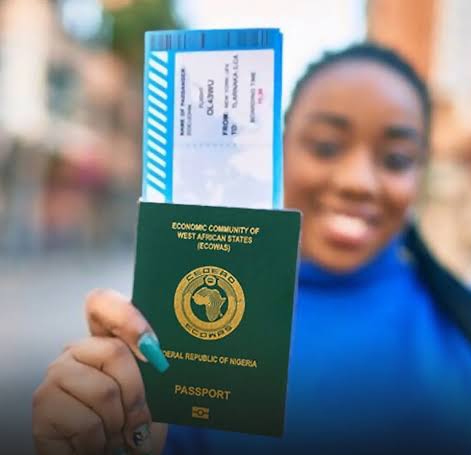
Nigerians spend an estimated ₦75 billion annually on visa application expenses, with unsuccessful applications accounting for a significant portion of the financial losses, according to a report obtained from the Ministry of Foreign Affairs.
The report, cited by Sunday PUNCH, estimated that Nigerians lost about €11.5 million, equivalent to approximately ₦19 billion, to rejected Schengen visa applications alone in 2025.
It highlighted the financial burden of international travel on Nigerians, particularly because visa application fees are generally non-refundable, regardless of whether an application is successful.
The financial exposure, according to the analysis, goes beyond official visa charges to include application centre fees, medical insurance, hotel reservations, flight bookings and other documentation expenses.
It estimated that an unsuccessful visa application could cost an applicant between ₦350,000 and ₦1.2 million, depending on the destination and the services required.
Canada was identified as one of the most challenging destinations for Nigerian applicants, particularly those seeking study permits. The report put the refusal rate for Nigerian study permit applications at approximately 75 per cent between January and April 2026, meaning only about one in four applications was approved.
It attributed many of the refusals to concerns about whether applicants would leave Canada after completing their studies, as required under the country’s immigration regulations.
Within the Schengen Area, Belgium reportedly recorded the highest refusal rate for Nigerian applicants at 60.3 per cent, followed by Spain at 52.7 per cent and France at 47.4 per cent.
The overall Schengen visa refusal rate for Nigerians stood at 46.9 per cent in 2025, compared with 45.9 per cent in 2024. Approximately 250,000 applications were unsuccessful during the year.
The United Kingdom recorded an overall refusal rate of 33.1 per cent for Nigerian applicants in 2025. The figure reportedly increased to 35.4 per cent in the first quarter of 2026, while visitor visa refusals stood at an estimated 38.6 per cent.
The report also stated that Nigerians accounted for 44.4 per cent of African visa refusals by the UK, citing a cumulative figure of 1.34 million over 21 years.
For the United States, the analysis cited an estimated refusal rate of 64 per cent for African applicants seeking F-1 student visas, compared with a global rate of 35 per cent. It identified concerns about applicants’ intentions to return to their home countries as one of the factors behind such decisions.
The report further highlighted rising visa charges in some countries. Japan, for instance, increased its visa fees for Nigerians from July 1, 2026, with a single-entry visa rising from ¥3,000 to ¥15,000, while a multiple-entry visa increased from ¥6,000 to ¥30,000.
These new charges were estimated at approximately ₦126,000 and ₦252,000, respectively. Despite the increase, Japan reportedly maintained a relatively low refusal rate of between 12 and 15 per cent for Nigerian applicants.
The analysis also listed several other destinations and their visa charges. A United States B1/B2 visitor visa costs $185, while Canada’s visitor visa and biometrics fees amount to CAD185. Schengen applicants were estimated to pay €90 in visa fees, in addition to about €35 in application centre charges.
For the United Kingdom, a six-month visitor visa was listed at £127, while a 10-year visitor visa costs £1,128.
India was described in the report as one of the more expensive destinations in the comparison, with a listed visa charge of $588, although its electronic visa options for eligible applicants reportedly cost between $25 and $80.
The report also examined the requirements for travelling to Indonesia, noting that Nigerian applicants generally require a sponsor and approval through the relevant immigration process rather than relying on visa-on-arrival arrangements. It estimated the refusal rate for Indonesian calling visas involving Nigerians at about 40 per cent.
Malaysia’s electronic visa system was identified as a comparatively affordable option for eligible Nigerian travellers, with the application fee estimated at RM126, equivalent to between ₦40,000 and ₦45,000.
The report advised Nigerians seeking to minimise financial losses to consider destinations offering visa-free entry, visa-on-arrival facilities or electronic travel authorisation, provided they meet the relevant eligibility requirements.
It listed several West African countries, including Ghana, Benin Republic, Togo, Senegal, The Gambia, Liberia, Niger, Burkina Faso, Côte d’Ivoire, Mali, Guinea, Guinea-Bissau and Sierra Leone, as destinations accessible to Nigerian passport holders under regional arrangements.
Other countries mentioned as possible alternatives included Rwanda, Barbados, Dominica, Fiji, Mauritius and Vanuatu.
However, the analysis cautioned that travellers should confirm current entry requirements through official government channels before making travel arrangements, as visa policies and eligibility conditions may change.
It also noted that visa-free entry does not necessarily eliminate all travel-related expenses, while electronic travel authorisations and some online permits may still attract non-refundable charges.
The Daily Reality