VAT

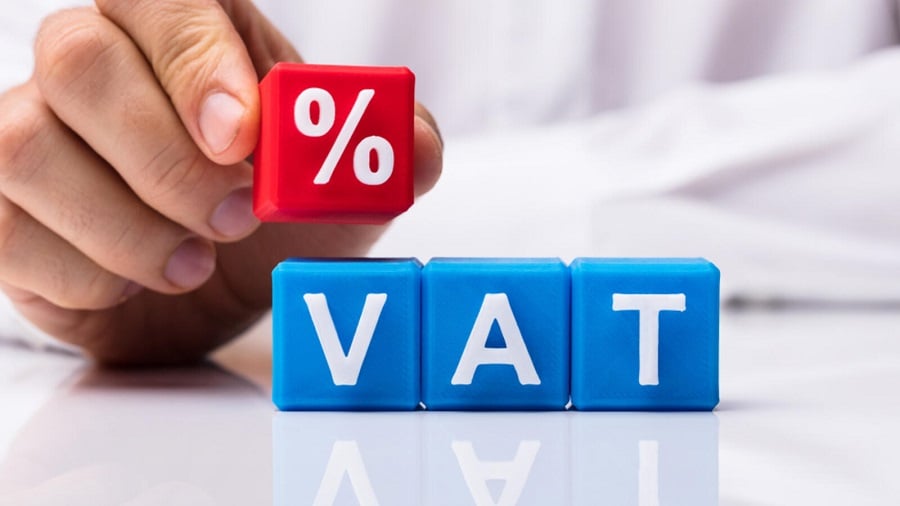
Nigerians to pay extra as government imposes 7.5% VAT on banking charges

By Sabiu Abdullahi

Nigerian bank and fintech users are bracing for a sudden increase in everyday banking costs as the government mandates a 7.5% Value Added Tax (VAT) on certain financial services starting Monday, 19 January 2026.

In a notice to its customers, Moniepoint, one of the country’s leading fintech platforms, revealed that the tax will apply to services such as POS transactions, mobile banking transfers, USSD fees, card issuance, loan processing fees, and Moniebook subscriptions.

The company reassured customers that the change is not a price hike by Moniepoint, but a government requirement to remit VAT to the Nigerian Revenue Service (NRS), formerly known as the Federal Inland Revenue Service.

“The NRS has communicated a deadline of 19th January for all financial institutions – including commercial banks, microfinance banks, and electronic money operators – to start collecting and remitting VAT,” Moniepoint said in its announcement.

Services such as interest on loans and deposits, however, will remain exempt from the tax.

For the average Nigerian, this seemingly small tax could add up. A ₦50 transfer fee, for example, will now attract an additional ₦3.75, which will go straight to the government rather than the bank.

Analysts say the VAT could stir public frustration as Nigerians grapple with rising costs, especially for digital financial services which have become a lifeline for many in the country.

Financial experts warn that the new rule is just the beginning, urging citizens to review all banking charges carefully to avoid being caught off guard by the added government levy.

Digital transfers boost FG revenue as EMTL gives way to stamp duty

By Abdullahi Mukhtar Algasgaini

The Federal Government generated a total of N8.09 trillion from Value Added Tax (VAT) and the Electronic Money Transfer Levy (EMTL) between January and November 2025, analysis of documents from the Federal Account Allocation Committee (FAAC) has shown.

Of the amount, N7.69 trillion came from VAT collections, while N403.68 billion was realised from EMTL during the 11-month period.VAT receipts opened the year at N771.86 billion in January but declined to N654.46 billion in February and N637.61 billion in March. Collections rose slightly to N642.26 billion in April and climbed further to N742.82 billion in May before falling again to N678.16 billion in June.

Revenue improved in the second half of the year, with N687.9 billion recorded in July and N722.61 billion in August. September saw a peak of N872.63 billion, before dropping to N719.82 billion in October and N563.04 billion in November.

EMTL collections followed a similar fluctuating pattern. Revenue stood at N21.40 billion in January, rose to N36.63 billion in February, and fell to N26.01 billion in March. April recorded N40.48 billion, while N28.82 billion was collected in May.

Collections increased to N30 billion in June and N39.16 billion in July before declining to N33.68 billion in August. September recorded the highest EMTL revenue at N53.83 billion, followed by N49.86 billion in October and N43.4 billion in November.

Meanwhile, EMTL will be replaced by stamp duties from January 1, 2026, in line with the Nigeria Tax Act (NTA) 2025. Under the new regime, a N50 stamp duty will be charged on transfers of N10,000 and above, with the sender bearing the cost, as mandated by the Federal Inland Revenue Service (FIRS).

Digital payment firm PalmPay, in a notice to customers, said the charge would not apply to transfers between a customer’s own accounts where names and BVN or NIN match, stressing that the duty is remitted directly to the Federal Government.

Daily Trust reports that EMTL has become a growing source of non-oil revenue, generating N219.11 billion in 2024, exceeding its N174.24 billion projection. The growth was driven largely by the extension of the levy to fintech platforms such as OPay, PalmPay and Moniepoint.

Under the new stamp duty regime, government revenue is projected to rise to N456.07 billion in 2026, N579.82 billion in 2027 and N752.45 billion in 2028, figures already factored into the Medium-Term Expenditure Framework (MTEF).

While officials insist no new tax has been introduced, analysts note that the N50 charge, though small individually, could generate hundreds of billions of naira annually due to the high volume of digital transactions, even as concerns persist over its impact on small businesses and POS operators.

Tax Reform Bill: A path to equity and unity!

By Zayyad I. Muhammad

Taxation is not merely a tool for generating revenue; it is a cornerstone for fostering national balance and ensuring the collective survival of all citizens. Recognizing this, with wisdom, Nigeria has exempted many essential goods and services such as agricultural produce, fertilizers, certain baby products, and healthcare items from taxation or VAT. This policy ensures that food items like rice, maize, sorghum, millet, beans, and meat—produced in states like Kano, Borno, Adamawa, Taraba, etc —can reach markets in Enugu, Lagos, and Port Harcourt, where they are accessible to Nigerians at reasonable prices.

Conversely, products such as fertilizers, agricultural machinery, baby items, and healthcare essentials manufactured in industrial hubs like Aba, Ibadan, Warri, and Lagos, etc., remain affordable across the country, including the northern states, because they are VAT-exempt. This interconnected economic framework fosters interdependence among states and promotes equitable access to essential goods, irrespective of geographic location.

However, the current discourse surrounding the proposed tax reform bill, particularly its provisions on VAT, has raised concerns about fairness and equity. Rather than serving as a unifying mechanism, the proposed VAT contributions and their sharing formula have become a source of tension, with some Nigerians—especially from the North—perceiving the system as skewed in favour of economically dominant states like Lagos. This perception has fueled suspicions, leading to terms like “Lagos colonialism” being used to describe the perceived imbalance in resource allocation and benefit distribution in the new VAT bill if passed into law by two chambers of the National Assembly 

To address these concerns, the tax reform bill must be designed to generate revenue and reflect the principles of fairness, inclusivity, and Nigeria’s complex politics.

Taxation policies should be a tool for strengthening national unity, ensuring that every Nigerian, regardless of region or state, feels an equitable share of the nation’s prosperity. There is no need to rush to nowhere- the government must patiently engage in transparent dialogue and adopt a balanced approach that considers the diverse economic contributions and needs of all states. 

One key reason the North rejected the bills is that President Tinubu’s administration is facing growing suspicion among many Northerners due to certain policies, programs, and appointments. This is a troubling development for a government that, before coming to power, proudly counted the North as its political stronghold and key support base.

Such distrust is damaging not only to the administration’s credibility but also to national unity. To maintain the confidence of all Nigerians, it is crucial for the government to address these concerns transparently, ensuring that its actions reflect inclusivity and fairness. Economics and politics often intertwine. When political backlash outweighs economic benefits, retreat and consultation are essential.

The Tinubu government must strive to deliver on its promises while fostering trust across all states and demographics, particularly among those who believe in its leadership.

In essence, taxation should not be seen as a divisive tool but as a bridge that connects the unique strengths of each state and region, fostering a truly united and prosperous Nigeria.

 Zayyad I. Muhammad writes from Abuja via zaymohd@yahoo.com.

Tax reform bill: What the North needs to do

By Bilyamin Abdulmumin, PhD

Passing bills in Nigeria (and apparently everywhere else) has a tradition of generating controversies. For instance, the Petroleum Industry Act (PIA) endured decades of rejection before finally passing into law. When the Electoral Act 2022 was signed into law, the opposition went agog, crying to high heaven. Similarly, when the Social Media Bill was passed, it was seen as proof of a government obsession with suppressing dissent.

The reform that is now raising the dust is the Tax Reform Bills. Days after sending the bills to the national assembly, the nineteen governors of the northern states convened in Kaduna to oppose them, describing them as anti-North. The Federal Executive Council (FAC) also backed the northern governors. However, like the vigour with which subsidy removal was pursued, the president insisted on proceeding with the reform.

Northern governors fear amending VAT to a derivation-based model will diminish their states’ revenue contributions. Governor Yahya, the NGF chairperson, notes that companies remit VAT based on their headquarters, not where goods and services are consumed. Consequently, while MTN services consumed in Kano generate VAT for Lagos, Kano’s allocation decreases despite the consumption.

This reform is a dream come true for the state where the plants and industries are sited; unfortunately, for the state’s bottom rock in terms of industries, it is a crying face to them.

 While seeking redress to the proposed bill, it is also better to take charge; no more time is needed for the North to dust off all the moribund infrastructure, pass and implement industrial policies, continue with the uncompleted, and maintain the few industries in the region than now. 

There are plenty of them in Kano; notwithstanding Karota revenue, Abba Kabir Yusuf needs to rise to industrious revenues. Dangote’s Tomato processing industry is said not to be meeting expectations and optimism.

In Zamfara, a once peaceful and serene area, Dauda Lawal needs to recall all the companies aground and those existing only in paper, e.g., fertiliser plants by his predecessor Mutawalle. Apart from raising revenue, industrialisation benefits in Zamfara are numerous, combating even the insecurities that bedevil the state (through job opportunities in the long run).

In Kaduna, Uba Sani needs to continue with the Malam El-rufai’s exploit, maintaining and upgrading Olam Nigeria and a host of economic initiatives.

In Kebbi state, the comrade Dr. Nasir Idris Kauran Gwandu needs to extend his widely recommended administration to continue the ongoing legacies of  Senator Abubakar Atiku Bagudu, like the bioethanol mega plant, maintaining and promoting already established ones ( e.g., GB Food tomato processing plant and WACOT). 

Ironically, the southern states (especially the west), where the proposed bill is set to favour, are upping the ante. Lagos, for instance, is making unprecedented investments in energy generation.

The interest in remodelling the proposed Tax Reform Bills is not enough; it is a wake-up call for the North to raise the bar regarding regional industrialisation.

Bilyamin Abdulmumin, PhD, wrote via bilal4riid13@gmail.com.

Tinubu’s tax reforms will cripple north, trigger nationwide crisis – Zulum warns

By Uzair Adam 

Governor Babagana Umara Zulum of Borno State has expressed strong opposition to the tax reform bills introduced by President Bola Ahmed Tinubu’s administration, cautioning that their implementation could significantly harm the northern region.

The controversial bills, which propose shifting the basis for Value Added Tax (VAT) distribution to the location of consumption, have sparked widespread resistance, particularly in the north. 

Key stakeholders, including northern governors, traditional rulers, and the Northern Elders Forum, have called for the withdrawal of the proposed legislation.

Speaking with BBC Hausa, Zulum criticized the rapid progress of the bills through the National Assembly, contrasting it with the protracted passage of other critical legislation, such as the Petroleum Industry Bill, which took nearly two decades to become law.

“We condemn these bills. They will set the north back and affect other regions, including some states in the South West like Oyo, Osun, Ekiti, and Ondo,” Zulum said. 

“This is not mere opposition; it is about safeguarding our future. We urge President Tinubu to reconsider. 

“He received substantial support from the north during the election, and our interests must be protected.”

Zulum warned that the financial strain imposed by the reforms could make it difficult for many northern states to pay salaries, adding, “Even if we manage to pay, it won’t be sustainable in the following year.”

When asked if the bills would exacerbate poverty and insecurity in the north, the governor affirmed, “Yes, it will. This isn’t just about the north; even Lagos is concerned. If so many regions are against these bills, why push forward without careful consideration?”

Zulum also addressed speculation about lawmakers being influenced by lobbying or kickbacks. 

“There are rumours, but we cannot be sure. What we need is patriotism. We have children, grandchildren, and relatives in rural areas. We must avoid endorsing policies that would hinder their progress.”

While emphasizing that his stance is not an act of defiance against the federal government, Zulum maintained that it calls for a more thoughtful approach. 

“We supported and voted for President Tinubu, but these bills are not in our best interest. We are simply asking for a reconsideration to protect the future of our people and the nation at large.”

Multiple blows to a reactive North: Emilokan na your mate? 

By Shettima Dan’Azumi, ESQ

Northern Nigerian states are gradually losing a significant portion of their Federal Accounts and Allocation Committee (FAAC) allocation shares, which is undoubtedly their biggest revenue source. From the Local Government Funds and Fiscal Reform Bills to dividends from NLNG shares of NNPC and, today, the National Lottery, all these are part of the pool that makes up the monthly national cake distribution known as FAAC.

These developments are not surprising to any student of development. We all saw it coming. Early this year, the Supreme Court, in a suit filed by the Federal Government, scrapped the States and Local Government joint account, which had previously entrusted local government funds to their respective states.

In another case, the Supreme Court also agreed with the AGF’s argument. It held that the NNPC’s stake (shareholding) in the NLNG, unlike the NNPC itself, actually belongs to the Federal Government, not the entire Federation. Those billions of dollars accrued to NNPC from NLNG annually are no longer to be shared with the States as part of FAAC. 

Similarly, VAT, a chunk of the non-oil revenue currently shared based on equity, derivation, and population formula amongst FG, States, and Local Government, will, if Emilokan’s Executive Bill succeeds at the National Assembly, now be shared based on derivation or consumption or both. Either way, I don’t see how the North can benefit. I will get to the reason shortly. 

Then came today, another blow in a Suit initiated by the Lagos State Government. The Learned Justices of the Supreme Court, while granting all the reliefs sought by the AG of Lagos State, held that revenues accrued to the Federation through the National Lottery Commission from the regulation and royalties of lottery and other online games are in reality within the Residual Legislative List, exclusive to States to regulate and generate revenues from. 

I believe there may be more of these seemingly harsh interpretations of the law in the near future because that is what the Constitution actually contemplated. 

If you put these chains of events together, you would only come to one conclusion: that full federalism is taking a crude shape in the country against the wish of everyone. We would have prepared for this time if northerners had been thoughtful and proactive. We would have confronted the issue of restructuring with strategy rather than our usual rejectionist attitude to achieve it on our terms and put a timeline for gradual implementation to minimise its impact. With our sell-out NASS members, who either do not appreciate where all this is headed or have been bought to look away, it’s only a matter of time. May Allah rest the soul of Senator Suke Yaro Gandi and the rest of his contemporary visionaries and patriots. 

What should we expect now? Our FAAC-reliant states will receive a shorter allocation. If VAT is to be shared based on derivation, then most of the Corporate Headquarters of businesses where the remittance of VAT takes place are far away from the north. What if it’s to be shared based on consumption? The follow-up question is: how do you determine the end users when you don’t have the data to prove where it is consumed? Even if this data exists, most of our businesses in the north, including Kano State, are not formal businesses, so their distributors are in Lagos and other Southern States. Our traders are running away from the institutionalisation of corporate governance frameworks in their businesses, which will give them the capacity to deal with manufacturers and wholesalers directly and document their dealerships properly. We are simply traders. 

The lottery is worse because most states think the whole business is haram. But, wait, is it not the double standard that you are operating a secular state, collecting VAT revenue generated from breweries and royalties from casinos, including the lottery, for all these years while still believing it’s haram? At least, it would soon be over, and we shall stick with halal revenues.

To cut a long story short, the North must wake up on governance and development issues. The culture of electing clueless governors and the dominance of corrupt and soulless political class must end. We must pay more attention to our manpower and skills development policies and reform our education systems because that’s what all these boil down to. EDUCATION! Our youth must stop social media praise-singing and political sycophancy and embrace education and skill acquisition. Our businesses must adopt corporate governance and innovation and be more industrious and forward-thinking. 

Because Emilokan is not your mate.

Ulama Forum rejects proposed tax reform bills 

By Uzair Adam 

The Ulama Forum in Nigeria has expressed strong opposition to the proposed Nigeria Tax Bill (NTB) 2024 and Nigeria Tax Administration Bill (NTAB) 2024, currently before the National Assembly. 

In a joint statement signed by its Convener, Aminu Inuwa Muhammad, and Secretary, Engr. Basheer Adamu Aliyu, on Monday, the forum raised concerns about the bill’s implications on equity, federalism, and economic fairness.  

The statement criticized the bills for transferring the largest share of Value Added Tax (VAT) revenue from consumption or generation areas to states hosting production entities’ headquarters. 

“VAT is a consumption tax. Transferring its revenue from the areas where it is generated to the locations of head offices undermines fiscal equalization, widens income disparity, and risks social disharmony,” the forum said.  

The forum also noted that the bills threaten the survival of critical agencies such as TETFUND, NITDA, and NASENI by proposing a gradual reduction in their funding through the Development Levy. 

“Phasing out these agencies will jeopardize infrastructure, research, and capacity-building efforts in our tertiary institutions, leaving students to bear exorbitant tuition fees under an ill-conceived student loan scheme,” the statement warned.  

The forum accused the government of rushing the bills without sufficient public scrutiny, alleging that they align with a long-term reform agenda by international financial institutions such as the World Bank and IMF. 

“There is room to suspect that these bills are part of the World Bank’s 10 to 15-year reform agenda, threatening our sovereign independence,” the forum alleged.  

To address these issues, the Ulama Forum urged the National Economic Council and State Governors to intervene and demand a thorough review. 

“The concerns of state governors and other stakeholders must be addressed to give these bills credibility and avoid perceptions of external imposition,” it added.  

The forum recommended that the bills be subjected to extensive public debate and expert analysis to ensure they align with Nigeria’s federal structure and national interest. 

It called on members of the National Assembly to act in the best interests of their constituencies and resist any pressure to pass the bills in their current form.  

“We urge public-spirited individuals and organizations to rise against this threat to fair and even development. The VAT-sharing formula and the proposed bills strike at the heart of federal constitutionalism,” the forum concluded.  

The Ulama Forum emphasized the need for justice and fairness, calling for the bill’s withdrawal to allow for broader discourse and a national consensus.

7.5% VAT rate remains — FG

By Anwar Usman

Mr. Wale Edun, the Minister of Finance and Coordinating Minister of the Economy, has debunked reports suggesting an increase in the Value-Added Tax rate from 7.5 percent to 10 percent.

In a statement signed by him on Monday, Edun clarified that the VAT rate remains unchanged at 7.5 percent, as stipulated in the nation’s tax laws.

Edun reiterated that “the current VAT rate is 7.5%, and this is what the government charges on a spectrum of goods and services to which the tax is applicable. Therefore, neither the Federal Government nor any of its agencies will act contrary to what the laws stipulate.”

He further explained the importance of maintaining a balanced tax system, emphasizing that Nigeria’s tax framework is built on three key pillars: tax policy, tax laws, and tax administration.

While addressing concerns over government actions perceived as anti-human, Edun reassured Nigerians that fiscal policies are designed to promote sustainable economic growth and alleviate poverty, not to hinder them.

The Minister also stated, “Our focus as a government is to use fiscal policy in a manner that promotes and enhances strong and sustainable economic growth, reduces poverty, and makes businesses flourish.”

VAT: Between common sense and critical observation

By MA Iliasu

The chart showing the performance of Nigerian State governments in internal revenue generation has done its part in unveiling the mixed performances of the state economies. As expected, the public reactions, which to me are warranted, carry both the weight of reason and emotion. And maybe for the first time in the history of the Nigerian political economy debates aren’t taken over by regionalism and ethnic jingoism. Instead, it seems that consciousness has succumbed after realising how laziness and incompetence have been fairly distributed among both the northern and southern ruling classes, governors mainly.

Having learnt the flow of sentiments from the day the revenue rankings were released to date, I conclude that the discussions around Internally Generated Revenue (IGR) and Value Added Tax (VAT) are more skewed toward the search for self-actualisation rather than exclusive state independence. For which I’m hoping to be correct. Because if I’m wrong, that’ll mean most of the commentaries are not more than unwarranted emotional outbursts on how the economy really works.

Critical observation will tell that states like Kano are painfully underachieving. Possibly because the government ignores countless taxable entities and many other revenue streams, or it doesn’t care to investigate the conduct of the revenue agencies, it’s very self inclusive. For it’s a fact that the government source massive revenue not only from taxation but from the sales of valuable assets, among others.

On the other hand, without even mentioning Lagos that no economy has come close to compete with, you’ve Kaduna and Rivers states. The economies that can quickly be agreed to be of similar strength if not inferior to Kano’s. Yet with the astronomical difference in IGR. The defining factor in that dilemma lies in their respective self-actualisation and economic competence. The same can be said on the other high-earning states against their low-earning counterparts. And where that’s concerned, questions are right to be asked on why should a state enjoy a sizable share of other state’s hard work when in itself it’s in a unique position to contribute as much if not more.

The way I see it, that’s where the conversation becomes critical. The high-earners think every state should enjoy as it earns. While the low-earners think the economic union should not be dissolved because they’re geographically and industrially rigged by nature. The indigenes of high-earners agree with their state’s notion. As do that of low-earners who think isolating their state expenditure with its earned revenue will awake them from the shameless slumber and make them more creative. The important of all is, does the economy work that way?

To begin with, governors who believe nature hinders their income stream must know that geography in an economic context is either an advantage or a symbol of unique opportunity. For example, it’s a fact that Lagos and Rivers, as the custodians of Nigerian ports, have found it easy, therefore, advantageous to source revenue. But it’s the same with Jigawa, that’s strategically positioned to be a massive tech-hub and schooling environment across Sahara, Yobe that’s agriculturally equipped to grow the most unique seeds and Delta that’s attracted to the non-fossils industry. Therefore, using nature as an excuse is beyond lazy.

Nevertheless, no matter what any state does to achieve economic supremacy, one state must earn more than another. Thus, one state must record a deficit in trade with another. It’s a simple law of nature that’s very sensitive in economic policy, especially in accounting internal trade.

For instance, it makes sense that Kano, the largest textiles market and importer in Africa, pays more to Lagos and Rivers, who are the custodians of ports than it receives. Likewise, if Kano, as the distributor of the shipment, receives more from Bauchi, a retailer, than it pays. The same line of argument can be asserted to the states that own what other states need more than it needs from them. And so, recording deficit by the paying state is inevitable because needs and economies of scale can never be the same.

Due to that vivid notion, the famous British economist John Maynard Keynes argued that economies must be bound together to solve the inevitable rigidities that’ll be caused by the unavoidable deficit bred by such economic interdependence. According to Keynes, crises can be redemptive and non-redemptive crises. The redemptive crisis is the type of crisis that’s capable of becoming its own medicine. In short, any problem that can paradoxically become its own solution qualifies as redemptive. While the non-redemptive crisis is the type of crisis that can’t solve itself.

For example, the ever prophetic General Theory explained how a trade-off exists between inflation and unemployment. That’s to say, by compromising inflation, unemployment often rises, which give rise to another wave of cyclical negativity. Meanwhile, inflation can be risked to reduce the level of unemployment. And the lower level of unemployment means higher employment which can help eliminate inflation. That way, inflation has laid the very foundation of its demise. The very redemptive crisis that Keynes had explained concisely.

The phenomenon with our state economies is that the internal trade between those respective states records deficit in the books of payers and surplus in the books of the receivers. The receivers are often the highest-earning in the ranking of VAT, while the payers are mostly the low ranking. And the intriguing dilemma is that where deficit and surplus are concerned, a serious tension occurs to the market flexibility that’ll need cohesive effort by those states to be released. And if they’re isolated from one another by warranting each state only to enjoy as it earns, it won’t be possible.

It’s like two siblings in a family of three. The older is a farmer who therefore is discharged with buying food and consumables. While the younger is an engineer, who’s charged with water and electricity bills. It was agreed that none should interfere with any’s responsibility. Interestingly a period of bumper harvest keeps taking place for the older. But sadly, the younger hasn’t been able to secure a job. Food has been available. But no water and electricity. The family eats, but it reaches the level where there’s neither the water to boil the food nor the electricity to power the oven. The bathrooms are inept too. Their mother becomes worried. Things begin to fall apart because the house has gone insane, and a family meeting gets summoned. A tension of similar magnitude will happen if state economies are left to their own mercy.

Firstly, in an economic context, Nigeria is a single-family because the states are bound by a single currency and enjoy free trade with one another. Secondly, the states must collectively pay for one another’s incapabilities like beloved siblings because they live within the same family. The flaw of one can devastate the situation of the other. Just like what happened when the above younger sibling couldn’t secure a job while the older enjoyed bumper harvests. Thirdly, all that has been mentioned doesn’t need to be accepted or agreed upon but must be complied with, whether one side is lazy or hardworking because it poses a direct threat to the economic stability of Nigeria. Moreover, it’s compensation for inflicting deficit in the event of a trade, which was why the US and its dollar have been more stable than Europe and its Euro; all because the same currency binds them.

It’s from that, therefore, that I learnt when Gov. Wike of Rivers suggested exclusive state supremacy on VAT, he was totally ignoring or ignorant of how the remittances among those states become what enables the highest-ranking states to record the surplus that they’re boasting about. It’s simple logic. As the lowest in the ranking, Bayelsa State is isolated with its small Internally Generated Revenue (IGR), its purchasing power would decline severely. And state’s purchasing power is the consumer’s purchasing power. If it drops, it’ll mean no buyers for the available commodities in the Bayelsa market, which will hinder restocking from the industries in Lagos and Anambra. When it persists, the commodity market will die. Deflation will strike, and consequently, the investment will disappear. Small enterprises will become bankrupt.

Trade deficit goes hand in hand with governments that are also in deficit. If an economic crisis occurs within any among the economies that are bound by the same currency, the fall in demand will trickle down to the deficit economies. Once the crisis began, whether in a surplus state or not, it would inevitably soon reach both the surplus and deficit states. Even if it arrived in the form of a slight downturn, some debtors would be made to feel that they were carrying too much debt. Keen to reduce their exposure, they would cut spending. But since, at the level of the national economy, society’s overall demand is the sum of private and public expenditure, when a large segment of the business community tries to reduce debt (by cutting expenditure), overall demand declines, sales drop, businesses close their doors, unemployment rises, and prices fall. As prices fall, consumers decide to wait for them to fall further before buying costly items. A vicious debt-deflation cycle thus takes hold.

Now that’s the question the Nigerian state economies must sit down and ask themselves; is this where we want to go?

From what we’ve learnt, recycling mechanisms are necessary to avoid the bubble from bursting. Likewise, it’ll be absurd to allow lazy economies to keep enjoying off the hard work of others. The best response, in my opinion, is to set a minimum threshold, one that each state must abide by. An evaluation of the state’s income streams must be made so that no state should source less than it should. Gubernatorial candidates must adequately explain henceforth how they intend to fund ambitious capital and recurrent projects. Both to the voters and intellectuals. Because the days of off-head projections are over. The truth is Nigeria is broke. And most states are lazy. While cutting them off will destroy the economy as a whole. The room for politicians who dreamt of becoming governors when they’re young is no longer there. What’s there is a capacity for difference makers. Policymaking bodies can no longer be filled with empty-headed pot-belly carrying nepotists. Trained economists must be engaged. For now, everything is up to the central authority; we shall see if it’ll tame the situation or sink the economy further.


MA Iliasu writes from Kano State. He can be reached via his email muhada102@gmail.com.

IGR, VAT controversies: a bright future for northern Nigeria

By Muhammad Sagir Bauchi

Adam Smith, in “Wealth of Nations”, while discussing what he tagged as “Canon of Taxation”, outlines some principles he describes as “Principles of Good Taxation”. These principles include fairness, certainty, convenience and efficiency. By the principle of fairness, he meant that the taxpayer’s condition should be considered before enforcing tax on him; this is in addition to the ability of the taxpayer to pay the tax. By certainty, the taxpayer should be informed on why he needs to pay his tax and how such taxes are levied on him. By the convenience, he refers to how the taxpayer finds the process of paying the tax as easy as it is. The final principle of efficiency described how the tax payment should have no negative effect on the distribution of resources in the economy.

In a short story, a man came to someone and asked him, “what should I be giving you every day?” He replied: “Sand”. So, as requested, whenever he meets that person, he picks up sand on the ground and hands it over to him. 

One day, that man came to him to collect the sand, but he looked at him abruptly and said, “Why can’t you bend down and fetch it by yourself? Why should I be giving you what you can have if you work hard?”

Recently, there has been an uproar between Federal Inland Revenue Services (FIRS) and Ekiti State Government. As a result, the state government came up with a law regulating Value Added Tax (VAT) collection. With the new law, the Ekiti state government will have absolute power to utilise the VAT generated from that state instead of the usual remittance to the Federation Account! Ab initio, a State high court granted an order to the Ekiti government to move on with their new VAT policy since they have already enacted a law to that effect. Still, a move by the FIRS through the Appeal Court blocked Ekiti State Government from putting the law into effect.

In the beginning, the will to challenge the Federal Government on VAT collection by the states was spearheaded by a single state. Still, by looking at the fruition that may come out from the success of such a legal battle, some states from the South-South joined Ekiti in the suit, thereby sending their representative to the Appellate Court.

Before going further, we need to understand what VAT refers to; for that, we will shed more light on the desperation and motives of these states to have the right to deduct VAT within the economy of their states.

According to FIRS, VAT is “a consumption tax paid when goods are purchased and services rendered“  to this, “all goods produced within or imported into the country are taxable except those specifically exempted by the VAT act”.The authorities responsible for the deduction of the VAT are; indigenous companies with non-resident companies within the country; government ministries, statutory bodies and other agencies of government; and companies operating in the oil and gas sector. These are the statutory bodies saddled with the responsibility of deducting the VAT in Nigeria.

From 2016-2020, Nigeria recorded more than five trillion naira from VAT deduction, but surprising, about three point nine trillion of that amount came from Ekiti and Lagos State. And as usual, the whole amount was shared between the three tiers of government with some amount given to the FIRS for its VAT deduction services! Naturally, human beings are similar to those two people mentioned that one gives sand and the other received, which at the end one expressed tiredness. 

Sentiment aside, it is hard to imagine how a state or region would work diligently harnessing such a hefty amount, in which, in the end, it will be shared with others that contributed little out of it.

Before discovering oil in commercial quantity, the Northern Region of Nigeria was the main contributor to GDP growth, which means that the agricultural sector was the primary source of foreign exchange to the country. But today, despite the contribution of agriculture to the GDP, Northern States rely primarily on what is given from the federation account. Today, it is no longer a secret that only some few Northern states can stand on their own to pay their workers salaries and wages, fulfil their financial commitments, not to mention financing their annual budgets. Most of them would go broke and insolvent if the federal government decided to withhold their monthly allocation for a single month!

To some analysts, the action of Ekiti and Lagos State Governments is nothing but a display of absolute selfishness. Still, to me, it is nothing but expressing their worth and importance to their counterparts.

Amidst this VAT controversy, a new statistical report on Internally Generated Revenue (IGR) of the 36 states of the federation for the fiscal year of 2020 was released. Lagos State is topping the list with about 418bn, Rivers with 117bn and Delta as the third. The report stated that only two Northern States are among the top 10 states with highest IGR, that’s Kaduna and Kano State. And it is not surprising since Kano is the commercial hub of the North. But, surprisingly, even the commercial nerve of the North is generating less IGR than Kaduna. Are commercial activities taking place in Kaduna greater than that of Kano? This shows that there’s transparency and accountability in Kaduna state more than that of Kano.

If one analyses that IGR statistical report and the five-year VAT table, he will weep for the sorry state of the northern states! And the implications of the possible ruling favouring those two states (Ekiti and Lagos) by the Appellate Court against the federal tier, then not only the northern states, but the remaining 34 states would find themselves in deep economic crises.

Then, what should the Northern policymakers do to improve their IGR and move away from dependence on monthly federal allocation?

I foresee a bright future for the northern states out of this development if only their policymakers pursue policies with a serious positive impact on the income of its majority (who are peasant farmers) other than policies that could only favour the wealthy and those in the government. For instance, if the agricultural sector will be given proper attention, thereby coming up with policies that could boost commercial farming through accessibility to quick/soft agro related loans, hybrid seeds with the ability to stand these ever-changing climatic conditions, mechanised farming equipment, setting up subsidised agro-allied chemical industries in the region, provision of good accessible roads connecting all the remote areas, all year round farming and a fair export zones, with these, its unemployed youths will surely seize that opportunity and venture into agro-businesses without looking up to the government for job opportunities in the government sector. But imagine an agricultural intervention program meant to cushion farmers difficulties is deeply flawed in I don’t care attitude of government officials, deliberate delays and nepotism, in the end, such interventions may not meet the majority of farmers on time!

Other regions in Nigeria cannot feed themselves without the support of the Northern farmers. So, why should we be panicking when they try to withhold their money? Why can’t the North stand up and bring out those opportunities? 

Despite the insecurity in almost all parts of the Northern region, one fact that can never be denied is that the area is blessed with arable land, enough for cultivating in dry and rainy seasons. Therefore, adequate farming inputs and machinery should be provided, either in loans or at a subsidised rate by the Northern states governments.

Curbing insecurity is another point that all the governors of the 19 northern states should work hand-in-hand to achieve.

Senators, Representatives and States Assembly members should focus on things that harmonise them with their governors to formulate policies that will boost their states IGR, rather than engage in their usual political war, which deprives millions of citizens of opportunities that may bring development to their livelihood and the region at large.

The impact of Small and Medium Enterprises (SMEs) in boasting every economy can never be neglected in every sound economy. But in northern Nigeria, those SMEs are either forced to shut down due to unfriendly tax policies or poor environment to carry out their activities. So, those SMEs should be given more reason to be alive than to seize to exist, thereby granting them soft loans with zero interest or a low interest rate and a friendly environment to carry out their activities.

Most of those states with high IGR have different means of gathering or sourcing revenue within their states. But in the North, both the tax collectors and taxpayers are not up to their responsibility. Therefore, a transparent and professional agency should be enacted in every state with the sole aim of creating awareness on the importance of paying tax, why they should be taxed and the transparent manner in which their tax is utilised.

Lastly, the principle of fairness, certainty, convenience and efficiency should be put into practice to generate more tax to boost IGR for those states.

Sagir writes from Bauchi State and can be reached via ibrahimsagir1227@gmail.com and 07019718681.