USA

Pentagon chief Hegseth promises ‘most intense day’ of US strikes as Iran war escalates

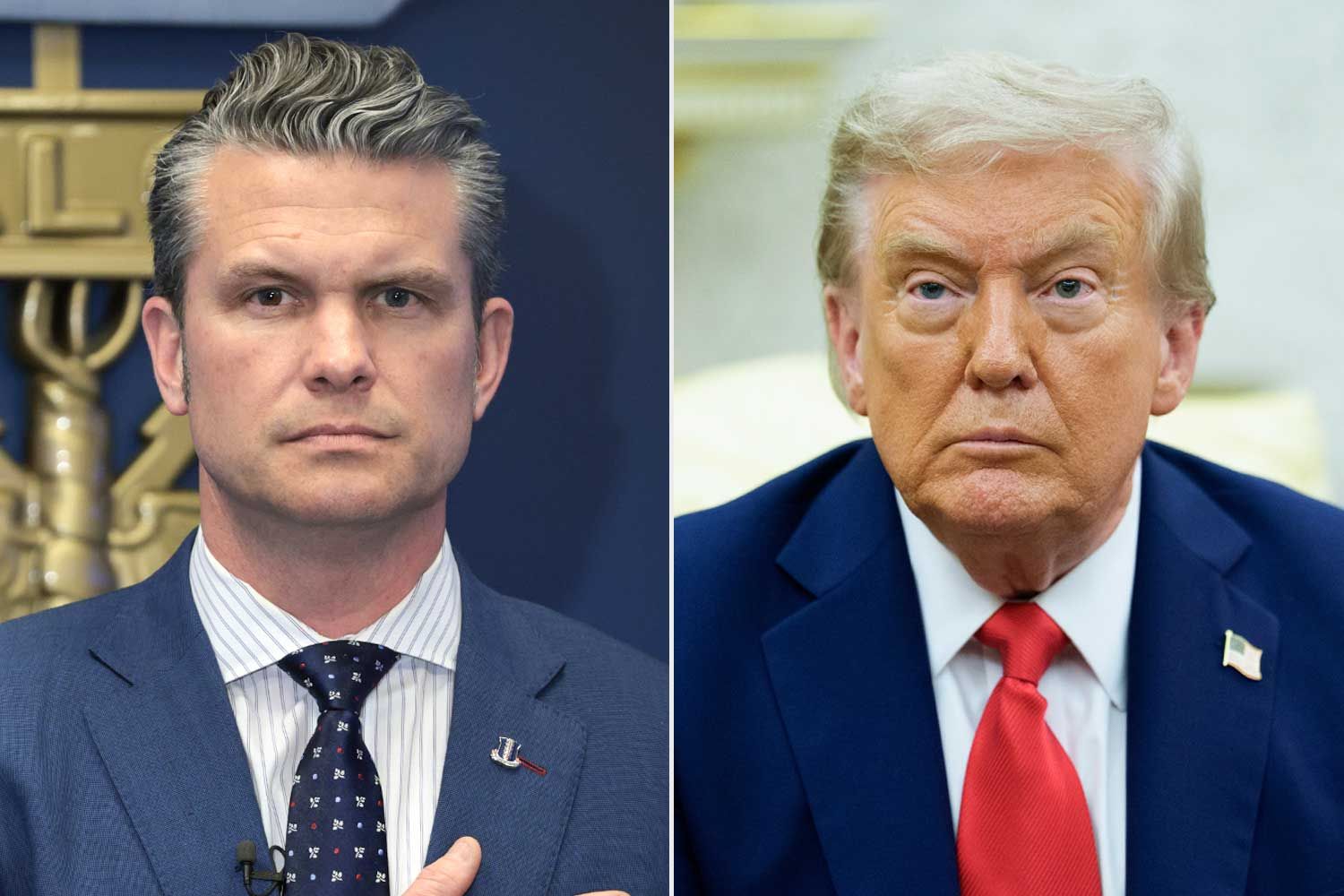
United States Secretary of Defence Pete Hegseth has said American forces are preparing for what he described as the most intense round of strikes against Iran since the conflict began.

Hegseth made the remark during a briefing with reporters on Tuesday. He stated that the United States believes it is gaining the upper hand in the war. However, he declined to give a timeline for when the fighting might end. He said President Donald Trump will determine the pace of the campaign.

According to the Pentagon chief, Washington’s military operations are focused on weakening Iran’s missile capacity, destroying its naval forces and ensuring that Tehran can never obtain nuclear weapons.

“We will not relent until the enemy is totally and decisively defeated,” Hegseth said.

“We do so on our timeline and at our choosing. For example, today will be yet again, our most intense day of strikes inside Iran – the most fighters, the most bombers, the most strikes.”

Despite the claims from Washington, Iranian leaders have projected defiance. They have promised that the country will continue to resist the attacks.

“Those mightier than you have not been able to eliminate our nation. Those who have tried have become eradicated themselves,” Iranian official Ali Larijani wrote in a social media post on Tuesday.

Iran has repeatedly denied that it is pursuing nuclear weapons. Authorities in Tehran insist the country’s nuclear programme is peaceful. The denial comes despite earlier claims by President Trump that US strikes in June 2025 had “obliterated” Iran’s nuclear programme.

The conflict has already led to heavy casualties. US and Israeli strikes have killed Iran’s Supreme Leader Ali Khamenei along with more than 1,250 other people. Iran has responded with missile and drone attacks against Israel and other targets across the region.

Iranian forces have also targeted oil facilities in several Gulf countries. The military campaign has disrupted shipping through the Strait of Hormuz, which is one of the world’s most important energy routes. The disruption has pushed global fuel prices higher.

President Trump warned Iran on Monday that it would face “death, fire, and fury” if it continued to block oil shipments through the strategic waterway.

Larijani responded with a warning of his own. He said the strait “will either be a Strait of peace and prosperity for all or will be a Strait of defeat and suffering for warmongers”.

Top US General Dan Caine said American forces are still tracking and striking vessels suspected of laying naval mines in the Gulf. He noted that Washington has not yet decided whether the US Navy will escort oil tankers through the strait.

“If tasked to escort, we’ll look at the range of options to set the military conditions to be able to do that,” Caine said.

The war has also revealed differences in military priorities between the United States and Israel. Last week, Israeli forces struck oil depots in Tehran. The attack triggered large fires and thick smoke across the Iranian capital. The move attracted criticism from some supporters of the war.

Hegseth acknowledged that Israel has its own objectives in the conflict. He indicated that attacks on Iran’s energy infrastructure were not a primary US goal.

“Israel has been a really strong partner in this effort. Where they have different objectives, they pursued them. Ultimately, we’ve stayed focused on ours,” he said.

Questions remain about the long-term aim of the war. President Trump has offered different explanations in recent weeks. His statements have ranged from promoting “freedom” for Iranians to suggesting that a new Iranian leader from within the country’s political system could emerge and cooperate with US and Israeli demands.

When asked how long the conflict might last, Hegseth said the final decision rests with the president.

“The president has set a very specific mission to accomplish, and our job is to unrelentingly deliver that. Now, he gets to control the throttle. He’s the one deciding.”
Putin dares US, pledges “unwavering support” to Iran’s new Supreme Leader

By Sabiu Abdullahi

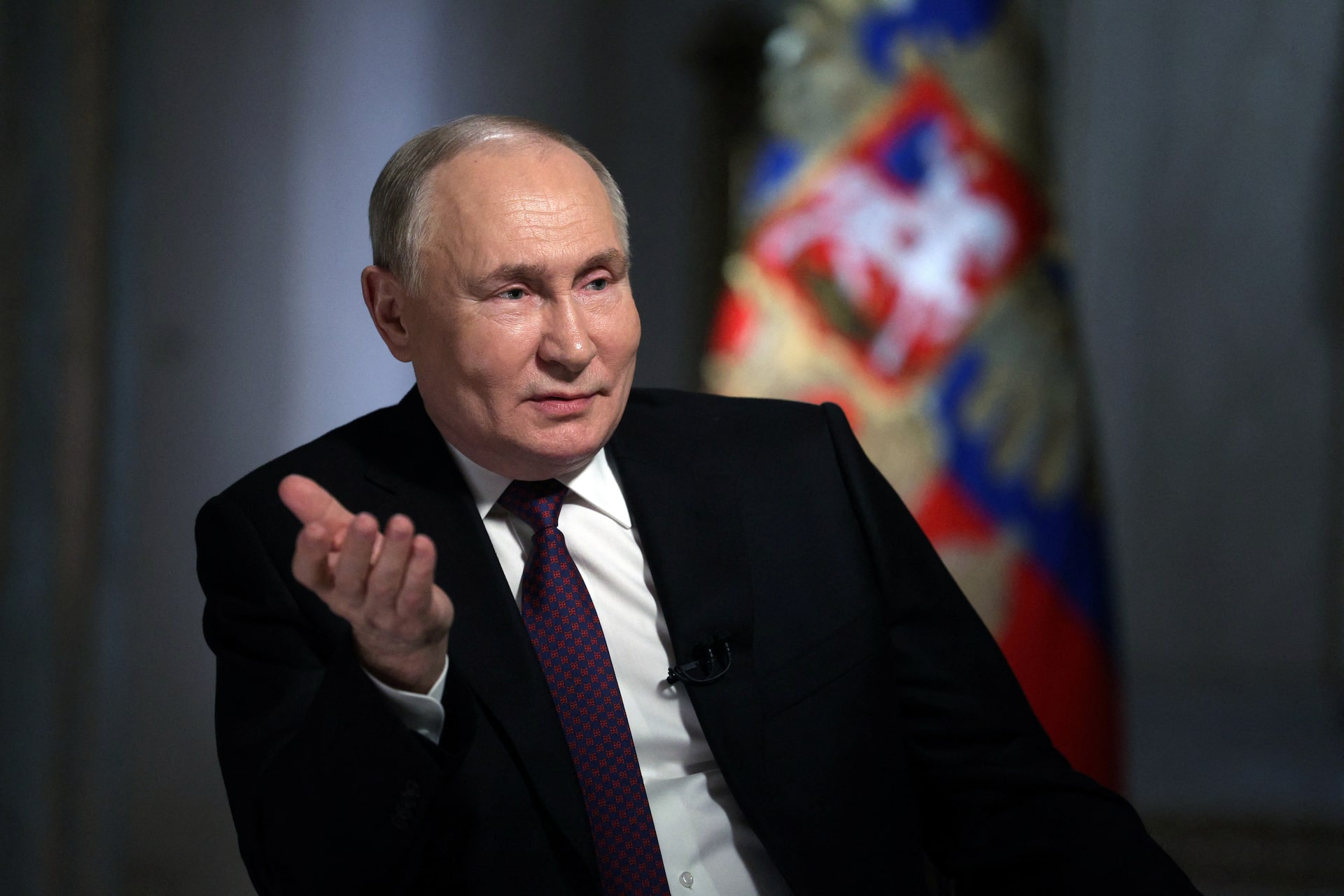
In what appears to be a daring move against the United States and its allies, Russian President Vladimir Putin has expressed support for Iran’s new Supreme Leader, Mojtaba Khamenei, after the cleric was appointed by the country’s Assembly of Experts.

Putin congratulated the 56-year-old on Monday. He said he believed the new leader would continue the legacy of his father, the late Ayatollah Ali Khamenei, who was killed in recent US-Israeli strikes.

The Russian leader said he was confident Mojtaba Khamenei would carry out his responsibilities “with honour” and unite the Iranian people “in the face of severe trials”.

Putin also reaffirmed Moscow’s position on Iran. He said Russia wished to confirm “unwavering support ‌for Tehran and solidarity with ⁠our Iranian ⁠friends”.

Iran and Russia have maintained close ties since the collapse of the Soviet Union in 1991. During the current conflict, reports have suggested Moscow may have supplied intelligence that helped Iranian forces target American positions. The White House has not denied those reports, although Russia has not formally entered the war on Iran’s side.

China has also reacted to the leadership change in Tehran. Beijing warned against any attempt by the United States or Israel to target Mojtaba Khamenei during their military campaign.

Meanwhile, the conflict in the Middle East has continued to intensify. Israel launched fresh air strikes on several Iranian locations, including Tehran, Isfahan and parts of southern Iran. Israeli officials said the attacks were directed at key infrastructure.

Thousands of Iranians gathered in major cities to show support for the new leader. Crowds assembled at Enghelab Square in Tehran and Naqsh-e Jahan Square in Isfahan. Many people carried Iranian flags and portraits of Mojtaba Khamenei while pledging loyalty to him.

In Washington, US President Donald Trump said any decision to end the war would involve both the United States and Israel.

“I think it’s mutual… a little bit. We’ve been talking. I’ll make a decision at the right time, but everything’s going to be taken into account,” Trump told The Times of Israel.

He also claimed the military action prevented a larger threat from Iran.

“Iran was going to destroy Israel and everything else around it… We’ve worked together. We’ve destroyed a country that wanted to destroy Israel,” he said.

Trump declined to comment directly on Mojtaba Khamenei’s appointment as Iran’s new supreme leader, saying only: “We’ll see what happens.”

Diplomatic efforts to calm the crisis are also under way. British Prime Minister Sir Keir Starmer said his government is working with partners to reduce tensions in the region.

French President Emmanuel Macron has travelled to Cyprus for talks with President Nikos Christodoulides on regional security. France has deployed naval forces to the Mediterranean and says it will help defend British bases on the island while Royal Navy ships are absent.

US senator says war on Iran could bring huge financial gains

By Sabiu Abdullahi

A senior United States senator has suggested that the ongoing war against Iran could bring major economic benefits if the current Iranian government collapses.

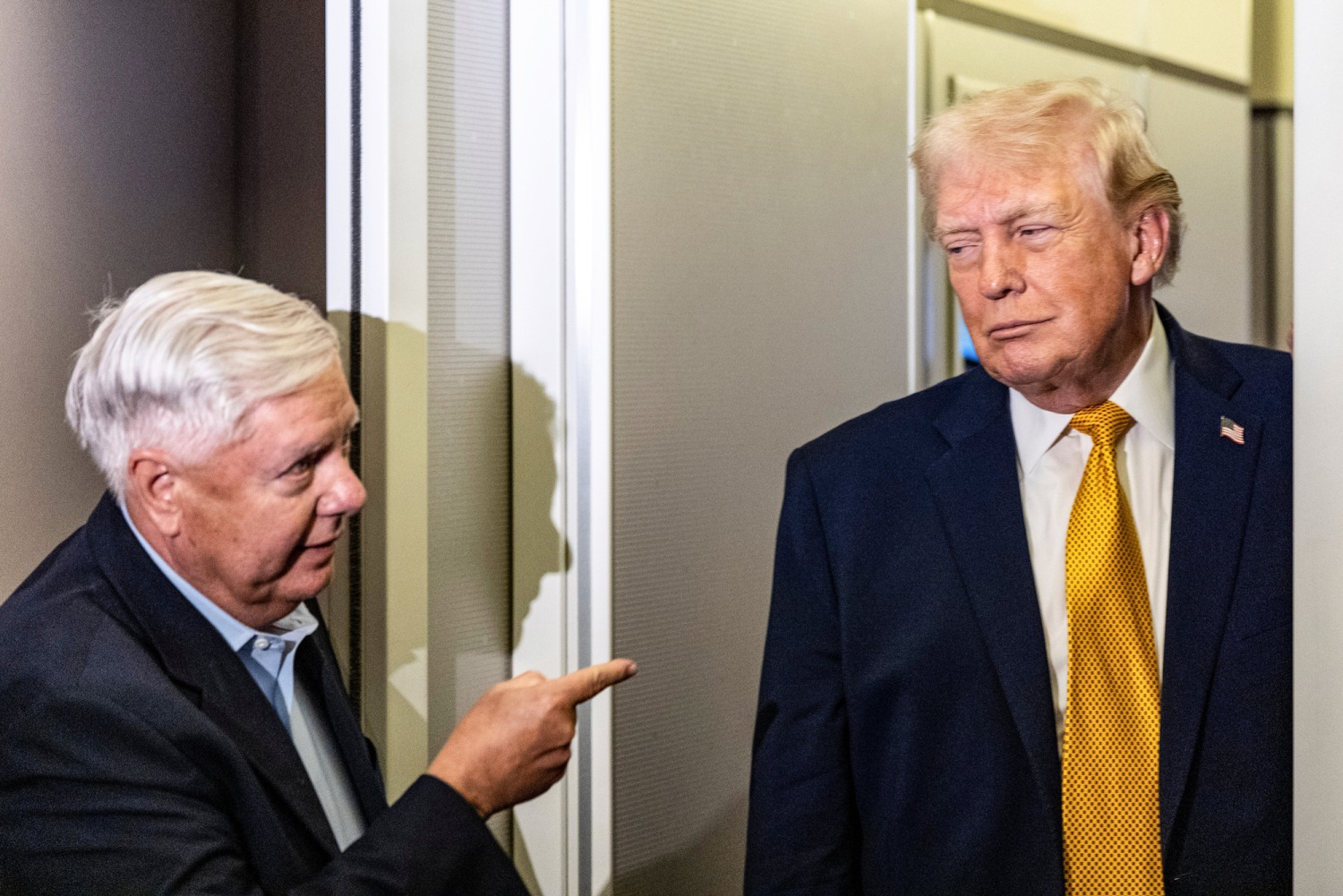
Republican Senator Lindsey Graham, who has long supported military intervention abroad, made the remarks during an interview with Fox News on Sunday. He said it would be worthwhile for Washington to invest resources in removing Iran’s leadership.

“When this regime goes down, we are going to have a new Middle East, and we are going [to] make a tonne of money,” Graham said.

The veteran lawmaker has been one of the most outspoken supporters of the US-Israel war against Iran under President Donald Trump’s administration. He also appeared to link recent US actions abroad to control over global oil supplies.

“Venezuela and Iran have 31 percent of the world’s oil reserves. We’re going to have a partnership with 31 percent of the known reserves. This is China’s nightmare. This is a good investment,” he said.

Iran strongly rejected the claims and accused Washington of attempting to divide the country in order to control its natural resources.

Iran’s Foreign Ministry spokesman Esmaeil Baghaei said the United States had a clear plan to weaken the country and take over its oil wealth.

“Their design is clear, their enterprise is quite obvious – they aim at partitioning our country to take illegal possession of our oil riches,” he said. “Their objective is to violate our sovereignty, defeat our people and undermine our humanity.”

Graham also warned that US and Israeli attacks on Iran could intensify in the coming weeks. He issued a strong warning to Tehran over threats to shipping routes in the Strait of Hormuz.

The senator said the US was ready to escalate military pressure.

The Trump administration has defended the strikes against Iran. President Trump said the Iranian government posed a serious danger to Americans.

“An Iranian regime armed with long-range missiles and nuclear weapons would be a dire threat to every American,” Trump said on March 2.

However, some analysts and legal experts have questioned the justification for the military action. They said the claim that Iran posed an immediate threat lacks legal backing under international law.

The conflict has also affected the global economy. Oil prices have risen above 100 dollars per barrel since the fighting began. Iranian missile and drone attacks have targeted Gulf countries that host US military bases. These include Saudi Arabia, the United Arab Emirates, Qatar, Kuwait and Bahrain. The strikes have disrupted oil and gas production and forced several countries in the region to close their airspace.

Reports also show that Graham held several meetings with Israeli officials before the war began. He said he had discussions with members of Israel’s intelligence agency, Mossad.

“They’ll tell me things our own government won’t tell me,” Graham said.

According to the Wall Street Journal, the senator also spoke with Israeli Prime Minister Benjamin Netanyahu during his visits. The report said Graham advised Netanyahu on how to persuade President Trump to support military action.

Netanyahu later presented intelligence information to Trump that helped convince him to approve the joint attacks on Iran, the senator said.

Israel has repeatedly claimed that Iran intends to develop nuclear weapons. Tehran denies the accusation and insists its nuclear programme is designed for civilian purposes.

The International Atomic Energy Agency has also said there is currently no evidence of a systematic programme by Iran to produce nuclear weapons.

Graham has supported several US military operations in the Middle East during the past two decades. These include the 2003 invasion of Iraq, as well as interventions in Syria and Libya.

During the interview, he also urged Saudi Arabia and the United Arab Emirates to join the fight against Iran.

“Yeah. I want them to get into the fight. We sell them weapons. Iran is striking their country; they have good capability,” he said.

Graham’s remarks also suggested that US attention could shift to Cuba in the future.

“You see this hat? ‘Free Cuba.’ Stay tuned. The liberation of Cuba is upon us. We’re marching through the world. We’re clearing out the bad guys. Cuba is next.”

Iran’s next leader must get U.S. approval or won’t last – Trump warns

By Uzair Adam

U.S. President Donald Trump on Sunday warned that Iran’s next supreme leader would not remain in power for long without Washington’s approval, as Tehran prepares to announce a successor to the late Ayatollah Ali Khamenei.

Nine days after joint U.S.–Israeli strikes on his compound killed Khamenei and triggered a wider Middle East conflict, Iran’s Assembly of Experts met behind closed doors and selected a new leader, members of the body said.

The clerics did not disclose the identity of the chosen candidate but indicated that an announcement would be made soon. Some members suggested that Khamenei’s 56-year-old son, Mojtaba Khamenei, could succeed his father.

Trump had earlier insisted that the United States should have a say in the decision and described Mojtaba Khamenei as an unacceptable “lightweight.”

“He’s going to have to get approval from us,” Trump said in an interview with ABC News. “If he doesn’t get approval from us, he’s not going to last long.”

However, Iran’s Foreign Minister Abbas Araghchi rejected the suggestion, saying the leadership decision was solely Iran’s internal matter.

Speaking on Meet the Press on NBC, Araghchi also called on Trump to “apologise to people of the region” over the escalating war.

Mojtaba Khamenei is widely viewed as a hardline conservative, partly because of his close ties with Iran’s Islamic Revolutionary Guard Corps.

Israel’s military has already issued a warning to any incoming Iranian leader, saying it would not hesitate to target them if necessary.

Israel demonstrated its military reach overnight with two new operations — air strikes on fuel depots in and around Tehran and an attack on a hotel in Beirut believed to house suspected Iranian commanders.

Warplanes hit five oil facilities near the Iranian capital, killing at least four people, according to a state oil executive, and sending thick smoke across the city.

Tehran’s governor told the state-run Islamic Republic News Agency that fuel distribution in the capital had been temporarily disrupted.

A dense haze covered the city of about 10 million people, blocking sunlight as the smell of burning fuel filled the air.

Authorities warned that the smoke could be toxic and advised residents to remain indoors, although many buildings had their windows shattered by the force of the explosions.

A 35-year-old resident said the fire had been burning for more than 12 hours and that the air had become difficult to breathe.

“At first, I supported this war. After Khamenei’s death, I celebrated with my friends,” she said in a message sent to Europe. “But since yesterday, people say there is no gasoline left at the stations.”

As the conflict entered its ninth day, Iran’s Revolutionary Guards said they had enough supplies to sustain missile and drone operations across the Middle East for up to six months.

Explosions were also reported over Israel’s commercial hub of Tel Aviv after the Israeli military detected a barrage of Iranian missiles. The emergency service Magen David Adom said six people were wounded in central Israel.

Trump again declined to rule out deploying U.S. ground troops in Iran but insisted the war was close to being won despite continued Iranian attacks.

The U.S. president also spoke with British Prime Minister Keir Starmer on Sunday, according to Downing Street, after previously criticising him over Britain’s involvement in the conflict.

Meanwhile, Iran’s Revolutionary Guards spokesman Ali Mohammad Naini said the country had so far used only first- and second-generation missiles but would soon deploy more advanced long-range weapons.

The conflict has also affected other countries in the region. Authorities in Saudi Arabia said a projectile killed two people and injured 12 in Al Kharj province after a wave of drones was intercepted near the capital Riyadh.

Kuwait reported damage to fuel tanks at its international airport, while Bahrain said a desalination plant had been hit.

Iran’s health ministry said at least 1,200 civilians had been killed and about 10,000 wounded in the war, although the figures could not be independently verified.

In Lebanon, the health ministry reported that at least 394 people had been killed in Israeli air strikes since the country was drawn into the conflict, including dozens of women and children.

Two Israeli soldiers were also killed during clashes in southern Lebanon, according to the Israeli military.

Analysts say there is still no clear path to ending the conflict, which U.S. and Israeli officials believe could last for several weeks.

Trump suggested Iran’s economy could be rebuilt if a leader acceptable to Washington replaces Khamenei.

Meanwhile, China’s top diplomat Wang Yi warned that the war should never have occurred, saying the world “cannot return to the law of the jungle.”

During his Sunday prayer, Pope Leo XIV also called for peace, urging that “the roar of the bombs may cease, the weapons may fall silent, and space for dialogue may open.”

Tornadoes kill at least eight people in central US

By Sabiu Abdullahi

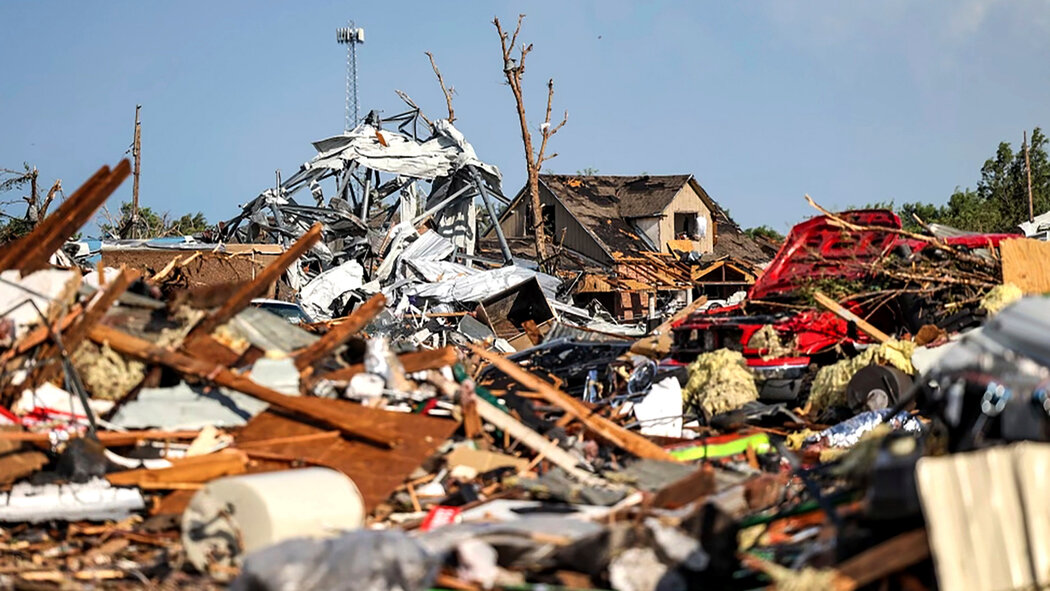
At least eight people have died after powerful tornadoes struck parts of the central United States, affecting the states of Michigan and Oklahoma. Authorities have warned that more severe weather could occur in the coming hours.

Officials confirmed on Saturday that four people died in southern Michigan while another four lost their lives in Oklahoma. Emergency responders are still assessing the affected areas, and authorities say the death toll may rise as more information becomes available.

The storms swept through several communities on Friday. They left widespread destruction that included damaged buildings, crushed vehicles, fallen trees, and power lines. Videos released by local media showed heavy damage across some towns after the tornadoes passed.

The United States National Weather Service also warned that additional severe weather could develop across a wide region stretching from the Great Lakes to Texas. The agency said thunderstorms and flash floods remain possible, and there is still a chance that more tornadoes could form.

In Michigan, the Branch County Sheriff’s Office reported that three people died and 12 others were injured in the Union Lake area near Union City.

About 81 kilometres southwest of that location, officials in Cass County confirmed another fatality. Several people were also injured after another tornado struck the area.

“Emergency Management personnel will be conducting damage assessments in the affected area as required by the State of Michigan,” the local sheriff’s office said.

In Oklahoma, authorities reported additional deaths linked to the storms. Law enforcement officials said at least two people were killed after a tornado hit the town of Beggs in Okmulgee County.

State Governor Kevin Stitt also confirmed that two other victims, a mother and her daughter, died in Major County on Friday.

“I declared a state of emergency for Alfalfa, Creek, Grant, Major, Okmulgee, Rogers, Tulsa, and Wagoner counties to ensure Oklahomans have the support and resources they need after last night’s storms,” Stitt wrote on social media on Saturday.

Emergency teams continue rescue and assessment operations across the affected communities as authorities prepare for the possibility of further extreme weather.

US government downplays reports Russia shared intelligence with Iran on American targets

By Sabiu Abdullahi

The United States government has played down reports that Russia provided intelligence to Iran about American military targets across the Middle East amid the ongoing war involving the US, Israel and Iran.

The report was first published by The Washington Post. It claimed that Moscow had supplied Tehran with information about the location of US military assets in the region.

US Secretary of Defense Pete Hegseth addressed the issue during an interview with CBS’s 60 Minutes on Friday. He said the US military is closely monitoring developments and incorporating any relevant information into its operational planning.

Since the conflict began on February 28, Russia has reportedly passed details to Iran about US military positions, including warships and aircraft. Three officials who spoke anonymously told The Washington Post about the alleged intelligence sharing.

“It does seem like it’s a pretty comprehensive effort,” one of the sources told the newspaper.

However, other unnamed officials who spoke to The Associated Press said US intelligence agencies have not found evidence that Moscow is instructing Iran on how to use the information. The conflict has continued with US and Israeli forces carrying out air strikes while Iran responds with attacks targeting American assets and allies in the Gulf region.

Hegseth dismissed concerns that the reported intelligence sharing could endanger US citizens.

“The American people can rest assured their commander-in-chief is well aware of who’s talking to who,” Hegseth said.

“And anything that shouldn’t be happening, whether it’s in public or back-channelled, is being confronted and confronted strongly.”

He added: “We’re putting the other guys in danger, and that’s our job. So we’re not concerned about that. But the only ones that need to be worried right now are Iranians that think they’re gonna live.”

White House Press Secretary Karoline Leavitt also responded to the report on Friday. She told journalists that the alleged intelligence sharing has not affected US military operations in Iran.

“[the report] clearly is not making any difference with respect to the military operations in Iran because we are completely decimating them,” Leavitt said.

She declined to comment on whether President Donald Trump had discussed the matter with Russian President Vladimir Putin or whether Russia might face consequences. She said the president would address the issue himself if necessary.

President Trump also reacted sharply when asked about the report later on Friday. During a White House meeting focused on college sports, Fox News reporter Peter Doocy raised the issue during a question-and-answer session.

“I have a lot of respect for you, you’ve always been very nice to me,” the US president said to Peter Doocy, the Fox News reporter.

“What a stupid question that is to be asking at this time. We’re talking about something else.”

The intelligence report marks the first indication that Russia may have taken steps to involve itself in the conflict that began about a week ago.

Kremlin spokesman Dmitry Peskov said Tehran has not requested military assistance from Moscow. He noted that Russia continues to maintain communication with Iranian leaders.

“We are in dialogue with the Iranian side, with representatives of the Iranian leadership, and will certainly continue this dialogue,” he said.

When asked directly whether Russia had provided military or intelligence assistance to Iran since the start of the war, Peskov declined to comment.

Russia and Iran have strengthened their ties in recent years. Moscow has relied on Iranian missiles and drones during its ongoing war in Ukraine. Both countries have maintained cooperation even as Iran faced long-standing Western sanctions linked to its nuclear programme and its support for armed groups across the Middle East.

US economy loses 92,000 jobs in February as unemployment rate rises

By Sabiu Abdullahi

The United States economy recorded an unexpected decline in employment in February after official figures showed that thousands of jobs were lost across several sectors.

Data released in the latest labour report indicates that payrolls dropped by 92,000 during the month. The unemployment rate also increased slightly to 4.4%. Analysts had predicted that the labour market would remain steady.

The development has raised fresh concerns about the strength of the US job market. Economists now question whether the labour sector could be entering a period of weakness.

The report shows that job losses affected nearly every major sector of the economy. The healthcare industry also recorded losses despite its reputation as a stable source of employment. Strikes in the sector contributed to the decline in February.

The drop represents the largest monthly job loss since October. At that time, the United States government shutdown disrupted economic activity.

Economic observers also point to rising oil prices as another potential challenge. The increase followed tensions linked to the US-Israel war in Iran. Analysts warn that the surge in energy costs could place additional pressure on economic growth in the coming months.

US pushes for Venezuelan mineral access as Trump officials visit Caracas

US mining companies are lining up to invest in Venezuela, Interior Secretary Doug Burgum said during a visit to the country on Wednesday, where he pressed for greater access to critical minerals.

Burgum represents an administration that claims to effectively control Venezuela and its vast natural resources following the removal of Nicolás Maduro.

He is the second senior US official to visit Caracas since an American bombing raid on January 3 left around 100 people dead and saw Maduro and his wife flown to New York to face US drug trafficking charges.

Accompanied by more than two dozen mining executives, Burgum described the group as representing “billions of dollars in investments and billions of dollars in well-paid jobs.”

“They are eager to get started, and they are eager to cut the red tape to allow that capital investment to flow,” he said after meeting with interim President Delcy Rodriguez.

Burgum, who heads President Donald Trump’s National Energy Dominance Council, described cooperation between Caracas and Washington as “unlimited.”

His visit follows that of Energy Secretary Chris Wright last month, who called for a “dramatic increase” in Venezuela’s oil output and highlighted “tremendous opportunities” for both countries.

The shift in tone reflects the altered US-Venezuela relations since Maduro’s capture. Trump has allowed Rodriguez, formerly vice president, to serve as interim leader as long as she complies with his directives regarding access to Venezuela’s natural resources.

In another sign of the diplomatic reset, the US Department of Transportation approved Envoy Air, an American Airlines subsidiary, to operate direct flights between Miami and the Venezuelan cities of Caracas and Maracaibo. These will be the first direct flights since US-Venezuela relations deteriorated in 2019.

— Gold and Coltan —

While US attention has focused on Venezuela’s oil, Burgum noted the country is also “rich in critical minerals.” In addition to gold and diamonds, Venezuela has deposits of bauxite and coltan, a mineral used in mobile phones, laptops, and other electronics. Mining activity is concentrated in the southeastern Orinoco arc.

Environmentalists have condemned the expansion of illegal mining in the area, citing deforestation and river pollution. Rodriguez, who recently overhauled the state-controlled oil sector to attract private investment, is now planning reforms to the mining code. Her brother, Congress Speaker Jorge Rodriguez, said Monday that the changes would allow “large foreign companies” to exploit minerals and rare earth elements.

— ‘Doing a great job’ —

Trump has praised Rodriguez’s compliance, posting on Truth Social on Wednesday that she was “doing a great job and working with US Representatives very well.”

“The Oil is beginning to flow, and the professionalism and dedication between both Countries is a very nice thing to see,” he wrote.

Rodriguez thanked Trump on Telegram for the US administration’s “kind willingness to work together for the benefit of the people of the United States and Venezuela.”

On Tuesday, Venezuelan state oil firm PDVSA announced new oil contracts with the United States. Since January, PDVSA has shipped over 80 million barrels of crude to the US, according to Trump. These deals come amid concerns about falling global oil output due to the war in the Middle East, which has already driven crude prices to their highest level in 18 months.

JUST IN: US Secretary of War says Iran ‘tried to assassinate Donald Trump’

By Sabiu Abdullahi

United States Secretary of War Pete Hegseth has alleged that Iran attempted to assassinate President Donald Trump, as he announced the killing of a senior figure linked to the plot.

Hegseth made the remarks during a press briefing at the Pentagon on Wednesday, where he provided updates on the ongoing conflict with Iran. He referred to recent interceptions of drones and rockets by American forces and praised the strength of the US military.

He said: ‘Yesterday, the leader of the unit who attempted to assassinate President Trump was hunted down and killed.

‘Iran tried to kill President Trump, and President Trump got the last laugh.’

The defence chief also vowed retaliation for American personnel killed in the fighting. He stated that the United States would ‘avenge’ the four servicemen and women who died in attacks involving Iranian drones and rockets.

Hegseth stressed that operations are still underway. He said the mission is not ‘accomplished’. He cited a recent naval action in which a US submarine sank an Iranian warship that, according to him, ‘thought it was safe in international waters’.

Hegseth added: ‘This was never meant to be a fair fight, and it’s not a fair fight… they’re going down.

‘More and larger waves are coming; we are just getting started.’

A Defence Department map displayed during the briefing outlined the first 100 hours of what has been named Operation EPIC FURY. The chart detailed a series of strikes across Iranian territory.

Meanwhile, Iranian authorities reported a rising death toll from the conflict. Iran’s Foundation of Martyrs and Veterans Affairs said at least 1,045 people have died so far. The agency explained that the figure reflects bodies identified and prepared for burial.

The fighting entered its fifth day with continued airstrikes by the United States and Israel on Tehran and other cities. Israeli forces targeted members of Iran’s leadership and security services. Iran responded with missile launches and drone attacks aimed at Israel and locations across the region.

Residents in Tehran reported explosions at dawn. State television broadcast images of damaged buildings in central areas of the capital. The city of Qom and several other locations also came under attack.

The Israeli military said one of its F-35 fighter jets shot down a piloted Iranian Air Force YAK-130 aircraft over Tehran on Wednesday.

The conflict has intensified tensions across the Middle East, with both sides signalling that further military action may follow.

Spain rejects U.S. pressure as Trump threatens trade cut

By Sabiu Abdullahi

Spain has pushed back against pressure from the United States after President Donald Trump warned that Washington could halt trade ties over Madrid’s refusal to support American military strikes on Iran.

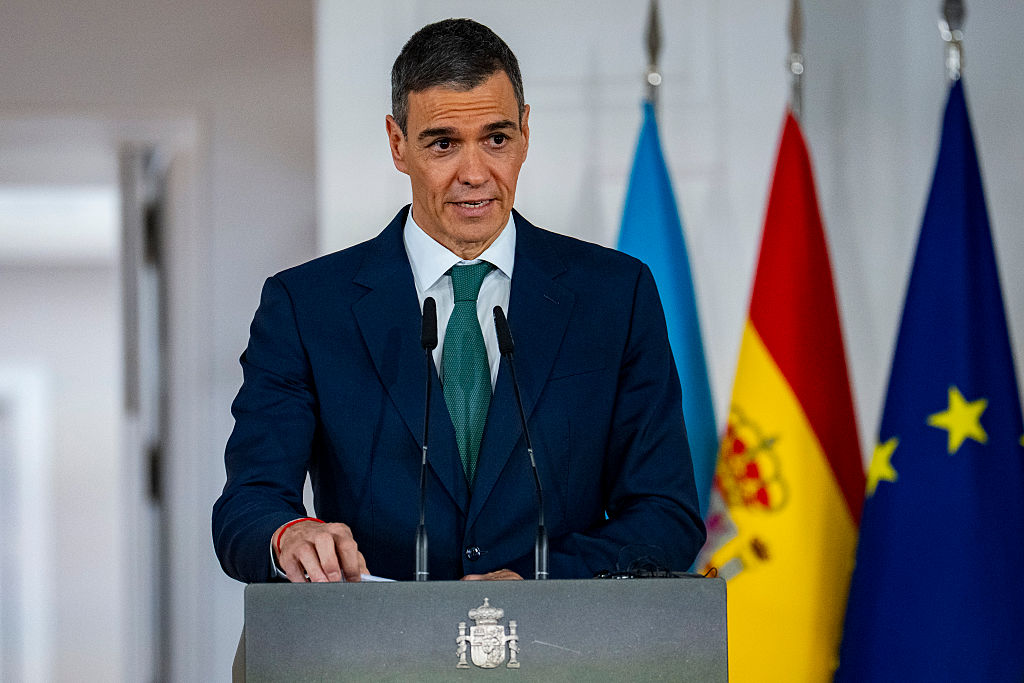
In a national broadcast from the Moncloa Palace, Prime Minister Pedro Sánchez set out his government’s position in clear terms. He told citizens that Spain’s stance could be reduced to three words: no to war. He also stressed that one “illegality” could not be met with another, framing the issue as a matter of principle and international law rather than political rivalry.

Tensions escalated when Spain declined to grant the United States permission to use the shared military bases at Morón and Rota for operations targeting Iran. Spanish authorities described the strikes as unjustified and risky. In response, Trump labelled Spain a “terrible” partner and threatened to cut off all trade between the two countries.

The warning has raised concerns about a key economic partnership. The United States ranks among the top destinations for Spanish exports and remains a major source of investment. Although no formal sanctions or tariffs have been announced, the prospect of trade restrictions has unsettled investors and business leaders.

Spain’s approach aligns with its recent foreign policy record. The government has adopted firm positions on conflicts it believes may violate international law. It has criticised Israel’s actions in Gaza and recognised a Palestinian state ahead of several European Union members. At the same time, Madrid has backed Ukraine in resisting Russia’s invasion, while urging restraint to avoid broader escalation elsewhere.

Spanish officials have also invoked the memory of the 2003 Iraq invasion. That conflict, which Spain supported under a previous administration, sparked widespread protests at home. Many citizens still regard that decision as an error that increased insecurity and carried lasting costs. Leaders now argue that military action can produce consequences that endure well beyond the battlefield.

The dispute unfolds at a delicate time for Spain’s coalition government. It faces political pressure in parliament and allegations of corruption involving individuals close to the leadership. However, recent opinion polls indicate that a significant number of Spaniards hold unfavourable views of Trump. Analysts say this could reduce the domestic fallout from the diplomatic clash.

For Madrid, the confrontation extends beyond Iran or access to military facilities. It touches on Spain’s broader role in global affairs. The government maintains that adherence to peace and international legality reflects national values and long-term interests. Critics counter that challenging the United States may expose the country to economic strain that could affect ordinary citizens.

The next phase depends largely on Washington’s response. If the White House moves from rhetoric to concrete measures, trade relations could face serious disruption. Until then, Spain remains in a tense standoff that tests both its diplomatic principles and its economic stability.