USA

Iran Threatens To Attack U.S. Tech Firms in Middle East, Urges Staff to Evacuate

By Sabiu Abdullahi

Iran’s Islamic Revolutionary Guard Corps (IRGC) has issued a serious warning, threatening to target major American technology companies operating in the Middle East and calling on employees and nearby residents to evacuate immediately.

The statement, carried by Iran’s Tasnim news agency, identified U.S. firms involved in technology and artificial intelligence as potential targets. “Since the main element in designing and tracking terrorist targets are American and ICT and AI companies … from now on, [these] main institutions will be our legitimate targets,” it said.

The IRGC specifically named more than 15 companies that could be affected, including Boeing, Tesla, Meta, Google, and Apple. The warning noted that attacks could begin from 8 p.m. local time on Wednesday if further Iranian leaders are killed in what the statement described as “targeted assassinations.”

This announcement represents a significant escalation in regional tensions, raising concerns over the safety of multinational corporations and their staff.

Earlier, IRGC Aerospace Commander Seyed Majid Moosavi had directed a warning at employees of industrial firms connected to the United States and Israel, urging them to leave their workplaces following a series of attacks on Iran’s production facilities.

In a post on X last Friday, Moosavi stated, “You tested us once before; the world saw again that you yourselves started playing with fire and attacking infrastructure.”

He further cautioned, “This time, the equation will no longer be an eye for an eye; wait and see! Employees of industrial companies associated with the Americans and the Zionist regime should quickly leave their workplaces to avoid endangering their lives.”

The warning comes amid reports of targeted attacks on Iranian industrial facilities in recent weeks. The IRGC has repeatedly emphasized that foreign involvement in Iran’s industrial sector could provoke serious consequences, signaling a stronger defensive posture.

Last Thursday, Israel announced the killing of the Commander of Iran’s IRGC Navy, Alireza Tangsiri, in a targeted military operation. Israeli Defence Minister Israel Katz confirmed the operation, saying Tangsiri was “directly responsible for the terrorist act of bombing and blocking the Strait of Hormuz.”

Katz added that the naval chief was “blown up” along with several other “senior Navy command officials.” Tangsiri, appointed as IRGC Navy commander in 2018, had previously served as deputy commander since 2010.

Other Iranian leaders have also been killed amid ongoing regional conflict, including the now deceased Supreme Leader, Ali Khamenei.

US Marines Arrive Middle East As Houthis Join US/Israel War With Iran

By Sabiu Abdullahi


United States naval personnel and marines aboard the amphibious assault ship USS Tripoli have reached the Middle East, according to an announcement by the Central Command on Saturday.

The vessel serves as the flagship of the Tripoli Amphibious Ready Group/31st Marine Expeditionary Unit. It carries about 3,500 troops along with transport and fighter aircraft.

The deployment is expected to strengthen the U.S. military presence in the region. Washington is reportedly weighing the possibility of launching a ground operation around Iran’s key oil export hub and the Hormuz Strait.

Reports indicate that the U.S. is considering steps to secure Iran’s nuclear materials. Other options under review include a possible seizure of Kharg Island, an invasion of Larak Island near Hormuz, and control of Abu Musa and nearby islands. Additional strikes on nuclear and energy facilities are also being considered.

At the same time, Yemen’s Houthi forces have declared their involvement in the conflict. The group said it carried out its first operation using ballistic missiles against Israeli military targets.

“Our operations will continue until the declared goals are achieved,” a spokesperson vowed on Saturday. “We will continue until the aggression stops on all fronts.”

Meanwhile, Iran continued retaliatory actions against Gulf countries over the weekend. Two drones struck Oman’s Port of Salalah. The incident left one worker injured and damaged a crane.

Authorities in Kuwait reported that multiple drones hit the country’s international airport, affecting its radar systems. Emirates Global Aluminium also confirmed that Iranian strikes impacted its Al Taweelah facility in Abu Dhabi.

Iranian President Masoud Pezeshkian criticized the situation. He said it was unfortunate that “the territories of some Muslim countries” are being used to attack Iran. He accused Israel of attempting to widen the conflict across the region.

The president also stated that Iran has been “attacked twice during negotiations,” adding that the “bombing infrastructure and assassinating Iranian figures show that the aggressors cannot be trusted.”

His remarks came after Israel launched fresh strikes on two nuclear-related facilities in Iran. The targets included a heavy-water production plant in Khondab and a yellowcake production site in Ardakan.

Russia also reacted to the developments on Saturday. Moscow accused Iran’s opponents of escalating the conflict “despite related risks, including a threat of large-scale radioactive contamination.”

The country called on the International Atomic Energy Agency (IAEA) to address what it described as a “grave threat.” It added that the attacks breached international law and should attract strong condemnation from the global community.

US Secretary of War Hegseth Accused of Bias, Racism After Removing Four Black, Female Officers From Promotion List

By Sabiu Abdullahi

United States Defense Secretary Pete Hegseth has taken the unusual step of blocking the promotion of four Army officers to the rank of one-star general, a move that has drawn concern among senior military officials.

According to officials familiar with the development, two of the affected officers are Black, while the other two are women.

According to a report by The New York Times, the names were removed from a promotion list that includes about three dozen officers, most of whom are white men.

Sources said Hegseth had, for months, urged top Army leaders, including Army Secretary Daniel P. Driscoll, to drop the officers from the list. Driscoll reportedly declined on several occasions, citing the officers’ long-standing records of distinguished service.

The situation changed earlier this month when Hegseth acted on his own to strike the names from the list. It remains unclear whether he has the legal authority to make such a decision.

The list is now under review at the White House and is expected to be forwarded to the Senate for final approval. Officials noted that some Black and female officers are still included.

The decision has attracted rare attention at this level, as promotion lists for one-star generals do not usually face this degree of intervention from a defense secretary. The development has also highlighted divisions within the military leadership.

Hegseth has defended his broader stance on military reforms. He has argued that he is working to overhaul a system he believes was shaped by “foolish,” “reckless” and “woke” leaders from previous administrations.

However, critics have raised concerns that his actions, particularly toward minority and female officers, could undermine trust in a promotion process that is expected to remain neutral and based on merit.

UN Security Council to Hold Talks Over Iran War Friday

By Anwar Usman

The United Nation Security Council will hold closed-door consultations on Friday to discuss strikes on Iran at Moscow’s request, Russian state media reported, as the Middle East war nears its second month.

Iran has come under near-daily bombardment since US-Israeli strikes on February 28 triggered the war, which has since widened to large parts of the region.

According to state news agency TASS, spokesman for Russia’s envoy to the United Nations, Evgeny Uspensky, said “The Russian Federation has requested closed-door consultations with the UN Security Council due to the ongoing strikes on civilian infrastructure in Iran, including educational and healthcare facilities.”

A strike on the first day of the war hit a school in the southern Iranian city of Minab, killing more than 160 children, according to authorities.

Reports from the US military investigation by The New York Times indicated that a US Tomahawk cruise missile had hit the school due to a targeting mistake.

The United States, which holds the Security Council presidency this month, scheduled the meeting for 10:00 am in New York (1400 GMT), according to TASS.

The US-Israeli military campaign has targeted Iranian leadership, missile sites and military infrastructure, prompting a large-scale Iranian retaliation across the Gulf and the effective closure of the crucial Strait of Hormuz, through which a fifth of global crude and liquefied natural gas passes during peacetime.

AFP reports that, the UN Human Rights Council will hold a separate meeting on Friday in Geneva focused on the deadly school strike.

Cheap Drones, Costly Consequences

By Zayyad I. Muhammad

Low-budget drones are reshaping the architecture of modern warfare in ways that were unimaginable just a decade ago. They allow combatants to engage targets with minimal human contact, reduced battlefield exposure, and significantly fewer casualties. Unlike traditional air power that requires expensive fighter jets, trained pilots, and sophisticated logistics, drones can be produced at low cost, deployed quickly, and operated remotely with high precision. This shift is lowering the barrier to entry for military capability and redefining how wars are fought.

More importantly, this transformation is changing the balance of power between strong and less-powerful nations. Previously, military dominance depended heavily on air superiority, armoured divisions, and naval strength, all of which were controlled by a handful of major powers. Today, relatively smaller or less-equipped countries can use swarms of low-cost drones to challenge technologically advanced militaries. This has made conflicts more prolonged, unpredictable, and difficult to decisively win. Even well-funded armies now face persistent threats from inexpensive systems that are hard to detect and cheap to replace.

The Ukraine-Russia war is a clear example of this shift. A country with fewer conventional military resources has been able to slow down and at times stall a larger, more powerful opponent by using drones for surveillance, artillery guidance, and direct strikes. Commercial-style drones modified for military use have destroyed tanks, disrupted supply lines, and targeted command positions. This has contributed to battlefield stalemates and reduced the effectiveness of traditional heavy military advantage.

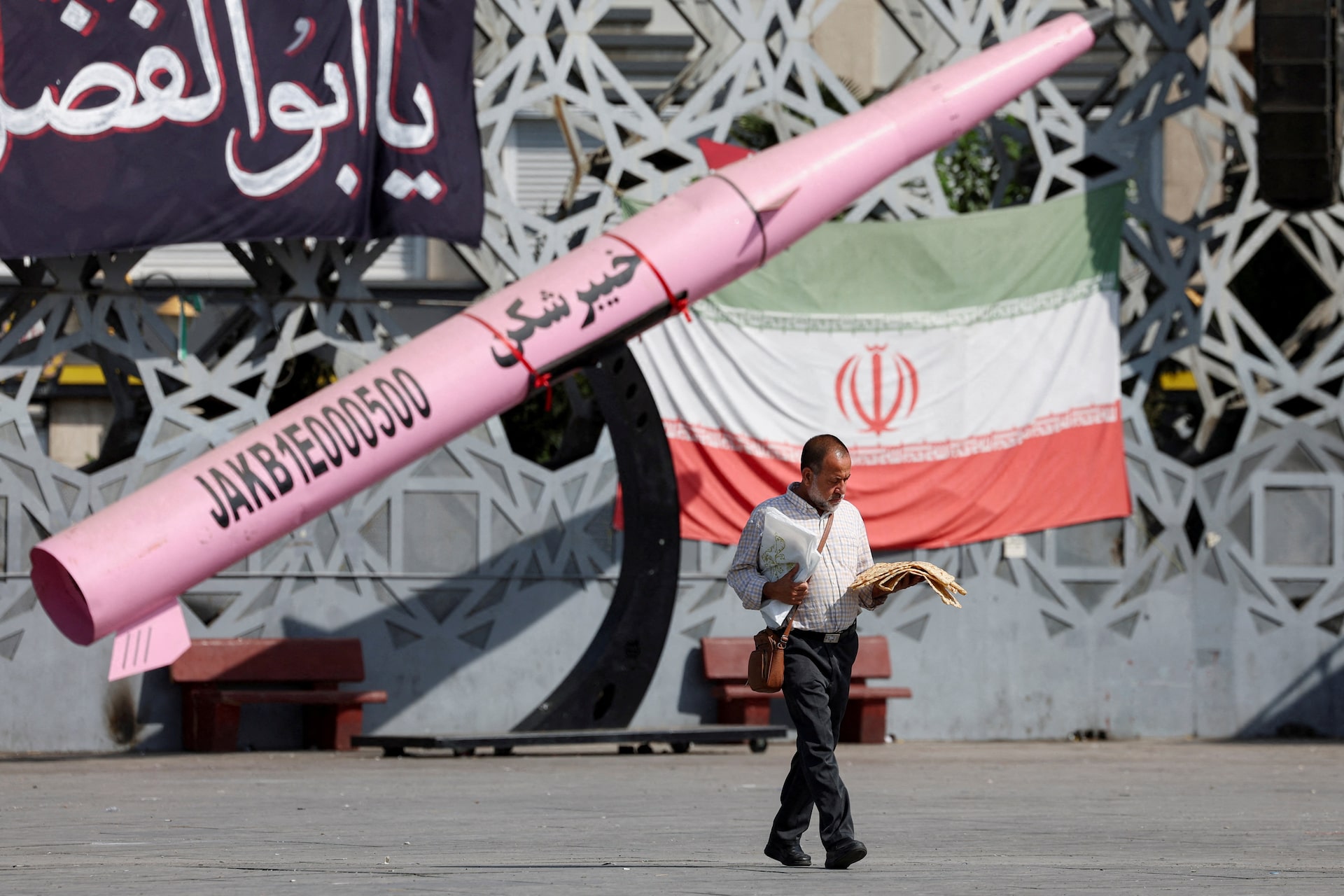
Similarly, the United States-Israel-Iran war has demonstrated how drone technology is changing deterrence dynamics. Iran, with its Shahed drones, was able to withstand the US and Israel at the same time, including being able to attack other countries. Iran was able to attack military bases, infrastructure, or naval assets across the Gulf and Israel using its relatively cheap drones; these have altered strategic calculations of the entire war. Furthermore, this suggests that even nations without overwhelming conventional strength can project power and create credible resistance.

However, while low-cost drones provide tactical advantages, they also introduce serious risks. The biggest concern is that non-state actors, militias, insurgent groups, and even criminal organisations can now access and deploy drone technology. Unlike fighter jets or missiles, drones are easier to acquire, modify, and operate. This increases the likelihood of asymmetric attacks against states, critical infrastructure, and civilian targets. What was once the exclusive domain of national militaries is now accessible to smaller groups with limited funding.

In essence, low-cost drones have ‘democratised’ air power. They have changed the face of war, reshaped military strategy, and reduced the dominance of traditional superpowers. But at the same time, they have introduced a new era of insecurity where conflicts may become more frequent, more decentralised, and harder to control. The same technology that reduces casualties on one side also increases the risk of widespread, unpredictable confrontations, especially when used by non-state actors beyond conventional rules of engagement.

This trend is no longer limited to state actors alone. Multiple credible reports and security analysts confirm that Boko Haram and ISWAP (Islamic State West Africa Province) have increasingly deployed low-budget, commercially available (COTS) drones, often modified quadcopters, in attacks on Nigerian military positions in the Northeast. These drones are reportedly used for surveillance, reconnaissance, and in some cases, direct strikes against troop locations and defensive positions.

Beyond Nigeria, other non-state actors in different parts of the world have also been reported to use low-budget, commercially available drones, typically inexpensive quadcopters or FPV models, modified with improvised explosives, grenades, mortar rounds, or IEDs. These systems are deployed for intelligence gathering, target acquisition, and direct attacks. The accessibility of these platforms makes them attractive tools for irregular forces seeking to offset conventional military disadvantages.

 Zayyad I. Muhammad writes from Abuja via zaymohd@yahoo.com.

Iran Accuses Trump of Manipulating Oil Prices After US Pauses Strikes on Energy Infrastructure

By Sabiu Abdullahi

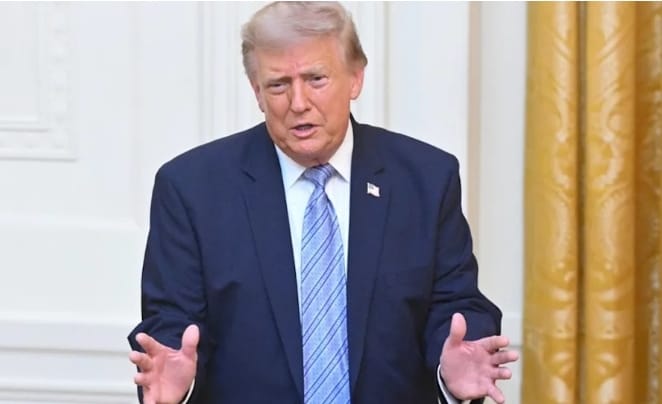
Iran’s foreign ministry has dismissed US President Donald Trump’s claim of “productive” talks to end hostilities, suggesting the remarks aim to calm energy markets and gain time for military planning.

On Monday, Trump announced that Washington and Tehran had held “VERY GOOD AND PRODUCTIVE” conversations over the past two days about a “COMPLETE AND TOTAL RESOLUTION OF HOSTILITIES IN THE MIDDLE EAST”. He added that he had instructed the US Department of War to postpone all strikes on Iranian power plants and energy infrastructure for a five-day period. This announcement came just hours before the deadline of his ultimatum demanding that Iran reopen the Strait of Hormuz, warning that failure to comply would result in Tehran being “obliterated.”

Iran’s foreign ministry rejected the notion of direct negotiations with the US. It stated that while regional countries had initiated efforts to reduce tensions, “all requests should be directed towards the US as we did not initiate the war.”

Citing an unnamed source, Iran’s Fars news agency reported that Trump delayed military action after learning that Iran would respond by targeting all power plants in the region. The source also indicated that Tehran could lay mines across the Persian Gulf if the US proceeded with attacks on the country’s coast or islands.

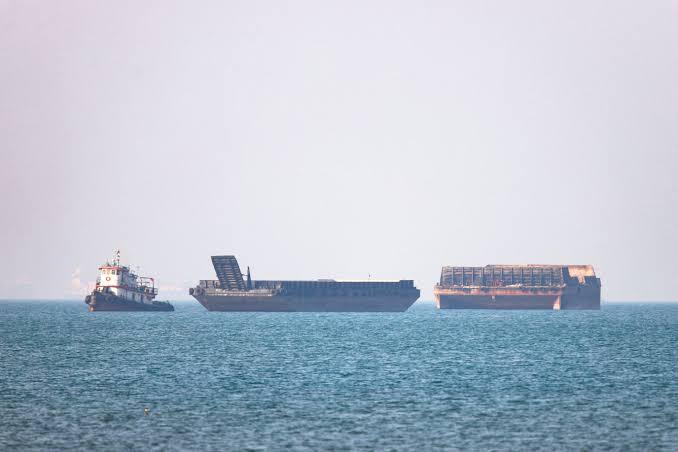
The closure of the Strait of Hormuz has intensified pressure on Trump. The vital waterway is a major conduit for oil, and its disruption has caused energy prices to surge since hostilities escalated in late February.

In London, Prime Minister Sir Keir Starmer welcomed Trump’s announcement to delay strikes. His official spokesman said: “Any reports of productive talks are welcome. We have always said that a swift resolution to the war is in global interests and the Strait of Hormuz specifically needs to be reopened.”

The spokesman added that the UK was in contact with the US about the situation and had discussed safeguarding international shipping. “It has been something the prime minister has talked about since the beginning of this conflict, that we want to work with the US and international partners to develop a viable plan to safeguard international shipping and see an end to this crisis,” he said.

Financial markets responded to Trump’s announcement with modest optimism. Analysts warn, however, that prolonged closure of the Strait of Hormuz will continue to drive energy prices upward, potentially prompting multiple interest rate increases in the UK. Rising costs are expected to affect transport, fuel, and production, increasing inflationary pressures.

Meanwhile, Israel’s military confirmed fresh strikes on “Iranian terror regime targets” in Tehran, and Iranian sources stressed that the country would continue to respond and defend its territory. According to Iran’s semi-official Tasnim news agency, “the Strait of Hormuz will not return to pre-war conditions and energy markets will remain unsettled,” and no direct negotiations with the US are underway.

Trump’s announcement of a temporary pause came as he described ongoing discussions with Iran as “very good and productive,” aimed at achieving a “complete and total resolution of our hostilities in the Middle East.”

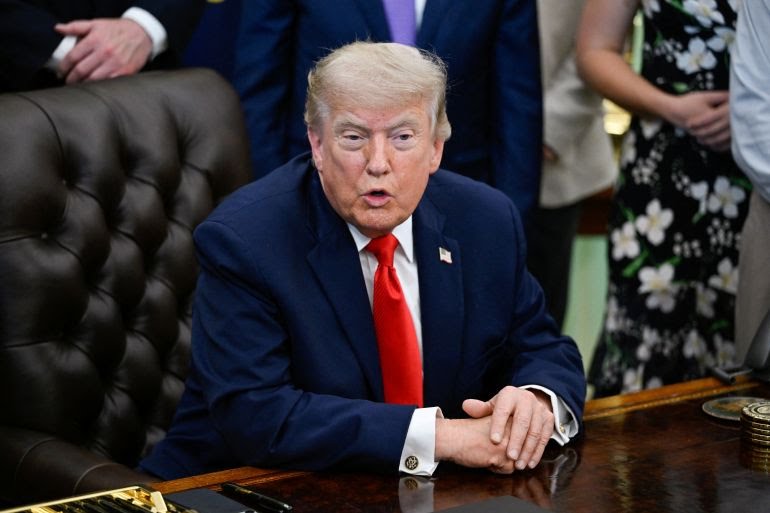
“Based on the tenor and tone of these in depth, detailed, and constructive conversations, witch [sic] will continue throughout the week, I have instructed the Department of War to postpone any and all military strikes against Iranian power plants and energy infrastructure for a five day period, subject to the success of the ongoing meetings and discussions,” Trump wrote on Truth Social.

“Thank you for your attention to this matter! President Donald J. Trump”

U.S. Embassy Tells Americans To Vacate ‘Israel’ Via Land Routes, Organizes Buses To Jordan

By Sabiu Abdullahi

The United States Embassy in Jerusalem has advised its citizens in ‘Israel’ to consider leaving the country through land borders due to ongoing travel difficulties and limited immediate options.

In a message posted on its official Instagram page, the embassy explained that overland routes currently offer the quickest way out. It pointed to border crossings into neighboring countries such as Egypt and Jordan as the most viable options for departure.

According to the advisory, commercial flights are still operating from airports in Egypt, including Sharm el-Sheikh and Cairo, as well as from Jordan’s capital, Amman.

To support those seeking to leave, the U.S. Department of State has begun arranging bus transportation for American citizens. The service is scheduled to start on March 23 and will move passengers from ‘Israel’ to Queen Alia International Airport in Amman.

As part of the “departure by land” plan, assisted transport will be available through the northern crossing known as the Jordan River/Sheikh Hussein border point. The embassy said this option is intended for citizens who require help exiting the country.

Americans interested in using the service must first complete an online registration form. After that, they will receive information on departure schedules and designated meeting locations. Current arrangements cover departures from both Jerusalem and Tel Aviv.

Officials stressed that travelers will still need to handle their onward journeys themselves, including securing flights from Amman.

The embassy added that it will continue to provide updates to U.S. citizens in ‘Israel’ as the situation develops.

Drones Reportedly Spotted Over U.S. Military Base Housing Top Officials In Washington

By Sabiu Abdullahi

Fresh security concerns have surfaced in Washington after unidentified drones were seen flying over a sensitive United States military installation.

The Washington Post reported that the drones were detected above Fort McNair, a facility where Secretary of State Marco Rubio and Pentagon chief Pete Hegseth are accommodated. The report cited three individuals who were briefed on the development.

Officials have not determined where the drones came ⁠from, the report said, citing two of the people familiar with the matter, leaving questions over their origin unanswered.

The situation has led to internal discussions within government circles about whether Rubio and Hegseth should be relocated from the base due to safety worries. Despite those concerns, both officials are still at the facility. A senior administration official confirmed this, according to the report.

The newspaper also noted that the U.S. military has increased its surveillance of potential threats. This comes amid heightened alert levels linked to the ongoing conflict involving the United States and Israel against Iran.

Reuters reported it could not independently verify the development at the time.

Meanwhile, both the Pentagon and the U.S. State Department have not issued official statements on the matter. When approached by the Washington Post, Chief Pentagon spokesperson Sean Parnell declined to provide details.

“The department cannot comment on the secretary’s (Hegseth’s) movements for security ⁠reasons, and reporting on such movements is grossly irresponsible,” he told the Post.

US Intelligence Says Iran Not Rebuilding Nuclear Enrichment After 2025 Attack

By Sabiu Abdullahi

United States intelligence agencies have concluded that Iran has not resumed efforts to rebuild its nuclear enrichment programme following the destruction of key facilities in a joint US-Israeli strike in June 2025. The finding contrasts with President Donald Trump’s justification for his ongoing military campaign.

Director of National Intelligence Tulsi Gabbard disclosed the assessment in a written submission presented during an annual threat review before the Senate intelligence committee. However, she did not repeat the position while addressing lawmakers in person.

“As a result of Operation Midnight Hammer, Iran’s nuclear enrichment program was obliterated. There has been no efforts since then to try to rebuild their enrichment capability,” Gabbard said in the testimony to the Senate intelligence committee.

When questioned by a Democratic senator over the omission during the hearing, Gabbard explained that time constraints prevented her from reading the full statement. She did not dispute the conclusion.

President Trump has consistently defended the February 28 strike on Iran, which was carried out alongside Israel. He cited what he described as an “imminent threat.” After the 2025 bombing, Trump stated that Iran’s nuclear facilities had been completely destroyed. More recently, he has claimed that Tehran was close to producing a nuclear weapon. That position is not widely supported by analysts and comes amid ongoing negotiations over a possible nuclear agreement.

Meanwhile, a senior aide to Gabbard stepped down on Tuesday. The official said there was no “imminent threat” and argued that Trump had been misinformed by both Israel and sections of the media.

In her remarks to senators, Gabbard noted that Iran had suffered significant damage in recent weeks of attacks. The strikes included the killing of longtime supreme leader Ayatollah Ali Khamenei. Despite this, she said the country’s governing system remains in place.

The US intelligence community “assesses the regime in Iran to be intact but largely degraded due to attacks on its leadership and military capabilities,” Gabbard said.

She added that if the current leadership remains, it may attempt to rebuild over time.

“If a hostile regime survives, it will likely seek to begin a years-long effort to rebuild its military, missiles, and UAV forces,” Gabbard said.

U.S. Counterterrorism Chief Resigns Over Iran War, Alleges Israeli Pressure

By Sabiu Abdullahi

The Director of the United States National Counterterrorism Center, Joseph Kent, has stepped down from his role, citing disagreement with Washington’s military involvement in Iran and questioning the factors behind the conflict.

Kent conveyed his decision in a letter to President Donald Trump. He said he reached the conclusion after careful thought and confirmed that his resignation takes immediate effect.

“After much reflection, I have decided to resign from my position as Director of the National Counterterrorism Center, effective today,” he wrote.

He stated that he could no longer support the administration’s current foreign policy, especially its decision to engage Iran militarily.

“I cannot in good conscience support the ongoing war in Iran. Iran posed no imminent threat to our nation, and it is clear that we started this war due to pressure from Israel and its powerful American lobby,” he stated.

Kent noted that his position reflects principles he believes once shaped U.S. foreign policy.

“I support the values and the foreign policies that you campaigned on in 2016, 2020, 2024, which you enacted in your first term,” Kent wrote.

“Until June of 2025, you understood that the wars in the Middle East were a trap that robbed America of the precious lives of our patriots and depleted the wealth and prosperity of our nation.”

He also accused “high-ranking Israeli officials and influential members of the American media” of driving what he described as a misinformation effort. According to him, the campaign “wholly undermined your America First platform and sowed pro-war sentiments” that encouraged action against Iran.

Kent argued that U.S. leadership received misleading information about the situation.

“This echo chamber was used to deceive you into believing that Iran posed an imminent threat to the United States, and that should you strike now, there was a clear path to a swift victory. This was a lie,” he said, while drawing a comparison with events that preceded the Iraq war.

He pointed to his own military background to stress the human cost of war.

“As a veteran who deployed to combat 11 times and as a Gold Star husband who lost my beloved wife Shannon in a war manufactured by Israel, I cannot support sending the next generation off to fight and die in a war that serves no benefit to the American people nor justifies the cost of American lives,” he said.

Kent urged the president to reconsider the current approach and warned about possible long-term consequences.

“I pray that you will reflect upon what we are doing in Iran, and who we are doing it for. The time for bold action is now. You can reverse course and chart a new path for our nation, or you can allow us to slip further toward decline and chaos. You hold the cards,” he said.

He ended his letter by expressing gratitude for the opportunity to serve. “It was an honor to serve in your administration and to serve our great nation.”