US

China, Russia, Iran Sign Strategic Pact Amid Rising US-Iran Tensions

By Sabiu Abdullahi

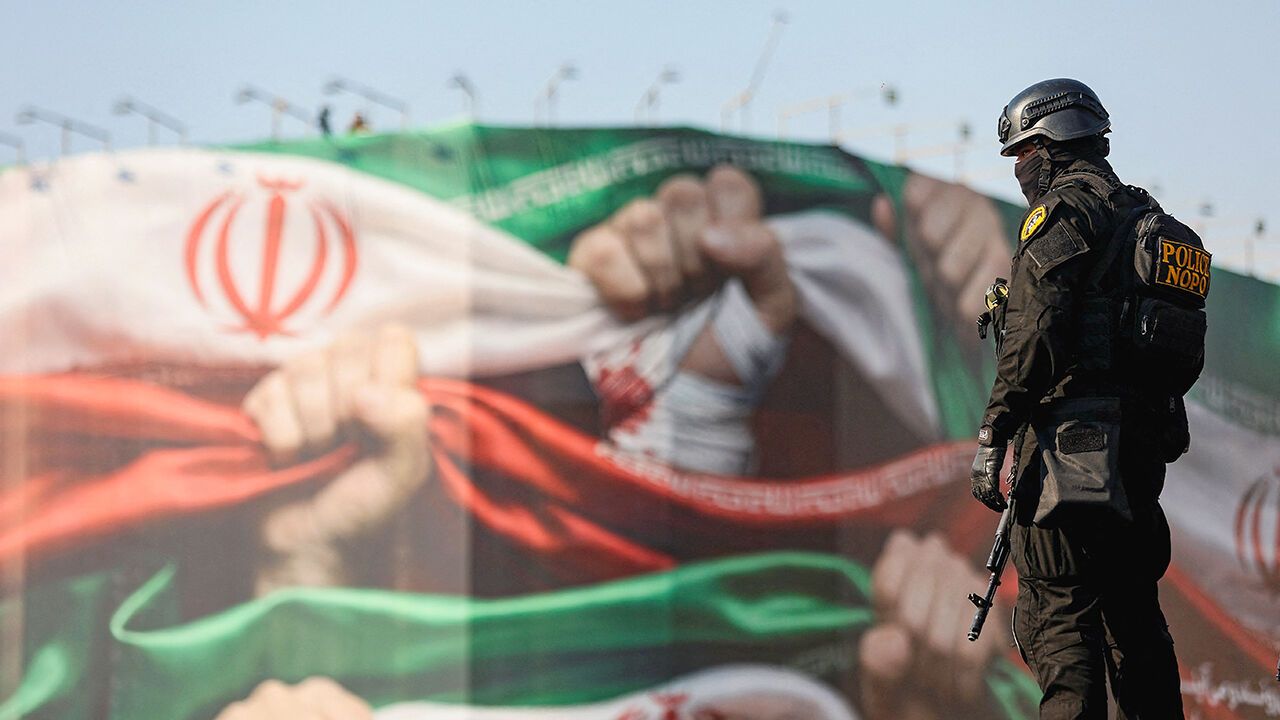
China, Iran, and Russia have formalized a wide-ranging strategic agreement, a development experts say could shift global power balances and heighten tensions with the United States.

The pact was announced simultaneously in Tehran, Beijing, and Moscow. Officials from the three countries described it as “a cornerstone for a new multipolar order.”

While the full text is being gradually released, authorities confirmed that the agreement covers collaboration in energy, trade, military coordination, and diplomatic strategy.

Iranian state media cited officials saying the pact reflects a joint commitment to “mutual respect, sovereign independence and a rules-based international system that rejects unilateral coercion.” Beijing and Moscow issued similar statements, highlighting their shared opposition to Western dominance.

This trilateral agreement builds on years of close bilateral ties. In January 2025, Iran and Russia signed a 20-year Comprehensive Strategic Partnership Treaty to strengthen economic and defense cooperation and counter Western sanctions. That treaty became effective last year.

Iran and China had also signed a 25-year cooperation deal in 2021, aimed at expanding trade, infrastructure, and energy cooperation.

What sets this new pact apart is that it explicitly unites all three countries under a coordinated framework. Unlike previous bilateral agreements, the pact aligns them on issues such as nuclear sovereignty, economic resilience, and military coordination.

No Formal Defence Commitment

Officials emphasized that the agreement is not a mutual defense treaty like NATO’s Article 5, which obligates members to defend one another militarily.

Past agreements between Iran and Russia did not include such guarantees, and this pact follows the same cautious approach. Analysts say it signals a political and strategic alignment intended to counterbalance US influence, resist sanctions, reduce dependence on Western financial systems, and expand regional influence.

The signing comes as tensions rise between Iran and the United States. Washington has accused Tehran of enriching uranium beyond the limits of the 2015 Joint Comprehensive Plan of Action (JCPOA). The Trump administration withdrew from the JCPOA in 2018 and reimposed sanctions that have severely impacted Iran’s economy.

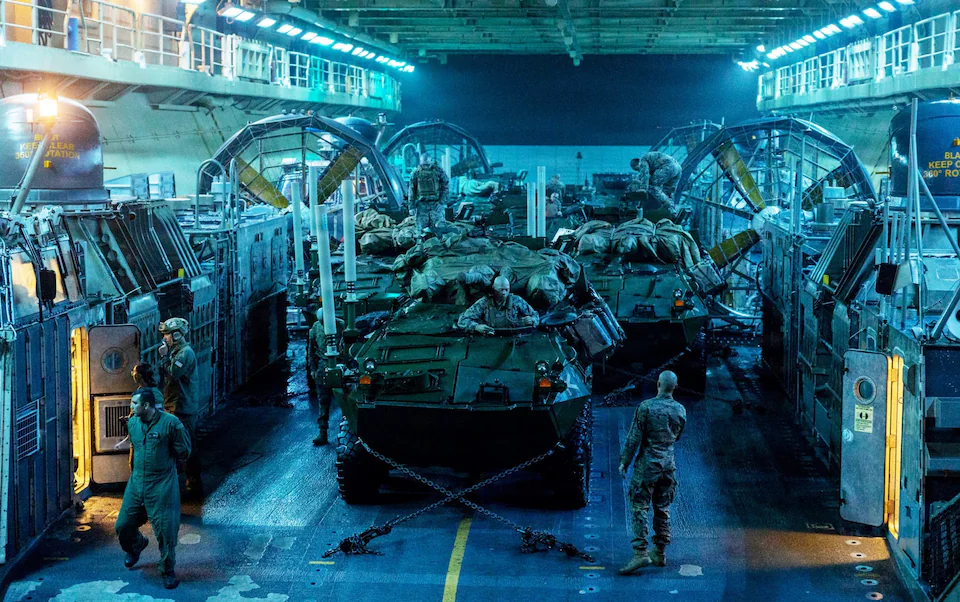
Attempts to revive the deal have repeatedly stalled. Talks in Oman and Rome in 2025 ended without an agreement, deepening mistrust. US military deployments in the Gulf, including the aircraft carrier USS Abraham Lincoln, have also raised fears of escalation.

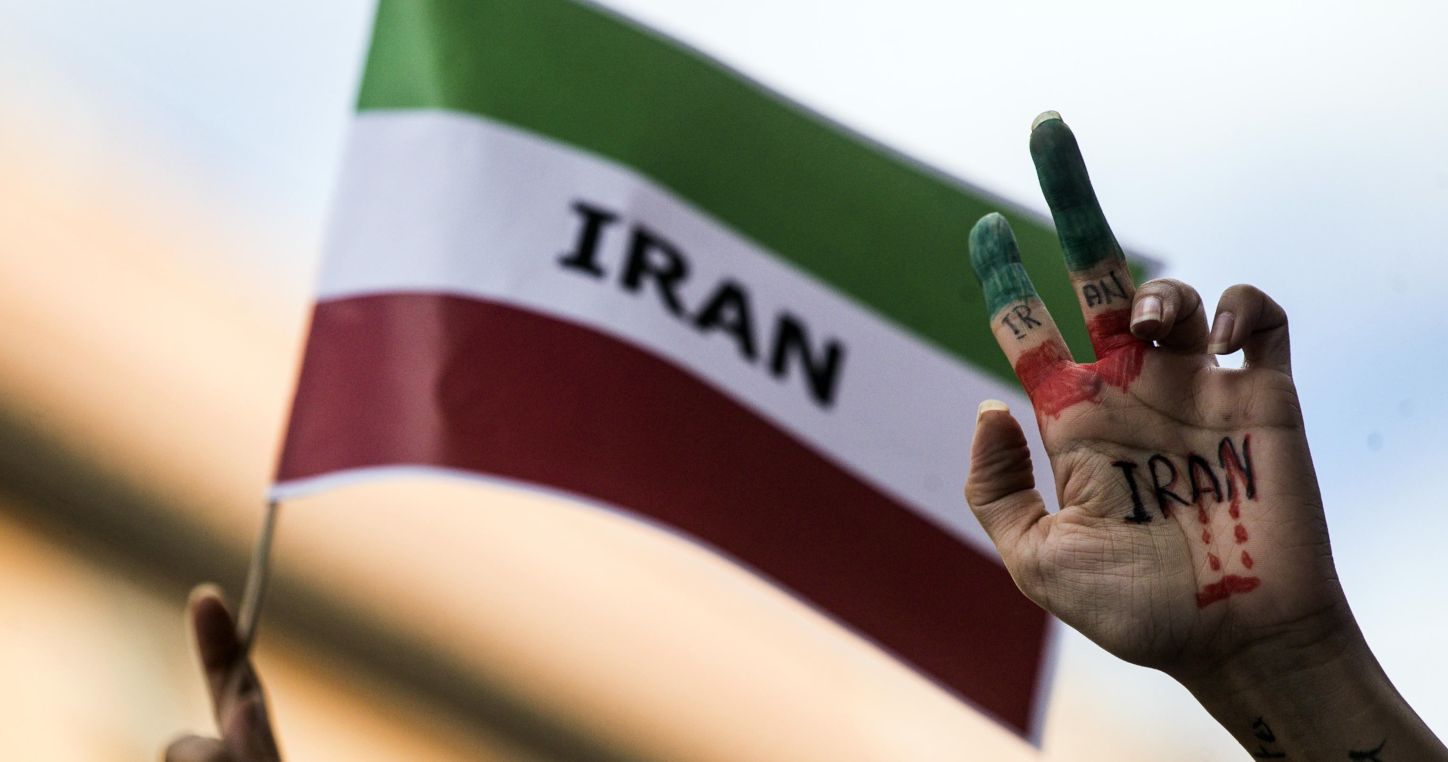
Inside Iran, protests that began in December 2025 over economic hardship have added domestic pressure. Iranian authorities accused foreign actors of fueling unrest, citing statements by US President Donald Trump in support of demonstrators as interference in domestic affairs.

Strategic Implications

For Tehran, the pact offers economic relief and strengthens deterrence against military threats by deepening ties with Russia and China.

For Moscow and Beijing, the agreement provides access to Iran’s energy resources and strengthens their capacity to challenge US alliances in the Middle East and Indo-Pacific. Both countries have expanded military cooperation with Iran, including joint naval exercises in the Gulf.

For the United States and its allies, the pact complicates efforts to isolate Iran. Gulf states, wary of Tehran’s ambitions, fear the agreement could embolden Iran and destabilize the region further.

Experts caution, however, that the pact has limits. Russia and China remain cautious about overcommitting, mindful of possible US retaliation. Iran’s ongoing economic challenges and domestic unrest could also hinder its ability to meet obligations. Without a formal defense guarantee, Tehran remains vulnerable to confrontation with the US or Israel.

Much will depend on whether Moscow and Beijing risk deeper involvement in Iran’s disputes with the West. For now, the agreement strengthens Tehran’s diplomatic position, even as tensions with Washington persist.

Tinubu assigns ambassadors to U.S., UK, France, Turkey, ahead of presidential trip

By Abdullahi Mukhtar Algasgaini

President Bola Tinubu has assigned four high-profile diplomats to strategic allied nations, including the United States, United Kingdom, France, and Turkey.

The postings come from a pool of 68 ambassador-designates confirmed by the Senate last December.

The assignments see Ambassador Ayodele Oke posted to France, while Colonel Lateef Are is designated for the United States. Ambassador Amin Dalhatu, previously Nigeria’s envoy to South Korea, will serve as High Commissioner to the United Kingdom.

Notably, former Kebbi State Governor Usman Isa Dakingari Suleiman is appointed ambassador-designate to Turkey. This posting precedes President Tinubu’s scheduled state visit to Ankara next week.

According to a presidential memo to the Ministry of Foreign Affairs, the ministry has been directed to formally notify the host governments of the designations in line with established diplomatic protocols.

The posting of the remaining confirmed envoys is expected to follow.

President Trump threatens military deployment to Minnesota amid Anti-ICE protests

By Sabiu Abdullahi

United States President Donald Trump has warned he may deploy the military to Minnesota under the Insurrection Act as tensions rise over an intensified immigration enforcement operation in Minneapolis.

The threat follows days of clashes between local residents and federal officers after an Immigration and Customs Enforcement (ICE) agent fatally shot U.S. citizen Renee Good in her car eight days ago.

Protests over the killing have spread to multiple cities, Reuters reports.

Trump’s warning came shortly after another shooting in Minneapolis. Authorities said an immigration officer wounded a Venezuelan man in the leg after he fled when agents tried to stop his vehicle.

“If the corrupt politicians of Minnesota don’t obey the law and stop the professional agitators and insurrectionists from attacking the Patriots of I.C.E., who are only trying to do their job, I will institute the INSURRECTION ACT,” Trump wrote on social media.

The president, a Republican, has repeatedly criticised Minnesota’s Democratic leadership and referred to Somali-origin residents in the state as “garbage” who should be “thrown out” of the country.

Nearly 3,000 federal officers have been deployed to Minneapolis. Armed personnel wearing military-style camouflage and masks have patrolled the streets while residents protested loudly and angrily.

On Wednesday night, crowds gathered near the area where the Venezuelan man was shot. Some shouted in protest, prompting federal officers to fire tear gas and use flash-bang grenades.

After most residents left, a small group vandalised a car believed to belong to federal officers, spray-painting: “Hang Kristi Noem,” a reference to the Homeland Security secretary.

Since the enforcement surge began, federal agents have arrested both immigrants and protesters. In some cases, officers smashed windows and removed people from vehicles. They have also faced criticism for demanding identification from Black and Latino U.S. citizens.

Both the Trump administration and Minnesota officials have blamed each other for fueling anger and violence.One widely reported incident involved U.S. citizen Aliya Rahman, who was detained near the site of Good’s killing.

She told Reuters, “They dragged me from my car and bound me like an animal, even after I told them that I was disabled.”

Rahman added that she repeatedly requested medical attention while in ICE custody but was taken to a detention centre instead. She said she later lost consciousness in a cell and was transported to a hospital.

A Department of Homeland Security spokesperson said an “agitator” ignored an officer’s orders to move her vehicle away from an enforcement action and was arrested for obstruction.

The wounded Venezuelan man, identified by DHS as Julio Cesar Sosa-Celis, entered the U.S. in 2022 under former President Joe Biden’s humanitarian parole programme.

The Trump administration has since revoked parole granted to Venezuelans and others admitted under the programme.According to DHS, officers attempted to stop Sosa-Celis in his vehicle.

He fled, crashed into a parked car, and ran on foot. During a struggle, two other Venezuelan men allegedly attacked an officer with a snow shovel and broom handle.

Tinubu nominates ambassadors to US, UK, France

By Abdullahi Mukhtar Algasgaini

President Bola Tinubu has put forward the names of three non-career ambassadorial nominees for crucial postings in the United States, the United Kingdom, and France.

According to an announcement, the nominees are Ambassador Ayodele Oke, Retired Colonel Lateef Kayode Are, and Ambassador Amin Mohammed Dalhatu. Their specific country assignments will be finalized after they undergo a screening and confirmation process by the Nigerian Senate.

The nominees bring a wealth of experience in diplomacy and security to the roles.Ambassador Amin Mohammed Dalhatu is a familiar face in foreign service, having previously served as Nigeria’s Ambassador to South Korea.

He was first appointed to that position in 2016 under the administration of former President Muhammadu Buhari.

Ambassador Ayodele Oke, a graduate of Emory University in Atlanta, is a former Director General of the National Intelligence Agency (NIA).

He also has prior diplomatic experience from serving as Nigeria’s ambassador to the Secretariat of the Commonwealth of Nations in London.

Retired Colonel Lateef Kayode Are has a distinguished background in security and intelligence. He was the Director General of the State Security Service (SSS) from 1999 to 2007 and later served as the National Security Adviser in 2010.

His career also includes serving as an officer in the Directorate of Military Intelligence.

A highly educated officer, he graduated with First Class Honours in Psychology from the University of Ibadan in 1980.

The Senate is expected to schedule a screening date for the nominees in the coming weeks.

President Trump freezes funding for US-funded media outlets

By Abdullahi Mukhtar Algasgaini

Hundreds of staff members at major U.S.-funded media outlets, including Voice of America (VOA), Radio Free Asia, and Radio Free Europe, were informed over the weekend that they would be barred from their offices and required to surrender press passes and equipment.

The move follows an executive order signed by U.S. President Donald Trump on Friday, which designated the U.S. Agency for Global Media (USAGM), VOA’s parent agency, as part of “unnecessary” federal bureaucracy.

USAGM, which employs approximately 3,500 people and has a budget of 886 million U.S. dollars for 2024, oversees several international broadcasters that are now facing significant cuts.

These include the shutdown of contracts with Radio Free Europe and Radio Free Asia, as reported by local media outlets.

VOA Director Michael Abramowitz confirmed on social media that nearly the entire staff of 1,300 journalists, producers, and assistants had been placed on administrative leave.

The White House has stated that the move is aimed at ensuring taxpayers are no longer funding what they described as “radical propaganda.”

The decision is expected to face challenges in Congress, as the U.S. Constitution grants lawmakers, not the president, control over federal spending.

Trump dismisses top military officer in major shake-up

By Abdullahi Mukhtar Algasgaini

President Donald Trump has fired the United States’ top military officer, Gen. Charles “CQ” Brown, in a significant reshuffling of the country’s armed forces leadership.

Gen. Brown, who was appointed Chairman of the Joint Chiefs of Staff less than two years ago, had been serving a four-year term.

In a brief statement posted on his Truth Social network, Trump expressed his gratitude toward Gen. Brown for his more than four decades of service to the country.

“I want to thank Gen. Brown for his over 40 years of service to our country, including as our current chairman of the Joint Chiefs of Staff. He is a fine gentleman and an outstanding leader, and I wish a great future for him and his family,” Trump wrote.

No further explanation was provided for the decision to dismiss the highly regarded general.

FG receives $52m Diezani loot from U.S.

By Sabiu Abdullahi

The Nigerian government has received $52.88 million in recovered assets linked to Diezani Alison-Madueke, a former Minister of Petroleum Resources.

The funds were handed over by the United States government, as announced by the Attorney-General of the Federation (AGF) and Minister of Justice, Lateef Fagbemi, during a formal agreement signing ceremony in Abuja on Friday.

In his remarks, Fagbemi explained that $50 million of the recovered assets would be allocated through the World Bank to support rural electrification projects.

The remaining $2 million is to be directed to the International Institute of Justice to enhance the justice system and combat corruption.

Stating the benefits of this development, Fagbemi described it as a milestone in the collaboration between Nigeria and the United States in fighting corruption and promoting the rule of law.

He also emphasized that this recovery reflects President Bola Tinubu’s commitment to addressing corruption.

United States Ambassador to Nigeria, Richard Mills, stressed the need for transparency and accountability in using the recovered funds to benefit the Nigerian populace.

This asset recovery represents a continued effort by both nations to strengthen their partnership in ensuring good governance and accountability.

#USDecides2024: Harris, Trump set for debate on Tuesday

By Uzair Adam

The highly anticipated face-off between Democratic Vice President Kamala Harris and former Republican President Donald Trump is set to take place on Tuesday in Philadelphia.

This will be the first and potentially only televised debate ahead of what promises to be a fiercely contested 2024 presidential election.

With President Joe Biden stepping down from the race, Harris has become the new face of the Democratic Party, uniting her supporters and narrowing Trump’s lead in the polls.

However, the race remains tight, and Harris acknowledges she is still the “underdog.”

Trump, now 78, has taken an aggressive approach after Harris’s candidacy disrupted his White House bid, making him the oldest candidate in U.S. history.

The former president, known for his controversial remarks, including racist and sexist taunts aimed at Harris, will look to dominate the debate in his signature style.Both candidates have a lot riding on the debate.

Harris, America’s first female, Black, and South Asian vice president, has been preparing intensely in Pittsburgh, aware that she must navigate a barrage of attacks while combating stereotypes.

Trump, on the other hand, will have to gauge how much of his brash rhetoric will resonate with undecided voters in a deeply polarized country.

The debate is set to take place in Pennsylvania, a crucial battleground state, adding to the tension.

Given the uncertainty surrounding future debates, this encounter could be pivotal for both campaigns as they look to sway voters in the final stretch before the November 5 election.

With millions of Americans expected to tune in, the outcome could significantly impact the direction of the race, especially in an election year marked by sharp divisions.

All eyes will be on the ABC moderators to manage the proceedings and potentially fact-check the candidates, especially given Trump’s previous debate performances.

This event promises to be a critical moment in what has already been a historic election season.

Trump defers abortion rights decision to states

By Uzair Adam Imam

Republican presidential candidate Donald Trump has advocated for leaving the decision on abortion rights to individual US states, a move that deviates from his previous wavering on the highly controversial issue.

In a video shared on his Truth Social network, Trump expressed his stance, stating, “My view is now that we have abortion where everybody wanted it from a legal standpoint, the states will determine by vote or legislation or perhaps both.”

He stated that whatever decision states make regarding abortion rights “must be the law of the land, in this case, the law of the state.”

This declaration comes after months of uncertainty surrounding Trump’s position on abortion, exacerbated by conflicting reports.

In February, The New York Times published an article suggesting Trump favored a 16-week national abortion ban but refrained from publicly addressing it to avoid alienating socially conservative supporters.

The backdrop against which Trump’s statement emerges is the landmark 2022 US Supreme Court ruling that overturned Roe v Wade, the case that had established the federal right to abortion.

The ruling effectively transferred the authority over abortion laws to individual states, resulting in a patchwork of regulations across the country.

While some states have implemented near-total bans on abortion, others, like Maryland, have reinforced abortion rights through legislation.

Many conservatives have been advocating for a national ban to supersede state laws favoring abortion rights.

However, public opinion leans towards supporting abortion rights, with extensive polling indicating that a majority of Americans believe abortion should be legal in most cases.

Approximately half of the states have enacted measures to safeguard access to abortion services.

Trump’s presidential rival, incumbent President Joe Biden, has consistently supported abortion access despite being a devout Catholic.

Democrats have framed Trump as the driving force behind attacks on reproductive rights and have vowed to restore Roe v Wade if given the opportunity.

Since the Supreme Court’s ruling on Roe v Wade, abortion rights advocates have achieved success in seven consecutive referendum victories.

Conversely, Republicans have struggled to establish a clear stance on the issue and faced repercussions in the 2022 midterm elections, losing crucial battlegrounds to candidates supporting abortion rights.

In his video address, Trump reiterated his support for exceptions to abortion bans in cases of rape, incest, and when the life of the mother is at risk.

He also emphasized his backing for in vitro fertilization (IVF) access for couples undergoing fertility treatments.

Legal experts suggest that the Supreme Court’s decision effectively grants states the ultimate authority on matters of personhood, potentially impacting various aspects of reproductive health, including IVF procedures.

Trump’s latest stance adds another layer to the ongoing debate over abortion rights in the United States.

U.S. airman sets himself alight outside Israeli embassy to protest genocide in Gaza

By Sabiu Abdullahi 

A 25-year-old U.S. Airman, identified as Aaron Bushnell, died on Sunday night after setting himself on fire outside the Israeli Embassy in Washington, D.C., according to independent journalist Talia Jane. 

D.C. Fire and Emergency Medical Services (DC FEMS) confirmed an adult male was transported with critical, life-threatening injuries to a local hospital following the incident on Friday.

Authorities have not confirmed the identity, condition, or status of the individual when asked by TIME. 

Bushnell reportedly sent a message to media outlets before his self-immolation, stating, “Today, I am planning to engage in an extreme act of protest against the genocide of the Palestinian people.”

He also allegedly live-streamed the act on Twitch, which has since removed the video for violating guidelines and not responded to requests for comment from TIME. 

Footage reviewed by TIME shows Bushnell walking towards the driveway of the Israeli Embassy, stating, “I will no longer be complicit in genocide. I’m about to engage in an extreme act of protest.”

Authorities are investigating the incident and the reasons behind Bushnell’s actions. The Israeli Embassy has not issued a statement regarding the incident. 

The incident has sparked outrage and concern within the U.S. and abroad.

Critics have questioned the lack of information available about Bushnell’s motivations and mental health.  

Mental health experts urge anyone experiencing distress to seek help and the resources readily available.

The National Suicide Prevention Lifeline (1-800-273-8255) is available 24/7 in the U.S.