University of Maiduguri

The menace of unauthorized traditional medicine selling

By Salama Ishaku

The unauthorized selling of traditional medicine is gradually becoming a menace that begs for our collective attention. Across many towns and cities, traders openly display unlicensed herbal products, often with loud proclamations about their supposed healing powers. While traditional medicine has long been a part of our culture, the unregulated and indiscriminate sale of these substances poses serious risks to public health and safety.

At motor parks, street corners, and crowded markets, it is common to see hawkers peddling mixtures in bottles and sachets, claiming they can cure anything from malaria and typhoid to infertility and diabetes. Some even promise instant solutions to chronic conditions that modern medicine struggles with. These exaggerated claims lure unsuspecting citizens, particularly the poor and vulnerable, who are desperate for relief.

The danger, however, lies in the fact that most of these so-called remedies are not scientifically tested or approved by relevant health authorities. Without proper regulation, there is no guarantee of their safety, dosage, or effectiveness. Some of the concoctions are prepared in unhygienic conditions, exposing users to infections and long-term complications.

Equally worrisome is the way sellers often discourage people from seeking professional medical care. By instilling false confidence in their products, they convince patients to abandon prescribed treatment in favour of unproven alternatives. This not only worsens health outcomes but also contributes to avoidable deaths that could have been prevented through timely medical intervention.

Another aspect of this menace is the use of harmful substances. There have been reports of herbal mixtures laced with high doses of alcohol, caffeine, or other chemicals to create instant effects. Such practices endanger consumers who unknowingly ingest toxic elements in the name of treatment. The lack of labelling and dosage instructions further increases the risk of overdose.

The proliferation of unauthorized traditional medicine sellers also undermines the credibility of genuine traditional healers who practise responsibly and adhere to cultural ethics. By mixing quackery with legitimate herbal practices, the public perception of traditional medicine as a whole is eroded. This makes it difficult for serious practitioners to gain recognition and collaborate with modern healthcare providers.

Mr. President and relevant health agencies must recognise that this problem requires urgent attention. Stronger regulatory measures need to be introduced to monitor and control the sale of traditional medicine. Sellers should be licensed, and products subjected to scientific testing to ensure they are safe for human consumption.

Public sensitisation is also essential. Citizens must be educated about the dangers of patronising unverified medicine sellers. Awareness campaigns through radio, television, social media, and community outreach will go a long way in discouraging reliance on unsafe remedies. People should be encouraged to seek medical advice from qualified professionals rather than fall prey to street hawkers.

Equally important is the need to strengthen the healthcare system. Many Nigerians resort to traditional sellers not out of choice but because hospitals are often inaccessible, expensive, or overcrowded. By improving affordability and access to quality healthcare, the dependence on unauthorized herbal remedies will naturally reduce.

There is also a need for collaboration between traditional and modern medicine. With proper regulation, research, and training, traditional knowledge can complement modern healthcare instead of competing with it. This would preserve our cultural heritage while safeguarding the health of citizens.

Communities themselves must take responsibility by reporting illegal sellers to the authorities. Religious and traditional leaders should also lend their voices in discouraging the spread of unregulated products. Tackling this menace is a collective duty, not one for government alone.

In conclusion, while traditional medicine has its place in our society, the unauthorized and reckless selling of herbal products is a ticking time bomb. The longer we ignore it, the greater the health risks we invite upon ourselves. For the safety of our nation, decisive action must be taken now to regulate traditional medicine, protect citizens, and uphold public health standards.

Salama Ishaku writes from the Department of Mass Communication, University of Maiduguri, Nigeria.

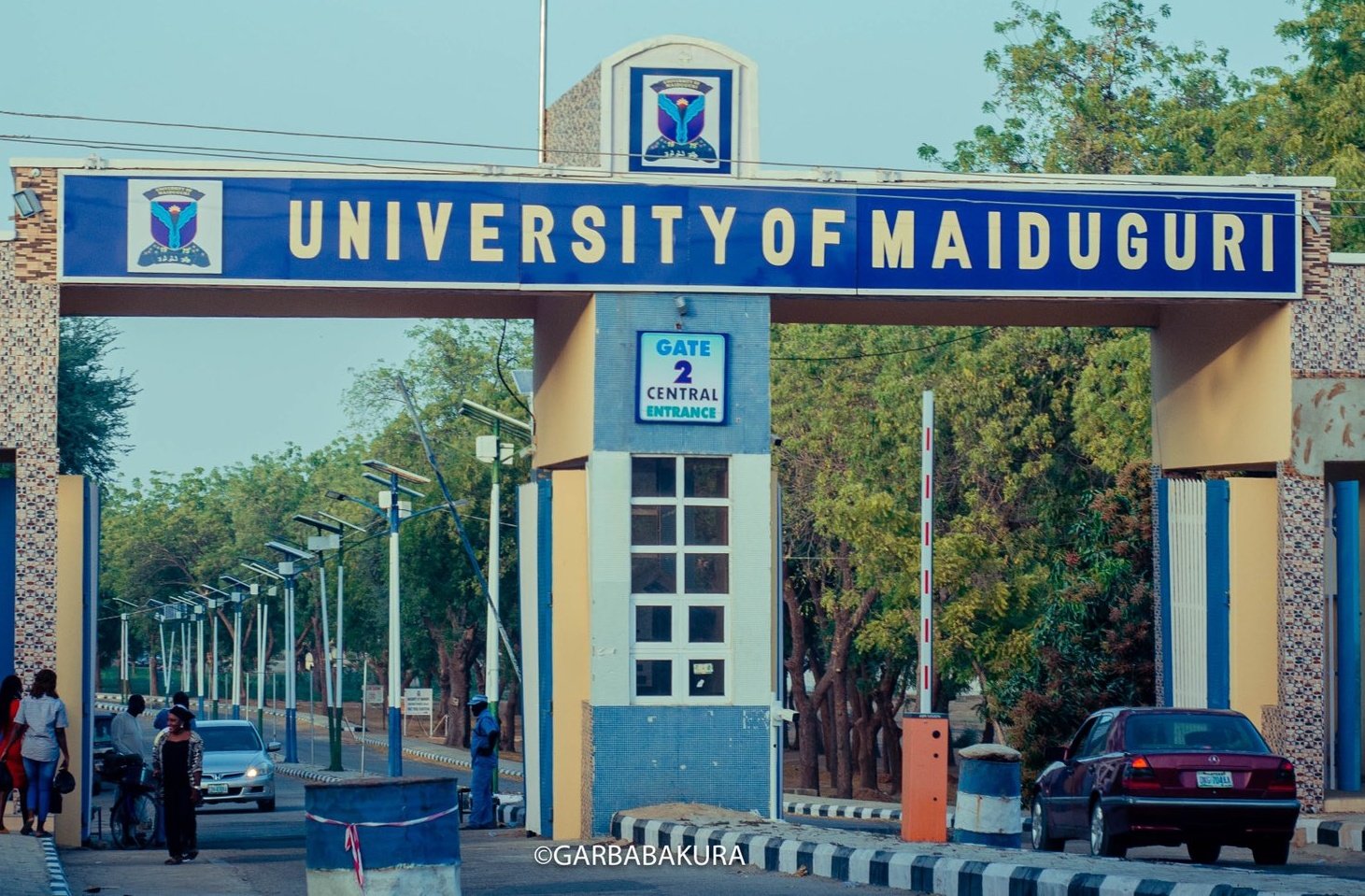
University of Maiduguri alumni oppose proposed renaming of institution

By Muhammad Sulaiman

Alumni of the University of Maiduguri have voiced strong opposition to reported plans to rename the institution after former President Muhammadu Buhari. In a statement issued by Muazu M. Dikwa, a 2004 LLB graduate, the alumni group described the move as “ill-advised” and one that fails to reflect the university’s unique heritage and regional significance.

The group emphasised that the University of Maiduguri has long stood as a symbol of resilience and academic excellence in Nigeria’s North-East. They argued that changing its name would undermine its historical identity, which is deeply tied to its geographic location and the challenges the region has faced.

The statement also pointed out that former President Buhari has already been honoured with the naming of the Federal University of Transportation in Daura, Katsina State—his hometown. The alumni maintained that this existing tribute is more appropriate and sufficient in recognising Buhari’s contributions.

“We urge the relevant authorities to reconsider any such proposals,” the statement read. “Focus should instead be on strengthening the university’s capacity and supporting its mission in the region.”

The alumni group called on all stakeholders—students, faculty, community members, and especially the people of Borno State—to resist any attempt to alter the name of the institution.

The University of Maiduguri, established in 1975, has played a crucial role in advancing education in Nigeria’s North-East, despite the security challenges it faces.

No, Mr President, it is UniMaid

By Zailani Bappa

In the last few days, we have been engaged in a debate over whether it was right or not for President Bola Ahmed Tinubu to rename the University of Maiduguri (UNIMAID) after the late President Muhammadu Buhari. I want to add my voice to this as well.

I am a staunch fan and supporter of the late President, and I cherish his exemplary qualities, which are truly uncommon among our present-day crop of active politicians. I respect him alive and in his death. I am also a graduate of UNIMAID.

Despite the above, I strongly disagree with Bola Ahmed Tinubu’s decision to rename my alma mater after President Muhammadu Buhari at this time. The move, to my understanding, is self-serving, dishonest and, obviously, unpopular. And if the President has to do it, there are so many other things available to manipulate for achieving political ambition. 

Just imagine renaming the University of London, or the Oxford University or the Harvard University to another name at this hour. These names have become top brand symbols worldwide and are synonymous with the excellence the Universities are demonstrating.

So is UNIMAID. Its service of excellence has become synonymous with this name for more than five decades. Universities with names of persons, such as Ahmadu Bello University and Bayero University, built their present reputation from the outset, along with those names.

In truth, if President Bola Ahmed Tinubu wanted so desperately to seize the demise of President Muhammadu Buhari to advance his political opportunities in the Northern part of Nigeria ahead of the upcoming elections, he should have renamed the University of Ibadan or the University of Lagos after the late President which will prove to the Northerners more of his nationalistic and unbiased posture. 

After all, the latter of the above Universities was reportedly saved from this kind of unwholesome political decision by his active participation when it was to be renamed after the late MKO Abiola. I will sign and urge everyone to sign the petition currently circulating, which opposes this highly offensive decision.

Like soldiers, like trees

By Abubakar Idris Misau

According to a study published 10 years ago in the journal Nature (Ehrenberg, 2015), our planet is home to a staggering 3.04 trillion trees. Now, try searching for the article titled “Global forest survey finds trillions of trees”; come back with a different result and refer to me as “Mr. Sociologist” – as Reno Omokri would say it, please. 

When writing in the realm of science and research, one cannot simply state things. Often, figures are necessary, and it is not enough to just present them; one must also explain where and how they were obtained, detailing their validity. This is the academic way. This is the scientific way. This is not the sociologist’s way. And definitely not the way of “political science.“ 

With “political science” in quotes, let me share a short story: While at the University of Maiduguri (UNIMAID), there was a legend involving the renowned mathematics guru, Professor M.Y. Balla. They said he remarked, “While mathematics is the simplest thing to understand, the most difficult concept ever conceived is the one that led to the naming of a department or discipline as political science.” It’s quite a legend!

Deduce, meanwhile, that science is proof, not talk. Scientific research writing can tire a person before they reach the end of the first sentence – only for one to finish the terrible journey and have people saying, “wetin this one talk nii?”

In other words, a scientific work is like a qualified doctor’s handwritten prescription: terrible and difficult to read, yet easy to understand by the right audience, such as a pharmacist, when it comes to a medical doctor’s handwritten advice.

Hence, with this message targeting the general public, it remains so – as it is. The scientific way isn’t for us.

Let’s get to work:

As we navigate the complexities of our planet’s ecosystem, one ironic truth holds: the most formidable soldiers of our planet are not those wielding guns or bombs, but rather the ones with leaves, roots, and trunks. Trees, the often-overlooked sentinels of our environment, are the true warriors of planet Earth.

Contrary to what some of us mistakenly believe, these arboreal giants are not merely passive observers; they are actively engaged in a continuous struggle to protect our planet’s fragile balance. 

From producing oxygen to filtering pollutants and supporting biodiversity, trees are the frontline defenders against the ravages of climate change. 

But if we think that’s all they do, then we cannot be more wrong. In truth, as this little note shows, trees are more than just ecological warriors; they are also master strategists. 

In an academic context and hopefully for the last time, a study entitled “Net Transfer of Carbon Between Trees by Ectomycorrhizal Fungi in the Field” demonstrates that trees have evolved complex communication networks, utilizing fungal hyphae to share nutrients and warn of potential threats (Simard, 1997). 

This symbiotic relationship eerily resembles the tactics used by human militaries, where intelligence sharing and coordination are essential to success. Technical? Sorry about that. That’s the best I can do! Keep the tempo up.

The point is that trees have developed an impressive array of defense mechanisms to counter the numerous threats they face. From the chemical defenses used by the majestic baobab tree (Adansonia digitata) to the physical barriers created by the resilient redwood (Sequoia sempervirens), trees have evolved a remarkable range of strategies to ensure their survival.

And here comes the shocking open secret: despite their critical role in maintaining planetary balance, trees are facing unprecedented threats. Anthropogenic activities are taking a devastating toll on global tree populations, including industrialization, farming, housing, and shambolic acts. 

The game of numbers: We cut down 41 million trees each day! That amounts to 15 billion trees annually. This means we have only 200 years to eliminate the remaining 3.04 trillion standing soldiers. 

Mind you, it isn’t as if we are making any real effort to reverse the dangerous trend. Currently, we plant less than 2 billion trees a year (about 5 million each day).

To maintain our current situation – without increasing our numbers, which we desperately need to avoid – we must plant 36 million more trees daily, totaling 13 billion trees needed to close the gap between what we destroy and what we establish each year.

We are, therefore, through this trade-up, waging a war against our own planet, with trees as the immediate casualties.

However, we need to understand that trees are not just individual organisms; they are part of a larger web of life. They are some of the most important elements of this web. Soldiers. Custodians. Protectors of life itself. 

Therefore, we must acknowledge the vital role trees play in protecting our planet and take steps to preserve them.

The future of our planet relies on the ongoing vigilance of these unsung heroes – the arboreal army standing tall, steadfast, and tireless in their defense of our world.

Let’s stop the starvation and attacking our saviors, please!

The Good News: We are approximately 8 billion people. Planting two trees per person means planting 16 billion trees. This results in a surplus of about one billion trees compared to the 15 billion stands we destroy each year. The ball is in our court.

Happy International Day of Forests, 2025.

Abubakar Idris, a Forestry and Wildlife graduate from the University of Maiduguri, writes from Katsina. Contact: abubakaridrismisau@gmail.com. 

Negative influence of TikTok trends on Nigerian youths

By Manasseh Mercy

Social media integrates digital media platforms, including combinations of electronic text, graphics, moving pictures and sounds in a structured computerized environment that allows users to interact with the data for appropriate purposes or otherwise. The digital environment can include the Internet, telecommunications and interactive digital television. The Web is now part of the overall business of communication, sales and services. It changes business practices across the globe.

Its technical limitations affect the amount of material and the speed of access. The network depends mainly on the connections of the telephone line, so the more they are good on a territory, the more the service will be reliable. As a result, messages can reach audiences and target groups in real-time and generate changes and trends.

Nowadays, younger generations grow up having good contact with different social networks, easily acquire digital culture and live in a digital world where only adults are naturalized citizens. Trends can bring awareness to other organizations and not just for selling products. 

In 2014, the ice bucket challenge was a popular trend that spread across Instagram’s platform. The trend was created to help bring awareness and donations to Lou Gehrig’s Disease, also known as ALS, which stands for Amyotrophic Lateral Sclerosis. Pete Frates, a former baseball player for Boston College, helped promote the nonprofit organization ALS Association because of his diagnosis of the disease. Both celebrities and regular social media account holders made videos of pouring ice water on themselves while tagging at least three friends to post themselves participating.

This trend was an example of one of the many situations that brought light to very serious topics. The millions of people posting about the ice bucket challenge resulted in the organization raising millions of money. That year, an estimated $115 million was raised for the cause in just a few months. The Ice Bucket Challenge was created to raise money for research purposes in hopes of finding a cure for ALS disease.

The Ice Bucket Challenge is just one of the many trends that took over social media platforms. Many nonprofit organizations have been going viral over the years, bringing awareness to millions of people. Situations like these can come out of pure luck to get everyone on the Internet to discuss a topic. Getting people to talk about specific issues brings attention to a cause that can get people to donate money. It’s not only companies and organizations that get attention online but also individuals as well.

TikTok is a social media platform for creating, sharing and discovering short videos. Young people use the App to express themselves through singing, dancing, comedy and lip-syncing. It allows users to create videos and share them across a community. It is one of the most popular social media platforms in the 21st century. 

In Today’s generation, popular trends on social media have a significant influence on younger generations. Trends can consist of different things such as makeup, clothes, music, toys, and interests. TikTok trends are viral short videos that use popular features, songs, sound effects and hashtags. 

Some current TikTok Trends (November 2023) include Bird’s-eye View — November 17, 2023. In this trend, you grab your friends or coworkers, tape your phone to the ceiling, and record yourselves dancing and being silly. Another was (Added November 20, 2023) Smug Corgi/Confused Dog Meme Trend. Example: Posting a video with the CapCut template from the example with a funny text overlay describing a situation where you (the corgi) would be smugly doing something while the other person (represented by the other dog) is super baffled, often about spend a lot of money on something like Christmas decorations.

What are the potential risks? Users may be exposed to foul language and sexual content. Users can comment on other videos, which leaves the potential for online bullying or negative comments. The App promotes positive comments and encourages users to ‘say something nice’. However, if you encounter an inappropriate comment, you can report it as abuse. 

Stalking, identity theft, personal attacks and misuse of information are some of the threats social media users face. Most of the time, the users themselves are to blame as they share content that should not be in the eye of the public. 

These dangerous trends are not only harmful to the individuals who participate in them, but they also hurt society as a whole. When young people engage in these trends, they send their peers messages that it is acceptable to engage in risky and inappropriate behaviours. This can lead to a culture of recklessness and disregard for personal safety and etiquette.

It is essential for parents and educators to be aware of these dangerous trends and to talk to young people about the potential consequences of participating in them. It is also essential for social media platforms like TikTok to take responsibility for the content shared on their platform and to take steps to remove the dangerous content.

In conclusion, TikTok trends influence the social behaviour of Nigerian youths in one way or another. Nigerian youths engage in time-consuming and energy-draining trends, and sometimes, they cost money because they want to be famous and act like their peers. The Nigerian government should closely monitor and adequately regulate TikTok trends so as not to destroy Nigerian youths’ moral and social behaviour.

Mercy Manasseh is a student of Mass Communication from the University of Maiduguri and can be reached via mercymanasseh951@gmail.com.

UNIMAID must reconsider its stand

By Kasim Isa Muhammad

In a disheartening turn of events, the University of Maiduguri faces widespread criticism for its recent policy to bar students with unpaid fees from entering examination halls. This decision has sent shockwaves throughout the campus community, leaving many students dismayed. UNIMAID must reconsider its stance and adopt a more compassionate and supportive approach to ensure equal opportunities for all.

The consequences of this ill-conceived policy are far-reaching and detrimental. Numerous students, burdened with financial hardships, now face the distressing prospect of academic exclusion. This sudden disruption hampers their progress and undermines the core principles of inclusivity and equal opportunity that universities should uphold.

The impact of this decision extends beyond individual students, raising serious questions about the university’s commitment to fostering a conducive learning environment. Instead of supporting students facing financial difficulties, the punitive measures imposed exacerbate their struggles and perpetuate a cycle of inequality.

As a society, we must recognise the importance of empowering our students to overcome obstacles and pursue education as a fundamental right. Education is the foundation upon which individuals and communities thrive, contributing to societal progress and development. By impeding the academic advancement of these students, UNIMAID risks compromising its mission and tarnishing its reputation.

Under the administration of Professor Aliyu Shugaba, the University of Maiduguri must take immediate action to reconsider this misguided policy. A compassionate and supportive approach should be adopted, exploring alternative means of financial assistance to ensure no student is left behind. By proactively addressing students’ financial constraints, the university can uphold its commitment to inclusivity and guarantee equal opportunities for every aspiring mind to succeed.

Furthermore, stakeholders, including student unions and alumni, should raise their voices collectively to advocate for a fair and equitable resolution. Through the collaborative efforts of all concerned parties, we can foster an environment where students’ dreams can flourish, and the pursuit of knowledge remains unrestricted by financial barriers.

The current state of criminality and insecurity in our country further underscores the urgency of this matter. If these students are deprived of their education and forced to drop out of university, they may find themselves vulnerable to the temptations of criminal activities. Education has always been a powerful tool in shaping the future of our society, and denying students access to exams and their academic pursuits can have far-reaching consequences beyond the classroom.

In conclusion, we implore Professor Aliyu Shugaba to consider the profound impact of the ongoing economic downturn on the lives of our fellow citizens, particularly those from disadvantaged backgrounds. Many families are struggling with financial difficulties, making it challenging to meet their financial obligations promptly. We risk pushing students into an even more precarious situation by denying them the right to write their exams solely due to unpaid fees.

Kasim Isa Muhammad wrote from the Department of Mass Communication, University of Maiduguri.

Is the University of Maiduguri witnessing one of its worst administrations?

By Salim Toro

A mistake repeated more than once is not a mistake anymore. It is a decision. – Paulo Coelho

I am not sure if this write-up will reach the appropriate authorities. But, anyway, if it reaches them, they should please consider and solve all the problems facing students of this great learning environment.

This question keeps coming to my mind. I can say that most of the University of Maiduguri students recall that the school commenced its 2022/2023 academic session on 3rd January 2023 for its new students and 16th January 2023 for returning students. However, I can see that no one is talking about it, although it’s already getting to two months, and no proper academic activities have commenced yet. 

Firstly, I’m not sure if this happens at a few universities. Still, it’s not proper to commence an academic session without placing your students’ results/academic statuses. But the case is different at the University of Maiduguri, and no effort is put into changing it. This same mistake happened last year, resulting in massive failure the following semester for those carrying over previous level courses, especially first-semester courses, because tests had already been conducted before the placement of the academic status. 

It’s tragic to know that the University of Maiduguri, a university created in 1985, doesn’t have any active student portal for registration, hostel registration, etc. They always come up with a new portal at the beginning of each session, with many difficulties for students when registering. Many students could not apply for hostel last year due to such challenges, and the management is still not ready to sort out this problem. 

Moreover, the university management doesn’t listen to students’ pleas on issues such as electricity, hostel maintenance and water supply. Sadly, students stayed in total blackout for weeks during the last examination session, which might result in massive failure in the semester examinations. Unfortunately, neither the school management nor the Student Union Government (SUG) takes serious action to solve the problem.

It’s sad to say that when the student representative met with the Vice Chancellor of the university, he boldly told them that the students should focus on their primary assignment and should not bother about anything other than that, which is impertinent. 

Although the SUG is supposed to be a channel between us and the management and a representative when any matter arises, I think they were appointed without minding to know the exact duty of the student union, and at last, they failed woefully. Aliyu Fannami’s administration is the worst SUG administration the university has ever had. 

Lastly, I’m calling on the JAGABAN of this administration to please put things into order. There’s still time to leave good legacies that will write your name with a golden pen in the university’s history, sir, because going down like this will only write your name as one of the worst JAGABAN the university ever had. 

Best wishes, Sir!

Salim Toro writes from Toro and is a 400l student from the Faculty of Agriculture, University of Maiduguri. He can be contacted via salimabdulhamid0909@gmail.com.

Cerebrovascular accident and the fairy tales of “Garsa”

By Abba Muhammad Tawfiq

Garsa is a sinister superstition label ubiquitously attached to stroke patients particularly in some Hausa-Fulani community. The conception of cerebrovascular accident as demon-ridden problems is continuously denying its victims the pleasure of urgent medical intervention. This delay in appropriate medical care inevitably complicates the patients’ condition and make it even difficult to treat after all the efforts of traditional treatments have proved abortive.

The vagueness over which the accident is traditionally considered as “being possessed” ailment is refuted and cleared by sophisticated medicinal sciences. This piece will help to comprehensively elucidate more on what cerebrovascular accident and its management entail.

Adequate life sustaining nutrients and oxygen necessitate the survival of the building blocks of life. Hence, the circulatory system is primarily programmed to efficiently execute the function of meeting the fundamental requirements of body tissues and cells. This however can successfully be achieved by the way of transporting nutrients and metabolic wastes to and away from the body. Also, establishing a stable homeostatic state in all the tissue fluids by transporting biological chemicals called hormones from the part of its synthesis to where its effect is necessary in order to ensure an optimally continuous survival and robust function of the body tissues and cells through the means of blood and blood vessels.

Physical and organic pathology that disorient the rudimentary pattern of circulation that shape various tissues give rise to life threatening complications. And this conceptualizes the basis of “STROKE” with regards to brain.

Stroke otherwise known as cerebrovascular accident occurs as a result of an interruption to or loss of blood supply to a part of the brain from an assault to the concerned arterial supply to the brain. The American Heart Association defined stroke as “a disease that affects the arteries leading to and within the brain.

Globally, stroke is said to be the leading cause of morbidity and mortality. It is the No. 5 cause of death and a leading cause of disability in the United States. The current prevalence of stroke in Nigeria is 1.14 per 1000 while the 30-day case fatality rate is as high as 40%.

On pathological ground, the disease lends itself to two categorical divisions, namely; Ischemic stroke and haemorrhagic stroke.

The former is the most common type of stroke and associated with blocked or narrowing of the brain’s blood vessel caused by fatty plagues which build up in the blood vessels or by blood clots or other debris that travel through the bloodstream, most often from the heart, and lodge in the blood vessels in the brain. This consequently leads to the death of brain tissue from poor nutrients and oxygen supply to the brain.

However, the latter occurs due to a rupture or leakage in blood vessel in the brain. This is mainly associated with atherosclerosis or a local dilation of the blood vessel (aneurysm) which leads to the burst of the blood vessel hence leading to hemorrhagic stroke

The predisposing factors that lead to cerebrovascular accident can be categorized into modifiable and non modifiable factors. And the major modifiable risk factor for stroke is sedentary lifestyle. People’s manner of living exerts impact on their state of well-being. Obesity caused by unhealthy diet, excessive alcohol consumption and smoking may result in high blood pressure or deposition of fatty droplets in the arterial wall causing arterial narrowing or bursting, thus consequently leading to stroke. Others include uncontrolled hypertension, gestational or pregnancy hypertension and diabetes.

The non modifiable risk encompasses factors such as family history and ageing. Although stroke does not wreck havoc on any age or age group exclusively, but older individuals are at higher risk of having stroke than other individuals. This is because the complications of ageing are mainly associated with arterial narrowing and loss of elasticity. Hence the susceptibility of the arteries to be damaged by fatty droplets and other debris in circulation, thus; resulting in stroke is high.

History of severe idiopathic headache, dizziness and vomiting are being clinically associated with haemorrhagic stroke. Facial, arm, or leg weakness on either or especially one side of the body denotes the onset of stroke. Other symptoms include confusion or trouble in understanding other people, difficulty speaking, visionary problems, trouble with walking and coordination.

Obesity and or weight control by the means of lifestyle/dietary modification and exercises are the mainstay for the prevention of stroke. The revelation of the aforementioned symptoms of stroke should urgently be reported to a close healthcare facility for immediate care and complications minimization. Notable blood pressure should be regulated through exercises and medications.

Multidisciplinary approach is essential for the effective management of stroke. This comprises a team of a well trained healthcare professionals and most precisely doctors, speech therapist, occupational therapist and physiotherapists. Surgical procedures can also be employed to repair vascular damage in the case of haemorrhagic stroke, while obstruction of adequate blood flow and oxygen supply to the brain by clogged garbage in the vessels can be flushed out through the use of medication.

The physiotherapy specialty covers a wide scope in the management of patients with neurological conditions such as stroke and their aftermath on the body function. Following stroke, patients show and suffer from multiple complications such as muscles flabbiness, accumulation of secretion in the lungs and loss of speech, loss of balance and coordination, which may not be or difficult to manage by medication.

Various physiotherapy techniques are applied to improve muscle physiology, prevent deformity, improve coordination, facilitate airways clearance by removal of accumulated secretions in lungs and improvement of overall quality of life. Physiotherapists therefore bridge this gap by playing restorative and preventive role in restoring the lost function and preventing post stroke complications.

Abba Muhammad Tawfiq, graduate of Medical Rehabilitation, University of Maiduguri, Borno State, Nigeria.

ASUU Strike: Lecturer puts library for sale in Maiduguri

By Uzair Adam Imam

An aggrieved lecturer at the University of Maiduguri has put his personal library for sale as the dispute between the Federal Government and the Academic Staff Union of Universities (ASUU) lingers.

The lecturer, Othman Abubakar, disclosed this in a short note, which The Daily Reality verified, titled, “Goodbye To Education In Nigeria, No Hope”.

The Daily Reality recalls that ASUU has been on strike since February 14, 2022, resulting in the shutdown of public universities nationwide for over seven months.

The union is protesting against alleged infrastructure decay at various institutions and neglect of its members’ welfare.

Abubakar said, “With the destruction of university education in Nigeria today, and the starving of university lecturers by the insensitive APC government, I no longer need these books. 

“Those that still believe that education in Nigeria is important, please come to my office at the address below and buy these books at your own price l am available in the office from 9 am to 5 pm daily, including weekends.

“Access Address: Department of English and literary studies, University of Maiduguri. Sign. Dr Abubakar Othman,” he stated.

Currently, the case between ASUU and FG is in court as the FG dragged the union before the court to put an end to its lingering strike that led to the shutdown of all public universities nationwide.

The fallen heroes of Adamawa: Tributes to Prof. Gidado Tahir

Ahmadu Shehu, PhD.

Like any other place around the world, 2021 has not been easy, and 2022 does not seem to promise anything better. Great people have been lost all over, but Adamawa State has seen its worst for a very long time.

On one of those cold mornings, the world learnt about the transition of one of the bedrocks of the modern Nigerian university system, Dr Mahmud Tukur, the pioneer Vice-Chancellor of what has become Nigeria’s centre of academic excellence, Bayero University, Kano.

Not many weeks passed before death struck again, this time at the heart of the Nigerian civil service veterans, taking away one of the best black-boxes, our father, Baba Ahmed Joda. As if that was not enough loss already, one of the leading public servants, a silent achiever and an erudite scholar, Alh. Abdullahi Danburam Jada left a vast vacuum that cannot be filled in the foreseeable future.

These were first class, first-generation Nigerians who fought for and served this nation in different and various capacities. They built the nation’s civil service, education, military, politics and economy. These were among the people without whom there wouldn’t have been Nigeria. They were the best Adamawa could offer to the world.   

But, today, I have not been as sad for a very long time because the reality of losing an icon, a mentor, has come to a step closer. A piece of unbelievable news surfaced on various platforms that one of the best of the bests in brain and character, a glittering light, a joint of unity among many, an icon of devotion and commitment, one of the most selfless souls, whose humility, sacrifice and gentility are immeasurable has gone to rest.

 Professor Gidado Tahir? No! I couldn’t believe it, for we have so much in stock waiting to be accomplished, none of which was for him or any single soul. Everything has been for his society, Nigeria, humanity. Although already 74, I couldn’t fathom the reality that Prof. has left without seeing some of these things happen.

However, the will of Allah is sacrosanct. Therefore, I accept it. I have come to terms with the reality that Professor Gidado Tahirhas left for good, but not without leaving us behind with the heavy responsibility of actualizing beautiful plans for our society and humanity.    

My relationship with Professor Gidado is a 24-year-old journey full of fascinating stories, exciting experiences and unforgettable lessons. In 1997, my father, Shehu Isa, took me alongside the headmaster of our nomadic primary school, Mamukan, Mal. Ahmed Musa Nyibango, to visit the head of the National Commission for Nomadic Education.

Before the visit, my father had organized a well-attended first graduation ceremony to celebrate the first graduands of the school. Professor Gidado was ably represented but asked that my father visit him for familiarization. I was 12 years old, fresh from primary into junior secondary.

My headmaster introduced me to him as the school prefect and the first in class position during that occasion. Prof. shook my tiny hands and said, “sannu maa Professor”, and while stirring deep into my eyes, he added, “do not leave school because you are the future”.

He then asked my father to “please keep in touch” and not relent in his pursuit for the education of the nomads, who he persuades to settle down with him and enrol their children into school. Indeed, my father kept to these words until the final moment.

The subsequent encounter was when Prof. handed me my Grade II certificate, which I earned from a DFID-sponsored nomadic teacher training program anchored by F.C.E., Yola and NCNE. Once again, Prof. followed this by saying to me, “move on, this is not the bus stop”, and that there is so much ahead to achieve. I heeded this advice and returned to school immediately after completing the two-year mandatory service at my nomadic school of origin. 

In 2004, the year I obtained an N.C.E., someone from the college who knew my modest academic activities had the cause to discuss me with him. I didn’t have a phone at the time, but Prof. ensured that his message got to me. It says, “please further your education to the university and let me know if you need my help. You can reach me on….” I immediately walked to my mentor at the college, Dr Salihi Atiku, and asked him to facilitate my results and application to the university.

There was a slight communication gap since I joined the University of Maiduguri until Dr Nafisatu D. Muhammed – who was instrumental to the survival of the entire nomadic education and my personal progress – mentioned me to him, highlighting my modest first-class degree and seeking his intervention in my application for a teaching job.

As the usual father that he was, Prof. immediately asked to see me, spoke to me regularly, mentored, engaged and supported me during my good and bad times. My last moments with him are unforgettable. He invited me to his house in the Villa on a Friday evening, where I met him undergoing physiotherapy with his doctor. I asked to excuse them, but he said to me, “sit here close to me, my son because you [plural] are our pride.”

More like a pre-planned episode, Prof narrated their struggle at and for NCNE, UBEC and how they helped establish the American University of Nigeria. Among many things, I would like to share his last words with all the young people out there: These legacies are for you to sustain and build upon. I gave him my words and left around 05:50 P.M. Allahu akbar!

Thank you for everything, Professor. May Allah grant you Jannah – until we come.

Dr Ahmadu Shehu writes from Kaduna. He can be reached on ahmadsheehu@gmail.com