University Education

Does it matter the course you studied?

By Bello Hussein Adoto

I am a microbiologist. A colleague asked recently in my set’s WhatsApp group if we are practising as a microbiologist, and another colleague replied: “Virtually everyone!” His reply was laced with sarcasm.

A common belief amongst Nigerians is that if you are told you can work anywhere with your course, you are probably studying one of the so-called useless courses. Microbiology falls into this category.

My colleague’s reply suggests that it doesn’t matter whether you are a banker, a tech bro, or a journalist. You’re a microbiologist regardless of what you do. After all, “you can work anywhere.”

Sarcasm aside, the idea of being able to work anywhere with the course you study should not be a source of mockery. Instead, it should be a testament to the transferable skills that university education should equip you with.

All courses are not created equal. Human Kinetics Education is not as lucrative as Medicine; neither is History and International Studies as prestigious as Law. At least, many don’t believe they are. Nevertheless, each course is a product of university education, which should count for more than a patronising line that “you can work anywhere.”

I don’t use my university degree certificate today, but the training I got for it has served me in multiple fora. The communication skills I acquired from my practicals, presentations, and assignments helped my work as a freelancer, student, and team lead.

My team-playing experience from lab work, time management from projects, independence, ruggedness, and the capacity to improvise, adapt, and evolve came mainly from my time studying at the University.

Of course, these are not part of the curricula. The training I received on writing came via GNS 111 and MCB 311, and they were not even thorough. I only did them in “partial fulfilment of the requirements for the award of ” XYZ—the others I picked up ‘ear and dear’ as a student, without necessarily having to write exams. Still, I am not sure I could have picked all that without having the formal structure of a university to inspire and support me.

I’m not holding brief for courses that have probably outlived their usefulness and should be scrapped or those better as a six-month online course than a four-year classroom programme. Those courses should be reviewed and made more relevant now that education is more expensive and the labour market is more competitive.

Beyond universities and educators, students must reflect on who they want to be. The era of special courses that fetch cool jobs and fat salaries is fast coming to an end. It’s no longer just a matter of what you studied but who you are and what you can do. Some may add who you know, but that’s open to debate.

Besides, the usefulness of a course is also becoming a matter of perspective. Is studying medicine useless if you can earn more as a tech bro.? Is going to school even necessary when you can make a lawyer’s annual salary from creating videos on YouTube and TikTok? Students must find their answers early. Proper career guidance could help here.

We need people in various departments to practice in diverse fields. Not everyone will be a medical doctor or earn thousands of dollars from writing codes or doing affiliate marketing. We will still need farmers, teachers, and communications specialists in the future.

While studying a not-so-prestigious course and earning good money are not mutually exclusive, it’s better now, to begin with the end in mind so that you don’t get to the “top of the ladder and only then realise it was standing against the wrong wall,” as Stephen Covey wrote.

Meanwhile, if you are studying any of the so-called useless courses that allow you to work anywhere, immerse yourself in it. Make your time worth your while. Come out enriched with skills and experiences that can serve you anywhere and at any age.

Don’t fall for the condescension or pity yourself for wasting your time at the University. You are already studying the course, so it’s in your best interest to help yourself and make the most of the course. Who knows, you might graduate and realise the course is not useless after all.

Bell Hussein writes via bellohussein210@gmail.com.

Farming: Alternative for Nigerian university students

By Abdulmumini Lawal

The fate of university students in Nigeria undergoes various hiccups and calamities. Among these are the frequent industrial actions by different Academic Unions and Non-Academic Unions, the probability of hike increment in school fees, uncertainty in life itself whether one will even graduate or not,  constant mutable thinking on what tomorrow might bring, and overall, the competitive race awaiting there in the labour market – life after graduation. Economic hardship is another phase of constraint students undergo towards pursuing their academic careers.

However, those above and other threats in academic space have been the main predicaments for Nigerian students and have to serve as a deterrent to one and evolve his perspective approach of who thinks the only way he can excel in life is by obtaining a degree and/or eventually securing a job (white collar one as many say). The limitation of thinking faculty in university students is expected to differ from layman’s, so he has to admit as such.

To my brothers and sisters, preferably those from low-income family backgrounds, I call upon your attention to erase the sense of thinking about when and why you will meet your desired expectations by the government in academia. You have many alternatives to make your life different; the agricultural sector is one of thousands. 

Initially, citing examples from my humble self and being a farmer for ten consecutive years, I decided to embark on farming activities last year. This was a result of the incessant ASUU strike. I vowed to utilise the time I had then positively. During the year, I realised I knew little or nothing among the bounties of opportunities therein. Meanwhile, my ten years of experience in the field is limited. It doesn’t widen the scope of the lucrative opportunities in the farming investment. I strived a lot, putting in the effort I could, most notably money and time, to achieve it.

Alas! So many blessings will never meet you openly but will surely reach you in disguise. To me, the ASUU strike was a blessing in disguise for every university student since this was coming purposely to divert from being affected by the trauma of the ASUU strike.

Subsequently, the outcome was favourable. To sum it up, despite the fertiliser price hike, when I calculated the profit, it multiplied the capital I invested by 4 – 5 times. That’s to say, the profit reached 400 – 500%. I accomplished my dream. I have learnt a lot. There are numerous opportunities there. Many have become what they are today not by the certs they obtained, but by those skills many university students understand. 

Moreover, today’s life is becoming more challenging every day. Today can’t be yesterday, just like tomorrow can’t be today. We see new changes every day, everywhere. It is supposed to be the turn of our parents and guardians to reap from what they have been investing in. Where does our thinking go? Okay, we think they will reap after we graduate and get employed. The uncertainty of securing a job after graduation is a constant gesture. The number of unemployed graduates keeps increasing. Universities keep producing. The white collar jobs are no longer to be found. 

Meanwhile, the incessant government’s negligence in line with education concerns many other threats that have nothing to do with your failure and could never be the reason behind your excellence. Whatever Allah decides for you is a blessing in disguise. It’s either you misuse it or unknowingly leave it untouched.

Let’s wake up! Thousands of opportunities are there waiting for us. Let the cert be the second priority. Strive fervently day and night. For the little chance you have, make use of it appropriately. 

I wish you a better tomorrow in all your endeavours!

Abdulmumini Lawal is a student of Mass Communication at Ahmadu Bello University, Zaria.

Bridging linguistic worlds

By Abdussamad Yahya Sufi

My Literature teacher cautioned me in secondary school to avoid using Pidgin English during communication. Mr. Ibrahim Bello would always tell me that using pidgin in the infancy of learning English would affect my budding standard English. Since then, I have never used it and always try to avoid it in writing and speaking.

Now that I’m at university, I have met different people from southern Nigeria who always use pidgin. At first, I feared what would happen to my infant English. However, later, I realised that I could still maintain the standard since they all understood standard English; they just chose not to use it.

During my first days at university, the pidgin speakers in my hostel irritated me the most. Everyone used the language, and I didn’t understand 80% of it. When someone talked to me, especially my roommates, I would ask them to translate what they said.

After a few days, many of the guys in the hostel noticed me and began teasing me, thinking I simply chose not to speak the language until they understood that I didn’t understand it. They started calling me ‘English Man,’ which didn’t bother me as I had heard such names before.

Some invited me to their rooms to tell me stories, and I never rejected that opportunity. I knew it would help me improve my English skills. When I told them stories, they paid attention and asked questions in good English, not bad pidgin. 

Honestly, that helped me build my public speaking skills, and I appreciate the guys for understanding me then, unlike before. Even when I meet any of them on campus now, they introduce me as the ‘English Man.’ to their friends, and they all speak good English while exchanging greetings.

I don’t mind being silly while learning; I don’t hide myself when interacting with my schoolmates and friends. They are my laboratory, where I practise what I have learned. Even if they laugh at me or call me names, I use those experiences to practise my learning skills.

Abdussamad Yahya Sufi wrote via abdussamadsufi744@gmail.com.

The graduate skills that you ignored

By Prof. Abdelghaffar Amoka

When I was an undergraduate student, one of my lecturers during a physics class told us that physics makes you think better than others. We were wondering how. He said we don’t have to pick up a physics job after graduation but that whatever we decide, the skills acquired while studying physics will lead us through. That I later found to be true when I look at my classmates and their different endeavours.

In another class, the lecturer told us we should learn not to compartmentalise our brains. Let all that we have in our heads work together. During my undergraduate days, we were constantly reminded that as we pass through the university, we must allow the university to pass through us.

I was passing by the Department of Mathematics this morning, and my eyes captured their sign oars. On the signboard was the motto: “Critical thought for a critical mind”. The department claimed to be a place to develop critical minds. I have seen critical minds from there that are bankers, entrepreneurs, etc.

We were discussing this morning, and a friend narrated to us how he got a job as a marketing officer, a position he never applied for. He applied for the position of Admin Officer, and to end the interview after responding to all the questions from the panel members, the DG asked him why he didn’t apply for the position of Marketing Officer. He answered that he did not study marketing and he felt that from his degree, he was only qualified to be Admin Officer. The DG then responded that with his communication skill and confidence, he would do well as a Marketing Officer and was hired as a Marketing Officer.

One of the top skills required from a graduate is communication skills, and your training in the university includes that. Graduates need to be able to effectively get the message across, including in verbal and written formats. It’s also about listening and understanding other views. Good command of languages for projecting a confident, professional image and for good communication with clients and colleagues. If you don’t have it, you should blame yourself, not your university.

Aside from your hard technical skills, the other skills expected from a graduate are Time management, flexibility or adaptability to respond to unexpected changes in circumstances or workload effectively. Ability to work in a team to take on the responsibility to ensure your team achieves its goals. Critical thinking and problem-solving skill to approach problems and resolve issues from different angles is also highly valued.

Interpersonal skills to build positive working relationships, good communication, persuasion, and negotiation. Being flexible in your thinking and being open-minded and curious, and creative thinking that will help in problem-solving and innovation. The ability to understand others towards finding solutions that allow both parties to achieve their goals or come out of a situation. Leadership, the ability to bring something extra to a team, is essential. You are required to have a basic knowledge of the field. And guess what? You should have learned all these skills in school.

These are embedded in some of the activities we ignored in school. Some of them look routing, but there are important lessons in them. Time management is ensuring you hand in your assignment or report at the due date and time. That lecturer who locks you out of the lecture room, because you are 10 minutes late to his class, has nothing to benefit from you missing the class. He is training you to respect the time and be punctual. They say time is money, and punctuality is the soul of business. Flexibility to handle unexpected workloads is managing your time to take extra lectures and extracurricular activities. The ability to work in a team ensures that your practical or presentation group achieves its goal within the specified time.

Giving a class assignment or exam questions that require a little thinking is building your critical thinking to deal with challenging situations. You have classmates with diverse beliefs and ideologies to develop interpersonal relationships with and get to understand them. You are made to have seminar presentations to develop your ability to present an idea to the public and defend it. You are meant to lead a practical or study group for a reason. You are learning to be a team leader. Campus associations and societies are not there just for fun. Some of the union leaders grow to become political leaders.

So, don’t let anyone discourages you from pursuing a degree program, except it’s your choice not to go for a degree. Pursue your degree and pay attention to the requisite skills for the degree.

If you didn’t get these skills as you are graduating, stop arguing over skills vs “just” degree and blaming your university and lecturers for failing to acquire the skills during your study. You just passed through the university and did not allow the university to pass through you. Go and develop it; it is not late. Maybe you are the one that the book is referring to.

However, let me remind you that if you have these skills in Nigeria, it will be easier to use them to get a job outside than in the country. To get a job here, you may need the extra skill of knowing someone that knows somebody that knows another person to get a job. I learn some jobs are on sale. If you have the cash to buy one, I wonder if you need these skills.

An ex-aide to the Chairperson of the Federal Character Commission was reported to have confessed before a House of Representatives ad hoc committee investigating job racketeering at ministries, departments and agencies (MDAs). He said he had sold federal employment slots to job seekers at the directives of his former boss. According to him, some paid N1 million, others N1.5 million.

Finally, our problem is not skills or degrees; we have these in abundance and even export them abroad (the Japa phenomenon). Our problem is creating a system where the son of nobody can become somebody without knowing anybody. Our present system is not sustainable. It’s a disaster waiting to happen.

Abdelghaffar Amoka Abdelmalik, PhD, wrote from Ahmadu Bello University, Zaria. He can be reached via aaabdelmalik@gmail.com.
My journey into student unionism

By Mubarak Shafiu

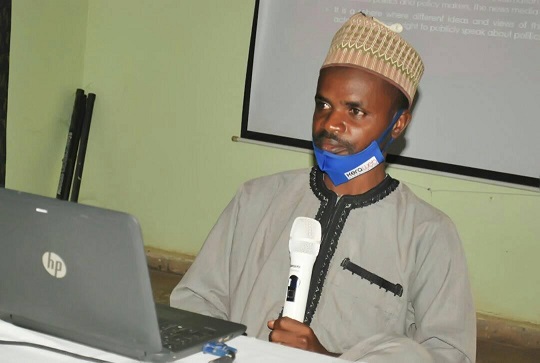
I joined the train of the Students’ Union right from day one at the university. My painstaking journey to the world of student activism has also fed me with sour, bitter and sweet experiences. Often, I feel nostalgic about the onerous struggles we underwent and the myriad of obstacles we encountered.

Being a passionate advocate for good governance, leadership and democracy, I was overwhelmingly compelled by nature to partake in the diversity-politics. My participation is solely to add my own quota and refine the university’s political atmosphere.

It is indeed sad seeing incompetent, incapable, self-centred and unpatriotic students take the leadership mantle and run the affairs of this vast student body.

Though my fundamental assignment is to study, acquire knowledge, experience, and skills, more importantly, earn my degree with colourful grades. Yet, I developed a burning desire to involve in the school’s extracurricular activities, more precisely- politics, intending to make sustainable reformation.

As a freshman, my initial preoccupation was to study and adequately understand my new environment. Being well-informed would assist me tremendously in making better decisions as events unfold.

Along the process, on many occasions, my parents called me to order and cautioned me to be steadfastly focused on my studies and not mingle with bad company. These cautionary words always crossed my mind, and I decided to keep myself away from anything that could interfere with my study.

Since then, I shunned anything apart from my study as the drumbeat of my parents’ cautionary remarks sounded louder and louder into my eardrums. This made my ambition of becoming a student leader a pipe dream, for naturally, I disliked betraying the parental confidence reposed in me.

As an obedient child, who always wanted to please his parents, I had never turned down every admonition. I just dispelled and dismissed anything that had nothing to do with my study. I attended classes, dug into research, engaged in group discussions and made the library my best friend. 

As the exam approached, I became consistent, determined and accelerated my efforts towards achieving my goal. Expectedly. I passed out with flying colours in my first-semester examination, as I made an “A” in the overall result.

Out of sheer joy, I presented the result to my parents to bless it, as they had been nursing the dream of seeing their son become a champion. 

After a short break from the first-semester examination, we all returned to our dear University, and academic and social activities began fully.

Students from various departments and faculties started expressing their interests in different positions, especially in the “Students’  Union Government” (SUG) and other associations like departmental, faculty and state associations.

Being sceptical and scared of my parent’s stance on not getting involved in school politics, I let my intention be latent and inexpressible. I was only debating whether to seek my dear parents’ approval.

Seeing how time flew, I just took the bull by the horn, shook off my phobia and sought permission to contest for a position that would not be infectious to my study.

 Surprisingly, my parents gave me the go-ahead to participate on the condition that I should not interfere with my academic performance. Having heard of this had gladdened my heart and brightened my spirit. 

Long story short, I vied for a senator representing my department in the “Students’ Representative Assembly (S.R.A), and I effortlessly made it. This assembly shared some things in common with the “National Assembly regarding greatness, corruption, unaccountability and many more.

Millions of funds were annually poured into the students’ union government account.

However, these funds were being mismanaged, misappropriated and stolen in collaboration with representatives of various departments.

The brainlessness and wickedness of the so-called student leaders tremendously moved me. This compelled me to resign and distance myself from the system. I recently retired from S.U.G to my state association, “The National Association of Kano State Students”. But you guess what? The Story was the same or even worse than that of S.U.G.

I contested for the presidential position under the bona fide umbrella of the association, and I won the election by a wider margin. To my dismay, under the watchful eyes of the students, some unscrupulous folks rubbed, snatched and ran with my mandate to one’s advantage.

Sadly, these corrupt individuals are the so-called leaders of tomorrow. Imagine an institution like a university where learning, character and discipline are inculcated. The university management should force such student-leaders to face punishment to deter others.

If we have not changed ourselves into better persons, we will continue to produce bad leaders in the country. Let’s desist from insulting, cursing, and condemning our leaders at all levels.

“Change begins with me”…….

Mubarak Shafiu wrote via mubarakshafiu596@gmail.com.

Life before graduation

By Aminat Adebesin

Getting into college after high school has been the main focus of students for decades to the extent that we mostly forget about life during college/university days and what might come after getting a degree. Universities offer everyone different opportunities like networking, housing, relationship, partying, etc. It all depends on the aspect you tend to grab. 

Before graduating, build enough networks to last you a lifetime, even to the coming generations, if possible. As they say, the university is the best stage for you to lay the foundation of “who you want to be” and “people you want to be with”.

Make use of the resources around you and better use them. No one cares whether you have anything to give, so tap into the resources in the school to build yourself up. Building yourself up should be your primary focus, which involves updating your CV with meaningful resources as much as possible. 

Getting a side hustle will ease life in school better than relying entirely on your sponsors, as there are some impromptu needs that you would love to take care of without disturbing them. No one can relate to the spending that comes with schooling unless you experience it yourself.

Attending university is about making memories and having the most beautiful experience possible. Building memories and networks have good and bad days, so make enough to last since they are all we have to show we have passed through a stage with some people.

Never let anything stop you from enjoying your school days. Learn and have fun sensibly.

Aminat Adebesin is a student of the Mass Communication dept, Bayero University, Kano.

Student Loans: Good or bad?

By Kasim Isa Muhammad

In 2016, Femi Gbajabiamila, the immediate former Speaker of the 9th House of Representatives, took a bold step by introducing a bill to address the financial challenges faced by students in higher education institutions nationwide. The proposed legislation, known as the Student Loan Act, sought to provide students with access to loans from the federal government to alleviate the burden of educational expenses. After its initial introduction, the bill was later reintroduced in 2019. However, when it resurfaced in 2022, it sparked a heated debate within the National Assembly, with members expressing divergent views.

The revival of the Act triggered intense discussions and disagreements among the members of the National Assembly. On one side, some legislators strongly supported the motion, citing the potential benefits of student loans for expanding access to education and reducing financial barriers. Proponents of the bill argued that it would provide equal opportunities for students from various socio-economic backgrounds, enabling them to pursue higher education without financial constraints.

Lo and behold! On June 12, 2023, President Bola Ahmed Tinubu signed the Student Loan Bill into law, demonstrating his administration’s commitment to strengthening the country’s educational sector.

Although concerns have been raised regarding the extent of student access to these loans, considering the persistently high rate of unemployment afflicting the country, One of the key considerations surrounding the implementation of the Student Loan Act is the number of students who will benefit from the financial assistance, as it remains unclear how many students will qualify for and receive loans.

However, some suggested that providing massive job opportunities for graduates would be a more practical approach than granting them loans. This sentiment is echoed by those who believe most graduates possess the skills but lack the capital to enhance their businesses. For instance, providing them N500,000 to start a business could be a viable alternative.

Whoa! The current provision stating that loan repayment begins two years after the completion of participation in the NYSC programme is being questioned. The government should reassess this strategy with graduates struggling to secure employment for up to eight years or longer. Given the prevailing circumstances, it is doubtful that the debt collectors will be able to repay their loans within such a short timeframe.

I was also taken aback when I discovered a particular element of the loan procedure: defaulters risk being fined N500,000 or even being incarcerated for up to two years. This revelation left me astounded and raised an essential question in my mind. Is it, not a grave injustice to punish our helpless teeming youths who are already battling to secure jobs with imprisonment simply because they cannot repay their loans?

The fundamental component of the loan process that exceedingly caught my attention is the requirement for students to provide at least two guarantors who must meet specific criteria, such as being a civil servant of at least level 12, a lawyer with at least ten years of post-call experience, a judicial officer, or a justice of the peace. This provision raises concerns, particularly for individuals residing in rural areas or those without any relatives in government positions who could serve as guarantors.

Since the loan programme intends to support the financially disadvantaged, the requirement of guarantors with specific professional backgrounds seems to create a barrier for those who lack connections with people in high positions in the government. 

Another facet of the Act that appears contradictory is the provision that a student’s family must have an income of less than N500,000 to qualify for the loan. This condition seems to limit the accessibility of the loan to only a select few people, raising questions about the effectiveness and inclusivity of the loan act.

Setting an income threshold may have been intended to target students with financial constraints, ensuring that those with the greatest financial need receive the necessary support. But the specific income limit of N500,000 may inadvertently exclude many students who could benefit from the loan.

Considering the drawbacks of the Loan Act, it becomes evident that the federal government should augment its efforts to fund tertiary institutions across the country. By so doing, education can become more affordable and accessible to a broader range of students.

Likewise, the recent increase in school fees at several institutions, including UNIMAID and BUK in the northern part of the country, highlights the pressing need for government intervention. While providing student loans is one possible solution, addressing the underlying issue of inadequate budgets for public universities is essential. By allocating sufficient funds to 109 public universities—50 federal and 59 state institutions—education can become more affordable for students.

The United Nations Educational, Scientific, and Cultural Organisation (UNESCO) recommended that developing nations give up to 15–20 per cent of their annual budget to public education. Nigeria’s allocation to the Education sector has not been meeting the UNESCO standard.

Dataphyte, a media research and data analytics organisation aiming to deploy data tools and technology for Nigeria’s socio-economic development, stated that the education budget analysis between 2016 and 2022 shows that the education sector has not received the recommended 15%.

This has indicated that the government at all levels should prioritise funding for education as a necessary step before implementing student loans. By addressing infrastructure deficiencies, making education affordable for underprivileged students, and providing needed resources, the government can create an environment where all students have equal opportunities to succeed. Investing in education will yield long-term benefits for people and society, fostering development and ensuring a brighter future for future generations.

Kasim Isa Muhammad is an investigative journalist who contributes as a full-time journalist at both Kanempress and The Citizen Reports newspapers.

The Daily Reality offers scholarship for BUK students

The Daily Reality (TDR) online newspaper management is pleased to announce the opening of its Endowment Fund Program and invites eligible and interested applicants to apply.

In light of the recent rise in registration fees at Bayero University, Kano (BUK), TDR plans to offer a grant to students who have had their articles published on the platform as a way of support.

Thus, if you are a BUK student and have your article published by TDR, please, contact us via contact@dailyrealityng.com or thedailyrealitynews@gmail.com. Please, submit proof of your student status at BUK, such as a copy of your ID or admission letter, along with the title of your article. The application closes on July 16, 2023, at 11:59 pm.

Please, join us in supporting young people’s education. Every contribution counts.

Sincerely yours,

TDR Editorial Team

UNIMAID must reconsider its stand

By Kasim Isa Muhammad

In a disheartening turn of events, the University of Maiduguri faces widespread criticism for its recent policy to bar students with unpaid fees from entering examination halls. This decision has sent shockwaves throughout the campus community, leaving many students dismayed. UNIMAID must reconsider its stance and adopt a more compassionate and supportive approach to ensure equal opportunities for all.

The consequences of this ill-conceived policy are far-reaching and detrimental. Numerous students, burdened with financial hardships, now face the distressing prospect of academic exclusion. This sudden disruption hampers their progress and undermines the core principles of inclusivity and equal opportunity that universities should uphold.

The impact of this decision extends beyond individual students, raising serious questions about the university’s commitment to fostering a conducive learning environment. Instead of supporting students facing financial difficulties, the punitive measures imposed exacerbate their struggles and perpetuate a cycle of inequality.

As a society, we must recognise the importance of empowering our students to overcome obstacles and pursue education as a fundamental right. Education is the foundation upon which individuals and communities thrive, contributing to societal progress and development. By impeding the academic advancement of these students, UNIMAID risks compromising its mission and tarnishing its reputation.

Under the administration of Professor Aliyu Shugaba, the University of Maiduguri must take immediate action to reconsider this misguided policy. A compassionate and supportive approach should be adopted, exploring alternative means of financial assistance to ensure no student is left behind. By proactively addressing students’ financial constraints, the university can uphold its commitment to inclusivity and guarantee equal opportunities for every aspiring mind to succeed.

Furthermore, stakeholders, including student unions and alumni, should raise their voices collectively to advocate for a fair and equitable resolution. Through the collaborative efforts of all concerned parties, we can foster an environment where students’ dreams can flourish, and the pursuit of knowledge remains unrestricted by financial barriers.

The current state of criminality and insecurity in our country further underscores the urgency of this matter. If these students are deprived of their education and forced to drop out of university, they may find themselves vulnerable to the temptations of criminal activities. Education has always been a powerful tool in shaping the future of our society, and denying students access to exams and their academic pursuits can have far-reaching consequences beyond the classroom.

In conclusion, we implore Professor Aliyu Shugaba to consider the profound impact of the ongoing economic downturn on the lives of our fellow citizens, particularly those from disadvantaged backgrounds. Many families are struggling with financial difficulties, making it challenging to meet their financial obligations promptly. We risk pushing students into an even more precarious situation by denying them the right to write their exams solely due to unpaid fees.

Kasim Isa Muhammad wrote from the Department of Mass Communication, University of Maiduguri.

Bayero University and the rising cost of registration fees

By Abbas Datti

Recently, the registration fees of most federal universities in Nigeria have risen dramatically, constituting a huge financial problem for students and their families.

The current fee increase places unfair constraints on low-income people, perpetuating inequality and promoting social inadequacies. More so, the exclusion is based on financial circumstances. As the registration fees continue to increase, the desirable dream of acquiring a university education slips further out of reach for many deserving individuals.

Therefore, as a bona fide resident of Kano and a great beneficiary of low and subsidised registration fees, I will use Bayero University as my case study. I am writing to appeal to Professor Sagir Adamu Abbas, the Vice Chancellor of Bayero University, Kano, regarding the current situation.

We know Sagir as someone with an exceptionally high calibre personality, humility and modest approach. This sets him far above others. Thus, we believe he will no doubt consider the attending consequences of this enormous increase.

We have been told that education is a fundamental right of every individual, and one must admit that it is the responsibility of educational institutions to provide a nurturing and good inclusive environment that fosters academic growth and development for all students. While one may comprehend the various needs associated with running a university and the alleged withdrawal of the government from funding universities, I would like to refer the Vice Chancellor back to the difficulties many students experienced in paying their respective registration fees since before the recent increase.

The ever-increasing cost of registration fees has become a significant deterrent for prospective students, leading to a potential decline in enrolment rates. The burden of high registration fees and other expenses, such as accommodation, and high living costs, is enormous on students and their various families. Potentially, it not only limits access to education but also jeopardises the overall tertiary education enrolments.

I passionately beseech the Vice Chancellor of Bayero University to consider the urgent need for a reduction in registration fees and initiate constructive consultations with the appropriate university stakeholders to find feasible solutions. This could involve exploring more alternative revenue generation, seeking additional funding from wealthy personalities and other intervention funds, or reallocating resources to ensure a well-rounded, balanced approach that benefits both the university and the students.

Abbas Datti wrote from Kano via abbasdatti448@gmail.com.