United States

Nigeria and the U.S.: Economic allies or political pawns?

By Haroon Aremu

After fierce contention between Vice President Kamala Harris and Donald Trump for the next occupant of the White House, with the latter emerging victorious, President Bola Ahmed Tinubu’s congratulatory message to the President-elect reignited intense discussion about the relationship between both nations. 

The president’s eagerness to strengthen ties between Nigeria and the United States raises questions. Has the partnership between both countries truly benefited Nigeria? Or was Mr. President’s call merely another political courtesy? These questions prompt us to examine the nature of Nigeria’s relationship with the U.S., its economic implications, and the broader political dynamics at play.

Nigeria and the U.S. have maintained a long-standing economic relationship. Nigeria is one of America’s top trading partners in Africa. In 2019, bilateral trade between the two nations exceeded $10 billion, and the U.S. remains Nigeria’s largest foreign investor, particularly in the oil and gas sector. 

However, Nigeria’s economy continues to struggle, primarily due to its overreliance on oil. With global shifts toward renewable energy, including in the U.S., Nigeria must diversify its economy to remain competitive and avoid being left behind.

Critics argue that while the U.S.-Nigeria partnership has brought some benefits, these advantages are not felt equally across the population. The wealth generated from trade and investment remains largely concentrated in the oil sector, leaving many Nigerians excluded from broader economic gains. The promise of diversification remains largely unfulfilled, and the average citizen continues to bear the brunt of the country’s dependence on oil.

The political dynamics of the U.S. and Nigeria share striking similarities, particularly in their recent elections. Both the 2020 U.S. election between Donald Trump and Joe Biden and Nigeria’s 2023 election, where Bola Tinubu contested mainly against Peter Obi and Atiku Abubakar, were “reportedly” marred by allegations of fraud, electoral manipulation, and identity politics. Just as many Americans questioned the integrity of their electoral process, Nigerians also faced concerns over corruption and electoral malpractice.

However, Nigeria can learn from the U.S. by adopting reforms that promote a certain level of transparency, credibility, and inclusiveness in its electoral system, as witnessed in 2024. While the U.S. system has its challenges, its efforts to ensure a fair and free election through checks and balances offer valuable lessons for Nigeria, which must work to eliminate corruption and build public trust in the electoral process. 

These reforms will help create an electoral system that reflects the people’s will and ensures fair participation. 

Transparency, accountability, and the active participation of civil society will be vital to improving Nigeria’s elections and ensuring the people’s will is genuinely reflected in government.

Nigeria’s economy faces pressing challenges, including over 30% inflation and a soaring unemployment rate. The country’s dependence on oil exports makes it vulnerable to global market fluctuations. 

The need for diversification has never been more urgent. Nigeria must expand into agriculture, technology, and manufacturing sectors to create a more sustainable and resilient economy.

While U.S.-Nigeria partnerships in agriculture, technology, and infrastructure development have created some jobs, the benefits are often limited. Without proper policies and management, the economic gains from these partnerships fail to reach those who need them most. Corruption hinders inclusive growth, with the wealth generated by foreign investments rarely benefiting the broader population.

The U.S. has provided substantial aid to Nigeria over the years, including over $125 million in COVID-19 assistance and various health initiatives, such as PEPFAR, which has improved healthcare access. 

Educational programs have also significantly impacted Nigerian schools, providing millions of books and teaching resources. However, critics argue that much of this aid addresses immediate needs without addressing the deeper, systemic issues that hinder long—term development, such as corruption, poor governance, and institutional inefficiency.

Though aid has brought short-term relief, Nigeria must push for real, lasting change. Relying on external assistance alone is not enough without addressing the root causes of poverty, unemployment, and economic instability. 

Development cannot be achieved through aid alone—it requires internal reforms and institutional strengthening.

To President Bola Ahmed Tinubu, Nigeria is at a critical juncture. It faces significant economic challenges, including the risk of recession, but the partnership with the United States offers an opportunity to stimulate growth, attract investment, and create jobs. 

While the World Bank acknowledges Nigeria’s efforts through macro-fiscal reforms like unifying exchange rates and phasing out gasoline subsidies, these changes must be carefully managed to minimize short-term negative impacts on vulnerable groups. 

Scaling up social protection programs, investing in critical sectors such as education, healthcare, and infrastructure, and promoting economic diversification into areas like agriculture, technology, and manufacturing are essential to reducing reliance on oil and ensuring long-term stability. 

The World Bank’s $2.25 billion funding through the RESET program can enhance revenue mobilization, improve governance, and foster private sector growth.

Nigeria must strengthen its dialogue with the U.S., showcase investment opportunities, and deepen cooperation on security. Moving forward, Nigeria must prioritize real, actionable partnerships that deliver sustainable benefits to its people, avoid actions akin to political fraternization, and focus on inclusive development. 

The world is watching, and now is the time for decisive action to secure Nigeria’s future.

Haroon Aremu Abiodun, author of Youth Service for National Stability: A Corpers’ Chronicle, advocates for national development, has received an award from PRNigeria Center, and is an investigative research journalist. He can be reached at exponentumera@gmail.com.

Can the Mandela Washington Fellowship Conference reshape Africa’s economic development?

By Lawal Dahiru Mamman 

Africa boasts an abundance of resources, with its vast landscapes from north to south and east to west teeming with diverse natural and mineral riches. These treasures have the potential to revolutionise the lives of its citizens. The continent’s human capital is equally impressive, harbouring 18.3%—approximately 1.5 billion—of the global population, making it the world’s second-most populous continent.

In truth, these natural resources gifted to Africa have not been fully harnessed for the benefit of its people. In some cases, resources in regions have ignited conflicts and even war, leaving people in bemoanable poverty and deprived of basic necessities like food and water, which are essential for human survival. This is in sharp contrast to the supposed envious rapid developments cities should be undergoing for urban and economic renaissance.

Ghana’s first president, Kwame Nkrumah, an enthusiastic advocate for the continent’s unity and independence, captured this problematic state of African nations when he said, “Africa is a paradox,” not without rhyme or reason but because “Her (Africa) earth is rich, yet the products that come from above and below the soil continue to enrich, not Africans predominantly.” 

Considering this age-long reality, leaders have repeatedly converged, deliberated, and mapped out strategies for development. Among many of these, Africa Agenda 2063 – a deliberate framework for socioeconomic transformation adopted by the African Union (AU) in 2015—and the African Continental Free Trade Area (AfCFTA)—an economic agreement aimed at creating a single unified market for Africa—remain the most talked about in the present. 

Little progress has been made with these well-thought-out agreements for nearly a decade. Recently, the Mandela Washington Fellowship Alumni Association of Nigeria (MWFAAN) announced its intention to host a ‘Pan-African Legacy Conference’ in the Federal Capital Territory (FCT), Abuja. 

The conference will commemorate the 10th anniversary of the Mandela Washington Fellowship, a brainchild of former United States President Barack Obama to enhance U.S.–Africa relations, particularly among young people. Since its inception, the fellowship has sent over 7,200 young Africans to the U.S. for six weeks of professional development and cultural exchange. 

Themed “Shaping Africa’s Future through the AfCFTA and Agenda 2063” aims to chart a path for the next 10 years, focusing on economic development in Africa. It will bring young people closer to decision-makers to bridge the gap between the African Continental Free Trade Area (AfCFTA) and youth entrepreneurs. It will also ensure access to trade opportunities across Africa and unite the government, nonprofit sector, and business leaders to create a comprehensive framework for sustainable development.

A ruckus has been raised in the fullness of time for youth to participate actively in governance for Africa’s development. This conference is a deliberate attempt by young people to engage policymakers and industry experts in solving our age-old predicament: failing to cater to our rapidly growing population.

Could this gathering sew the Gordian knot, freeing Africa from the shackles of stagnation and retrogression and guiding her towards prosperity? Tempus Omnia Revelat—the future holds the answer. 

As Kwame Nkuruma astutely observed, “It is clear that we must find an African solution to our problems and that this can only be found in African unity. Divided, we are weak; united, Africa could become one of the greatest forces for good in the world.”

If the Mandela Washington Fellowship Alumni Pan-African Legacy Conference will be a point of unity that proffers solutions and moves us towards economic liberation, so be it.

Lawal Dahiru Mamman writes from Abuja and can be reached via dahirulawal90@gmail.com.

Israel-Hamas war: Has diplomacy failed?

By Hajara Abdullahi

The long reoccurring war between Israel and Palestine spans decades which can be traced to the Balfour Declaration of 1917  that led to the creation of a national home in Palestine for the Jewish people fleeing the Nazi Holocaust in Europe. After the creation of the zionist state in 1948, the Arab states went to war with Israel, which led to the first Nakba (Catastrophe) that led to the killing of hundreds of Palestinians and thousands of others fled their homes. Israel won the war, and the reality surfaced that the Zionist state had come to stay, especially with unwavering support from allies like the US, France, Germany and other European countries.

Since the creation of Israel, Palestinians have been subjected to the worst form of apartheid and dehumanisation, as well as the forceful annexation of their lands to establish Jewish settlements, which the U.N. have described as illegal under international law. Peace accords and diplomatic efforts have done little to address this decade-long conflict from Camp David to Oslo.

On October 7 2023, Hamas launched an unprecedented attack on Israel that led to the loss of about 1,139 lives, while about 250 were kidnapped, according to the BBC. This attack sparked rage worldwide, considering the strong support Israel enjoys from powerful allies like the U S and the U.K. This attack had led to the launch of a full-scale wall on the besieged Gaza Strip that has claimed the lives of at least 45,000 people, and almost 100,000 have been injured. It has also led to the displacement of nearly the entire population of 2.3 million, a hunger crisis and a genocide case at the World Court. Even the occupied West Bank is not spared, as IDF have carried out airstrikes and shellings that have killed civilians and displaced thousands. The U.N. has described 2024 as the deadliest year for Palestinians in Gaza, with the IDF offensive reducing the enclave to rubble.

Since the outbreak of the conflict, The U.N., E.U., U.S. and other world leaders have condemned the Hamas act and called for restraint to avoid escalation. Diplomatic efforts have been put in place after months of fighting with Iran-backed resistant groups Hezbollah and Houthi launching solidarity attacks against Israel. On October 18 2023, U.S. President Joe Biden visited Tel Aviv to make a peace deal between the warring parties. Similarly, the G7 leaders also met in Tokyo in June to push forward for a ceasefire to avoid a wider regional conflict.

On May 31, U.S. President Joe Biden announced a three-phase proposal to the U.N. Security Council to end the war in the Gaza Strip. He called, first, for a temporary ceasefire tied to partial withdrawals of Israeli forces, limited hostage exchanges, and an influx of aid. Negotiations would then begin and, if successful, lead to the second phase, involving a permanent cessation of hostilities tied to total withdrawals and complete hostage exchanges. The final phase would see reconstruction efforts being set up, but Israel’s refusal to accept the conditions witnessing the withdrawal of Israeli troops from Gaza a total setback amidst protests by families whose relatives are held as hostages in Gaza. However, the ceasefire plan was short-lived when Israel, with the assistance of intelligence support from the U.S., launched a deadly attack that led to the killing of at least 200 Palestinians while  4 Israeli captives held in Nuseirat camp in Central Gaza were rescued, according to the BBC.

Hopes were lit when U.S. Secretary of State Anthony Blinken, in his 11th trip to the Middle East on August 15 to avert a wider conflict after the killing of top Hamas leader by Israel, told a gathering of reporters while departing Tel Aviv that the ball is in the court of Hamas to accept the conditions as Israel has accepted the bridging proposal for the ceasefire to work. Unfortunately, Hamas said it won’t be part of a new proposal, saying it will only accept the initial proposal put forward by President Biden.

While Israeli Prime Minister Benjamin Netanyahu vehemently opposes the release of Palestinian prisoners held in Israel in exchange for captives held in Gaza, the withdrawal of IDF from Gaza while Hamas has not been dismantled, as well as leaving the strategic Philadelphi corridor  ditched the last hope of the ceasefire which two key mediators Egypt and Qatar have been working on.

Marwan Bishara, a senior political analyst with Aljazeera, said, “Both parties understand that they cannot achieve in diplomacy what they couldn’t achieve in war” This implies that the Israelis won’t get the captives back on a platter of gold, neither would Hamas get Gaza free of Israeli soldiers free of charge.

The  Wall Street Journal, in an exclusive article it published on September 20 2024, said it’s unlikely for a ceasefire to be reached in Gaza, citing top-level officials in the White House, State Department and Pentagon without naming them while explaining two obstacles will make it difficult: Israel’s demand to keep forces in the Philadelphi corridor between Gaza and Egypt and the specifics of an exchange of Israeli hostages for Palestinian prisoners held by Israel. In the recently concluded 79th session of the UNGA, world leaders called for restraint in Lebanon as tension heightened.

In the end, diplomatic efforts may produce little or no results because, as Tim Marshall explained in his book Prisoners of Geography, the map of the region is being redrawn in blood, and the current fault lines emerged from the artificial lines drawn by Europe. Therefore, the U.N., U.S, Arab League and other world leaders must work hand in hand for a two-state solution agreed upon in the Oslo Accord of 1993, as well as press Israel and Hamas to accept the conditions laid down for the ceasefire to work which will ensure a peaceful coexistence in the Middle East region as well as prevent a wider regional conflict the region risk facing with the recent clash between Hezbollah and Israel on the Lebanese southern border.

Hajara Abdullahi wrote from the Dept of Mass Communication, Bayero University Kano.

The race to political power amidst serial corruption

By Kabir Fagge Ali

Throughout its history, Nigeria has allowed political figures who have failed to meet public expectations to remain in or return to positions of power. This trend of political recycling has not only stifled progress but also perpetuated a cycle of inefficiency and corruption.

Nigeria ranks among the most corrupt countries globally, consistently near the bottom of the Transparency International Corruption Perceptions Index (CPI). In 2023, the country was ranked 145 out of 180 countries, with a score of 25 out of 100, reflecting minimal improvement from previous years. The country’s persistent corruption is deeply rooted in its political culture, where high-profile politicians frequently escape serious consequences for their actions. 

For instance, despite numerous corruption allegations, former officials often receive minimal penalties or are pardoned altogether, as seen with former governors pardoned by former President Muhammadu Buhari.

Over the years, the Nigerian government has established institutions like the Economic and Financial Crimes Commission (EFCC) and the Independent Corrupt Practices and Other Related Offences Commission (ICPC) to combat corruption. However, these bodies often face significant challenges, including political interference and inadequate resources, which hinder their effectiveness.

Since gaining independence in 1960, Nigeria has seen a recurrent pattern of political leaders re-emerging in positions of power despite their previous failures. This trend spans various administrations and political parties, often characterised by a lack of accountability and transparency. One prominent example is the Senate leadership. David Mark served as President of the Senate from 2007 to 2015. 

Despite controversies surrounding his tenure, including allegations of misappropriation of funds and lack of transparency, often re-emerged in various political capacities. Similarly, Bukola Saraki, who served as Senate President from 2015 to 2019, faced numerous allegations of corruption and asset declaration discrepancies. Despite these issues, he continued to wield considerable influence in Nigerian politics, running for the presidency and remaining active in politics.

Similarly, state governors in Nigeria have also exemplified this trend. James Ibori, the former Governor of Delta State (1999-2007), was convicted of corruption and money laundering. Despite his conviction and imprisonment, he remains influential in Nigerian politics, with significant support and influence within his home state and beyond. 

Another example is Diepreye Alamieyeseigha, the former Governor of Bayelsa State (1999-2005), who was impeached and later convicted of corruption. Despite this, he remained an influential political figure until his death, and his family remains politically active.

These cases highlight how political figures, even after being held accountable for significant misconduct, continue to wield influence and often return to positions of power.

This trend is not limited to high-ranking officials. Ministers and other political appointees in Nigeria also exhibit this pattern. For instance, Diezani Alison-Madueke, the former Minister of Petroleum Resources, was implicated in numerous corruption scandals. Despite being under investigation and facing charges, she remains a prominent figure, and her case highlights the challenges of holding high-ranking officials accountable.

The re-emergence of such figures in the political scenery perpetuates a cycle of inefficiency and corruption, preventing new and potentially more effective leaders from taking the helm.

On the contrary, in stark contrast to Nigeria and many African nations, political accountability in the United States often results in swift removal from office for leaders who fail to meet public expectations or are involved in scandals.

For example, Rod Blagojevich, the former Governor of Illinois, was impeached and removed from office in 2009 after being charged with corruption, including attempting to sell a Senate seat. His removal demonstrated the U.S. system’s ability to hold officials accountable.

Similarly, Anthony Weiner, the former U.S. Representative, resigned in 2011 after a scandal involving inappropriate online behaviour. Despite attempts to return to politics, his repeated misconduct prevented a successful comeback. 

Another U.S. Representative, Katie Hill, resigned in 2019 amid allegations of inappropriate relationships with staffers and other ethical concerns. These resignations highlight the high accountability standards for U.S. public officials.

The recurrent emergence of previously unsuccessful leaders in Nigeria has major implications.

One major consequence is the stagnation of progress. Recycled leaders often bring back old policies and approaches that have already proven ineffective, hindering progress and innovation. This stagnation is evident in various sectors, including the economy, education, and infrastructure development and even the introduction of our dear nation’s old national anthem. The lack of new and dynamic leadership prevents implementing fresh ideas and solutions that could drive the country forward.

Additionally, another life-threatening implication is the erosion of public trust. The public’s faith in the political system diminishes when leaders who have failed to deliver on their promises can return to power. This erosion of trust leads to apathy and disengagement among the electorate, further weakening the democratic process. When citizens feel their votes do not lead to meaningful change, they are less likely to participate in elections and other civic activities, perpetuating a cycle of ineffective governance.

Furthermore, the preservation of corruption is another significant consequence of political recycling. Leaders who have previously engaged in corrupt practices will likely continue such behaviours, further entrenching corruption within the political system.

This persistent corruption undermines the rule of law, hampers economic development, and exacerbates social inequalities. The lack of accountability for corrupt leaders creates an environment where corrupt practices are normalised and even expected, making it difficult to establish a culture of integrity and transparency in governance.

Consequently, to break this cycle of political recycling and foster more accountable and effective leadership, Nigeria should consider several measures. Strengthening democratic institutions is crucial. Enhancing the independence and capacity of institutions like the judiciary, electoral bodies, and anti-corruption agencies can help ensure that leaders are held accountable for their actions.

The leadership should ensure that these institutions are empowered to investigate and prosecute corruption and other misconduct without political interference.

Additionally, promoting political accountability is another essential step. Implementing mechanisms to hold leaders accountable for their actions and ensuring transparency in governance can help restore public trust in the political system. This includes enacting and enforcing laws that prevent individuals with a history of corruption and misconduct from holding public office. Also, the media and civil society organisations play a vital role in holding leaders accountable by investigating and reporting corruption and other issues to the general public. 

Moreover, encouraging political renewal is also necessary to foster effective leadership. Creating opportunities for new leaders to emerge by promoting political education and participation, especially among the youth and marginalised groups, can help bring fresh perspectives and innovative solutions to governance. Of course, this includes investing in civic education programs that teach young people about their rights and responsibilities as citizens and encouraging them to participate in the political process.

Ultimately, political recycling in Nigeria has hindered the country’s development and eroded public trust in governance. By learning from global examples like the United States, where political accountability is enforced more rigorously, Nigeria can adopt strategies to ensure a more accountable and effective political leadership.

This, in turn, would foster a more prosperous and stable nation. The journey towards breaking the cycle of political recycling will not be easy. Still, with concerted efforts and a commitment to accountability and transparency, Nigeria can pave the way for a brighter future.

Kabir Fagge Ali is a Youth Corps Member with PR Nigeria centre and wrote via faggekabir29@gmail.com.

Kamala Harris’s race and the futility of one’s true identity 

By Sa’adatu Aliyu 

As the US election approaches and President Joe Biden steps aside for Vice-President Kamala Harris to run as president in 2024, questions swirl within both White and Black communities about Harris’s recent declaration as a Black woman. Despite her long-standing identification as a woman of Indian and Jamaican descent, Harris has only recently begun associating herself with the Black community. However, this sudden shift doesn’t surprise me, as politicians often use false identities to win popular support.

Can one simply claim a new identity without shared experiences and cultural heritage? Well, in the woke 21st century, perhaps. Is Harris’s declaration a genuine attempt to connect with the Black community or a calculated move to garner support? The timing of her proclamation, coinciding with her presidential bid, only fuels doubts about her authenticity.

But honestly, I am not in the least surprised by this sudden cross-dressing because it’s not uncommon to see politicians taking on false identities and doing strange things just to win popular support among the people, which will serve them during elections. I mean, among many others, I recall Joe Biden reciting a prophetic Hadith during the 2020 elections, attempting to prove his commitment to Muslim interests. This tactic is a familiar ploy to rally specific communities and secure votes. 

However, he was only using the strategy that every politician employs to rally Muslim communities to vote for him, and some bought it. Gullible and naive as they were, they had thought he was the man who wouldn’t see colour, let alone religion. However, Biden’s term turned out to be one of the regimes in which Palestinians suffered heavy persecution at the hands of his Israeli allies.

Now, I fail to understand the reason behind former President Donald Trump and the Republican Presidential candidate’s surprise that a dogged opponent is simply employing a political strategy to win the sympathy of the Black community, who, to a large extent, may determine the outcome of the US election. This is similar to how Trump capitalises on white supremacy and “America First” idiosyncrasies. Thus, it’s surprising that anyone is shocked when someone magically signs up to be a Black woman overnight as if we do not live in a world where our mere utterance and public declaration of being something automatically makes us that thing. I mean, take gender, for example.

I was born a boy, but I felt and wanted to be a girl, so I showed up and simply made a formal declaration. Isn’t gender, after all, a social construct? Perhaps Vice President Harris thought it was enough to be Black by merely making an official declaration of being Black, even though she’d always flaunted her Indian and Jamaican heritage with pride. And I don’t blame her. If Kamala Harris one day wakes up and says, “I am a Black woman and belong in the Black community,” so be it. She could just as easily choose to argue that she’s a white woman by simply being married to a white man or by saying she’s white. It’s easy to be a chameleon these days, changing into the colour that best fits our situation to achieve our desires.

With reference to Mrs Harris, who suddenly feels and declares herself a Black woman, and in relation to Simone de Beauvoir’s notion in her famous feminist book The Second Sex that “One is not born but becomes a woman,” perhaps it’s time to put the issue of race behind us. Let’s consider race, like gender, a social construct and integrate everyone irrespective of colour, as long as they feel and make the formal proclamation: “Although I was born Black, I feel I am white, and therefore, I am what I think I am.” Just like transgender people, who are increasingly being accepted into their desired gender community, we should similarly accept individuals who self-identify with a particular race. After all, we’re all one.

To that effect, if race is perceived as a social construct, then one is not born black but becomes black, and one is not born white but becomes white.

 Let us remember that for several decades, Black people have struggled for full acceptance into the world of white people. Some have straightened their hair with hot irons and a range of relaxers, worn contact lenses to have the “bluest eyes” to be accepted “under Western eyes”, and gone as far as bleaching their skin. However, this has not made them white nor granted them full acceptance into the white community because, despite all these efforts to change into somebody else, they are simply not that person.

Just because I say I am a doctor and put on a doctor’s uniform, parading myself as one, does not make me a doctor when I am a writer. The pen and scalpel are not interchangeable just because I say they are. And if, as a writer, I insist on performing the duties of a doctor, we’ll sure be heading for disaster. 

Therefore, if one is not born but becomes a woman, how about we stop seeing colour? How about we think of race as a social construct, too, and integrate everyone into one big, happy, peaceful family? Why is race still an issue? If some people recognise gender as a social construct, why haven’t the same group of people wholly recognised race as a social construct?

Perhaps it’s because cross-dressing doesn’t change certain realities. 

Sa’adatu Aliyu is a writer from Zaria. She is pursuing an M.A. in Literature at Ahmadu Bello University and lecturing at the university’s Distance Learning Centre. Her writing interests include prose fiction and international politics.

Binance’s conflict with Nigerian authorities and troubles worldwide

By Haruna Chiroma

Binance is widely regarded as the largest cryptocurrency platform globally, facilitating billions of dollars in transactions daily. As of March 3 2024, it had over 179 million registered users across 100 countries and supported over 30 languages. Despite its prominence, this emerging financial institution operates with relatively lax oversight from financial regulatory agencies, unlike traditional financial institutions. This lack of stringent policing renders the platform vulnerable to illicit transactions. 

However, Binance also plays a significant role in fostering economic growth and providing earning opportunities for both digital natives and digital immigrants. Established in 2017, Binance rapidly gained widespread acceptance, particularly among digital natives, spreading rapidly like wildfire. 

Binance has encountered significant resistance from governments worldwide, citing concerns over its lack of transparency and regulatory issues. Numerous countries have completely banned Binance from their cyberspace, prohibiting transactions within their borders. These countries include China, Malaysia, Italy, Vietnam, the Philippines, Thailand, Australia, and several others. Despite all this, Binance is boldly embracing the wave of AI to stay competitive in the cryptocurrency market. 

The company has incorporated an AI token known as “Sleepless AI” into its platform, which is available on the Binance Launchpool. A visit to the Binance website indicates a listing of the top AI crypto tokens according to market capitalisation, with a market cap of over $7 billion and over $1.3 billion in trading volumes. 

Despite being banned from Japan, in 2022, Binance made determined efforts to re-enter the Japanese crypto market by expressing interest in acquiring Sakura, a Japanese crypto company. In another development, Binance sought a crypto license in Germany to facilitate transactions within the country’s crypto market, aiming to expand its presence across Europe. 

However, the crypto giant encountered regulatory hurdles from German financial regulators. In a prompt response, in March 2023, Binance announced the withdrawal of its license application. Following sanctions imposed on Iran, sidelining the country from traditional financial systems, Iran turned to Binance as an alternative gateway to financial institutions. Blockchain data reveals that between 2018 and 2022, Binance facilitated over $8 billion worth of transactions for Iranian firms. 

Banning Binance from a country does not necessarily prevent Binance customers from finding alternative means to conduct transactions within the banned country’s crypto market. The Wall Street Journal, published on August 2, 2022, stated that Binance successfully facilitated over $90 billion in transactions in one month within China’s crypto market. 

In the current digital age, blocking access to Binance is unlikely to be effective. Users can easily bypass restrictions by installing a Virtual Private Network (VPN) with a fleet of thousands of servers across many countries, choosing a server in a country where Binance operates, and accessing the platform with minimal effort. 

In 2021, Binance encountered regulatory challenges in Thailand, with the country’s financial authorities accusing the platform of operating without a license. This led to filing a criminal complaint against Binance with the Thai police. Later, Binance was finally banned from operations in Thailand.

Binance finds itself entangled in a legal dispute with US authorities, facing accusations of violating federal money laundering laws by neglecting to report more than 100,000 transactions deemed suspicious. Prosecutors argue that Binance serves as a prime environment for ransomware transactions (a cyberattack method that denies victims access to their computers until a specified ransom is paid via payment systems) and the exchange of payments for child abuse materials. In what appears to be an effort to resolve the matter out of court, Binance has opted for a plea bargain with US authorities. 

Under the terms of that agreement, Binance agreed to pay the US authorities a substantial fine of over $4.3 billion ($1.81 billion for criminal acts and forfeiture of $2.52 billion). Additionally, Binance plead guilty to sponsoring terrorism and involvement in money laundering. As part of the agreement, Binance has committed to operating within the legal framework and implementing monitoring mechanisms, as reported by Reuters on February 24, 2024. 

On February 24, 2013, NPR reported that the US Securities and Exchange Commission and Commodity Futures Trading Commission filed a lawsuit against Binance in court. The lawsuit was based on the absence of regulatory oversight, highlighting Binance’s operation without stringent policing akin to traditional financial institutions, artificially inflating trade volumes, and diversion of customer funds. 

Currently, Binance is engaged in a contentious dispute with the Nigerian government, which has resulted in the government blocking access to the platform. The government reportedly fined Binance a substantial sum of $10 billion, though the circumstances surrounding the fine are controversial. Users can circumvent the block by utilising a VPN, as previously discussed. Therefore, legalising and regulating the platform would be more prudent rather than the Nigerian government potentially losing billions in revenue through the backdoor. 

Given that Binance handles transactions in billions of dollars, I argue that it would be unwise to discard the benefits along with the drawbacks (“throwing a baby with the bath water”). Particularly in light of the high levels of unemployment among youths and the prevailing hardships in the country, many young people have discovered opportunities in the world of Binance. Therefore, rather than outright banning Binance from Nigeria, integrating it into its legal framework may yield better outcomes. 

As a short-term solution, Binance should be permitted to continue its operations in Nigeria under stringent control mechanisms established within the country’s legal framework, with critical oversight from entities such as the Central Bank of Nigeria (CBN), Economic and Financial Crimes Commission (EFCC), and other relevant authorities. 

For a long-term strategy, the CBN and EFCC, in collaboration with the Cybersecurity Department of the Federal University of Technology, Minna, should undertake high-impact research to be sponsored by the CBN and EFCC to develop a robust framework for regulating cryptocurrency operations in Nigeria. This framework should balance Nigeria’s legal system and economic growth objectives. 

Emphasising research and development is a globally recognised best practice for addressing societal challenges instead of relying solely on inter-ministerial committees, which may lack the necessary technical expertise, resources and research skills. 

Haruna Chiroma, Ph.D. Artificial Intelligence, wrote from the University of Hafr Al Batin, Saudi Arabia, via freedonchi@yahoo.com.

Middle East, Israel targeted assassinations and the increasing risk of all-out war 

By Ismail Obansa Nimah

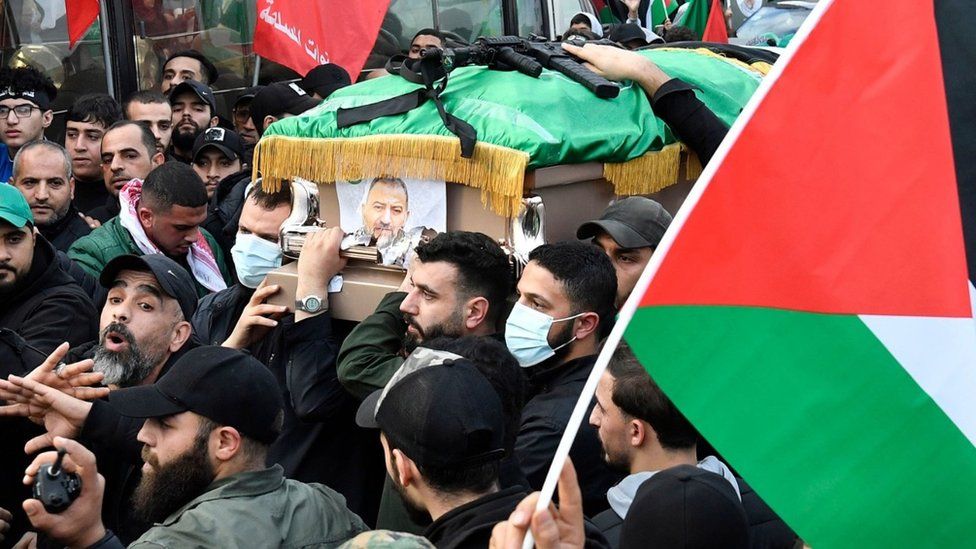
Yesterday again saw another targeted Israeli assassination of a high-profile leader of the Palestinian resistance axis, Hamas deputy leader Saleh Al Arouri. The assassination by Israel took place in the heart of Beirut, the capital of Lebanon, at about 5:45 pm Local time. It comes roughly 24 hours before the 4th anniversary of the assassination of Qassem Soleimani, former Commander of Iran’s elite Quds brigades of the Iranian Revolutionary Guard corps.

On the 3rd of January, 2020, turmoil was yet again unleashed in the Middle East when the United States of America (USA), in collaboration with her Israeli ally, assassinated Major-General Qassem Soleimani, a man who doubled as the commander of the Iranian Elite Revolutionary Quds Force and the second most potent/influential man in Iran after Ayatollah Al-Khamenei (Iran’s supreme leader).

Citing the preservation of the interest and national security of America, the United States launched a drone strike at a convoy conveying Soleimani and Iraqi militia leader Abu Mahdi Al-Muhandis, killing them both and eight others near Baghdad airport in Iraq.

The conflict between the US and Iran dates as far back as the 1970s, and as almost always, the killing of Soleimani immediately rattled up tensions, bringing the US and Iran to the brink of war. According to some Iranian sources, General Soleimani was on an important mission to deliver a message to the Iraqi prime minister about its gulf neighbours and reconciliatory steps taken between Iran and its neighbours, especially its regional rival Saudi Arabia, suggesting that Riyadh may have leaked intelligence to Washington.

The killing of Soleimani was met with shock, worldwide condemnation and fierce declarations of avenge from Iranian officials and Iranians, generally with the supreme leader, President and military commanders/leaders pledging a harsh retaliation. Following the killing, massive protests and mourning broke out in the cities of Iran and Iraq, with hundreds of thousands of Iranians pouring out into the streets, mourning and chanting their desires for revenge.

On January 5th, 2020, the remains of General Soleimani and the other Iranians killed alongside him were flown into Iran amidst a sea of millions of mourners. The funeral and national procession of the Iranian legend was planned for the 7th of January, at his home town in ‘Kerman’, but an ensuing stampede due to massive crowds led to the death of at least 56 people and injuring 213 people, resulting in the immediate postponement of the burial.

In the early hours of the 5th day after Soleimani’s assassination, on the 8th of January 2020, Iran retaliated and launched over a dozen ballistic missiles on two US bases in Iraq. The attack by Iran injured over 100 US soldiers, with most of them reportedly suffering traumatic brain injuries, and also resulted in the destruction of important US assets in the bases. Tensions immediately skyrocketed following the Iranian counterattack, with oil prices rising to levels not seen in 3 months and countries including the US ordering their citizens to evacuate and leave Iraq and its environments, as well as airliners being told to avoid the airspace over Iran and Iraq.

As the world woke up to the news of an Iranian response, so did the news of the downing of Ukrainian International Airlines flight 752, killing all 176 on board. The Iranian Revolutionary Guard Corps placed its defences on high alert following the counterattack, allowing its surface-to-air missile defence system to mistakenly shoot down the Kyiv-bound airliner shortly after take-off from Tehran. Following damages to the US bases and injuries to personnel, President Trump and the Pentagon ordered the immediate deployment of more US military assets to the Gulf region. Consequently, an airstrike on Iran that would be called off at the last minute by President Trump was ordered.

 Iraq, caught in a conflict between the world’s superpower and a Middle Eastern regional power, became destabilised. With the outright violations of its national sovereignty by a supposed ally, protest broke out with both ordinary Iraqis and the Iraqi parliament calling for the expulsion of American troops and other foreign forces from its soil. For a lot of them (Iraqis), the horrors and consequences of decades of war can still very much be remembered and felt, and they, by all means, want to be left out of another regional conflict.

Four years on, tensions remain at a ceiling level between Iran and the US/its Middle Eastern allies, particularly Israel. Israel’s brutal genocidal war on Gaza has killed more than 22,000 Palestinians, as well as more Israeli-targeted killings of Iranian officials. It’s regional allies with American support, including Mohsen Fakhrizadeh; it is yet to be fully known how close an all-out war is between Iran and American-backed forces within the region, particularly Israel.  Although so many structures have been re-named after Soleimani, the void created in the hearts of Iranians, the Palestinian resistance axis and the Islamic Republic of Iran by his death will take a long time to heal and will require more than an anniversary celebration for the already sanction crippled nation.

Ismail Obansa Nimah wrote via nimah013@gmail.com.

Rethinking my legacy: How our local tradition wowed Western intellectuals at an Ivy League University

By Umar Sheikh Tahir (Bauchi)

Columbia is an Ivy League University, one of the eight most prestigious institutions in the United States of America. Ph.D. students at this university undergo two years of coursework. One of the classes I took was Islam, Knowledge and Forms, which a visiting professor from Germany taught. Part of the course is a library visit to the exhibitions section under the project of Islamic Sciences, Science, Nature, and Beauty: Harmony and Cosmological Perspectives in Islamic Science (2022) at Butler Library, the largest library of Columbia University with millions of resources. 

The exhibition contained objects, images, rare manuscripts, and other learning materials. Two materials, among others, became the most astonishing factors in the exhibition: one of them is a rare copy of the Holy Quran, and the second is a locally handmade wooden tablet (Allo).   

The instructor asked everyone to talk about any material in the exhibition. Students gave their feedback on the experiences passionately; different things wowed everyone. When it came to my turn as someone who had known these items since childhood in my father’s private library, where we sneaked as children, which housed similar treasures. To us, these are the most useful items in his library as we do not read books; we only view images and magazines, such things that are not viewed as essential to the readers. Then, I shared my familiarity with these items, telling them I was exposed to most of the exhibited materials from my upbringing in Northern Nigeria, including “rare manuscripts” of the Quran. 

The Quran displayed was a giant copy of the original Uthmanic Quran, denoted to the third Caliphate of the Muslim nations who reigned (644/23H–656/35H). It was so amazing to all of us. As for me, the Quran is the most frequently read book in my entire life, and to their surprise, I can read this copy fluently without diacritical marks. I highlighted that memorising the holy Quran, even without understanding Arabic, is common in Northern Nigeria.  Most of my fellows never knew that sometimes people memorise it at an early age. I did not shock them with that, as I am one of them. 

In the second incident, Professor Brinkley Messick invited me to speak in his class on Islamic Shariah Law as someone with experience with an Islamic Madrasa background and went to Azhar University in Egypt. The theme of the class is the Islamic madrasa. He is interested in the Islamic tradition, as evident from the cover of his book, “Calligraphic State.” 

Allo

The Professor brought Allo a wooden tablet to the class and circulated it to students. Everyone was looking at it with surprise. I named it to them as a personal tablet for inscription and memorisation of the holy Quran, and the students asked for more details. I said we write verses from the holy Quran for memorisation after repeating it several times; not everyone understands how that works, except those with Islamic background. However, when I told them when we wash the script, we drink it, everyone was left with open mouths, surprising our embodiment of the holy book, including the professor. They could not process as modernised individuals with high sensitivity to germs and bacteria. Again, as I told our class last semester, this is very common in Northern Nigeria. 

Coincidently, one of the attendees from a Saudi background added that people used some scripts for Talismite and protection from Djinn (Ruqyā in Arabic or Ruqiyya in Hausa) by reciting some verses in water. I told her this is true; we have that part in our culture too, but the biggest part is that we drink washed script for the embodiment and show respect for not letting a drop of that water on the ground as a sacred word. As kids, we were told that whatever verses we memorise from the holy Quran and drink will stay in our hearts for a long time.

In reference to that, American Professor of Islam in Africa Rudolph Ware published his book Walking Quran on the Madrasa system in West Africa. He referred to those Quranic students’ embodiment as the Walking Quran in relation to the narration of the Hadith reported in the books of Hadith such as Ṣaḥīḥ Muslim; Aisha was asked about Prophet Muhammad’s PBUH character, and she said he was a Walking Quran.  

Our cultural legacy, often undervalued by some of us in our region, gained recognition at Ivy League institutions. Those people appreciate a centuries-old Quranic educational tradition or Almajiri system and show their respect to our subregion. Even our way of drinking the washed script of the Quran mesmerised them. 

A professor dedicated his projects to studying a school system called Daara schools in Senegambia or the Tsangaya schools in Northern Nigeria, making it evident that our legacy is an astonishing point to those communities. Then, as indigenous Africans who were introduced to the colonial system of Education less than a century ago in Northern Nigeria, we should be more proud of our system by appreciating those communities who choose to preserve it, as they make our subregion a central point of high intellectual conversation around the world. 

We should not deny our legacy by stigmatising the Almajiri system of education. Instead, we should support it and create a way of modernising it to empower and preserve our centuries-old legacy.  Whoever shows kindness to the Quran and its reciters will receive people’s applauses in this life, including Western intellectuals, and God’s reward in the hereafter. Thanks to those state governments in Northern Nigeria who support and recognise this system of education.

Umar Sheikh Tahir is a PhD student at Columbia University, New York, USA. He can be reached via ust2102@columbia.edu.

Arewa24 and the globalisation train

By Zailani Bappa

The satellite television, Arewa24, with headquarters in Kano, will continue to be a pain for northerners who cherish their heritage. It is a necessary evil and a bad influence on the teeming youth in a predominantly conservative society. But, it is established to achieve a purpose and do that efficiently and quickly.

I learned the medium was established by the US government through one of its established NGOs some nine years ago. Amidst the devastating experience of Boko Haram in this part of the country, several studies have indicated to the West that the passion for Islamic values in the North and the teeming followership of a springing set of radical Salafists in the region is the major cause of such developing activism….or should I say…terrorism.

Hence, the decision to spend the hard-earned tax-payers money of the American people to build an entertainment television station in the heart of conservative Kano (after rejecting Kaduna and Abuja as a base for the new medium). I am sure you know that when these guys give you a dime worth of something with the right hand, they are sure enough to take back something worth a dollar from you with the left hand.

So, the Arewa 24 came into light with a bang…..good hands employed mostly popular actors from the entertainment industry as pioneer staff, with good pay for them to work optimally and to stay, very enticing and entertaining programmes with fresh breath of air and of course, all programmes beamed to us with the best of technology one can find around here. Significantly, most programmes target women and the young.

Free of charge, we were entertained until the station became a menu that came to every table in the house. Then came the next stage of the plan (as I see it). It was sold out to a very rich and powerful Nigerian who has the capacity and the passion to run it according to both the quality of content and the pursuit of the target.

Gradually, the programmes started becoming more daring in their approach to change. There is mild and uncoordinated resistance here and there, but the medium has a strong advisory consultant. They evade or outrightly neutralise every challenge from angry quarters at times. And they will continue to do so.

I firmly believe that the Arewa 24 debut, acceptability, prowess, and popularity (often challenged with visionless resistance) are only the tip of the iceberg. This is an era of globalisation. It is a moving train we cannot stop. It will reach its destination, ultimately. Our resistance to it will continue to be a massage to its global ego.

So, for those who understand this phenomenon, just pray, stay calm and do your own thing according to your conscience. Teach your young ones to value your values the way you can, very hard and consistently; then, leave the rest to God. This fight is just too big for us……..for every one of us.

Zailani Bappa wrote from Bauchi State via zailanbappa@gmail.com.

Teens, social media and mental health

By Muhsin Ibrahim

Social media has a double-edged function. It can uplift you or do the exact opposite. It largely depends on the people and pages you interact with. Worried about their teens’ mental health, Utah became the first US state to regulate teen social media access this week.

According to a BBC report, “under the measures enacted on Thursday, a parent or guardian’s explicit consent will be needed before children can create accounts on apps such [as] Instagram, Facebook and TikTok.”

People of all ages can have their mental health wrecked on social media if they aren’t cautious. Some of us crave attention or other’s validation. Thus, people do crazy things to get more “likes” or ensure what they do gets their friends’ applause. That is one thing some of your social media ‘friends’ will never grant you because they are not your friends in the true sense of the word. So, the earlier you understand this, the better.

Of course, you should not be carefree. Each culture has its codes, and so on. So, consider these etiquettes but worry not about people’s attention or endorsement. Social media friendship is primarily fake. Folks, especially teens, can’t understand this. Thus, trolling push them to lose self-esteem, hate themselves, and some take their lives!

I salute the government of Utah. I am sure more states in the US and elsewhere will do the same. However, as ours (in Nigeria) will likely not do the same anytime soon, parents and guardians should do more. As it’s very challenging to deny your kids access to social media, monitor whom they interact with and the pages they visit.

Muhsin Ibrahim lives and works in Cologne, Germany. He can be contacted via muhsin2008@gmail.com.