Turkiye

Marketing Bago’s Carbon Market Initiative at COP31

By Aliyu Umar Aliyu

‎As global climate diplomacy shifts from promises to practical implementation, Niger State can position its emerging carbon market initiative as a vehicle for investment, job creation, and sustainable development. For Governor Mohammed Umaru Bago, popularly known as the Farmer Governor, the 31st United Nations Climate Change Conference (COP31), scheduled for November 9–20, 2026, in Antalya, Türkiye, offers a strategic platform to advance the state’s green economy vision.

‎The conference will bring together governments, investors, climate finance institutions, development partners and environmental experts to discuss practical responses to climate change. For Niger State, however, participation should go beyond showcasing its environmental ambitions. The priority should be to secure credible partnerships, develop investment-ready projects and establish a clear pathway for converting its natural resources into measurable climate and economic benefits.

‎Governor Bago’s vision presents an opportunity to connect climate action with Niger State’s agricultural strength, forest resources, renewable energy potential and waste-management needs. If properly developed, these assets could support projects that reduce greenhouse gas emissions while creating employment, improving energy access and strengthening rural livelihoods.

‎Niger State’s participation at COP29 in Baku, Azerbaijan, in November 2024 offered an early opportunity to promote its green economy agenda, including sustainable agriculture, renewable energy, and forest conservation. COP31 should build on that engagement by moving from international advocacy towards practical project development and investment mobilisation.

‎From Green Economy Vision to Carbon Market Investment

‎Carbon markets provide a potential mechanism for financing projects that reduce or remove greenhouse gas emissions. Under recognised crediting systems, a carbon credit generally represents one metric tonne of carbon dioxide equivalent reduced or removed, subject to the applicable methodology and verification requirements.

‎For Niger State, opportunities could include methane capture at landfills, climate-smart rice cultivation, solar mini-grids and forest restoration. These initiatives could attract investors while supporting the state’s wider development objectives.

‎However, natural resources alone do not guarantee carbon revenue. Projects must demonstrate credible emissions reductions, additionality, appropriate monitoring and independent verification. They must also comply with relevant national regulations and international carbon market requirements.

‎This is particularly important as Niger State seeks to position itself as a pioneer in subnational carbon market development in Nigeria. The ambition to become the country’s first subnational government to open its carbon market to investment and to advance towards international carbon-credit sales could be significant.

‎The proposed Niger State Carbon Market Office could play a central role by coordinating project identification, technical assessments, investor engagement, regulatory compliance and stakeholder participation. Its effectiveness will depend on a clear mandate, adequate expertise, transparent procedures and coordination with the relevant federal authorities.

‎International cooperation could accelerate this process. In correspondence with the Niger State team on a post-feasibility mission action plan, myclimate’s Article 6 Bilateral Cooperation Team said a draft memorandum of understanding (MoU) on project development and carbon market activities was undergoing internal legal review, with the intention of finalising it before COP31.

‎The correspondence, signed on behalf of the team by Nsikan-George Emana, Senior Project Manager for Bilateral Cooperation at myclimate, proposed November 12, 2026, for a strategic meeting with the Niger State Government, during which the parties hope to sign the agreement.

‎The proposed engagement offers an opportunity to establish a framework for technical cooperation, project development and potential international market participation. Nevertheless, the MoU remains prospective until formally concluded, and its existence should not be mistaken for evidence that investment has already been secured or carbon credits sold.

‎Niger State should approach the meeting with clearly defined priorities, including project timelines, financing arrangements, responsibilities, community safeguards and measurable implementation targets.

‎Article 6 and the International Opportunity

‎The proposed partnership is particularly relevant to Article 6 of the Paris Agreement, which provides frameworks for international cooperation in reducing greenhouse gas emissions. At COP29 in November 2024, countries made significant progress on the rules governing international carbon trading and the UN-supervised carbon crediting mechanism.

‎Under Article 6.2, countries can cooperate through internationally transferred mitigation outcomes, subject to applicable accounting and authorisation requirements. Article 6.4 provides a UN-supervised crediting mechanism, while Article 6.8 addresses non-market approaches.

‎For Niger State, these frameworks could create opportunities to develop projects that attract international finance and contribute to Nigeria’s climate commitments. However, the state must work within Nigeria’s national climate governance arrangements. International transfers under Article 6 cannot be treated as an exclusively state-level transaction where national authorisation and accounting are required.

‎Potential projects should therefore be developed with appropriate technical, legal and financial support.

‎Landfill methane management, for instance, could reduce emissions from decomposing organic waste while improving sanitation. Rice farmers in suitable production areas, including Loguma in Agaie, could be assessed for alternative wetting and drying practices that may reduce methane emissions. Solar mini-grids could expand electricity access, while carefully designed forest restoration projects could support carbon removal and protect ecosystems.

‎Each initiative requires a feasibility assessment to establish its emissions-reduction potential, costs, commercial viability and social and environmental implications. Farmers and host communities must also understand their rights, obligations and expected benefits before participating.

‎The central objective should be to develop a credible pipeline of bankable projects rather than announce projected carbon-credit volumes without adequate technical evidence.

‎Making Climate Finance Work for the People

‎International experience offers Niger State useful lessons. Germany’s energy transition demonstrates the importance of sustained investment and policy support for renewable energy. Morocco’s Noor Ouarzazate solar complex illustrates the potential of large-scale clean energy infrastructure, while China’s solar and electric vehicle industries demonstrate how investment in green technologies can support industrial development. Rwanda’s landscape restoration initiatives also offer lessons on linking environmental protection with community livelihoods.

‎Niger State should adapt these experiences to its own circumstances, particularly its agricultural economy, rural energy needs and environmental challenges.

‎Ultimately, the value of Governor Bago’s carbon market vision will be measured by its impact on people’s lives. Carbon finance should support employment, improve energy access, strengthen agricultural productivity and generate transparent benefits for participating communities.

‎The state should establish clear benefit-sharing arrangements, disclose project revenues and legitimate costs, and provide independent oversight of project performance. It must also guard against exaggerated emissions claims, unclear land rights and agreements that leave communities without a fair share of the benefits.

‎As the proposed November 12 meeting approaches, Niger State’s delegation should arrive in Antalya with well-defined project proposals, feasibility findings, investment requirements and a clear negotiating position. The relevant state institutions, legal experts and technical personnel should work together, involving federal authorities wherever national approval is necessary.

‎The success of COP31 should not be measured by the number of meetings held or agreements announced, but by concrete progress towards financing, implementing and verifying climate projects.

‎Governor Bago’s green economy vision can create new opportunities for Niger State, but credibility will be essential. An MoU is a starting point, not an investment guarantee; a proposed project is not a verified carbon credit, and a credit is not automatically authorised for international transfer.

‎COP31 should therefore bridge Niger State’s carbon market ambition and measurable development at home. By combining credible partnerships, transparent governance and commercially viable projects, the state can strengthen its position in Nigeria’s emerging carbon market landscape while ensuring that climate action delivers tangible benefits for its people.

Aliyu Umar is a Public Affairs analyst and can be reached via aliyuumar721@gmail.com.
Headscarf Dispute Strains Turkey-Azerbaijan Relations

By Hassana Abdullahi

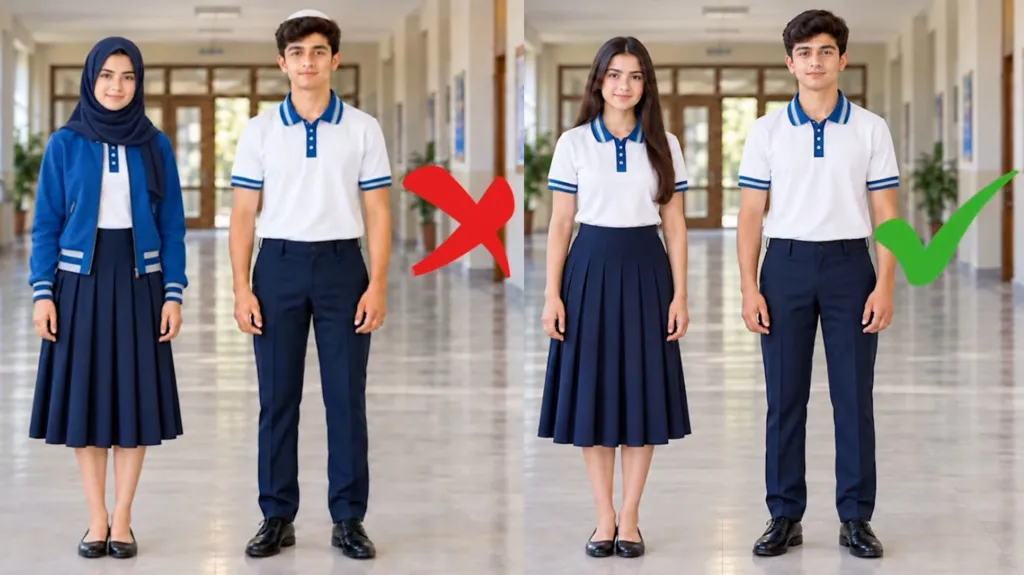
A dispute over restrictions on Islamic headscarves in Azerbaijan has sparked criticism from Turkish officials and Islamist groups, raising tensions between the two countries known for their close political and military ties.

Turkish President Recep Tayyip Erdoğan’s chief adviser, Oktay Saral, condemned the restrictions as “unacceptable” and urged Azerbaijan to reverse the decision, insisting that wearing a headscarf was a requirement of Islamic faith.

Several lawmakers from Turkey’s ruling Justice and Development Party (AK Party) also criticised the measures, while protests were held outside Azerbaijan’s diplomatic missions in Ankara and Istanbul.

The controversy has drawn a sharp response from Azerbaijan’s ruling New Azerbaijan Party, which accused Turkish officials of spreading defamatory claims and warned against interference in the country’s internal affairs.

Azerbaijani President Ilham Aliyev had earlier cautioned outsiders against interfering in the country’s way of life.

The disagreement is particularly sensitive because Turkey and Azerbaijan describe their relationship as “one nation, two states”. Turkey provided strong support to Azerbaijan during its 2020 war with Armenia over the disputed Nagorno-Karabakh region.

However, the headscarf controversy has also exposed differences over Azerbaijan’s close relationship with Israel. Baku buys Israeli weapons and supplies oil to Israel, while Ankara’s relations with Tel Aviv have deteriorated sharply over the war in Gaza.

The tensions became more visible on Thursday when delegations from Turkey, Iran and other countries reportedly walked out of a regional security summit in Baku during an address by Israeli President Isaac Herzog.

Azerbaijan has sought to maintain relations with both Israel and other regional powers, but the growing dispute highlights the diplomatic challenges facing its efforts to balance competing political and religious interests.

Is it really Kano First or Politics First? 

By Dr Aminu Tukur Adam

The recent political drama in Kano State, which began as a rumour before metamorphosing into a full-blown political battle, is interesting: how loyalty is being reinterpreted, how personal interest is being transformed into the people’s mandate, and how politics gradually takes over governance. 

It’s now becoming crystal clear to everyone that the Kano State government is not only static but also backtracking. At a critical point of state emergency and national concern, our dear state is being placed on hold. 

To begin with, APC was initially viewed as a disaster by Engr. Rabiu Musa Kwankwaso, Kano State governor and all their supporters; many of the supporters sacrificed their lives to rescue the state from the APC, a party that was hated for its immense corruption, extortion and oppression. 

As big as Kano State is, with its about 20 million population and an over 1 trillion naira budget, it will surprise you to know that the state’s executive council members are currently redundant; the council held only one executive session in the span of 90 days! The previous buzzworthy council is now scheduled for the end of recess. 

That probably explains why the only visible function of this government, road construction, is also neglected; no one is there to approve new projects or supervise the ongoing ones. 

The most unfortunate event was the visit of the Turkish ambassador to Nigeria to the Kano State government house, with the aim of consolidating multimillion-dollar projects, but astonishingly, only the Chief of Staff and two commissioners received a figure like this! For anyone familiar with the Turkish Cooperation and Coordination Agency (TIKA), it must have been a nightmare. 

TIKA isn’t like the usual agencies you see; it’s an international technical assistance agency. This same agency renovated the Kano capital school without a penny from the state government. 

We’re also talking about the Turkish Trading Firm, Direkçi, which has invested over $22 million in Nigerian states, with Kano as a major beneficiary.

The visit was intended to create an opportunity to secure scholarships for Kano state indigenes, to bring the Turkish humanitarian foundation IDDEF to boost humanitarian services in the state, and to commence visa services at the Turkish consulate in the state.

Yet, when that esteemed Ambassador walked into the Government House, he was neither received by the Governor, nor his deputy, nor the SSG.

While the governor plays an absentee landlordism, some villages in the state were burning and many lives were also lost; the recent unfortunate incident in the Katai and Fauda communities in Wudil local government generated widespread reactions, a police officer lost his life and villages were set ablaze; however, no formal press release, no condemnation and no any form of assurance from the state government. 

Astoundingly, when the governor was too busy to hold a council meeting, overwhelmed to meet the Turkish ambassador to Nigeria and also overloaded with responsibilities to comment on the Wudil incident, we saw his face in the convoy of Yilwatda, the APC national chairman, courting the governor of Bauchi state, Bala Muhammad, into APC. 

To add more salt to the injury, when the governor was returning to Kano, the local government chairmen and some of the governor’s aides orchestrated a drama, where a rented crowd were paid to welcome the governor from his political excursion. You may be surprised as to why the welcoming? Was he not just coming back from Abuja? Was the journey not a political journey for the APC’s convention? Is there any significance to this journey in the life of the innocent Kano people? 

This is the Kano first agenda they’re selling. It’s not about you or the state; it’s simply an idea to sell Bola Tinubu and his party.

Turkey condemns terrorist attack in Kwara, assures Nigeria of support

By Sabiu Abdullahi

The Republic of Türkiye has denounced the deadly terrorist assault on Woro and Nuku communities in Kaiama Local Government Area of Kwara State, expressing grief over the casualties recorded in the incident.

In a statement released on Thursday through its Ministry of Foreign Affairs, the Turkish government said it was “deeply saddened by the loss of lives caused by the terrorist attack that took place in Nigeria’s Kwara State.”

“We strongly condemn this heinous attack and extend our condolences to the families of those who lost their lives and to the people of Nigeria. Türkiye will continue to support Nigeria in its fight against terrorism,” the statement read.

Meanwhile, Nigeria’s Defence Headquarters (DHQ) in Abuja said the attackers struck after residents rejected attempts to subject them to ideological indoctrination.

In a separate statement signed by the Director of Defence Information, Major General Samaila Uba, the military described the incident as a “cowardly terrorist attack.” It also conveyed sympathy to bereaved families and affected communities.

Reports indicated that more than 170 residents lost their lives during the Tuesday onslaught.

According to the DHQ, the assailants had earlier approached Woro village seeking approval to “conduct preaching and indoctrination sessions,” a request the villagers declined.

Troops were deployed to the area after security agencies received intelligence about the threat. Military patrols and surveillance operations continued for about two weeks.

“However, weeks after the troops withdrew, the cowardly terrorists returned to kill innocent citizens in protest and in a bid to terrorise inhabitants and others,” the statement said.

The Armed Forces of Nigeria commended residents of the affected communities for standing firm despite threats. It praised their refusal to abandon their beliefs and constitutional loyalty.

“The AFN mourns with the families of those who have lost loved ones in these and other similar brutal attacks on defenceless citizens defending community values and freedom across Nigeria,” the military said.

The DHQ urged Nigerians to remain resolute and resist extremist indoctrination. It warned that violent groups aim to impose “twisted beliefs through terror and intimidation.”

Citizens were also encouraged to cooperate with security agencies. The military stressed that unity and resilience remain vital in confronting terrorism.

It added that security forces, in collaboration with other agencies, have intensified efforts to identify and prosecute those behind the Kwara attack and related acts nationwide.

Amnesty International also reacted to the wave of violence. The organisation condemned what it called a troubling rise in killings and abductions across the country.

It described Tuesday, February 3, 2026, as a “Bloody Tuesday,” following coordinated assaults in several locations.

“Alarming escalation of attacks, abductions for ransom and frequent killings across Nigeria have left people feeling more unsafe, showing utter failure of the Nigerian authorities to protect lives and properties,” Amnesty International had said.

The group cited attacks in Woro and Nuku in Kwara State, Doma Tafoki in Katsina State and Abande in Benue State, where many residents were reportedly killed.

The incident has drawn both local and international concern, with renewed calls for stronger security measures to curb terrorism and protect vulnerable communities.

Tinubu heads to Türkiye for key state visit


By Abdullahi Mukhtar Algasgaini

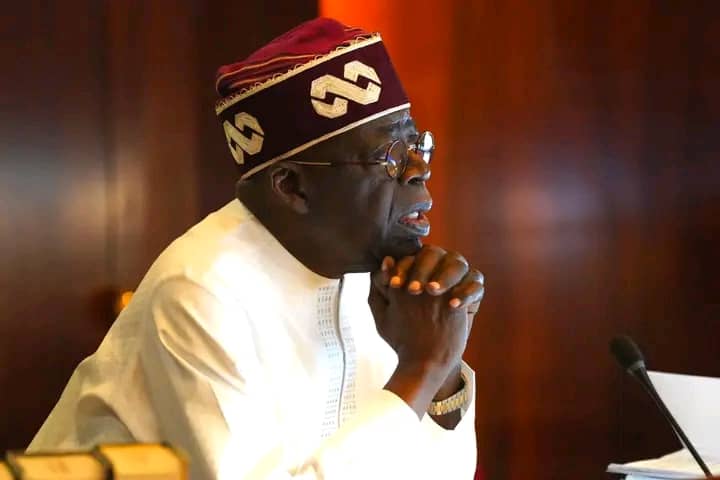
In a move to bolster bilateral relations, President Bola Ahmed Tinubu will on Monday commence a state visit to the Republic of Türkiye.

The visit is designed to enhance cooperation in critical sectors including security, aviation, and innovation. It comes in reciprocity to Turkish President Recep Tayyip Erdogan’s official visit to Nigeria in October 2021.

During the engagement, both leaders are expected to oversee the signing of several memoranda of understanding (MoUs). These agreements will span areas such as scientific research, energy, military cooperation, and media communications.

A business forum featuring investors from both nations will run concurrently to explore economic partnerships.

The President’s delegation comprises top government officials: the Ministers of Foreign Affairs, Justice, Defence, Women Affairs, Interior, and Culture & Creative Economy. Also included are the National Security Adviser and the Director-General of the National Intelligence Agency.

President Tinubu is scheduled to return to Nigeria after the visit.

State Department memo reveals lack of evidence against detained student

By Hadiza Abdulkadir

Rumeysa Öztürk, a 30-year-old Turkish doctoral student at Tufts University, was detained by U.S. Immigration and Customs Enforcement (ICE) agents on March 25 near her home in Somerville, Massachusetts. The arrest, captured on security footage, showed masked agents taking her into an unmarked vehicle without identifying themselves, leaving her screaming for help.

Öztürk, a Fulbright scholar pursuing a Ph.D. in Child Study and Human Development, had co-authored a 2024 op-ed in The Tufts Daily criticizing the university’s response to the Gaza conflict and calling for divestment from companies linked to Israel. Following the publication, her name and photo appeared on Canary Mission, a controversial website that profiles individuals accused of anti-Israel activism.

The Department of Homeland Security (DHS) accused Öztürk of supporting Hamas, though no public evidence has been provided. Her student visa was revoked, and she was transferred to a detention center in Louisiana, despite a court order requiring 48 hours’ notice before moving her out of Massachusetts.

Öztürk’s detention has sparked widespread protests and condemnation. More than 2,000 students rallied at Tufts University, and demonstrations have taken place in Boston and Washington, D.C. A coalition of 27 Jewish organizations filed a legal brief in her support, arguing that her arrest threatens free speech and academic freedom.

Tufts University President Sunil Kumar stated that the university has no information supporting the allegations against Öztürk and emphasized the importance of due process. Öztürk’s legal team, including the ACLU, is seeking her immediate release, citing violations of her constitutional rights.

A federal court hearing is scheduled to determine the jurisdiction of her case. Öztürk remains in ICE custody, facing possible deportation to Turkey.

Turkey-Syria Earthquake: Gov’t arrests building contactors

By Muhammadu Sabiu

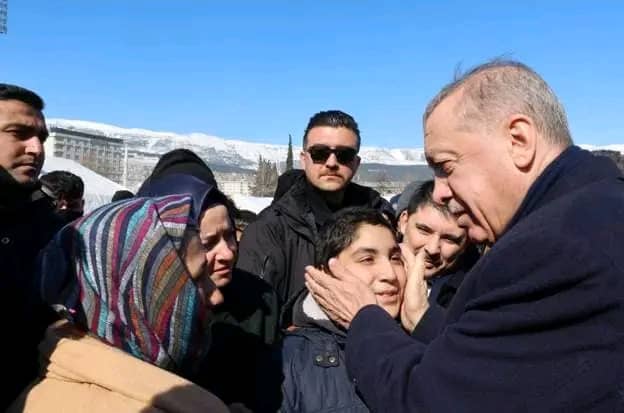
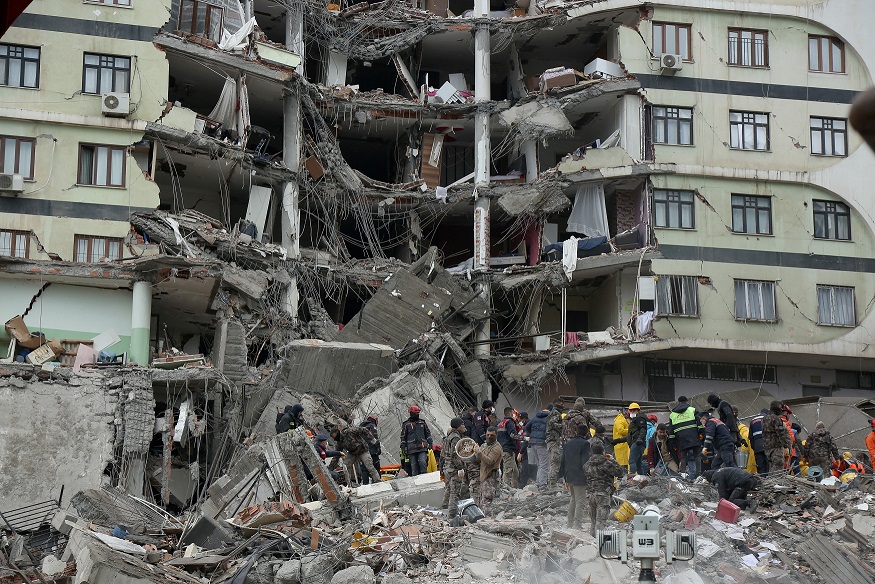
Turkish officials reportedly issued arrest warrants or detained about 113 people who were allegedly involved in some illegal construction methods six days after earthquakes caused buildings to collapse and lost of many lives.

According to CNN, at least 12 people, including building contractors, have already been detained by Turkish authorities. Reports have it that rescue operations have been hampered in some areas due to protests in southern Turkey. More than 33,000 fatalities in Turkey and Syria have now been officially confirmed.

The arrests of building contractors, according to CNN on Monday, were perceived by many as a move by the Turkish government to shift full responsibility for the catastrophe.

According to findings before the natural disaster occurred, it was expected that the destroyed structures were built to withstand earthquakes. Since many new buildings in Turkey are unsafe because of widespread corruption and government practices, experts have been warning about this for years.

In order to promote a construction boom, including in earthquake-prone areas, those rules permitted so-called amnesties for contractors who flouted building regulations.

Turkey-Syria earthquake kills 1,200 people, injures 3,000 others 

By Muhammadu Sabiu 

Over 1,200 people were killed, and nearly 3,000 were injured when an earthquake measuring 7.8 on the Richter scale rocked Turkey and Syria.

Local media stated that the earthquake occurred close to the border between the two countries.

Millions of people in the two affected countries, including Israel and Lebanon, were startled from their beds, according to a Monday report by the New York Times.

The Aleppo, Hama, Tartus, and Latakia districts have so far reported 237 casualties, according to the Syrian Health Ministry.

Lebanon and Cyprus were also affected by the strong earthquake that struck at 4:17 a.m. near the Turkish city of Gaziantep at a depth of 17.9 km.

The 10 cities of Gaziantep, Kahramanmaras, Hatay, Osmaniye, Adiyaman, Malatya, Sanliurfa, Adana, Diyarbakir, and Kilis were reportedly damaged, according to a statement to the media by Turkish Interior Minister Suleyman Soylu.

The Minister said at least 23 fatalities were recorded in the Malatya province, which is northeast of Gaziantep, while 17 fatalities were reported in Sanliurfa, which is in the east, and the remaining fatalities were reported in Diyarbakir and Osmaniye.

According to Xinhua news agency Ahmad Damiriyeh, Syria’s Deputy Minister of Health, general emergency preparations have been implemented for the affected districts, and private institutions have been instructed to accept all injured patients.

Foundation sponsors 3 Kano indigenes to study in Türkiye

By Uzair Adam Imam

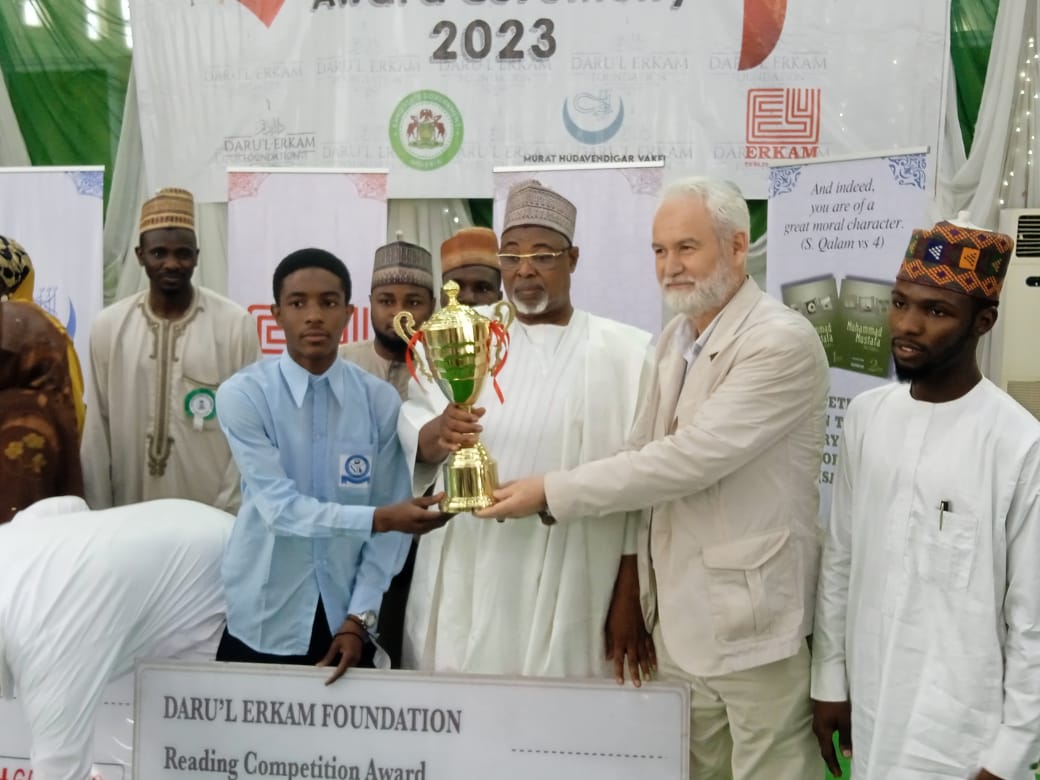
Darul Erkam Foundation has fully sponsored three indigenous students of Kano state for undergraduate studies in Istanbul, Türkiye.

Aliyu Yusuf, the Director Public Enlightenment, Ministry of Education Kano State, disclosed this in a statement Friday.

Yusuf said the youths were sponsored following their outstanding performance in the just concluded Reading Competition of the Biography of Prophet Muhammad (SAW).

He added in the statement, “The 3 sponsored students are Muhammad Nasiru Dantiye from Asal College, Fadima Musa Haruna from Kuntau Academy and Al-Amin Sani from Governor’s college.

“In addition to their sponsorship, Muhammad Nasiru Dantiye, who emerged as the overall winner of the reading competition, got a Prize of N700,000 and a Trophy, Fatima Musa Haruna received N650,000 and a Trophy for emerging in the 2nd position, while Al-Amin Sani who emerged the 3rd position received N600,000 and a Trophy.

“Speaking during the presentation of the awards at the coronation Hall of the state government House, Kano, the Commissioner of Education, Rt Hon. Ya’u Abdullahi Yan’shana expressed gratitude to Darul-Erkam Foundation for the kind gesture.

“The Commissioner noted with great pleasure the various humanitarian activities been rendered not only in Kano but in other states by the Darul-Erkam Foundation, saying only Allah the most gracious can reward them.

“Rt. Hon Yan’shana said he was much happier than any one of you here because this achievement has been recorded during my stewardship as the Commissioner of Education” 

“While congratulating the sponsored students for the height they have attained, he urged them to be good ambassadors of the state and their parents when they found themselves in Istanbul.

“To other participants of the reading competition who also revised different consolation prizes and medals, the Commissioner said they should not be reluctant as more opportunities are coming to their way, stressing that all of them should put into practice what they have read in the Biography of our Noble Prophet.

“In their separate remarks, the Chairmen of Murat Huda Vendigar Vafki Foundation and that of Darul-Erkam Foundation disclosed that the reading competition was part of the Humanitarian activities of the foundations aimed at boosting the reading culture of the participants as well as inculcating the practices of the life of the Prophet Muhammad SAW in their day to day activities.

“During the award presentations, all the participants were given a medal and cash prizes ranging from N5,000 to N200,000 depending on their performance,” the statement concluded.

Insecurity: Türkiye to deploy drones, helicopters in Abuja 

By Uzair Adam Imam

The development of security threats in the Federal Capital Territory, Abuja, has become worrisome and continues to terrorise citizens.

Countries, including the United Kingdom and the United State of America, issued the wake of a terror alert to Nigeria and their citizens that have been in the country for various reasons. 

On Saturday, Nigeria was greeted by the Republic of Turkey’s words to deploy drones and helicopters to Nigeria to help the country cope with the fears of insecurity threats. 

The Ambassador of the Republic of Turkey to Nigeria, Hidayet Bayraktar, disclosed this adding that the drones and helicopters would soon arrive in Nigeria as part of efforts to strengthen the security architecture of the country.

Bayraktar was reported to have made this intention public during the commemoration of the 99th National Day of the Republic of Turkey in Abuja.

He said, “The defence contracts signed between our countries last year marked a historical record.

“Taking this opportunity, I am proud to announce that two of our flagship defence industry platforms, Bayraktar (TB-2) drones and (T-149) ATAK helicopters, are set to arrive in Nigeria.

“We are confident that new Turkish defence products will support the efforts of the Nigerian government and contribute immensely to the peace, prosperity and security of fellow Nigerians,” Bayraktar said.