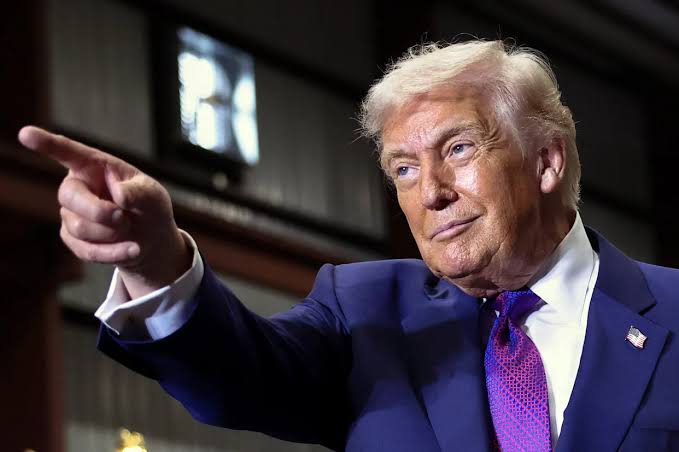
Trump

Starmer rejects Trump criticism, rules out UK role in US-Israel strikes on Iran

By Sabiu Abdullahi

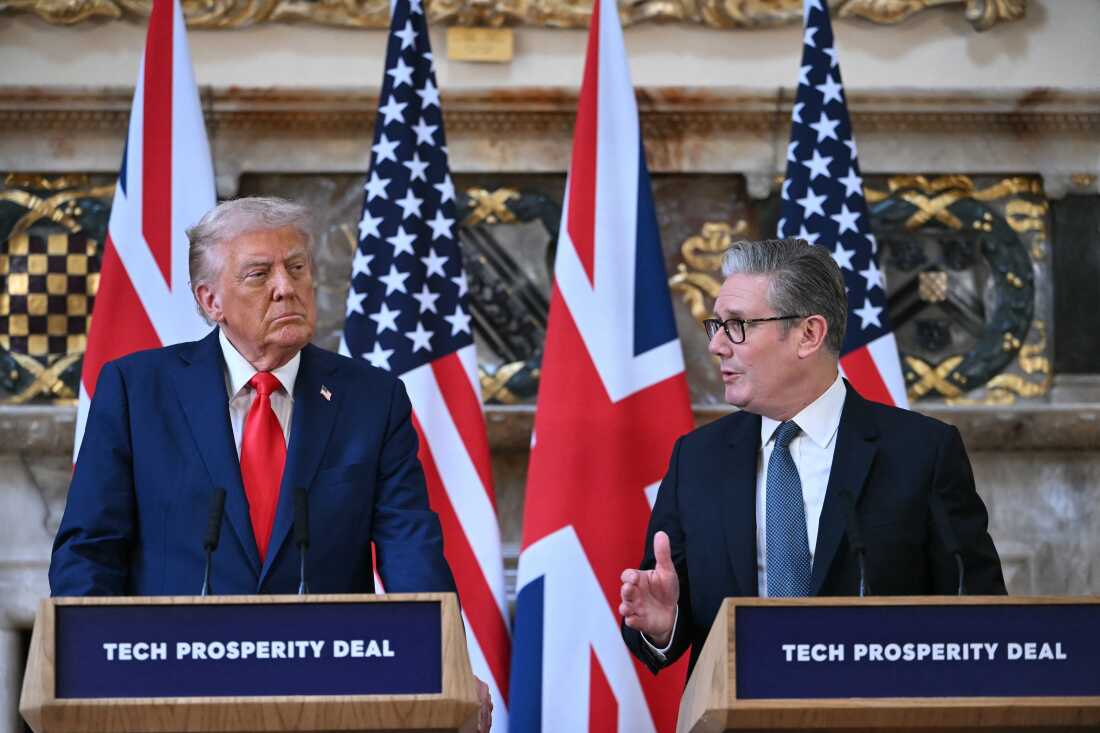
British Prime Minister Sir Keir Starmer has confirmed that the United Kingdom will not take part in offensive military action against Iran, despite criticism from United States President Donald Trump.

Speaking in the House of Commons, Starmer said he stood by his decision not to join the initial US-Israeli strikes. Trump had earlier expressed frustration with the UK’s stance and told The Daily Telegraph he was “very disappointed”. He also claimed Starmer “took far too long” to permit the use of British bases such as the Chagos Islands for operations linked to the strikes.

Responding to the remarks, Starmer told MPs: “President Trump has expressed his disagreement with our decision not to get involved in the initial strikes.

“But it is my duty to judge what is in Britain’s national interest, and I stand by it.”

The prime minister explained that although British forces will not participate directly in attacks, the UK has allowed US forces to use certain British bases for limited defensive purposes. He said the request concerned targeting Iranian missiles at storage depots or launch sites.

“It is simply not possible to shoot down every Iranian missile and every drone after they’ve been launched,” he said.

“The US requested permission to use British bases for that specific and limited defensive purposes.”

Starmer stressed that UK bases in Cyprus were not being used by American bombers. He addressed reports of a drone strike at RAF Akrotiri and clarified the circumstances.

“It is important for me to say that our bases in Cyprus are not being used by US bombers,” he said.

“I want to be clear. The strike on RAF Akrotiri in Cyprus was not in response to any decision that we have taken. In our assessment, the drone was launched prior to our announcement.”

He added that developments since the weekend had changed the security picture. “It is clear that Iran’s outrageous response has become a threat to our people, our interests, and our allies, and it cannot be ignored,” he said.

Around 300,000 British nationals are believed to be in countries affected by the crisis. More than 100,000 have registered with the Foreign Office for updates. Airspace closures have disrupted travel across much of the region.

Starmer urged citizens to remain vigilant and register their presence. “We’re asking all British citizens in the region to register their presence so we can provide the best possible support and to monitor the Home Office travel advice, which is being regularly updated,” he told MPs.

He noted that local authorities in several areas have advised people to stay indoors. The government has deployed rapid response teams to assist British nationals and is working with regional governments and the travel industry to facilitate safe returns.

The prime minister also addressed concerns about the legality of military action. He referred to lessons from the Iraq war and underlined the need for a clear legal foundation.

“We all remember the mistakes of Iraq and we have learned those lessons. Any UK action must always have a lawful basis, and a viable thought-through plan,” he said.

He repeated that Britain would not join offensive operations. “ I say again, we were not involved in the initial strikes on Iran, and we will not join offensive action now. But in the face of Iran’s barrage of missiles and drones, we will protect our people in the region and support the collective self-defence of our allies, because that is our duty to the British people.”

Starmer also said the long-term objective of preventing Iran from acquiring nuclear weapons must be resolved through talks rather than force.

“So it’s clear the Iranian regime must never be allowed to get their hands on nuclear weapons. That remains the primary aim of the United Kingdom and our allies, including the US, and ultimately, this will have to be achieved at the negotiating table,” he said.

Elsewhere in Parliament, Liberal Democrat leader Ed Davey criticised Trump’s decision to launch strikes, which he described as “an illegal war”. He also called on wealthy British tax exiles in the Middle East, including “billionaires and washed up footballers”, to “pay their fair share to fund British defence”.

In a separate exchange, Starmer said the UK is working with Ukraine to counter drone threats in the Gulf. He highlighted Ukraine’s experience in responding to Iranian-made drones during Russia’s invasion.

“Ukraine, sadly, has more expertise than anyone in dealing with drones, and that’s why we’re putting their expertise and our expertise together and using it to help our allies in the region of nations as we speak,” he said.

As tensions escalate, the government has pledged to enhance security at Jewish and Muslim places of worship in the UK. Ministers say efforts will continue to protect British interests abroad while pushing for a diplomatic solution to the crisis.

NYT editorial criticises Trump over new Iran strikes

By Sabiu Abdullahi

The Editorial Board of The New York Times has strongly criticised Donald Trump over his decision to launch a fresh military attack on Iran, describing the move as reckless and poorly justified.

In an opinion piece published on February 28, 2026, the board said Mr. Trump had gone against his earlier campaign promise to end wars, noting that he had instead ordered military strikes in several countries over the past year.

The editorial stated that the latest operation, carried out in cooperation with Israel, was broader than earlier attacks on Iranian nuclear facilities in June. It accused the president of failing to properly explain the reasons for the action to Americans and the international community.

According to the board, Mr. Trump did not seek approval from Congress before authorising the strike, despite constitutional provisions that grant lawmakers the authority to declare war. It also criticised the timing and manner of his announcement, noting that he released a video in the early hours of Saturday claiming Iran posed “imminent threats” and calling for regime change.

The editorial questioned the credibility of the president’s justification. It pointed out that he had earlier claimed Iran’s nuclear programme was “obliterated” during the June strikes, a position it said was contradicted by intelligence reports and the need for a new attack.

While acknowledging that preventing Iran from acquiring nuclear weapons is a legitimate objective, the board argued that the administration had not clearly defined its goals or secured sufficient domestic and international support.

It further stated that the president’s approach showed disregard for both U.S. law and international rules governing warfare.

The editorial also criticised the Iranian government, describing it as oppressive and responsible for widespread human rights abuses, including the killing of protesters and persecution of minorities. It added that Iran’s leadership had long posed a threat through its hostility toward the United States and alleged support for violent activities abroad.

Despite this, the board maintained that the dangers posed by Iran do not justify what it described as an ill-prepared and potentially destabilising military action by the Trump administration.

Racism: US President Donald Trump faces backlash over AI video depicting Obamas as Monkeys

By Sabiu Abdullahi

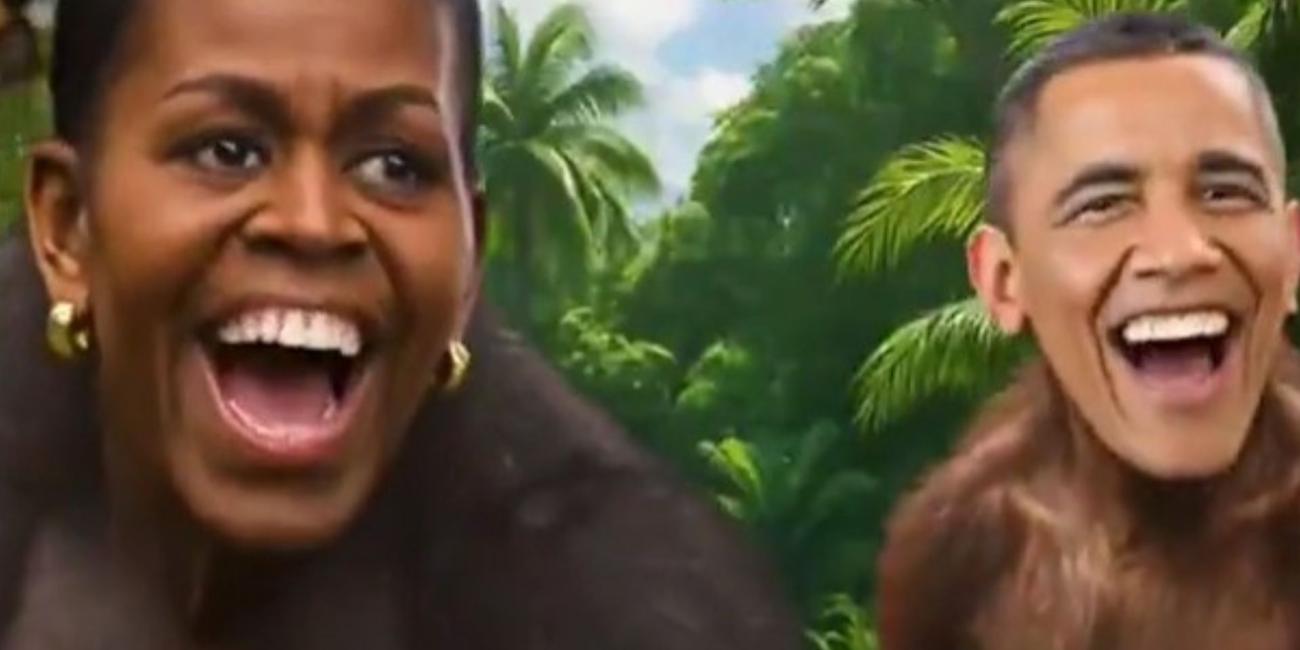
United States President Donald Trump has drawn widespread condemnation after posting a controversial video on social media that features an AI-generated scene portraying former President Barack Obama and former First Lady Michelle Obama as monkeys.

The video surfaced late Thursday during a flurry of activity on Trump’s Truth Social account. Within less than one hour, the president uploaded dozens of posts on the platform.

One of the materials shared was a compilation video that repeated his long-standing claims that the 2020 presidential election was manipulated. Those allegations have been dismissed in court and through official reviews.

Close to the one-minute point of the footage, an altered segment appears. It shows the Obamas’ faces placed on monkeys’ bodies. The background audio features the song ‘The Lion Sleeps Tonight’.

Trump reposted the same video twice. The timing fueled further anger online because the incident occurred during Black History Month.

Users on X and other social media platforms reacted strongly. Many described the clip as racist and degrading. Some critics argued that the post reinforced racist stereotypes historically used against Black people.

The controversial upload formed part of a broader late-night posting spree. During the same period, Trump again promoted discredited narratives about widespread voter fraud in the 2020 election, despite the absence of supporting evidence.

In a separate post that drew attention, Trump shared a screenshot bearing the message, “This can be a great option if things don’t work out,” alongside a fight scene video of martial artist Bruce Lee. He did not clarify the meaning of the message, leaving observers to speculate.

The uproar followed renewed scrutiny of Trump’s remarks about the U.S. electoral process. Earlier in the week, he suggested that Republicans should assume control of election administration in several areas and proposed federal involvement in voting oversight.

“The Republicans should say, ‘We want to take over,’” Trump reportedly said during a conservative podcast released Monday.

During the same conversation with former deputy FBI director Dan Bongino, he added that elections should be “nationalised.”

However, in an interview with NBC News correspondent Tom Llamas on Wednesday, Trump attempted to retract that position.

“I didn’t say nationalise,” he claimed, even though recordings of the earlier remarks circulated widely.

The White House later tried to ease tensions sparked by the statements. Press secretary Karoline Leavitt said the president remains loyal to the U.S. Constitution. She added that he believes previous elections were affected by “fraud and irregularities,” although no verified evidence supports the claim.

Only hours after that clarification, Trump appeared to reinforce his stance while speaking in the Oval Office.

“The federal government should get involved,” he said.

The developments have continued to generate debate across political and civic circles in the United States. Critics argue that both the video controversy and the election comments raise concerns about political rhetoric and democratic norms.

Petro heads to Washington for high-stakes meeting with Trump after months of tensions

By Sabiu Abdullahi

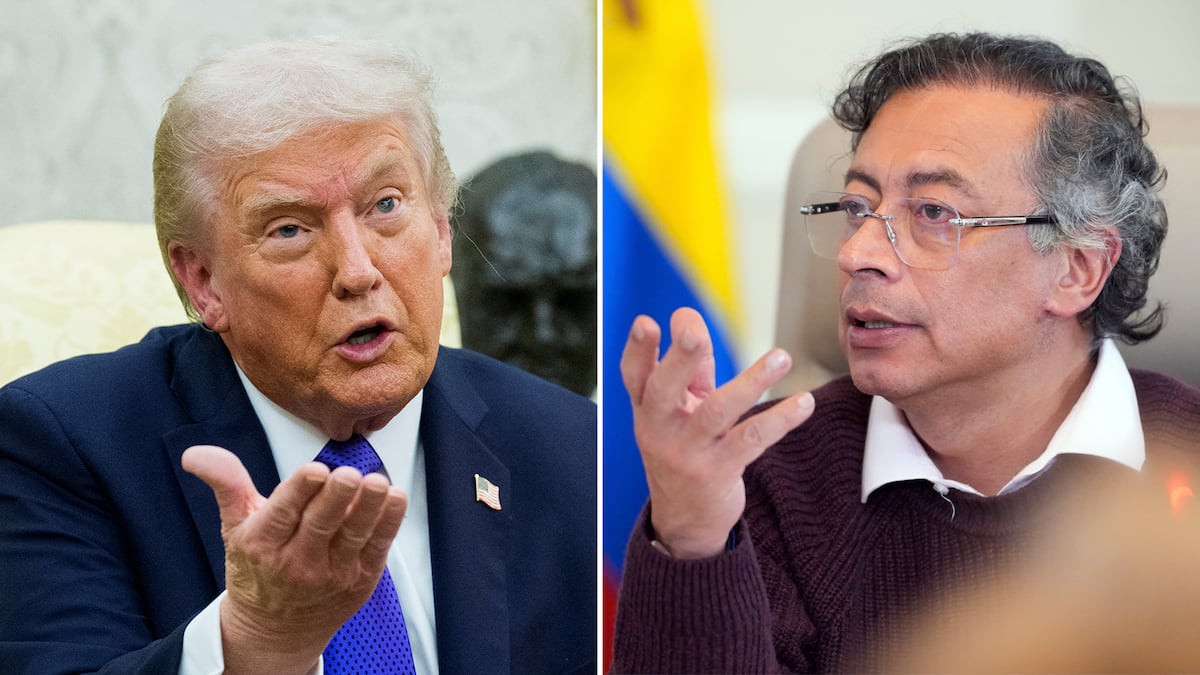
After months of sharp exchanges marked by insults, threats, tariffs and sanctions, United States President Donald Trump and Colombian President Gustavo Petro are set to meet in Washington on Tuesday in what appears to be an effort to ease a strained relationship.

Petro confirmed his attendance after accepting an invitation from Trump last month. The decision followed what both sides described as a cordial phone call that brought an abrupt end to a prolonged public feud.

The talks come at a critical time for the Colombian leader. His administration is seeking to convince Washington that it remains committed to fighting drug trafficking. This follows a recent US military operation in neighbouring Venezuela that led to the arrest of President Nicolás Maduro, whom Washington accused of links to drug cartels. Petro is also pushing for the lifting of US sanctions imposed on him.

Trump said on Monday that he was looking forward to a “good meeting” with his Colombian counterpart.

Petro arrived in Washington on Monday on a special visa. His previous visa had been revoked in September after a speech delivered to a pro-Palestinian audience, during which he urged American soldiers to disobey Trump.

The deterioration in relations began early in Trump’s second term in January 2025, despite Colombia’s reputation as one of Washington’s most reliable partners in the region, especially on security and defence matters.

Tensions flared after the Trump administration launched a mass deportation campaign that involved the use of military aircraft. Some deportees arrived in restraints, a move that angered Petro. He initially blocked two deportation flights and said he would “never allow Colombians to be brought back in handcuffs on flights.”

Later the same day, Petro reversed his decision after Washington threatened tariffs and sanctions. Colombian authorities announced that the country would accept “all” of Trump’s conditions, including the “unrestricted acceptance of undocumented immigrants” who entered the US.

The dispute deepened in March 2025 after US Homeland Security Secretary Kristi Noem claimed that Petro had described members of the Venezuelan criminal gang Tren de Aragua as “his friends” who only needed “more love and more understanding.” Petro denied the claim and blamed a possible misunderstanding on his limited English.

The Trump administration escalated matters in September by decertifying Colombia as a counternarcotics partner. US officials accused Bogotá of failing to meet its obligations, though they said funding would continue. Petro rejected the claim and argued that Colombia was doing its part, while drug consumption remained a US social problem.

“The US decertified us after dozens of deaths among police officers, soldiers, and civilians who were trying to disrupt cocaine trafficking,” Petro said.

Relations worsened further after Petro publicly called on American soldiers to disobey Trump during a visit to New York for the UN General Assembly. He also described Trump as an “accomplice to genocide” in Gaza. In response, the US revoked his visa, citing “reckless and incendiary actions.”

In October, Trump stepped up his criticism and described Petro as a “thug,” while blaming him for drugs reaching the United States. Soon after, the US Treasury imposed sanctions on Petro and several members of his family and cabinet.

“Since President Gustavo Petro came to power, cocaine production in Colombia has exploded to the highest rate in decades, flooding the United States and poisoning Americans,” Treasury Secretary Scott Bessent said.

Petro denied the allegations and vowed to challenge the sanctions. “On the contrary, my government has seized more cocaine than in the entire history of the world,” he said. In November, he made his bank accounts public to demonstrate, according to him, that he had no links to drug trafficking.

The standoff intensified again in December after Trump warned that countries involved in drug trafficking could be “subject to attack.” Petro responded by cautioning Trump against threatening Colombia’s sovereignty and invited him to visit the country.

A turning point came on January 3, 2026, when US forces carried out an operation in Venezuela that resulted in Maduro’s capture. Trump renewed his attacks on Petro soon after.

“He’s making cocaine and they’re sending it into the United States,” Trump said. “So, he does have to watch his ass.”

Trump later added that Petro was “a sick man who likes making cocaine and selling it to the United States, and he’s not going to be doing it very long.”

Petro rejected the remarks and spoke of “taking up arms” if necessary to defend Colombia’s sovereignty. Days later, Colombia’s foreign minister signalled readiness for dialogue with US officials.

On January 7, the two leaders held an unexpected phone call that eased tensions. Petro said the conversation helped calm relations, though he maintained that the US operation in Venezuela was “illegal.” Trump welcomed the exchange and invited Petro to the White House.

Ahead of the meeting, Trump said Petro’s attitude had changed in recent weeks. “He was certainly critical before that. But somehow after the Venezuelan raid he became very nice. He changed his attitude very much,” Trump told reporters.

Colombia’s presidency said the meeting would “define strategic priorities and strengthen lines of cooperation,” while describing Petro’s visit as a “milestone in bilateral relations.”

In addition to the White House talks, Petro’s schedule includes meetings with political, academic and business figures, as well as engagements with members of the Colombian diaspora in the United States.