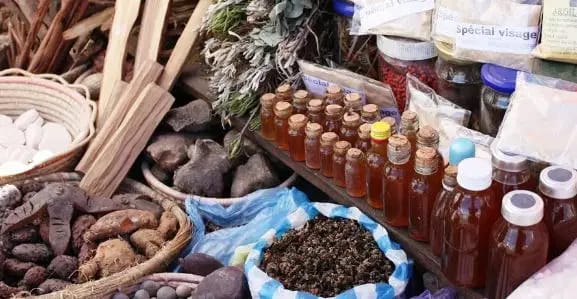
Traditional medicine

Time to Regulate Traditional Medicine Consumption

By Jessica Jummai Ayuba

The consumption of traditional medicine has become a widespread phenomenon in Nigeria, with many people resorting to it as an alternative to orthodox medicine. However, the unregulated nature of the traditional medicine industry has raised serious concerns about the safety and efficacy of these medicines. It is high time for the government to take decisive action to regulate the consumption of traditional medicine in Nigeria.

The traditional medicine industry in Nigeria is a multi-billion naira market, with thousands of practitioners and sellers operating across the country. However, the majority of these practitioners and sellers are operating unlawfully, without obtaining the necessary licenses and permits from the government. This lack of regulation has created an environment in which quacks and charlatans can thrive, putting the lives of millions of Nigerians at risk.

One of the major concerns about the traditional medicine industry in Nigeria is the lack of standardization and quality control. Many traditional medicine practitioners and sellers are using untested and unproven remedies, which can have serious side effects or even be fatal. Furthermore, many of these remedies are being prepared in unsanitary conditions, which can lead to contamination and infection.

The government has a critical role to play in regulating the traditional medicine industry in Nigeria. The National Agency for Food and Drug Administration and Control (NAFDAC) is the primary agency responsible for regulating the industry, but it has been struggling to keep up with the sheer number of practitioners and sellers operating in the country. The government needs to provide NAFDAC with more resources and support to enable it to effectively regulate the industry.

Another major concern about the traditional medicine industry in Nigeria is the lack of transparency and accountability. Many traditional medicine practitioners and sellers are making exaggerated claims about the efficacy of their remedies, and some are even using fake or forged certificates to convince their customers. The government needs to take action to protect consumers from these unscrupulous practitioners and sellers.

The regulation of the traditional medicine industry in Nigeria is not just about protecting consumers; it is also about promoting public health. Many traditional medicine remedies are being used to treat serious diseases such as malaria, tuberculosis, and HIV/AIDS, but these remedies are often ineffective or even counterproductive. The government needs to take action to ensure that traditional medicine practitioners and sellers are providing safe and effective remedies.

To effectively regulate the traditional medicine industry in Nigeria, the government needs to establish clear guidelines and standards for the production, sale, and use of traditional medicine remedies. The government also needs to establish a system for monitoring and enforcing compliance with these guidelines and standards.

Furthermore, the government needs to provide support and resources for traditional medicine practitioners and sellers who are willing to operate within the law. This could include training programs, loans, and other forms of assistance. By providing support and resources, the government can encourage traditional medicine practitioners and sellers to operate safely and effectively.

In addition to regulating the traditional medicine industry, the government also needs to educate the public about the risks and benefits of traditional medicine. Many Nigerians are unaware of the potential risks associated with traditional medicine remedies, and they need to be educated about how to use these remedies safely and effectively.

The government also needs to work with traditional medicine practitioners and sellers to develop new and innovative remedies that are safe and effective. This could include supporting research and development programs, as well as providing funding and resources for the commercialization of new remedies.

In conclusion, the regulation of the traditional medicine industry in Nigeria is a critical issue that requires immediate attention. The government needs to take decisive action to regulate the industry, protect consumers, and promote public health. By working together with traditional medicine practitioners and sellers, the government can develop a safe and effective traditional medicine industry that benefits all Nigerians.

Jessica Jummai Ayuba, Department of Masss Communication, University of Maiduguri.

A policy without a pulse

By Oladoja M.O

How Nigeria’s Traditional Medicine Policy Falters in the Face of a Healthcare Crisis

Traditional medicine remains a lifeline in the heart of Nigeria’s vibrant communities. For millions, the village herbalist is not just a healer but the only accessible one. Yet, despite its ubiquity and potential, traditional medicine in Nigeria remains largely relegated to the fringes of the healthcare system.

Why? Because the one policy that could breathe life into it, the “Traditional Medicine Policy” of 2007, is quite frankly a policy without a pulse.

It exists on paper, yes. But in practice, it drifts in the ether of neglect, underfunding, and governmental lip service. The intent was noble: to recognise, integrate, and regulate traditional and complementary medicine (T&CM) harmoniously with Nigeria’s conventional medical framework. But over 15 years later, the landscape remains fragmented institutions, unrecognised practitioners, and a glaring vacuum of legislation that could bind it all into something functional.

The 2007 policy envisioned institutionalising traditional medicine education, promoting evidence-based practices, and protecting indigenous knowledge. It proposed the development of curricula, collaborations between practitioners and scientists, and most importantly, the integration of traditional health workers into mainstream healthcare delivery.

But here’s the reality in 2025:

Despite repeated attempts to pass the Council for Traditional, Alternative, and Complementary Medicine Practice Bill, there is no functional regulatory council for traditional medicine practitioners.

No constitutionally defined or legally licensed role for herbalists or traditional health workers within Nigeria’s medical profession.

Institutions like NICONMTECH, Ibadan College of Natural Medicine, and African College of Traditional Medicine train thousands annually, but no professional pathway exists to license or employ them formally.

Only National Diplomas or certificates exist; there’s no accredited B.Sc. program, no postgraduate clinical practice recognition, and no universal standard for certification.

The result? A generation of “trained” traditional medicine practitioners with no seat at the healthcare table.

Counting some blessings, Nigeria’s Ministry of Health did establish the Department of Traditional, Complementary & Alternative Medicine in 2018, but its impact has been symbolic at best. NAFDAC mandated herbal product registration and labelling, which doesn’t translate into practitioner recognition or integration. The Natural Medicine Development Agency (NNMDA) was signed into law in 2019 to spearhead research and development, but there is no central governing council, which means that coordination remains chaotic. State governments have made some strides, e.g., Governor Soludo’s Anambra State Herbal Practice Law, but it is an isolated effort with no national backing. Ultimately, it’s like having a beautifully designed ship without a captain or compass.

One might ask, why does this matter more than ever now?

It is no longer breaking news that Nigeria is bleeding professionals. The “Japa” wave has not spared doctors, nurses, or dentists. With over 65% of qualified health workers seeking opportunities abroad, Nigeria’s healthcare system is being hollowed out from within.

To compound this, the country now faces blocked financing from global donors like the U.S., partly due to concerns over poor transparency, suboptimal health data management, and systemic inefficiencies. With this dwindling foreign aid and a crumbling workforce, we should explore every viable alternative, and traditional medicine stands at the crossroads.

But rather than mobilise this ready workforce, we shackle them with policy paralysis, leaving our vast herbal and traditional knowledge base languishing in semi-formal practice, unprotected, unregulated, and unsupported.

Time after time, the National Association of Nigerian Traditional Medicine Practitioners (NANTMP) has repeatedly called on the National Assembly to pass the Traditional, Complementary and Alternative Council of Nigeria (TCACN) Bill. Their plea is simple: recognise, regulate, and give us a voice in the national health discourse. They are not asking for a free ride, but for the years of training at herbal schools, skills acquisition centres, and research institutes across Nigeria to be met with a legitimate path to service.

After all, how do you tell a Nigerian College of Natural Medicine Technology graduate that their diploma is valid, but they are legally invisible? How do you justify decades of policy silence when the country desperately needs all hands on deck?

A living policy evolves with need, responds to gaps, and energises sectors. The 2007 policy is comatose, hanging on by technical documents and departmental charades. What it needs now is:

An active national council to regulate, license, and accredit T&CM practitioners.

Curriculum reform and NUC-approved B.Sc. degrees to professionalise training.

Legal recognition of traditional practitioners under Nigeria’s health law.

Clear collaborative frameworks between conventional health professionals.

Nigeria cannot afford to sideline its heritage medicine when its hospitals are overcrowded, its workforce is thinning, and its people are desperate for healing, wherever it may come from.

We do not need another policy document. What we need is a pulse.

Oladoja M.O writes from Abuja and can be reached at: mayokunmark@gmail.com