TikTok

From TikTok to police cell: Borno’s crackdown on civic dissent

By Abdulsalam Alkali

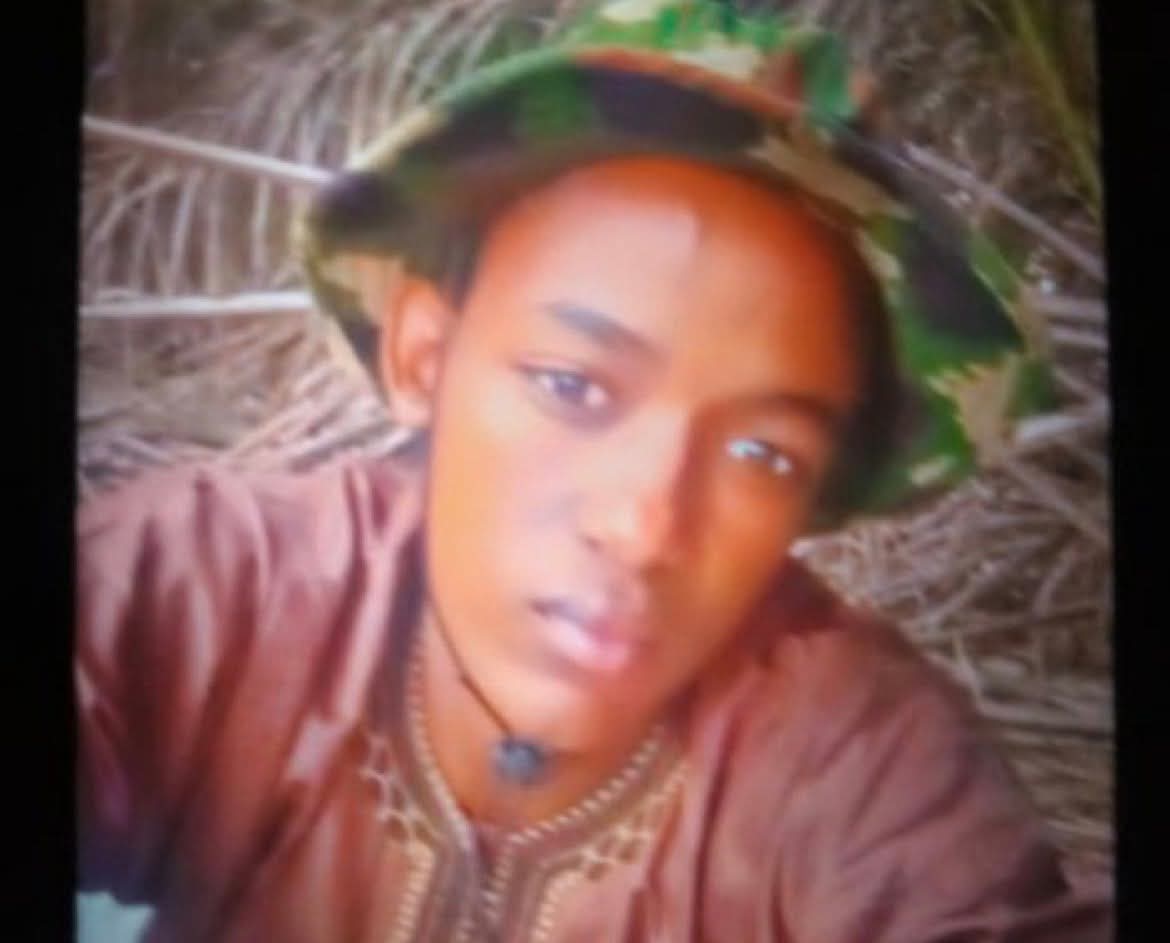
Haruna Muhammad, known on the streets of Maiduguri as ‘ABALE BORNO’, had always chased greener pastures. His journey from his hometown to the bustling Nigerian capital, Abuja, was a familiar blur of hope and hardship. For a long time, he sold apples on Abuja’s streets, dreaming of the day he could return home to his mother and family.

When the month of Ramadan arrived, Abale felt a pull stronger than any market stall could offer. “I travelled from Abuja to Maiduguri, my heart light with the thought of sharing Eid al-Fitr with my loved ones. The journey was long, but the anticipation of reunion kept my spirits high”. Abale recounted with tears.

Back in Maiduguri, Abale slipped into his usual routine, posting short videos on TikTok. ‘’I voiced out my neighbourhood’s frustrations over an unfinished road project and the dilapidated Wadiya Primary School in Gomari Kostin’’ Abale stated. Residents slogging through potholes and the school’s crumbling walls quickly garnered attention.

One morning, seeking a quieter spot to rest during the Ramadan fast, Abale spread his mat under a lone tree inside the school, where he had earlier raised concerns about its dilapidated condition, offering some respite to the neighbourhood. As he lay there, three men approached—a Civilian Joint Task Force member and two policemen in traditional kaftans. “I felt relaxed even after seeing them, as I never thought the videos I made could trigger such a response from security,” Abale recounted.

While in Police Custody

“I was sceptical and confused about my arrest. I was first taken to the G.R.A Police Station, where I was temporarily detained until the Commissioner of Police, now-retired Yusuf Muhammad Lawan, arrived and ordered my transfer to the CRACK Division’’ Abale stated. Crack Division of the Nigeria Police is a unit specialised in tackling armed robbery, theft, and other capital offences.

“While in custody, I was denied access to my phone. I begged the policeman at the counter to help inform my mother. He agreed but charged one thousand naira for a call that lasted less than a minute,” Abale recalled.

At the CRACK Division, “I was informed that my offence was criticising the state government on TikTok, and I was arrested by ‘orders from above.’ There was no proper explanation. I was subjected to a thorough interrogation by scores of policemen, all asking the same question repeatedly: ‘Who is sponsoring you to attack the government?’ They took my phone, tripod, and microphone, searched them, but found nothing. The disappointment on their faces was visible,” he stated.

Abale recalled being treated like a criminal for expressing his community’s frustrations. “A policeman threatened my mother, telling her I was a criminal who would be jailed for no less than 20 years.” He was held for six days, despite laws requiring that an accused person be charged in court within 24 hours, or 48 hours if no court is within proximity, as stipulated by section 35 of the Nigerian Constitution. 

Abale had not initially engaged legal services. “However, a human rights lawyer, Hamza Nuhu Dantani, came to me. He was God-sent.” Abale stated

The Court Case

Abale was charged at Magistrate Court Number 2, popularly known as ‘Koton Madam,’ in Maiduguri. However, the court was in recess, and the case was referred to another magistrate. “The court found no significant reason for my arbitrary detention, and I was released,” Abale said.

Legal Struggle

After his bail was granted, Abale returned to Abuja to recover from the losses and expenses caused by his detention. However, the case was continuously adjourned. “I travelled from Abuja to Maiduguri three times to seek justice and retrieve my gadgets—two phones, pods, and a microphone—but to no avail. There was no conviction, no acquittal. The case was swept under the carpet,” he lamented.

Violations Continued

Suleiman Usman, 26, known as Sultan, was arrested and detained for three days simply for disagreeing with a public office holder on Facebook. “Even after promising my lawyer, I would be released within 24 hours, I spent three days in the cell,” Sultan recounted.

He was arrested after criticising the Executive Secretary of the Borno State Geographic and Information Service on Facebook. “The complainant insisted it amounted to criminal defamation, even though there was no proof. My words were harmless,” Sultan stated. After three days in the CRACK Division, he was released unconditionally.

Similarly, Alhassan Musa, 40, a father of nine, was arrested and detained for five weeks on the orders of Governor Babagana Zulum. “I was carrying passengers near the newly built flyover bridge in Bolori Store when a white Hilux vehicle drove into our way. It was Governor Zulum. He immediately ordered the police to arrest me,” Alhassan stated.

Detained at the CRACK Division for what was clearly a civil matter, Alhassan was repeatedly refused bail. Without formal charges, and only after his lawyer’s intervention, he paid N100,000 to the Borno State Traffic Maintenance Agency (BOTMA) for a traffic violation. “Five weeks of detention went under the carpet, unexplained,” he said.

Amnesty International Nigeria

In August 2025, Amnesty International Nigeria raised concerns over allegations of human rights violations by the Borno State government. “Borno, based on our initial findings, is increasingly becoming a bastion of repression, abuse of office, and unlawful attacks on the right of the people to disagree with those in power. People have the right to agree and disagree with those in power,” the statement read.

It further attests, “People who criticise the governor are being arbitrarily arrested and detained for months or more, without trial or access to a lawyer or family. A detention centre run by the police has now become a den of unlawful detention and ill-treatment. Some are even refused bail in utter disregard for due process.”

The statement was necessitated by the sentencing of five young people to five years imprisonment for organising and participating in an #EndBadGovernance protest.  Efforts to locate them proved abortive, but a relative of one of the sentenced individuals, who chose to remain anonymous, confirmed ‘’they are still in Maiduguri Maximum Correctional Centre”.

Similarly, Ibrahim Muhammad of the National Human Rights Commission in Maiduguri acknowledged the commission’s awareness of such claims but clarified its role. “We must receive a formal complaint, either in person or through other means of communication, before we can act. We have established protocols, and no violation has been officially reported to us,” he stated.

The Borno State Police Public Relations Officer, ASP Nahun Kenneth Daso, declined to comment, insisting on a physical meeting. However, he neither picked up calls nor replied to messages at the appointed time.

What the Law Says

According to lawyer Barr. Alkali Adamu Askira, “No individual, whether a governor or anyone acting under his authority, has the power to arrest and detain any person beyond the constitutionally permitted period of 24 hours, or at most 48 hours where applicable, without either granting bail or arraigning the person before a court of competent jurisdiction.” He further clarified, “Any directive or action that results in unnecessary arrest or prolonged detention outside these legal limits constitutes a gross abuse of power and an act of lawlessness.”

Barr. Askira noted that the remedy is to file fundamental human rights enforcement suits. “Otherwise, we will have rights we cannot enforce,” he stated.

Commenting on Abale and Sultan’s detention, human rights lawyer Barr. Hamza Nuhu Dantani said, “Abale and Sultan’s cases exemplify the endemic abuse of power, suppression, and denial of access to justice by people in authority.” He advised, “Security agencies should respect the rights to freedom of expression,” and urged public office holders to “refrain from using their office to oppress citizens. 

Egypt arrests teenage TikTokkers over indecency and money laundering

By Hadiza Abdulkadir

Egyptian police have arrested dozens of teenage TikTok creators on charges ranging from indecency to money laundering, in what critics say is a crackdown on free expression.

Authorities have confiscated the influencers’ devices, frozen their assets, and imposed travel bans. Among those detained is 19-year-old Mariam Ayman, known online as “Suzy El Ordonia,” who has more than nine million followers. She is accused of posting indecent content and laundering millions of pounds.

Rights groups warn that vague morality provisions in Egypt’s cybercrime law are being used to silence young voices online, while traditional media remains tightly controlled by the state.

So far, none of the detained creators have been released, and the government has not indicated any change in its approach.

Authorities ordered TikTok to delete content it described as inappropriate or face a ban.

According to reports, TikTok had removed more than 2.9 million videos, some of them even before being reported or flagged by users.

Fame, fortune, and fallout: The Peller paradox that’s stirring Nigeria

By Haroon Aremu Abiodun

It all began like any other viral moment on Nigerian social media, but then it took a turn. Popular TikTok sensation Hamzat Habeeb Adelaja, popularly known as Peller, shocked followers recently with a post that seemed almost too generous to be true. He was hiring a cameraman for a monthly salary of ₦500,000. The news spread like wildfire, and in no time, graduates, yes, university graduates, trooped in for interviews, hoping to clinch the role under the young entertainer’s banner.

But beneath the glitz of that social media post lies a stark irony, a brutal reflection of Nigeria’s current socioeconomic reality: a secondary school certificate holder interviewing degree holders for a position in the gig economy. Is this a triumph of hustle over education or a symptom of a failing system?

This scenario has ignited widespread controversy. Should someone with Peller’s academic background employ graduates? Is he flaunting success in a way that undermines the value of formal education? Or is he, in his own unorthodox way, contributing to job creation in a country where unemployment is a ticking time bomb?

Regardless of where you stand, one truth remains: Nigeria’s youths are not only unemployed, they are disillusioned.

But, beneath the glamour, is Peller’s youth the key to his controversial rise? At age 20, can Peller truly shoulder the weight of fame, fortune, and the emotional toll that comes with being in the public eye? Fame is a double-edged sword, and wealth earned in the public space, especially in a country like Nigeria, where social values matter, can either elevate or destroy a brand.

Some have attributed his behaviour to immaturity, a lack of exposure, or poor guidance. Others question the roles played by his management and inner circle. Are they enabling his excesses or helping him stay grounded?

Peller’s youth and maturity seem to be dancing to different tunes at times in sync, at other moments, sharply distinct. While his age brings the energy, creativity, and audacity that fuel his rise, it may also limit the depth of judgment that comes with lived experience. Despite his fame and financial success, one thing remains true: maturity isn’t measured by wealth or followers. 

He may be richer or more popular than his advisers, but that doesn’t make guidance obsolete. In fact, the higher one climbs, the more essential wise counsel becomes. No matter our age or status, we all need mentors, correction, and continued learning because growth, like fame, should never outpace wisdom.

This is not Peller’s first brush with public criticism. During the heated JAMB controversy months ago, he was branded a poor role model. Critics say he misuses his influence. Admirers say he is just being himself. But the question is not just what Peller does, it’s what he represents.

When individuals like Peller become the aspiration of thousands of young people, what message are we sending? That fame, regardless of how it’s earned, trumps knowledge, experience, and decorum?

One might ask, is this a systemic failure or a personal flaw? But the deeper question is this: Can we really blame Peller for being a product of a broken system? Or should we point fingers at the society that created him, a society where education is devalued and unemployment drives graduates to accept roles from entertainers with no formal qualifications?

This is a national dilemma. Young people are no longer looking to engineers, doctors, or scholars as role models. They now look to influencers, many of whom may lack the maturity or training to handle such responsibility.

This isn’t just about Peller; it’s about perception, power, and public influence.

The Brand at Risk: PR Implications

From a public relations perspective, Peller’s every move is now under a magnifying glass. As a brand, his current trajectory presents both opportunity and risk. He is loved by many but also watched with scrutiny by an equal number. His brand power lies in his authenticity, but even that must be managed with intentionality because one viral moment can either grow his brand or ruin it.

In a society where cultural norms still dictate public perception, Peller must understand that his brand isn’t just about content; it’s about conduct. His platform gives him power, and with that comes responsibility.

PR experts warn that failing to manage this carefully could result in brand erosion, reduced partnerships, and a gradual loss of public trust. A sustainable career in entertainment requires more than charisma—it demands discipline.

Beyond the Buzz: What should Peller do? It’s easy to dismiss these concerns as envy or moral policing, but that would be a mistake. Peller is a Nigerian pride, a self-made entertainer who carved a niche and created employment. That in itself is commendable. But with influence comes expectation. With status comes scrutiny.

This article is not to tear Peller down. It is to offer a lens of accountability, reflection, and growth. The same media that celebrates must also question, not out of hate, but out of hope that Nigeria’s influencers will see themselves not just as entertainers, but as leaders in a generation gasping for direction.

Peller can choose to be more. He can use his platform to elevate the values of integrity, hard work, and education, even as he continues to thrive in entertainment. He can show that success does not require disrespect, and that influence is not a license for irresponsibility.

Whether he likes it or not, Peller is not just a content creator. He’s a movement. And movements, when misdirected, can lose their magic or worse, mislead millions.

Final Thought

Peller’s story is still unfolding. He is talented, young, and full of potential. This is not a final verdict, but a cautionary tale. The camera is rolling, the nation is watching.

The real question is: What will Peller do next?

Haroon Aremu Abiodun, An Author, public Affairs Analyst. He wrote in via exponentumera@gmail.com

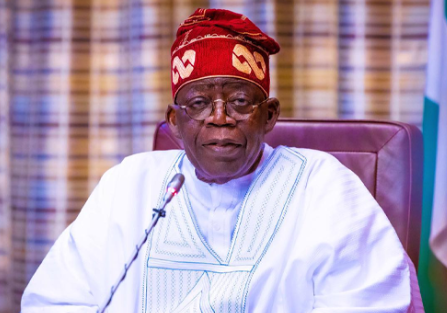
Dear President Tinubu, please ban TikTok to preserve our national values

By Malam Aminu Wase 

Your Excellency,

I write with deep concern for the moral and cultural fabric of our nation. It is my humble request that you consider banning the operation of TikTok in Nigeria to restore and preserve the dignity of our country, our religious values, cultural heritage, and the moral upbringing of our youth.

While TikTok is used in many parts of the Western world as a platform for creativity, advertising, and business promotion, the situation in Nigeria is deeply troubling. Instead of being a tool for productivity and education, TikTok has become a channel where inappropriate content thrives, particularly content that undermines our moral values and exposes young people to harmful influences.

In Nigeria today, TikTok is alarmingly associated with immoral displays, including the exposure of private parts by married women, as well as the promotion of prostitution. It has sadly become a platform that contributes to the breakdown of marriages and family structures. Many relationships have been destroyed because of disagreements over the use of this platform, with some spouses refusing to delete their TikTok accounts despite repeated appeals from their partners.

This moral decline is not just a private matter; it affects our collective national conscience and identity. If left unchecked, it may have long-term consequences for future generations.

Therefore, I respectfully urge your administration to take decisive action to regulate or, if necessary, ban TikTok in Nigeria. Such a step would not only protect our societal values but also send a strong message about the importance of discipline, modesty, and responsible use of technology.

Thank you, Mr. President, for your continued commitment to the growth and integrity of our nation.

Malam Aminu Wase writes from Kaduna. He can be reached via aminusaniusman3@gmail.com.

TikTok star Khaby Lame departs US after visa overstay detention

By Hadiza Abdulkadir

Khaby Lame, the Senegal-born TikTok sensation who rose to global fame for his silent comedic videos, has voluntarily left the United States after being detained by U.S. Immigration and Customs Enforcement (ICE) for overstaying his visa.

The 25-year-old, who officially became an Italian citizen in 2022, was held at Harry Reid International Airport in Las Vegas for immigration violations. Lame had been in the U.S. on a temporary visa, which reportedly expired before his detention.

Lame, known by his handle @khaby.lame, boasts over 162 million followers on TikTok, making him one of the most followed creators on the platform. His signature style—wordless, expressive reactions to overly complicated life hacks—catapulted him to viral fame during the COVID-19 pandemic.

His detention comes amid intensified immigration enforcement under President Donald Trump’s administration, which has renewed crackdowns on visa overstays and undocumented immigrants.

Sources close to Lame say he has returned to Italy and cooperates fully with authorities. Neither Lame nor his representatives have made a public statement regarding the incident.

Taranding vs Trending | Hausa Youth Entrepreneurship Visibility 

By Prof. Abdalla Uba Adamu

They are both young boys, although one seems slightly older. From March to May 2025, they captured the attention and interests of Hausaphone social media with their radically different approaches to digital media visibility. In the process, they provided a template or script for the future of youth engagement in public culture and demonstrated the power of agency. 

Taranding in an open cesspool (Kabiru Isma’il, Kano).

The first was Kabiru Isma’il, better known as Kabeer2pac (apparently a fan of the late American rapper 2Pac Shakur).He had 1.8m followers and 15.1m likes on his TikTok account, which prominently displays his phone number (or that of his agent) for advertising purposes. His early videos clocked in millions of views. His most famous video, in which he shakes the dust off his body and jacket, has earned 51 million views. He devised two strategies to achieve this fame. 

His first videos were posted during the 2025 Ramadhan on 19 and 20th March 2025. In the videos, he was recorded immersed in a stagnant open cesspool of household wastewater (kwatami), dunking himself in it and smearing the sediments on his face. The videographer asked for his motives, and he replied he was doing so to “tarand” (trend) because he yearns for fame (ɗaukaka). He affirms he was not a lunatic. The video had 2.6 million views. He further explained that he resorted to this because his earlier attempts at trending were unsuccessful.

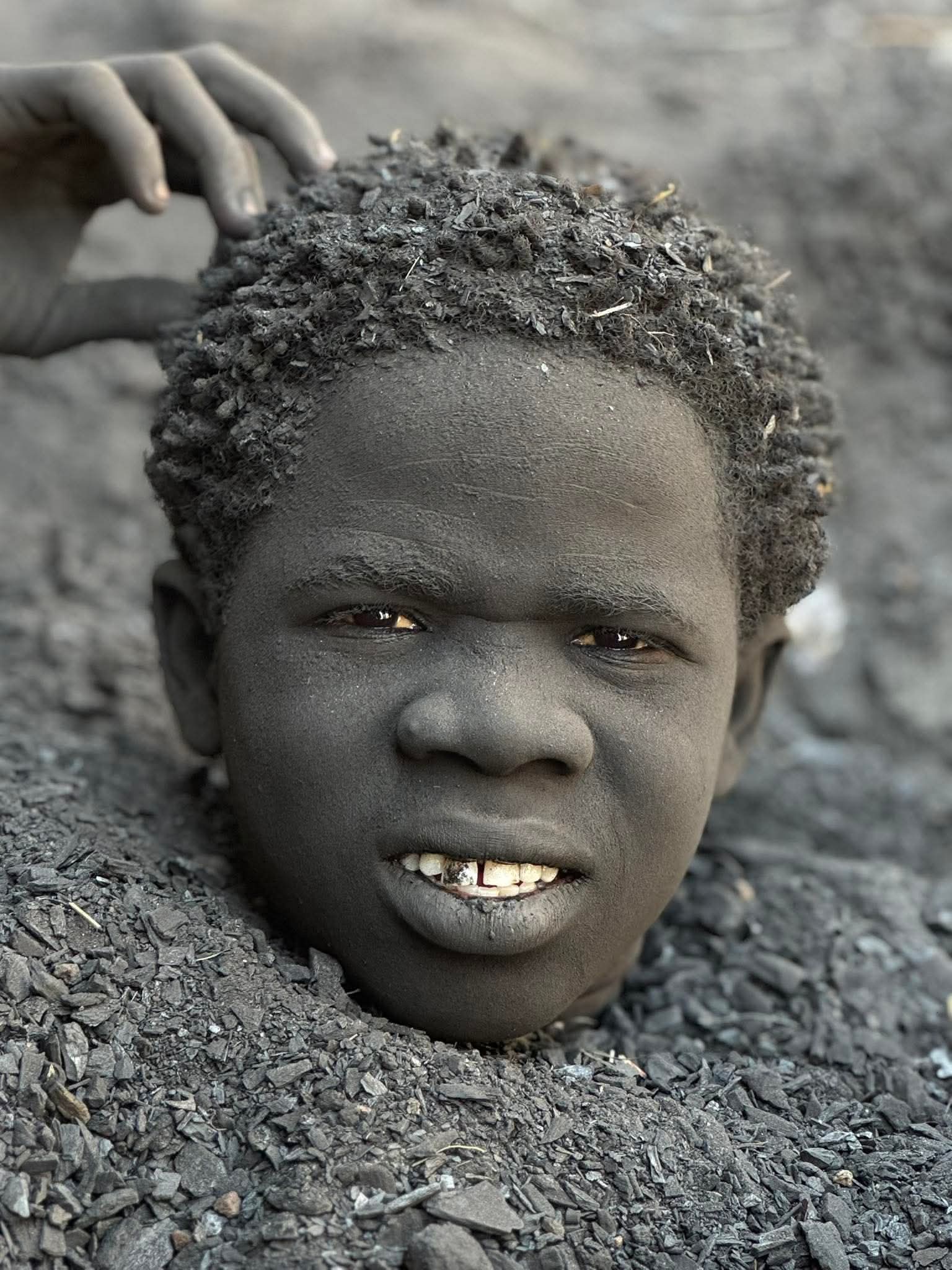
On 3rd April 2025, he switched from cesspool contents smearing to getting a sack of charcoal dust dumped on his head,which earned the video 14.8 million views. By then, his fame spread because the CoalDust video he posted two days later earned him 51 million views. His videos attracted Gwanki Travels and Tours International Ltd in Kaduna, who invited him and offered him a free ticket to perform the lesser Hajj, Umrah. Beaming with happiness, Kabeer2pac declared his gratitude that he had achieved the fame he had sought and had “taranded” very well. Of course, Gwanki also trended because they were riding on his coat-tail, as it were, to advertise their services.

Reactions to Kabeer2pac’s fame and fortune were varied but predictable. Most commentators were happy for him and took umbrage at any view that condemned his behaviour as unhealthy and unbecoming. Some Muslim clerics condemned him. Others were against the money spent on his Umrah, arguing that he was young and the money should be invested in either a trade or his education. His behaviour led to copycat copying. 

Quite soon after it started trending, copycats appeared in various guises, including a cesspool girl, from dousing themselves with petrol to set fire on themselves, to having cement blocks banged on their head, to immersing themselves in a stagnant pool of waste water. In one case, a young boy entered a soak away— all in their desire to “tarand” and possibly get a free Umrah ticket.

In an RFI video interview posted on 16th April 2025, Kabeer 2pac admitted that the possibility of his social media celebrity status is likely to be short-lived, as he understands that people will soon get bored with his antics and switch to something else. But for the period he was trending, he was happy with the endorsements he received and his branching out into comedies and short dancing skits in his trademark winter jacket. 

He has accurately anticipated the ephemeral nature of his antics. About two years ago, others who trended and quickly faded away were even more famous and established what I call “celebrification culture”. The first was Ale Rufa’i Bullgates, who devised his own currency, “Gangalion”. He was followed by Ale Umar Bush, whose speciality was foul-mouthing everyone around him. Each was given a social media celebrity status – private jets, fancy meals, endorsement deals by fancy local merchants. Ale Umar Bush seemed to have a Middle-Eastern “girlfriend”. People mocked their mental health and turned them into the theatre. That was probably why Kabeer2pac prefaced his first video by proclaiming that he was not mad. 

What motivates people to watch grisly events as lookie-loos, whether on screen or in physical spaces? Kabeer2pac’s audience can be called voyeuristic or spectator audiences. Odd or outlandish behaviour fascinates them because it provides novelty, entertainment, and sometimes a sense of shock or disbelief. Due to its unconventional nature, such content often triggers curiosity, amusement, or even a desire to share with others. 

Trending Young Dangote (Sadiq Usman Ahmed, Kurmin Mashi, Kaduna)

In contrast to Kabeer2pac, Sadiq was a street hawker in Kurmin Mashi, Kaduna, whom someone tagged Young Dangote. His nickname refers to the Hausa business mogul Aliko Dangote, the richest Black man in the world at the time. Anwar Textiles Ltd discovered him at a traffic stop in Kurmin Mashi, Kaduna, on 18th May 2025, when the young lad, who looks about 13 years old, was hawking car fresheners. 

Intrigued, the videographer asked how he started the business. Beaming an incredibly infectious smile (alone enough to make you buy his ware, even if you had no intention of doing so), he said he started with ₦300 with which he used to purchase cotton buds for ₦50 and sold for ₦70-₦100, before moving to products he bought for ₦350, selling at ₦500, happy with whatever profit he made. Gradually, his capital reached ₦5,000, then ₦1000, “har jari ya kai dubu hamsin cifi cif”/up to ₦50,000 neat. He said he prefers schooling to hawking, but poverty forced him into hawking. He relates this with a devastating, charming smile and enthusiasm for his current station in life, clearly with a business goal in mind. 

Touched by his resolve to improve his business, the video was posted on Anwar Textiles’ personal account and went viral. This impressed so many people (including the Pop Cola company in Kano) that they sent their widow’s mite to Anwar Textiles to improve the boy’s capital. Some asked for an account. In a very honourable way, Anwar Textiles traced the boy’s father. They recorded a video in which the father explained their happiness about the crowdsourcedfunding efforts made by Anwar Textiles. He emphasised that they were not begging for assistance as such (they were well off, but had a bad patch in life), but are grateful to those who contribute to the boy’s entrepreneurial ambitions. An account number was given. 

By 16th May 2025, Sadiq had over ₦300,000 capital and a larger basket to hold more products, which Anwar Textiles helped to purchase for him. The balance of the money was handed over to the father. He thanked Anwar Textiles for making it possible for people to know him. He displayed his new “mobile shop” and declared, “daga nan sai ƙasar waje, inshaa Allahu”/next, overseas, by God’s grace. He also stated his intention to go back to school soon. 

I find Anwar Textiles honourable. He located the boy, helped him, and supported his family. Importantly, he did not engage the boy in a gaudy marketing gimmick for his company, as done with Kabeer2pac. The boys’ marketing strategy was brilliant, as seen in a video posted a few days later in which he persuaded a motorist to buy more car fresheners than the customer actually intended to buy!

Both of these teenage boys demonstrate what personal resolve can achieve. Through social media, each person has attained something they wanted at the beginning of their lives. Kabeer2pac’s social media platform, which thrives on trends and viral content, where the unusual or unexpected can quickly gain traction through likes, shares, and comments, further amplifying its reach, worked perfectly well. He has the fame (ɗaukaka) he strives for. 

For Young Dangote, who has no social media presence (I even doubt if he has a phone, for he would probably plough the money into his business), we see what the power of crowdfunding and simple determination can do spontaneously. Comments from those who knew the family indicated that they were stable (as indeed even the father stated), but went through a bad patch. Instead of mourning their turbulent period, Sadiq dropped out of school, picked up a basket, got some money, bought car fresheners, and started hawking them at traffic stops. The rest, as they say, is a viral history. 

Social media can be a space for what Bala Muhammad (Adaidaita Sahu) at the DEEDS Book vs Screen May 2025 KHAIRUN Dialogue refers to as “digital iskanci”—or something else. Your judgment of each is, of course, personal.

TikTok influencer killed during livestream

By Muhammad Abubakar

Valeria Marquez, a 23-year-old beauty influencer from Zapopan, Jalisco (Mexico), was tragically shot and killed during a TikTok livestream on May 13, 2025. Known for her makeup tutorials and lifestyle content, Marquez had nearly 200,000 followers across social media platforms.

The incident occurred at Blossom The Beauty Lounge, where Marquez worked. A man posing as a delivery person entered the salon and fatally shot her while she was streaming live. She was struck in the chest and head, collapsing on camera in a moment that quickly went viral and shocked viewers.

Authorities are investigating the killing as a femicide, a gender-based crime. Reports indicate that Marquez had previously expressed fears about threats from an ex-partner, whom she believed was behind earlier harassment.

Her death has sparked outrage and renewed calls for stronger protections against gender-based violence in Mexico, a country grappling with high rates of femicide.

Social media influencer arrested for Naira abuse in Kaduna  

By Abdullahi Mukhtar Algasgaini

The Economic and Financial Crimes Commission (EFCC) has apprehended Muhammad Kabir Sa’ad, a social media content creator, for allegedly abusing the Naira.  

The suspect, known as @youngcee0066 on TikTok and Instagram, posted a video showing him throwing Naira notes on the ground, stepping on them, and daring EFCC officials to arrest him in Hausa.  

Acting on intelligence, operatives from the Kaduna Zonal Directorate tracked him down in the Tudun Wada area and took him in for questioning.  

EFCC officials confirmed that Sa’ad will be prosecuted once investigations are concluded. The arrest serves as a warning against the misuse of the national currency.

TikTok stunt gone too far: Hisbah arrests man for lewd act with goat

By Muhammad Abubakar

The Kano State Hisbah Board has arrested 24-year-old Shamsu Yakubu after a disturbing video showed him allegedly licking a goat’s genitals. The footage, which circulated widely on TikTok, sparked outrage among viewers and residents.

Yakubu reportedly asked someone to film the act in a bid to gain social media fame. “I did it to trend on social media and become famous,” he admitted in the video. 

However, under interrogation by Hisbah officials, he denied fully committing the act, saying, “I swear to Allah, I did not lick the goat’s genitals. I only put my mouth around the area.”

Hisbah officials were alerted after concerned residents, angered by the video, threatened to take matters into their own hands. A community leader intervened and reported the incident to the authorities.

Speaking on the arrest, Deputy Commander-General of the Hisbah Board, Sheikh Aminuddeen Abubakar, expressed dismay over the act, calling it a violation of religious and moral values. “Sadly, a Muslim man will use his mouth to lick the genitalia of a goat, without regard to religious teachings,” he said.

Sheikh Aminuddeen revealed that both the suspect and the goat will undergo medical testing. “We will test both for possible diseases before prosecution,” he stated, adding that Yakubu would also face psychiatric and drug evaluations.

He warned others against seeking online popularity through indecent behaviour, saying, “Anybody caught bathing in dirt or charcoal under the guise of fame will be arrested and dealt with accordingly.”

The incident has reignited conversations around the influence of social media on youth behaviour, with some calling for stricter regulations and moral guidance to curb extreme acts done for clout.

Trending at any cost: TikTok fame and the rise of Kabeer 2Pack

By Hadiza Abdulkadir

In a striking example of how far young people are willing to go for online fame, a TikTok content creator known as Kabeer 2Pack has taken social media by storm with bizarre, often repulsive stunts—drawing the attention not only of millions of followers but also of serious academic inquiry.

Kabeer, dubbed the “April 2025 sensation,” has garnered over 5.2 million likes and 618,300 followers on TikTok by performing antics such as bathing himself in filthy gutter water and covering himself in dust and charcoal. His goal, he insists, is not madness but “glory”: “Ba hauka ba ne, ɗaukaka na ke nema,” he says—“I’m not mad, I seek glory.”

While his popularity soars—one of his videos reached 30.3 million views—critics question why such extreme behaviour overshadows respected Islamic scholars like Sheikh Aminu Daurawa, whose most viewed video stands at 2.4 million. In comparison, controversial influencer Murja Ibrahim Kunya boasts 3.1 million followers and 59.4 million likes.

Professor Abdalla Uba Adamu of Bayero University, Kano, argues that these influencers, despite their antics, are crucial subjects for academic study. “Influencers, trenders, even sickos and weirdos are all part of the data to harvest in order to fully understand contemporary society,” he wrote in a recent commentary.

According to Adamu, the phenomenon reflects what scholars now term the “Attention Economy,” where digital content, no matter how outrageous, is exchanged for social capital, influence, and often money. He compares this with global TikTok stars like Khaby Lame, who silently mocks life hacks and has amassed over 162 million followers—earning $20 million in 2024 alone.

“Even the most ridiculous trends can be read as resistance, escapism, or social commentary,” Adamu notes, urging researchers to see past the surface and explore the deeper meanings behind online behaviour.

In a digital age where clout is currency, young people like Kabeer 2Pack are not just chasing fame—they’re reshaping the culture, one like at a time.