Terrorism

Texas shooting: another dimension in the culture of killing innocent people in US

It was a tragic moment, when an unidentified terrorist stormed a primary school in Texas and killed many people, mostly innocent children. The US officials have confirmed that all the victims of the recent Texas shooting were killed in a single classroom.

According to the Upday News, the “US President Joe Biden has called for new restrictions on firearms in America after a gunman massacred at least 19 children at a Texas elementary school. All of those killed in the shooting were in one classroom, a state public safety official said.

In an emotional address to his nation from the White House, Mr Biden pleaded for action to curb gun violence after years of failure – and blamed firearms manufacturers and their supporters for blocking legislation in Washington.

He said: “When in God’s name are we going to stand up to the gun lobby? Why are we willing to live with this carnage? Why do we keep letting this happen?”

The US leader spoke just hours after an 18-year-old gunman opened fire at Robb Elementary School in Uvalde, 85 miles west of San Antonio, killing at least 19 children and two adults.

It is America’s deadliest school shooting since 20 children and six adults died at Sandy Hook Elementary in Newtown, Connecticut, in late 2012.

The gunman – identified by officials as Salvador Ramos, who lived in the community – was killed by law enforcement responding to the massacre. Texas governor Greg Abbott said one of the two adults killed by the gunman was a teacher.

With US first lady Jill Biden standing by his side in the Roosevelt Room, the US president, who has suffered the loss of two of his own children, spoke in visceral terms about the grief being suffered by the victims’ loved ones and the pain that will endure for the students who survived.

“To lose a child is like having a piece of your soul ripped away,” Mr Biden said.

“There’s a hollowness in your chest. You feel like you’re being sucked into it and never going to be able to get out.”

He called on the nation to pray for the victims and families – but also to work harder to prevent the next tragedy. “It’s time we turned this pain into action,” he said.

Just one week earlier, Mr Biden had travelled to Buffalo in New York state to meet with victims’ families after a racist gunman killed 10 black people at a grocery store.

The back-to-back tragedies serve as sobering reminders of the frequency and brutality of an American epidemic of mass gun violence.

Hours after the attack, families were still awaiting word on their children.

Outside the town civic centre, where families were told to await news about their loved ones, the silence was broken repeatedly by screams and wailing.

Many of the wounded were rushed to Uvalde Memorial Hospital, where staff members in scrubs and devastated victims’ relatives could be seen weeping as they walked out of the complex.

It is not immediately clear how many people were wounded, but Uvalde Police chief Pete Arredondo said there were “several injuries”.

Earlier, Uvalde Memorial Hospital said 13 children were taken there. Another hospital reported a 66-year-old woman was in critical condition.

“These kinds of mass shootings rarely happen anywhere else in the world – why?” Mr Biden asked in the White House.

The president reflected that while other nations have people filled with hate or with mental health issues, no other industrialised nation experiences gun violence at the level of the US.

“The idea that an 18-year-old kid can walk into a gun store and buy two assault weapons is just wrong,” Mr Biden said, adding: “I’d hoped when I became president I would not have to do this, again.”

Echoing Mr Biden’s call, former president Barack Obama, who has called the day of the Sandy Hook shooting the darkest of his administration, said: “It’s long past time for action, any kind of action.”

US congress has been unable to pass substantial gun violence legislation ever since the bipartisan effort to strengthen background checks on firearms purchases collapsed in the aftermath of the 2012 shooting.

Despite months of work, a bill that was backed by a majority of senators fell to a filibuster – unable to overcome the 60-vote threshold needed to advance.

In impassioned remarks on the US senate floor on Tuesday, senator Chris Murphy, who represented Newton, Connecticut, in the house of representatives at the time of the Sandy Hook massacre, asked his colleagues why they even bother running for office if they are going to stand by and do nothing.

He said: “I’m here on this floor to beg – to literally get down on my hands and knees – to beg my colleagues.”

Mr Murphy said he was planning to reach out to Texas Republican senator John Cornyn after the two had teamed up on an earlier background check bill that never became law. He said he would also reach out to Texas’ other Republican senator, Ted Cruz.

“I just don’t understand why people here think we’re powerless,” Mr Murphy said. “We aren’t.”

The teenage gunman had hinted on social media that an attack could be coming, according to state senator Roland Gutierrez, who said he had been briefed by state police.

He noted that Ramos “suggested the kids should watch out”, and that he had bought two “assault weapons” after turning 18.

Before heading to the school, Ramos shot his grandmother, Mr Gutierrez said. Other officials said later that the grandmother survived and was being treated, though her condition was not known.

Investigators believe Ramos posted photos on Instagram of two guns he used in the shooting, and they were examining whether he made statements online alluding to the attack in the hours before the assault, a law enforcement official said.

Officers were serving multiple search warrants on Tuesday night and gathering telephone and other records. Investigators were also attempting to contact Ramos’ relatives and were tracing the firearms.

The attack began at about 11.30am local time (5.30pm BST), when the gunman crashed his car outside the school and ran into the building, according to public safety officials.

A resident who heard the crash called 911, and two local police officers exchanged gunfire with the shooter.

Both officers were shot, though it was not immediately clear where on the campus that confrontation occurred, or how much time elapsed before more authorities arrived on the scene.

Meanwhile, teams of Border Patrol agents raced to the school, including 10 to 15 members of a Swat-like tactical and counter-terrorism unit, officials said.

One Border Patrol agent who was working nearby when the shooting began rushed into the school without waiting for backup and shot and killed the gunman, who was behind a barricade.

The agent was wounded but able to walk out of the school, the law enforcement source said.

Boko Haram raids Borno community, slaughters, dismembers 40 farmers

By Uzair Adam Imam 

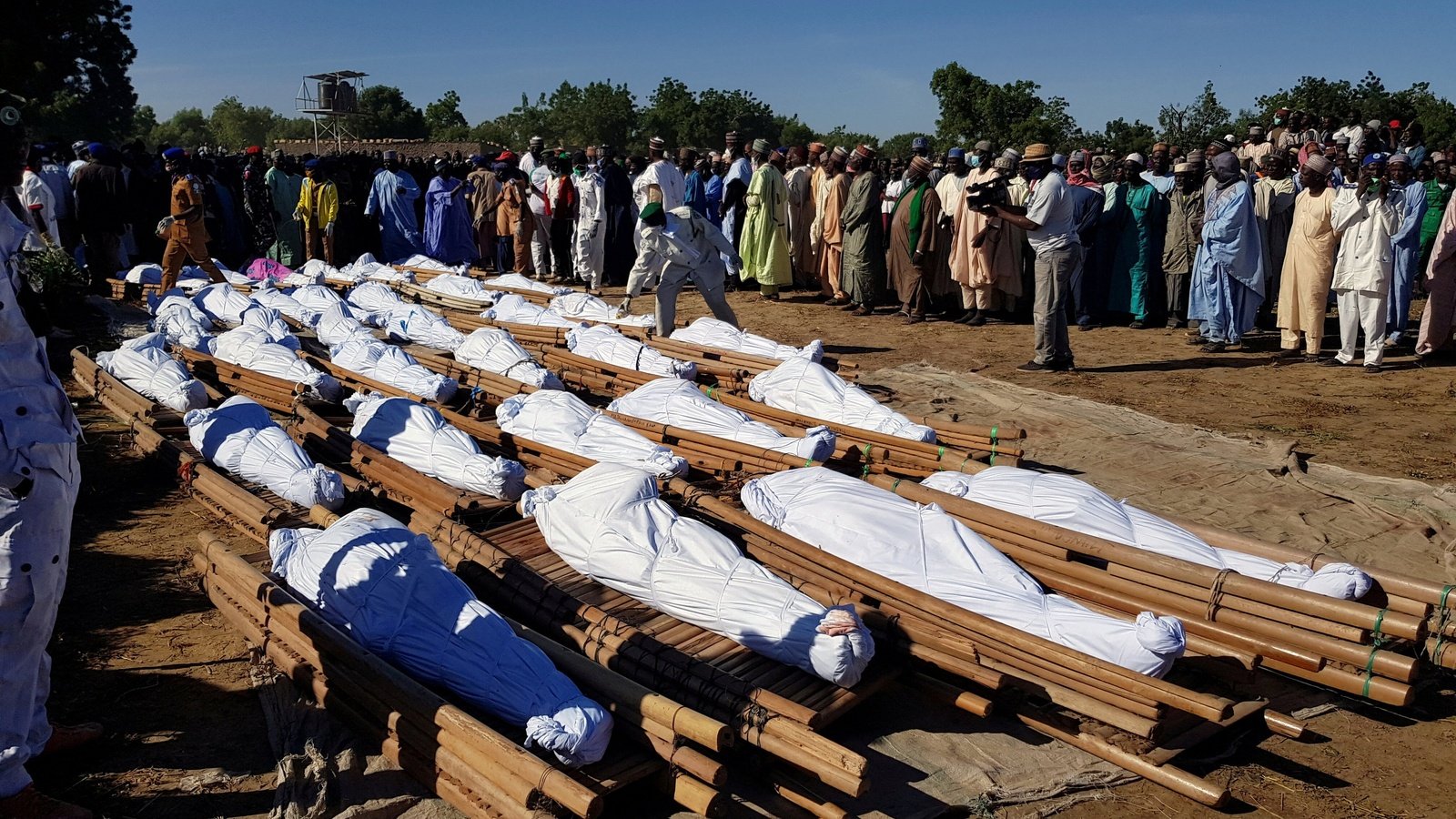
Reports from Kala Balge Local Government Area of Borno State have disclosed how Boko Haram fighters raided the community Sunday and slaughtered over 40 innocent farmers. 

The farmers were killed, and some of the bodies were dismembered while some were tied up and their throats slit by the terrorists.

Hon. Zainab Gimba, the federal lawmaker representing the area, confirmed the traumatic incident to the BBC in an interview.

A counter-insurgency expert and security analyst in Lake Chad, Zagazola Makama, stated that the fighters flooded the community en masse and attacked the peasant farmers with machetes.

He added that “over 40 farmers were killed and some of the bodies were dismembered while some were tied up and their throats slit by the terrorists.

“The victims were buried on Monday with residents saying many others are yet to be accounted for,” Zagazola said.

The Daily Reality gathered that those killed had been buried according to Islamic rites, and the search for more bodies continued. 

FG in dialogue with abductors of Kaduna-Abuja train passengers

By Uzair Adam Imam 

The Federal Government is in dialogue with the bandits that stormed and abducted many people in the Kaduna-Abuja train attack. 

The FG was said to have granted a discussion with the bandits for negotiation. 

Dr Jimoh Fatai, who has been designated as chairman of the group pressing for the release of their loved ones, made the disclosure. 

He stated that the Minister of Information, Lai Mohammed while addressing the victims’ relatives, assured them that FG would save the victims.

The Daily Reality reported how bandits attacked the Kaduna-Abuja train, killed eight persons, and abducted many passengers last month.

The bandits in a video threatened to kill all the victims if the federal government refused to negotiate with them.

However, a few days after the attack, the bandits released one of the abductees, Alwan Hassan, the Managing Director of the Bank of Agriculture (BON).

Hassan was alleged to have paid the sum of N100 million as ransom.

Boko-Haram expansionism and the future’s gruesome picture

By Abdulhaleem Ishaq Ringim

The Abuja-Kaduna train attack has finally halted the speculations regarding Boko-Haram’s expansionism into North-West territories of Nigeria. Although warnings sounded as far back as 2-3 years ago were suggestive of the existence and operationalization of such an active expansionist agenda, it wasn’t until January 2022 that I saw what I consider the first official acknowledgement of the expansionist efforts of BH. This acknowledgement was contained in Kaduna State Ministry of Internal Security and Home Affairs’ annual security report wherein lies observations of escalating relationships between Boko-Haram groups and bandits.

It should be recalled that Boko-Haram ceased to exist as a single entity since 2014/2015 when factionalism befell the central entity. This factionalism yielded 3 different groups distinguishable by certain ideological and tactical contrarieties. They are; The Shekau Led Jama’atu Ahlis-Sunna Lidda’Awati Wal-Jihad (JASLWJ), The Al-Qaeda in the Islamic Maghreb (AQIM) supported Jama’atu Ansaril Muslimina fi Biladis Sudan (Ansaru) and The Islamic State (IS) supported Islamic State in West Africa Province (ISWAP). And they have been fighting one another for influence and jurisdiction ever since. 

Interestingly, establishing an influential presence in North-central and North-west Nigeria has always constituted a major aspect of these groups’ grand agenda. But for years, it had proven hard for this objective to be achieved by any of the groups even after staging several operations in the 2 subregions as none of them was able to establish that desirable level of hegemonic presence and influence. 

However, among the three groups, Ansaru remains the most influential in the North-west even though it is thought to have hibernated after the face-off that ensued from the factionalism. Terror watch reports suggest that while in hibernation, Ansaru embarked on a strategic recruitment exercise targeting NW’s most dominant non-ideological criminal groups – the bandits – through infiltration, training, tactical assimilation and arms supply. Apart from Ansaru, Shekau-led JAS through some commanders(like Adamu Bitri before he defected to ISWAP and eventually died) also established and maintained contact and relationship with leaders of some bandit groups. 

Last year, Nigeria’s terror network experienced heightened volatility due to the escalation of the conflagration between the two major terrorist organizations —the Shekau-led Jama’tu Ahlis Sunna Lidda’awati wal-Jihad (JAS) and Al-Barnawi-led Islamic State in West Africa Province (ISWAP) — operating in the North-east and Lake-chad basin. This resulted in the death of Abubakar Shekau by suicide which sparked serious disarray within the network and rendered the JAS somewhat defenceless. 

Consequently, ISWAP issued an ultimatum to all JAS commanders and fighters to either defect to ISWAP and pledge allegiance to Al-Barnawi or vacate all former JAS territories which now fell under their control. Some commanders and fighters complied and defected while many others surrendered to the Nigerian Army with the aim of becoming beneficiaries of the Nigerian government’s amnesty program(Operation Safe Corridor). The third group of JAS commanders and fighters who neither defected nor surrendered to the Nigerian army were thought to have migrated to NW to forge alliances with bandit groups. 

By implication, the above-stated events suggest that while Ansaru continues to remain the closest to NW bandits, ISWAP and former JAS fighters might have also re-ignited links with bandit groups in the NW. While ISWAP might have taken over control of the vast network of bandit groups that were formerly affiliated to Shekau-led JAS due to the carpet-crossing of JAS commanders (some of whom are the keepers of the link between JAS and the bandit gangs in the North-West just as Adamu Bitri) to the ISWAP side, JAS fighters that refused to surrender to both ISWAP and the Nigerian Army might, however, have also migrated to NW to forge alliances with bandits and escape ISWAP’s wrath. 

Now, the changing dynamics, improved weaponry and renewed offensive tactics seen in recent attacks thought to be staged by bandits are testimonials to an improved alliance between Bandits and members of BH groups. These attacks carry BH signatures all over from attacks on public infrastructure (as in the case of the two train attacks) to attacks on military formations (e.g NDA and the Birnin Gwari Army Forward Operational Base) and the efficient use of IEDs for offensive have increased in frequency in NW states. The recent videotape that was released in the aftermath of the release of the Bank of Agriculture’s MD also signals this unholy alliance. 

At this pace, North-west Nigeria is on the verge of becoming a deadlier terror zone than the North-East ever was. This is because we are dealing with two groups with complementary terror/criminal expertise synergy which holds the potential for the establishment of the most sophisticated terror network Nigeria has ever seen. The bandits indubitably boast of an unmatched knowledge of the local terrain and geography of North-west’s forests and other ungoverned spaces while BH groups, be it Ansaru or ISWAP, boast of a very deadly extremist-ideological core with a sophisticated array of terror-based expertise and affiliation to global terror networks through Islamic State(IS) African subsidiaries(for ISWAP) and Al-Qaeda in the Islamic Maghreb (AQIM) (for Ansaru) that allows them access to global terror resources and funding.

The bandits also have numbers sourced from a rich population of child soldiers. Their numerical preponderance, nonideological-cum-uneducated nature and relatively young base makes them extremely vulnerable to indoctrination and a suitable source for terror manpower. Sadly, the use of child soldiers for terror activities is attributed to both ISWAP and Ansaru, but ISWAP has gone further to institutionalize child recruitment and indoctrination using international terror recruitment standards. Hence, ISWAP might leverage this rich child-soldier manpower source opportunity more effectively. 

As I write this piece, I must confess to experiencing the oscillation of an overwhelming shockwave of fear that has been travelling through the deepest core of my body since I discovered ISWAP’s new recruitment and indoctrination strategy through open-source terror watch networks. And here is why:

The largest bandit-manpower source is predominantly the forsaken, uncivilized and uneducated population of forest-based Fulani. Several testimonies from victims of kidnapping further affirm that the bandits are mostly young boys aged 14-18. They have been adjudged to be tremendous in terms of population and now BH groups (ISWAP, ANSARU, fmr JAS) have infiltrated the vast bandit network due to the government’s avoidable mismanagement of the entire situation which metamorphosed from the farmer-herder crisis. Unfortunately, the continued mismanagement of this crisis now holds the potential of further transfiguring into an implosive generation-long extremist insurgency.

ISWAP has instituted a new recruitment and indoctrination initiative. This initiative aimed at recruiting an army they term “The Empowerment Generation” focuses on training and indoctrinating children aged 8-16 as seen in a propaganda video released by the group. The implementation of this training and indoctrination exercise is done through the instrumentality of a well structured educational institution named “Khilafah Cadet School”. Cadets, otherwise called “Cubs of the Caliphate” are drilled in extremist Islamic education; tactical military, arms and infantry training; and Jihad and enemy execution techniques. 

This school boasts of having a well-structured curriculum consistent with global terror standards and a strict entry requirement as students have to pass entrance exams before getting admitted. The school is well-funded and resourced. The scariest aspect of the video is the scene that shows the cadets practising special force warfare tactics. In the scene, the cadets are shown entering a building in special forces style to extract enemies. The enemies used for this drill were Nigerian soldiers captured by ISWAP. After the extraction, the 3 soldiers were made to kneel and they were all shot in the head by three different child soldiers barely aged 15. The precision, the tact and the efficiency in execution are consistent with that which is usually seen in war movies. 

The “Cubs of the Caliphate” are a product of a long-term strategy envisioned by ISWAP to continue the ideologically-driven war for another generation, serving as a formidable and inexhaustible manpower source for the terrorist army. As I watched that video, I reflected with fear on the young bandit population in the NW and the possibility that most of them might end up getting admitted into such kinds of indoctrination programs as a result of the strategic alliance between bandits and these terror groups. I could not help but weep at this gruesome picture of the future, asking what if Boko-Haram groups succeed in assimilating a major section of the young bandit population operating in this part of the country? 
The catastrophe that would result from this scenario is indescribable. Nigeria has managed to mismanage every security situation that it had ever faced. But we cannot afford to continue mismanaging this crisis for the future looks gruesome unless a de-escalation happens. But how do we tame this menace? 

The only security situations in Nigeria that the government had been able to manage to an extent are those that benefitted from robust dialogue and amnesty programs. And the closest we got to destroying insurgency through the use of brute force was when mercenaries were hired to fight Boko-Haram in 2015. But just like dialogue, the implementation of completely annihilating military offensives is as well another efficient option in countering terrorism and insurgency. But in Nigeria’s context, this method carries the smell of impossibility all over it. In fact, brute force clearly constitutes precedential failures in the fight against terror and insurgency in Nigeria.

The highest level of brute force(since the completely annihilating one has so far been simply unachievable) we have been able to exert could not tame Niger-Delta Militancy, it hasn’t been able to crush Boko-Haram for almost two decades now. And it is yet again proving inefficient in the fight against bandit-terrorists even before the infiltration of the very tactical and well-resourced Boko-Haram groups. 

We are left with two options; the Gumi option of dialogue and strategic engagement with stakeholders in the affairs of these bandits with the aim of securing a ceasefire and ultimately, surrendering of arms in exchange for amnesty and redress(before they completely get assimilated into the ideological war BH groups are fighting) or the Elrufai solution of engaging the services of mercenaries to perform a sweeping operation targeting all forests and hamlets harbouring these bandit-terrorists and their BH affiliates since the implementation of such method by our military seems impossible. 

Principally, the fundamental responsibility of every government is to safeguard the lives and properties of its citizens. Nigeria’s government under President Buhari has failed in that responsibility but we can no longer tolerate this failure for it holds the potential of consuming us and the country at large. Nigerians must rise up and demand an end to this barbarism NOW! 

Abdulhaleem Ishaq Ringim is a political/public affairs analyst. He writes from Zaria and can be reached through haleemabdul1999@gmail.com.

Giwa, banditry and internally displaced persons

By Musa Kalim Gambo

Before this kidnapping, banditry, and terrorism got to this scary stage, I consider(ed) Giwa my favourite and adopted Local Government in Kaduna State. This is a place where I have the largest number of friends in Kaduna State; many of these friends have come to assume the status of brothers to me. Not long ago, I visited Giwa frequently, almost weekly.

Now all things have changed. Giwa has become an epicentre of kidnapping and terror attacks on innocent individuals. Criminals attack people at home and on their farms; kill and abduct for a huge ransom. In the past few weeks alone, the rate of this criminality has intensified geometrically. Due to this tragic development, some villagers have been forcefully displaced. They have had to migrate to the Giwa town, which is relatively safer than their communities. About 3,000 of these displaced persons now take refuge in camps in Giwa town, Marabar Yakawada, and Yakawada. While a large number of the displaced persons have also moved to stay with their relatives in neighbouring towns of Sabon Gari and Zaria in Kaduna State and Funtua in Katsina State.

The families who have been sadly uprooted from their homes have obviously been denied access to the arable rural farmlands. Beyond the refugee crisis, this will result in an attendant shortage of food in the towns, which may eventually spill over to the rest of the country. Therefore, it is evident that life will not be easy for them in their camps and the host communities.

These refugees now have to contend with the gory reality in town, that while they run for their lives, they also definitely need food, medical attention and clothes to survive in their new temporary settlement. It has been reliably reported that the Giwa Local Government Chairman, Dr Abubakar Shehu Lawal, has made provisions for feeding them at various refugee camps in Giwa and across the Local Government. Also, Senator Uba Sani is reported to have delivered some relief items to the camps. This is indeed commendable. The local politicians have indicated a high level of commitment to responding to the plight of their people in distress.

However, all these are not enough. What is needed is a total end to this incessant spate of killings and kidnappings in Giwa. Within the week, this was one of the major issues raised on the floor of the House of Representatives by Honorable Shehu Balarabe, a member representing Giwa and Birnin Gwari federal constituency, in a motion of urgent public importance. Honourable Balarabe, in a very emotional tone conveying the gravity of the situation, highlighted the depth and dimension of the troubles and crises that these banditry, kidnapping and senseless killings have plunged his constituency in both Giwa and Birnin-Gwari. He called on the Federal government to direct all the relevant agencies to swing into action in order to address the crisis.

It is sad to note that the two Local governments that Honorable Shehu Balarabe represents at the House of Representatives are the two most dangerous places in Kaduna State in terms of banditry and kidnapping today. So it is easy to understand the difficult situation in which the Honorable finds himself as one of the voices of these people in Abuja. Birnin Gwari suffers way too much from the atrocious attacks of these bandits, and it also has its refugee crisis as well. However, I write on Giwa because of my deeper connection and access to the situation there.

So to an appreciable extent, it may well be concluded that the political leaders from Giwa are playing their roles to bring an end to this madness that has continued for too long. However, what remains is the commitment on the part of the federal government, which obviously does not seem to render any positive outcome yet. There has been a military presence in Giwa and other bandit infested communities. However, it has remained a puzzle that the criminals could still carry out attacks almost every day without any hindrance.

The month of Ramadan has just begun. While we keep calling on the governments at all levels to aid these communities in crises, it is also important for us to use this holy month to pray to Allah to provide succour and restore peace and sanity in the land. It is now evident that we should no longer pray for Allah to guide these criminals aright, no! They have unleashed an unforgivable magnitude of terror on our land. The least we can do now is pray for an eternal condemnation upon them, starting from here on earth. It should also be our point of prayer that whoever supports these criminals, in whatever way or means, from their informants’ right to the supply chain of their arms and ammunition, should face eternal perdition and body crippling afflictions here on earth before they meet their worse punishment in hell.

Finally, may Allah grant our leaders the will and ability to put in place the right measures to end these killings and kidnappings. At the same time, we should assist these displaced persons with the little we have in terms of food items and clothes; I have also seen a group of youths on Facebook led by the immediate past president of the Giwa Students Association, Nuhu Haruna mobilizing funds on Facebook to assist these displaced persons. We should contribute as much as we can.

Musa Kalim Gambo writes from Zaria and can be reached via gmkalim@hotmail.com.

Worsening Insecurity: Our lives latter 

By Najeeb Maigatari 

The recent attack on travellers along the Abuja-Kaduna road is shocking. The fact that those ‘terrorists’ could now detonate explosives before killing and kidnapping innocent people is damming and quite alarming. It says a lot about our security system. 

It also sends a clear message to everyone that no one is safe. We are all in this mess together; the ordinary people and the ‘elites’ alike. No transportation system is secure in the country. One could now be attacked when travelling by road, railway or even by air. 

The unfortunate train attack is not the first of its kind- and will seemingly not be the last unless the needful is done. The only difference is that this time around, unlike other attacks before, the ‘terrorists’ appear well-armed, more audacious with the hunger to kill, which shows their daunting strength. 

Those terrorists have been attacking villages and killing people, especially in the northern part of the country, where such attacks have become the order of the day. They have established themselves as an authority with several villages under their control. Some of their brutal attacks and heinous crimes are underreported in the news media. 

According to the Nigeria Security Tracker (NST), in a report published from January to February, at least 1761 people lost their lives across the country in incidents related to insecurity and protracted armed violence. 

Under our noses, our beloved country, once a nation of peace and tranquillity, is gradually turning into the likes of Somalia, Libya, and Afghanistan or worse; today’s Nigeria has become a slaughterhouse, and its citizens turned into walking corpses. 

Even worse, most of those killed are people trying to make a living for themselves and their families. People are killed in their homes, offices, markets, on roads, and virtually everywhere. It’s practically killings everywhere at every turn under every circumstance. 

It suffices to conclude at the moment that there’s seemingly the creation of ‘a state within another’. On the one hand, there’s almighty sovereign Nigeria – that continually fails to protect its citizens – and on the other hand, the hypothetical terror nation ruled by such terrorists as Boko Haram, bandits, kidnappers and the likes. 

The government is evidently failing – woefully so – in its fundamental responsibility of securing the lives of citizens, as they swore to do before taking over from the previous administration. 

Therefore all hands must now be on deck to nip in the bud this issue that threatens our existence irrespective of gender, ethnicity, religious or political affiliations. 

To begin with, the government should be bold enough to fish out and address the ultimate cause of all these crises, such as answer the question as to the genesis of the terror groups, their sponsors, financial channels, sources of arms and weaponry, contacts in the community, etc. 

In addition, such factors that tend to inflame the situation as poverty, social injustice, illiteracy, etc., should also be proactively addressed by devising measures to assuage people’s suffering and displeasure. 

Furthermore, the security forces should be well equipped with state-of-the-art weapons to take the war to the terrorists’ camp. They should also engage the public as people. If people can get trained, they can be utilized for intelligence gathering, informant tracing, reporting suspicious activities, etcetera. 

In conclusion, the people should also cooperate and work hand-in-hand with security forces and other relevant government agencies in every way legally possible in order to curtail the worsening insecurity crisis ravaging the country once and for all. 

Our lives must matter as long as we continue to call this our homeland. We should not allow those ‘terrorists’ to take over our homes and rule our lives in perpetual fear. If those in authority cannot secure our lives, they should honourably step aside and let competent individuals take over the helm of affairs in the country. Enough is enough! 

Najeeb Maigatari writes from Jigawa State and could be reached via maigatari313@gmail.com.

The bleeding North and the executive inaction of its leaders 

By Mohammed Baba Goro

God knows how hard I’ve been suppressing this uncontrollable urge to write about the damning insecurity, especially that of the bandits. Yes, our hues and heys do not matter, but the sigh that comes with someone pouring the biting grief of his heart out is a relief! Again, I wouldn’t want to get emotional in doing that, but the situation of insecurity is enough to cause any well-meaning leader to lose sleep.

I felt cold when all northern leaders could give President Muhammadu Buhari (PMB) during the convention as pass mark was hearty cheers, especially the remarks by the Senate President and Governor Atiku Bagudu of Kebbi State. The governor just lost over 60 vigilantes in one ambush, alongside police officers and a DPO. Yet, it all sounded like all was well with the North and the country.

The economy, insecurity, and corruption are the hallmarks promises of this administration, yet these are the areas the regime has failed the most. Even when you try to tinker with them because of some sparsely built infrastructures – though this is typical of every administration; the high economic numbers that have dragged more people into poverty keep staring at you in the face to have a second thought.

The recent attack on the Abuja-Kaduna train reaffirms that we don’t learn a lesson. The government is inactive, and this is an outright failure of leadership that has deserted the masses on the mercies of the Almighty.

All these tell us that, on the one hand, there is a disconnection between what those in the president’s echo chamber tell him and the reality the masses face. And on the other hand, the executive inaction of its leaders. If not, their remarks to Mr President at the convention shouldn’t have been praises alone but a mixture of some honest and collective concerns about the bleeding North and the urgent need to get to grips with it. 

I hope and pray Mr President will write his name in gold, at least for his last days in office, to exterminate these destructive elements and redeem the promise of peace and security he made amidst tears to his Northern kith and kins, and for him to have a befitting retirement.

Mohammed Baba Goro writes from Mokwa in Niger State. He can be reached at: mohammedbabagoro3@gmail.com.

Airspace and aviation security in Nigeria: Matters arising

By Mukhtar Ya’u Madobi

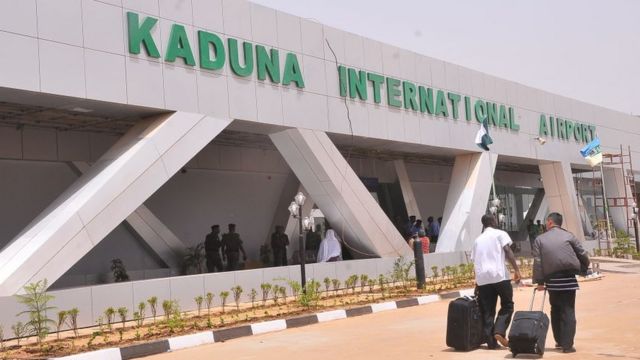
Another national embarrassment almost happened over the weekend. But alas, it wasn’t fated. Reports indicated that a group of bandit-terrorists, about 200 swarmed the Kaduna International Airport located in Igabi Local Government Area of the State.

The incident temporarily led to the disruption of activities, including the grounding of an Azman Air Lagos-bound aircraft. In addition, a security officer attached to the Nigerian Airspace Management Agency (NAMA) also lost his life.

It was learnt that the terrorists were on a revenge mission after some Nigerian military troops neutralized scores of them and equally retrieved some rustled cattle in their possession.

However, this unfortunate development is coming after another security breach had occurred last year, when the same category of criminal elements–bandits–invaded the country’s highest defence and security training hub, the Nigerian Defence Academy, NDA, in Kaduna.

Aside from killing some soldiers, reports claimed that the bandits abducted a senior military officer.

Nevertheless, the level at which these non-state actors are resurging and unleashing violence at will is something that needs to be treated with the adequate attention it deserves. Government and security agencies should live up to their expectations to surmount these lingering security challenges that disturb our nation’s peace.

It has been noted that an efficient transport system is part and parcel of national security as it entails the movement of people and goods from one place to another across the length and breadth of a particular geographical location. But in today’s Nigeria, it is disheartening to learn that people no longer travel comfortably with peace of mind due to uncertainties associated with our entire transport system.

For example, looking at the land transport system, the roads are in bad shape caused by numerous potholes that can easily plunge a motorist into an accident. Apart from that, the roads are also not safe as bandits, kidnappers and armed robbers are always having a field day launching attacks on commuters, robbing them of their hard-earned properties, abducting or even killing them.

Even the trains are no longer safe as terrorists have since devised a means of exploding rail tracks, thereby forcefully bringing them to a halt to pave the way for them to carry out their nefarious activities on passengers.

The recent bombing of the Kaduna-Abuja rail track by bandits is one of the worst attacks on the Nigerian transport system. Several passengers were killed, others got injured, while scores were equally abducted and yet to be accounted for.

Similarly, Nigeria’s waterways are also dangerous because they are swarmed by pirates who rob ships and sometimes abduct the entire crew only to release them upon payment of ransom. With the recent attack on the airport, it is right to deduct that the entire Nigerian transport system is compromised and has lost its calibre to serve the functions it is known to deliver.

The time is long overdue for Nigeria to rise to the challenge of safeguarding airspace and other transport sectors from the menace of criminal elements.

The importance of airspace and aviation security has been captured effectively in Nigeria’s National Security Strategy (NNSS 2019), a document published by the Office of the National Security Adviser (ONSA), Babagana Monguno, a retired Major General.

According to the document, “Efforts to secure the Nigerian airspace will be led by the Nigerian Air Force (NAF) in collaboration with other relevant agencies. Considering the vulnerability of the airspace, the NAF will employ preventive and protective measures to guard against airspace violations through [the] enforcement of international and national air laws.

“In addition, the NAF will deploy its resources to ensure the integrity of Nigerian airspace is maintained at all times. This will include [the] conduct of aerial surveys and delineation of security zones and liaison with appropriate agencies towards the completion of the Total Radar Coverage of Nigeria (TRACON) project to ensure effective monitoring and airspace security.

The primary stakeholders principally concerned with safety and security in the aviation sector include the Nigerian Civil Aviation Authority (NCAA), Nigerian Airspace Management Agency (NAMA), the Federal Airports Authority of Nigeria (FAAN) and the Nigerian Air Force (NAF), among others.

The role of these agencies is expected to be coordinated and enhanced in line with extant legislation and policy on Nigerian Aviation Security.

Nevertheless, another evolving phenomenon in airspace security is the preponderance of drones which constitutes safety challenges such as air misses and mid-air collisions with manned aircraft and security challenges such as air space violation, penetration of prohibited airspaces, a threat to VIP security, terrorism and espionage. Others are law enforcement challenges such as drug trafficking and proliferation, all inimical to national security.

To properly secure airspace and the aviation industry, the government must ensure the continuous provision of modern and up-to-date equipment and the promotion of adequate training and professionalism of various agencies handling different aspects of aviation security.

Additionally, Standard Operation Procedures must be developed to streamline the roles and responsibilities of the various agencies to optimize their performance and enhance the cohesion of their personnel.

Furthermore, it is imperative to ensure the development of standard safety protocols and resilience to protect critical aviation information infrastructure against cyber-attacks to enhance aviation security.

Mukhtar wrote from Kano via ymukhtar944@gmail.com.

The burning train of a burning country

By Khadijah Tijjani

It has been a while since I wrote about issues of national interest. I have decided to steer clear of such conversations because I doubt if it is really worth it. I used to pride myself in being a patriotic Nigerian until about a decade ago when the post-graduation shock shook me to the marrow.

Fresh out of medical school, I was determined to serve my country “with love and strength and faith”, using my knowledge and skills. But I was greeted with a cold welcome into a moribund system – a system that had almost nothing to offer but was ready to suck your sweat and blood and abandon your remains when you’re done with your heroism.

This is not about me and how I lost hope in the fatherland. If I’m still alive, I’ll tell you the whole story some other time. My grouse for today is stimulated by the recent terrorist attacks on the Kaduna-Abuja train. I’m sorry to bore you with this rant; I hope it makes me feel better. I’m just here to let it out and stop pretending to be oblivious.

I despise horror and tragic movies because of some traumatic scenes I watched as a kid. One of such movies is THE BURNING TRAIN, a Bollywood blockbuster that made waves in the early 80s. Vinod, a railway engineer, launched the Super Express, a dream project that was India’s fastest passenger train. Unfortunately, the train went out of control on its maiden journey due to a bomb planted by a rival. Directed by Ravi Chopra, the movie was known to have moved millions of people to tears.

Every time I replay that movie in the part of my brain that stores it for over two decades, I struggle to hold back the tears.

I never imagined something strikingly similar happening in real life, claiming several lives so close to home. The terrorists, having succeeded in stopping the Kaduna-bound train, reportedly shot sporadically and held the stranded passengers hostage for over an hour.

One of the victims was a promising young colleague – Dr Chinelo. This was a brilliant doctor who could have discovered the next best treatment for cancer, HIV or another disease yet unknown. But instead, she was wasted a few days after obtaining her GMC licence to practise in the UK.

Could she have survived if we had quick and effective disaster response teams? Only God knows.

She was lucid enough to tweet a distress call and probably breathed for a couple of hours before kicking the bucket. But what sort of treatment did she get? Welcome to Nigerian hospitals!

The train attack happened less than 24 hours after a similar incident along the same route. This mishap rekindled my memory of that catastrophic movie, The Burning Train. I’ve been trying not to talk or write about it, but my heart can no longer contain the pain.

I am a woman of faith and believe in the power of prayers. However, we’re on a burning train in this country, and faith is not enough to quench the fire.

This train is burning, and the political leaders are going about their rallies, spending millions of naira on branded clothes and live bands.

This inferno is consuming the best amongst us, but the worst amongst us are winning and dining.

This country is burning like wildfire, but there’s no fire truck anywhere.

They say there is light at the end of the tunnel. But the end of this burning tunnel is obscured by thick smoke that can kill faster than the fire itself.

We seek your aid, yaa Allaah!

Khadijah Tijani is a medical doctor. She writes from Ibadan and can be reached through askodoctorkt@gmail.com or @AskDoctorKT.

Insecurity: Reengaging ‘Yan Sa-Kai and the need for caution in Zamfara

By Suleman Ahmad Tudu

One of the immediate decisions of Gov Bello Matawalle’s administration was disbanding the vigilante group popularly known as Yan Sa Kai as one of the conditions for dialogue with bandits in his efforts to bring a solution to the decade of bloodshed in Zamfara state. The dialogue has recorded some early successes in almost a year of its initiation.

Unfortunately, despite being given this ample opportunity for the bandits to completely lay down their arms and embrace a lasting peace, some of them refused to subscribe to the dialogue. They continue launching and intensifying their deadly attacks on communities—killing, kidnapping and rapping women unabated, taking advantage of the vacuum created by disbanding their sworn enemies, the Yan Sa Kai.

Some negative implications of disbanding the Yan Sa Kai are that many communities that gallantly resisted bandits before the disbandment have now submitted to them. Palaces that were no-go-areas to bandits before have now become accessible to them. As a result, the morale of many vigilante members has been killed. The bandits have also taken advantage of the dialogue to deceive the government and get many resources. They kidnap many people, including school children, for ransom to procure more arms.

But we can honestly understand the justifications behind the disbandment of Yan Sa Kai in the first place as a sine qua non for dialogue to thrive. The activities of this group have fuelled the crisis for their jungle justices—extrajudicial killings and ethnic profiling of criminals. All Fulanis are bandits to the Yan Sa Kai, which is wrong!

Now that Gov Matawalle has reversed his decision to reactivate the Yan Sa Kai in the fight against terrorism (banditry), which is very good, there is a need for a caution in the recruitment, administration, and operations of the about to be born-again group. We need Yan Sa Kai guided by rules of engagements, monitored by security forces and coordinated by established authority. We need Yan Sa Kai with some basic military training and improved weaponry, not the locally fabricated, non-cartridge guns, bow and arrows that cannot match the arsenal of the terrorists.

Achieving this requires efficiency right from the recruitment process. Government should not simply dust off the list of the previous members without scrutiny to fish out those whose morale has been killed or no longer believe in the course of the group. Liaising with traditional institutions will be an effective way only if those who have cases to answer are side-lined in the process. Government should also not mistake recruiting members of the born-again vigilante group from the communities that were adjudged to have wholly submitted to bandits before or during the dialogue initiative. These measures could help avoid enlisting bad eggs who would compromise or sabotage the group’s activities.

Training of the carefully selected and thoroughly profiled members of the group will go a long way in shaping their mindsets and inculcating in them the rules of engagements, discipline, command, control and coordination. It will also mend their relationship with the security forces with which they should work together as a team. This can be possible within at least a month of rigorous training.

Granted that Yan Sa Kai knows the bandits, their collaborators and hideouts better than the security forces, yet storming weekly markets in the name of hunting bandits or their collaborators is a flawed strategy that has to be changed. They used to carry extrajudicial killings during such operations that sometimes affect innocent people. This time around, the group’s approach should be offensive by jointly reaching out to the bandits’ enclaves together with security forces now and then. And if the group has to defend and hunt, the defence should be restricted to every member’s immediate community while the hunt should be on the checkpoints to be placed in strategic places. 

While NO suspect deserves to be (extrajudicially) killed but arrested and prosecuted accordingly, I can command that any civilian seen wielding an AK-47 rifle should be “shot at sight” as ordered by President Muhammadu Buhari!

May Allah grant us everlasting peace in Zamfara and Nigeria at large. Amin.

Suleman Ahmad Tudu wrote from Nasarawa Mailayi of Birnin Magaji local government, Zamfara state. He could be reached via suleatudu@gmail.com.