Sule Lamido

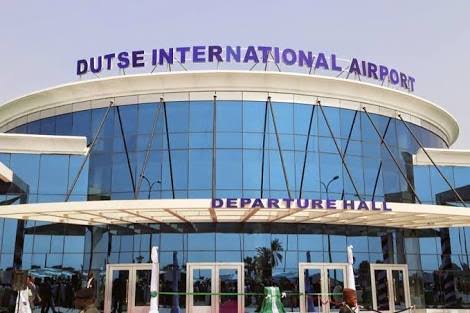
Governor Badaru and Governor Namadi and the Dutse International Airport: A Misuse of N11.5 Billion of Jigawa State’s Public Funds

–A costly decision demanding accountability, public scrutiny, trust, leadership priorities, and responsibility

By Nura Jibo MRICS, MNIQS, PQS, RQS, UN-DCP

If Muhammad Badaru’s eight-year stewardship as Jigawa State’s governor could not provoke his conscience to reflect on the abandonment of the N11.5 billion Dutse International Airport, from which Jigawa State’s public money was taken and used by Governor Sule Lamido, nothing will! 

If Governor Umar Namadi’s one-year display of overt leadership anger, just to play to the gallery while inspecting projects at Dutse General Hospital and Rasheed Shekoni, is any indication of god-fearing, at this point, he should be seeking Allah’s repentance and forgiveness for neglecting the Dutse International Airport that Governor Sule Lamido spent N11.5 billion to construct.

The issue is: It is not just about campaigning and winning public office. It is not about aspiring to be a governor, senator, minister, or president while relegating public responsibility. Indeed, it is about taking a substantial amount of Jigawa State’s money to build an airport that its ordinary citizens (Talakawa) have never benefited from. It is about earning public trust, accountability, responsibility, and excellence by safeguarding public funds and ensuring that the people of Jigawa State receive value for their money.

Anything short of this, one would inevitably appear before Allah SWT and answer for all misdeeds, inactions, and karmic retribution.

It is very painful to witness a project one participated in constructing being abandoned by Governors Badaru and Namadi after an enormous sum of N11.5 billion was spent on it. And the governors who do this are sleeping with both eyes closed! They forget that a day of reckoning is coming when they must appear before their Creator and answer the most difficult questions of their lives. 

The engineers from Jigawa State’s Due Process involved in this airport project are also unhappy with the abandonment of the Dutse International Airport.

The person who hired this writer as a supervising consultant for Dutse International Airport in 2013, Mallam Rabi’u Shuaibu Kazaure, then director of building at Jigawa State’s Due Process and Project Monitoring Bureau, has passed away. He was a man of integrity, sincerity, and honesty who diligently discharged his duties. May Allah bless him with Jannah and continue to reward his efforts in the airport project. 

Therefore, the deliberate killing and systemic lack of foresight and vision by the two governors regarding the Dutse Airport is not only negligent but also significantly affects the weak, crushing the innocent’s opportunity cost and marginal propensity to invest their billions in agribusiness and other Jigawa State science and technology developments.

Indeed, airport construction and management are not for everyone! It is not merely a governor’s affair! It is not a long-standing academic practice in which a governor would recruit or “shop” lecturers from universities and give them “lucrative” positions in Jigawa State, expecting them to perform miracles, while their true expertise lies in marking students’ scripts for years. They know nothing about industry knowledge beyond their rules of engagement as academics and their involvement in academic staff unionism, which they spent decades pursuing with little success! 

Managing Jigawa State’s departments and agencies is certainly beyond a mere academic exercise. It requires industry knowledge, not academic learning. It does not require mastery of the English language, where certain DGs in Governor Namadi’s cabinet, for example, could deceive the governor with all sorts of English grammar or polemics in the name of “fetching” Jigawa State government investors from abroad.

This could be elaborated more succinctly in a subsequent discussion on the mismanagement of Jigawa State’s funds by Governor Namadi and his DGs on foreign trips under the pretext of seeking investors for Jigawa State. If time permits, photos and videos could be released to substantiate this point!

Now back to the wasteful venture of the Dutse International Airport.

Governor Sule Lamido’s efforts must be acknowledged and appreciated for the construction of the Dutse International Airport. He single-handedly started this project in February 2013 and completed it in 18 months! This is certainly commendable for a governor who is primarily an administrator and a lifelong politician rather than a technical expert.

However, even Governor Lamido’s vision and mission for the airport could be faulted for his limited understanding of how airports are managed globally, particularly when the client (owner) lacks the resources to manage it. This writer has repeatedly communicated with Governor Lamido about the importance of handing over the entire airport to a reputable airline to operate it on behalf of the Jigawa State government. This is akin to an agreement reached with Captain Edward Boyo, the CEO of Overland Airways, who scheduled a three-day flight connecting Abuja, Dutse, and Bauchi. Unfortunately, the memorandum of understanding agreed upon with Overland was not honoured by Governor Badaru and his entire cabinet. Neither was it honoured by Governor Namadi, courtesy of political disputes arising from party differences, which ultimately led to the waste of Jigawa State’s people’s money and resources in perpetuity.

Very recently, in a conversation with top political office-holders in the state, they recounted their ordeals over their inability to make the airport functional and useful.

An investigation revealed that a South African company interested in the Dutse International Airport came and went without arriving at a common standpoint. Ethiopian Airlines was also revealed to have an interest in turning it into a cargo airport, but Governor Badaru and Governor Namadi’s lack of interest has hindered this line of business.

It is, therefore, foolhardy to talk about or dream of good governance when these two governors came and found a functional airport and, provocatively, made it dysfunctional for political reasons and personal interests best known to them, which are diametrically opposed to public interests. With this kind of behaviour alone, Allah SWT will, insha’ Allah, never allow them to go scot-free, given their lack of responsibility and public trust in sustaining the airport for well over 10 years now! The airport could have at least covered its full construction cost by now! 

For instance, the Murtala Mohammed International Airport in Ikeja, Lagos, is a federal asset managed by the Federal Airports Authority of Nigeria (FAAN) and the Nigerian Customs Service (NCS). Its Customs revenue alone as of 2025 was reported at N202.9 billion! The airport’s FAAN revenue in 2024 was the highest in Nigeria, accounting for an average of 67% of its total revenue of N256 billion.

Malam Aminu Kano International Airport in Kano generated N20.2 billion in revenue, accounting for 5.3% of FAAN’s total revenue in 2024!

Therefore, the Dutse International Airport could have generated at least N50 billion in 10 years (2015-2025) if it had not been left idle or used solely for Hajj ceremonial shuttling by Governor Badaru and Governor Namadi.

Though the revenue from the Ikeja and Kano airports goes to the federal government of Nigeria, by comparison, Lagos State and Kano benefit from increased economic activity due to the presence of NAHCO and SAHCO, as well as from personal income taxes paid by workers and businesses operating in the airports’ vicinity.

This is what the people of Jigawa lost due to Governor Badaru and Namadi’s neglect of the Dutse International Airport for well over 10 years! 

Indeed, on a daily basis, Ikeja airport’s customs could generate an average of N555 million in import/customs duties if its reported 2024/2025 revenue of N256 billion is anything to go by. 

Governors Badaru and Namadi’s avoidance of this airport responsibility since 2015, by portraying it as a ceremonial airport for commuting Hajj pilgrims, is not only detrimental but also exposes the political leaders’ lack of foresight and mismanagement of public funds. 

The indecision regarding the Dutse International Airport by Governor Badaru and Governor Namadi contravenes FAAN’s three measurable KPIs, which include on-time operations, revenue growth, and passenger satisfaction.

Solutions 

Globally, airports are assessed against standards and quality. Dutse International Airport was built to standard. Its runway is 3 kilometres long, and the airport’s width is 60 metres. It is, by all standards, suitable for large aircraft such as the Boeing 747 to land on its runway, with an average concrete and asphalt thickness of seven meters! This does not fall short of the global requirements for the longest runways at the world’s biggest and top 10 airports, with an average length of three to five kilometres.

The financial and economic losses at Dutse International Airport are significant due to the Jigawa state government’s lack of leadership priorities, as evidenced by the management of international airports in Rwanda, Addis Ababa, Qatar, Gatwick, and Heathrow, among others. Taking time, for example, by Governor Namadi to go to the Qatari Embassy in Abuja with a very junior high school colleague to meet with the Qatari Ambassador or inviting him to see the airport, is not the way to woo partners or encourage Qatar Airways to partner with Dutse International Airport. The ambassador’s duty is certainly diplomatic, not technical; he is not in any way going to help the Jigawa state government, technically speaking, make its airport useful. The Qatari people are law-abiding individuals known worldwide for their uprightness and accountability. They mostly engage in charitable and educational programs for deprived communities, as witnessed in Gaza, Palestine, Syria, and in Dutse and Hadejia, Nigeria.

To make Dutse International Airport useful, one must look beyond the banal and quibbling issues of political sentiments and personal interests.

The airport could have been taken in partnership with Qatar Airways if the proper partnership channels had been communicated to Qatar Airways’ commercial department in Doha. It could have been salvaged if, for example, direct contact had been established with Rwandan Airlines rather than Ethiopian Airlines. It could have doubled its construction cost in revenue if the two governors had done their homework very well through Jigawa State’s international partnerships and linkages. This department could have liaised with Gatwick or London Heathrow Airports, for example, in the United Kingdom, or even with Frankfurt Airport in Germany, to take over the management of Dutse International Airport and enter an agreement, inter alia and ab initio, at a 50-50 business fee. 

Lufthansa, for example, offers extensive partnerships and connections linking East and North Africa. There is no harm whatsoever in giving the Dutse International Airport management to Frankfurt’s Lufthansa as an up-taker, or to Madrid Barajas Airport (MAD), which is currently interested in African partnerships by shuttling its flights to connect to various African geographical locations such as Chad, Niger Republic, Rwanda, Ghana, Cameroon, Kenya, Uganda, Senegal, and Mali, to mention but a few. 

Royal Air Maroc could also have been a strong partner to the Jigawa State government and to Dutse International Airport, beyond the Overland domestic partnership that was caught up in Badaru’s and Namadi’s political acrobatics. Indeed, Dutse International Airport, within this 10-12-year period of neglect by the two governors, could have been used to provide serious dollars to the Jigawa State government from abroad and a couple of billions of naira on domestic flight arrangements and agreements, because it would have certainly offered the highest frequency of flight influx and a “buffer” zone from Europe to the west and Sahelian Africa, allowing easy accessibility to passengers and cargo into major African airports like Cape Town, Casablanca, and Addis Ababa etc.

Unfortunately, the current governor is busy shuttling between China and India to invite investors to invest in Jigawa State, with minimal progress that is often overamplified by his new media aides.

Therefore, what is wrong, useless, and should be avoided is what an academic once described as hot-air jargon, popularly known as Dogon Turanci. The Jigawa State government should take the management of its international airport seriously by inviting up-takers to handle the airport for a couple of years, with its staff and technical personnel. No Nigerian or Jigawa indigene should be employed to work at the check-in and check-out counters or security points to avoid passengers begging for money (dollars), which is typical of Nigerian-trained and employed airport staff and has caused significant damage to Nigeria’s integrity and national image. 

Nura Jibo writes for the West African Research Association (WARA) and the African Studies Centre at Boston University, United States.

Rebuttals to this piece are welcome and healthy. They can be submitted to jibonura@yahoo.com.
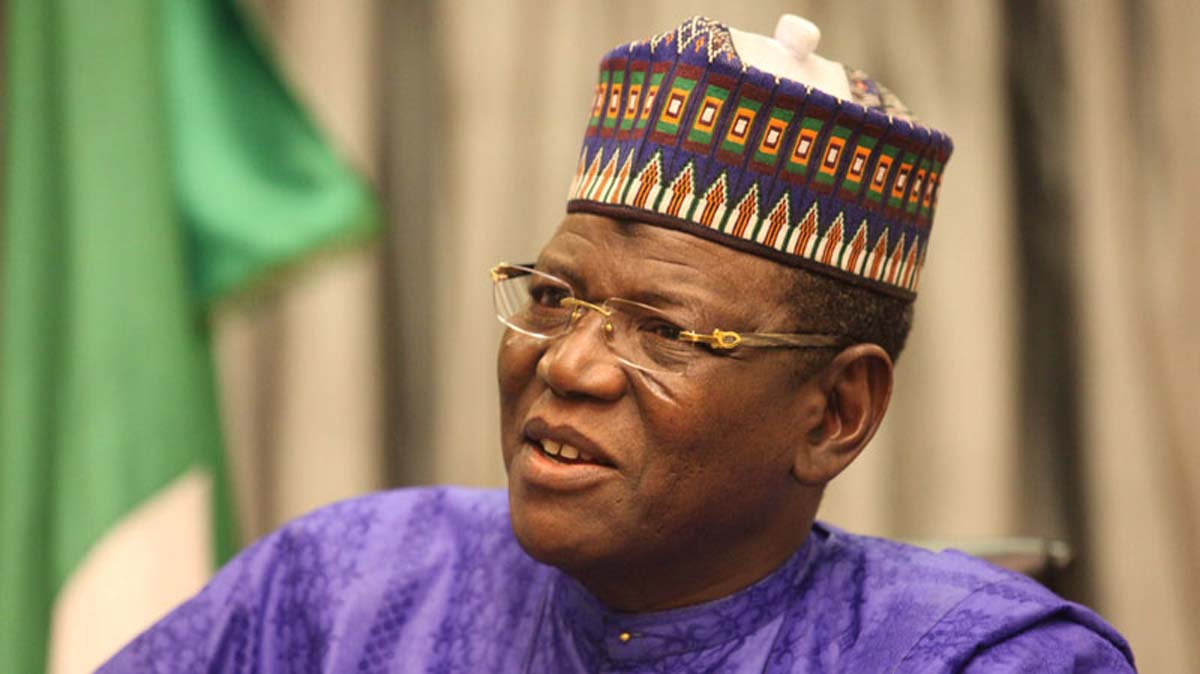
Ex-Jigawa Governor Sule Lamido, two sons to face fresh arraignment in N1.35bn fraud case

By Muhammad Sulaiman

A Federal High Court in Abuja has fixed April 1 for the fresh arraignment of former Jigawa State governor, Sule Lamido, over an alleged N1.35 billion fraud.

Justice Peter Lifu scheduled the new date after Lamido and his two sons, Aminu and Mustapha Lamido, failed to appear in court to take their plea on Friday.

The former governor and his sons are expected to be re-arraigned on charges filed by the Economic and Financial Crimes Commission (EFCC), which alleges that they were involved in fraudulent contract awards used to siphon public funds.

Counsel to the defendants, Joe Agi (SAN), apologised for their absence, explaining that they had received notice of the trial on Thursday evening. He told the court that Lamido and his sons reside in Kano and could not travel to Abuja at short notice.

However, counsel to the EFCC, Chile Okoroma (SAN), expressed surprise at the defendants’ absence, insisting that they had been duly served with the hearing notice.

Okoroma also informed the court that the EFCC had written to the Chief Judge of the Federal High Court, Justice John Tsoho, requesting that the initial trial judge, Justice Ijeoma Ojukwu, who has since been transferred to Calabar, be returned to Abuja to continue hearing the case.

Justice Lifu described the EFCC’s request as an administrative matter to be decided by the Chief Judge, before adjourning the case to April 1 for the defendants’ arraignment.

The EFCC had filed a 27-count charge against Lamido, his two sons, and several companies in 2015, accusing them of laundering about N1.35 billion allegedly diverted from Jigawa State through a complex money-laundering scheme.

Experts call for broader recognition of ulama in Nigerian politics

By Uzair Adam 

Bayero University, Kano (BUK), on Tuesday hosted a landmark conference organised by the Faculty of History and Development Studies, exploring the historical and contemporary roles of ulama in Nigerian politics. 

The event, themed “Ulama and Politics in Nigeria: Historical Perspectives,” attracted scholars, politicians, and religious leaders from across the country.

Professor Muhammad Wada, Dean of the Faculty of History and Development Studies at the university, explained that the central mission of the conference is to highlight the pivotal role of ulama—Islamic scholars—in societal development. 

He stated that, “Over the years, through our research, we realised that ulama have played and continue to play an important role in various spheres of life, including politics and economics. 

“This conference seeks to address widespread misconceptions about whether it is legitimate for ulama to be involved in politics,” Professor Wada added.

He further stated that the conference has received hundreds of abstracts from scholars of various fields, demonstrating the broad relevance of the topic. 

“Historically, ulama have contributed to societal development, and they remain capable of doing so today. 

“Their role goes beyond leading prayers or teaching religion; it extends to guiding the public in political and civic matters,” Professor Wada emphasised.

Professor Sani Umar, one of the keynote speakers, described the conference as “highly enriching and a model that should be held regularly to sensitise ulama and the public alike.” 

He stressed that the discussions are not only relevant to Muslims but also to followers of other faiths, promoting mutual understanding and peaceful coexistence. 

Umar further explained that the widespread perception that ulama should avoid politics is misguided, noting that true politics involves leadership, compassion, and care for the vulnerable—qualities inherent in the work of scholars.

Speaking on the occasion, Sheikh Ibrahim Khalil, Chairman of the Council of Ulama, urged the public to recognise that politics is for everyone and that ulama, given their knowledge and moral grounding, are particularly well-suited to political engagement. 

He called for more frequent conferences of this kind, at least twice or three times a year, and appealed to media professionals to disseminate these messages widely, including via social media.

The conference drew participation from ulama representing various Islamic sects, academics, and politicians, including Sule Lamido, the former Governor of Jigawa State. 

Governor Abba Kabir Yusuf, represented by Professor Tijjani Muhammad, also attended, highlighting the significance of the event for both scholarship and governance.

The two-day conference will continue tomorrow with plenary sessions, providing a platform for rigorous discussion on the contributions of ulama to Nigerian society and politics.

Thinking with Sule Lamido: An inside review of Being True to Myself

By Samaila Suleiman, PhD

“No amount of deconstruction and reconstruction, to turn history on its head, can bury the truth” – Sule Lamido.

Writing a review of Being True to Myself, the autobiography of His Excellency, (Dr) Sule Lamido, is, for me, both an intellectual obligation and a profoundly personal reckoning. As a student of historiography and politics of knowledge production, book reviewing is an integral part of my professional calling. At the same time, as a member of the editorial team of the Sule Lamido Autobiography Project (SLAP), along with my colleagues Dr Nu’uman Habeeb and Mustafa Ibrahim Chinade, I lived with the idea of this book, from its conception to the first manuscript drafts, the final typeset, and its printing and public presentation. 

Book reviewers are traditionally expected to be neutral critiques, assessing works with analytical distance and relying largely on their reading of the text. What I offer here, however, is a deeply personal reflection of a tripartite engagement with the author, the text, the context of its production and the reactions it elicited from readers. This is, therefore, not a conventional book review but an attempt, as one of the editorial consultants for the project, to recount the story of thinking (working) with Sule Lamido in the making of Being True to Myselfitself. 

The Context

I first met Sule Lamido in 2019 when the late Professor Haruna Wakili introduced me, along with Dr. Nu’uman Habeeb and Mustafa Ibrahim Chinade, to serve as editorial consultants for his autobiography project. Our role was to facilitate the production of the text through interviews and other editorial interventions. Before this meeting, my knowledge of Lamido was limited. I knew him only as a former Minister and Governor. What I did not immediately realise was how profoundly the project would impact me as a historiographer, constantly negotiating the epistemological questions of truth, power, and narrative responsibility. 

The first lesson I drew from the project was the discovery of Lamido as an intellectual—an aspect of his persona that is often overshadowed by his public image as a forthright politician. At our inception meeting, I was immediately struck by his brilliance and philosophical acuityfollowing a lengthy conversation about the focus of the autobiography. My initial perception of Lamido was quickly overturned. Beneath the image of a seasoned politician, I encountered a man of deep philosophical substance, whose politics is rooted in a profound knowledge of history and critical thought. 

Although Lamido is not a career academic, his grasp of political and historical discourse is profound to the extent that some of his academic friends affectionately call him “Professor.”  He is one of the few politicians around who embodies the tradition of first-generation politicians, whose politics are grounded in principles and knowledge.

Over the course of many interviews with the editorial team, Lamido narrated his life story with a precision and wit that often left me marvelling at his hyperthymesia, attention to detail, and critical reasoning. Each time we returned to a topic for clarification, he would recount events with striking consistency, as though he had already internalised the book long before the project began. 

As the project advanced, Lamido took control of the content, style, and narrative flow of his autobiography, insisting on framing his experiences within a broader historical process. Even at the stage of typesetting and design, he remained involved, reviewing passages, fact-checking, and fine-tuning the manuscript. At one point, I jokingly said to him, while the book was already at press: “Your Excellency Sir, bakin alkalmi ya bushe”—implying that no further edits should be made, especially with the launch date approaching.

Some of our most intense editorial discussions went beyond factual accuracy to debates about historical methodology and explanation. When Lamido was advised to moderate some contentious revelations in the manuscript, he posed critical questions around secrecy and privacy in knowledge production, carefully dissecting the distinction between classified and declassified records. I found myself challenged, at times humbled, by his rigour and the depth with which he interrogated established academic assumptions about Nigerian history, politics, and writing. This level of discursive sophistication is rare among people without advanced degrees in historical studies.

There were moments when the manuscript resisted simplification, and we chose to retain its complexities rather than smooth them over, because they were intellectually honest. This demonstrates that a political memoir, at its best, is not merely a legacy-building exercise, as many autobiographies are, but a critical exercise in self-reflection within the context of history. Lamido gave himself that space and, in doing so, gave us the opportunity to reconsider some of our scholarly convictions about the nature of truth, memory, and life writing.

The Text  

Lamido’s distinctive voice is evident throughout Being True to Myself. Those familiar with his discursive signature will immediately recognise his bluntness, candour, and unfiltered expression in the text. 

Unlike many public figures whose autobiographies are primarily shaped by ghostwriters, Lamido maintained a hands-on approach. Each chapter bears his imprint, making the work not only intimate but also a demonstration of authorial agency.

Even the book’s title was not chosen lightly. It was the product of a year-long reflection on what Lamido’s life represents. Ultimately, Being True to Myself was favoured as the narrative’s central theme, mirroring the life of a man of unshakable principles and conscience.  The title comes from a passage where he describes himself as “an independent-minded child, who always stood his ground…not because I felt important, but because I tried to be true to myself.” 

What makes Being True to Myself particularly compelling is its historical nuance and emotional texture. Lamido alternates between humour, vulnerability, and defiance, recounting comical childhood stories, such as his naïve performance during Ramadan tashe, alongside harrowing experiences of persecution and betrayal. His willingness to revisit painful memories, without bitterness but with conviction, creates a text that is both deeply personal and politically insightful. 

The book is divided into eight broad thematic parts, tracing Lamido’s journey from his early life in Bamaina to his career in the Nigerian Railways and Tobacco Company, his involvement with the PRP, his time as foreign minister, and his tenure as governor of Jigawa State. It offers rich commentary on important political events such as the annulment of June 12, his detention under General Sani Abacha, his role in the formation of the PDP, the Obasanjo Presidency, his tenure as Foreign Minister, the Yar’Adua Presidency and how he was succeeded by Goodluck Jonathan, and the intricacies of power, politics and democratic governance in Jigawa state. 

In discussing Nigerian politics, Lamido dons the garb of a political scientist and historian, offering a critical examination of the military’s role in Nigerian politics. He critiques successive regimes, from Buhari’s military rule to IBB’s sophisticated but flawed transition programs, Abacha’s repression, and Abdulsalami’s genuine and successful transitional government, as well as the restoration of democracy. His reflections read as much like political history as autobiography, enriched by his insider perspective. One cannot help but wonder at the contents of his library, given his ability to weave theory and empirical detail with ease. 

The Praise and the Pushback 

Since its launch in May 2025, Being True to Myself has attracted a wide range of reactions, from praise by the media, scholars and statesmen to criticism from political associates, reflecting the complexity of both the author and the book.

At the high-profile launch in Abuja, political heavyweights celebrated the work. President Bola Tinubu, through his minister, commended Lamido as “a bold, consistent, and principled politician whose personal journey mirrors the story of Nigeria’s democratic evolution.” He described the book as a “significant contribution to Nigeria’s political literature,” encouraging other political veterans to document their experiences for posterity. 

The book reviewer, Dr. Iyorchia Ayu, lauded Lamido’s courage, recalling episodes such as the author telling an IGP, “Who are you?” and a military head of state to his face, “You must resign”. 

The book has not been without detractors. Some critics, including Malam Aminu Ibrahim Ringim, a former Chief of Staff to Lamido during his governorship, criticised the memoir as being rife with “self-glorification, misrepresentation and disrespect for the contributions of others.” 

Taken together, these divergent reactions reveal the dual nature of Being True to Myself as both an intimate self-portrait and a contested historical document. 

On the whole, the Sule Lamido Autobiographical Project is an elegant demonstration of how autobiographies can serve as a space for dialogue between politicians and scholars, working as collaborators in the pursuit of truth.

As former President Olusegun Obasanjo writes in the foreword: “No historian or public affairs officer should be without a copy of the book. I enjoyed reading it.” 

Happy 77th Birthday and best wishes, Sir!

Samaila Suleiman, PhD, wrote from the Department of History, Bayero University, Kano. He can be reached via smlsuleiman@gmail.com.

While I’m still in PDP, I’ll fork for ADC—Sule Lamido

By Ibrahim Yunusa

Former Jigawa State Governor and founding member of the Peoples Democratic Party (PDP), Sule Lamido, has expressed his willingness to support the African Democratic Congress (ADC) in a bid to ensure President Bola Tinubu’s defeat in the 2027 general elections.

Lamido, while reaffirming his membership in PDP, accused President Tinubu of having total control over the party, alleging that figures like Samuel Ortom and Nyesom Wike are being used to weaken the PDP’s position as a formidable opposition.

He declared support for any coalition or group that aligns with the goal of unseating the ruling APC, adding that reclaiming the country’s integrity and ensuring peace for the masses is his top priority.

Sule Lamido launches his autobiography, “Being True to Myself”

By Samaila Suleiman, PhD

Political memoir is an important genre of autobiography. It preserves not only the memories of its author but also serves as a first-hand account of critical policy decisions and political milestones in a nation’s historical journey.

In a country where official records are often incomplete, contested, or deliberately erased, writing autobiographies is more than just a historiographical or literary venture—it is a moral and social obligation on the part of the political class to share their personal truths, address silences, and contribute honestly to the preservation of our national history. 

What lessons can the life of Sule Lamido, who is one of Nigeria’s most principled elder statesmen, offer us about our country’s turbulent and checkered national history, marked by deep-seated contradictions?  

Having been active in the political scene for over four decades, the story of Sule Lamido is hand in glove with Nigeria’s political history, spanning important political transitions and dispensations. 

Following years of thoughtful introspection, Sule Lamido’s long-awaited autobiography, Being True to Myself, will be formally launched on 13 May 2025 at the NAF Conference Centre in Abuja.

With a foreword by Olusegun Obasanjo, Being True to Myself promises to deliver a constellation of compelling insights and thought-provoking revelations on the inner workings of power and governance in Nigeria – a story of unflinching refusal to compromise the ideals and principles that have guided Lamido’s politics since the Second Republic.

The event will be chaired by former Head of State, General Abdulsalami Abubakar, with former President Olusegun Obasanjo as the Special Guest of Honour, and Dr Iyorchia Ayu, former Senate President, as the book reviewer—three eminent national figures whose presence underscores the national significance of both Sule Lamido and his autobiography.

Being True to Myself will surely resonate not only with students of history and politics but with every Nigerian who still believes in the politics of principles and the promise of a better Nigeria.

Lamido rejects El-Rufai’s call to join SDP, defends loyalty to PDP

By Uzair Adam 

Former Jigawa State Governor, Sule Lamido, has dismissed an invitation from former Kaduna State Governor, Nasir El-Rufai, urging opposition politicians to join the Social Democratic Party (SDP).  

El-Rufai, who recently defected from the ruling All Progressives Congress (APC) to the SDP, made the appeal in an interview with BBC Hausa, inviting prominent figures such as Atiku Abubakar, Peter Obi, Rotimi Amaechi, and Rauf Aregbesola to join him in the party.  

Responding in a separate BBC Hausa interview on Sunday, March 16, 2025, Lamido described El-Rufai’s call as an insult, emphasizing that the People’s Democratic Party (PDP) was instrumental in shaping the former Kaduna governor’s political career.  

“The party we built, the PDP, is what gave birth to El-Rufai. He is not in a position to make us abandon it,” Lamido said.  

He also criticized El-Rufai’s leadership approach, questioning his sudden shift to the SDP after years in the APC.  

“Leadership requires patience, vision, and commitment to the peace and stability of the country. It should not be driven by anger or personal interests,” he added.  

Reaffirming his allegiance to the PDP, Lamido stated that he had no reason to leave the party, saying, “If I wanted to leave, I would have done so in 2014 when the APC was formed.”  

He advised El-Rufai to prioritize national interest over political grievances, stressing that the PDP remains focused on rebuilding its strength after losing the 2015 presidential election.

In defence of Sule Lamido and Nasir El-Rufa’i

By Saifullahi Attahir

In 1984, during the second term of former US President Bill Clinton as Governor of Arkansas, he was alarmed by a damning report on the decline in educational standards in the state. He, therefore, constituted a committee headed by his wife, Hillary Clinton, to go around the state and come up with resolutions on how to rescue the State Educational sector.

He introduced robust proposals, including more time for academic work, mobilising more funds, increasing the school year, special opportunities for gifted children, a maximum class size of twenty pupils up to third grade, and more recruitment of Mathematics, History, and Science teachers.

The most controversial proposal required all teachers and administrators to take and pass the National Teacher Examination. Even in the US, this proposal was met with backlash from interest groups and misinformed teachers that the governor was trying to hijack their means of livelihood. But in reality, there is no way that a reform in education can be successfully achieved without looking at the guardians of that knowledge.

 Teachers are the backbone of any school. No matter how beautiful the school building, how few students per class, or how good the curriculum, if the person imparting the knowledge is not well-prepared, problems will continue to arise.

In President Bill Clinton’s case, he recommended that teachers who failed be given free tuition to take regular courses and be able to take the test as many times as possible until certified to be able to teach.

This same scenario occurred during the tenure of two visionary governors in northern Nigeria. Former Jigawa State Governor Alhaji Sule Lamido used the same strategy to improve the state’s education, which was then on life support. I can count the number of primary school teachers I knew who were allowed to return to the College of Education (COE) Gumel to obtain an NCE Certificate fully funded by the state.

In the case of former Kaduna State Governor Mallam Nasir Elrufa’i, we can remember the giant effort he tried to impose to rescue the educational sector in Kaduna. This included a massive purge of school teachers who could not pass their Aptitude test. The former governor was met with a heavy force of resentment and protest, including a mass media campaign in which he was simply trying to retrench workers from their source of livelihood.

These three cases were almost similar, although different States, different personalities, at different times, and nearly different approaches. But history will judge…

Saifullahi Attahir wrote via saifullahiattahir93@gmail.com.

A right of reply to Governor Sule Lamido 

By Nura Jibo MRICS

His Excellency, the former governor of Jigawa State, wrote:

“The APC-controlled government of Jigawa State has WON all the Chairmanship seats of the 27 Local Governments and the 283 Councilorship seats in the YET to be conducted local government elections throughout the State. The reason being no opposition Party is able to pay the FIVE MILLION NAIRA for the Chairmanship and TWO MILLION NAIRA for the Councilorship nomination forms from the State electoral commission! While other States are engaged in protests over hunger and poverty, congratulations to Jigawa for being the most prosperous State in Nigeria. “

I responded to him below. Enjoy!

“Your Excellency,

Courtesies and good morning, sir.

With due respect, this was what your president and you did as his governor(s). Indeed, you did similar political maneuvering during your stewardship as Jigawa State Governor and got much of it! However, one thing that you politicians so often forget or hardly understand is that life is just like a piano! It keeps on repeating itself! I am happy you mentioned hunger and poverty in this short satirical write-up. 

Lest you forget, you were quoted several times on social media and in the national dailies asserting that the Talaka that your type impoverished cannot do anything to effect any meaningful change or something like it! You were quoted in the Leadership Stable Newspaper by Wole Olaoye in an article that he dubbed “Too Poor to Revolt,” saying: 

“Nigeria is too weak to break. Who will break it? The ordinary person in Jigawa, the ordinary person in Sokoto, or the ordinary person in Bayelsa? Is it the Igbo vulcanizer, the Yoruba woman selling kerosene by the roadside, or the Okada man in Delta? They don’t have the capacity to unite because they are burdened by poverty. We have taken away from them their dignity, their self-esteem, their pride, and their self-worth so that they cannot even organize.” Wole went ahead to quote you, affirming the fact that “Up there, we (the elite) unite… We will never allow Nigeria to break because once it breaks, we will lose. But the common man loses nothing. What is he losing? He is already in hell; he cannot lose anything more than this hell.”

Unfortunately, all these statements that you made were full of a dearth of political history and knowledge of the political changes that happened in certain parts of the world. Your Excellency, let me take you back to memory lane and inform you so that you see the reasons for the superficial statements that you made in the Leadership and so that you may give thanks to Jibo one day for telling it exactly how it is!

Excellency, you should be aware that the recent Zanga Zanga that started in Nigeria is just a precursor to what you hypothesized above, and want to make those with little or no knowledge of how politics and politicians use words to manipulate or intimidate the hapless and vulnerable by eating therefrom. Your Excellency, what you and all the Northern Governors failed to understand is this:

The resilience in Talaka that you spent so long a time defining and controversially defending under the tutelage, or better put, an appendage of Malam Aminu Kano’s school of thought, is only workable and thrives on individual mental toughness, which is not sufficient! Whenever you talk of hunger and poverty plus starvation in Talaka, there are other sides of it that local champion politicians, especially the northern ones, don’t know or deliberately ignore. 

The hunger and poverty-driven Zanga Zanga that you see is what I prefer to call organizational resilience and sustainability. Indeed, that form of deliberate Talaka’s subjection to poverty and hunger that you mentioned suggests that those highly pauperized Nigerians that your type thinks have dribbled and can charge them and score points any day are no longer susceptible to individual resilience and adaptability, sir! They are now resorting quickly to community resilience support systems essential for successfully navigating unpredictable circumstances. 

I don’t have the time, sir. Still, I could have opened up this political history debate by making you think profoundly about those statements you made, which, by and large, are nothing but one of those political mistakes that most African political leaders are good at. They no longer see the dangerous paths they have led their people down until they are consumed by it.

In any case, I wish you all the best in reviving the political atmosphere in Nigeria.

Sincerely,

Jibo.

InvestJigawa and matters arising

By Saifullahi Attahir Wurno

” …. In the next 25 years, Jigawa state should be the preferred investment destination in Nigeria”.  – Sule Lamido

On June 4, 2024, the Jigawa State Investment Agency, with the collaboration of other key economic sectors, convened a summit to raise awareness on how to facilitate easy access to small credits and attract foreign investment.

Many dignitaries across the state gracefully attended the summit, including various agencies concerned with investment in the state and the private sectors involved in providing job opportunities for our army of unemployed youths.

Summits like these were crucial to highlight key areas that urgently need investment in Jigawa state. These investments would serve as catalysts for job creation, improve economic indices, and attract more internally generated revenue (IGR) for the state.

I was delighted by a speech by Mal Audu Ahmadu from CBN, who highlighted the role played by commercial banks in hindering small enterprises’ access to loans because of their high interest rates, which amount to over 30 per cent instead of the more tolerable 25 per cent or less.

Commercial banks created other bureaucratic formalities that prevented local investors from getting easy loans. They required collateral assets to be presented, sometimes demanding that they be in the nation’s capital, Abuja, or other unreachable locations.

Although many banks were invited, the commercial bank Zenith Limited required special mention not only for being the only bank honouring the invitation but also for analysing its activities over the years in Jigawa state aimed at improving the standard of living of ordinary people in the state. The bank formulated a specially designed program called Z-Women to give medium-term credit to women interested in domestic marketing.

Other key dignitaries in the summit who were among the frontiers as local investors include Dr Sambo of Sambo Hospital Limited, Dr Yamuna Kani of Albarka Hospital Limited, Mallam Umar Babayaro of Limawa Table Waters, and Mallam Hassan Hashim from Hasina Confectionery Limited.

Another key guest was Mallam Aminu Bizi, CEO of the renowned Bizi Mobile Cashless Consultancy Limited. He was instrumental in providing millions of jobs in the technology sector across many States in Northern Nigeria through mobilisation, marketing, and public awareness of POS services during the early CBN introduction of the cashless policy.

Aminu Bizi other ventures include; Bizipay Fintech Account, NASIA health insurance, Jigawa JICHMA health insurance, and Jigawa Palliative shops. All these were his endeavours to provide jobs for unemployed youths in the state through partnerships with the state government.

Jigawa state was in dire need of investment, and the unfortunate low profile caused the poor turnout of foreign investors. However, with the appointment of the current Director General of the Agency, Hajiya Fureira Jumare, many positive strides were made to attract potential investors to the state.

For the benefit of outsiders, Jigawa state is one of the most peaceful states in the country, with political stability that would protect capital venture investments. The state has a population of over 6.5 million people, which is a readily available market for any investment and cheap labour for manufacturing.

In 2018, the World Bank ranked Jigawa state second among states with ease of doing business. The state has a rainfed land of over 1.9 million hectares, of which 400,000 is Fadama readily for rice farming. The state is mainly Agrarian, with vast land that fruitfully yields Sesame, grains, Hibiscus, tomatoes, and Onions. Jigawa is blessed with about four major markets that have an extensive network linking the state to others and international markets like Niger and Cameroon. The market include; Sara, Gujungu, Maigatari, and Hadejia.

Jigawa state has over 22,000 square kilometres of land, over 3000 km of road network, and a state-of-the-art International Airport. The current and previous administrations have led the way in bolstering the state’s economic indices and attracting foreign investors.

InvestJigawa was founded in 2013 after the first economic investment summit under Governor Sule Lamido (the father of modern Jigawa). Seven years later, with the appointment of the current DG, she strives to create a commendable five-year strategic plan (2021-2026) for the InvestJigawa journey. 

The roadmap would constitute a public-private partnership (PPP) and comprehensive development framework (CDF) to revive key employment avenues like MSMEs, tourism, solid minerals mining, renewable solar energies, and the already established Agriculture.

Jigawa state aims to attract at least 1 billion USD and create 2500 jobs by the end of 2030. This is thanks to other investments made during previous administrations, such as the Kila Cassava processing plant, Hadejia rice mills, Gagarawa Sugarcane plants, Gagarawa Industrial Park, and Dutse Ceramic Processing Company.

Saifullahi Attahir Wurno wrote from Dutse. He can be reached via saifullahiattahir93@gmail.com.