Students

From confusion to excitement: The untold story of ‘Jambites’ in university

By Rashida Aliyu

The term ‘Jambites’ refers to new or fresh students at the university, and they often display certain characteristics that set them apart from returning students.

Upon their arrival at Usmanu Danfodiyo University Sokoto, the faces of Jambites reflected a mixture of excitement and confusion, marking their transition from a secondary school environment to university life.

In observations, Jambites often exhibit behavior characterized by anxiety, as the university setting is entirely new to them. Many struggle with finding their way, navigating registration processes, and adapting to the academic system. As a result, they frequently seek assistance from returning students or university staff to understand how things work.

The fashion of Freshers and their engagement on social media is notable; Jambites tend to wear trendy outfits in an attempt to make a good first impression. They often document their initial experiences by sharing pictures and updates online to inform friends and family about their new journey.

Financial mismanagement is a common issue for many new students, particularly those living on campus. They often receive significant amounts of money from their parents to cover expenses, but inadequate financial planning—largely due to a lack of understanding of the environment—can lead some to spend extravagantly on unnecessary items during the initial weeks, resulting in financial difficulties later.

Eager to attend lectures, Jambites typically arrive early and try to secure seats at the front of the lecture hall to impress their lecturers. However, as the semester progresses, some may become less punctual as they settle into their new school life.

Jambites often seek guidance from senior students, who may either genuinely help them or exploit their naivety. Some returning students mislead newcomers by either exaggerating school rules or soliciting money for the assistance they provide.

Additionally, members of the local community and operators of computer business centers can sometimes betray the trust of new students. For instance, during the accommodation process, many new students are deceived by locals who take their money without providing housing. Furthermore, computer business centers and stationery shops often overcharge freshers for items and services compared to what regular students pay.

Hafsat Muhammad Tsamaye from the Faculty of FEED shared her experiences of life as a Jambite. She mentioned enjoying wandering around the campus without any specific purpose, simply to observe the movement of people. “During my first year, which people referred to as Jambito, it was amusing and easy because I was a Jambito. There were three things I normally did during that time: I was always looking for free Wi-Fi to download more movies than I could watch, even though I didn’t end up watching a lot of them,” she recalled.

Hafsat also shared her experience of attending night classes, remarking, “During my first semester as a Jambito, I always attended night classes, but I didn’t study much; I mostly just slept and changed classes every hour, spending money without any control. The funniest part was that I always cooked for others.”

The behaviors exhibited by Jambites upon their arrival at UDUS vary, but most of them show excitement, anxiety, and a strong desire to fit in.

In my opinion, the university management should implement a comprehensive orientation program to guide newcomers and facilitate their smooth transition into university life. This would help prevent potential issues. Additionally, returning students should treat freshers as their juniors and ensure they do not mislead them.

Examination malpractice violates students’ ethics

By Hamza Almustapha Paki

Examination malpractice is regarded as any deliberate act of wrongdoing that violates examination rules intended to provide a candidate with an unfair advantage. Examination malpractice, also referred to as the unlawful actions students undertake during their exams to achieve good grades by taking shortcuts.

Exam malpractices, such as cheating, impersonation, and leakage of examination questions, have become a persistent and widespread problem among students in Nigeria. These malpractices threaten the education system and the country’s future. 

The phenomenon has infiltrated the education system, compromising the integrity and fairness of assessments, undermining efforts to foster a skilled workforce, and eroding public trust in the system. Examination malpractice, alongwith its disadvantages, has negatively impacted all facets of society.

The examination law and ethics state that the sanctions or penalties for candidates involved in examination malpractice in Nigerian tertiary institutions range from a warning letter to not allowing the candidates to sit the examination, suspension for two semesters, expulsion, and dismissal from the institution, depending on the degree of misconduct. 

According to the National Examination Council (NECO), it is estimated that the total number of students involved in various forms of examination malpractices was about 20,000 as of 2021.

On the other hand, 178 cases of malpractice were detected in the Unified Tertiary Matriculation Examination in the 2022 and 2023 batches.

The Joint Admissions and Matriculation Board (JAMB) identified the malpractices as including “multiple registrations, manipulation of biometrics, collusion of some private CBT centres with parents, impersonation, deliberate disruption of the examination process, and syndicate of adjacent centres in examination.

It is depressing, regrettable, and shameful to engage in examination malpractices after all the energy expended by our respected lecturers or teachers.

In conclusion, examination malpractice could lead to a loss of confidence, self-esteem, determination, and indolence. 

It also acts as a source of future persistent sadness, which could cause psychological, emotional, and physical disorders in the victim. Therefore, it should be seen as the enemy of society and jettisoned.

My journey as a studentpreneur

By Amina Muhammad Sani

When I first stepped into university life, I thought it would be a breeze compared to secondary school. I assumed that financial burdens would be minimal and that I could coast through with ease. But reality quickly set in.

As a young adult, I realised I needed to take charge of my finances. That’s when I ventured into the egg business—sourcing eggs from farms and selling them to shop owners. The business initially showed promise, but I soon encountered a major hurdle: getting paid on time.

The delayed payments took a significant toll on my mental well-being. As a student entrepreneur, I relied heavily on the income from my egg business to cover essential expenses like transportation, handouts, and saving for next year’s school fees. With the uncertainty of when I’d receive payment, I found it challenging to focus on my studies. The constant worry and stress began to affect my academic performance. It was then that I decided to pivot and explore a new business venture – making samosas.

Initially, my samosa business took off, and I was thrilled to have finally found a reliable source of income. However, success comes at a cost. Making samosas was labour-intensive and time-consuming, requiring me to wake up at night to prepare for the day. The exhaustion was overwhelming, and I often dozed off during lectures. Despite the high demand and timely customer payments, I realised that the business was jeopardising my academic performance. The very reason I started the business – to support my education – was now being undermined. I knew I had to make a change again. This time, I decided to switch to making buns and doughnuts.

Making buns and doughnuts proved to be a more manageable venture, as I could prepare them in advance. However, I soon faced a new challenge: declining demand. Students lost interest in my baked goods, preferring samosas instead. The economic climate didn’t help, as the rising prices of snacks made it difficult for students to afford my products. As a result, sales dwindled, and I was left relying on the kindness of friends who purchased my snacks out of sympathy. But I knew I couldn’t sustain a business based on charity. I needed a more reliable solution. Having always been self-sufficient, I decided to explore alternative options for supporting myself financially. This led me to take on a job as a sales girl at the market.

Landing a job as a sales girl at the market was a dream come true. The pay was good, and I was finally on my way to becoming a successful, independent businesswoman – a goal I’d always been passionate about. As a final-year student in my final semester, I had a flexible schedule, with lectures only on Mondays and Thursdays. This allowed me to dedicate the remaining days to work, as agreed upon with my boss.

However, my new role came with its own set of challenges. My early morning departures and late evening returns raised concerns at home. In my community, it’s deemed improper for a female child to stay out late at night. My mom would often call me, suggesting that I quit my job, as it was deemed more suitable for men. The real issue, though, was the difficulty I faced in finding transportation after closing work at 6 PM. The location was far from home, and the rush of workers leaving at the same time made it challenging to find a ride, often leaving me stranded until 7 or 8 PM.

My experience as a salesgirl taught me valuable lessons about perseverance and determination. However, juggling this role with my academic responsibilities proved incredibly challenging. The physical and mental exhaustion were constant companions, and convincing my mom to allow me to continue working was an ongoing battle.

Through this journey, I’ve come to realise that becoming a successful businessperson requires unwavering dedication. Business and education are two distinct paths that demand individual focus. In my opinion, it’s unrealistic to expect someone to excel in both simultaneously.

I struggled to balance these two aspects of my life, and I firmly believe that students should prioritise their studies. Entrepreneurship can wait until after graduation, or students can explore business ventures that complement their academic schedules without compromising their studies. By focusing on one goal at a time, individuals can give their all and achieve success.

Amina is a level 400 student of Mass Communication, and she writes from Bayero University, Kano

Crypto Airdrops, a distraction in disguise                  

By Thomas Akoji Amodu 

A crypto airdrop is typically performed by blockchain-based startups to help bootstrap a virtual currency project. Its primary aim is to create awareness about the cryptocurrency project and encourage more people to participate when it becomes available. 

Airdrops are generally communicated through the company’s official channels and cryptocurrency communities. Coins or tokens are sent only to specific wallets based on the blockchain network or coins held in existing wallets. Airdrop coins are generated by continuously tapping the phone screen.

Today, the trending event in Nigeria is crypto airdrops, which have attracted millions of Nigerian youths. This became popular following the successful listing of Notcoin in 2023, which paid miners significantly. Since then, Crypto has been introducing several airdrop projects such as MemeFi, X-Empire, Tapswap, Hamster, Tomarket, cats, Dogs and many more to engage miners. Many Nigerian youths spend more than half a day on these mining platforms daily. When it eventually lists on exchanges, they get nothing compared to the time, energy and subscriptions invested in the airdrop.

This engagement with crypto airdrops by Nigerian youths has caused great concern, as many solely rely on it as a full-time job, while some regard it as an escape route from poverty. Youths are becoming lazier than ever before because of these projects. Students tap their phone screens during lecture time, thereby dividing their attention. Even graduates have embraced airdrop mining over creative thinking and productive undertakings. 

This trend has further questioned the state of the country’s economic and political atmosphere because where there is a stable economy, good living conditions and basic provisions for healthy living, the citizens will shun any form of distraction and focus on more beneficial activities. It is pathetic that most Nigerian youths who resort to airdrop mining are graduates who could not secure a job because of bad governance and corruption in the country. 

On September 26th, 2024, one of the most anticipated airdrops, “Hamster,” was listed, and many Nigerian youths were disappointed by the poor payment. Before the listing of Hamster, some people had priced what to buy, such as vehicles, lands, gadgets, and so on. Unfortunately, Hamster paid below expectations, and many became depressed. The time, energy, and sleepless nights spent just to complete tasks were in vain. 

Despite the poor rewards of these crypto airdrops, Nigerian youths do not seem discouraged from engaging in the projects. This clearly indicates the government’s failure to fulfil social, economic, and political responsibilities. The government should establish more industries, provide loans for small business owners, encourage agriculture, and invest in tech education to refocus youths’ attention on a better future.

Thomas Akoji Amodu writes from the Mass Communication Department at Bayero University, Kano, via amoduthomas@gmail.com.

Hardship: Nigerian university students bear the burden

By Zainab Haruna Shittu

The economic downturn in Nigeria has reached alarming proportions, leaving no one unscathed. The youth, particularly university students, face unprecedented hardships. Financial constraints, food insecurity, and limited access to resources have become the norm for many Nigerian university students.

Research has shown that economic hardship profoundly impacts students’ academic performance and mental health. A National Bureau of Statistics (NBS) study reveals that poverty and hunger are major factors contributing to students’ poor academic performance. Similarly, a report by the United Nations Children’s Fund (UNICEF) highlights the devastating effects of food insecurity on students’ mental health.

For many students, the struggle is personal. “Academic pressure mounts, but hunger weighs heavier. I’m constantly worried about where my next meal will come from,” confesses a 21-year-old student who wished to remain anonymous.

Another student echoes this sentiment. “I struggle to focus in class because I’m constantly worried about where my next meal will come from. My parents’ hard work doesn’t pay enough to sustain us, leaving me hungry and stressed. The toll on my mental health is overwhelming,” shares a 20-year-old university student.

To mitigate the effects of economic hardship on university students, policymakers and stakeholders must prioritise education and food security. This requires collaborative efforts, including government support for education and food programs, increased scholarships and financial aid, improved access to mental health resources, and community-based initiatives for food security.

Nigeria’s economic woes have far-reaching consequences, affecting various sectors, including education. University students deserve support and resources to thrive. It is imperative that we prioritise their well-being and future.

Zainab Haruna Shittu wrote from Bayero University, Kano, via harunazainabshittu7567@gmail.com

Save your little income and invest it: A call for students

By Salihi Adamu Takai

The personal anecdote of Robert T. Kiyosaki’s Rich Dad and Rich Dad’s Guide to Investing is alluring. The author’s insatiable appetite for investment doesn’t reveal excessive love for money. Instead, it’s just a guide for future students’ financial capacity. His voracious appetite for investment started when he was based in Huawei and met his friend and his Rich Dad. 

Robert was, of course, a fortune student who graduated from college and got a job with the Marine Corps as a pilot. He was able to survive on $12,000 annually. However,  in 1973, his mindset changed, and he became reluctant to continue working as a self-employed and government employee.

Robert believed that if he didn’t become an investor,  he would continue to be poor like his Poor Dad, who ended up with a paycheck-to-paycheck life. Eventually, he was guided by his Rich Dad. He became a sophisticated investor as he planned it — learning from his Rich Dad.

Investments vary as the business does. Since Rich Dad refused to let Robert invest in his business due to a lack of funds, it taught him that before investing with people, ensure you are financially and educationally equal to them. Robert didn’t have the minimum amount of $35,000 to invest in Rich Dad’s business, which disqualified him.

Therefore, as a university student, you must be open-minded and never limit your thoughts on becoming a self-employed or government employee (working with the government!). Try to be optimistic about money and believe that it’s simple to invest.

When you think that money is difficult to get, it will be difficult for you to become rich. Save your little income to invest it, starting a business with an open mind.

Salihi Adamu Takai wrote via salihiadamu8888@gmail.com.

Kano students suffer as government fails to pay off their tuition fees

By Muhammed Sodangi

Let me begin with the famous saying of the South African anti-apartheid revolutionary leader, Nelson Mandela, who said, “It is through education that the daughter of a peasant can become a doctor, that the son of a mine worker can become the head of the mine, that a child of farm workers can become the president of a great nation. It is what we make out of what we have, not what we are given, that separates one person from another.”

On August 23, 2023, the Executive Governor of Kano State, Engr. Abba Kabir Yusuf, approved the payment of ₦700 million to 7,000 Kano indigenous students at Bayero University, Kano.

This commendable gesture has put smiles on the faces of a great number of students who were utterly struggling for the survival of their academic pursuits at the time.

Under your stewardship, Your Excellency, approximately 550 indigent students from Kano State were sponsored to travel overseas for a master’s scholarship program.

Thus, it is a clear testimony that the education sector has been prioritized by investing heavily in the future leaders of our state.

However, students studying at various universities outside the state risk deferment or withdrawal for not settling their tuition fees as promised by the Kano State government.

On March 2, 2024, the Kano governor held a meeting with the “Joint Consultative Forum of Kano Universities Students” to address the lingering issue regarding the payment of their tuition fees.

A few days later, a screening team from the scholarship board was dispatched to various universities, but no progress has been recorded yet.

Your Excellency, many students have missed tests and are on the brink of missing exams. We are thus calling on your intervention as soon as possible.

Thank you.

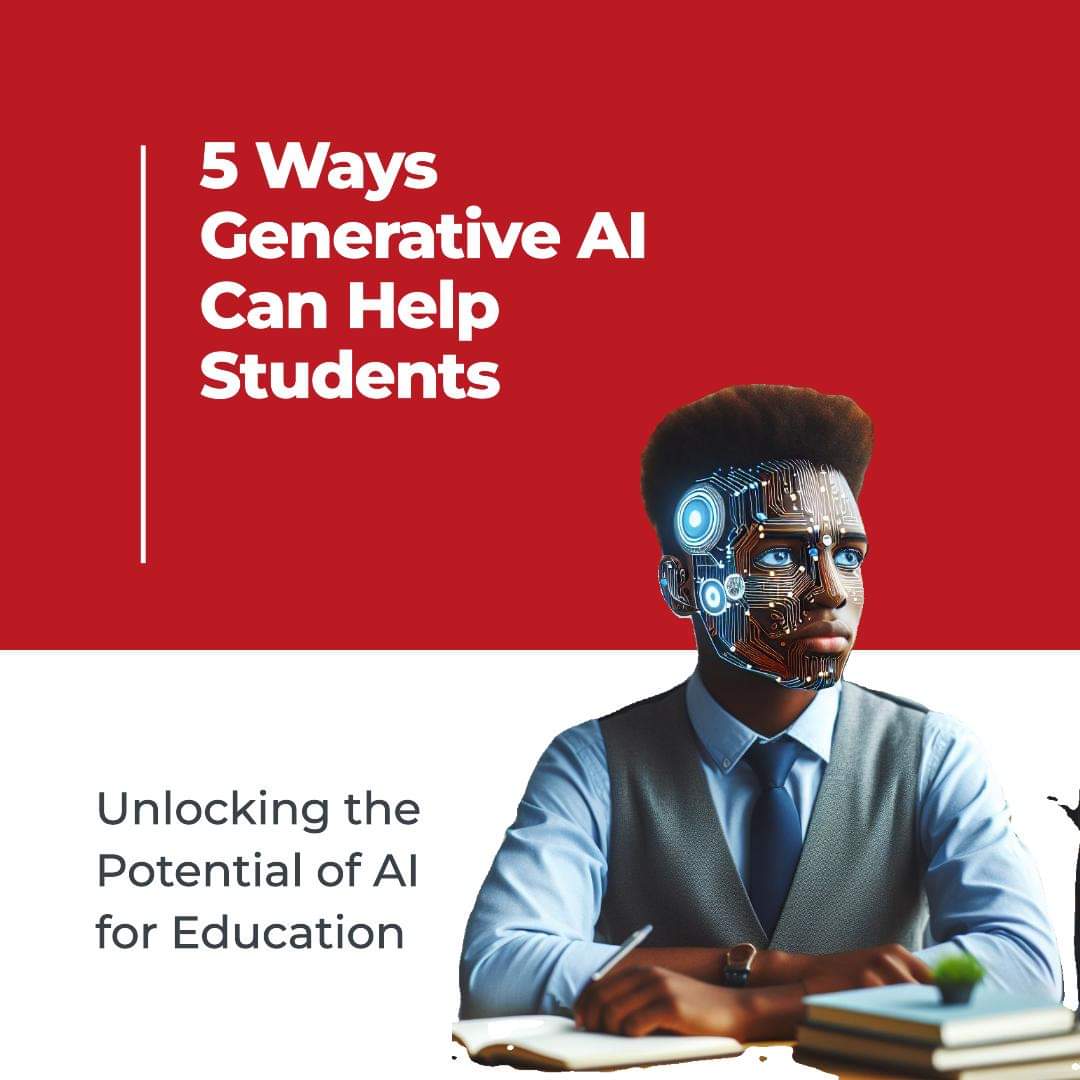
5 ways students can leverage generative AI to improve their academic performance and career prospects

By Najeeb G. Abdulhamid, PhD

I was recently working on a document about the ethical and responsible use of generative AI in academic research. It struck me that I hadn’t explored the potential of this technology for students themselves. So, I’ve compiled 5 potential uses cases for generative AI that can enhance learning while promoting responsible and ethical practices.

1. Leveraging Generative AI for Peer Feedback

One of the benefits of generative AI is that it can provide feedback on your work. Whether you are writing an essay, preparing a presentation, or working on a project, you can use tools like Bing Copilot, ChatGPT, Google Gemini, and Claude.AI to get comments on your draft. These tools can identify your strengths and weaknesses, suggest improvements, and ask insightful questions. This can help you polish your work and learn from your mistakes.

However, you should always verify and cite the feedback generated by these tools. Do not blindly accept or copy their suggestions without checking their accuracy and relevance.

2. Using Generative AI as a Personal Tutor

Another way to use generative AI is to get personalized tutoring. You can use these tools to review course materials, prepare for exams, and explore new topics. For example, you can use these tools to generate summaries, outlines, or flashcards from textbooks, lectures, or slides. You can also request practice questions, hints, and solutions tailored to your specific course and difficulty level. Additionally, you can use these tools to generate summaries, analyses, and insights based on your research questions and sources, allowing you to explore new areas of your field.

However, you should not use these tools as a substitute for your instructor, textbook, or classmate. You should still attend classes, do your readings, and participate in discussions.

3. Using Generative AI as a Source of Inspiration

Generative AI can also spark your creativity and self-discovery. You can use these tools to generate new ideas or content related to your interests, like stories, poems, music, images, recipes, or travel guides. This can help you discover hidden talents and passions, broaden your perspectives, and uncover new possibilities.

However, you should not use these tools to plagiarize or copy the work of others. You should always give credit to the original sources and the generative AI tools you used.

4. Using Generative AI as a Copilot to Conduct Research

Generative AI can also assist you in conducting research. You can use these tools for brainstorming and ideation, summarizing relevant literature, and exploring research questions, methods, findings, limitations, and recommendations.

Additionally, these tools can help you refine your language and address potential grammar or clarity issues in your draft papers. This can help you conduct research more efficiently, communicate your findings with greater clarity, and effectively convey the significance of your work.

However, you should not use these tools to fabricate or falsify data, code, or results, or to misrepresent or exaggerate your findings and implications. Always follow the ethical and responsible principles and practices of research, such as transparency, accountability, fairness, and privacy.

5. Leveraging Generative AI to Build Stronger Teams

With the rise of project-based learning, fostering effective teamwork is crucial. Generative AI tools can help you generate suggestions and tips for successful collaboration, such as strategies for setting roles and responsibilities, managing conflict, and resolving issues. These tools can also generate project plans outlining tasks, deadlines, and deliverables.

Additionally, they can create templates that prompt you to define roles, goals, communication methods, and feedback mechanisms. This can help you develop interpersonal, leadership, and problem-solving skills, ultimately improving team productivity and satisfaction.

However, you should not use these tools to replace or undermine the human element and the social aspect of teamwork and collaboration.

A Word of Caution: Responsible Use is Key!

While these applications hold great promise, it’s crucial for students to check with their faculty and consult their academic integrity handbook first. If specific policy guidelines aren’t established, here are some golden rules for responsible and ethical use of generative AI tools:

• Verify all information: As the user, you are ultimately responsible for ensuring the accuracy, relevance, and appropriateness of your work. Do not blindly accept AI-generated content without thorough verification.

• Cite your sources accurately: This includes both the original sources you used in your work and the generative AI tools you employed.

• Beware of fabricated information: Generative AI tools can sometimes invent references and information. Always verify any suspicious content before including it in your work.

By employing these tools thoughtfully and ethically, students can enhance their learning experience, boost creativity, and cultivate essential skills for academic and professional success. P.S:

To make this article more useful, I created some sample prompts for each of the five use cases I discussed above. You can use them to try out generative AI tools for yourself. Just follow this link t.ly/R5gPT to access the prompt library!

Image and poster credit: #generatedwithbingcopilot

Struggles of students: A cry for justice

Usman Muhammad Salihu

In the hustle of everyday life, many people find themselves navigating through challenges, and for some, the journey includes the demanding world of academia. A recent encounter with a university student sheds light on the harsh reality students face on the path to education, especially in Nigeria today.

As a graduate waiting for our results to be released, I engaged in a rickshaw business. As I was moving through the city of Jos, Plateau State, I picked up a young woman who, by all appearances, seemed to be a dedicated university student. Little did I know that the shadows of academic hardships marred her journey.

Her phone conversation with a fellow coursemate delved into the frustrating realm of carryovers and spillovers. According to her, some lecturers seemed to wield their power recklessly, subjecting students to the ordeal of repeating courses, even after graduation. What struck me was the claim that these burdens were inflicted upon students who resisted inappropriate advances.

With a frustrated tone, the young lady spoke of the financial strain that accompanies repeating courses. Despite the current economic challenges faced by many Nigerians, students find themselves compelled to pay registration fees to rectify the consequences of what appears to be an unjust system.

If the allegations are indeed true, and this is a manifestation of the notorious “sex for grades” issue, it raises serious concerns about the ethical conduct within our educational institutions. It is a cry for justice that cannot be ignored.

In response to these distressing revelations, a collective responsibility falls upon the government, the Students Union, and the wider public. The government must ensure a thorough investigation into these claims, holding accountable any lecturer found guilty of such misconduct. The Students Union has a vital role in advocating for the rights of its members, providing support, and pushing for systemic changes that protect students from exploitation.

Moreover, the public must not disregard the struggles faced by these students. Awareness is the first step towards change. By shedding light on these issues, we collectively contribute to fostering an environment where students can pursue education without fear of victimisation. Only through collective action and a commitment to transparency can we hope to eradicate these hardships and create a safe space for education to flourish.

Usman Muhammad Salihu writes from Jos, Nigeria, via muhammadu5363@gmail.com

Life before graduation

By Aminat Adebesin

Getting into college after high school has been the main focus of students for decades to the extent that we mostly forget about life during college/university days and what might come after getting a degree. Universities offer everyone different opportunities like networking, housing, relationship, partying, etc. It all depends on the aspect you tend to grab. 

Before graduating, build enough networks to last you a lifetime, even to the coming generations, if possible. As they say, the university is the best stage for you to lay the foundation of “who you want to be” and “people you want to be with”.

Make use of the resources around you and better use them. No one cares whether you have anything to give, so tap into the resources in the school to build yourself up. Building yourself up should be your primary focus, which involves updating your CV with meaningful resources as much as possible. 

Getting a side hustle will ease life in school better than relying entirely on your sponsors, as there are some impromptu needs that you would love to take care of without disturbing them. No one can relate to the spending that comes with schooling unless you experience it yourself.

Attending university is about making memories and having the most beautiful experience possible. Building memories and networks have good and bad days, so make enough to last since they are all we have to show we have passed through a stage with some people.

Never let anything stop you from enjoying your school days. Learn and have fun sensibly.

Aminat Adebesin is a student of the Mass Communication dept, Bayero University, Kano.