Strike

Doctors in England launch 5-day strike over pay dispute

By Maryam Ahmad

Thousands of doctors across England began a five-day strike on Friday, marking the 13th walkout in three years by resident doctors. The unprecedented action threatens to intensify pressure on the British government as it struggles to reduce long hospital waiting lists.

Resident doctors — qualified medical professionals still in specialist training — are demanding pay restoration, arguing that their earnings have declined by approximately 20% in real terms since 2008. The British Medical Association (BMA), which represents doctors, insists that the strike is necessary to address long-standing pay erosion and poor working conditions.

Health Secretary Wes Streeting condemned the action, accusing the BMA of behaving “like a cartel” and holding the government to ransom. Despite the government’s claims of financial constraints, official figures show that resident doctors’ salaries have increased by 29% over the past three years.

The walkout, which comes just weeks before the busy winter season for the National Health Service (NHS), is expected to cause the cancellation of tens of thousands of appointments and procedures. With patient backlogs already high, public frustration is likely to mount as the dispute drags on.

Strike: FG to implement no-work-no-pay, as ASUU begins two-week warning strike

By Anwar Usman

The Federal Government on Sunday night threatened to implement the no-work-no-pay policy on the Academic Staff Union of Universities due to its failure to comply ongoing negotiations.

In a statement issued by the spokesperson of the Federal Ministry of Education Folasade Boriowo, says the ministry accused ASUU of not being cooperative despite efforts by the government to avert the strike that was declared by the union.

“The Ministers further stressed that the government has continued to prioritise the welfare of university staff and the stability of the academic calendar under the Renewed Hope Agenda of President Bola Ahmed Tinubu, GCFR.

“According to them, dialogue remains the most effective and sustainable path to resolving disagreements, and government remains open to engagement at any level to prevent unnecessary disruption in the education sector.

They, however, emphasised that the “no work, no pay” policy remains an extant labour law of the Federal Republic of Nigeria, and the government will be guided by this law should academic activities be disrupted in the nation’s universities.

While the government continues to demonstrate goodwill and flexibility, it will not abdicate its responsibility to uphold fairness and accountability in the use of public resources.

The statement also reassured Nigerian students, parents, and the general public that the Federal Government is firmly committed to maintaining industrial harmony in the tertiary education system.

The statement further revealed that, “Ministers appealed to all academic unions to embrace partnership and dialogue rather than confrontation, in the collective interest of the nation’s higher education system.”

On Sunday, the university lecturers declared a total and comprehensive two-week warning strike starting from Monday, October 13.

ASUU is currently demanding the conclusion of the renegotiated 2009 FGN-ASUU agreement including the release of the withheld three and a half months’ salaries, sustainable funding of public universities, revitalisation of public universities, and cessation of the victimisation of lecturers in LASU, Prince Abubakar Audu University, and FUTO.

Others factors include the payment of outstanding 25-35% salary arrears, payment of promotion arrears for over four years and release of withheld third-party deductions (cooperative contributions, union check-off dues)

Abuja faces sanitation crisis as contractors threaten strike over unpaid wages

By Anas Abbas 

Abuja may soon face a sanitation crisis as contractors responsible for cleaning the city have threatened to suspend operations from September 25 over the non-payment of nine months’ wages.

The Association of FCT Solid Waste and Cleaning Contractors (AFSOWAC), which oversees sanitation services across 44 lots in the capital, raised the alarm in a letter to the Coordinator of the Abuja Metropolitan Management Council.

“Despite our loyalty and sustained service delivery, we have not received payments since January 2025,” the group said. “We have reached a point where passion and commitment alone cannot sustain this essential service. Without payment, we cannot continue.”

According to the association, its members clear more than 1,000 tonnes of refuse daily using over 100 refuse trucks and 60 tippers, while engaging more than 3,000 workers. Many of these workers, it said, depend solely on the job for their livelihoods.

AFSOWAC disclosed that contractors had kept operations afloat by borrowing heavily from banks and informal lenders, but warned that such means had been exhausted. It added that the Abuja Environmental Protection Board (AEPB), which supervises their contracts, had continued issuing daily directives without addressing the financial challenges.

The contractors further lamented the deteriorating state of the Gosa dumpsite, describing it as “deplorable” and urging urgent intervention to improve access roads and equipment.

They also called on the FCT Administration to expedite the procurement process initiated in October 2024 and review payment rates to reflect current economic realities, such as the removal of subsidies and the devaluation of the naira.

The association warned that a strike would trigger a rapid build-up of waste in Abuja, a city renowned for its relative cleanliness, and could expose residents to serious public health risks.

“We can no longer guarantee uninterrupted services in the Federal Capital City without urgent payment,” AFSOWAC cautioned.

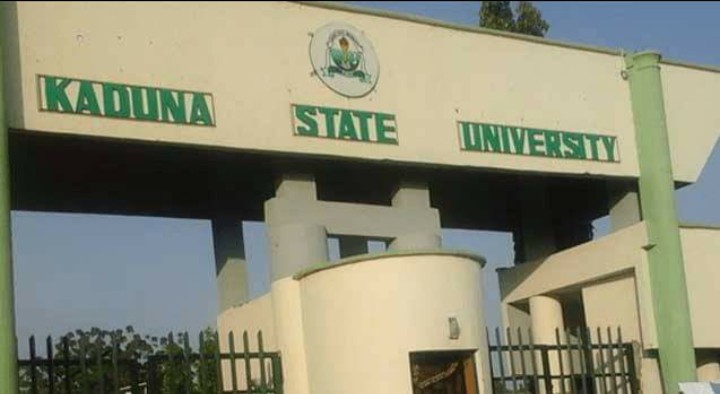
ASUU-KASU embarks on total, indefinite strike

By Anas Abbas

The Academic Staff Union of Universities, Kaduna State University (ASUU-KASU), has officially commenced an industrial action today, marking the beginning of a total, comprehensive, and indefinite strike.

In a statement released by the Publicity Committee of ASUU-KASU, the union outlined a series of actions that must be observed during the strike. These include the suspension of all Senate, Faculty, and Department meetings, as well as the cessation of project supervision and both physical and online lectures.

Additionally, the Students Industrial Work Experience Scheme (SIWES) will not be subject to project defences, field studies, or supervision. 

The union has also prohibited online meetings and mandated that no Continuous Assessment (C.A.) or examination scripts be marked. The processing and submission of results are also on hold, alongside any standing committee meetings.

ASUU-KASU has urged all members to adhere strictly to these directives. The union emphasised that any non-compliance or attempts to infringe upon the strike actions should be reported immediately to the Strike Monitoring Committee (SMC) at the ASUU-KASU Secretariat on the Main Campus.

One rotation, one strike

By Hussein Adoto Bello 

In the first rotation of my clinical training at a federal government university teaching hospital in North Central Nigeria, resident doctors went on strike to protest the kidnapping of their colleague in Kaduna. The government threatened “no work, no pay.” Students lost a week of clinical training. The victim wasn’t released until weeks later. 

When I reached the second rotation, I was greeted midway with a warning strike by consultants protesting the non-payment of their arrears. Classes came to a halt, and we, the students, had to hustle for an extension. 

Now, in the third rotation, the Medical and Dental Consultants Association of Nigeria (MDCAN) has declared another strike. Students will once again be the victims, but life will continue.

Medical students may be called the next generation of residents and consultants, but when push comes to shove, we are the first to be thrown under the bus. And then patients. Classes stop. Clinics and theatres become skeletal, attending only to critically ill patients and emergencies. 

For students, the situation becomes a matter of finding X, where X is the number of days, weeks, or months the “warning” strikes will go before they are suspended or transform into indefinite strains.

What can we do? Unlike Mour Ndiaye in The Beggars’ Strike, the people who put students in this limiting position don’t need us to survive. We don’t pull enough academic or professional weight to influence their advancements as doctors, consultants, and professors. They can resume whenever and however. 

Government officials know they can keep students at home for nearly a year without hurting their chances at the polls. The students may even fight tooth and nail for them. 

The never-seen-but-felt hands of the hospital and the university management don’t need student crutches to do as they please. Their appointment is not premised on how long students spend in school or patients’ satisfaction. Students and patients are all left to gnash their teeth in the Academic and Clinical Waiting Area while the royal rumble rages. 

It’s not easy, therefore, to try playing Nguirane Sarr. The clever blind beggar realised that beggars have services they can withhold in light of their harassment, which made a difference in The Beggars’ Strike

What do students have? Twitter/X hashtags and a lot of God abegs! Boycotting classes, clinics, and theatre may not help; it will only transform an acute case into a chronic one. 

Students in Algeria went on strike to demand more residency openings and accreditation of their diplomas. It’s been weeks, and the issue has yet to be resolved. 

Moroccan students revolted against the shortening of their programmes from seven years to six by declaring a strike in January. December is less than two weeks away.

Meanwhile, medical students here rarely face such massive blows at once. We adjust to the worsening learning difficulties until we graduate, leaving the next generation of students to endure the crucible. Resilience, after all, is an undeclared objective of medical training. 

We are not equally affected, either. A clinical student has a different worry than those still struggling with anatomy and biochemistry in preclinical classes. A strike by ASUU lecturers may not be felt in the clinics. Students in private schools are largely immune to what happens to their colleagues in government universities, and so on. 

For now, one can only hope—rather than expect—that the country establishes independent arbitration bodies for resolving labour issues promptly without sacrificing hapless students and patients at the altar. 

Such a body should include representatives from labour unions, the government, students, and neutral mediators to ensure impartial decisions are swiftly implemented. It should also be able to hold the government, employers, and labour unions accountable so that everyone can act with greater responsibility and not with the callous indifference that has come to characterise labour disputes in Nigeria. 

Besides, labour unions and student bodies should organise themselves into a powerful lobby force that can successfully push for policies that serve their interests instead of waiting to use strikes to protect them. 

More importantly, striking workers and the government should give students and patients an alternative to manage while they bicker. They should host virtual classes if they can’t come for physical ones. They should host clinics or virtual consultations if they can’t go for ward rounds and theatre sessions. 

Thankfully for students, the ṣégé (difficulty) of strikes comes in aliquots, so we build tolerance until the situation rankles less and resistance becomes pointless. We only have to survive in brooding silence until we can escape the system with our scars or embrace it—like Ramatoulayé in So Long a Letter.

Hussein Adoto writes via bellohussein210@gmail.com.

NLC backs NUPENG’s strike threat over military involvement at oil rig

By Uzair Adam

The Nigeria Labour Congress (NLC) has expressed strong support for the Nigeria Union of Petroleum and Natural Gas Workers (NUPENG) in its decision to initiate a nationwide strike.

The strike threat follows allegations that military personnel were deployed to remove workers from the Oritsetimeyin oil rig, a move that has drawn widespread criticism.

In a statement issued on Friday, NLC President Joe Ajaero condemned the alleged military intervention, affirming the congress’s solidarity with NUPENG.

Ajaero warned of escalated actions from NLC if breaches of agreements and the use of security forces in industrial disputes persist.

This stance arises from a protracted dispute between NUPENG and the oil rig’s management, where agreements on employment terms reportedly remain unfulfilled.

Earlier in the week, NUPENG alerted the Federal Government, cautioning against military involvement and urging respect for previously established agreements.

On Thursday, however, a special naval unit allegedly arrived at the Oritsetimeyin rig to forcibly evict workers, prompting NUPENG’s strike warning.

Ajaero decried this development as an affront to worker rights, urging military and government officials to address the issue immediately.

“This unacceptable use of state security forces to intimidate workers undermines democratic values and workplace freedoms,” Ajaero’s statement read.

“The militarization of workplaces only harms our economy and violates the principles of industrial relations.”

NUPENG maintains that the eviction followed workers’ calls for adherence to agreements, including severance benefits discussed during prior meetings mediated by the Nigeria Upstream Petroleum Regulatory Commission (NUPRC) and the Department of State Services (DSS).

The NLC’s statement specifically called out companies Dutchford E&P and Selective Marine Services for failing to honor these commitments.

The NLC is urging the Nigerian military, the National Security Adviser, and other key government figures to intervene and prevent further confrontations, emphasizing that industrial issues should not involve the military.

BUK operations continue smoothly amid non-teaching staff unions’ strike

By Uzair Adam

The strike initiated by the Joint Action Committee (JAC) of university non-teaching staff unions has shown little effect on Bayero University, Kano (BUK), where daily activities continue as usual, and essential facilities remain accessible.

The Daily Reality observed that locations expected to be affected by the strike, such as the university’s main library and hospital, were fully operational.

Students were actively studying in the library, while the hospital staff continued to provide medical care.

The university main library with students preparing to get access

University staff activities were also observed at the Student Affairs Office, suggesting minimal disruption from the strike.

The JAC, which includes the Senior Staff Association of Nigerian Universities (SSANU) and the Non-Academic Staff Union of Educational and Associated Institutions (NASU), had issued a circular on Sunday instructing members to begin an indefinite strike.

The circular, signed by NASU’s General Secretary Mr. Peters Adeyemi and SSANU’s President Mr. Muhammad Ibrahim, cited four months of unpaid salaries as the reason for the action.

The announcement raised concerns that the strike could significantly affect university operations, with some anticipating solidarity actions from the Academic Staff Union of Universities (ASUU).

Students at the Attahiru Jega Twin Theatre writing their exams.

However, campus activities continue, and some students have even been able to sit for exams as scheduled.

Malam Nura Garba, SSANU’s Secretary, explained that the strike impacts only NASU and SSANU members, affecting administrative, hospital, and library operations. Nevertheless, these services remain accessible.

NASU Chairman Abdullahi Nasiru clarified that the delay in shutting down facilities stemmed from a late directive issued on Sunday.

“We are holding a meeting today, and the facilities currently open will soon be shut down,” he said.

The University’s Health Service Department

Nasiru emphasized that while the strike is intended to be “total, comprehensive, and indefinite,” the union needed official clearance from the national headquarters before proceeding.

Students who spoke with our reporter confirmed they encountered no issues accessing the hospital and library facilities, despite the ongoing strike.

University unions embark on indefinite strike over withheld salaries

By Uzair Adam

The Joint Action Committee (JAC) representing the Non-Academic Staff Union of Educational and Associated Institutions (NASU) and the Senior Staff Association of Nigerian Universities (SSANU) has directed members to initiate an indefinite strike starting Monday, following the non-payment of four months’ withheld salaries.

The strike, initially scheduled for October 23, was postponed to Sunday night, October 27, 2024, to align with the NASU branches’ Trade Group Council meeting.

A circular signed by NASU General Secretary Prince Peters Adeyemi and SSANU President Comrade Mohammed Ibrahim detailed this timing adjustment for unified coordination among union members.

Despite President Bola Tinubu’s approval of 50% payment for the withheld salaries, JAC expressed frustration with the alleged inaction from the Minister of Finance, questioning the government’s commitment to resolving the issue.

The union stated that multiple requests for resolution have gone unanswered, prompting their decision to proceed with the strike.

JAC reiterated its appreciation for the members’ loyalty and assured them of continued efforts to achieve a satisfactory outcome.

JUST IN: ASUU suspends warning strike

By uzair Adam Imam

The Academic Staff Union of Universities (ASUU) at Kano University of Science and Technology (KUST) Wudil has called off its two-week warning strike, which was launched to protest the state government’s handling of several issues.

ASUU had complained about the government’s reluctance to address issues related to university autonomy, staff welfare, and funding, despite efforts by the union and other stakeholders to resolve the matter.

However, following interventions by the Kano State House of Assembly, the House Committee on Higher Education, and the Governor of Kano State, the union has agreed to suspend the strike to allow for further dialogue and implementation of agreed-upon resolutions.

In a statement, ASUU-KUST Chairperson Dr. Aliyu Yusuf Ahmad said they appreciated the prompt intervention by the Kano State Government and relevant stakeholders.

He stated, “We appreciate the prompt intervention of the Governor and other stakeholders, which has created an opportunity for constructive engagement and resolution of the outstanding issues.”

FG begs NLC to shelve planned strike over fuel subsidy

By Uzair Adam Imam

The Federal Government has appealed to the Nigerian Labour Congress (NLC) to shelve its planned strike over fuel subsidy removal.

The FG said it was doing everything possible to address issues raised by the congress, which threatened to embark on a nationwide strike in August.

The Daily Reality reports that the Congress Spokesperson, Ben Upah, made this disclosure on Wednesday, adding that they give seven days to the federal government to address the demand.

Speaking after the Steering Committee meeting on Palliatives, Olu Verheijen, the leader of the government team and Special Adviser to the President on Energy, pleaded with labour to give the federal government more time to look into its grievances rather than embark on industrial action.

She explained that the government was yet to roll out palliatives because it didn’t want to make mistakes, adding that the meeting with organised labour was productive and would continue tomorrow.

Asked about the agenda of the meeting, she said: “It involves labour and some parts of government; it’s a steering committee. it’s a wide group of people, a wide group of stakeholders representing the interests of Nigerians. And we’ve agreed to continue to make progress.

“It was a very productive meeting, the focus was really around how we fast-track a lot of the interventions that will bring relief, particularly around CNG, mass transportation, cleaner energy, transportation, and reduce the impact of the cost of transportation, the increased cost of transportation. So we’ve made good progress. And we’re going to continue to do so and so that we can start rolling out these opportunities and these relief measures as quickly as possible.”

Asked if Labour will not embark on strike as threatened, she said: “The labour unions will speak to that. But we are making progress; we’re trying to address the issues that will prevent a strike. So that is essentially why I feel we made very good progress today and will continue to do so.”