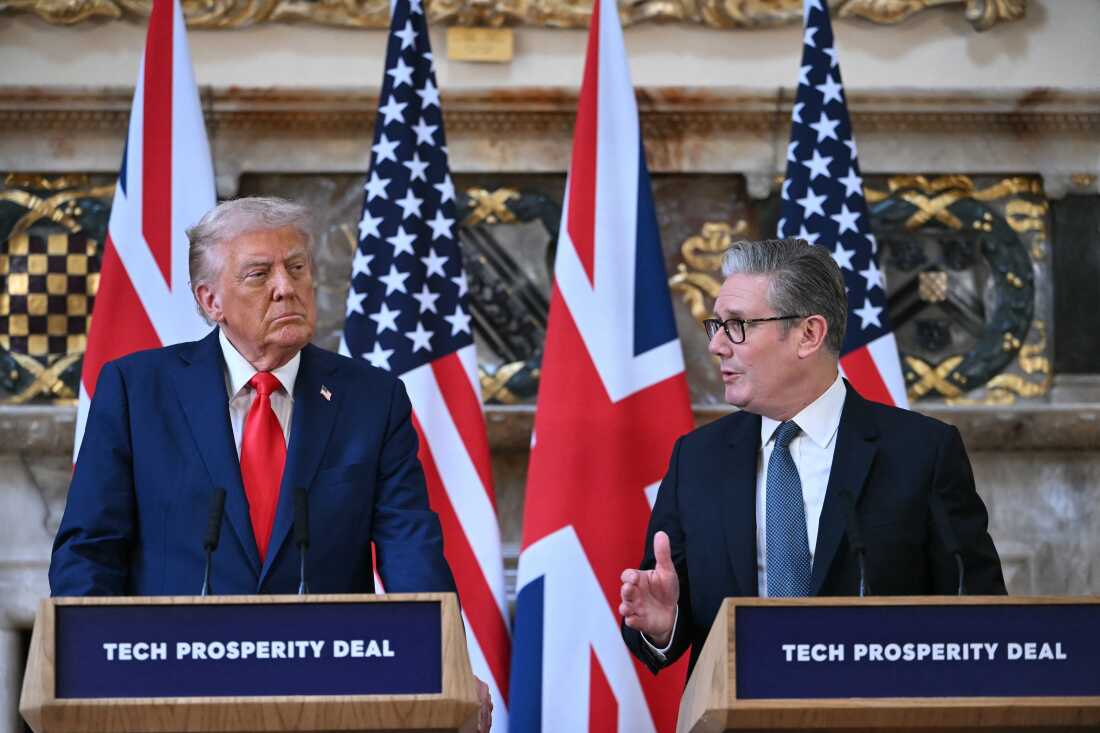
Starmer rejects Trump criticism, rules out UK role in US-Israel strikes on Iran
By Sabiu Abdullahi
British Prime Minister Sir Keir Starmer has confirmed that the United Kingdom will not take part in offensive military action against Iran, despite criticism from United States President Donald Trump.
Speaking in the House of Commons, Starmer said he stood by his decision not to join the initial US-Israeli strikes. Trump had earlier expressed frustration with the UK’s stance and told The Daily Telegraph he was “very disappointed”. He also claimed Starmer “took far too long” to permit the use of British bases such as the Chagos Islands for operations linked to the strikes.
Responding to the remarks, Starmer told MPs: “President Trump has expressed his disagreement with our decision not to get involved in the initial strikes.
“But it is my duty to judge what is in Britain’s national interest, and I stand by it.”
The prime minister explained that although British forces will not participate directly in attacks, the UK has allowed US forces to use certain British bases for limited defensive purposes. He said the request concerned targeting Iranian missiles at storage depots or launch sites.
“It is simply not possible to shoot down every Iranian missile and every drone after they’ve been launched,” he said.
“The US requested permission to use British bases for that specific and limited defensive purposes.”
Starmer stressed that UK bases in Cyprus were not being used by American bombers. He addressed reports of a drone strike at RAF Akrotiri and clarified the circumstances.
“It is important for me to say that our bases in Cyprus are not being used by US bombers,” he said.
“I want to be clear. The strike on RAF Akrotiri in Cyprus was not in response to any decision that we have taken. In our assessment, the drone was launched prior to our announcement.”
He added that developments since the weekend had changed the security picture. “It is clear that Iran’s outrageous response has become a threat to our people, our interests, and our allies, and it cannot be ignored,” he said.
Around 300,000 British nationals are believed to be in countries affected by the crisis. More than 100,000 have registered with the Foreign Office for updates. Airspace closures have disrupted travel across much of the region.
Starmer urged citizens to remain vigilant and register their presence. “We’re asking all British citizens in the region to register their presence so we can provide the best possible support and to monitor the Home Office travel advice, which is being regularly updated,” he told MPs.
He noted that local authorities in several areas have advised people to stay indoors. The government has deployed rapid response teams to assist British nationals and is working with regional governments and the travel industry to facilitate safe returns.
The prime minister also addressed concerns about the legality of military action. He referred to lessons from the Iraq war and underlined the need for a clear legal foundation.
“We all remember the mistakes of Iraq and we have learned those lessons. Any UK action must always have a lawful basis, and a viable thought-through plan,” he said.
He repeated that Britain would not join offensive operations. “ I say again, we were not involved in the initial strikes on Iran, and we will not join offensive action now. But in the face of Iran’s barrage of missiles and drones, we will protect our people in the region and support the collective self-defence of our allies, because that is our duty to the British people.”
Starmer also said the long-term objective of preventing Iran from acquiring nuclear weapons must be resolved through talks rather than force.
“So it’s clear the Iranian regime must never be allowed to get their hands on nuclear weapons. That remains the primary aim of the United Kingdom and our allies, including the US, and ultimately, this will have to be achieved at the negotiating table,” he said.
Elsewhere in Parliament, Liberal Democrat leader Ed Davey criticised Trump’s decision to launch strikes, which he described as “an illegal war”. He also called on wealthy British tax exiles in the Middle East, including “billionaires and washed up footballers”, to “pay their fair share to fund British defence”.
In a separate exchange, Starmer said the UK is working with Ukraine to counter drone threats in the Gulf. He highlighted Ukraine’s experience in responding to Iranian-made drones during Russia’s invasion.
“Ukraine, sadly, has more expertise than anyone in dealing with drones, and that’s why we’re putting their expertise and our expertise together and using it to help our allies in the region of nations as we speak,” he said.
As tensions escalate, the government has pledged to enhance security at Jewish and Muslim places of worship in the UK. Ministers say efforts will continue to protect British interests abroad while pushing for a diplomatic solution to the crisis.