The Caliphate did not die in Burmi: My travelogue to Maiurno
By Abdulrahman Sani
I went to Sudan to study Arabic. That was the beginning, simple and deliberate. But in truth, Arabic was only the surface. Sudan offered more than language. It stirred old questions I had carried with me since adolescence. Questions about memory, exile, and what remains after collapse.
My first encounter with the Sokoto Caliphate’s legacy wasn’t through archives or oral traditions. It was through theatre. I was in secondary school when I read Attahiru by Ahmad Yerima. The image of the Caliph fleeing colonial forces, defiant to the end, burned itself into my mind. I didn’t fully understand the politics then, but I felt the tragedy. That single text became a spark.
Later, I found the writings of Dr. Usman Bugaje, measured and searching. And then came Muhammad Shareef, the African American founder of Jamaa’at Danfodio in the United States, whom I had the pleasure of interviewing [here: https://youtu.be/_5Uj1S0lXQM?si=1BpJ9vusnW2HqWf4]. His writings were rich, wide-ranging, and full of overlooked geographies. It was through him that I first read about Maiurno, a small village in Sudan that held the echoes of Sokoto’s fall.
The very idea of it intrigued me. Remnants of the Caliphate had not only survived but also resettled, rebuilt, and renamed. I wanted to know what happened after Burmi. I wanted to know what exile looked like, generations later.
I mentioned this to my friend Malam Hassan, and soon after, we were on our way — me, him, and our guide. Before Maiurno, I spent some time in a Hausa village in Sudan. The familiarity was immediate. I saw areas named after Illela, heard idioms that sounded like home. It was as though Sokoto had sent a whisper into the desert, and it had echoed back in Sudanese tones.
Maiurno came into view quietly, without ceremony—a flat, sun-beaten village, carrying itself without fanfare. But history rarely announces itself. You feel it in the silences.
We made our way to the Sultan’s palace early in the morning. As we approached, an elderly man greeted me in Fulfulde. I hesitated, then responded in Arabic, admitting I didn’t understand. It was one of those quiet humiliations. A Fulani, abroad, unable to answer in the language of his own people. He smiled politely and said nothing.
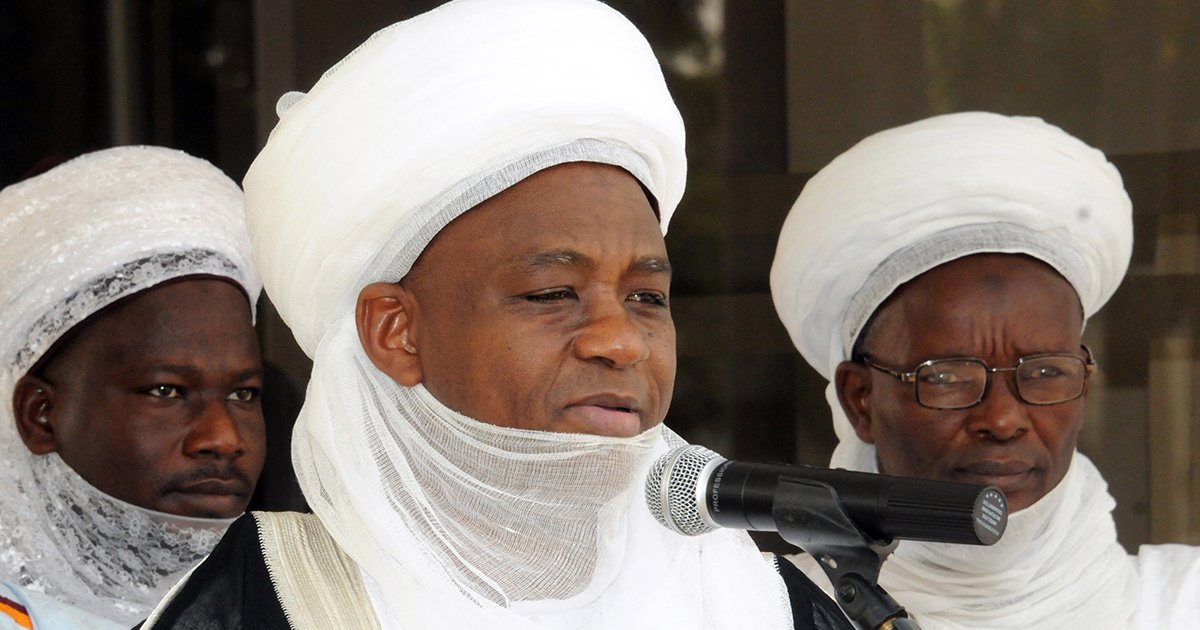
We waited. There were others before us, people from another town in Sudan who had come to report a case. In the meantime, I noticed the crocodiles. Yes, crocodiles. They lay in their enclosure like royal guards, unmoving. It felt surreal but somehow fitting. The Sultan was no mere figurehead. He was the acknowledged leader of Hausa and Fulani communities in Sudan, a man of both presence and authority.
When he finally emerged, he received the guests before us. He listened without interruption or impatience. Then he settled their matter with a wisdom that didn’t need to explain itself. That kind of clarity is rare.
Then he turned to me.
I told him why I had come. I said I was interested in the Fodiyawa manuscripts said to be preserved in Sudan. He nodded with understanding, but explained that the key lay with the Sardauna of Maiurno, a scholar of great standing who, ironically, had travelled to Nigeria, my own country.
The Sultan was fluent in Hausa, Arabic, and Fulfulde. He spoke with the calm rhythm of someone used to being listened to. He smiled and said, “I know in Sokoto your Fulfulde doesn’t go beyond Balinjam.” It was said lightly, but it landed with accuracy.
He spoke of his relative, Professor Mukoshay, the author of the Fulani-Hausa dictionary. Then, briefly about Hayat ibn Sa‘id, a name that deserves more telling than time allowed. Before long, I realised I should be recording this. I asked his permission. He agreed with grace.
He began narrating how their ancestors had come to Maiurno after the fall of the Caliphate, how they had built their homes, mosques, and memory on Sudanese soil, and how they still kept contact with their families in Nigeria. He spoke too of the Jamaa’at Danfodio in America with quiet admiration, amused by how history had found new shapes and tongues.
After the conversation, he did something unexpected. He asked, gently, for my contact. I gave it. We shook hands, and I took my leave.
What struck me wasn’t just the story. It was the clarity with which he carried it. My visit to Maiurno took place in 2019. At the time, the country was in a fragile transitional moment, unsure of what lay ahead. But even then, the Sultan stood out–quiet, composed, and principled. In later years, during the war with the RSF militia, I would hear that he remained steadfast and stood with the state when others hesitated. The president himself visited to thank him.
Maiurno wasn’t just a trip. It was a quiet, necessary crossing, from curiosity to memory, from story to place. The Sokoto Caliphate may have fallen in Burmi, but it lives on. In names. In speech. In places like Maiurno, where its sons still remember.
Abdulrahman Sani can be reached via X: @philosopeace.