Skills Acquisition

iDanraka Care Foundation: Redefining philanthropy

by Salim Yunusa

In Zaria, the name Danraka means different things to different people. To students of Ahmadu Bello University, it reminds them of a well-known student housing area off campus. To businesspeople, it represents a strong legacy in commerce. For many in Zazzau, it speaks of a house of nobility and respect. But to countless others, it brings to mind one person—Isyaku Danraka, a town planner, businessman, and a man known for his kindness and generosity.

The iDANRAKA Care Foundation is changing how we think about giving. It is not just about donations or handouts – the usual long queues and few kobos to get the town talking. It is about creating real and lasting change in people’s lives. Whether through helping young people learn new skills, supporting sports, or providing training for the future, the foundation is giving hope to those who need it most. Danraka has quietly been given to students, widows, young people, and others in need for years. Today, his good work has grown into a full foundation that has helped more than 5,000 people.

One of the foundation’s early efforts was the ZYA Phone Repair Project. It trained 150 young people from Zaria and nearby towns in just two months. These young people now have a way to earn a living and help their families. It gave them confidence and a new sense of purpose.

In another inspiring program, 50 young people were chosen from over 800 applicants for a special digital training. They learned to use digital tools, create content, understand artificial intelligence, and find remote jobs. These are life-changing skills that open new doors and build a better future.

The foundation also focuses on those who are often forgotten. People with disabilities are frequently left out of opportunities, but not here. Through the Zaria Para Sports Competition, more than 100 athletes living with disabilities got the chance to play, compete, and be celebrated. These events bring smiles, joy, and a deep sense of belonging. They remind us that everyone matters and deserves a chance to shine.

At the iDANRAKA Football Academy, young boys who dream of playing football professionally are given a real shot. With help from an American agency, scouts from the United States and Dubai came to watch talented players from places like Kano, Maiduguri, and Zaria. For many of these boys, it was their first real chance to be seen and noticed. You could feel the excitement in the air. Dreams suddenly felt possible. I was personally there and witnessed the signing of the MoU. The foundation means business.

Young people are at the heart of everything the foundation does. One of its most powerful programs is the Youth Empowerment Lab. Open to people between 17 and 30 years old, it offers more than just training. It offers hope. It teaches digital skills and shows how to find work online. The foundation even covers transport, meals, internet access, and gives out certificates. I was lucky to speak on a panel during one of the sessions, where we talked about what truly matters in the workplace today. We spoke about creativity, problem-solving, and how real-life experience can be just as important as a university degree. The room was filled with energy and emotion. You could see young people beginning to believe in themselves.

The Zaria Para Sports Competition is now more than a sports event. It is a celebration. Winners receive cash and gifts, but what they take home most is pride. They are seen, respected, and encouraged. These moments lift not just the athletes but their families and communities, too.

In a world where help sometimes feels far away, the iDANRAKA Care Foundation is different. It listens. It understands what people need. It works closely with local communities and offers support that genuinely changes lives. Whether it is a skill to start a small business, a way to earn money online, or a chance to play football, the foundation is lighting the way forward.

The iDANRAKA Care Foundation is not just making a difference. It is spreading hope. From the streets of Zaria to towns across Nigeria, it shows us that when people are given the tools, support, and love they need, there is no limit to what they can achieve.

On personal development

By Muntari Umar

The word personal describes someone’s own possession alone—something that belongs to someone and has power over it. Development refers to sequential and evolving changes over some time. It is a gradual and eventual transformation in the state of a particular thing.

Personal development is a series of positive changes ascribed to an individual over time. It is an accomplishment that someone gets over some time due to discipline, patience, dedication, and training. Personal development is beneficial to its owner, including sometimes to the people living around him.It causes happiness and satisfaction.

Therefore, personal development is very important. Every sensible individual should have a target personal development that he will focus on realising. Becoming busy on various aspects of the topic will make one serious and bring public respect, awe, support from the likes, comfort, and other good feelings.

Personal development is a must for people, particularly youths in their twenties and thirties.

Some of its examples include both soft and hard skills. Soft skills such as the ability to communicate very well verbally and in writing, the ability to solve complex problems resulting in wonderful outcomes (creative and proactive), the ability to control one’s emotions, the ability to learn new things quickly (smartness), ability to detect changes around one’s environment and respond accordingly, and ability to operate computers. All these are things that are learned over a while.

Hard skills include carpentry, tailoring, phone and computer repair, fridge fixing, shoe making, welding, painting and wiring houses, building, and vehicle repair, among others. These, too, are learned with time. The two classes of skills generate money for their respective experts.

The paragraphs above show the extreme importance of the day’s business because they are sources of income. Every individual needs money to survive. We all need food, shelter, clothes, medication during sickness, and education from qualitative sources.

Fortunately, money is required to possess all these things, and wonderfully, money comes from a particular ability developed over time. Because as long as you are good at something when the issue of that thing arises, you must be needed and finally be paid.

Money will also boost your immune system and give you much freedom of speech, power, and influence.

These opportunities are almost everywhere. They are easily identified. You need to feed yourself with the passion of your interesting personal development. Befriend its experts. Show them your interest. Respect and be obedient to them.You will gradually, but with patience, dedication, resilience, discipline, and practice, learn and start making money, thereby transforming your life.

Failure to have any personal ability will cause people to look down on an individual, disrespect him, and consider himlazy and useless to his life and his society. People will withdraw from a person who lacks any ability and shows no interest in any matter of development.

With this, I call on all of my fellow youths who lack any skills to embrace learning any available skill they can access. I urge you to become alert and sensitive to the chances of transforming lives. Remember, seeing is with the eyes, while vision is with the mind. Good things will locate you if you think positively.

“Whoever fails to learn learns to fail.” — Anonymous.

Muntari Umar wrote via muntariu94@gmail.com.

The diminishing value of formal qualifications in Nigeria’s labour market

By Isah Kamisu Madachi

The ubiquitous use of social media and other online platforms, marking the advent of the digital era facilitated by technological advancements, has revolutionised the Nigerian economy and labour market. The longstanding tradition of obtaining certificates and waiting for office work is declining, leading to a paradigm shift in the Nigerian certificate-based economy from valuing certificates to emphasising skills, akin to the trend in developed countries. It is silently moving from your paper to what you can offer. 

While I was not born in the 1970s and 80s, I believe it was difficult, if not impossible, to find someone with a certificate from a Nigerian institution engaged in skilled trades such as carpentry, tiling, wiring, and plumbing. During that period, when a certificate was earned, the expectation was to be employed by the government or a private organisation. However, the contemporary scenario is different, as it is common to find individuals with higher degree qualifications still actively engaged in such work. The emphasis on the value of practical skills is evident almost everywhere, including social media, classrooms, public lectures and capacity-building seminars.

Drawing from my sociology background, I am engaged in various activities such as YouTubing, blogging, essay writing, and video editing. A friend of mine, a law graduate, works with a radio station because of his oratory prowess. My mentor, who graduated years before I joined the university, now works with a leading newspaper in Nigeria because of his ability to write well. It is a common misconception among Nigerians to equate education or skill with certificates.

As a student, I have witnessed how things have changed. An internationally respected lecturer from my department who also worked in the same profession in the United States of America for many years remarked that nobody had ever inquired to see his certificate for the time he spent there. He only lists his certifications and compliments them with the knowledge and skills attached.

This shift from certificate-based to skill-based education is affecting the Nigerian education system because, despite the evolving changes in this endeavour, it seems to have found it difficult to adapt to the new reality. In schools, the focus is still highly on the certificates and theoretical aspects of the courses offered instead of skills. This continues to create discrepancies between what the job market needs and what schools produce.

Seeing overwhelming numbers of unemployed Nigerian graduates roaming the streets led frustrated Nigerian youth to conclude that school is a scam, chanting the famous “school na scam” phrase. This conclusion descended on even those who have yet to experience the reality of life after graduation. Gradually, it has become popular to the extent that overwhelming youth in Nigeria today choose to behave as if they just come to school to acquire the certificate but to learn nothing, despite the seemingly irrelevance of the certificate in the job market. 

To adapt to the changing global trend, Nigeria requires education reform to address the production of half-baked graduates, which is a consequence of the unfavourable learning conditions created by underfunding education. Many experts have raised alarms about the outdated nature of the Nigerian education curriculum, pointing out its mismatch with the needs of the Nigerian labour market. Effective reforms are necessary to address these issues.

Isah Kamisu Madachi, a fresh sociology graduate, writes from Katagum L.G.A, Bauchi State, and can be reached via isahkamisumadachi@gmail.com.

More than Khaki: The invaluable skills derive from the NYSC scheme 

By Haroon Aremu

Fostering national unity and cohesion is one of the core objectives of establishing the National Youth Service Corps (NYSC) Scheme. Grouping with other prospective corps members en route to the camp is a simple act that highlights the spirit of togetherness and brotherhood that the NYSC scheme promotes.

During the Man O’ War drills, we delved into the essence of leadership. Practical lessons taught us that as leaders, we must make wise decisions, stay steadfast, dedicated, and remain disciplined. Initially, people may rally around you, but when challenges arise, you might find yourself alone, tasked with solving problems independently. Good leaders are always alert, willing to learn and unlearn, and possess strong listening skills. They understand the importance of carrying people along when necessary. These are invaluable lessons that stay with you, and for those who have gone through this, the memories and practical examples serve as lifelong guides.

Another enriching aspect of NYSC is the opportunity to make friends from various tribes and states, including those who studied abroad. The camp environment is a melting pot of cultures and ideas, providing ample networking opportunities. Whether you seek fruitful relationships, financial growth, or career advancement, the connections you make at camp can be pivotal in your next life phase.

While camp life can sometimes be stressful, it is equally interesting and filled with numerous advantages crucial for our future. The experience fosters personal development and resilience, equipping you with skills and insights invaluable in your professional and personal life.

Participation in the NYSC is mandatory for all Nigerian graduates, whether you studied within or outside Nigeria,provided a person does not reach 30 years of age at graduation. The implications of not serving your nation may have ripple effects on any chosen career development. Without completing the NYSC, one cannot contest for any political office or receive political appointments. 

This rule was underscored by recent events involving prominent figures such as the Minister for Arts, Culture, and Creative Economy, Hannatu Musawa, who had to complete her youth service quickly to retain her ministerial position. Similarly, former Minister of Finance Kemi Adeosun faced a significant scandal for not participating in the NYSC, which ultimately led to her resignation.

The NYSC scheme allows graduates to contribute to reducing the flames of tribalism and nepotism, fostering peaceful coexistence and good neighbourliness. The program cultivates a sense of love and unity, reinforcing that we are all one Nigeria.

The NYSC experience is a transformative journey that every Nigerian graduate should embark on. It prepares you for the future by instilling leadership skills and fostering valuable connections, but it also plays a crucial role in national unity and development. Embrace the NYSC scheme and join the movement that builds a stronger, more united Nigeria.

Haroon Aremu Abiodun is a corp member with PRNigeria centre, Abuja and wrote in via exponentumera@gmail.com.

Skills or Degrees? You may need both to thrive

By Nusaiba Ibrahim

For over a year, I have been working alongside other creatives in my department after I assumed my role as a content writer and website manager with a higher education institution. The department in which we work is formally referred to as the Media and Communication Department, but somehow, maybe before I joined, it became known as the Creative Department.

Whenever we attend a meeting, we are termed the creatives. Only along my journey did I realise that two or three of the team members had undergone degrees in disciplines that had little or no bearing on the creative industry. The team—a social media manager, a content writer or website manager, a graphic designer, a motion designer, and a creative support staff member—has one thing in common: we possess skill sets that are within the creative industry. Yet, we all have degrees.

During our usual chitchats, I realised that the social media person I had met was a history graduate with a second degree in the same field. He’s doing wonderfully well today in Lagos because of his exquisite skills as a brand marketer and manager. The new staff member who assumed the role is a biology graduate; the motion designer studied industrial design; the graphic designer and I studied mass communication; and the creative support staff studied quantity survey and obtained a postgraduate diploma in the same field.

From the faculty to operational staff to even students, the creative department comprises geniuses skilled in producing exceptional creative pieces that would be admired by the university’s community and beyond. Hence, the department is admired by many. Simple casual discussions with students and staff, whether in or out of the office, never ended without passionate statements like “I will stop by to learn one or two things” or “I’ll come to learn a few things.”

When I was putting this piece together, a faculty member, a friend of the creative department, had come in to drop a request. While going out of our office, he was tempted to read the title of the article. He read it carefully and said, “I think I disagree with you. I am of the opinion that skills are better than degrees.” I turned and tried to explain that the topic didn’t mean degrees were superior to skills or vice versa. They could be used to complement each other when necessary.

This particular faculty member only left me with more thoughts about the debate. He’s a faculty member with a B.Sc. and Master’s degree in International Relations and is very much appreciated by the institution due to his expertise in teaching. He is yearning for a skill set. I understand he must not have realised he could do well as a public speaker, as that is what he’s most notable for. Hence, he didn’t value his proficiency in public speaking, which is now widely applauded. Later that day, he came into our office to further explain his passion for learning graphic design or motion design.

With these current debates, which have awakened people’s desire to invest more in skill sets, I think we are on the path to building the future we’d envisioned to be far. We are getting closer to a better Nigeria. Nonetheless, you might still need a solid foundation from degrees that will familiarise you with values and etiquette that will propel your career.

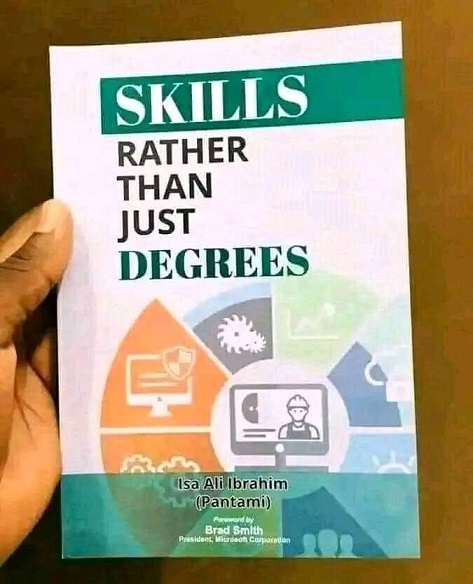
I’d say this regarding the book title by Prof. Pantami, ‘Skills rather than Just Degrees’, that stirred the Arewa atmosphere a week ago (which I haven’t read). I’m only saying this based on the evident experiences of the revered scholar and the book title. Sheikh Pantami possesses three degrees: a B.Sc., an M.Sc., a Ph.D., and other academic qualifications. He is also a distinguished Islamic scholar who has been lauded adequately due to his skills in teaching Islamic education through his exceptional preaching.

To showcase the relevance of having both, the Sheikh used his wealth of technology experience to serve as a minister and accepted a professorial award (which has generated so much back-and-forth). In the process of serving as one of the ministers under former President Buhari, he definitely acquired more administrative and political skills, making his career stronger.

So you see, the title wouldn’t have become a bone of contention if people had realised the Sheikh was writing to explain the benefits of obtaining both, but just a little bit of emphasising skills. But works of art unleashed on the world are open to criticism. This is something authors and artists cannot control; hence, the Sheikh faced reactions due to his publications.

One of the things I’ve learned amid other creatives is skills and academic upgrades. I tell you, we’ve learned so much from each other. We often see ideas from similar perspectives when it comes to designs, motion graphics or writing. Three out of four yeses is always a pass for any content. We have become part of one another’s journey and a great team. Despite our skill-based engagements, we’d encourage one another to further our degrees.

Whether you have skills or degrees or both, use what you have to get what you want in life. With degrees, you can pursue a particular area of interest and gain something extraordinary. Likewise, with skills, you can also realise your potential. So, the big idea is to use any of the two to gain something beneficial for yourself.

Nusaiba Ibrahim Na’Abba wrote from Kano. She can be contacted via nusaibaibrahim66@gmail.com.

In defence of the NYSC SAED program

By Ammar Muhammad Rajab

On November 1st, 2023, following mobilisation by Ahmadu Bello University, Zaria, I enrolled with the NYSC at one of the accredited centres in Zaria. I was deployed to Wailo Camp in the Ganjuwa Local Government Area of Bauchi State shortly after.

I departed Zaria on November 2, 2023, via a commercial bus. Following a six-hour journey, I arrived in Bauchi and spent the night there. On the afternoon of the 3rd of November, a Friday, I boarded another commercial car for a 60-kilometer journey to the camp where I had been deployed.

Immediately upon my arrival at Wailo camp, I underwent registration with the NYSC officials. Subsequently, I received the necessary items and materials for my three-week stay at the camp. The orientation period blended joy, intensity, lasting memories, education, and valuable information. I vividly recall the rigorous drilling, the monotonous parades, and the enlightening lectures delivered by various professional bodies, including but not limited to the DSS, Army, Police, NHIA, WEMA Bank, Fire Service, NIM, NSE, OIC Foundation, NAFDAC, FRSC, NDLEA, NDE, NGOs, SDGs, NOA, USAID, and YOMA, among others.

The army and Man O’ War were highly professional in their approaches. Despite the unfamiliar circumstances we found ourselves in, I enjoyed the teachings and orientation provided at the camp.

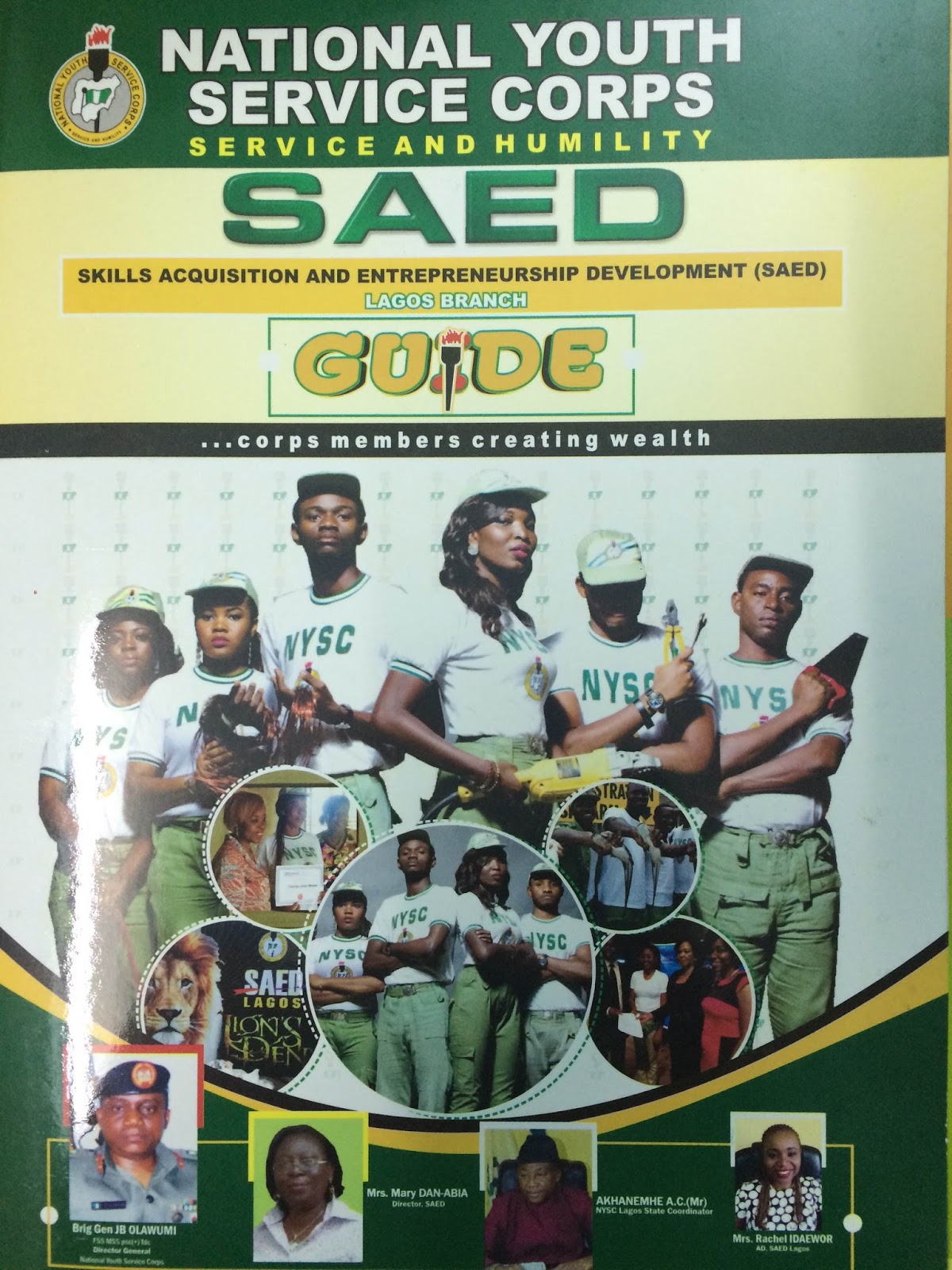
Skills Acquisition and Entrepreneurship Development (SAED), an acronym for a NYSC program established in 2012, was designed to tackle the pervasive issue of unemployment, a significant challenge confronting Nigerian youths and graduates today. This issue has become a national concern as some of our most educated and dynamic individuals are not actively contributing to economic and social development.

The SAED program was charged with raising corps members’ awareness of the realities of the Nigerian job market. Offering foundational entrepreneurship training and practical skills aimed to empower them to consider the possibilities of self-employment or initiating their businesses.

Many corps members harbour disdain for the program, often attributing it to the lengthy duration of both the lectures and practical sessions. During our orientation camp, the program ran daily from 9:00 a.m. to 2:00 p.m., spanning 5 hours. In the classroom, it was common to observe corps members dozing off, engrossed in their smartphones, displaying signs of fatigue, or engaging in other unserious behaviour.

To me, that period was the highlight of the orientation camp. I gained invaluable knowledge, particularly during the lecture delivered by an official from the National Directorate of Employment following the distribution of the guidebook titled “Starting My Own Small Business: Participant’s Workbook.” This lecture was a pivotal and transformative moment for anyone responsible and attentive.

 We were imparted with comprehensive insights into the intricacies of establishing a formal business in Nigeria and the diverse opportunities available across various sectors. We also learned how one could secure grants or loans from government agencies tasked with that responsibility or from commercial banks to facilitate business expansion.

Many individuals who had successfully leveraged these opportunities were invited to deliver practical lectures, and they did so with professionalism and expertise. Their first-hand experiences served as invaluable lessons for us, providing practical insights and guidance on effectively navigating the entrepreneurial landscape.

I listened attentively, maintained focus, and diligently documented all the necessary information provided during the SAED program. Hajia Jummai Idris Reme, the Head of the SAED program in the camp, often reiterated to us that “the SAED program is a corps members’ pathway to wealth creation,” and I wholeheartedly agreed with her sentiment. With commitment and dedication, one could create wealth using the knowledge acquired during the SAED program.

Before attending the camp, I already had a business idea and was working diligently towards realising it. However, attending the SAED classes further ignited and encouraged my efforts. As a result, I recently took the step to register my business with the Corporate Affairs Commission, spurred on by the confidence and insights gained from the SAED program.

In Wailo Camp, I initially participated in the ICT class under the SAED program, but I eventually discontinued my involvement due to some reservations. Subsequently, I joined the educational class, which I found very engaging. However, the class experienced low participation rates. Although we initially started with around twenty-plus participants, we concluded the class with fewer than ten individuals.

Despite the low turnout, I thoroughly enjoyed the educational class. We were exposed to numerous informative, educative, and innovative ideas about education, which enriched my understanding and perspective on the subject.

Most of the participants in the educational class were educators, except myself and one other individual. During this class, I learned about the legal processes involved in opening a private school. I am grateful to Aishatu Yusuf Saje, the head of the educational class, for imparting such valuable knowledge.

Isa Mohammed Inuwa and I were privileged to represent the educational class on Friday, November 17th, 2023, during the camp’s inter-platoon skills acquisition competition exhibition. Following my presentation, Mrs. Rifkatu Daniel Yakubu, the Bauchi State Coordinator, offered valuable advice. She emphasised the importance of establishing a standard school to contribute to our country’s education development. Mrs Yakubu highlighted the prevalence of substandard schools and stressed the significance of ensuring quality education. Her advice resonated deeply with us and reminded us of our responsibility to shape the educational landscape.

With the assistance of the SAED program, four corps members were able to secure a total of 2.3 million Naira in grants. Among the 90 corps members who submitted their business plans, seven were selected to present their proposals to WEMA Bank officials, fellow corps members, and other NYSC officials. Ultimately, four corps members emerged as grant recipients, with amounts awarded: 800,000 Naira, 700,000 Naira, 600,000 Naira, and 200,000 Naira, respectively. This achievement highlights the effectiveness of the SAED program in fostering entrepreneurship and facilitating financial empowerment among corps members.

The prevalent laziness among many youths today contributes negatively to their disdain for the SAED program. Several corps members have expressed that they consider it the most “boring” aspect of the orientation camp. However, the parade is the most tedious part of the camp. This is because I lack any passion for becoming an army or paramilitary officer, which diminishes my enthusiasm for the parade activities.

The blame should not be placed on the NYSC SAED program itself. Instead, the laziness and lack of foresight among many of our youth and graduates hinder their appreciation of this valuable opportunity. The SAED program serves as a platform to showcase talents and acquire knowledge that can be instrumental in thriving during and after the NYSC program. We need to seize this opportunity and make the most of it, as it may only come once in a lifetime.

Ammar Muhammad Rajab is a journalist who writes from Kano and can be reached at ammarmuhammad1993@gmail.com.

Skills acquisition and the rise of Arewa female entrepreneurs

By Aminu Mohammed

The article was inspired by a video on Nelly Agbogu’s Facebook page, also known as Naijabrandchick. In the video Aisha Falke of Northern Hibiscus created, she urged female vendors in the Northern region to take advantage of the NBC Trade Fair, scheduled to be held in Kano on February 4, to showcase their products to potential buyers.

This caught my attention, and I scrolled through Nelly’s Facebook page to learn more about the programme. I was impressed by the quality of content and creativity displayed by different female vendors from the North. They were soliciting for patronage of their products during the forthcoming trade fair. I was pleased to see that many young female entrepreneurs from the North are now engaged in small businesses and have embraced the spirit of self-reliance.

I also observed the activities of many northern female vendors on Instagram, TikTok, and Facebook, such as Maryam Gatawa and Aisha Abubakar. These vendors sell items ranging from well-packaged local food to products consumed by people every day.

Growth of Female Entrepreneurs

I am impressed by Maryam Gatawa’s sale of many of our local food items, such as beef jerky, powdered garlic and date, garin kunun tsamiya made from powdered millet, and garin dan wake (bean dumplings), all of which are well-packaged. This surge in the number of young women engaged in various businesses gladdens my heart and is an indication that things are changing in the north, unlike before. I am still using the bean dumplings I bought during my visit to Nigeria last year.

Some northern female entrepreneurs, such as Aisha Falke and others, have encouraged Arewa women to start small businesses by organising workshops, seminars, and training in Abuja, Kaduna, and Kano. However, more needs to be done to encourage our women to imbibe the spirit of self-reliance.

I have always encouraged my younger sisters to engage in small businesses. They are all engaged in small businesses and other activities that earn them money. There is nothing like financial independence and the ability to take responsibility for one’s life by involving oneself in a productive venture.

Small-scale and medium businesses are critical for the growth of any economy, as they employ one or more people and create jobs. Encouraging many young people to pursue entrepreneurship for their economic emancipation is vital. Any activity that generates income and enables one to earn a livelihood should not be looked down upon. You cannot escape poverty when you are not willing to do the so-called “dirty jobs”.

Need for Change in Mindset

It is essential to note that the North is currently facing a dire situation due to the mindset of its people. The youth must change their mindset about salaried jobs and embrace entrepreneurship. Over-reliance on government jobs has made things worse for us and led to the region’s retrogression. We cannot move forward as a society when most youths do not want to engage in small businesses or trade to earn a livelihood. Most of our graduates look down upon people doing vocational skills while roaming the streets looking for jobs. They prefer to remain idle rather than engage in a vocational skill.

The progress and development of the North depend on a productive population skilled in various aspects of human endeavour. We cannot make meaningful progress when most youths who graduate from university brandish their certificates without any skills to help them survive. It is vital to acquire both education and skills to survive in the new economy. I have spent money to acquire digital marketing skills despite my academic qualifications.

I still reiterate that the Northern youth should focus on acquiring digital skills, and those not interested should learn vocational skills. Stop dwelling in the past and embrace change. The era of looking for public sector jobs is over. The economic situation in Nigeria, which has been worsened by inflation and stagnant income, warrants the need for young men to engage in small businesses to earn a livelihood.

I have a nephew, Kabiru, who graduated from Bayero University Kano a few years ago. He decided to take the bull by the horns after the service year to learn furniture making rather than roam around looking for a job. Kabiru is now fully engaged in furniture making and has four employees who support him in his shop. I gave him a job to do for me during my visit to Nigeria last year, and he executed it to my satisfaction. Today, Kabiru is doing very well in his vocation, while some of his friends are still searching the streets for jobs.

Of course, not everyone can be an entrepreneur or run a small business, but we cannot continue to cling to the past and expect any progress in our region. Our young men should stop wasting time chasing certificates without commensurate skill. They should stop waiting for their relatives to help them secure government jobs as they are no longer tenable.

Necessity of Skill Development 

There are several free resources available on platforms such as YouTube, Google, Coursera, Udemy, Simplilearn and others, which can be used to learn a variety of skills like digital marketing, data science, web development and more. Those not interested in acquiring such skills must focus on vocational skills like fashion designing, furniture making, baking, plumbing, etc. Those who have the financial resources can also consider small-scale businesses or farming.

We must encourage our women to engage in entrepreneurship and strive to acquire education and critical skills that can help them manage their businesses better. We cannot afford to have many ignorant and unproductive people in our society. It is important to promote girl-child education and discourage the Almajiri system. We cannot have millions of children roaming the streets without proper education that will enable them to live a productive life.

As January 2024 draws close, our youth should wake up and become more productive. Instead of wasting their time sitting under trees with friends in their neighbourhood during productive hours, they should go and learn a skill or trade that can enable them to contribute to the economy of their community. I wish you the best of luck as you strive to improve your life.

Aminu Mohammed wrote this article from Ingolstadt-Bayern, Germany. He can be reached at gravity23n@gmail.com.

Prioritising skills and knowledge 

By Salisu Uba, PhD FCIPS

Let’s discuss why it’s crucial to focus on gaining knowledge and skills as you step into the post-graduation world. Instead of chasing influence or hoarding resources, the real power lies in arming yourself with knowledge and skills.

Being well-known might seem appealing, but the true influence isn’t about being the talk of the town. It’s about leveraging your understanding and expertise to make a positive impact. Genuine influence comes when you navigate challenges with the wisdom gained through knowledge and skills.

Accumulating wealth and resources can be tempting, but having a vault of riches won’t get you far if you don’t know how to use them wisely. It’s not just about having resources; it’s about being savvy enough to transform them into meaningful contributions. Knowledge and skills are the keys to unlocking the full potential of the resources at your disposal.

Think of knowledge as a vast kingdom waiting to be explored. It’s about understanding the rich history, diverse cultures, and the broader world. The more you know, the better equipped you are to connect the dots and see the bigger picture. Knowledge acts as the map that guides you through the complexities of the professional journey, especially when combined with digital skills.

Imagine having the ability to navigate complex tasks, communicate effectively, or solve intricate problems. These skills set you apart in the professional world. Furthermore, being skilled means being prepared for the challenges that come your way, making you a valuable asset in any field, anywhere, at any time.

When you combine knowledge and skills, you become an unstoppable force. For example, graduates who merge theoretical understanding with practical abilities can turn ideas into reality. With the wisdom of knowledge and the practicality of skills, you’re equipped to find innovative solutions, inspire others, and contribute to building a brighter future not just for yourself but for generations to come.

Finally, remember this; while influence and resources might glitter, it’s knowledge and skills that truly shine with everlasting brilliance. Equip yourself with the finest tools, explore diverse knowledge, and let your skills improve your professional path.

Dr Salisu Uba, PhD FCIPS, writes from the United Kingdom.

What can I start with small or zero capital?

By Tijjani Ahmad, FCA

Many complain about lack of capital as the major barrier to their dream venture. This is not always true. It is just an excuse. While capital is an essential factor, it is not the only factor. Because it is relative, you will find out the complainer is referring to financial capital in the form of large amounts of capital when you ask further.

In business, many things can give you the advantage that capital “alone” can’t give. But if you have them, they can jointly stimulate your journey more than capital.

Skills: Ensure you have the know-how of any venture you are interested in. The know-how will make you be considered an expert, and people want to see expertise in whatever they want to relate with. For example, if you are interested in carpentry or the fashion industry, here is how you can start:

Know the theoretical skill: There are thousands of free courses, videos, and tips for beginners. All you need is the smartphone you use to read this. If you consistently commit 2 hours to attend the right courses and watch YouTube videos for a month or two, you will master the trade.

Learn the practical skill: You can learn this through apprenticeship. It will take time, but it will surely pay. Just prepare yourself and be ready to learn. Many people are there looking for people like you who are ready to learn. 

With basic skills earned through courses and commitment to your apprenticeship, what is between you and becoming your own boss is tools and the right attitude. 

Tools: Own the tools. I know some will ask how I can get the tools without capital. Here are the ways:

Your skills will land you your first work; with this first work, your first tools are secured. And then your second job and second tools, and the cycle will continue. 

Two years ago, I had a plumbing problem. I reached out to a plumbers shop in our neighbourhood. Unfortunately, the boss wasn’t around, but his apprentices were. I asked one of them to come and fix my tap; it could be done in less than 15 minutes. But he said I should wait for his boss. He went for another work with the tools.

To my surprise, the cost of the tools needed to come and fix my tap was not more than N2,000, and his fee was not less than N1,000. Meaning two works like mine will earn him his first tools.

Attitude: “A strong positive attitude will create more miracles than any wonder drug.” —Patricia Neal.

Attitude influences your action, response to challenges, incentives, and rewards. Attitude is not just about being positive or negative but also about being adaptable and willing to learn and grow. It will shape how you relate with yourself, your trainers, partners and customers.

Therefore, depending on your passion, expertise, location and resources available. Here are some of the businesses you can start with zero or negligible capital:

1. Farming and animal rearing 

2. Content creation, copywriting, coaching and vlogging

3. Consultancy service and remote jobs

4. Cleaning and laundry services 

5. Gardening and landscaping 

6. Event planning and management 

7. Sports centre facilitation 

8. Mini processing, packaging, printing services, 

9. Web design and development, marketing, commission agent 

10. Fashion design, makeup art

I wish you all the best.

University Degrees vs Skills debate: A consequence of our purposeless education system?

By Prof. Abdelghaffar Amoka Abdelmalik

A recently published book by Dr Ali Isa Pantami has rekindled the debate between degrees and skills. Even though the book focused on digital skills, “educated” Nigerians are trying hard to separate skills from university degrees (education). That someone graduated in computer science without being able to write a computer code does not mean that all graduates in computer science cannot write computer code.

Public primary and secondary schools have collapsed, and there is no debate on a possible mission to rescue them. The public universities are on the path to the state of the public primary and secondary schools, and all we want is to keep the kids in the class to MILT (manage it like that).

Some of the questions that came to my mind as I watched the debate were: What is skill? Can you truly separate skills from university degrees? What qualified you to receive a degree from a university? What skills do you need to survive in Nigeria? What skills do we need to propel Nigeria to a particular height? Just digital skills? What are the available jobs in high demand in Nigeria? Over the last 20 years, tell me about a job that was advertised, and after all the screening, they could not get a qualified graduate in Nigeria with the appropriate skills for the job.

The debate on degrees and certificates is getting more interesting. It is more interesting to me this time around as the Northern elites champion it. We are growing up.

I did my National Youth Service in a secondary school in Bagwai, Kano state, between 2000 and 2001. One weekend, I went to the market to get some stuff and met the Senior Teacher. I jokingly asked why he was in the market and didn’t let the wife do the shopping. That led to a lengthy discussion where I mentioned the General Hospital, Bichi. As of then, there were 3 Doctors, all male, at the hospital. Two were Yoruba and one Igbo. They were all Christians. There was no female doctor. I told him that they need to encourage their daughters to go to school so that we can have their daughters as Doctors in those hospitals. I guess I was wrong. Degrees are useless.

We are fond of mentioning our iconic automotive designer, Jelani Aliyu, as an example of skills rather than degrees. This is a very interesting example with a missing background. Jelani was a very good student and truly left the university for the polytechnic because he wanted a more practically oriented program. That is what polytechnics are originally meant for. So, after finishing his HND from the polytechnic as the Best All-Round Student, he got a scholarship from the Sokoto state scholarship board to study automotive design at the College for Creative Studies in Detroit, US. They got certificates every step to show that he has acquired the requisite skills. The rest is history.

You see, anyone can write a book on degrees vs skills, especially people at high places whose entire success is based on their degree certificates. But can the book change our reality? Not likely. Only a few Nigerians actually read books. A long post on Facebook is even difficult to read. We prefer to use the time to argue over who is the football G.O.A.T. How do we change that? There are several challenges to deal with to save our system.

But then, by the virtue of your degree certificate, you got a job as a Graduate Assistant at a public university. You built on that to have your Master’s degree in the university. And being a lecturer in a public university, you got a scholarship for PhD in the UK. With a PhD degree from the UK, you got a job offer as an Assistant Professor at a university abroad. Then, a few years later, you got an appointment outside academia. I guess a skill was identified that took you to all these places. There was no record of industry experience. So, all the skills were acquired at the university. So, what is your problem with the university? If you have got all these skills in the university and the necessary skills that your students in your department need to have are missing, then we should blame you for it.

All that you are was built on your degrees, and the same degrees are suddenly no more important but skills? We are supposed to be the light of our society. So, what is skill? What do we do in the universities? Are university environments unskilled environment? Where do you get the skills? Meanwhile, their kids are in university acquiring degrees. My guess is that you need skills, while their kids need degrees to manage your skill.

One of my senior colleagues once told us during an undergraduate lecture in the ’90s that physics makes you think. That’s a skill. He said, whatever you decide to do after graduation, physics will help your thinking. Sometimes back, I had a discussion with one of our graduates who switched from physics to IT after graduation, and he said IT is a piece of cake compared to Physics. He said he finds it easy having studied physics. Of course, let’s preach skills and not degrees while our best graduates are been harvested by the US, Canada, France, Norway, England, Germany, etc.

Recently, there were some trending Master’s graduation lists from UK universities where the graduates were 99% Nigerians. The tuition fee for the master’s program can start a business in Nigeria, but they decided to give the money to the UK university to acquire a certificate that will qualify them to work in the UK. Their first degree from Nigeria got them admission to a Master’s program in the UK. That qualifies them for the two years post-study visa to get a job. They don’t intend to come back, and they will get a job there with a university degree.

Shaquille O’Neal found it offensive when he walked into business meetings, and people would only talk to his representatives. He felt he was lacking something and found it necessary to enrol in a Master’s degree program at the University of Phoenix. He told them that he wanted somebody to teach him in class but was informed that the course he enrolled for was only taught online and that he can’t be taught alone. He asked for the requirements to have a physical class, and he was told that they needed a minimum of 15 students. Shaq paid for 15 of his friends to join him in the Master’s program. There was a gap, and he got a degree to fill it. It is up to you if degrees are skillless.

Barrister Jimoh Ibrahim recently got a Doctor of Business degree from Cambridge Judge Business School, University of Cambridge. He is a billionaire with an MSc in Major Programme Management from Oxford, an MBA from Cambridge, a Certificate in International Tax Law from Harvard, an MPA from Ife, and a Bachelor of Law from Ife. He has been a billionaire. What does he need another degree for?

Our universities are not in the best form, nor are our polytechnics the way they were during Jelani’s days. We watched public educational institutions degrade over the years without any resistance except ASUU. That we have lost some vital components of what made a university a university is not a global case. It’s a peculiarity that we have to deal with to save our system. Our efforts should be towards reviving the lost skills that ought to be acquired at each level of our education, from primary schools to polytechnics and universities. 

Sadly, instead of making efforts to save the education system of the country and direct it toward the developmental needs of the nation, we are arguing over degrees and skills while they are taking the extra steps for the further destruction of public universities. The people telling you to go for skills instead of degrees have got their kids in schools abroad or private universities. What are they acquiring there? Unskilled knowledge? They have systematically destroyed what made the university a university but complained of a lack of skills. Double standard.

Since our brothers are championing the commercialization of public universities and skills rather than degrees, I hope our general hospitals in the North have got enough doctors so that we can close down our degree programs for medical sciences. What about law, finance, etc.? Optic fibre, which has revolutionized medicine and telecommunication, was a product of research from the university. A simple physics concept (total internal reflection in a material) that was engineered. Endoscopy and broadband transmission are not products of questionnaires but skilled thinking.

The World Bank recently said it will take northern states 40 years to catch up with their southern counterparts considering the current growth rates. Meanwhile, northern leaders don’t seem to bother about that but doing politics with the education of the people. I was informed today that grasses have taken over some of the primary schools in a state in the North-central. If we are to stop going to school, we need to start telling them to lead the way on the skills we need to survive in the North and make Nigeria work. Is it farming, as the president advised?

In a recent World Bank report, the Bank stated that “despite its vast natural resources and a young, entrepreneurial population, development in Nigeria has stagnated over the last decade, and the country is failing to keep up with the GDP growth of its peers. Declining private investment and demographic pressure push young Nigerians to pursue opportunities overseas”. Lack of skilled leadership and not a skilled workforce is possibly responsible for this.

It wasn’t a lack of skilled workforce that caused the massive unemployment in the country. There won’t be unemployment if there are jobs. There can’t be jobs if there is no job creation or an enabling environment for job creation. We are quick to forget that every certificate, degree or not, comes with the requisite knowledge and skills. The certificate is to show that you have acquired the prescribed skills. Of course, some find a way to get it without getting the requisite skill. This is Nigeria, where everything is possible. That is a systematic problem. That is why there is an interview.

Are you dealing with incompetent graduates? Blame your hiring process or yourself for not conducting the required interview. That you can’t find a job in Nigeria does not mean you don’t have the skill to get a job. The jobs ain’t just there. Go and study in the UK. If you stay back, you will get a job without any need to know someone that knows somebody. But if you dare return to Nigeria out of that thing called “patriotism” to contribute, you may need to buy a job or know somebody at a high place to get that dream job.

The problem is that we don’t even know what we want. No strategic plans. Everyone is just looking out for his pocket. After seven years, there is no clear education policy for the country. They said there are not enough resources to properly fund education, but they can’t produce a sustainable funding model for education. We are still living and surviving in lamentation mode.

They said a country cannot grow beyond the level of education of the people. Meanwhile, the education system of the country is in a deep mess, and no one is calling for a discussion on the sort of education that we need to aid our development as a developing nation. Every opportunist sits in the comfort of his office to push a policy through our throat, policies that will naturally die after they are out of the office. 

It was entrepreneurship yesterday and that made them introduce entrepreneurship as a compulsory subject in secondary schools and as a general studies course in the universities. But which entrepreneur will go and sit as a secondary teacher in a class to receive slave wages of N40,000 per month? The course is taught at the university by colleagues struggling to get home with their take-home pay.

The subject is taught by people struggling with monthly salaries and doesn’t know what entrepreneurship looks like aside from what they read in the book. The government that introduced the policy, as usual, did not make adequate provisions for it to be taught. But they are happy to have introduced the subject. Not sure of how many entrepreneurs we have produced from the teaching of the courses. Today, it is skill acquisition. Are we confused?

Just like the “entrepreneurship” package of yesterday, “Skills rather than Degrees” seems to be the new gold mine among those in government with different packages for funding from the government. At least we have started spending billions on skill acquisition across states. A report from Vanguard on April 6, 2022, says over N6.2 billion was spent to train and equip 16,820 Bauchi youths in the art of smartphone repairs. That’s about N368,609 per person.

You can write books on skills and get Bill Gates to write the foreword, but that won’t change our situation until we are willing to change it. We are not getting it right with our education system, and we have refused to ask honest questions and find answers to them. Some of the skills needed to be acquired at the university are missing due to system failure, and we pretend that all is well. All that our leaders want is to hear that students are in class and manage it like that. The quality of the teaching is not important to them. After all, their kids ain’t there. Unfortunately, we don’t see anything wrong with the MILT syndrome, and some of the victims even consider questioning/challenging the leaders as insubordination.

A member of this government is championing the “Skills and NOT Degrees” campaign, and he has written a book on it. I did not know that ministers have the luxury of time to write books while in office, despite their tight schedules. Well done, sir. I hope the idea will not die in May 2023 after leaving office.

There is no doubt that all is not well in our universities, from the hiring process to the interference of professional bodies to funding to the strangulation of the system by government agents to the killing of motivation to the localization of the universities to the internal politics to the quest for positions to the loss of a scholarship, etc. But condemning the university system that made us because of our mindset against ASUU won’t solve our problem unless we ask the right questions and find answers to them.

Why did the public primary schools collapse? What is the basic skill requirement at the primary school level? Why are those skills missing? What are the deliverables at the secondary schools? How did we lose it? We had the Government Technical Colleges. What happened to them? Can we restore them? What are the expectations from the polytechnics and the university for national development? What are the obstacles to making the expectations a reality? How do we get rid of the obstacles? The University education system is a universal purposeful system that has not changed. Ours is what we made it to be. We must revive the purposeful educational system towards our developmental needs as a developing nation.

Restoring our universities and other educational institutions to the state they are meant to be needs an honest approach. But window dressing our challenges won’t solve the problems if we don’t tackle them from the root. If we don’t sit to deliberate on the sort of education system we need to aid our development as a developing nation, we’ll keep moving around the clock while our situation keeps deteriorating.

Abdelghaffar Amoka Abdelmalik, PhD, wrote from Ahmadu Bello University, Zaria. He can be reached via aaabdelmalik@gmail.com.