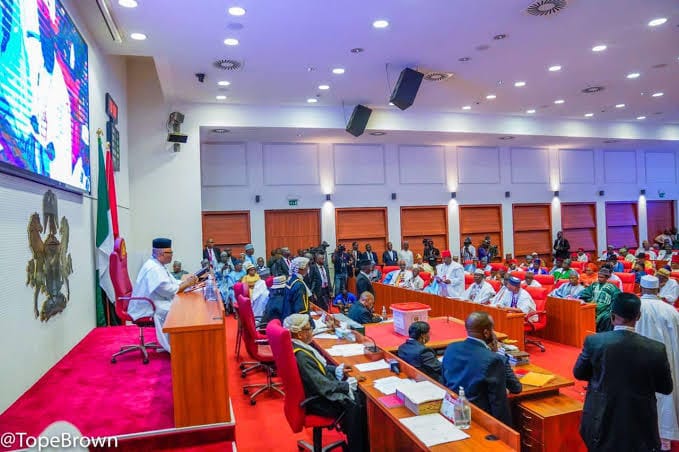
Senate

Senate Urges FG to Stop Reintegrating Repentant Terrorists

By Uzair Adam

The Senate has called on the Federal Government to discontinue the rehabilitation and reintegration of repentant Boko Haram members and other violent criminals, arguing that the policy has failed to curb insecurity across the country.

The resolution followed a motion on the rising cases of attacks, abductions and killings involving serving and retired military personnel, including the late former Director of Defence Information, retired Major General Rabe Abubakar.

The motion, sponsored by the Chairman of the Senate Committee on Army, Senator Abdulaziz Yar’Adua (APC, Katsina), received unanimous support during Tuesday’s plenary.

Lawmakers condemned the continued rehabilitation of former Boko Haram fighters, bandits, kidnappers and other criminal elements under the Federal Government’s deradicalisation programme. Several senators linked the persistent security crisis, particularly in northern Nigeria, to the release of individuals described as repentant criminals back into society.

The Senate expressed concern over what it described as the deteriorating security situation, warning that the growing attacks on serving and retired military officers represent a dangerous dimension to the country’s security challenges.

It cited the killing of retired Major General Richard Duru in Owerri after a reported ransom payment of $50,000, the murder of retired Brigadier General O.M. Harlord Udokwere in Abuja, the 56-day captivity of former NYSC Director-General, retired Brigadier General Maharazu Tsiga, and the death of retired Major Aja while in captivity in Kogi State.

According to the lawmakers, the attacks pose a significant threat to national security because many of the victims previously held sensitive operational, intelligence and command positions.

The Senate observed a minute of silence in honour of Major General Rabe Abubakar and other Nigerians killed by terrorism, insurgency, banditry, kidnapping and other violent crimes.

It also urged the Federal Government to ensure that perpetrators are arrested and prosecuted.

The Red Chamber further called on security and intelligence agencies to strengthen intelligence gathering, surveillance, threat assessment and early warning mechanisms, while urging the government to accelerate the deployment of modern security technology to combat terrorism, banditry and kidnapping.

The resolution comes despite the existence of Operation Safe Corridor, a Federal Government initiative launched in 2016 to deradicalise, rehabilitate and reintegrate former Boko Haram combatants who voluntarily surrendered.

While officials have credited the programme with encouraging thousands of insurgents to abandon violence, concerns have persisted over reports of some beneficiaries allegedly returning to criminal activities.

Reacting to the Senate’s position, security analyst and Associate Professor at the University of Namibia, Dr. Babayo Sule, described the resolution as unfortunate and potentially counterproductive.

He argued that the deradicalisation programme was introduced only after military operations failed to bring lasting peace, stressing that rehabilitation and reconciliation remain recognised components of counter-insurgency strategies worldwide.

Rather than scrapping the initiative, Sule urged lawmakers to investigate its shortcomings and strengthen its implementation. He also called for greater oversight of Operation Safe Corridor and similar reconciliation programmes in states affected by insurgency.

According to him, abandoning the programme without addressing the underlying challenges could further worsen insecurity, as the country currently lacks sufficient capacity to defeat insurgents solely through military means.
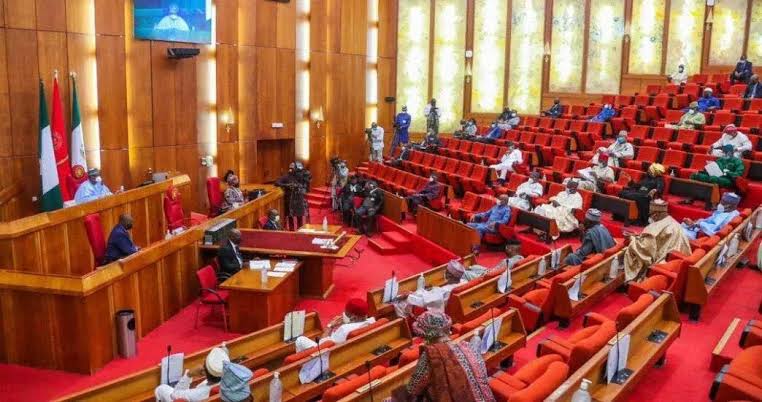
Senate Defends State Police Bill, Says Security Must Rise Above Politics


The Senate has defended the recently passed State Police Bill, insisting that national security concerns should take priority over political disagreements.

Last Wednesday, the upper legislative chamber approved the Constitution of the Federal Republic of Nigeria (Alteration) (State Police) Bill, 2026, which seeks to establish state police across the country.

The development followed criticism from some political figures and opposition leaders.

Peter Obi, presidential candidate of the Nigeria Democratic Congress (NDC), had called for the implementation of state police to be delayed until after the 2027 general election. He warned that politicians could misuse the structure if proper safeguards are not in place.

Hakeem Baba-Ahmed, national chairman of the Peoples Redemption Party (PRP), also criticised the proposal during an appearance on Channels Television’s Politics Today programme. He said the current administration lacked the credibility to implement such a system and described the moment as “this is the worst possible time” to introduce state police.

Reacting to the criticism, Senate Leader Opeyemi Bamidele said the legislation emerged from national necessity rather than political calculations.

In a statement issued on Sunday, Bamidele described the bill as “purely a child of necessity and not of political expediency as well as a product of national consensus and not of cynicism”.

The senator representing Ekiti Central explained that the proposal was not a recent initiative. According to him, the idea formed part of submissions presented before the Senate ad hoc committee on the review of the 1999 Constitution.

He said lawmakers consulted widely because of the sensitive nature of the issue.

Bamidele stated that the National Assembly engaged the executive arm of government, the Nigeria Governors’ Forum, the Conference of Speakers of State Legislatures and the leadership of the Nigeria Police Force, among other stakeholders.

He added that public hearings also took place across the six geopolitical zones in July 2025.

“At each level of our consultation, nearly all stakeholders embraced the State Police Bill in the light of stark realities we are facing today,” he said.

According to him, recommendations from the Nigeria Police helped lawmakers create oversight and accountability measures aimed at preventing abuse of state police by politicians.

“The resolve of the Nigeria Police to support the Bill obviously highlights its strategic national significance to deal with insecurity at local and state levels,” he said.

Bamidele also said the bill enjoyed support across party lines in both chambers of the National Assembly.

“Even though the APC is the majority, there are members of opposition parties – PDP, ADC, NDC and Labour Party – that exercised their discretion in favour of the Bill, mainly in the national interest and not on parochial basis,” he said.

“In the Senate, for instance, 84 out of 109 members voted clause by clause in support of the Bill. This accounted for 77.06% approval at the Senate alone.”

The Senate leader stressed that security issues should not be treated as partisan matters.

“Political actors elsewhere always throw off their togas of partisanship and parochialism to support initiatives that will boost and reinforce national security,” he said.

He urged opposition parties to offer constructive ideas that could improve peace and stability across the country instead of focusing solely on criticism.

“Even when they disagree on some grounds, they are under obligations to provide credible and useful ideas that can make our Nation better and greater. Unfortunately, they have not passed this critical test of opposition democracy,” he added.

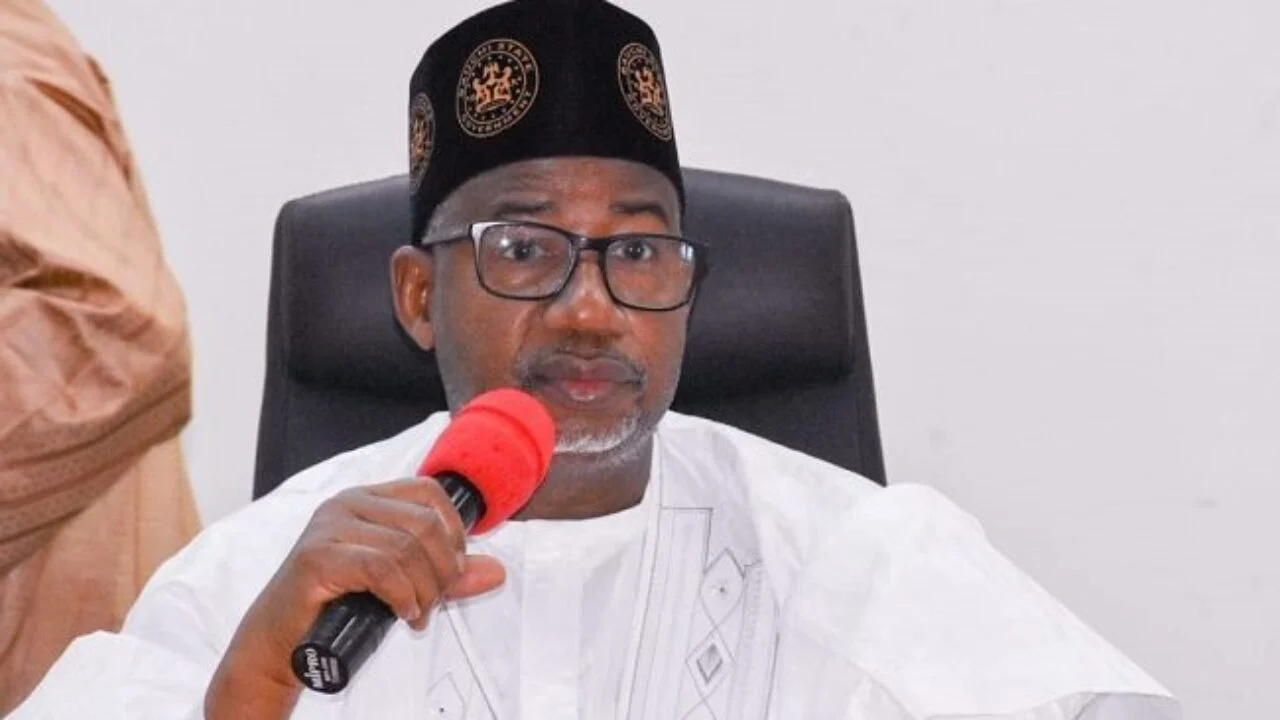
Why Governor Bala Mohammed’s Records Qualify Him to Become a Senator

A response to Barr Ahmed Umar Farouk.

My dear learned brother, Barr Ahmed Umar Farouk, as I pledged to respond to your post, let me briefly add a few lines, as my learned friend, Barr Hassan Saraki, has already engaged you on the other issues you raised, which I think makes my work easier. 

According to the Nigerian Constitution, any Nigerian aged 35 years and above can contest the senatorial seat. This legal provision makes Governor Bala Abdulkadir Mohammed fully qualified to run for the Bauchi South Senatorial District seat in the 2027 general elections. 

As a retired director from the federal service, a senator for about 3 years, a minister for more than 5 years, and currently a sitting governor serving a 2nd 4-year term, these alone are exceptional qualities that make Senator Bala Abdulkadir the best choice for the Bauchi South senatorial district. Could this ring a bell for you?

His contributions to the Senate gave him an edge over all the contestants across all political parties. His brief sojourn in the red chamber was notable for his active legislative role and key administrative positions within the Senate. His contributions during this period primarily focused on committee leadership, advocacy for reform, and a landmark constitutional motion. 

Key among his legislative contributions was the Doctrine of Necessity Motion during the political uncertainty of late 2009. He courageously moved the motion that empowered then-Vice President Goodluck Jonathan as acting president during President Umar Musa Yar’Adua’s illness, effectively resolving a looming constitutional crisis. 

Senator Bala Mohammed was recognised as one of the most outspoken and vibrant legislators during plenary sessions. He championed bills focused on public service reform and anti-corruption, advocating for greater transparency in governance. During his two years in the Senate, Senator Bala Mohammed tackled essential social issues by providing water and sanitation infrastructure, improving health facilities, and addressing youth unemployment and other social challenges, among other initiatives. 

Senator Mohammed served as a member of several committees and held strategic leadership positions, including Vice Chairman of the Senate Committee on Aviation, Secretary of the Northern Senators Forum, and member of the Committees on Communication, Finance and Public Accounts, Rules and Business, Environment, Labour and Productivity, and Senate Ad-hoc Committee on the Jos Crisis. 

As Governor for seven years, Bala Mohammed has implemented a series of reforms and projects aimed at transforming Bauchi State. His administration focuses on a blueprint designed to revitalise critical sectors of the economy. His achievements in health, education, and infrastructural development are clear examples of a representative and responsible government. 

This piece has done justice to the four items you presented as the reasons why Governor Bala Mohammed is the least suited to represent the Bauchi South senatorial district in the red chamber. 

Governor Bala Mohammed is contesting the Senate position not as a retirement home but to continue with the good works he started between 2007 and 2010. Don’t forget that His Excellency defeated a sitting governor, Dr Ahmad Adamu Mu’azu, with a landslide victory to win the Bauchi South senatorial seat in 2007. 

With these few paragraphs, I hope my learned brother can see the differences between His Excellency Governor Bala Abdulkadir Mohammed and the other contestants, which are far below his pedigree, given his educational qualifications and requisite experience in governance and national assignments.

Isyaka Laminu Badamasi is of No 555, Ajiya Adamu Road, Bauchi, Bauchi State.

President Tinubu Requests Senate Approval For Fresh N9 Trillion Loan

By Sabiu Abdullahi

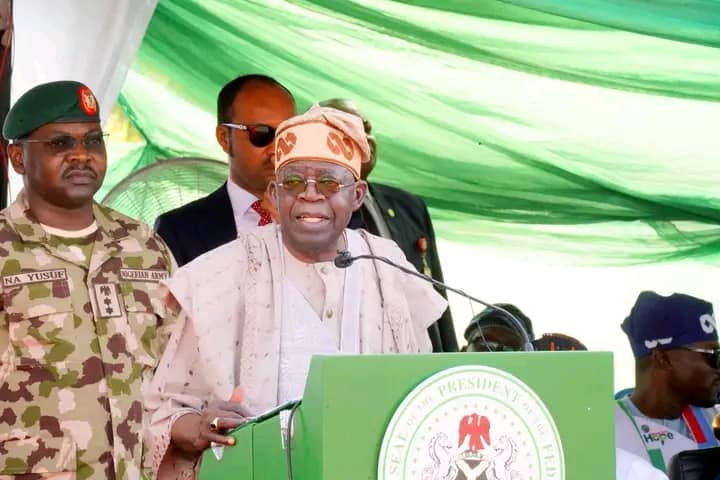
President Bola Tinubu has asked the Nigerian Senate to approve fresh external loans estimated at about ₦9 trillion to ₦9.6 trillion to support the country’s financial obligations.

The request was presented through two separate letters sent to Senate President Godswill Akpabio and read during Tuesday’s plenary.

In one of the letters, the President sought approval to secure a $5 billion facility from Abu Dhabi Bank. The fund is intended to address the budget deficit and meet existing debt commitments. In another request, Tinubu asked lawmakers to approve a $1 billion loan from Citibank in London to finance the rehabilitation of key port infrastructure.

The proposed upgrades will focus on the Lagos Port Complex and Tin Can Island Port, which are among the busiest seaports in the country. According to the President, the project will tackle infrastructure challenges, improve efficiency, strengthen safety standards, and support non-oil trade. He also noted that the move will help position Nigeria as a competitive trade hub in the region.

After the letters were read, Senate President Akpabio referred both requests to the Senate Committee on Local and Foreign Debts, led by Aliyu Wamakko, for further review and quick consideration.

The development comes at a time when concerns continue to grow over Nigeria’s rising debt profile and dependence on external borrowing to fund budget gaps.

It also follows a $1 billion Development Policy Financing loan approved by the World Bank four months ago under the initiative titled “Nigeria Actions for Investment and Jobs Acceleration (P512892).” The facility includes a $500 million International Development Association credit and a $500 million International Bank for Reconstruction and Development loan.

The World Bank explained the objective of the programme in its document, stating: “The proposed Development Policy Financing supports Nigeria’s pivot from stabilisation to inclusive growth and job creation. Structured as a two-tranche standalone operation of US$1.0 billion (US$500m IDA credit and US$500m IBRD loan), it seeks to catalyse private sector–led investment by expanding access to credit, deepening capital markets and digital services, easing inflationary pressures, and promoting export diversification,” the document read.

The Federal Ministry of Finance will oversee the implementation of the facility, as the World Bank has cleared the loan preparation process to move forward.

Since 2023, the Tinubu administration has introduced several economic reforms. These include the removal of petrol subsidy, the unification of exchange rates, and the stoppage of central bank deficit financing. The government said these steps, introduced under the Renewed Hope Agenda, have helped stabilise the economy, reduce the fiscal deficit, and improve investor confidence.

Despite these measures, economic growth remains slow, with over 130 million Nigerians still living in poverty. The World Bank noted that although stability has improved, “Nigeria’s economy has yet to shift decisively into a higher and inclusive growth path,” which highlights the need for increased investment to boost productivity, expand exports, and create jobs.

Senate summons Kyari, other ex-NNPCL bosses over unaccounted N210tn

By Anwar Usman


The Senate Committee on Public Accounts has summoned the former Group Chief Executive Officer of the Nigerian National Petroleum Company Limited (NNPCL), Mele Kyari, alongside former Chief Financial Officer Umar Ajia Isa and former Group General Manager of the National Petroleum Investment Management Services (NAPIMS), Dr. Bala Wunti, over an alleged N210 trillion not properly accounted for by the company between 2017 and 2023.

The committee, chaired by Senator Aliyu Wadada (Nasarawa West), issued the summons on Thursday following a review of audit queries relating to the financial records of the national oil company.

The Committee chairman said they would issue an arrest warrant against the former management team if they fail to appear before it on a date that will be communicated to them.

He added that the former officials are expected to appear before the committee alongside the current management of NNPCL led by the Group Chief Executive Officer, Engr. Bayo Ojulari, as well as the external auditors who served the company during the period under review.

Wadada, while reading the committee’s resolutions to journalists, said the panel had directed the NNPCL to account for the combined sum of N210 trillion  comprising N103 trillion and N107 trillion, identified in audit reports.

“NNPCL should refund the sum of N210 trillion, being the combined sum of N103 trillion and N107 trillion, which were not properly accounted for as contained in the audit reports. NNPCL should and must account for the two figures,” he said.

The committee further  directed the company to remit to the Treasury all production costs charged against crude oil revenue for the period under review, noting that NNPC and its subsidiaries, including NAPIMS, do not directly produce crude oil.

According to Wadada, the company claimed that the N103 trillion represented cumulative expenditures by joint venture partners from JV cash calls between 2017 and 2023, an explanation the committee described as unacceptable.

He added that the company also recorded N107 trillion as subsidy receivables and sundry debts in its audited financial statements as of December 2023, which it said were owed by various banks and other entities.

“When put together, NNPCL needs to properly account for the N210 trillion,” Wadada said.

The committee also interrogate the expenditure of N5 billion which was said to have been used to facilitate the change of the company’s name from the Nigerian National Petroleum Corporation (NNPC) to the Nigerian National Petroleum Company Limited (NNPCL).

He further urged the Auditor-General for the Federation to conduct a forensic audit of the company’s financial statements for the period under review in line with Section 85 of the 1999 Constitution (as amended).

Senator seeks 16-year single tenure for president in Nigeria

By Kamal Alkasim

Kenneth Eze (APC-Ebonyi) has called for a nationwide debate on replacing Nigeria’s current two-term, four-year presidential cycle with a single 16-year tenure.

(APC-Ebonyi) has called fotionwide debate on replacing Nigeria’s current two-term, four-year presidential cycle with a single 16-year tenure.

Mr Eze, chairman of the Senate Committee on Information and National Orientation, said this on Monday while addressing journalists at his Ohigbo-Amagu country home in Ezza South LGA.

He noted that frequent election cycles undermined policy continuity and stalled national development.

“Every four years, we return to campaign mode. By the third year, governance slows as attention shifts to re-election; that is why projects are abandoned, and policies are not allowed to mature.

“Nigeria’s constitution provides for a four-year presidential term, renewable once, but if you ask me, I will advocate one tenure of 16 years. It sounds controversial, but it will allow policies to run their full course and stabilise the system,” Mr Eze explained.

Mr Eze, therefore, proposed scrapping the two-term structure in favour of a single, extended tenure that would free leaders from electoral pressures and enable them to pursue long-term reforms.

The lawmaker noted that critical sectors such as power, infrastructure, agriculture and fiscal reform required sustained commitment beyond short political cycles.

According to him, irrigation schemes, mechanised farming programmes, and energy reforms require continuity to yield a measurable impact. He defended recent economic measures, including the removal of the fuel subsidy, describing them as unavoidable steps to avert fiscal collapse.

”We were borrowing to pay salaries. That is not sustainable for any country; tough decisions are necessary to secure long-term stability,” said Mr Eze.

Mr Eze maintained that his proposal should be seen as a governance conversation, not an assault on democracy. He called for a broader national dialogue on constitutional reform to determine whether an extended tenure could improve implementation while preserving checks and balances.

He acknowledged that any amendment would require approval by the National Assembly and ratification by state legislatures, but stressed that the process must remain transparent and participatory.

Beyond tenure reform, Mr Eze urged citizens to embrace civic responsibility and patriotism. He challenged journalists, teachers, civil servants and parents to promote national values, warning that policy changes alone could not transform the country.

Senate backs electronic transmission, manual results as backup in electoral act

By Abdullahi Mukhtar Algasgaini

In a decisive move, the Nigerian Senate has formally amended its records to clarify the method for transmitting election results, endorsing electronic transmission as the primary method while establishing a manual backup.

The amendment, ratified during a plenary session on Wednesday, February 4th, pertains to the contentious Section 60(3) of the Electoral Act Amendment Bill. The resolution was initiated by a motion from the Senate Chief Whip, Mohammed Tahir Monguno.

Under the adopted framework, election results from polling units are to be transmitted electronically. However, the Senate introduced a critical contingency: in the event of any technical failure or communication glitch, the manually completed Form EC8 will serve as the primary document for collation.

This form, which contains the polling unit results, must be duly entered, stamped, and signed by the presiding election officer and counter-signed by party agents before being used for further tallying.

The session saw a moment of procedural tension when Senator Enyinnaya Abaribe called for a division—a formal process requiring each senator to vote individually on the clause. This move, however, was withdrawn shortly after Senate President Godswill Akpabio acknowledged his request.

The amendment seeks to balance technological advancement with practical safeguards, aiming to bolster the integrity of the result collation process while accounting for Nigeria’s inconsistent network coverage.

General Musa takes over Nigeria’s defence ministry after Senate’s confirmation

By Abdullahi Mukhtar Algasgaini

The Senate confirmed retired General Christopher Musa as Nigeria’s Minister of Defence on Wednesday. This appointment places the former Chief of Defence Staff at the head of the nation’s defence apparatus barely 40 days after his military retirement.

The confirmation followed a rigorous screening session where senators questioned the nominee on various security challenges facing the country.

The approval was ultimately secured through a voice vote.General Musa’s nomination moved swiftly through the executive and legislative branches.

President Bola Tinubu nominated him on Tuesday, with his name transmitted to the Senate for confirmation the same day.

Senate probes military withdrawal from Kebbi school ahead of bandit attack

By Uzair Adam

The Senate has mandated its joint committee on security to investigate the sudden withdrawal of military personnel from Government Girls Secondary School, Maga, Kebbi State, shortly before bandits attacked the school.

The committee is expected to report its findings within two weeks.

The upper chamber also tasked the joint committee to probe the circumstances surrounding the killing of Brig.-Gen. Musa Uba.

In addition, the Senate resolved to dissolve its standing committees on National Security and Intelligence, as well as the Air Force, with a view to reconstituting them.

The Senate leadership is also set to meet with President Bola Tinubu to brief him on the critical resolutions and views of the upper chamber.

These decisions followed a motion by Senate Deputy Leader Lola Ashiru titled, “Urgent Need to Address Escalating Insecurity in Kwara, Kebbi and Niger, Call for Immediate and Comprehensive Federal Intervention,” during Wednesday’s plenary.

Other resolutions included commending President Tinubu and security agencies for their rapid interventions and rescue of some kidnapped victims.

The Senate urged sustained coordinated operations until all abducted persons nationwide are rescued and perpetrators apprehended.

It also advised the federal government to strengthen local vigilance groups for swift responses to similar attacks and recommended a review of Nigeria’s firearm law to reflect current security challenges, similar to more than 175 countries where responsible citizens are permitted to own guns.

The Senate further resolved to pursue diplomatic engagement with the United States and other allied nations’ parliaments to strengthen intelligence sharing and counter-terrorism training to address Nigeria’s security challenges.

Members observed a one-minute silence in memory of the victims of recent attacks.In his contribution, Deputy Senate President Jibrin Barau highlighted the rise in insecurity across the country, linking it to international perceptions and the increased activities of terrorists.

“These heinous crimes show that those involved do not love our country. They move in convoys to commit atrocities. We should deploy technology to counter this menace,” he said.

Senate Leader Opeyemi Bamidele noted that many kidnapped persons from Kwara, Kebbi, and Niger have regained their freedom, emphasizing that government did not pay ransom but achieved successful rescues, a positive development amid ongoing security challenges.

Converting ATBU to a conventional university: A backward step in a forward world

By Aminu Babayo Shehu

The recent move by Senator Shehu Buba Umar, representing Bauchi South, to convert Abubakar Tafawa Balewa University (ATBU), Bauchi, from a University of Technology to a conventional university has stirred deep concern among stakeholders, alumni, and advocates of science and technology education. The bill, which has already passed second reading in the Senate, risks undoing decades of progress that ATBU has made in advancing technology-driven learning and innovation in Nigeria.

In an era when nations are competing through science, technology, and innovation, Nigeria cannot afford to take a step backwards. Around the world, technology is driving development, job creation, and national competitiveness. From Artificial Intelligence to Robotics, Biotechnology, and Cybersecurity, the future of work and industry is being reshaped by technology. It is therefore troubling that, instead of strengthening one of Nigeria’s most respected technology-based universities, the discussion is now about diluting its identity.

ATBU has earned its reputation as one of the country’s leading technological institutions. For decades, it has produced graduates who are not only competent but highly sought after in both the public and private sectors. Alumni of the university are excelling in software engineering, telecommunications, construction, fintech, and data science. Many are leading teams, building products, and contributing to the growth of major organisations across Nigeria and abroad.

In recent years, the university has made even more progressive strides. The Faculty of Computing, for instance, has expanded its curriculum beyond traditional Computer Science to include new, globally relevant courses such as Artificial Intelligence, Data Science, Software Engineering, and Cyber Security. These additions are clear evidence that ATBU is aligning itself with international trends and preparing students for the realities of the modern digital economy.

Instead of seeking to convert ATBU into a conventional university, the Federal Government and relevant stakeholders should focus on strengthening its technological capacity and research base. There are better, more visionary ways to make the institution self-sustaining and impactful. Establishing Artificial Intelligence research laboratories, cybersecurity and digital forensics hubs, robotics and automation labs, and technology incubation centres would attract both local and international partnerships. Such facilities could become national assets for innovation, startups, and industrial research.

Globally, top universities have achieved great success by maintaining and deepening their technological focus. The Massachusetts Institute of Technology (MIT) in the United States, Tsinghua University in China, and the Korea Advanced Institute of Science and Technology (KAIST) are shining examples of institutions that have transformed their nations through technology-driven education and research. Nigeria should be learning from these models, not abandoning its own.

Turning ATBU into a conventional university would water down its focus and weaken the very foundation on which it was established. What Nigeria needs today are more institutions that specialise in applied sciences, engineering, and emerging technologies; not fewer.

This proposal, though perhaps well-intentioned, is ill-timed and misdirected. The challenges of the 21st century demand more innovation, not less. The future will belong to nations that invest in science, technology, and knowledge creation.

ATBU should remain what it was meant to be: a University of Technology dedicated to building Nigeria’s next generation of innovators, engineers, and researchers. To do otherwise would not just be a loss for Bauchi or Northern Nigeria, but for the entire country.

Aminu Babayo Shehu is a Software Engineer and alumnus of Abubakar Tafawa Balewa University, Bauchi. He writes from Kano via absheikhone@gmail.com.