Racism

Salah calls out double standards in media coverage

By Muhammad Abubakar

Liverpool star Mohamed Salah has ignited fresh debate over media bias in football after highlighting what he sees as unequal treatment between himself and fellow striker Harry Kane. 

Speaking in a recent interview, Salah recalled a past spell when Kane went 10 matches without scoring, yet continued to receive strong backing from commentators.

According to Salah, the tone was markedly different when he experienced similar difficulties. “The media were like: ‘Oh, Harry will score for sure.’ When it comes to Mo, everyone is like: ‘He needs to be on the bench,’” he said. The Egyptian forward stressed that his point was not a personal jab at Kane, adding humorously, “I am sorry, Harry!”

Salah’s comments quickly circulated on social media, garnering millions of views and sparking widespread discussion. Analysts and supporters have since weighed in, with many arguing that the incident reflects broader inconsistencies in how players from different backgrounds are portrayed in mainstream football coverage.

The episode has added a new layer to ongoing conversations about fairness, perception, and representation in global sport, especially in Europe.

Suspected racist’s brutal murder of Algerian lady in Germany sparks outrage

By Sabiu Abdullahi

The fatal stabbing of 26-year-old Rahma Ayad, an Algerian nursing trainee, in the German town of Arnum near Hanover has ignited protests and diplomatic conversations between Algeria and Germany.

Many are urging that the incident be treated as a racially motivated hate crime.Rahma was killed on the morning of 4 July in the stairwell of her apartment building.

According to German police and eyewitness reports, her screams were heard by neighbours who called emergency services. She was discovered with multiple stab wounds to her chest and shoulder.

Despite the rapid arrival of medical personnel, she succumbed to her injuries shortly afterward.A 31-year-old German man, who resided in the same building, was arrested later that day.

While he remains in custody, authorities have yet to officially confirm a motive or file formal charges.

Rahma’s family alleges that she had previously expressed concerns about her safety.

They claim she had been repeatedly harassed by her neighbour, particularly because of her Arab identity and choice to wear the hijab.

In an interview with Al-Araby TV, her mother revealed that Rahma had felt unsafe for months due to the neighbour’s behaviour, which reportedly included verbal abuse.

Algerian community activists in Germany echoed these concerns, stating that the suspect had a history of making derogatory remarks directed at Rahma.

They are now calling on authorities to treat the incident as a case of racist violence rather than dismissing it as a random act or linking it to mental instability.

The killing has sparked widespread protests across Germany.

On Tuesday, demonstrators gathered outside Rahma’s residence in Arnum, holding a rally to demand justice and draw attention to what they described as rising Islamophobia across Europe.

The protesters also criticised the muted response from German officials and the limited coverage the story received in mainstream media.

“If the killer had been a Muslim and the victim German, this would be headline news everywhere,” one protester told Al-Araby TV.

Another participant accused German authorities of applying justice “only selectively”.

The incident has stirred strong emotions online as well.

A user on X (formerly Twitter) commented, “People travel to Europe for safety and a better life […] and they end up like this.”

Responding to the outcry, Algeria’s Secretary of State for National Community Abroad, Sofiane Chaib, held talks with the German ambassador in Algiers.

He described Rahma’s death as a “heinous crime” and called for greater protection of Algerians living in Germany.

In a related gesture, the Algerian consulate in Germany has committed to covering the expenses for transporting Rahma’s body back to Oran, where she will be laid to rest.

Anti-immigrant riots spread in Northern Ireland

By Maryam Ahmad

Anti-migrant riots have spread across parts of Northern Ireland, with violent mobs attacking police and targeting migrant communities.

Clashes erupted in several towns, leaving police vehicles damaged and officers injured. The unrest, sparked by anti-immigrant rhetoric online, began in a Belfast suburb and quickly spread.

The Police Service of Northern Ireland condemned the violence and confirmed multiple arrests. Community leaders and rights groups have called for calm and urged protection for vulnerable communities.

Authorities continue to monitor the situation.

Illinois man sentenced to 53 years for killing Palestinian-American child

By Hadiza Abdulkadir

An Illinois man has been sentenced to 53 years in prison for the fatal stabbing of a six-year-old Palestinian-American boy in what prosecutors described as a hate-motivated attack.

Joseph Czuba, 71, was convicted earlier this year of first-degree murder, attempted murder, and aggravated battery after he attacked Wadea Al-Fayoume and the boy’s mother, Hanaan Shahin, at their home in Plainfield Township in October 2023. Authorities said Czuba targeted the victims because of their Muslim faith and the ongoing conflict in the Middle East.

During sentencing on Friday, the judge described the act as “brutal and senseless,” emphasising the need for justice and deterrence in cases driven by hate.

Wadea, who had recently celebrated his sixth birthday, was stabbed 26 times. His mother, who survived the attack, suffered multiple stab wounds and continues to recover.

The case drew national attention and widespread condemnation, with civil rights groups calling for greater protection of Muslim and Arab-American communities amid rising tensions.

Czuba showed no remorse during the hearing. His attorneys said they plan to appeal the conviction.

Artificial Intelligence

Artificial Intelligence: A double-edged sword of progress

By Zainab Abubakar Abba

The advent of artificial intelligence (AI) has revolutionized many aspects of our lives, from healthcare and finance to transportation and education.

As AI systems become increasingly sophisticated, the ethical implications of their development and deployment have sparked intense debate.

The ethics of AI are complex and multifaceted, raising fundamental questions about the nature of intelligence, autonomy, and human responsibility.

One of the primary concerns surrounding AI is its potential impact on human agency. As machines assume tasks traditionally performed by humans, there is a risk that individuals will become increasingly dependent on technology, relinquishing control over critical decision-making processes. This could lead to a loss of autonomy, as humans become relegated to secondary roles, with AI systems dictating the terms of our interactions.

Furthermore, AI systems are only as unbiased as the data used to train them. If this data is tainted by existing societal prejudices, AI will perpetuate and amplify these inequalities, exacerbating issues such as racial and gender discrimination.

For instance, facial recognition algorithms have been shown to exhibit racial biases, misidentifying individuals from diverse ethnic backgrounds. Similarly, AI-powered hiring tools have been found to favor male candidates over female ones.

Another critical issue is accountability. As AI systems assume greater autonomy, it becomes increasingly challenging to assign responsibility for their actions. In the event of an AI-related accident or malfunction, who bears the blame: the developer, the user, or the machine itself? This ambiguity undermines the principles of moral accountability, creating a regulatory vacuum that must be addressed.

The potential consequences of advanced AI are equally unsettling. The prospect of superintelligent machines capable of surpassing human intelligence raises existential questions about humanity’s future. Will these machines prioritize human well-being, or will they pursue goals inimical to our interests? The lack of clarity surrounding AI’s long-term goals and motivations necessitates cautious consideration.

To mitigate these risks, developers and policymakers must prioritize transparency, explainability, and accountability in AI development. This involves implementing rigorous testing protocols, ensuring diversity in training data sets, and establishing clear guidelines for AI decision-making.

Moreover, ongoing dialog between stakeholders—including developers, ethicists, policymakers, and the public—is essential for fostering a shared understanding of AI’s ethical implications.

Ultimately, the ethics of artificial intelligence are inextricably linked to our collective values and aspirations. As we navigate this uncharted territory, we must recognize that AI is not a neutral entity but a reflection of our own biases, strengths, and weaknesses. By acknowledging these complexities and engaging in thoughtful deliberation, we can harness AI’s transformative potential while safeguarding human dignity and agency.

Zainab Abubakar Abba wrote from Bayero University, Kano, via zainababba19@yahoo.com.

Of football, racism and hypocrisy

By Aliyu Yakubu Yusuf 

Racism in football has been a problem that refuses to go away. Football is often rightly described as the beautiful game. However, the persistent problem of racism has been a blight on this enduring beauty. Despite the fact that numerous campaigns (such as “Say No To Racism” and “Black Lives Matter” etc.) sponsored by FIFA and other regional football associations, racism has seemingly been kryptonite for the footballing establishments. 

I firmly believe that FIFA, UEFA, the media and most fans in Europe and America are not sincere about fighting racism. All these campaigns against racism are merely lip service that will never bring an end to this menace. Vinicius Junior is just the latest case that opens a fresh can of worms in a long list of racism storms that rocked the football world. 

When the trio of Saka, Sancho and Rashford missed crucial penalties in England’s Euro 2020 final defeat to Italy, they were racially abused online by their own fans. Even Real Madrid fans are also guilty of racism towards black players from other clubs and their players. When FIFA released the votes for the last Ballon d’Or, and it appeared that Real Madrid’s Austria captain, David Alaba, had voted for Lionel Messi as his first pick ahead of his teammate Karim Benzema, Real Madrid fans racially abused him online. And he was forced to apologise. And these are the same people that are up in arms “protecting” Vinicius. If this is not hypocrisy, I don’t know what is. 

Heck! Even fans at various French clubs were reported to have racially abused black players. And this is a country whose national team is simply an amalgam of players from their former African colonies. Imagine! 

Racism is here to stay as long as the powers that be are not serious about tackling it. FIFA has a three-step process for dealing with racism during matches. First, the referee should stop the game and announces that racist chants are going on and should stop. Then, if the chants continue, the referee should apply the second stage, which is to instruct the players to go back to the dressing room and wait. After a while, the referee should ask the players to resume on the pitch and restart the game. Finally, if the chants continue, the referee should apply the third process, which is to stop the game entirely and award the three points to the opponents. 

However, instead of making it mandatory for all regional football unions to adopt this process, FIFA only “recommend” it. Everyone knows that the only way to stop racism once and for all is to enforce this law. When clubs realise that some unscrupulous elements within their fanbase are making them lose points unnecessarily, they will fish out these “fans” and give them lifetime bans from stadiums. 

The question is, ‘Do black lives really matter’?

Aliyu Yakubu Yusuf wrote from Bayero University, Kano. He can be reached via aliyuyy@gmail.com.

On the conditional lionisation of Black players and racism in football

By Musa Touray

When I saw France’s penalty squad entirely constituting black players at the final of the recently concluded World Cup, I was not happy with the composition even though I was rooting for Argentina, itself a country infamous for Black antipathy. I not only expressed my discontent at this decision but also prophesied the barbaric racism it could instigate among disgruntled fans if France lost to Argentina, as it eventually turned out.

The sole reason a legion of black football enthusiasts supported Argentina against France is their desire to see their football idol Lionel Messi win the World Cup and nothing else. The country has not done anything to deserve the symbolic outpouring of support from its African (black) fan base.

If anything, it’s the memories of affliction that Argentina meted out on their progenitors which continue to linger in their minds. History has it that the country is an inveterate anti-Black establishment that was said to have at least once led a crusade to exterminate its black residents. 

In a December 19, 2022 article titled “Messi’s emilokan – In Touch,” Sam Omatseye, a renowned Nigerian columnist for The Nation newspaper, wrote, following Argentina’s World Cup victory against France, that he “wanted France to beat Messi’s country, if I had a heartbeat for Messi’s game. It is a nation that never liked blacks. While Brazil is content to place its dark people in its ghettoes and salve its conscience by cultivating its Peles, their southern cousins decided to wipe them out. In a whitewashing sweep, they removed every trace of black people from their soils.” 

“They did not only cleanse the blacks out of their lands, they whitewashed its telling. They do not want even their forbears to know what happened. Today’s Argentines do not learn that aspect of their butchery. They were the ancestors of Hitler. But no one can deny the story. Some of their leaders are even proud of it. One of their former presidents, Carlos Menem, once quipped: ‘In Argentina, blacks do not exist; that is a Brazilian problem.’” He added.

Now that black fans—and of course, other fans—have their aim fulfilled in wanting to see Messi win the World Cup over his stiff competitor Ronaldo, most of them will not be rooting for Argentina ever again in light of the foregoing narrative.

Following England’s Euro defeat in 2020, its trio of black players, in the persons of Marcus Rashford, Jardon Sancho and Bukayo Saka, were cursed with excruciatingly racist invectives laden with all sorts of disgusting stereotypes. They were called monkeys, as if not humans. They were asked to return to their ancestral countries as if England was not where they proverbially had their umbilical cords interred. 

When Saka, Rashford and Bellingham made a name for themselves by performing excitingly and scoring goals at the recently concluded World Cup, they were lionised and extolled to the skies. Their identity and colour did not matter. They were more English than their colour could conspire to deny. Hence the caption of this article cannot be more befitting.

England progressed into the tournament—thanks to the awe-inspiring performance of their goalscoring black players—until everyone thought they would have the trophy. At last, Harry Kane’s missed penalty shoot defied people’s expectations. France knocked England out. Unlike Rashford, Sancho and Saka, Harry Kane was not subjected to any racial abuse. He survived the not-so-extreme heat of the moment.

The story would be different if a Rashford kind of player missed that penalty if the wont of English fans is anything to go by. His colour, although innocent, would have risen the anger and agitation to an unimaginable frenzy. It would invite the verbal causticity of the ungrateful trolls of a fan and pique the online devil in them. But since Harry Kane is one of their kind, his penalty miss was understood to mean nothing but destiny.

French fans have also unfailingly shown the world their racial bigotry, prompting a black French player to disable his Instagram account after having had enough of their online enormity. They blatantly disregarded black players’ overwhelming contributions and numerical significance throughout the tournament. 

Had they a pretence of gratitude, they wouldn’t resort to demonising their black players; yet, they would be busy trying to figure a way to canonise black players like Kylian Mbappé, who was literally the lifeblood of France in this World Cup.

Black players are, in other words, recognised and embraced when they pull stunning performances, ostracised and vilified when they do the contrary. It is nothing, as absurd as it sounds, other than the melanin that puts them at the receiving end of this insulting inconsistency of fans welled up in racism.

Musa Touray wrote from Sandu Kuwonku, The Gambia, via musatouray970@gmail.com.
We’ll not condone racial attack against our player—Real Madrid

By Muhammadu Sabiu

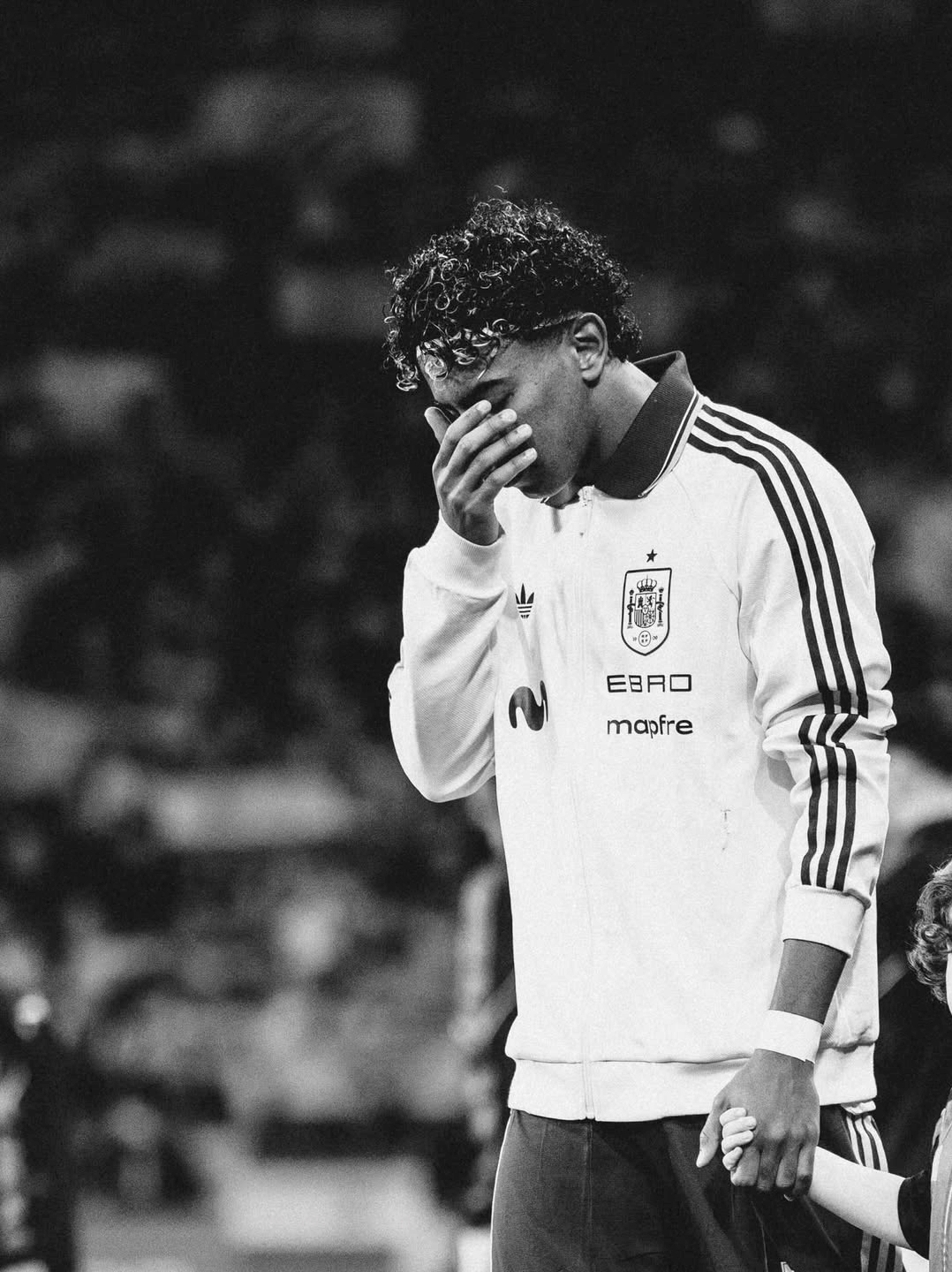
Real Madrid have condemned the “racist and xenophobic” attack on their Brazilian player Vinicius Jr. 

Real Madrid said, in a statement released via its website on Friday, that the club has instructed its legal staff to pursue legal action against anyone using racist remarks toward its players before this weekend’s LaLiga clash against Atletico Madrid.

“Real Madrid CF rejects all kinds of racist and xenophobic expressions and behaviours in the field of football, sport, and life in general, such as the regrettable and unfortunate comments made in recent hours against our player Vinicius Junior.

“Real Madrid wants to show all its love and support for Vinicius Junior, a player who understands football as an attitude towards life-based on joy, respect and sportsmanship.

“Football, which is the most global sport that exists, must be an example of values and coexistence.

“The club has instructed its legal services to take legal action against anyone who uses racist expressions towards our players,” Real Madrid said in the statement

Remember that for his dancing celebration, Vinicius was the target of a racial comment made by Pedro Bravo.

The Brazilian international is well-known for dancing at the corner flag in front of fans, whether they are in the home or away end of the stadium, to celebrate the majority of his goals.

Pedro Bravo, the head of Spanish football agents, did make a statement on Vinicius’ celebration while appearing on El Chiringuito.

Bravo said, “You have to respect your opponents. When you score a goal, if you want to dance Samba, you should go to sambodromo in Brazil. You have to respect your mates and stop playing the monkey.”

Ambassador Joanna Tarnawska: A change of narrative  

By Ahmadu Shehu, PhD

For the first time in history, the President and Commander-in-Chief of the Republic of Poland, H.E. Andrzej Duda, visited Nigeria on 6th September 2022. Apart from being a landmark in history, this visit has renewed the longstanding alliance and friendship between these great nations and has substantially reduced miscommunications and misperceptions among the citizens and officials of both countries.

The visit has yielded bilateral agreements of enormous importance to both nations, especially on agriculture and technology transfer. Moreover, judging by its history and relationship with Nigeria, nay Africa, Nigeria and its sister nations stand to gain more level playing ground in bilateral negotiations with Poland than many other more advanced western countries. This, however, is a topic for another day.

The resilience of the Polish – Nigeria relationship was tested in the early days of the Russian invasion of Ukraine. As the Russian army steadily and mercilessly advanced toward major Ukrainian cities, foreign residents scampered for safety across all Ukrainian borders in search of safety. Thousands of Nigerians, mostly students, found themselves at the Polish border, which was already overwhelmed by destitute refugees struggling to cross into Poland. The scenes and images of the border control points shall never be missed!   

While a lot of misinformation and deliberate spinning of Poland as a racist, intolerant country was being cooked and distributed, the Polish diplomatic mission in Nigeria busied itself with solutions and helping Nigerians trapped in this conflict. A few days later, news surfaced that Polish officials were actually particularly kind to all citizens, especially Nigerians who were given special treatment by various missions based in Poland.  

Back at home, Polish companies and financiers have landed significant business deals to ramp up Nigeria’s solid minerals sector to ameliorate the foreseen global energy crises occasioned by the war. In addition, the Polish agro sector looked at Nigeria as the next solution to the food crises, raising the hope that the Nigerian agricultural value chain would become a global competitor.

Tracing the roots of Poland’s contribution to the growth of Nigeria’s tertiary education in the ‘60s, ‘70s and even ‘80s, several Nigerian universities have found valuable opportunities to collaborate with major Polish universities in various academic fields.

The Nasarawa State University, for instance, had a significant project that translated the works of a Polish scientist whose contributions to the Nigerian academic community cannot be quantified. Several first-class Nigerian universities, such as Bayero University, Kano, have maintained a functional MoU with the University of Warsaw for many years.

In line with its cultural heritage and educational development support, the Polish mission in Nigeria built a specialized school to support Almajiri and out-of-school children in Kaduna State. Although many foreign non-governmental organizations do these kinds of projects, Poland is the only country to start this foresighted initiative as part of its foreign mission activities.

The Polish mission established and sustains a vibrant Polish Alumni forum, which is meant to foster and strengthen the understanding between the citizens of the two countries. Nigerians who studied, trained or visited Poland in a working capacity discuss relevant issues of interest to Nigerians in Poland and the bilateral relations and areas of cooperation between the two countries. This initiative has led to mutually beneficial opportunities for Nigerians and Polish people willing to study, live or do business in either country.    

Polish – Nigeria relations is a sixty-year-old business that stood the test of time. However, to whom do we owe this enthusiastic revival of the friendship between these crucial countries? The bulk stops at the table of Her Excellency Joannah Tarnawska, the Poland ambassador to Nigeria.

Tarnawska is an African-born and bred Polish lady with a degree in African studies from the Faculty of Oriental Studies of the University of Warsaw. Mrs Tarnawska is currently doing a PhD in economics, with a research interest in economic issues in Africa.

Her cultural ties, deep understanding and love for Africa are unmatched. Thus, the amount of success she will record as a diplomat in Africa is promising. Her resilience and understanding of the murky waters of the Nigerian political landscape give her an edge to thrive. The balanced, respectful and dignified way in which the Polish mission now treats Africans will undoubtedly bring back the glory of the Republic of Poland as a true, non-colonial ally of this continent.         

Africa is the future! Therefore, this shall be a win-win for Poland and Nigeria!

Ahmadu Shehu is an Associate Professor at Kaduna State University. You can reach him at ahmadsheehu@gmail.com.

Racism: Poland at it again

By Usama Abdullahi

I didn’t want to talk about this. But my mind is sick of it and wants me to spell it out. My piece centres on racism today. It’s something that most of us are barely familiar with. Yes, most of us, who haven’t travelled to the white world, know next to nothing about it. Some of us might not know that this ill-treatment against black people exists. While others, like me, do hear and read about it either on television or in newspapers. 

As a kid, I knew nothing about racism. Neither did I ever acknowledge its existence. It is because I was too young to understand what that meant. I used to think that the whites were superior humans that accord us, the blacks, some respect. But, contrary to my little kiddish thoughts about the whites, a vile or an irresponsible white man loathes this glowing dark skin. This blessed skin that wrestles all sorts of skin threats or irritation, someone from the other part of the world has aversions for it. 

This skin that withstands the sun’s heat, someone who’s driven by hatred for the faultless black men, considers it hell. I came across the word Ku Klux Klan at 12. At the time, I had Longman Dictionary with me. I would carry it wherever I go. So when I first took a glimpse at the then unfamiliar word, I paused for a while. Afterwards, I proceeded to read its meaning till the end. I couldn’t believe it at first. 

True. I couldn’t believe that there used to be a secret society during the 20th century which supported white supremacy in the Americas. This outlawed secret society fights the blacks and drives them out of the United States despite being legal citizens. I’m glad that this fraternal group is now defunct. But the problem is that racism is feathering again. It is fast dominating the white world. Some of them, the racists who have no respect for individual differences, honour its stay. They see nothing wrong when a black person gets badly treated because of his skin.

Sadly, we are entangled in a world that supports baseless animosities toward the people we share different views, faith or race with. The world we dwell in is a respecter of evil. We live to dine at the expense of our oppressed brothers from other parts of the universe. We see skin colour as a barrier to our unity and coexistence. Hence we look at each other with intense disgust. Unknowingly, this racism kills our hope to live a meaningful life.

Last year, we were hit by the tragic news of an African-American man who had his fate crushed in the hands of a cruel white policeman. The news filled up the media until it captured public attention. Concerned black folks, particularly the deceased’s bereaved family, went through hell as a result. As a result, many people took their outrages to the streets, protesting against racism with the hashtag, “Black lives matter”. And they were assured of drastic measures to prevent such by the American government.

Considering America’s quick intervention on the matter, we thought the issue of racism was laid to eternal rest, but it, like Lazarus, has been resurrected. We saw the uproar and slighting comments which trailed the media over the failure of Bukayo Saka, Marcus Rashford and Jadon Sancho to score during the penalty kick of the Euro 2020 final. We also saw the unusual treatment against Zouma over a minor offence on his cat, costing him millions of dollars. And, unfortunately, Poland is at it again.

It’s sad to watch how the blacks were denied entry into the train conveying people from the war-ravaged Ukraine to Poland. Despite the threats they face, the racial prejudice in these racist morons prevails and has got to the point of favouring the Ukrainians over Africans or blacks – as if they aren’t all humans in need of urgent aid. Racism is a disease that bites deep into our hearts. It is also a barricade that holds back our progress as humans. So, It’s high time we stopped promoting racial discrimination.

Usama Abdullahi wrote from Abuja, Nigeria. He can be reached via usamagayyi@gmail.com.