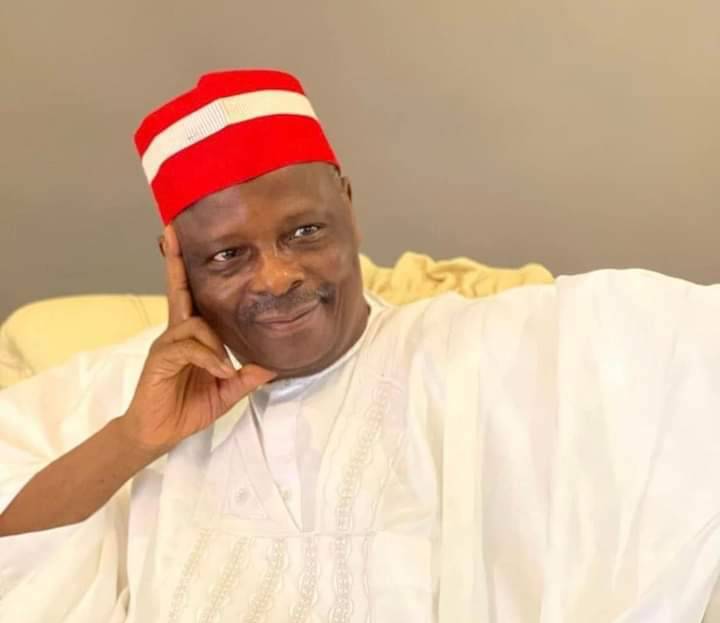
Rabiu Musa Kwankwaso

More clarifications ahead of 2023

By Amir Abdulazeez

When President Obasanjo carelessly picked Goodluck Jonathan to serve as Umaru ‘Yaradua’s potential Vice President in 2007, little did we know that the politics of choosing running mates would later become complex and problematic. The death of Umaru, the ascension of Jonathan, the surprising emergence of Namadi Sambo and Patrick Yakowa becoming the first Christian Civilian Governor of Kaduna State would all combine to later add more relevance to the politics of running mate selection. In 2014, APC had more headaches picking a presidential running mate than the presidential candidate himself. It took them so much time and effort that one thought they would organize a new convention for that purpose.

Today, the Muslim-Muslim ticket debacle is the bane of Nigerian political discourse. While clamouring for fairness and balance, which are needed for a fragile system like Nigeria’s, we should also remember that from 1999 to date, no religion can claim any net gain from this Nigerian version of democracy. Ordinary followers of all faiths have been victims of bad governance, even pagans. We have suffered so much that if a pagan/pagan ticket will eradicate insecurity, fix the economy and bring development while being fair to all interests and affiliations, we should allow it. Therefore, the choice is between searching for solutions and satisfying sentiments; we seem to favour the latter.

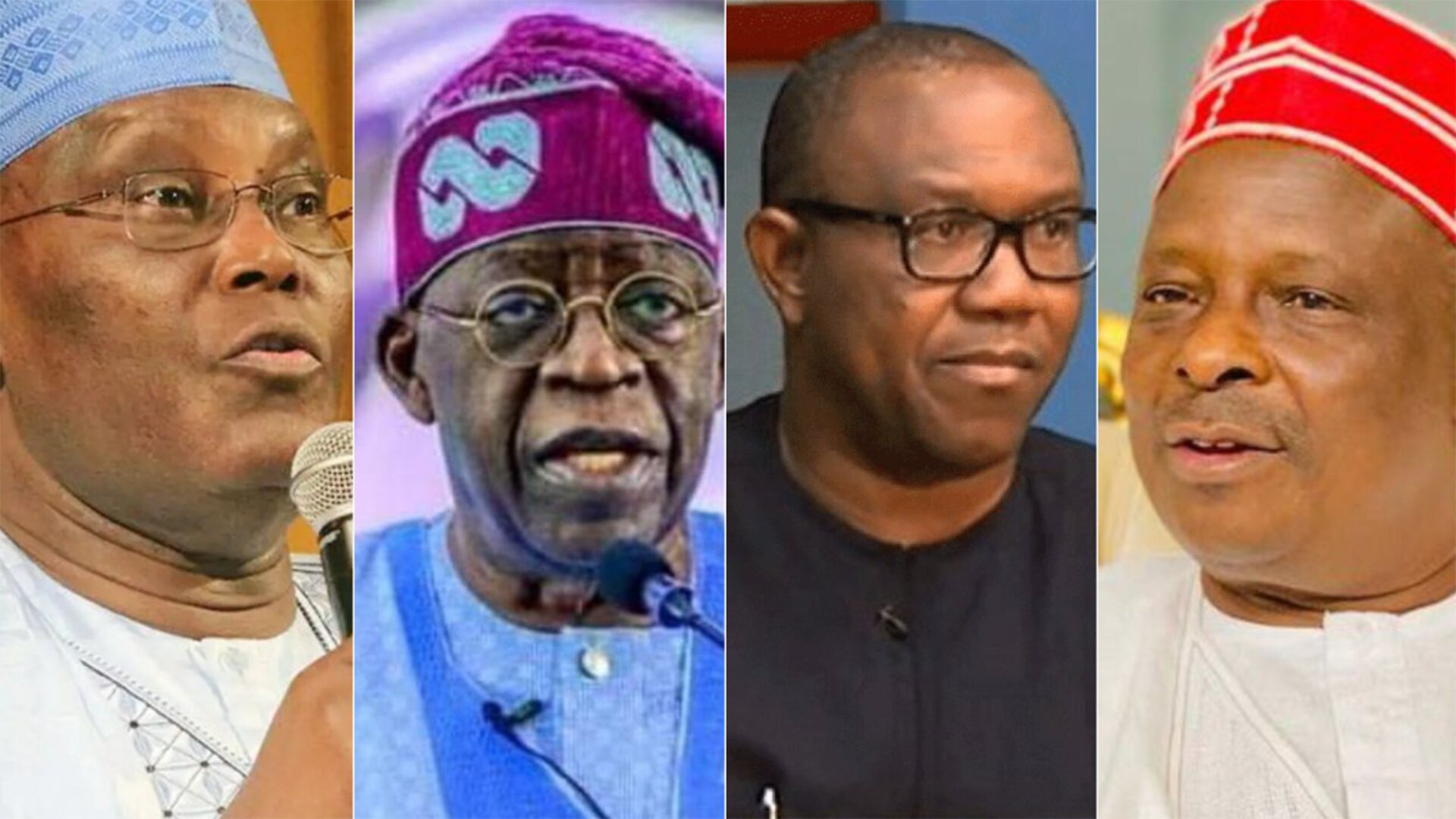
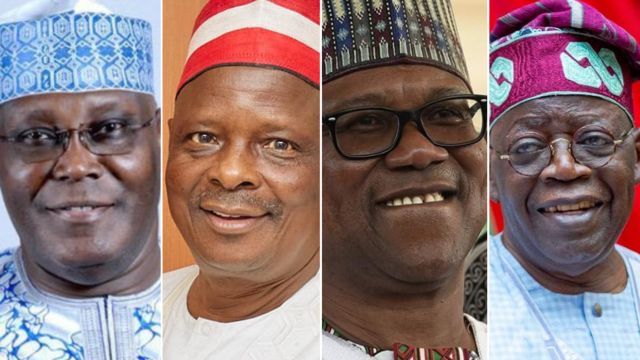
A section of public commentators and spectators are already suggesting a walkover for Atiku Abubakar in the 2023 polls. That is the biggest complacency I have ever seen in contemporary Nigerian politics. How can you be facing a ruling party with almost 65% of political stakeholdership in the country and be expecting to have a walkover? Atiku is an institution, but his successes in the last two PDP primaries are more financial supremacy than political dominance. That aside, barring a Buhari-like scenario, Atiku will make a good president. He is perhaps the only fully independent candidate with a clear and accessible blueprint since 2007. In 2011, he had a better manifesto and approach than President Goodluck Jonathan; he only lost the PDP primaries to the power of incumbency. By the way, what happened to the Jonathan 2023 candidacy?

From 1992, this is Atiku’s 7th attempt at the Presidency, with 2019 being his closest to success. Many believe 2023 is his year, and so many apparent factors call for optimism in his camp. However, two fundamental things may haunt Waziri; (in)consistency and (un)popularity. Buhari and Tinubu are successfully reaping the harvests of consistency and perseverance; they stuck to opposition politics all their lives. Atiku should’ve remained in opposition when he decamped to Action Congress in 2007 or should’ve stayed in the ruling PDP when he decamped back in 2011. Ambition had kept him running from one place to another, making him neither establishment nor anti-establishment. The second question is whether there is a single state in Nigeria in which Atiku can secure one million votes or more in 2023? I hope we all remember Dr Rabi’u Kwankwaso’s 3-K States theory?

Tinubu’s boast in Ogun State over his role in the emergence of Buhari as President needs some revisiting and clarification. To avoid doubt, Muhammadu Buhari did not lose the 2003 presidential elections; it was brutally rigged to return Obasanjo for a second term. 2003 will easily enter the list of the worst elections in modern world history. In 2007, the results of the presidential election were simply written, so we can’t even call that election not to talk of who won or lost. I have never relied on 2003 and 2007 election figures for research or serious analysis because they are primarily fabricated. The 2011 elections were relatively fair, but at least 40% of the vote was rigged, written, or inflated, especially in the South-South and South-East.

In the circumstances like these, we cannot comfortably declare Buhari a loser of all the previous elections he contested and only became a winner when he met Tinubu. Although 2015 was indeed the weakest version of political Buhari, it was confirmed that he had lost hope and that the APC merger spearheaded by Tinubu was what brought him back to life. But it is also true that so many other factors other than Tinubu contributed crucially to Buhari’s victory. One major one was the abysmal performance of Goodluck Jonathan. One, however, is that, without Tinubu’s support, it would’ve been near impossible for Buhari to emerge APC flagbearer against the financial powerhouses in Kwankwaso and Atiku.

This brings us to the argument that access to public funds is why some candidates (not aspirants) are stronger than others. Supporters of a particular presidential candidate even claimed that if their man had equal access to public funds, he would be better than certain candidates. This is laughable; a debate like this will take us nowhere. Just campaign for your candidate and persuade people to vote for him. If we are talking about the abuse of people’s trust and the utilization of our commonwealth for personal political development, none of the prominent politicians in Nigeria will come out clean. So, let us not deceive ourselves and others.

Where are our smaller political parties who had spent most of their last four years fighting INEC over deregistration? This is a reasonable amount of time they would’ve spent coming together to form a strong bloc. In case we don’t know, 74 of them were deregistered for failing to meet the requirements to continue to exist as political parties. About 10 to 15 of the currently existing will be due for deregistration by this time next year. Instead of them to consider merging to form a decent alternative, they’ll rather hang on only to be fighting a legal survival battle with INEC next year. As the strongest and largest intellectual organization in West Africa, I don’t even know why ASUU is yet to form a political party or adopt any of the smaller parties to set up a path towards satisfying their own demands all by themselves instead of waiting and hoping for a hopeless Federal Government.

Why is nobody talking about the enormous task ahead of the next president, whom credible international reports suggest will have to use 100% of his revenue in servicing (not repaying) debts by 2024? To execute projects or even pay salaries, the next government may have to borrow further. Nigeria is in trouble. We are drowning in the ocean of foreign debts. Meanwhile, we are concerned over a presidential candidate’s religion more than his ability to bring us out of this mess. Buhari has failed because Jonathan had built a solid foundation for that failure. Now he has built a worse foundation for his successor. The possibility and danger of the next president, irrespective of his affiliation and preparedness to economically be worse than Buhari, is imminent. May God help us.

All of the political dynamics of today are closely related to 1999, some a bit earlier. Suppose you have not directly experienced Nigerian political development from 1999 with a mix of some pre-1999 historical knowledge. In that case, you will find it difficult, if not impossible, to connect specific dots that you see today. Extensive and intensive reading may help, but politely interacting with veterans will do better. Unfortunately, social media, where most of the political debates occur, is dominated by youths who knew little or nothing pre-2011 and don’t invest significant time in reading but trying to engage or even confront the same veterans that would’ve been their best opportunity at understanding the genesis of the current situation.

There are some visible changes in Nigeria’s socio-political spaces, although not new but have taken a different twist from the previous. The renewed order is the attempt to criminalize certain political choices against others. Between 2014 to 2018, discourses were dominated by hate, campaigns of calumny, fabrications and outright abuse. Today, political promoters are trying hard to make it appear that only their candidates are good enough, and any other choice is treason. This is extremism. Let’s be careful, everything is a matter of opinion, and everyone is entitled to his.

Twitter: @AmirAbdulazeez

Some clarifications ahead of 2023

By Amir Abdulazeez

The primary elections of the two leading political parties, APC and PDP, had come and gone. However, the dust raised by the exercises across various states of the federation is yet to settle. As things are going, it is unlikely that both parties’ primary election appeal committees will adequately or significantly settle the dust to the extent of amounting to a major change of the status quo. After all, everything was clear; the contests were majorly a measure of financial power.

As usual, our attempts to digest the intrigues and expectations of the upcoming grand 2023 event have once again resulted in endless debates that often lead to more confusion than clarifications. Certain political dynamics cannot be adequately explained by simple analysis or even complex ones. This is truer for cases like Nigeria, where deep insight is considered old-fashioned, authentic information is always scarce, and genuine narratives are always twisted.

Ahead of the just concluded APC Primaries, many accused Yemi Osinbajo of being a traitor and betrayer by contesting against his benefactor Tinubu. However, few people will understand that only one out of a million people will go so close to the presidency as Osinbajo did without succumbing to the temptation of taking a shot at it. The cabal theory notwithstanding, he is perhaps the Nigerian Vice President who was closest to the full privileges of the presidency in recent history. At a time, the Professor himself appeared like the next President in waiting. In sincere terms, Osinbajo may feel that running for the Presidency is more of an attempt to fulfil a destiny than betraying a godfather whose help he may not need any longer.

Maybe, many have forgotten that the Vice President had at a time been an Acting President with virtually full Presidential powers. He is aware of people’s confidence in his competence and knows that many factors are against Tinubu’s candidacy. With the Southwest as the default region where APC will likely have its next candidate, it is only natural he (the second default candidate) tries his luck in case Tinubu (the default candidate) does not get the nod. How can he cash in on a Tinubu collapse if he doesn’t contest? If he hadn’t competed, his promoters would never have forgiven him. Now that he had competed, he knows the extents and limits of his political strengths, which might have been hitherto exaggerated.

Some analysts have accused Tinubu of trying to become President at all costs despite being sick and unstable. We have forgotten that he had, since 1998, invested almost 25 years of his life (and health) trying to reach this point, and we all know he will need an ultimate reward at the end of it all. Now that the prize is within reach, only one out of a million people will back off over health challenges that are yet to prevent him from managing a public appearance. When he made all those sacrifices and concessions, many of us did not bother to understand the larger picture of where he was heading. If not for democracy, one will suggest that the APC ticket should’ve been handed over to him unopposed.

Therefore, Tinubu has fought for long. He has been in the opposition all his life. He has helped build a new political order in Nigeria. Without him, power will still likely be with the PDP and maybe forever. It’s not his making that his health appears to be failing him at this moment of near fulfilment, but as a human, he will continue believing his condition is good enough to manage him to the finish line. The late President Ƴaradua’s situation in 2010 should teach us some lessons, that of Buhari in 2017 too. Tinubu is undoubtedly not the best APC had on offer capacity-wise, but he is the most formidable. His political structure is out of this world. Win or lose, at least they have repaid a significant part of the debt they owe him.

In the build-up to the primaries, we all thought everyone was an enemy of the Southeast since the rest of Nigeria had refused to zone the presidency to the region exclusively. In his speech at the APC convention, Ogbonnaya Onu emotionally shouted for justice against the Igbo marginalization. If not for the APC and PDP Southeast delegates who proved the Igbos’ unpreparedness by refusing to vote for any of their kinsmen, everyone would simply be emotionally blackmailed. Besides, we have all seen how disorganized the Southeast aspirants were across both parties.

From 2003 to 2010, the Southeast was considered a formidable political bloc, but they wasted opportunity after opportunity to consolidate. Instead, they focused on ethnic and religious politics. Conceding the Presidency to the Southwest in 1999 was basically a military arrangement executed against democratic principles. The Southeast demanding the same in a maturing democracy is quite tricky. In this era, no one will gift you the Presidency; you have to earn it.

Another aspirant is NNPP’s Rabi’u Kwankwaso. His critics accuse him of being a local champion. However, his supporters insist on rating him higher than Atiku and Tinubu based on a tangible track record. However, the debate is not as simple as it seems. The same scale cannot be used to measure Tinubu, Kwankwaso and especially Atiku, as their political career paths are distinctively different. The truth is that Kwankwaso is a national figure who has invested too much energy in local politics, which was why he achieved what he has achieved. However, this has come with a price because he has dominated and taken away all the local relevance he could’ve easily allowed his subordinates to coordinate, a feat that would’ve given him a Tinubu-like aura. In the end, he ends up fighting for crumbs with local people, making him unavoidably local.

What of Peter Obi? He appears to have more packaging than substance, but he is yet another litmus test for the Southeast. They feel denied, marginalized and short-changed. Their response should be a massive vote for him. Even if he may not win, they will succeed in sending a strong message ahead of 2027. However, there is a wiser option. They can use Petr Obi as a bargaining tool with someone like Kwankwaso for example; form an alliance, challenge the red-cap man to deliver the Northwest zone while offering Southeast and see whether something will come out of it.

The bottom line is that we don’t need to be too upset or over-obsessed with anybody’s ambition, any region’s miscalculations or any party’s misdirection. There are so many choices in the political landscape that our myopia hinders us from utilizing. For example, if you genuinely want an Igbo president, the Labour Party has fielded Peter Obi. If you want somebody whose hands are not shaking, NNPP has fielded Kwankwaso, etc. So quietly do the needful and urge others to do the same. Give it a try. The strong parties and candidates are only front liners because you and I made them so.

Nigerian public discourse often makes complex political analysis look simple and simple political analysis look complex. And finally, we end up achieving no political analysis at all.

Twitter: @AmirAbdulazeez.

Why Kwankwaso deserves more accolades

By Najib Ahmad, PhD

We often hear people saying that ‘he [Sen. Rabiu Musa Kwankwaso] did it with the government funds.’ And so? Oh, you expect him to do it with his money; then, you will ponder whether he’s worthy of their gratitude. But, this is not how things have been done right from the inception.

If you read over the history of the previous great Muslim rulers like Umar Ibn Abdulaziz (61-101 AH), may Allah have mercy on him, you will realize the incredible impressions he left on people despite being a caliphate for a short period. But, it is known that all he had achieved and built weren’t from his funds. Still, he’s remembered and admired.

People often appreciate the history of how other nations developed, which primarily transpired through human development. But, for example, how do you think today’s China and Singapore got it right? Do you think they only wake up to all this in the morning? No, it was because some leaders decided to do it right and went on to create policies that enabled them to reach where they are today.

For instance, if you take China, they unconditionally relish Deng Xiaoping – the architect of modern China. While Singapore’s Lee Kuan Yew is also highly recognized as the founder of modern Singapore, they constantly appropriate him for its development. During their time as leaders of developing nations, all they have accomplished weren’t with their funds but with the government funds.

Those leaders’ priorities then were primarily policies on education and the industrial revolution transformation. Sending students, including the peasant farmers’ children, to universities worldwide via scholarships was part of Mr Xiaoping’s most significant policies that China benefited from. His initiatives have matured into a whole system, i.e., the China Scholarship Council (CSC) and China Postdoctoral Science Fund. This remarkable initiative alone helps them strengthen their universities and vocational colleges with a quality workforce and, in turn, enables them to become the world’s industrial powerhouse.

Today, check all your household belongings to verify the above. Those two leaders are still relevant in China’s and Singapore’s present days. You can’t underestimate their significance no matter how you try due to the enormous opportunities and equal advantages they created for their people.

I understand your frustrations, which is why one person out of more than 12 million people of Kano is receiving too many accolades. First of all, it is their choice to appreciate him, mind you. This is because he means so much to them. The good thing is, you can’t deny them this satisfaction even if you try. So, why the resentment? Allow those that prefer to do what suits them to continue thanking and re-thanking him till the end of time, if that is their wish. What’s your problem with their choice, fisabilillahi?

Above all, the main thing to look at is that appreciating Kwankwaso’s effort doesn’t physically hurt you or anyone else or destroy any of our fundamental values. In fact, it is teaching people to learn to recognize good deeds and be thankful to whoever is responsible or part of their progress in life. Isn’t this a harmless mannerism to learn, emulate, and propagate?

Dr Najib Ahmad is a Postdoctoral Researcher at Shandong University, China. He can be contacted via namuhammad03@gmail.com.

Three more Kano Assembly members dump APC, join NNPP

By Ibrahim Nasidi Saal

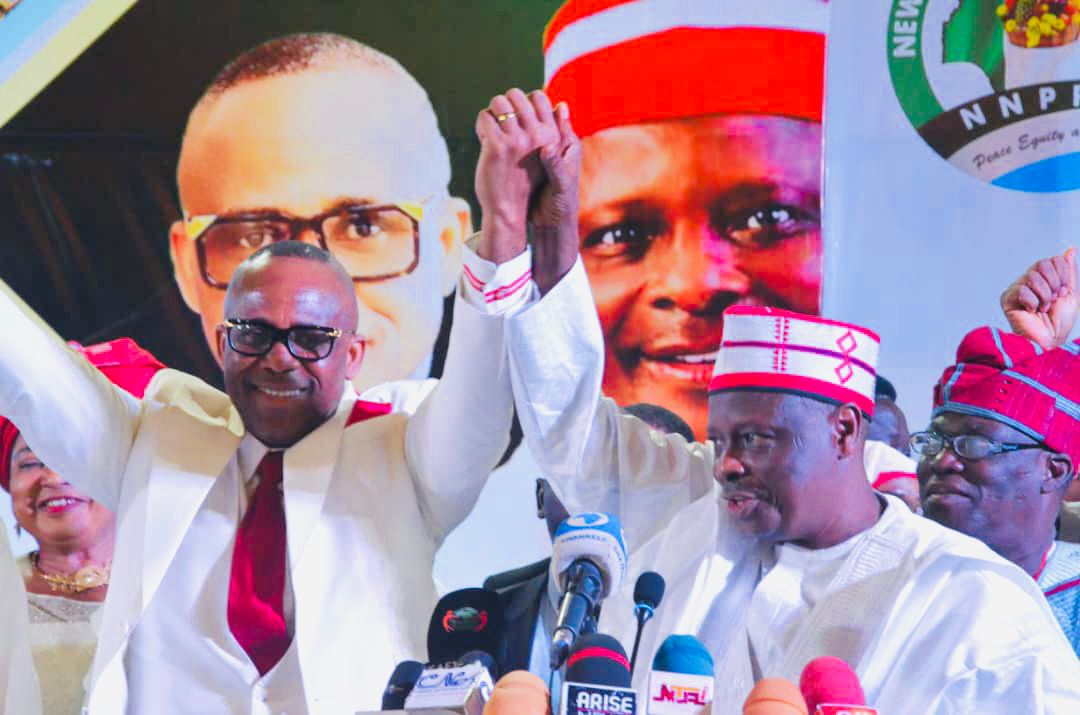
Days after nine Kano State House of Assembly members defected from the opposition Peoples Democratic Party, PDP to New Nigeria People’s Party, NNPP, three more lawmakers have dumped the ruling All Progressives Congress APC, for the new party.

On Wednesday, a spokesman for the Assembly, Uba Abdullahi, announced their defection, citing three separate letters the legislators sent to the speaker, Hamisu Chidari.

According to the statement, the members notified the House of their defection from the ruling APC to NNPP through the letters dated May 5, officially received by the House.

The defecting lawmakers are:

Hon.Abdullahi Iliyasu-Yaryasa, member representing Tudunwada Constituency;

Hon.Muhammed Bello Butu-Butu, member representing Tofa/Rimin Gado Constituency.

Hon.Kabiru Yusuf Ismail, member representing Madobi Constituency.

Mass defection rocks Kano State House of Assembly

Ibrahim Nasidi Saal

Nine members of the Kano State House of Assembly elected on the Peoples Democratic Party (PDP) platform have defected to the New Nigeria People Party (NNPP).

The spokesperson of the Assembly, Uba Abdullahi, announced this in a statement he issued on Friday. He said the members had sent a letter to the Speaker of the House notifying the House of their defection.

He said some of the members cited a leadership tussle in the PDP at state and national levels for their action.

The affected members include:

 Isyaku Ali Danja (Gezawa Constituency), 

Umar Musa Gama (Nassarawa Constituency),

Aminu Sa’adu Ungogo (Ungogo Constituency),

Lawan Hussain Chediyar ‘Yan Gurasa (Dala Constituency)

Tukur Muhammad (Fagge Constituency).

Mu’azzam El-Yakub (Dawakin Kudu Constituency)

Garba Shehu Fammar (Kibiya Constituency)

Abubakar Uba Galadima (Bebeji Constituency)

Mudassir Ibrahim Zawaciki (Kumbotso Constituency).

Earlier on April 29, the House announced the defection of a member representing Kano Municipal, Salisu Gwangwazo, from the PDP to the ruling All Progressive Congress (APC), also citing an internal crisis in the main opposition party

However, the latest defections are widely seen to be connected to the movement of a former governor of the state, Rabiu Kwankwaso, from the PDP to the NNPP.

Mr Kwankwaso moved to the NNPP earlier this year and is expected to run for president on the party’s ticket.

Kwankwaso’s defection has triggered the mass defection of his followers from the PDP to the NNPP. Some of them have taken party positions ahead of the party’s primaries.

Adamu Garba ll and the audacity of fundraising

By Ali Tijjani Hassan

Lately, in the previous weeks, Adamu Garba, from Adamawa state, declared his interest in vying for the office of the President of Nigeria under the platform of the ruling party, the APC, in 2023. Adamu, a young entrepreneurial pedagogy with fervent learning ability, nestled the slogan of the Youth-4-Youth movement. He’s a source of motivation, inspiration, and encouragement to the young generation.

After watching his declaration of interest speech and reading his visionary parable, “This is my Nigerian vision for the Presidency”, I learnt that; bundles of courage and braveness are kept in this young man. He meant business-like to his ambition. If elected, Adamu vows to tackle national threats like corruption, unemployment and insecurity.

The young Adamu, in his 40s, held no public office before his declaration. He’s likely to be a corruption-free citizen, and he could make a good President if elected and be the ‘Mr. Integrity’ we were craving earlier. As he said, “we failed many experiments with individuals that know nothing but public service”. Adamu’s mind is not obsessed and dominated by lively greed.

Adamu dreams of lifting the country close to heaven by transforming it into 21st century Nigeria. So, we can compete globally in diplomacy, development and economic productivity.

The audacity of fundraising:

President Muhammadu Buhari bamboozled Nigerians to send their accumulative income to his ‘fes benk’ account when contesting in 2015. Numerous Nigerians see it as fraudulent and daylight robbery that the aspirants use to avoid bankruptcy. If they do, so they lose to make it in the primaries. Buhari used this beguiling technique twice during his democratic terms, becoming a modus-operandi among shining politicians. It’s one of Nigeria’s political cultures that many Nigerians hate.

If this fraud has to be put into practice amidst this life plight and economic hardship, no politician fits the kind of supportive gestures from his followers than two political idols; Sen. Shehu Sani of Kaduna state and Sen. Rabiu Musa Kwankwaso of Kano state. But to all my pleasure, these humble men surreptitiously take their form of interest without coward ploy.

Adamu Garba ll has adapted this weapon and paved his way to national legendary. The matter arose and transmuted to night thunder not only to Adamu Garba ll but also to many deceitful cartoon-sketch candidates. But alas, he received the shocking response of his life, as most of the responders took his notion as a joke and responded with a kind of joke we’ve never witnessed.

The saddened part is that some people are busy promoting this delusional love to the spendthrift governor like one of Yobe state. In a saner clime, people to used their hard-earned money to sponsor any candidate is not a good idea. Still, with the kind of deception we witnessed from the previous candidate that went through the same system, the culture has to be stopped and allow people to deal with the incompetency of these politicians.

Ali Tijjani Hassan wrote from Potiskum, Yobe state via alitijjanihhassan@gmail.com.

2023: Kwankwaso declares presidential ambition next week

By Uzair Adam Imam 

The two-term governor of Kano, Engr Rabi’u Musa Kwankwaso, said he had concluded plans to formally declare his political ambition next week.

Kwankwaso, who has been nursing the ambition over the years, would contest for president on the New Nigerian Peoples Party (NNPP) platform.

Speaking at a news conference on Friday, Mr Kwankwaso said he consulted widely on his plan, and the responses were positive.

“I have been consulting widely with friends and Nigerians of diverse interests, and the outcome has been positive. 

“I will be informing Nigerians of my political ambition sometime early next week,” he said.

Kwankwaso also acknowledged the successes recorded by his new political party at its recently-concluded membership registration. 

He added, “the support for the NNPP had been overwhelming going by the responses recorded at its recently-concluded membership registration drive.”

Kwankwaso and his over-ambitious movement

By Sagir Ibrahim

Recently, we witnessed a new direction in our modern politics, whereby former Governor of Kano State, Engr. Rabi’u Musa Kwankwaso and other former political heavyweights formed a new movement with an ambition to upset the status quo ante of our politics.

No doubt, Kwankwaso is a political juggernaut with a track record of achievements within his state. I don’t think it will be an exaggeration to say, none among his peers can match him in terms of positive impact on the lives of the poor. From that, he successfully built a team of educated youth that penetrated the nook and crannies of Northern Nigeria. On a visit to any tertiary institution in the North-West, it is rare to register the absence of a lecturer who happened to be a benefactor of the Kwankwaso government or under his present Kwankwasiyya Foundation.

And on the other hand, looking at his peers, for instance, Sokoto, under Governor Aminu Waziri Tambuwal, is not yet free from the shackles of illiteracy despite being a former speaker a second-term governor. Moreover, Sokoto is ravaged by persistent banditry insecurity. So then, how can he save the nation from the current insecurity challenges if he can’t secure his state? But in terms of party acceptance and the 2019 PDP presidential primary election’s result, his political strength is more extensive than Kwankwaso’s.

Although, that will not be unconnected with his ability to forge a good relationship with his party leadership, unlike Kwankwaso, who is known to have mad love for dominating relationships and space without considering others. For instance, when he left PDP for APC in 2014, he dominated the APC in his state by anointing his preferred candidates on the party tickets leaving no room for those he met in the party. The same happened when he defected to PDP from APC. He cornered all the party structure and candidates to his faction without regard for others that were there before him. That forced people like Sen. Ibrahim Shekarau to leave the party.

Kwankwaso’s New Movement

Recently, Kwankwaso launched a new movement that aimed to bring a positive change to the country’s political atmosphere. Known political figures that attended the launching are ex-governors, ministers, political actors and some technocrats. But, there is a possibility that the movement would join an existing political party outside the two major parties to serve as a third force in the upcoming election. Assuming that it joins another party, is he the only person in the movement with a presidential ambition? How ready are his colleagues to assist him financially and politically? Are they influential enough to sway people to vote for him? These and many more questions are begging for an answer.

Currently, forming and marketing a new political party in Nigeria less than a year before the election is almost impossible unless it is a merger of existing political parties. But, unlike this new movement, the influence of its convener is the most potent force that can be marketed. And if he can be sold in his Kano quickly, could that be done in Northeast, which has VP Atiku Abubakar, Ahmed Mu’azu, and Gov. Bala Muhammad that are eyeing the same seat?

Even in the North-West, how well prepared is the movement to confront the likes of Tambuwal that outshined him during the 2019 primary election?

What about Southerners who believe this is their perfect time to clinch the seat? Therefore, Kwankwaso has a lot to face in this new direction.

If not for wishes being horses, he would’ve exercised enough patience to join either of the two bigger parties, especially the APC. Because if the likes of Prof. Yemi Osinbajo emerge as the party flag bearer, they will be left with no perfect match to serve as his running mate than him. But his desperation is for leadership is second to none.

But looking at the constitutional provision, one needs a political party to contest any political seat since there is no constitutional provision for independent candidacy. With this, we can understand the political calculation of Kwankwaso. Going by the obstacle(s) mentioned, there is no possibility of Kwankwaso being the flag bearer of any of the two major parties. At best, joining NNPP could serve as an avenue for him to test his relevance in the national political space since his new party has no candidate of his calibre. Therefore, there’s every possibility for him to clinch the party presidential ticket.

Can He Win?

This is something that only time could tell. But, indeed, if any of the political parties give their ticket to a Northerner, Kwankwaso will now turn into a major spoiler to the Northern votes and a distraction. Thus, this could pave the way for a Southern candidate to victory. And in the end, if God lend us long life to 2027, maybe then he’ll contest again and luckily emerge as a winner since most of the contestants are either in old age or have given up their ambition

Sagir Ibrahim is a graduate of Economics from the Department of Economics, Bauchi State University Gadau. He can be reached via ibrahimsagir1227@gmail.com.

Kwankwaso earns doctorate in water engineering from Indian varsity 

By Uzair Adam Imam 

The former governor of Kano State, Engineer Rabi’u Musa Kwankwaso, has bagged a PhD in Water Engineering from Sharda University, India.

Kwankwaso was said to have defended his PhD dissertation on Tuesday, March 14, 2022.

This was in a Facebook post from his page and has later sparked to the walls and pages of other ardent Kwankwasiyya followers.

Of what has come as jubilation, many people have taken to their various social media platforms to celebrate the two-time former Kano State governor and senator representing Kano Central. 

The post read: “Congratulations to His Excellency Engr. Dr Rabi’u Musa Kwankwaso, for your successful viva presentation in PhD Water Engineering today (14th March 2022) at Sharda University, India. 

“From his right is Prof. Gaurav Saini (his supervisor), from his left, Prof. Rameshwar Adhikar (Tribhuwan University), Kathmandu Nepal (his External Examiner) and other Distinguished professors during his successful Final viva presentation.”

Kwankwaso’s knowledge economy model: A dream shortened by greed

By Tijjani Ahmad

As a state that accommodates one out of every ten people living in the country, Kano has many competitive advantages over other states regarding development at the sub-national level. Looking at how economies worldwide are competing to finance development, mainly using domestic resources mobilisation, the easiest for the state is to leverage on its abundance of human resources.

As a governor of the state for the second time from 2011 to 2015, Rabi’u Musa Kwankwaso wanted to make Kano a knowledge-based economy by providing necessary education and skills, thereby making a large portion of the state’s economic growth and employment from knowledge-intensive activities. The governor understood how knowledge spurs more rapid growth than any other resources; therefore, he projected the potential of the state to use its population of teeming youth as a comparative advantage.

His revolution started with efforts to bridge the workforce gap in tertiary institutions by sponsoring more than 2,500 postgraduates and undergraduates to study abroad. In addition, he sponsored hundreds of undergraduates in private universities across the country. These beneficiaries were expected to come back and support the education sector of the state and beyond. 

These people were selected based on merit, and most of them occupied positions at various tertiary institutions in Kano state and Northern Nigeria in general. Recently, two of the beneficiaries were listed among the most cited scientists in the world.

The governor further created 47 technical colleges to revive technical and vocational education. These colleges were strategically located across 44 local governments to provide secondary school students in rural and urban areas with skills in various trades. 

Looking at how Kano businesspeople import textile and garments materials, the governor also established skills acquisition centres in more than 20 local governments in the state to serve as incubation centres for modern garment production. However, these centres were about to be launched when the present government truncated the effort. Only God knows the reason. 

I heard the governor on air saying that when these centres are launched, they would compete favourably and capture a significant share of the undergarments market in Nigeria and across the sub-region. This is because the centres have been equipped with the most modern techniques and technology in garment making industry.

Kwankwaso didn’t stop there. He introduced over 20 specialised training institutions to provide in-demand skills in agriculture, ICT, sports, tourism and hospitality, among others. One of them is the poultry training institute located at Tukui village of Makoda local government in the northern part of the state.

The institute is designed to offer formal and informal training in poultry production and management. Immediately after its establishment in 2012, the institute trained 4,400 women in basic requirements for poultry production and management practice.

These centres were meant to bridge the skills gap, provide employment to our teeming youth and reduce insecurity and over-dependency on grants by improving internally generated revenue of the state. Had there been continuity in the models employed by the former governor, Kano would have been on its way to reclaiming the past glory it is known for in terms of knowledge and commerce.

The hope of everyone who wishes good for the state is to consolidate this model by whoever would emerge as the state’s number one citizen in 2023. But, of course, this can only be possible if his priority is development.

Tijjani Ahmad wrote from Kano via ahmatee123@gmail.com.