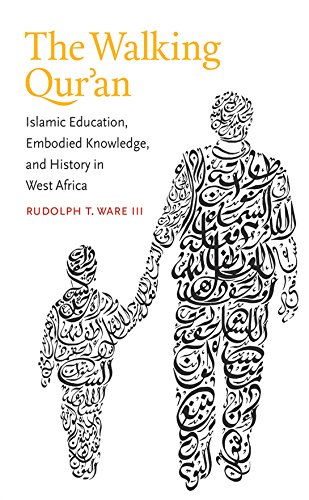
Qur'an

Book Review: The Walking Qurʾan: Islamic education, Embodied Knowledge, and History in West Africa

  • Book time: The Walking Qurʾan: Islamic education, Embodied Knowledge, and History in West Africa
  • Author: Rudolph T. Ware III.
  • Date of Publication: 2014
  • Number of Pages: 330
  • Publisher: The University of North Carolina Press
  • Reviewer: Shamsuddeen Sani

After recently reading a book about Quranic Schools in Northern Nigeria, I was left hungry for a less Western way of presenting the subject matter. So I serendipitously laid my hands on this book, and knowing that I have read about the author in the past, I didn’t hesitate to devour it.

Following a broad introductory section, the book delves deeply into an interdisciplinary examination of the knowledge philosophy underlying Quranic education. This required an in-depth historical ethnography of the institution in modern-day Senegambia, which lays the way for comprehension of the conceptualization and transmission of knowledge. It also strengthens the case that internalizing texts, even by swallowing them, was crucial to understanding and remembering the material. This book’s central concept represents the embodiment and actualization of Islamic knowledge.

Importantly, these early chapters look at the emergence and long-term evolution of a native West African clerisy. Ware underscores how these African Islamic instructors and thinkers were the primary agents of Islamization in a continent unperturbed by the early Islamic conquests. In order to avoid rulers (and maintain their independence), they established a unique framework for the interactions between political and religious powers. It also emphasizes both moral and political economies of studying and teaching the Qur’an throughout the 18th century focusing on how the growth of the Atlantic slave trade led to the breakup of this model of pious distance from power.

As we near the middle of the book, Ware thoroughly explored the historical account of the enslavement of ‘huffaz’ in Senegambia from the 1770s until the advent of the French colonial rule in the late 19th century. With clerics viewed as embodied exemplars of the Quran, such incidents of enslavement were perceived as more than just violations of Islamic law, but as desecrations of the Book of God.

The book meticulously illustrates the chronological narrative of Senegambia’s revolts, rebellions, and even revolutions inspired by the enslavement of “the walking Qur’an.” Without going further into spoilers, these historical happenings culminated in the climactic radical movement by African Muslim clerics and their disciples, with a cascade of events leading to the overthrow of hereditary slave-owning kings in 1776, the abolition of both the Atlantic slave trade in the Senegal River Valley and the slavery institution itself.

These narratives would lack crucial context if they did not include the efforts of formerly enslaved people and other oppressed groups to use the legal abolition of slavery in the French colonial state to assert their dignity through the dissemination of the Qur’an in the early 20th century. They fought to transform their very selves through Islamic education while doing so from within the epistemology of embodiment and in opposition to regional traditions that stigmatized their bodies because of their social standing. The establishment of mass Sufi organizations and the emergence of new French and Muslim teaching forms were only two of the many changes in colonial Senegal’s political and educational landscapes fueled by this knowledge-sifting process.

This outstanding work profoundly serves as the first step for anyone interested in learning about Qur’anic instruction in West Africa. A significant chunk of detail about Quranic education in West Africa jumps right off the page, you can feel the author’s passion, and as he claims, this is the narration from within. The writing style is genuinely simple and engaging and has a powerful sense of atmosphere. It gives you a lot to chew on and is one of those books that it would not feel right if you didn’t give it the five stars it deserves.

Rudolph T. Ware III is a historian of West Africa at the University of California, Santa Barbara. He formerly taught at the University of Michigan and then at Northwestern University. His work aims to confront and dispel Western misconceptions about Islam.
Islamiyya System: A perfect replacement for the archaic Almajiri system

By Muhammad Dattijo Kabir

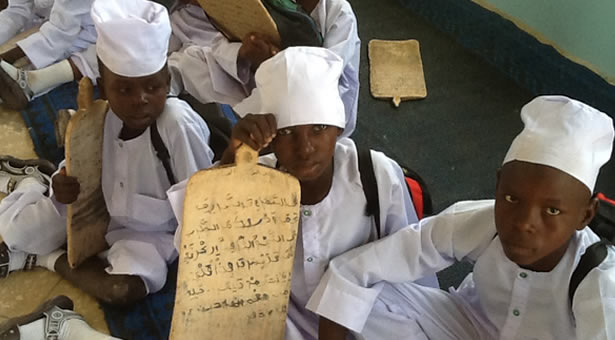
Islamiyya system has been proven to be an alternative to the Almajiri system. In the Islamiyya system, it is easier to commit the Qur’an to memory within the shortest period with decency. And it also allows the children to seek other knowledge that will aid them in confronting the present challenges. Almajiri system can only be insisted to be reformed when it is proven that that is the only way to learn the Qur’an. The system poses a lot of danger to the children, such as health challenges, inferiority and, of course, most of them become morally debased in the end.

Reforming this system alternatively means rewarding irresponsible parents for their irresponsibility, creating unsustainable programs which cannot see the light of the day. Instead, the government should ban and criminalise the system and absorb all the already enrolled Almajiri into formal schools. Then any other parent that wants his child to learn the Qur’an by traditional means must first provide shelter, food, and health facilities for the welfare of the child and must ensure that the child goes to school to at least get primary education.

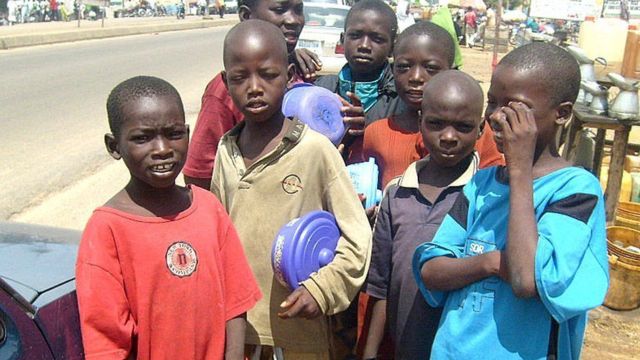
No one is saying karatun allo should be banned. Karatun allo differs in content and operation from the Almajiri system. While the former entails learning Qur’an by the traditional design by all and sundry, the latter entails recruiting young persons to learn Qur’an by traditional means without provision for food, shelter and medical facility for children recruited. The said recruited army of children relies only on begging leftover food and tattered clothes for subsistence.

It requires no second thought to believe that this system of taking young children away from their parents at the ages they need their parents the most should be stopped and criminalised. No child under the age of 12 should be taken away from his parents’ house in whatever guise. There is nothing good in the Almajiri system as practised today. The system has served and outlived its usefulness. It became archaic and, to some extent, barbaric considering the conditions of the children involved in the system.

There are more decent systems which are alternatives to the already abused system. The system indirectly supports irresponsible parents to breed bundles of children they know they cannot cater for. The parents use the system to abdicate their parental responsibility of feeding, clothing, educating and sheltering their children.

Also, the half-baked Malllams use the system as a means of income. The activists are using it to get themselves employment from international NGOs. The nagging question is, can Qur’an be learned through a more decent system than this child molesting system? The answer is yes. Thousands of children have committed the entire Qur’an to memory through the modern Islamiyya system.

Let’s move on; the system is not viable in the present era. The era of dogma has passed. Let every child be supported by his father and take Quranic education before his parents while attending school. Any system that encourages parents to take their children to the street is barbaric and should not be encouraged.

Muhammad Dattijo Kabir. Muhammad is a lawyer, a human rights activist and a public affairs commentator. He lives in Kaduna and can be reached via jibrilmuhammad27@gmail.com.

What’s the fate of the Almajiri?

By Abdulsalam Alkali

Almajiranci is an informal educational system that is predominantly practised in Northern Nigeria. Almajirai are teenagers ages 4-17 who are sent away from their dwelling by their respective parents to seek Islamic knowledge, a source for sustenance and clothe themselves by begging for alms from people.

The Almajiri system has produced prime leading Islamic intellectuals in Northern Nigeria. Still, along the cord, the system has been altered with the rise in population, making it a system that makes children of tender age susceptible to danger.

It’s awful how Almajirai are abandoned to cater for themselves even though parents should be responsible for their children’s needs and provide them with education. Sadly, parents choose to neglect their responsibility towards their children and abandon them at the early phase of their lives. This is unfair and should be tackled; else, it will erode our societal values.

Numerous discussions and symposia have been held on the predicaments of the Almajirai and how to reform the system. But it is all an exercise in futility because there has been practically no action to stem the tide.

The government, civil society organisations and traditional leaders have a role to play. First, the government should enact legislation prohibiting parents from taking their children to the Almajiri school. In addition, the government should make primary and secondary school free and compulsory so that poor and vulnerable parents can send their children to both formal and informal schools for our society’s good.

Abdulsalam Alkali writes in Maiduguri, Borno State, via abdulsalamyusufalkali71@gmail.com.

Beggars still on Kano streets despite govt’s ban

By Uzair Adam Imam

Who could have thought that the lingering issue of street begging would still be persistent despite the imposition of an outright ban on begging by the state government? Likewise, who would believe that the state government will continue to be the captive of the past, allowing Almajiri parents to drop around their children for Qur’anic education without shelter, food or clothing?

This and many more have called into question the government’s effort to end street begging in the state.

Recalling the statement issued by the Chief Press Secretary to the Governor of Kano State, Abba Anwar, the Kano State Government announced the ban of street begging in the state. It said that the effort was to fully consolidate the free and compulsory primary and secondary schools education.

“The decision was meant to integrate the Almajiri system into the policy and address the lingering problem of street begging,” Governor Abdullahi Ganduje said in the statement. He further warned that Almajiri teachers must accept the newly introduced approach by the government and that “If Almijiri teacher thinks he cannot accept the new policy he has to leave the state. 

“When Almajiri are caught begging, it is not only that beggar is caught but also his parents or guardians. Such parents or guardians would be taken to court to face the wrath of the law,” the governor added.

The statement disclosed that the newly introduced system was meant to allow the beggars to continue their studies to secondary school and beyond.

But despite the declaration, promises and threats against beggars and their teachers, beggars are still on the state’s streets. They beg from car to car, tricycle to tricycle and from person to person freely and in the presence of security personnel.

Meanwhile, Almajiris in Kano were neither being thwarted from begging nor introduced to western education, as the governor promised.

One of the Almajiri teachers in the state who spoke with The Daily Reality said, “I had no idea of the new policy the state government introduced and no official of the government contacted him ok the policy.”

An educationalist, who prefers not to be named, opined that; “I believe this will definitely be a joyous and celebratory idea if the government could be able to implement the new system.

“But sometimes government plays politics, and I am afraid this might be one, considering the length of time since the assertion was made.” He observed.

Some beggars who were brought to the city from Minjibir explained to our reporter that they face no challenge from anyone. According to them, they move around freely in every nook and cranny, including Nassarawa GRA, where the Kano State Government House is situated.

“We are brought here for Qur’anic education from Minjibir Local Government. Our Tsangaya is situated at Rimin Kebe, Ungogo LGA, and we are not even aware of the ban on begging in the state.”

The lingering problem of street begging is known to anyone living in Kano and the North, or even the country as a whole. But it is worse than expected in the North. 

Kano State Government’s idea of banning street begging is an idea many residents applauded when launched. The ban was introduced to enable the Almajiri to acquire western education while undergoing their Qur’anic education. The ultimate goal was to empower them in society.

Human rights in Islam

By Adamu Sani (Tj Chinade)

It appears that some people think of human rights was only theorised by the Western world and scholars. However, this perception proves inaccurate because Islam is the ultimate religion that left behind nothing in confusion. To understand this, Almighty Allah says, “…..We have neglected nothing in the Book (Glorious Qur’an).” (Qur’an 6:38). Given this verse, most of what the western people theorised has its roots in Islam. Meaning that if someone searches deeply into the topic, someone may easily trace its origin from the Glorious Qur’an and Hadith of the Prophet. Therefore, human rights have been discussed and recognised by some organisations as detailed in Islam, since Almighty Allah is the Creator of the universe.

What differentiates between human rights in Islam and the western perspectives is that Almighty Allah and all laws that give rights in Islam are derived from the primary sources. In contrast, in western perspectives, it is man-made laws, and the leaders provide the rights to their respective people of their States or Nations. It should be clear that human beings are all the same in the sight of Allah. The rights and privileges that Allah has granted to man as a human being will be enjoyed by all individuals, regardless of colour, religion, geographical location, nationality, among others. All the rights should be recognised and respected by every Muslim. The following are some of these rights.

1. Right to Life

The first and foremost fundamental right is the right to live and respect human life. The Glorious Qur’an states: “If anyone killed a person, not in retaliation of murder, or spread mischief in the land, it would be as if he killed all mankind…” (Qur’an 5:32). According to this verse, the punishment of taking life in retaliation for murder or spreading mischief on the earth can be decided only by a proper and competent court of law. In addition, if there is any war with any nation or country, it can be determined only by a properly established government. In whatever case, no human being has any right by itself to take human life in retaliation or for causing mischief on this Earth. In another place, Almighty Allah has condemned the killing of any soul without a reliable measure as He is saying;  “… and kill not anyone whom Allah has forbidden, except for a just cause (according to Islamic Law)…” (Qur’an 6:151).

2. Respect for the Chastity of Women.

In Islam, the chastity of women must be respected and protected under all circumstances, everywhere, regardless of her religion or even if she has no faith. A Muslim is forbidden to be in any illegal relationship with a woman. Almighty Allah emphasises this in the Glorious Qur’an, thus: “And come not near to the unlawful sexual intercourse. Verily it is Fahishah (i.e. anything that transgresses its limits)” (Qur’an 17:31).

3. Right to Basic Standard of Life.

The Glorious Qur’an enjoins upon the Muslims about the economic right. Allah says: “And in their properties, there was the right of the beggar and the Mahrum (the poor who does not ask the others)”. Qur’an 51:19.

4.Right to Freedom.

Islam has clearly and categorically forbidden the barbaric practice of enslaving a free man or selling him into slavery. Because of this, the unequivocal statement of the Prophet reads, “There are three categories of people against whom I shall by myself be a plaintiff on the Day of judgement. On this three, one who enslaves a free man, then sell him and eat this money”.

5. Right to Justice

It is also the most important and valuable right Islam has given to man as a human being. Almighty Allah calls upon humankind to respect justice in many places in the Glorious Qur’an. One of these places is where Allah says: “O you Who believed! Stand out firmly for Allah and be just witnesses and let not the enmity and hatred of others make you avoid justice. Be just: that is nearer to piety, and fear Allah. Verily Allah is Wel-Acquainted with what you do.” (Qur’an, 5:8).

The above verse clarifies that Muslims have to be just not only with ordinary human beings but even with their enemies. It is noteworthy that justice in Islam is not limited to Muslims but all people regardless of their race, colour, tribe, nation or religion – the entire humanity. This indicates the boundless mercies of Almighty Allah to his creators.

6. Equality of Human Being

It should be clear that Islam not only recognises and confers absolute equality between men irrespective of any colour, race, or nationality but makes it an essential and significant principle and a reality. To understand this, Almighty Allah says: “O mankind! We have created you from male and female and made you into nations and tribes that you may know one another. Verily the Honourable of you with Allah is that (believer) Who has Taqwa (Qur’an, 49:13).

The above verse suggests that the division of human beings into nations, races, tribes, and group is for the sake of distinction so that people of one tribe or group may easily recognise their partner once they meet. This further indicates that the superiority of one man over the other is only based on one’s faith, purity of character and high morals, not based on colour, nation, tribe and language.

7.Right to Freedom of Expression

Islam also gave human beings the right to freedom of speech, but with a limitation, this can be seen in one of the Hadith of the Prophet reads: “Say good, or be silent” This Hadith clearly shun away the spreading of fake news and hate speech.

By 

Adamu Sani (Tj Chinade)

07030045189

adamusani3828@gmail.com