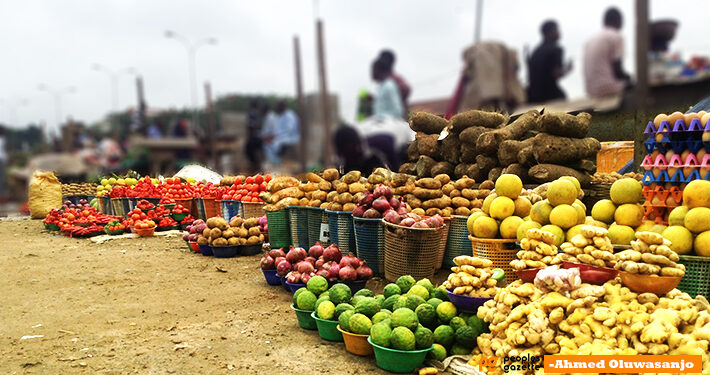
Safeguarding Nigeria’s Future Through Food Security
By Godwin Philip Malgwi
Nigeria stands at a critical crossroads, facing the looming threat of a severe food crisis that could destabilize its economy, security, and social fabric. Without prompt, coordinated, and strategic intervention, the nation risks sliding into widespread food shortages, skyrocketing prices, and an unhealthy reliance on imports.
A major driver of this crisis is the growing trend of farmers abandoning the cultivation of vital cereal crops such as maize, rice, millet, and sorghum. The causes are clear: the costs of essential agricultural inputs—fertilizers, pesticides, herbicides, and improved seed varieties—have soared beyond what most smallholder farmers can afford. Combined with rising inflation and limited access to agricultural credit, many have been forced to scale back or quit farming entirely.
The situation is further compounded by the declining market value of locally grown cereals. For many farmers, production costs now exceed potential profits, largely due to the unchecked importation of cheaper food products that saturate local markets and undermine domestic production. This double blow—high input costs and weak returns—is eroding farmers’ morale and threatening the foundation of Nigeria’s food system.
To its credit, the Tinubu administration has made progress in improving security, reopening key markets in northern Nigeria, and restoring access to farmlands previously abandoned due to insurgency. However, these gains must be consolidated through urgent, decisive measures that revitalize the agricultural sector and restore farmers’ confidence.
A critical first step should be the subsidization of essential farm inputs to reduce the financial strain on farmers and encourage continuous cultivation. In addition, the government should introduce a national grain-purchasing program to buy surplus cereals from farmers holding unsold stocks from previous harvests. This initiative would help stabilize market prices, stimulate rural economies, and demonstrate tangible support for local producers.
Equally vital is the revitalization of agricultural extension services. Many farmers still lack access to modern farming techniques, climate-smart practices, and efficient post-harvest handling methods. Strengthening these services would enhance productivity and reduce losses across the agricultural value chain.
Furthermore, key government programs like the **Presidential Fertilizer Initiative** and the **Anchor Borrowers’ Programme** must be not only revived but restructured. Transparency, accountability, and inclusivity should be the guiding principles—ensuring that these interventions truly benefit smallholder farmers, particularly women and youth, who are the backbone of Nigeria’s food production.
Ignoring these warning signs would be both an economic and security blunder. A food-insecure Nigeria is a vulnerable Nigeria. History has shown that hunger and poverty often fuel unrest, migration, and instability—consequences that are far costlier than proactive investment in food security.
As Nigeria’s population continues to grow, so too will the demand for food. Ensuring agricultural resilience and self-sufficiency must therefore remain at the heart of the nation’s development strategy. Strengthening food security is not just an economic imperative—it is essential for Nigeria’s stability, prosperity, and survival.
Godwin Philip Malgwi, Department of Mass Communication, University of Maiduguri.