Prof. Salisu Shehu

Reminiscences of Dr Ahmad Bamba BUK

Professor Salisu Shehu

حَدَّثَنَا إِسْمَاعِيلُ بْنُ أَبِي أُوَيْسٍ، قَالَ حَدَّثَنِي مَالِكٌ، عَنْ هِشَامِ بْنِ عُرْوَةَ، عَنْ أَبِيهِ، عَنْ عَبْدِ اللَّهِ بْنِ عَمْرِو بْنِ الْعَاصِ، قَالَ سَمِعْتُ رَسُولَ اللَّهِ صلى الله عليه وسلم يَقُولُ  ” إِنَّ اللَّهَ لاَ يَقْبِضُ الْعِلْمَ انْتِزَاعًا، يَنْتَزِعُهُ مِنَ الْعِبَادِ، وَلَكِنْ يَقْبِضُ الْعِلْمَ بِقَبْضِ الْعُلَمَاءِ، حَتَّى إِذَا لَمْ يُبْقِ عَالِمًا، اتَّخَذَ النَّاسُ رُءُوسًا جُهَّالاً فَسُئِلُوا، فَأَفْتَوْا بِغَيْرِ عِلْمٍ، فَضَلُّوا وَأَضَلُّوا “‏. قَالَ الْفِرَبْرِيُّ حَدَّثَنَا عَبَّاسٌ قَالَ حَدَّثَنَا قُتَيْبَةُ حَدَّثَنَا جَرِيرٌ عَنْ هِشَامٍ نَحْوَهُ.

Narrated `Abdullah bin `Amr bin Al-`As:

“I heard Allah’s Apostle saying, “Allah does not take away the knowledge, by taking it away from (the hearts of) the people, but takes it away by the death of the religious learned men till when none of the (religious learned men) remains, people will take as their leaders ignorant persons who when consulted will give their verdict without knowledge. So they will go astray and will lead the people astray.”

My first sight of Dr. Ahmad Bamba was 37 years ago in 1984 in the UMMAH MOSQUE at the Old Campus, Bayero University, Kano where I just got registered as a pre-degree student and had begun to familiarize and acclimatize with the people, routines, events and the environment in the University. Although the Central Mosque in Bayero University, Kano would always be the first sight of any visitor or newly arriving student to the University, having been strategically located near the Main Gate, the Ummah Mosque may be the first place of worship for the new resident (on-campus) student because, in its own case, it is sandwiched between the hostels and the two major and oldest Faculties of the University- The Faculty of Arts and Islamic Studies ( FAIS) and the Faculty of Education. Because of its lively nature and vibrancy-series of nasihas, ta’alims, Qur’anic study circles and Tajweed, Arabic classes and even sometimes, very hot intra-faith dialogues and debates that may sometimes prolong from Isha to Fajr Prayer time, the Ummah Mosque, therefore, would always easily capture every newly arriving young Muslim student who might have arrived the University full of curiosity as well as,  enthusiasm and zeal to learn. We, therefore, easily got hooked up to the Ummah Mosque. We would only be seen at the Central Mosque, most surely on Fridays for the Jumu’ah prayer.

It was quite rare to see non-students’ faces at the Ummah Mosque except during Zuhr and Asr prayers when some visitors and some lecturers might be around to join the congregation. There was, however, a non-student face that was very familiar in the Ummah Mosque most especially, during Zuhr prayer and seldom during Maghrib. That was Dr. Ahmad Muhammad Ibrahim Bamba. He would certainly be the first lecturer students that used to regularly attend congregational prayer in the Ummah Mosque would be familiar with because of his regular presence. Of course, another very regular face was Professor M. D.Sulaiman of the History Department. As it were, and as earlier stated, the Mosque was very close to the Faculty of Arts and Islamic Studies where Dr. Ahmad belonged. He would easily come down to join the students’ prayer congregation and there was never an instance that he made any attempt or overtures to lead the prayer or say a word. The nasihas, the ta’alims, and sometimes the debates would be taking place in his presence and to his hearing but he would not utter a word. The situation in the Mosque could actually sometimes be rancorous but it would never stop him from coming. He would, certainly, however, observe his nawafil, and would make his way out. I had a feeling but was unable to ask him, that perhaps his regularity in the Ummah Mosque was not just for the purpose of observing the regular prayer but also to keep close contact and relationship with the students for the purposes of Tarbiyyah h. It was later when I became an Imam in the mosque that I realized that he used to invite or approach imams/leaders in the Mosque to make corrections politely or offer some advice/suggestions, as the case may be.

My first countenance of Dr. Ahmad in the Ummah Mosque reminded me of my first IRK Teacher in the Teachers’ College -Sheikh Yahya Abdul’Azeez, a fully bearded Pakistani Sheikh who was to teach me again –Kitab al -Tauheed, Bulugh al-Maram and Al-Nahwu al-Wadhih in Gwallaga Mosque in Bauchi in 1984, after he transferred his services to Bauchi College of Arts and Science (BACAS). That was shortly before I got admission into Bayero University, Kano. The two were the two fully bearded Sheikhs I first met in life. On my first sight of Sheikh Dr. Ahmad in the Ummah Mosque, the memories of Sheikh Yahya Abdul’Azeez suddenly came back to my mind. At that time, Sheikh Dr. Ahmad was certainly in his late 40s while I was just beginning the third decade (early twenties) of my life as a young undergrad. More strikingly, however, the sights of the two gentlemen present to the heart a mien of piety that sometimes made you think of the countenances of the Sahaba, or so we used to think as young people that still had some elements of naivety in our thoughts.

Our admiration of Sheikh Dr. Ahmad was ceaseless whenever he came and prayed with us in the Ummah Mosque and left. But our interaction with him was no more than the Salam and typically, he would wave at you and made his way out or extend his hand for a shake when you happened to be very close to him. The first time I ever had a conversation with him or heard him spoke to me was when I was appointed as an Imam in the Mosque, which was later to become my class where I taught Tajweed for about three years up to graduation in 1988. I was certainly the youngest of the Imams, a second deputy after Sheikh Sani from Zaria. With the benefit of early background in Qur’anic learning from home, one’s mastery, so to say,  of reading the Qur’an could easily be discovered. So, right from my first year I got appointed as one of the deputy Imams. The substantive Imam then, was the late  Malam Usman Muhammad, the Chief Imam of Laranto, Jos, who was undergoing the Diploma in Arabic, Hausa and Islamic Studies.

Still, with the vestiges of adolescent exuberance and obsession for a fashionable and smart appearance, my wardrobe had more of the fashionable shirts and trousers of the time (TOBI shirts/jeans and HARA trousers) than kaftans. Invariably, therefore, the Imam in me would most of the time lead prayers in the said kinds of fashionable shirts and trousers in the Ummah Mosque. I led the Maghrib prayer one day. After the prayer, Sheikh Dr. Ahmad Bamba called me and held my hand to the outside of the Mosque. In his typical gentle manner and way he said, “Liman, yaya kokari”. I replied, “Alhamdulillah”, with a mix of exciting and nervous mien. He then said to me, “Toh liman ga karatu mai kyau, amma kuma kullum ana mana sallah kai babu hula?”. With a sigh of relief, I said , ” Na Gode Mallam, in sha Allah, za a gyara.”. It was both an awesome and joyful moment for me. But what was most instructive was the fact that that simple and gentle counsel not only made me appreciate that I was no longer just an ordinary student on campus but I was treading the path of spiritual leaders, it also changed my life in terms of personal dispositions and appearance on campus and beyond.

A second experience with Sheikh  Dr. Ahmad Bamba made me a witness to his magnanimity. It was in the case of attending his Hadith class for students offering  Islamic Studies as Special Honours. I was not one, so I could not register for that course. I offered Islamic Studies as a subsidiary course, but I was interested in attending his Special or rather advanced Hadith class. All my friends and classmates- Professor Salihu Lawal Malumfashi (present Dean of the School of Continuing Education and one of the Darul Hadith Imams), Alhaji Bashir Sheshe (now a Permanent Secretary, Ministry of the Federal Capital Territory, Abuja), Dr. Ahmad Maigari Dutisin -ma (Department of Islamic Studies, Usmanu Dan Fodiyo University, Sokoto), Professor Usman Sani Abbas (Department of Islamic Studies, BUK) to mention just a few were all encouraging me to just enter the class and that they were sure Malam would not send me out. On the second or third lecture day, I joined some of these mates while being very scary. I  sat in the class with some bit of nervousness. Sheikh entered the class, conducted his lesson and alhamdulillah, he did not send me out. He definitely saw me, and he definitely knew that I was not duly registered for that course because it was a small class of fewer than 15 students. Later, I want to believe that one of those classmates of mine approached him and spoke to him about me, and Malam graciously permitted. By virtue of my Imamship in Ummah Mosque, I was already a familiar face to him. With a deep sense of appreciation, I must say that that opportunity was my first experience with not only some of the basic and essential rudiments of Ilm al-Hadith but was also the greatest inspiration for deeper and more advanced study of the field.

After graduation in 1988 and having left for the national youth service scheme to far away Bendel State (now Edo and Delta) I did not only cease to benefit from the Special Hadith class of Sheikh Dr. Ahmad but also lost sight of him for about a couple of years. I got intellectually and personally reconnected with him when I returned to Bayero University, Kano in 1991. I came back to pursue Masters in Educational Psychology. Graciously, that presented yet another opportunity for, in a way, to continue to drink from the fountain of the knowledge of Hadith that Sheikh Dr. Ahmad Bamba personified. That was the year Sheikh Dr. Ahmad Bamba started his very awesome, weekly/weekend Hadith Ta’alim Sessions, beginning with Sahih al-Bukhari in the BUK Central Mosque and subsequently Darul Hadith Mosque, a teaching cum admonishment exercise that he continued to conduct uninterruptedly with a great sense of passion, vigour, consistency and rare faith and commitment for THIRTY (30) SOLID YEARS up to the end of his life. Although I was not chanced to be present at the first and second sessions, I would want to remember that I was there in the third session.

In the Hadith Ta’alim Sessions, we did not only learn the texts of the Hadiths and elements of Mastalahul Hadith but we also learnt to be much more committed to Sunnah in terms of faith and practice. Quite instructively also, we learnt lots and lots and lots of the Aqwal ( wise or sayings) of the salafs, many aspects of Usul al-Fiqh (Islamic Jurisprudence), Qaw’id al-Fiqh (Jurisprudential principles and maxims) and many Islamic religious and Jahiliyyah poetries (Qasa’id and Shu’ara’ al-Jahiliyyah). I would not, therefore, end this paragraph without recalling one stanza of a poem that Sheikh Dr. Bamba used to quote very frequently, in his constant admonishment on the obligation to hold and cling tenaciously to the Sunnah of the Prophet (صلي الله عليه وسلم). That is: “دعوا كل قول عند قول محمد فما ءامن في دينه كمغامر

It would be pertinent to mention here, perhaps also to inform those who might not know that Sheikh Dr. Ahmad Bamba did not only contribute to the knowledge of Hadith through the Ta’alim Sessions. He also  contributed to it through authorship. Within the first three years after the commencement  of the Sahih al Bukhari lessons one of his very scholarly Hadith works was released. That was his Takhreej and Tahqeeq work on Imam al-Bukhari’s “Juz al-Qira’ah Khalf al-Imam. It was a book that I unhesitatingly bought a personal copy and ‘voraciously’ read cover to cover within a couple of days.

For Sheikh Dr. Ahmad Bamba, it was a life well spent. Thirty solid years of uninterrupted teaching the Hadiths of the Prophet (s.a.w) was not just a monumental intellectual and scholarly contribution but was evidence of true love of and for our Beloved Prophet Muhammad صلي الله عليه وسلم. This reminds me of the saying of one of the Hadith scholars, quoted by the late Sheikh Muhammad Nasiruddeen alAlbani in his Sifat Salat al-Nabiyy that: اهل الحديث هم اهل الرسول وان: لم يصحبوا نفسه أنفاسه صحبوا.

The death of our most honourable Sheikh Dr. Ahmad Muhammad Ibrahim Bamba is certainly a tragic loss to the world of knowledge and Da’awah as rightly and as clearly alluded to in the Hadith above, with which we opened this tribute. Our closing words would only be fervent and sincere and hearty prayers for him.

إنا لله وإنا إليه راجعون

 إنَّ للهِ ما أخذ وله ما أعطى وكلُّ شيءٍ عنده بأجلٍ مسمًّى.

اللهم اغفر لدكتور احمد، وارفع درجتَه في المهديين، واخلفه في عقبه في الغابرين، واغفر لنا وله يا ربّ العالمين، وافسح له في قبره، ونوّر له فيه

وآخر دعوانا ان الحمد لله رب العالمين

All praise is due to Allah, Lord of the Worlds. May His Peace and Blessings be upon our Beloved Prophet Muhammad صلي الله عليه وسلم.
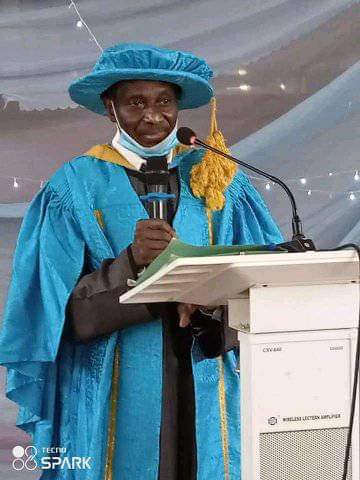
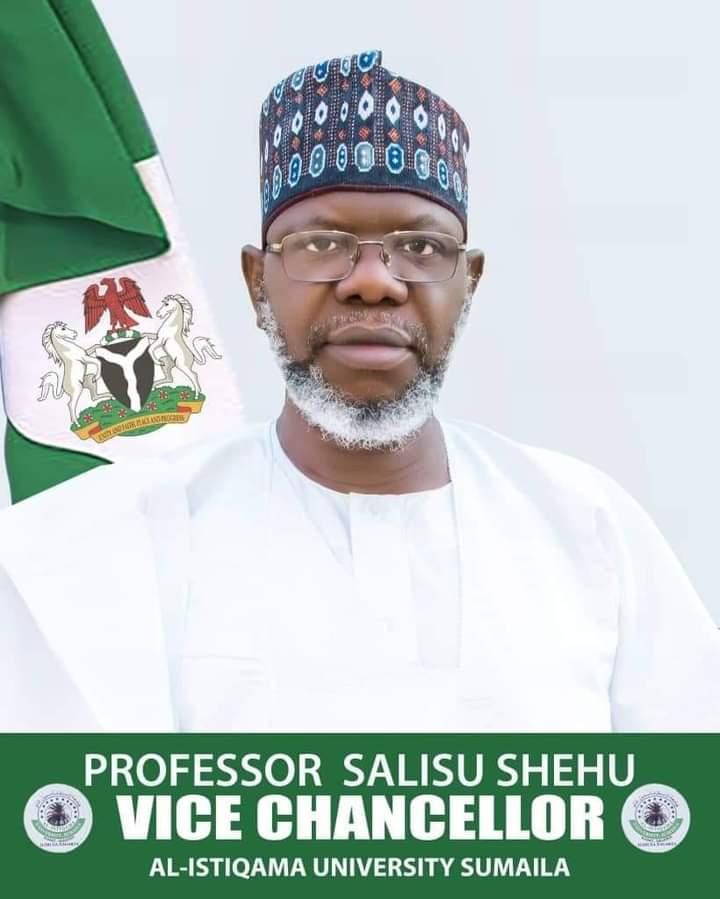
Many students go to university without any dream – Abdullahi Abubakar Lamido

By Aisar Fagge and Ahmad Hassan

Many students who go to university do not have the awareness and motivation to understand the need to have a personal vision and proper training on managing their time effectively.

Malam Abdullahi Abubakar Lamido of the Department of Economics, Bayero University, Kano, made this observation while presenting his papers in a lecture series organized by Al-Istiqama University, Sumaila (AUSU). Speaking about the first paper titled “My Mission in Life,” Lamido said:

“Well, essentially, the essence is to help the students with the necessary tools with which they can plan and organize their life, from developing their personal life vision; what they want to achieve in their own life, and what they want to achieve in the university.

“When we say vision, we mean how to help them develop a multi-dimensional vision that covers all the essential aspects of their life – spiritual, religious, social, economic, financial, political, family and educational life,” he added.

Lamido’s second paper was about how students manage their time where he said:

“One of the greatest assets that one needs to move towards greatness is to master the art of time management. I gave them some tools that can help them pragmatically in organizing their time. We use the “Big rock concept” and Brain Tracy’s “Eat that frog and so on.”

When commending the management style of the Vice-Chancellor of Al-Istiqama, Lamido commented thus:

“When I heard about the appointment of Prof. Salisu Shehu as the VC of Al-Istiqama, I concluded these people are serious. Because whoever knows Prof. Salisu Shehu knows him as a man of seriousness, a man of vision, a man of commitment, a man of dedication, a man of mission, a man of good character, a man of scholarship and an accomplished administrator.”

Two students attending the event explained the impact the lectures had on them.

Ibrahim Bashir, a student of Medical Laboratory Science, said, “My mission as a student of Al-Istiqama is to become a medical laboratory scientist and memorize Holy Qur’an.”

Fatima Muhammad from the Department of Nursing said, “Today’s activities are very motivating and educative as well. I have learned the difference between the vision and mission in life and how to use time accordingly.

“As a student of Al-Istiqama University, my vision is to become a professional nurse that is going make a difference out there – someone who is going to help the society and also the people from my state, women especially.

“People are complaining in the hospital that the nurses lack good manners, nurses harassment and others. I know showing sympathy to people in need of medical services is good.”

Other scholars who presented various papers related to their fields include Eng. Bashir Adamu Aliyu, Barrister Ahmad Yarima Misau, Dr Abubakar S. Usman, Dr Halima Rabiu Abdullahi and Dr Muhammad S. Usman from their respective institutions.

Many academics, religious and traditional leaders, as well as members of the Muslims Students Society of Nigeria (MSSN), graced the occasion.


Al-Azhar University to make Al-Istiqama center for Arabic sign language – Prof. Salisu Shehu

By Aisar Fagge

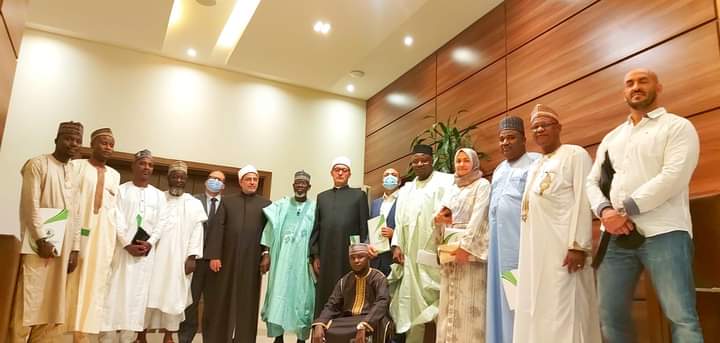
On 3rd November, 2021, a delegation from the Al-Azhar University, Egypt visited Al-Istiqama University Sumaila (AUSU) for partnership, staff training and establishing a centre for Arabic sign language that no any Nigerian university has. Explaining to the Daily Reality about this development, The VC of Al-Istiqama University, Prof. Salisu Shehu said:

“You know universities in the world thrive on partnership and collaborations. You need to come to abreast with international best practices in university education. And it is only through collaboration and partnership you get that. You need to mutually interdependent on one another. And it is on this basis we get some form of partnership with Al-Azhar University. As it were, Al-Azhar University is over one thousand years old. It is our big mother.”

“We are moving towards a memorandum of understanding with Al-Azhar University, and they are going to help us in a number of ways: one of which, for example, is that we want them to give us training, to train some of our staff on Arabic sign language.”

There is a problem with Muslim deaf people when it comes to Arabic language and reciting Qur’an especially in their prayers. Lamenting about this lingering issue, the VC affirmed that:

“Muslim deaf people in Nigeria don’t read Arabic, they don’t read the Qur’an, they pray in English. Because what is taught in our school is only English sign language. So even when you write Hausa to them they don’t understand, let alone the Arabic language.”

“So we need to get Arabic sign language and, we want to make Al-Istiqama University, insha Allah, a center for the production of deaf people that are literate in Arabic sign language so that they will be able to read Arabic and Qur’an. Not the usual English they are taught.”

“So we have requested Al-Azhar University to support us in terms of training so that can establish a center for Arabic sign language in order to promote braille literacy,” he concluded.

Al-Istiqama is the cheapest private university in Nigeria – Prof. Salisu Shehu

By Aisar Fagge

In its second segment of the students’ orientation lecture series held between 6th and 7th November 2021, the Vice-Chancellor of Al-Istiqama University Sumaila (AUSU), Prof. Salisu Shehu, stated that AUSU is the cheapest private institution where students can memorize the Holy Qur’an before their graduation.

Speaking about the name of the university, Prof. Salisu Shehu said: “Well, the message sent to parents and guardians from the name of the university is that, this is the university that stands for uprightness in all sense of the word; uprightness in character, behaviour and learning. What we aspire to achieve is that effective teaching and learning take place in our university.

We want to be sure that whoever comes to Al-Istiqama would be seriously groomed with the sound knowledge that is possibly only obtainable in our institution. Not only that, through our counselling and mentorship, serious students can memorize the Holy Qur’an before their graduation.”

From the name “Al-Istiqama”, some people think that the institution is all about Islamic studies and Arabic courses. Reacting to this, the VC has clarified that:

“Yes! This is a faith-based university, and that’s why it’s given the name “Al-Istiqama”. But that does not mean that learning is only going to be restricted to the religious sciences. All disciplines are going to be offered in this university. And, for now, we have about 15 different degree programmes. Islamic Studies is just one of the 15. In addition, there are social sciences, basic sciences and medical sciences. And we are going to open additional faculties as we keep moving, in sha Allah.”

There are complaints about students of private universities that they do not respect their teachers because they are proud of the huge money their parents spend on their school fees, and that has affected the quality of their learning process.

In his reaction to the above, Prof. Shehu explained that Al-Istiqama was different. He added:

“Al-Istiqama, being a faith-based institution, will not tolerate indiscipline, pomposity and any immoral character. We will not tolerate that situation where students are extorted. Although we need to get funds and resources that will sustain the university, parents and students should not be that source.

Our school fees are very, very affordable. Almost the lowest you can find around because it is not a profit-making venture. The proprietor did not intend to make a profit out of it. Rather, he intended to render service to humanity. So that kind of notion and that kind of mentality would not have a place here.”

The leaders we need in Nigeria

By Muhammad Auwal Ibrahim

This article is an attempt to highlight the leaders we need in our society. This becomes more relevant as election season comes and goes. We ought to know the leaders that are the best for us if we only want to succeed. This article, thus, would go a long way in addressing some of our major problems.

I am a Nigerian, and I am part of her in every situation, no matter how it may be. Be it good or bad; we share the feelings altogether. It is unfortunate that at this age of Nigeria, things are still happening upside down. Things are still falling apart. It is shameful.

Today, in Nigeria, any person can aspire to be a leader and be chosen either legitimately or illegitimately. But, mostly illegitimately, as asserted by Dr Usman Bugaje said in a paper he presented during Dr Sulaiman Kumo Memorial lecture at Gombe High School in 2018. This is one of the reasons that made me pen this.

However, Prof. Salisu Shehu, sometimes back, stated in his book Social Justice Leadership Responsibility in Islam that “It is because of the so-called democracy…”. I agree with him because even as young as I am, I still observed that some of our leaders are not competent or just, but they are still there to lead us. Some don’t even know where to start. Some still need to be trained and disciplined.

Dear Nigerians, do you vote for good leaders or looters with your eyes widely opened? Do you vote for competence or richness? Do you vote for your future wellbeing or for your present wellbeing that can perish in less than a day? Do you vote for the prosperity of your children: for them to enjoy the dividends of democracy, i.e. one who, if voted, would build schools, hospitals, construct roads, develop our infrastructures? Do you give somebody the mandate to rule you without paying particular attention to his qualities? Is it somebody that kills our economy, offers stimulants to our youth, destroys our society that you want to represent us?

Do you vote because you can or because it is an obligation and a right at the same time? Should we sit and fold our arms and watch them continue with their ruination, plundering, looting/embezzlement and squandering of public funds? What can we do, and how can we start? Think carefully about these questions.

The need for good leadership has been stressed earlier on. It is our fault since we failed to learn and implement the Islamic teachings, some of which the Sokoto jihad leaders deliberated on. Like the qualities of a leader. We cannot just stop on those mere democratic qualities.

Another critical point is that our people today seemed not to know their roles and obligations. This is not only in the case of the ruled but also the rulers. Why? The answer is very apparent. We need no further consultations. Sadly, most of them are not educated enough on leadership, not to mention their followers. This is indeed painful.

If I may ask some of our leaders, how many read books written on this topic of discussion ‘leadership’ by Sokoto jihadists like Shehu Usman Danfodio, his brother, Abdullahi Fodio, his son, Sultan Muhammad Bello and the rest of them? I think only a few would boast answering yes if any.

We, the subjects or more preferably the ruled or the led, have our various contributions to good governance at multiple levels of life. Aside from obedience and compliance with rules, so long as they are not evil and terrible. There are other positive contributions, like constructive criticisms, advising the government on good things and warning against evil and prayer, as asserted by Prof. Salisu Shehu in his book (Social Justice Leadership Responsibility in Islam). But today, we are relentless to all of these. Not all, but only a few of us are doing that.

Justice is an essential aspect of any given society. A leader, therefore, must be just. Consequently, we should pay special attention to this quality before selecting any leader.

Knowledge should be considered. Knowledgeable can be found in our learning institutions. Therefore, institutions should be put in place to teach our younger ones leadership traits before it becomes too late to overcome the present challenges. 

Competence is another most appealing quality. A leader’s ability to overcome situations and handle matters mattered a lot. But do we care? We should not just go ahead and select a person to represent us, knowing that that person is not competent.

These are the few characteristics of a leader. Some books address such issues. These include: Social Justice Leadership Responsibility in Islam and Shugabanci a Mahangar Musulunci: Yadda Al’amarin Yake A Nijeriya. I hope they will serve as a guideline to aspiring leaders.

In the end, I hope our young leaders will take heed of all these. Further, I pray that all aspiring leaders learn what leadership is all about before clinching any position of power.

Muhammad Auwal Ibrahim is an award-winning journalist, fellow African Investigative Journalism Conference (AIJC) 2020, Wits University, Johannesburg, South Africa. He can be reached via awwalbinibrahim@gmail.com.

Abduljabbar Dialogue: ‘My emergence as judge’ – Prof. Salisu Shehu

Prof. Salisu Shehu, who is the Director of the Centre for Islamic Civilization and Interfaith Dialogue of Bayero University, Kano, in an exclusive interview with The Daily Reality (TDR), described how he emerged as the presiding judge of the dialogue between Sheikh Abduljabbar Nasiru Kabara and some Islamic scholars in Kano state.

“I want to believe that it was made by the grace of God. I know that several senior, elderly and important personalities were pencilled down and contacted, but some of them declined while others, unfortunately, were out of town. My name was among those that were suggested as options. And, by the grace of Allah, my name was anonymously accepted by the committee and therefore was presented to the Kano State Government. I received my appointment letter a day before the fixed date for this dialogue. I, too, have actually tried to decline because there are many people that are more deserving and competent. Still, the committee insisted and persuaded me to accept this appointment since State Government has approved it.”

There were speculations that those who rejected the offer to chair the session or refused to participate did that due to the gravity of the blasphemous remarks on the person of Prophet Muhammad (S.A.W). They, thus, and see the whole issue as needless and a waste of time.

“Of course, these are terrible, sacrilegious statements and utterances. And it is disturbing listening to them because they are horrible and disrespectful to the Prophet (S.A.W). But from the perspective of a jurisdiction maxim: “Addarurat tubihul mahzurat“, we have to do something to bring an end to it. And I have seen how this person has been boasting and bragging that all his claims are valid and no one can face him. So I felt it was necessary to accept and participate in this capacity to bring an end to his misguidance That was how I convinced myself,” Prof. Shehu said.

Sheikh Abduljabbar has complained about the time given and has tried several times to provoke you. How did you manage his provocations?

“You see, dialogue should not just be conducted for an unlimited time. We don’t have to stay the whole day. Unless there is no orderliness and good organisation, he was the only one complaining about time. You have all seen how one of the participants open about five books or more in his ten minutes. Abduljabbar had a system [mobile phone or laptop] with him together with two of his disciples. What was their function? Why did he bring them there? Why they were not opening the pages of those books, he was asked to? It was obvious. So it was quite challenging in the sense that you have to control yourself. You have to exercise a great deal of patience because one can easily be provoked.”