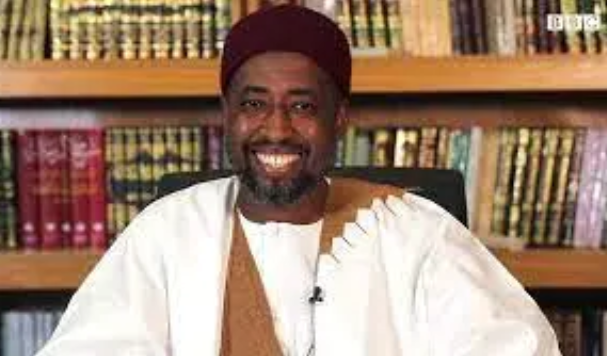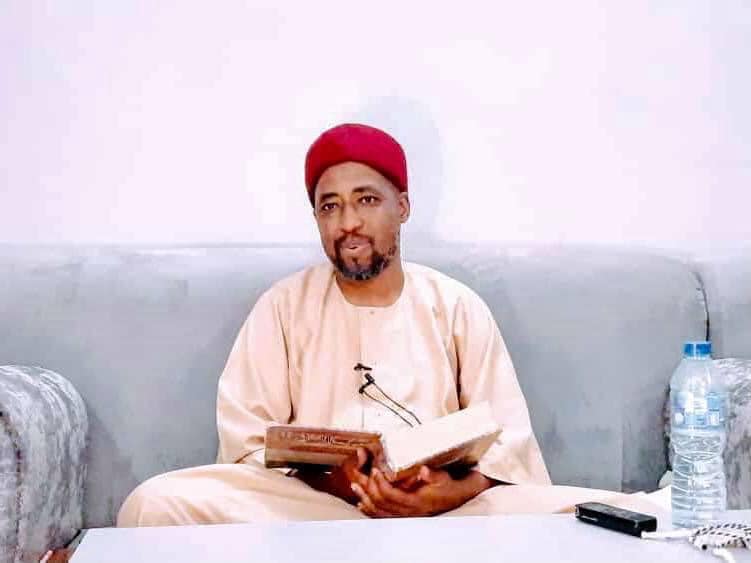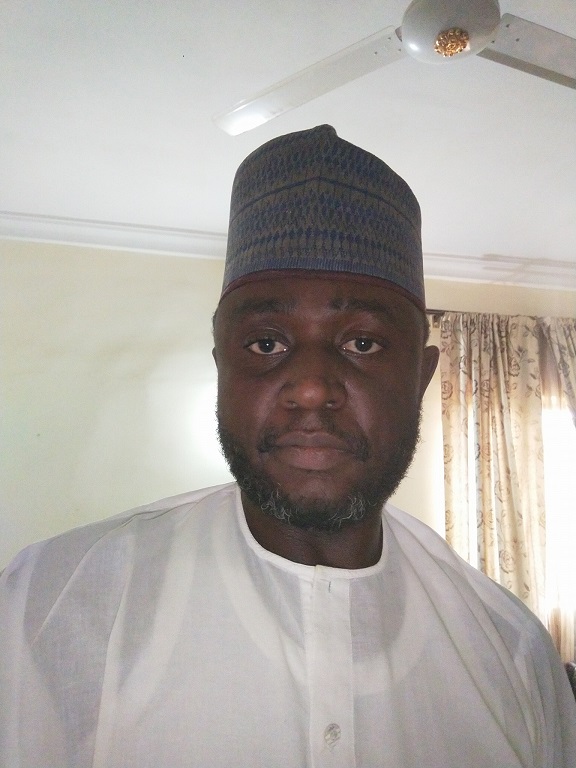
Prof. Ibrahim Maqari

A reflection on dimensions, death, and the eternal four: Ramadan 2025

By Ibraheem A. Waziri

MashaAllah. As the crescent moon rose to herald Ramadan this year, on this twentieth day of March 2025, a profound stillness has settled over me. The fast silences my body’s clamor, the long nights of prayer elevate my spirit toward the heavens, and my thoughts drift into the boundless expanse of the unseen. This Ramadan, I find myself wrestling with the nature of dimensions—what they signify, how they shape our fleeting lives, and how death might unlock realms beyond our earthly reach. 

The Qur’an unveils glimpses of this mystery: seven heavens layered in divine order, Jannah’s gardens of eternal serenity, Jahannam’s depths watched by stern guardians, and Allah’s timeless, infinite dominion. The number four—etched into our 4D reality and echoed in a hadith debate I explored last week—anchors my reflection, while the nineteen of Surah Al-Muddathir, mirrored in the nineteen letters of *Bismillahir Rahmanir Rahim*, stirs my soul. Could death guide us through a cosmic graveyard of stars into these dimensions, as some now ponder in awe?

Let us begin with dimensions as we experience them in this Duniya, this transient abode. We dwell within three spatial dimensions—length, width, and height. A minaret pierces the twilight sky; its shadow stretches wide across the sun-warmed earth, and its foundations sink deep into the soil. Time, the fourth dimension, flows relentlessly forward, a current bearing us from the first whispered adhan of Fajr to the tranquil hush of Isha. 

These four—three of space and one of time—form our 4D reality, a spacetime framework we navigate with every breath and every step we take. Yet science, with its insatiable curiosity, gazes beyond this familiar quartet, proposing extra dimensions—ten, eleven, or perhaps far more—coiled tightly at scales too tiny for our eyes to discern or sprawling across unseen planes our hands cannot grasp. These are not mere directions to wander but subtle layers, bending the forces of gravity, energy, or the very essence of creation in ways that stretch our comprehension.

In 2018, a Northern Nigerian Hausa broadcasting Television Station, Arewa24, in a documentary about space named black hole mutuwaren taurari (Mortuary of Stars), but I preferred mak’abartar taurari—the Graveyard of Stars—as a more evocative term. Here, death is a profound key, a passage to what lies beyond. In this 4D shell, we are tethered—our physical forms bound to the limits of space, our lives measured by the steady march of time. 

The Qur’an, however, assures us that the soul, the ruh, endures beyond this fragile vessel. When we die, might that soul break free, slipping into a fifth dimension, a sixth, or even further—realms where Jannah’s rivers ripple with mercy and Jahannam’s fires blaze with justice, domains veiled from us until Malak al-Mawt, the Angel of Death, carries us across the threshold? 

Physics offers a faint echo of this possibility: higher dimensions might surround us, omnipresent yet inaccessible, hidden behind a veil that only death can part. Some astronomers link each soul to a star wandering the cosmos; when a person dies, their star might collapse into this graveyard, bearing their ruh along. Could this black hole be a portal, a barzakh, where dimensions unfold beyond our sight?

The Qur’an sketches this vastness with strokes of majesty. “He who created seven heavens in layers,” proclaims Surah Al-Mulk (67:3), urging us to reflect on the nature of these layers. Are they celestial skies arching above our world, glowing in the twilight? Or could they be universes, dimensional planes, each distinct yet interconnected, ascending beyond our perception into a hierarchy only Allah fully comprehends? 

Our 4D reality, with its glittering stars and sprawling earth, might be the “lowest heaven,” as Surah As-Saffat (37:6) suggests, with its adorned lights, while six more heavens rise above, reachable only when death turns the lock. Time, too, bends in Allah’s presence—Surah Al-Ma’arij (70:4) likens a day with Him to fifty thousand years of our earthly counting. In these higher dimensions, time might not flow as we know it; it could stretch into an endless horizon, loop upon itself, or fold into an eternal now—a reality death alone might usher us into.

Yet it is the number four that steadies my wandering mind, a pattern I cannot unsee. Just last week, in *The Eternal Quartet: Understanding the Hadith Debate in Northern Nigeria*, I wrote of a debate stirring Northern Nigeria’s Muslim online space—Shaykh Prof. Ibrahim Saeed Ahmad Maqari and Shaykh Prof. Sani Rijiyar Lemo clashing over the degree of certainty in different categories of Hadith rather than dismissing their essence outright. 

I framed the scholars’ dispute through four lenses: reason, belief, doubt, and rejection, a quartet mirrored in Islam’s four legal schools—Hanafi, Maliki, Shafi’i, Hanbali—and four theological paths—Mu’tazila, Ash’ari, Maturidi, Athari. Maqari, with his Ash’ari and Maliki roots, demands the unshakable certainty of Mutawatir hadiths, those narrated by many, while Rijiyar Lemo, grounded in Athari and Salafi trust, upholds authentic Ahad narrations with strong chains, even if from fewer sources. Four emerged as a complete, balanced square: Maqari’s logic seeking widespread proof, Rijiyar Lemo’s faith in vetted tradition, the doubters’ hesitant questions, the rejectors’ outright dismissal. As I dwell in our 4D spacetime, I see it again—four as our foundation, the root from which higher dimensions might grow, a motif threading through faith, nature, and the human heart.

Then comes a piercing verse—Surah Al-Muddathir (74:30): “Alaiha tis‘ata ‘ashar”—“Over it are nineteen.” Nineteen angels guard Jahannam, their number stark and resonant, a mystery that stirs my soul to its core. Are these guardians confined to our 4D frame, or do they stride across dimensions, overseeing a hell that burns beyond our spacetime? This deepens when I count the letters in Bismillahir Rahmanir Rahim—ب س م ا ل ل ه ا ل ر ح م ن ا ل ر ح ي م—nineteen in all, the sacred invocation that opens every surah but one. Could this parallel—nineteen angels, nineteen letters—hint at more, perhaps 19 dimensions woven within or alongside the seven heavens? Science freely posits dimensions; string theory suggests ten or eleven, but the Qur’an’s seven and nineteen numbers carry a divine weight. From our 4D base, the seven heavens might rise as broad realms, each enfolding finer layers, totaling 19—a cosmic framework death unveils, where the nineteen serve as eternal watchmen.

Consider the black hole, this mak’abartar taurari. Could it be barzakh, a liminal space bridging dimensions? Does it cradle Jannah’s tranquility or Jahannam’s torment? Some wonder: might the Day of Judgment spring from this starry graveyard, an event science cannot yet name, where fallen stars—and souls—rise into new dimensions? We perceive only four in this Duniya, but black holes might harbor twelve, as some speculate. Add seven for Jahannam’s planes, and we reach 19—four we know, eight in Barzakh’s depths, seven in Saqar’s fire, guarded by nineteen, as Allah declares, “Alaiha tis‘ata ‘ashar”. Last century, scholars like Khalifa Rashad stirred debate with new readings of this verse—could it point to such a cosmic order?

Envision it: our 4D reality as the first heaven, rooted in four—length, width, height, and time. Six more heavens ascend, each a dimensional cluster, totaling 19 with Barzakh and Jahannam’s layers. Surah Fussilat (41:12) says each heaven has its command—unique laws across these planes, from fifth to nineteenth. His Kursi (Surah Al-Baqarah 2:255) spans them, the nineteen as sentinels in its scope. The Qur’an says the soul’s end wanders in the space between the dimensions of fire (dread) or peace (natsuwa). Death might thrust us through mak’abartar taurari into these 19, where nineteen angels stand guard.

As Taraweeh’s verses wash over me this Ramadan, I feel four and nineteen entwined. If 19 dimensions veil Jannah, Jahannam, or more, might they host others—angels, jinn, beings unseen? Science puzzles at silence; death might unveil a chorus. In sujood, fasting’s clarity sharpens this: the Qur’an bids us marvel. Whether seven heavens hold 19 dimensions via a starry graveyard, death is our key—a mercy cloaked as an end.

Breaking my fast, dates sweet with Jannah’s echo, I feel tethered to this vastness. Our 4D world—fourfold in dimensions and thought—is a breath, a shadow of Allah’s infinite craft. Ramadan 2025 is my pilgrimage—through hunger, hope, and “Alaiha tis‘ata ‘ashar”, mirrored in Bismillahir Rahmanir Rahim—toward a reality where death, from our fourfold root, opens the door to seven heavens, nineteen dimensions, and Allah’s eternal truth. Allah Shine masani.

The eternal quartet: Understanding the hadith debate in northern Nigeria

By Ibraheem A. Waziri

Last week, the Muslim online community in Northern Nigeria was abuzz with a debate between two prominent scholars: Shaykh Prof. Ibrahim Saeed Ahmad Maqari, Imam of the National Mosque, and Shaykh Prof. Sani Rijiyar Lemo, a well-known teacher and writer. They are discussing hadiths—sayings of the Prophet Muhammad—and their reliability. 

Maqari insists that only Mutawatir hadiths, which are passed down by many narrators, are certain. In contrast, Ahad hadiths, coming from fewer narrators, lack certainty; Da’if hadiths are doubtful; and Maudu’ hadiths are fabricated. Rijiyar Lemo argues that Ahad hadiths with strong chains—like those found in Bukhari or Muslim—are as trustworthy as Mutawatir hadiths, also rejecting both Da’if and Maudu’ hadiths.

This may appear to be a new split in Islam, but it isn’t. It’s an old debate reemerging, reflecting four fundamental ways we think: reason, belief, doubt, and rejection. Maqari and Rijiyar Lemo each adhere to one of four classic Muslim paths. Let’s simplify it to demonstrate that this isn’t a crisis—it’s just part of our nature.

The Scholars’ Stances: Old Roots, Modern Voices

Maqari aligns with the Ash’ari and Maliki approach. He’s cautious: only Mutawatir hadiths, widely shared and undeniable, confirm the Prophet’s words, especially for core beliefs. Ahad might be true but aren’t certain, Da’if are shaky, and Maudu’ are fabrications. His stance is logical, demanding solid proof.

Rijiyar Lemo takes the Athari and Salafi route. He’s straightforward: Ahad hadiths with strong chains are as good as Mutawatir—no need for a crowd if the narrators are reliable. He discards Da’if and Maudu’, trusting the vetting process.

This echoes a thousand years of Muslim thought, split into four theological groups—Mu’tazila, Ash’ari, Maturidi, Athari—and four legal schools—Hanafi, Maliki, Shafi’i, Hanbali. Maqari’s Ash’ari/Maliki; Rijiyar Lemo’s Athari/Salafi. The others linger in the background, forming four ways to see faith.

 The Fourfold Lens: A Universal Impulse

This isn’t just about hadiths—it’s how we view everything, through four lenses:

– Reason: “Prove it—how many narrators? Are they solid?” Maqari’s fans value his logic, insisting on Mutawatir’s wide agreement for certainty over Ahad’s limited sources.

– Belief: “My scholar says it’s true.” Rijiyar Lemo’s supporters trust a single Sahabi’s word if the chain is sound, no extra proof needed—just faith in the process.

– Doubt: “Are we sure? What if it’s wrong?” Questions linger for those unsure about either side.

– Rejection: “This is outdated nonsense.” Some walk away entirely.

Northern Nigeria’s Muslim online space shows all four: some cite Mutawatir facts for Maqari, others trust Rijiyar Lemo’s Salafi roots, a few question both, and some dismiss it outright. These align with the four schools, too. Picture a grid—reason on one side, revelation on the other—yielding four pairs:

– Reason + Reason: Hanafi and Mu’tazila  

  Hanafis use analogy and judgment for rules; Mu’tazila apply logic to beliefs like free will. They’re strict: theology needs Mutawatir or Ahad with three-plus narrators; rules use authenticated Azizi (strong Ahad). Reason leads.

– Reason + Revelation: Maliki and Ash’ari

  Malikis mix reason with Medina’s practices; Ash’aris back faith—like God’s traits—with logic. Maqari fits here: Mutawatir for beliefs, authenticated Ahad for rules like prayer times. Revelation guides reason.

– Revelation + Reason: Shafi’i and Maturidi

 Shafi’is prioritize hadiths and Qur’an, sorted logically; Maturidis use reason within scripture’s bounds. Mutawatir for theology, authenticated Ahad for rules like fasting. Revelation’s first, reason aids.

– Revelation + Revelation: Hanbali and Athari

Hanbalis stick to texts; Atharis take the Qur’an and hadiths as is. Rijiyar Lemo’s here: authentic Mutawatir or Ahad work for both beliefs and rules. Revelation rules.

Maqari’s Ash’ari/Maliki stance demands Mutawatir for certainty; Rijiyar Lemo’s Athari/Salafi view accepts authentic Ahad.

Four Across the Ages

Four isn’t just in this debate—it’s a pattern across time and cultures. In the West, psychologist Carl Jung saw four as a symbol of wholeness, like in mandalas or personality types—thinking, feeling, sensing, and intuiting. Stephen R. Covey’s four quadrants divide tasks by urgency and importance, offering a complete way to manage life. Game theory maps four outcomes—win/win, win/lose, lose/win, lose/lose—covering all possibilities in decisions, much like Karl Popper’s fourfold reasoning tests ideas through trial, error, doubt, and rejection. Four directions—north, south, east, west—guide us; four elements—fire, earth, air, water—once explained the world; four schools shape Islam. Even a Sudanese Sufi song by Abdurrahim Albur’iy, Misr al-Mu’mina, celebrates four in nature and Islamic history:

“We call upon You with the four and the four books,  

And the 114 surahs [Qur’an],  

With the six angels and the four noble ones,  

With our Prophet Muhammad and the four caliphs,  

And the six after them and the four imams,  

And the seven jurists and our four poles,  

The pegs of the earth in the four directions,  

The substitutes and the ten chiefs in four,  

Preserve my three and four limbs,  

And keep our four sides from the resting place,  

Remove the body’s illness in its four temperaments,  

Bless our week until Wednesday (fourth day),  

The ninety days of the year in four,  

And our seven seas and our four rivers,  

We are saved from four and gathered with four.”

Fours—caliphs, books, rivers—tie faith and life together across time.

Philosophy Meets Faith: Why Four?

Why four? It’s simple and complete. Two (yes/no) is too basic, three (yes/maybe/no) lacks balance, and five’s cluttered. Four’s just right: two ways to agree (reason, belief), one to question (doubt), one to reject. Like a square, it’s steady, covering all sides—seen in nature, history, and our debates.

Nothing New Under the Sun

Don’t let Northern Nigeria’s Muslim online space hype fool you—this is old news. Ash’ari scholars like al-Ghazali sought proof, like Maqari; Athari ones like Ibn Taymiyya trusted texts, like Rijiyar Lemo. Mu’tazila favored reason; Maturidi blended it with faith. Four schools, four views—same as today.

It’s loud now because Maqari’s at the National Mosque, and Rijiyar Lemo’s books reach many. People care about the Prophet’s words. But it’s not a new split—just two notes in an old four-part tune.

Takeaway: Embrace the Quartet

Don’t worry about this debate. It’s not Islam breaking—it’s alive, with views fitting four natural slots: Maqari’s logic, Rijiyar Lemo’s trust, plus doubt and rejection. Next time Northern Nigeria’s Muslim online space heats up—over hadiths or anything—spot these four: thinkers, believers, questioners, and naysayers, blending into many combinations. It’s how we work. Maqari and Rijiyar Lemo pick two corners of a square we’ve all been drawing forever. It’s not chaos—it’s our pattern.

Maqari Controversy: If ASUU says it, it must be right

By Yusufu Musa

Watching Prof. Ibrahim Maqari’s outburst the other day made it difficult to respond to several inquiries. One of these is whether solving all the problems ASUU is bringing home will fundamentally alter the perception of the higher education system and transform our universities into those we hear about in Europe and North America.

On February 14, the Academic Staff Union of Universities (ASUU) announced the start of a four-week roll-over strike that has since been extended three times. However, the issues brought up by Prof. Maqari are not ones that ASUU is examining. Instead, the union is concerned about the subpar working circumstances of its members, the proliferation of institutions, and the appalling physical and technological facilities of public universities.

Maqari alienated his old coworkers by criticizing them. He accused them of working only three to four hours a week, failing to undertake significant research, and engaging in academic fraud to further their careers. Unfortunately, I lack the means to substantiate his broad assertion because intellectual property theft is a severe legal matter. Thankfully, the targets have responded to him with detailed arguments.

I’m arguing in support of his assertion that lecturers should do the duties for which they are compensated, such as quality research and teaching if they want to be paid like Harvard professors who put in long hours. Because when a lecturer declines to instruct, the pupils suffer as a result.

I believe the next battle is one that students should win on their own. There is an internal conflict at the university. University students, who are primarily young people, can ensure that lecturers are held accountable. Still, they don’t always seem to reject the behaviour of some instructors, about whom ASUU appears unconcerned despite the proverb that “charity begins at home.”

ASUU is fighting its own battle but never agrees there are bad elements in the university system that should be fished out. 

The allegorical story Animal Farm by George Orwell struck a chord with me because of how the author captured the naivety of the oppressed in the figure of Boxer. Napoleon never fails, according to Boxer. This is a ball of fire that allows himself to be fooled. In actuality, he is the manor farm’s strongest animal.

Since then, critics have said Boxer represents the Soviet Union’s working class under Stalin’s rule. Members of this group contributed to Stalin’s rise to power. What took place in the end? Boxer became so weak that he was used and dumped. He believed the “thing with two legs” to be his enemy and agreed to help destroy the farm’s owner, only for his persuaders to grow more oppressive.

Consider Nigerian students to be Boxers because they believe ASUU is always right.

While it is true that Nigeria is not working, we are all equally to blame. We understand the system rather well because we are students at the institution.

Prof. Maqari revealed the other side of the story, but ASUU was not pleased. ASUU is bringing the gospel to the government house even though they also require it.

According to Qur’an 2:44: “Despite reading the Book, do you preach holiness but fail to uphold it yourself? Why don’t you understand?”

Through a lecturer, I learned that someone had proposed in one of his university’s senate sessions that professors be required to periodically take an exam so that administration may determine if they are still “professing.” The contributor worried that his colleagues would stop performing research once they received the title. For fear of the professors leaving for other universities, his recommendation was flatly denied.

When they notice that a promotion exercise is getting closer, some professors realize they need to compose a paper. When they do, no one will read the pieces they publish in a departmental journal. The articles are created for promotion rather than to contribute to the scientific community.

I recently visited a department head in one college of education. I noticed some journals on her bookcase. I told her I wanted to submit an article for their upcoming issue. Try to guess what the HoD said. She said that the journal was only released during every promotion season.

Government investment in universities may not change much because some teachers’ unethical behaviour is not being monitored. Even worse, individuals who should be watching for such unethical behaviour believe they are always right. According to them, only the government and students engage in destructive behaviour. Who will then stand up for students?

Students should reject any proposal to restructure the university system without establishing a framework to monitor the behaviour of the teachers. The battle for a functional university system goes beyond having lovely lecture halls, modern labs, and libraries.

Junior academics, resentful of their seniors, do most of the work. Because they are overseeing their PG dissertations, they treat them like slaves.

Even in the classes these powerful lecturers teach, the juniors are tasked with grading the written assignments. A junior lecturer would be seen grading papers for eight courses.

Most of our professors would visit the classroom once or twice during our time at the institution to launch a course and hand it off to a junior scholar. Some of them never even tried to educate us. Due to their inflated sense of importance, they are too big to instruct undergraduates. They were seldom ever seen in the departments. Because their mentors don’t have time, graduate students spend years researching at the institution.

Students must understand that nobody would stand up for them. The government may revitalize institutions and increase funds for higher education, but who has the right to oversee professors’ negligence?

Nigerian young, unlike Boxer, are aware of their power, which they used during the EndSARS rally. The youth must speak up and demand changes in education and other areas of national policy that will affect their future. Some of these teachers have our support despite doing nothing. The strike will finish. We’ll return to the classroom, but will the ASUU police its members there as well?

Yusufu Musa writes from Kaduna and can be reached via ymusa4055@gmail.com.

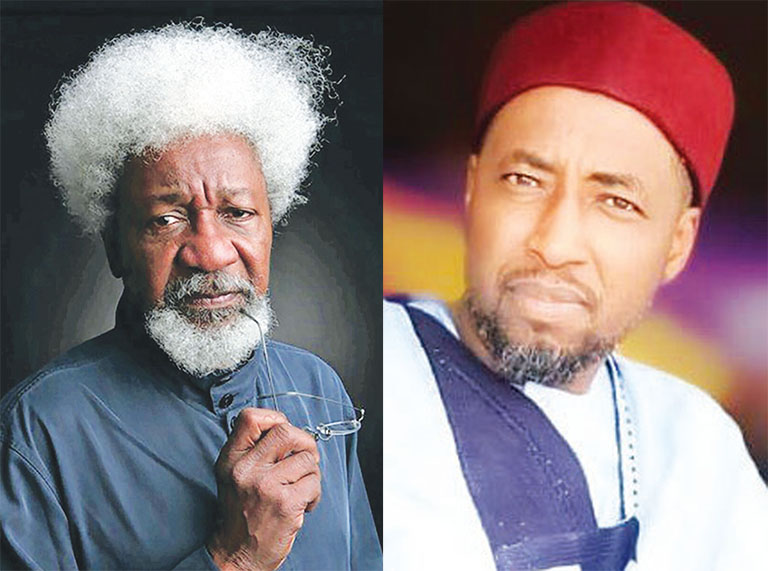
Wole Soyinka, Ibrahim Maqary and Western Neo-Paganism

By Ibrahim Ado-Kurawa

Wole Soyinka is a Nobel Laureate who won the highest prize for his work in Drama, where he excelled. But as everyone knows, no one who opposes Western ideas will win that prize. In fact, those who oppose their indigenous worldviews are more likely to win it. A good example is Neguib Mahfouz, the Egyptian anti-Islamic intellectual. Ibrahim Maqary, on the other hand, is an Islamic scholar who became prominent at a very young age because of his proficiency and erudition. They are from divergent backgrounds. Soyinka was nurtured in the neo-pagan Western intellectual tradition. Maqary was nurtured in the Muslim intellectual tradition of Sudanic Africa.

The neo-pagan Western Civilization, sometimes referred to as Western Christian Civilization, considers itself as the superior civilization, and all others must judge their practices according to its criteria. The West, since Enlightenment, has continuously incorporated pagan traditions. Hence Roberts’s conclusion that “Europe once coterminous with Christendom is now post Christian and neo-pagan” (Roberts 1996: 583).

The Islamic and Sinic Worlds have resisted Western intellectual domination. Therefore Ibrahim Maqary and other Muslim scholars always speak their minds damning the irritation of Western neo-pagan inspired scholars. Soyinka will insist that he is independent, but this is not true. His ideas of freedom are not original but primarily influenced by Western Neo-Paganism. He is not even a pan Africanist compared to Walter Rodney, Ngugi and Franz Fanon, who resisted colonialism. He was only engaged in sophistry, which is a form of intellectual cowardice.

Yes, there are elements of African traditionalism in Soyinka’s ideas, but they are those acceptable to the West. They include his anti-Islamic and anti-Muslim postures. He supports animism in Muslim majority Yoruba land. Hence despite his liberal pretensions, he never opposed the killings of innocent Hausa Muslims in Yoruba land by Sunday Igboho and other Oduduwa terrorists as much as he opposed the extra-judicial killing of Deborah Samuel in Sokoto.

Like his Western patrons, Wole Soyinka never opposes the killings of innocent Muslims. Hundreds of Hausa Muslims and non-Muslim northerners have been killed by IPOB and unknown gunmen in the South East. Yet, Wole Soyinka and Christian Bishops never protested loudly as they did for the extra-judicial killing of Deborah. Their conception of human beings is rooted in the Western intellectual tradition where the other has no value.

Why has the Neo-Pagan West become so inhuman even though Man has been the pivot of its philosophy since Renaissance? This could only be understood within the context of European history and the abolition of Christianity, and the entrenchment of secularism. Jesus (peace be upon him) did not come to destroy the Law of Moses but to confirm it and give glad tidings of the coming of Ahmad (SAW), the last Prophet. Therefore his followers remained Jews until the conversion of Paul. And eventually, Jewish Christians under the leadership of James, who upheld the Law, were obliterated (Wilson 1984: 126-7). This paved the way for emphasizing only the teachings of Jesus relating to personal piety, and people were encouraged to regard Caesar as supreme in worldly matters (Mark 7: 17).

Subsequently, Christianity became the Roman Empire’s official religion, and the clergy wielded power and influenced decisions. During the theocratic phase, in some areas, the clergy ruled, and the Pope, as the head of the Christendom, crowned the Kings and Emperors. The Church abused this privilege because Pauline Christianity was not equipped for this purpose. This necessitated a Reformation led by the Protestant fathers. In most parts of Europe, the clergy were made to revert to the position Paul intended for them. Many scholars have shown how Protestant ethics led to capitalism (Raghuram 1999: 236). The Catholic areas of Europe also followed these steps, and the influence of religion in public life was gradually reduced. Europeans believe that they were backwards in the Dark Ages because of the influence of the clergy, which caused the “Christian disease” (Lewis 2002).

With the curing of the “Christian disease,” religion became marginalized in Europe, and there was a shift from God as the pivot of philosophy to Man (Aminrazavi 1996: 384). This was the Enlightenment philosophy. According to Kant, one of the greatest Enlightenment philosophers, this current facilitated the emergence of man from his self imposed infancy and inability to use his reason without the guidance of another (Inwood 1995: 236-237). The Enlightenment philosophy preached equality for citizens of the nation but encouraged brutality and even genocide against others.

For example, the French revolution, which was a product of Enlightenment that gave birth to the republic based on “liberty, equality and fraternity”, but it restored slavery after it jailed Toussant L’Ouverture, the leader of the revolt in Haiti who was inspired by the French revolution (Time, December 31, 1999 p. 164). This shift from God to Man led to all the atrocities committed by Westerners who came to regard themselves as superior and all others as expendable. They lost the compassion of Christianity and became Christians in name only. And they were always willing to use Christian missionaries for this agenda. As confirmed by Pope Paul VI, the apostles who were extremists were also willing to be associated with the European imperialists because they regarded all non-Christians as heathens.

The public aspect of Christianity was abolished because the clergy misused the privilege. This was why Roy made his statement: “Secularity and politics are born of a closing of Christian thought onto itself” (Roy 1994: 8). Fukuyama also observed that: “Christianity in a certain sense had to abolish itself through a secularization of its goals before liberalism could emerge” (Fukuyama 1992: 216). This made it possible for some Western Christians to hate others and commit the worst crimes in human history: colonialism and Nazism. As a result, more than fifty million people lost their lives during the Western-inspired Second World War, the worst in human history.

This Western imperialist epistemological vision has enabled Western leaders to commit the worst atrocities against humanity despite human rights pretensions. European Americans committed genocide against Native Americans and Africans to build their economy. It is universally acknowledged that Western leaders lied when they invaded Iraq, as there were no weapons of mass destruction.

They spent trillions of dollars to destroy Muslim countries: Iraq, Afghanistan, Libya and Syria, causing the worst humanitarian crisis. Since World War II, the worst conflict has been the resource war in the Democratic Republic of Congo (DRC) caused by Western companies. Over three million people have lost their lives. No one cares about these atrocities in the West, but their diplomats can talk about Deborah in Nigeria.

Wole Soyinka and some Christian leaders can show their outrage against the extra-judicial killing of Deborah but not the massacre of innocent Muslims in the South East precisely because their worldview is rooted in the Western intellectual tradition. Muslim lives are nothing to people like Wole Soyinka. Hence, he was one of those who signed the petition that the murderers of Tafawa Balewa, Sardauna and military officers of northern origin should be released because the lives of Muslim and non-Muslim northerners eliminated do not matter. And now they want the mob that killed Deborah to be prosecuted simply because she symbolizes the violation of the sanctity of the Prophet (peace and blessings be upon him), not because of any humanitarian consideration since they are selective.

Wole Soyinka has no respect for the Prophet of Islam (peace and blessings be upon him). There is no problem with this since he is an acclaimed unbeliever, but he should show understanding of the Muslim position as an intellectual. Ibrahim Maqary, on the other hand, as a Muslim scholar, considers the position of the Prophet of Islam as more important than the world and what it contains. Therefore, just as Western imperialists can destroy countries to satisfy their hedonistic lives, Muslims are willing to sacrifice their lives for the Prophet (peace and blessings be upon).

Muslims have no history of genocide against non-Muslims or cruel destruction of countries as in the case of Iraq, Libya, Afghanistan and Syria or evil obliteration of communities like Tafawa Balewa in Nigeria.

Muslims, unlike Western Christians, have not abolished Islam; therefore, they cannot tolerate infringement on the sanctity of the Prophet. This is the worldview of the Muslims, and why should anyone query it? Must Muslims adopt a Western neo-pagan worldview? This can never happen. No Muslim scholar has ever called for the extra-judicial killing of anyone who violates the sanctity of the Prophet. It is the responsibility of the state to take action against those who commit this crime.

There is no doubt Wole Soyinka will continue his pretentiousness that Ibrahim Maqary should be sacked from the position of Imam of the National Mosque. This is one of the reasons why he was awarded the Nobel Prize – to promote Western neo-paganism against Islam. Ibrahim Maqary, on the other hand, will continue to attract the respect of the Muslims for protecting the sanctity of the Prophet (peace and blessings be upon him). Muslim scholars will also continue to maintain their position that Prophet must not be insulted and, at the same time, no mob action or human rights violations of innocent citizens.

Ibrahim Ado-Kurawa is the Editor of Nigeria Year Book and Who is Who. He can be reached via ibrahimado@hotmail.com.

Vanguard of Falsehood: In defence of Prof. Maqari

By Ibrahiym A. El-Caleel

By the special grace of God, nothing shall befall the Imām of National Mosque, Professor Ibrahim Ahmad Maqari, for the calculated report published by Vanguard Newspapers. The media house submitted a report on the Sokoto incidence wherein they sandwiched truths, half-truths and micro-truths.

The Imām didn’t justify mob action anywhere in his tweets and Facebook posts. He only maintained that Muslims have redlines. Circumferential lines that shouldn’t be approached, lines that must not be crossed to disrespect their faiths. And this is both factual and non-negotiable. So, the Imām was very much on point. No amount of deliberate media intimidation can change this hard fact.

You may say the Imām was not making a personal statement. He was stating what is obtainable in the thoughts of every Muslim with some adequate knowledge of Islamic law. It is in the books of Islamic law.

Unfortunately, we are not seemingly ready to make progress on this recurrent problem. People are reiterating the measures that can be taken to avert future episodes of this issue, but no one is ready to listen. Instead, the suggestions are mischievously twisted to mean tacit justification for mob lynching. What sort of regressive society have we become? We prefer to dwell on polemical exchanges rather than orienting ourselves towards some mutual understanding. Between polemics and societal orientation, which paves the way for harmony in a plural society?

Muslims are saying blasphemy isn’t tolerated in Islam. When genuinely committed to the rights of Prophet Muhammad (Peace Be Upon Him), the provision by Islamic law is execution. And in Qur’an Chapter 6, verse 108, Muslims are categorically prohibited from blaspheming anyone’s religion – be they Christians, Jews or Traditional Worshippers. It is not allowed in Islam. The Qur’an has warned about it. This prohibition was made so that no one blasphemes Islam out of revenge. By this, Islam respects the boundaries or redlines of every religion.

Are Christians saying that their religion encourages them to blaspheme Islam? Where was that stated in the Bible? I believe nowhere! This means it is purely an act of mischief for anyone to choose to make a living from ridiculing or blaspheming a Muslim’s faith since the instruction isn’t Biblical.

These are honest discussions that will promote harmony and give us some sanity. It will also give us a civil society. This is what a national mosque Imām, Professor Ibrahīm Maqari, says. He was not justifying mob action by any implication. So do not put words into his mouth, please. Vanguard Newspapers lied as usual. Barefaced. And this is not the first time they have submitted such a mischievous report whose jeopardizing tendencies they are underestimating.

But it is understandable since yellow journalists would always take pleasure in misfortunes like this. It gives them the advantage of selling volumes of papers and gathering traffic. Woe onto he who follows unethical methods to garner influence and gain income. Woe onto him!

Ibrahiym A. El-Caleel writes from Zaria and can be reached via caleel2009@gmail.com.

Prof. Maqari formally withdraws lawsuit against Dr Abdalla Gadon-Kaya

By Muhammad Abdurrahman

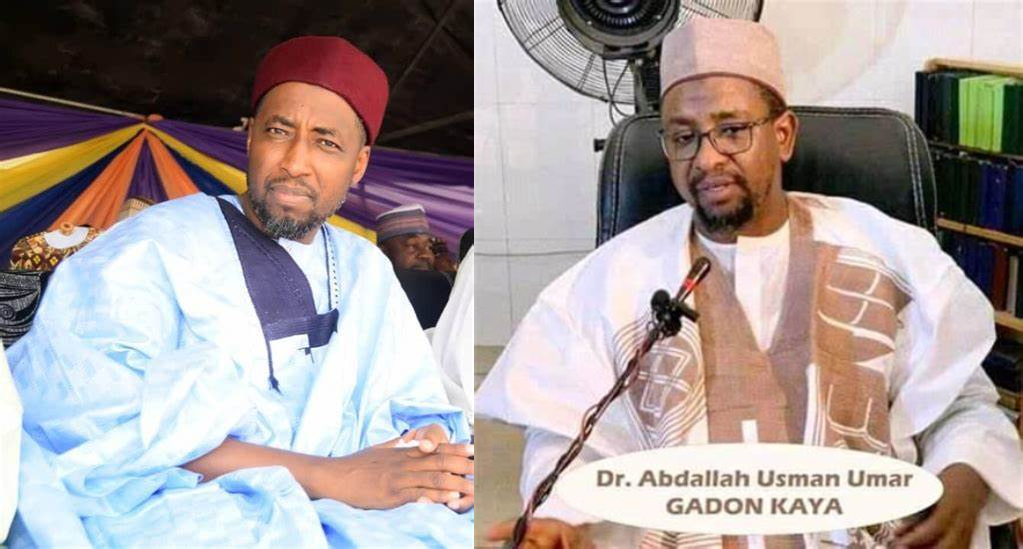
Today, the Abuja Central Mosque Imam, Prof. Ibrahim Maqari, formally withdrew his lawsuit against Dr Abdallah Usman Gadon-Kaya, seeking N20 million in damages for defamation.

The Daily Reality reported on September 1, 2021, that Dr Gadon Kaya’s lawyers had yet to receive any formal request to withdraw the lawsuit as of then. Instead, according to Barrister Ibrahim Umar Abere, all they saw was Prof. Maqari’s viral video alleging that he was compelled to withdraw it.

However, after appearing at the court today (6/9/2021) to defend their client, they got an official request from Prof. Maqari’s lawyers wherein the plaintiff withdrew the lawsuit in pursuit of peace.

Reacting to the reports that the defendant and his lawyers were preparing to file a counterclaim, Barrister Abdulrazak Kabiru Kofa said they had also shelved that plan. He cited a Quranic verse that says, “Peace is best” (4:128).

Recall that on July 23, 2021, Dr Abdallah Uthman Gadon-Kaya delivered a Friday sermon in a mosque in Kano State. That sermon did not go down well with Prof. Ibrahim Maqari. Thus, he appeared in a video warning Dr Abdallah to withdraw parts of the statement or meet him in court, which he eventually did.

The court order showed the case was due for hearing on September 6, 2021. Maqari demanded that Gadon Kaya retract the said statements, publish an apology in national dailies or pay the N20 million in damages.

Prof. Maqari disrespects DSS’ reconciliation – lawyer

By Muhammad Abdurrahman

On July 23, 2021, Dr Abdallah Uthman Gadon-Kaya delivered a Friday sermon in one of the mosques he leads prayers in Kano State. That sermon did not go down well with Prof. Ibrahim Maqari. Thus, he appeared in a video threatening Dr Abdallah to withdraw parts of the statement, or they would meet in court. On July 26, Dr Abdallah received a letter from Prof. Maqari’s lawyers, giving him a 7-day ultimatum to withdraw those “remarks” or face legal action.

Many media organisations, including online newspapers, reported the recent development. But no media reported Dr Abdallah’s side of the story. So the Daily Reality (TDR) spoke with one of his lawyers, Ibrahim Umar Abere.

Barrister Abere told TDR that “We initially received a letter from Prof. Maqari stating that his lawyers were charging Dr Abdallah for defamation. And he was given seven days to withdraw his utterances against Prof. Maqari. If not, he must appear before the court to stand a trial.

“In the letter he sent, his lawyer said that he knew Dr Abdallah had not mentioned Prof. Maqari’s name, but it was clear to them that the things said were directly referring to Prof. Maqari. [This means they were the ones who said that to their client]. We wanted to reply to them instantly. All of a sudden, the Department of State Service (DSS) from Abuja intervened, asking the two parties to sheath their sword and that both parties should report to the DSS office in Kano for reconciliation.”

“We went to the DSS office. I was there; Dr Abdallah was there, and Prof. Maqari, represented by his lawyer, was there. They said that Dr Abdallah must go and withdraw his utterances publicly on his pulpit. We said this is impossible because what happened was that Prof. Maqari spoke, and Dr Abdallah also spoke in their sermons about the things happening. Though some clerics already asked Dr Abdallah to withdraw those remarks that some people felt were harsh. He did so and apologised to all and sundry.

“The DSS stated that they were aware Dr Abdallah had apologised to anybody who misunderstood his sermon or felt any pain. We were satisfied with that. For this, there’s no reason for Abdallah to go and apologise for the second time.

By Allah, this was what happened. The DSS personnel also reminded us that both Abdallah and Maqari have followers; therefore, unless handled cautiously, the issue might become a grave conflict. That was why we did not respond to their letter. Because we take what authority said seriously, that was how our sitting ended,” said Abere.

On August 24, a copy of a summons showing that Prof. Maqari sued Dr Abdallah in an Upper Sharia Court at Rijiyar Lemo, Kano State, trended on social media.

In reaction to that, Abere told TDR that “We have seen that. It means they disagreed with the reconciliation made by the DSS a few weeks ago. That was why they went to court. On hearing that, we had to call the DSS and told them that these people took the case to court despite the fact the dispute had been resolved. For this reason, we had replied to their letter for them to know our stand. We told them that we were also charging Maqari with defamation and other things.

“In our reply on July 30 to Prof. Maqari’s lawyers, Dr Abdallah unreservedly denied all the allegations forwarded by Prof. Maqari. We also gave the lawyers a 7-day ultimatum to withdraw some defamatory remarks in their demand letter. They call Dr Abdallah derogatory names such as liar, lawless, mischievous, reckless, heartless, penchant for hate speech, high-handed and threat to public peace. Otherwise, he [Prof. Maqari] too will face a legal battle,” he lamented.

Surprisingly, Prof. Maqari appeared in yet another video on Saturday, August 28 2021, telling the public that some prominent personalities in the country had intervened on the matter. Therefore he left the case in their hands. This means there would be no court case against Dr Abdallah.

“We have thoroughly prepared to appear before the court on September 6, 2021. All our defences and counter-charges or claims are ready. Then we suddenly saw Prof. Maqari again on social media in another video saying that some people talked to him and now the case is with them.

Does that mean he had withdrawn his charges against Dr Abdallah? If that is the case, that is now how it is done. For Prof. Maqari to withdraw his charges against Dr Abdallah, it should be in a written form. Until now, we have not received any official letter. We just heard about it on social media. People should not seriously regard what has been said on social media or in a video,” concluded barrister Abere.

Prof Maqari vs Dr Abdallah: A diversion from Abduljabbar’s heretic teachings?

By Dr Muhammad Sulaiman Abdullahi

Tension grew as Prof. Ibrahim Maqari intends to sue Dr Abdalla Usman Gadon-Kaya based on what he (or his lawyers) called defamation of his character. It may be recalled that the main point of divergence between the two was their different religious affiliations, where Prof. Maqari subscribes to Tijjaniya Sufism, and Dr Abdalla is an Izala/Sunni scholar who preaches mostly against the teachings of Prof. Maqari and Tijjaniyya order in general.

Initially, the blasphemous and heretic teachings of Abduljabbar Kabara were the genesis of their misunderstanding, where Dr Abdallah erroneously cited a wrong reference when referring to an Abuja Imam. It was clear that the coalition of Kano Ulama, under the chairmanship of Dr Sa’idu Dukawa, lodged their complaint against what they found to be lies and concoctions against Bukhari, Muslim, some Sahabas, which in turn, ridicule and subject the sanctity of the Prophet’s household into questioning. These immoral teachings have negatively impacted some irate and ignorant youth, where they mockingly copy and paste anything from the sacred books and ridiculously call it a lie.

In response to this unprecedented religious turmoil, the scholars in Kano unanimously agreed to form a coalition to defend Islam’s sanctity. Abduljabbar directly targets Dr Abdalla and other prominent Sunni scholars in Kano as his reference point and as one of those at the forefront of exposing his evil antics. These altercations have taken a long time without Prof. Maqari featuring in the scene with either support or opposition to what Kano Ulamas have been doing.

After the debate session, the Muslims were happy as Abduljabbar failed to defend his heretical teachings. However, while everyone was happy and waiting for a verdict from the government, suddenly Prof. Maqari used his position from the Abuja Central Mosque and said that he perceived a form of propaganda in all that has been happening in Kano concerning Abduljabbar’s case. Thus, Prof. Maqari breathed life to all the supporters of Abdujabbar who died and buried their heads in shame.

Maqari’s submission made Dr Abdalla go berserk and even erroneously, out of emotions, mentioned many instances where an Imam in Abuja, which may be Prof. Maqari, used his position to delve into this – what no Imam in the history of Abuja Mosque ever delved into before. He cited instances where such an Imam said many things and even went to the extent of claiming to own classified audios of phone calls where that Imam, who may be Prof. Maqari, wanted to intervene in cases related to blasphemy.

In response, Prof. Maqari, in what shows his humility and humbleness, as usual, posted a video where he debunked all that Dr Abdalla said and called for peace. Later, Dr Abdalla also posted another video, clearly apologizing and calling for peace. Most poor innocent followers of these famous sheikhs were happy that the matter was settled amicably, only to wake up with another fresh video of Prof. Maqari saying he would go to court. I think this will be one of the first court cases that will generate high tension, cause a lot of damage, and divert people’s attention from the real cause of the trouble. It will indeed cause more harm than expected.

The decision may not ordinarily be  Prof Maqari’s. It may be that some people who are angry with Dr Abdallah may feel that this is the right time for them to score their cheap religious point by dragging Prof. Maqari and Dr Abdalla into the ring. How I wish it were done differently. How I wish it were not for Prof. Maqari and Dr Abdalla. Whoever knows Prof. Maqari knows a humble, soft-spoken, modest and religious personality. The way he doffs his Dara on his head can make everyone think of the kindest people of Magrib who devote their lives to the services of Islam.

On the one hand, Prof. Maqari is a Professor of the Arabic language, an Islamic scholar who triples as an Imam in the national mosque in Nigeria. He maintains a very cordial relationship with many people to whom he subscribes to their ways of religiosity and those he differs with. However, Prof. Maqari is tactically but unmistakably anti-Izali with a complete Tijjaniya Sufi disposition. These, he has never hidden and is found in many of his teachings. There are so many instances where he displayed anti-Izala inferences in his teachings, and this is not in any way bad as much as he is sure of his contrary opinions. Such disagreements and oppositions have been there among scholars since an immemorial time.

On the other hand, Dr Abdalla Gadon Qaya is a vocal, vibrant and versatile Islamic scholar who is also an Imam in an Izala mosque; he also triples as a lecturer of Islamic Studies at Bayero University, Kano. He has been known to talk during his Friday sermons fiercely against anybody who blasphemes, jokes, maligns or tries to tarnish the image of Islam. In addition, he has been known as a social media influencer, where he uses his position to viciously flatten his rude opponents, most of whom are not well-versed in Islamic studies, but trying to change the religious narratives, in the name of modernity or what they call modern Islam.

Looking at the delicate situation we are in now, I, therefore, call on these two gladiators in the ring to not allow their followers to use them to divide the Ummah further. We have many problems ahead of us, and that of Abduljabbar is not yet settled. Against whom are we to set our faces now? This may lead to another sectarian violence.

To me, both are good people. They are religious scholars; they are role models in their own rights. They are not infallible. Both have erred. Prof. Maqari emotionally chose the wrong time for his submission, while Dr Abdallah emotionally said something which Prof. Maqari didn’t say. All these are not supposed to come from Islamic scholars. Don’t allow those you call ‘YanBoko to play with your intelligence.

Your respected position will be trampled upon if you allow that. Both of you have lawyers who can give the last drop of their blood in protecting each of you; let these lawyers go and defend the sanctity of the Prophet. What will you gain if you see another person’s downfall just because you feel he wrongs you or he belongs to a different sect? What if the table turns? It isn’t socio-morally a welcome development for Islamic scholars to go to court. And who even initiated the idea of going to court? Who wants to use these reputable Malamai as his case study?

Finally, I am not in any way against going to court to look for justice. On the contrary, I support it. But, I won’t support scholars who are the mirrors to the Ummah to do that. What if one of your disciples learns from you that taking matters to court is the last good thing? Whether we like it or not, this will have sectarian colouration, and it will sow more rift than ever. Therefore, I kindly advise Malam Maqari to stop the court procession for good silently. I also kindly remind Malam Abdalla, Prof Maqari and all other Islamic scholars to guard and weigh their utterances and actions before uttering or doing anything.

Both clerics should silently sit, own the issue, discuss it and shame the detractors. Both Prof. Maqari and Malam Abdalla emotionally erred, and they apologised. That should have been enough reason to close the case. Why turning around and going to court? Otherwise, this will lead to digging more and more resolved issues by those rude supporters who don’t have much love for the religion, and it will lead to further disunity. Don’t we have other vital problems to deal with, please? And if both parties are doing it for the sake of Allah, then why court? Only the evil FOLLOWERS may propel their teachers to court cases just for them to laugh and continue to enjoy their ignorance.

Muhammad Sulaiman Abdullahi, PhD., is a lecturer at the Department of Nigerian Languages, Bayero University, Kano. He can be contacted via +234 80 65846225.