Reflections on inflation and our ineffective population
By Nusaiba Ibrahim Na’abba
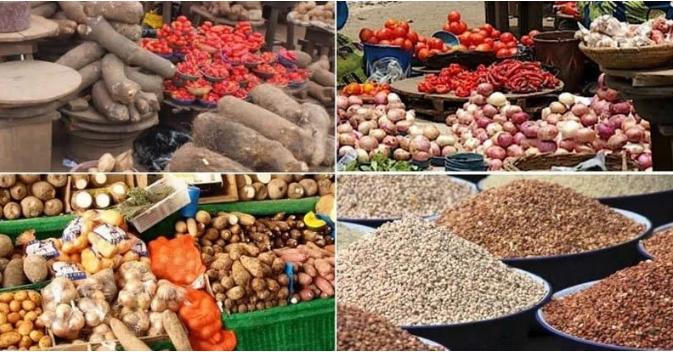
The ongoing unexpected outrageous hike in prices of goods and services stringed by inflation is not all new to our survival in Nigeria as we’ve learnt the hard way to navigate through hurdles and thorns to manage our lives. Simply put, things are at the moment not falling apart but in their right places – exactly where we want them to be. And by extension, we are reaping the seeds our predecessors sowed.
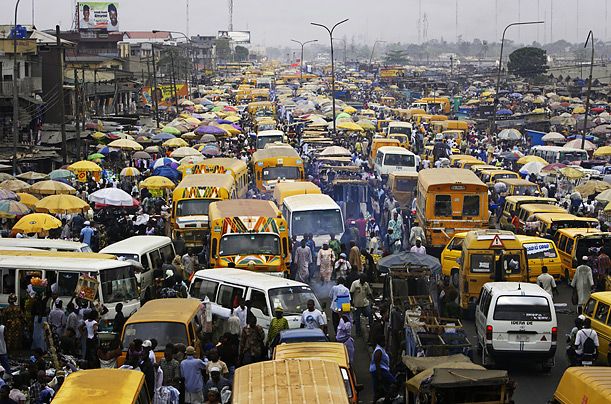
Contextualizing the global outrage on inflation unveils how our population crises are highly influential to the inflation catastrophe we are recently experiencing in Nigeria. Conversations around our incapacitated population have always been cumbersome. People keep reproducing to demonstrate their selfish reasons and associating them with religion, even when they’re fully aware of their inability to cater for their needs – a lifetime debate. Due to cultural and religious reasons, overpopulation is always quite a sensitive issue. Religious gatherings, cultural discussions and even governmental activities deliberately skip them to avoid chaotic scenes.
For reasons best known to the Nigerian government, the census that was supposed to take place a year after President Buhari assumed office in 2016 was unfortunately not prioritized in the list of essential development activities. There wasn’t even a convincing explanation for why it did not occur. I buy that the President was out of office as he severely fought to regain sound health. Still, his deputy, Prof. Yemi Osibanjo, was acting President until he recovered. He also didn’t give it the much significance it deserves. The worth of a National Census isn’t that shabby to escape their radar, as it assumes an unchallenged role in catalyzing the development of every society and nation-building.
Well, as it stands, many international sources now place the Nigerian population to have surpassed 200 million. But, referring to our precedents, the past administrations were unwilling to manage rapid population increase by corroborating it with needed economic, financial and health opportunities, among others. Instead, they were more or less obsessed with starting gigantic projects to leave them halfway done when leaving offices. Regrettably, from budgets, policies and programs among myriad activities, the population is often not carefully factored in.
At this point, explaining the statistical representations of our ailing population is almost unnecessary, especially since we are gradually failing to comprehend the magnitude of our plight in statistical terms. Presently, there exists a colossal number of youths that are desperately seeking jobs. Not only that, they are unemployed. Some are drug addicts, miscreants, and even kidnappers and whatnot. Their realm also includes people still hopeful for job opportunities, including a handful employed but in deep struggles, as they continue to shoulder countless responsibilities. This fraction is the largest among the demography of our country and, sadly, the most ineffective.
Then we have children, who contribute a fair share to the general population. A disturbing figure is that of out-of-school children due to their being part of the lower class and a lot who are quadrupling in number as insecurity is not slowing down in forcing them out of their communities. Visibly, most of them embrace street hawking and begging while others aimlessly litter the streets and little girls into forced labour. Picturing our population from a pie sketch, we also have the elderly, many of whom have delivered relentless service to the nation but have only been rewarded unkempt wretched feet as they search for their legitimate hard-earned pensions. And I don’t forget that we have People Living with Disabilities (PLWDs) who wallow in poverty. This is a fair elucidation of Nigeria’s population pie sketch.
Indeed, how inflation is ripping us apart in this country is an incredibly devastating experience. Development activities here have always journeyed long, and even more terrifying is that slow processes in everything aren’t much valued in today’s fast-paced world. As frightening as it appears, the race to the 2023 general elections is already painting a horrible scene for us. The primary elections recently concluded with alleged countless irregularities and corruption aren’t appealing. Hence, it becomes challenging to collate one’s thoughts regarding how life will likely be as we fight to forge ahead.
In a way, this current plight provokes the young minds who are already out of viable options to embark on deadly voyages to Europe. They risk their lives in search of a better life there. It is terrifying to know that the number of youths clamoring for these voyages includes graduates and those earning petty stipends and are well conscious of the dangers involved. However, they aren’t blameworthy for viewing their lives from angles of their responsibilities.
Many optimists, including myself, are hopeful about Nigeria’s transformation for the best. But, until alternative routes to utilizing our teeming population for efficient development are incurred, we’ll keep chasing the uncertain light at the end of the tunnel. Nigeria is behind schedule on capitalizing on effective strategies to breed an efficient population, opposing its self-anointed maxim of “no dey carry last”. We must reinvent this unfortunate wheel of inefficiency by adopting a knowledge-based economy model to harness the enormous potential of our massive population for the best.
Nusaiba Ibrahim Na’abba is a master’s student from the Department of Mass Communication, BUK. She is a freelance writer and researcher. She can be reached via nusaibaibrahim66@gmail.com.