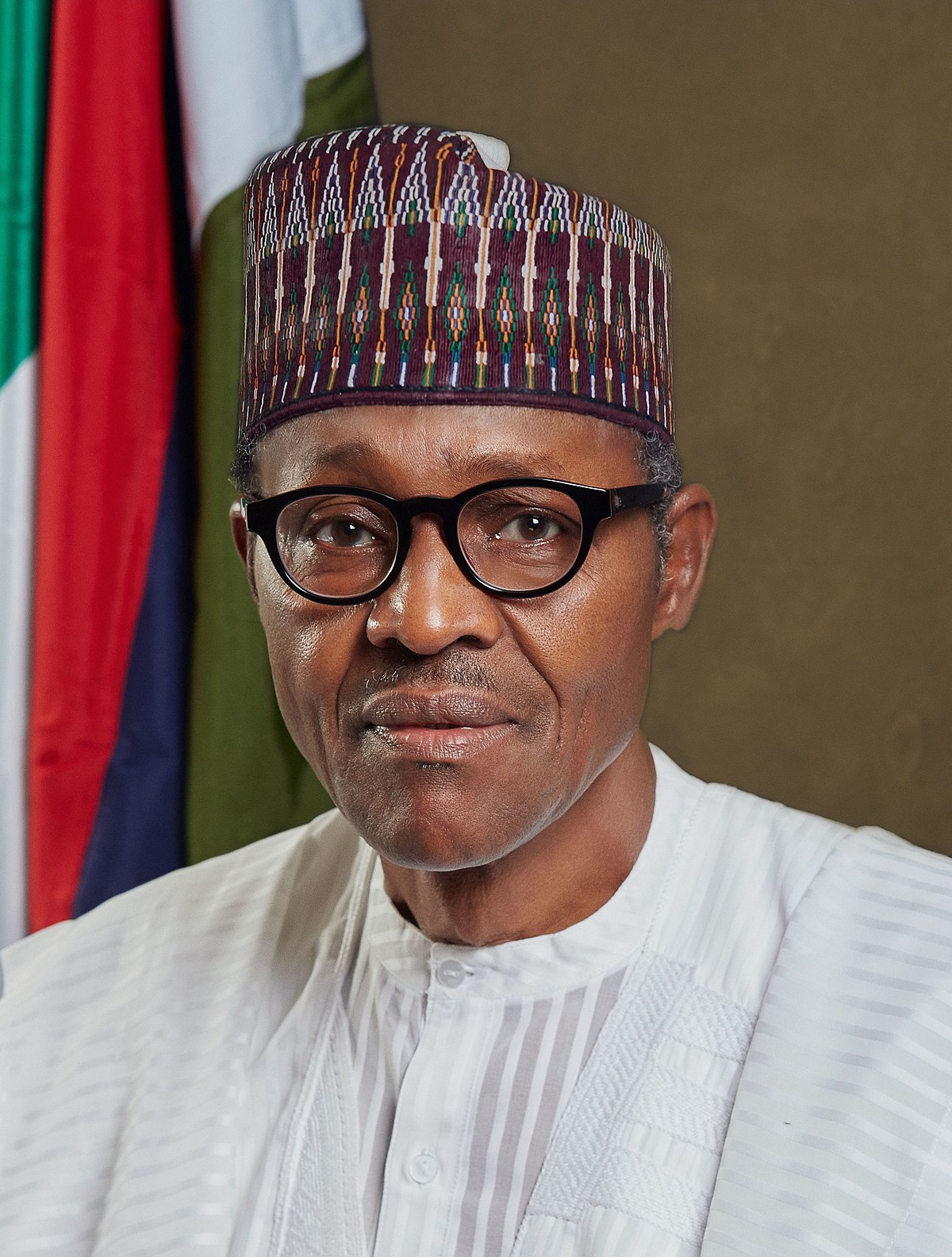
President Muhammadu Buhari

₦‎8000 palliatives: Tinubu should not repeat Buhari’s mistakes

By Kasim Isa Muhammad

I was quite gobsmacked when I came across the news that President Bola Ahmed Tinubu plans to compassionately alleviate the burden of subsidy removal on 12 million impoverished households by providing them with a meagre sum of N8000 for a period of six months. Initially, I had to rub my eyes in scepticism, questioning the authenticity of what I had just read. However, to my surprise, it appears that numerous media outlets have indeed reported this astonishing news.

Struggling to recover from what I scanned earlier, I stumbled upon a startling piece of news that left me exceedingly in complete disbelief. The gravity of the situation rendered me speechless for several minutes as I pondered the implications for the future of our country. Now, dear reader, I sense your anticipation to learn what I read. Brace yourself, for I came across an incredibly disturbing article in The Sun newspaper last Saturday.

In the midst of the unprecedented sufferings experienced by our nation, it was reported that the Senate and House of Representatives are planning to allocate a staggering N40 billion for the purchase of vehicles intended solely for the lawmakers inhabiting the Red and Green Chambers of the National Assembly.

The report further disclosed that a mind-boggling number of vehicles would be procured: precisely 107 units of the 2023 model of the Toyota Landcruiser for the Senate and an astounding 358 units of the 2023 model of the Toyota Prado for the House of Representatives.

Of course, this disclosure left me contemplating the priorities of our elected representatives and the ostensibly vast disconnect between their actions and the dire needs of our nation. As our country wrestles with countless challenges and its citizens endure untold encumbrances, it is disheartening to witness such extravagant expenditures.

The immense amount of funds allotted for luxury vehicles raises valid concerns in my mind about the judicious utilization of our collective wealth and the overall commitment of our lawmakers to serve the people’s best interests.

It is at moments like these that one cannot help but question the future trajectory of our country. The glaring contrast between the exorbitant spending on lavish vehicles and the pressing issues that demand urgent attention sends a disconcerting message about the priorities of our leaders. As a concerned citizen, I cannot help but wonder if there are better ways to allocate these funds and address the genuine needs and aspirations of our nation.

However, let me not dwell excessively on the shenanigans of our lawmakers, for Nigeria is a country that never ceases to stun with its myriad shocks and surprises.

My dear reader, allow me to transport you back to the discussion surrounding Tinubu’s poverty alleviation scheme. It is frankly baffling to comprehend how a mere 8K could possibly ameliorate the devastating impact of fuel subsidy removal in a country where people are already burdened with exorbitant prices for essential food commodities.

The current petrol pump price alone stands at nothing less than N500, and the cost of education in our public universities has experienced a drastic surge. In light of these distressing circumstances, one cannot help but reflect upon the efficacy of allocating a slavish sum of 8K to 12 million poor Nigerians over a period of six months.

Perhaps it is necessary to remind our leaders, as it seems they may have forgotten, that according to the National Bureau of Statistics (NBS), an overwhelming 84 million Nigerians are currently trapped in the clutches of extreme poverty, surviving on less than $1.9 per day. Instead of actively seeking lasting solutions to the multitude of challenges that plague us, it appears that Tinubu’s administration is perilously poised to repeat the mistakes of previous administrations.

We are all aware that the last government under former President Muhammadu Buhari implemented innumerable poverty mitigation programs, such as N-power, Survival Funds, and the National Youth Investment Fund (NYIF). However, it is worth questioning whether these initiatives have really succeeded in alleviating the pervasive poverty that plagues our country.

Similarly, the Nigerian Economic Summit Group (NESG) has also projected a distressing tide in unemployment, estimating it to reach a startling breathtaking 37 per cent this year. Is the N500 Billion not truly sufficient to empower our youth with viable and veritable skills?

Regrettably, it seems that our leaders have lost their ability to listen and empathize with the very people who entrusted them with power. Instead of prioritizing the well-being of those who elected them into office, they have chosen to inflict unnecessary hardships, seemingly oblivious to the devastating impact of their policies.

To illustrate, allow me, my admirable readers, to outline what N500 Billion can potentially achieve for our country.

First and foremost, education must be prioritized as it is essential for any nation’s progress. In Nigeria, the situation regarding education is particularly concerning.

According to a UNESCO report in 2023, approximately 20 million Nigerians, which accounts for 20 per cent of the country’s population, are not enrolled in school. This figure exceeds the total population of several African countries. In my opinion, by utilizing N500 Billion to build and renovate schools in both rural and urban areas, we can significantly reduce the number of out-of-school children in the country.

Furthermore, agriculture, being a vital sector of our economy, faces insurmountable challenges. By allocating a substantial portion of these funds to the agricultural sector, we can provide our farmers with adequate and affordable fertilizers, thereby enhancing the agricultural industry.

To incredibly uplift Nigeria, it is vital to focus on promoting rural infrastructure. By wisely directing the funds towards initiatives such as improving rural roads, ensuring a reliable electricity supply, and establishing cold storage facilities, we can also address issues of poor management, facilitate transportation of agricultural produce, and foster overall economic development in rural areas.

Additionally, our public universities are currently battling with insufficient funding, making education increasingly unaffordable for children from economically disadvantaged backgrounds. Will N500 Billion be sufficient to revamp many of these universities and address the pressing needs of students?

Finally, I would like to take this opportunity to address our esteemed President, Bola Ahmed Tinubu. Nigerians have high expectations of you, Mr President, as we believe you possess valuable insights into the economy. We eagerly anticipate your visionary ideas and urge you to wear your thinking cap. It may be early to pass judgment, but please do not disappoint us.

Kasim Isa Muhammad is an investigative journalist who contributes as a full-time journalist at both Neptune Prime and The Citizen Reports newspapers.

APC’s ineptitude, Nigerians’ suffering: Who is to blame?

By Salisu Uba Kofar Wambai

Atiku Abubakar made campaign promises about tackling border closure which seriously ushered hardships, especially in the North. He equally rolled out plans to liberate Nigeria from the shackles of foreign loans President Muhammadu Buhari immersed it into.

PDP is the party that has formidable and unnerving politicians who fought tooth and nail for democracy to thrive in this country. The party people know the long walk to freedom they walked, and their 16-year dispensation spoke for them. 

PDP mastered campaigns for the creditors to give us waivers, which prevented the country from such loan spells. They ensured Nigeria hadn’t been submitted to total external control like we see today with APC’s inexperienced and heartless dispensation.

PDP has think tanks that guide their foreign relations which made sure we did not accept in toto any development strategy which could undermine the welfare of citizens in the long run. Thanks to their inclusion of technocrats both from home and outside in their socioeconomic and political decision makings 

Atiku was an integral part of all these goodies mentioned; that’s why we suggested northern voters vote for him during the 2023 presidential campaigns. As a northerner who willingly gave power to the South from 1999 to 2015, I thought it was economically stagnant due to the selfish allocation of federal government projects under OBJ and GEJ. The North had expected Buhari to compensate the region for even development of the country.

However, Buhari seemed to have failed and was ignorant of why power was being rotated at the centre. He favoured the South in many aspects of development project allocations like railways, good roads, bridges and electricity. 

Most of the projects Northerners have been clamouring for, like Mumbila Power Plants, Baro Port, Ajakuota Steel Company, KKK gas pipeline projects, and roads linking states of the region, have not seen the lights of the day. And how could North continue to support power-sharing and shift these injustices, shabbiness and iniquity?

The southern PDP governors under Nyesom Wike led a mischievous campaign against their party candidate PDP to work for the southern presidency. They were not a bunch of idiots like some undesirable elements of the northern politicians who selfishly sold out the region for their egocentric notions.

Now that Nigerians are paying the price of what they had bought by bringing APC to power again, we must remind our people how to become politically smart next election season. And many folks from this part of the country cannot still see things as they are. Sad.

Salisu Uba Kofar Wambai writes from Kano State and can be reached via salisunews@gmail.com.

Lessons from Ganduje dollar videos

By Muhammad Muhammad Khalil

Since Dr Abdullahi Umar Ganduje’s dollar video surfaced on the internet, I have been keenly pursuing its happenings, from Ganduje’s fierce denial to the latest court order barring his arrest by the Kano Anti-Corruption Agency. I will highlight some critical lessons from this whole saga in this article.

1. Despite the former governor’s persistent efforts to dismiss the clip as bogus and doctored, many people still believe in its authenticity. In many people’s view, and thanks to the video, he is a greedy politician whose craze for money is beyond comparison.

Although Ganduje is ultra-rich, they say, he does not reject a fifty thousand naira kickback. Several stories are widely circulated demonstrating this. This shows us the importance of doing good and avoiding any act that can soil one’s reputation. Ganduje is Khadimul Islam to some people; to many others, he’s a dreadful, unrepentant bribe-taker.

2. The authentic or fabricated videos keep reminding us that what one holds hidden can be brought into the open and even grab the headlines. The fact that we do some terrible and disgusting things in the secrecy of our rooms shouldn’t make us feel we are wise; instead, we should never forget that nothing escapes the sight of Allah. The truth is that we sometimes fear creatures more than we fear the creator.

3. The same Ganduje who defied and has little or no respect for court orders is now desperately struggling to be shielded by the court orders he used to flout in broad daylight. Power is intoxicating.

4. Journalists who have the itch to blow the whistle on people in power should realise the danger of their boldness and prepare for what might trail their decision to speak out against corruption and corrupt politicians. It can cost one his dear life.

I don’t know if President Muhammad Buhari’s administration did anything to protect journalist Jaafar Jaafar from the threat to his life that forced him to seek asylum in the UK. The Buhari Mai Gaskiya claimed to have placed fighting corruption atop his priority. Wonder shall never end.

Muhammad Muhammad Khalil wrote from Kano. He can be reached via muhdmuhdkhalil@gmail.com.

Climate Crisis: Challenges for Nigeria’s new administration

By Nusaiba Ibrahim Na’abba

There are so many things on the table awaiting the newly inaugurated administration. With insecurity topping the list, there is a great task of realising viable and sustainable economic alternatives, developing a solid healthcare structure, and battling an ever-evolving overwhelming climate reality. The just-inaugurated administration will undoubtedly be challenged by many of what its predecessors fought. Addressing these issues of high public priority is an invaluable facet of the success of Bola Tinubu’s administration.

Unifying the country after a rigorously contested election is another challenge the incoming administration will face. The recently held elections have unveiled another dimension of disunity in this country. Unity is always an essential asset in any country’s development, which is why it is a pillar upon which societies thrive. Even before the new president was elected, the Muslim-Muslim ticket that filled the air was refuted by opposition parties.

Environmental challenges have dreaded many plans to succeed in Nigeria. Recently, because they are primarily multi-faceted. In 2022, they brought an unprecedented climate crisis in Nigeria and the world. Floods have devastated communities in Southern parts of the country, and many of the communities in the North were displaced. The inherent consequences of climate-related problems in our country are truly worrisome.

Over 12,000 farmlands across 14 local government areas were destroyed in Kano State due to heavy and torrential rainfalls. These figures were pronounced by the Kano State Emergency Management Agency (SEMA). In addition, several families were forcefully displaced from their homes.

In Jigawa State, many homes were destroyed by heavy rains and floods. Numerous families had to be dispersed across schools, serving as relief camps for the displaced. Some innocent lives were lost after being buried by the building, an effect of heavy rainfall. A substantial number of farmlands were said to have been destroyed too. These issues occurred while the President Buhari administration was nearing its end and political campaigns heightened.

The federal and state governments rushed to cushion the effects by sharing palliatives with affected communities. Philanthropists also played an essential role in supporting the victims affected. Many families had lost everything, including their only source of livelihood, farming. This challenge intensified living conditions for average Nigerians in these parts of the country as prices of commodities hiked and the cost of living rose significantly.

Now after a year, we’re back at it again. The Nigerian Meteorological Agency (NIMET) has started highlighting forecasts of what we would expect during this year’s rainfall season, and indicators are frightening; heavy rains and thunderstorms are the pointers. And because the foresight comes as a warning signal, many families in these areas are already baffled with unimaginable thoughts, picturing last year’s experiences.

Apart from heavy floods, the inconsistency of rainfall in the Northern part of the country is another climate wrinkle. If not managed with the right agricultural methodologies, the inconsistency of rain will only worsen access to food supplies. Policies of the just concluded government in terms of border closure and later ban on importing products like foreign rice have hit hard a large percentage of Nigeria’s population. Most average Nigerians have long relied on these foreign food supplies for survival. Even with the supposed increase in agricultural activities as the alternative induced by the Buhari administration, the prices are unbearable.

Heat is now persistent with the cut down of trees in the North. The severe effect has been felt by people, unlike heat seasons before. This year’s Ramadan season was barely scaled through because of excessive heat. By now, many are starting to realise the importance of building trees and the ills of cutting them down. Federal and state government initiatives at this stage in our lives must prioritise replanting of new and resilient breeds of trees in places set for infrastructural activities. Our experiences have highlighted that prior climate change initiatives in this respect are not enough.

Health problems are also being exacerbated as climate change continues to unravel. Continuous pollution consistently exposed Nigerians to various health hazards. Gigantic pyramids of waste in cities have polluted healthy air. In areas where the waste pyramids are later burnt down, people are forced to breathe in harmful substances that have long-lasting effects. More so, manufacturing companies in, for instance, Kano, have been hit with several allegations of releasing toxic substances after their production processes.

According to Wasteaid (2021), with no access to waste management services, one in 3 people worldwide have no choice but to dump or burn their waste. Open waste burning is a significant emitter of black carbon, CO2, carbon monoxide, and other harmful toxins. This explains the risks attached to indiscriminate waste generation and management.

The findings are vindicated by United Nations Environment Program (UNEP) 2021 in a study which identified that Nigeria produces more than 3 million tonnes of waste annually, and only 20 to 30 per cent is collected and disposed of. Uncontrolled wasted burning, which is one of the practices, contributes to deteriorating air quality in Urban centres.

In their recent publication this year, UNEP also states that in Nigeria, sachets have become increasingly widespread, especially in fast-growing cities like Lagos. Research shows that about 50 to 60 million used water sachets are thrown into the streets daily”. When you picture the whole of Nigeria in terms of this indiscriminate act, you know a bigger problem lies ahead unless necessary measures are implored. I have not forgotten about e-wastes that have found dwelling places in Nigerian cities.

I cannot possibly explore all the existential climate challenges within this single piece. On the one hand, the federal government is currently overwhelmed with subsidy removal, dollar instability and making appointments. On the other hand, at state/local levels, some governments a busy investigating the ills of just concluded administrations while others are trying to get a hold of the affairs of the states. Unfortunately, all these aren’t slow down the speech of climate-induced consequences.

In the southern part of the country, Nigeria has been fighting oil exploration problems which have disrupted livelihood. Floods have been a major occurrence in areas where oil is not being extracted. These challenges have to be creatively and carefully addressed.

Nigeria is blessed with enormous human resources capable of producing excellent ideas to combat some of these issues. As part of the government’s obligation to serve, it must consider accepting solutions from communities, creative youths, and start-ups. Many ideas can be supported with considerable investment to help the fight against climate-induced calamities.

Nusaiba Ibrahim Na’abba is a master’s student from the Department of Mass Communication, BUK. She is a freelance writer and researcher. She can be reached via nusaibaibrahim66@gmail.com.

When we thought we produced our best

By Muhammad Sulaiman Abdullahi, PhD

President Muhammadu Buhari has come and gone. It is believed that many Nigerians thought Buhari would be the best president of their lifetime. Even Baba Buhari himself assumed and pretended that he was the best. And he did his best; only that his best was not enough for Nigeria.

Baba accused all those before him, directly or indirectly, of mismanaging Nigeria. However, with all the accusations he heaped on others, Nigeria was technically and practically raped under his watch. It is even alleged that most of the suffering inflicted upon Nigeria and its innocent citizens was the handiwork of some of the closest associates of Buhari, including his family members. Some supporters claimed that his style was the best way to govern. They boasted that Buhari assigned competent hands to govern, and he never interfered. This assertion has many troubles, and I will mention only two.

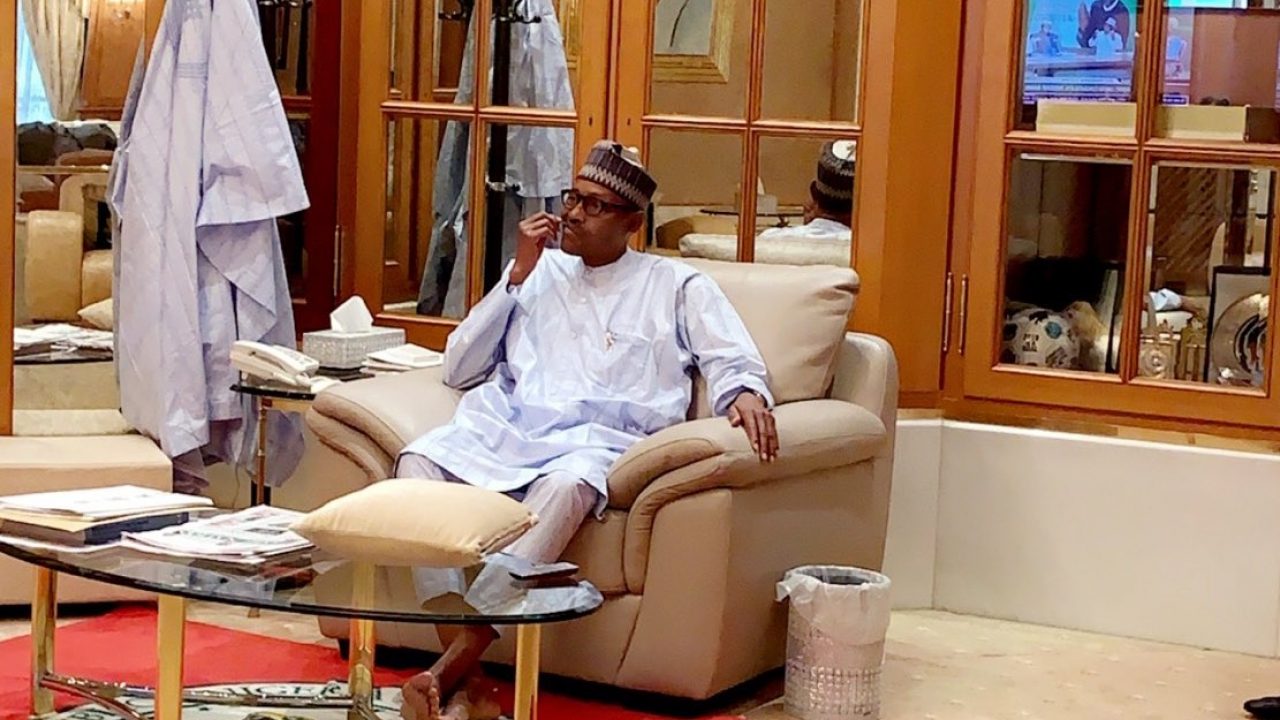
First, it is wrong for any leader to assume that his workers or those he assigns to do a specific job for him are perfect. They are not, and no one is. And even if assuming they are, he is responsible for watching, gauging, supporting and assessing them. Buhari didn’t do that. He was just there sitting, flossing and picking his teeth.

Second, some of those assigned some responsibilities and some ministries during the Buhari era were not competent. Look at what Adamu Adamu and Ngige and some of their close allies did to education. Look at what Hadi Sirika did to aviation. Look at what Godwin Emifele did at the Central Bank of Nigeria. These are just a few among many. One would wonder how did that happen under Buhari’s watch.

When Nigerians voted for Buhari in 2015, most believed Nigeria’s worries of 1960 downwards would just vanish. There is a widely circulated story of someone who sold his generator, considering that the electricity would be fixed and that the generator would be a nuisance to him and occupy space. Buhari disappointed him and all other Nigerians in the energy sector. The electricity tariff was hiked unprecedentedly, to the corrupt extent of not even giving notice. They hiked it at their will without recourse to anything or fear of anyone. This was Buhari’s era.

Furthermore, according to what many Nigerians believe, had Buhari not become a president, many fools and even non-foolish among Nigerians would have tagged him “The best president that never is”! He came and went, and his performance shows he isn’t the best.

However, no one will occupy that seat without doing good, willy-nilly. Buhari did some things, but I don’t think he did it consciously. His undoing and the power of the seat made it happen, as Baba didn’t seem to care then. I can’t mention a lot, but I know he tried not to influence the 2023 elections in favour of his party. That single action should be emulated by all those who come after him.

Also, some of our airports look majestic but at the expense of our roads. Some think that it happened due to his excessive love of foreign trips. He couldn’t bear the sinister looks of our airports as he happens to be a constant, consistent and regular customer there.

The health sector received almost total neglect during Baba’s era. He knew about it very well as he shunned all Nigerian hospitals because his government abandoned them. The former president enjoyed robust, healthy and developed foreign medical healthcare when Nigerians died in Malaysia and lack of genuine Capenol. He didn’t care, and neither did he ever talk about it.

Wallahi Nigerians suffered a lot under his leadership. Inflation has never been bad, like how it grew big during Baba. Another thing that Nigerians may live to regret is their high hopes for Buhari’s government, which became a curse on them. The ordinary people with whom Buhari sided and dined when he looked for the seat lost him completely. He later started accusing them of laziness.

His non-strategic accusations to all classes of people in Nigeria started in phases and kept on changing based on the position he found himself. 

The first phase was when he was aspiring to be the President. Then, he tactically sided with the masses and openly demonstrated with them on the streets. He yelled at the PDP government and accused them of various things, and his government multiplied all the suffering. The second phase was when he became the president, accused all the Nigerian politicians, and painted them bad in the eyes of all Nigerians and the world.

Lastly, in the final phase, when he consolidated his grip on the leadership, he turned and accused all Nigerians, especially the youth and the masses he sided with and voted for him. He accused them of being lazy and full of enjoyment as if he didn’t want to see anyone enjoying and smiling!

He governed as if he was doing Nigerians a favour while most of those who supported him were either dying of hunger, kidnapped or wholly disoriented.

Nigerians from the North and South graciously excused many of Buhari’s excesses, thinking he would do wonders. Today is only a few days of President Bola Tinubu’s government, but he has taken some decisive actions which Buhari’s eight years couldn’t do.

We didn’t have high hopes for Tinubu initially, but we foresee and pray that his government will be better and more beneficial to Nigerians than the I-don’t-care government of Baba Buhari.

Dr Muhammad can be reached via @muhammadunfagge (Twitter) or email: muhammadunfagge@yahoo.com.

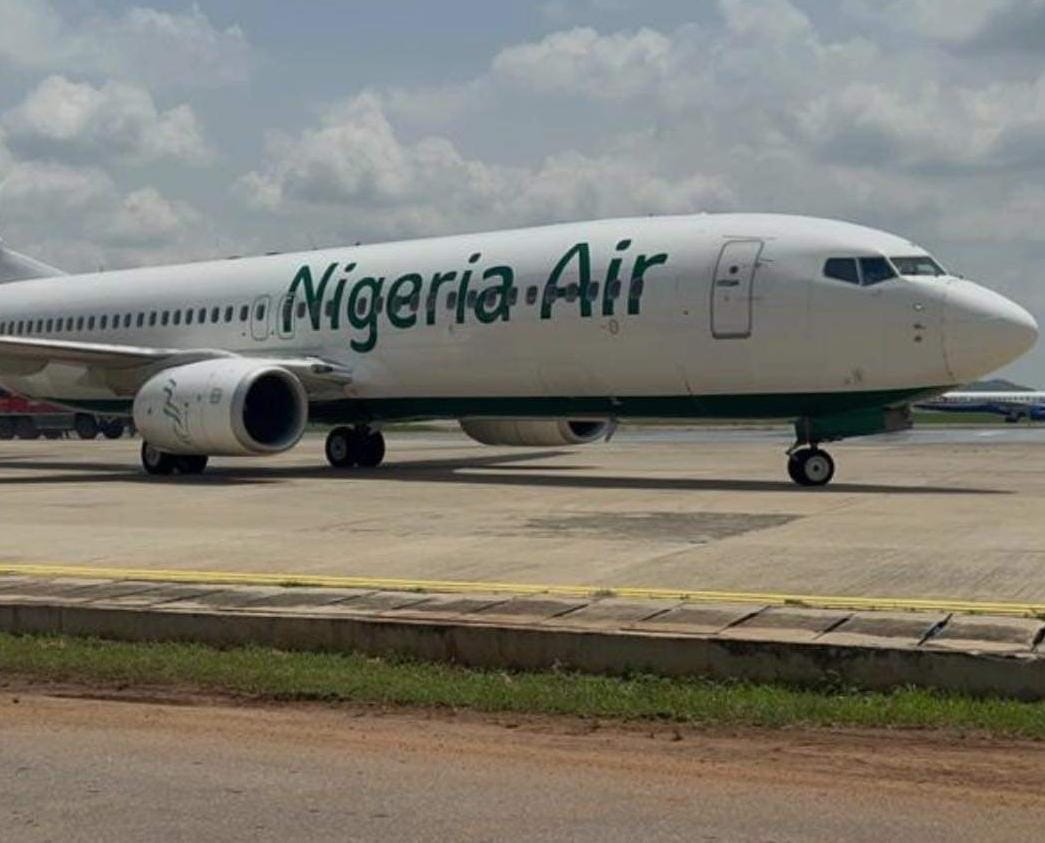
Nigeria Air: Omokri commends Buhari

By Muhammadu Sabiu
 
The Federal Government, led by President Muhammadu Buhari, has received praise from Reno Omokri, a former presidential spokesperson, for the starting up of Nigeria Air.
 
The sociopolitical pundit, who is also a fervent opponent of Buhari, made the statement while downplaying the accusations of the Nigerian administration over Nigeria Air.
 
Following the arrival of the Nigeria Air plane, Nigerians have been accusing the Federal Government of being involved in fraudulent activities.
 
Nigerians bemoaned it because it was said that Ethiopian Airlines was the owner of the aircraft.
 
 
“But Nigeria Air is a good idea. Even starting it with a wet-leased aircraft is an even better idea than starting it with a new one. If the government does badly, let us cane them with koboko. But if they perform well, we should be objective and praise them with the same ferocity, ” Omokri said.
 
 
However, responding to critics about the number of planes in the carrier, the former presidential spokesperson tweeted: “Emirate Airlines, that many Nigerians love to fly with, started off in 1985 with two airlines provided to them by Pakistan International Airlines.
 
“Today, they are thriving. If there is something to criticise, please sòrò sóké. But do not just criticise because your party is not in government. Ruga was a bad idea. Arresting Nnamdi Kanu was a wrong move. The Northernisation of our National Security Council was a horrible thing to do. And we criticised all of those.

A scorecard for Buhari 

By Mukhtar Jarmajo 

As President Buhari prepares to leave office the following Monday, reflecting on his tenure and his impact on Nigeria is important. When he assumed office in 2015, he came with the promise of improving security, revamping the economy and tackling corruption. While much is still desired, it is clear that he has made significant strides in achieving these goals.

On security, President Buhari’s administration has made considerable progress in the fight against insurgency, particularly in the country’s northeast region. The Boko Haram terrorist group has been significantly weakened, and the government has also made gains in the fight against banditry and kidnapping in other parts of the country. Although much work still needs to be done, it is clear that the foundations for a more secure Nigeria have been laid.

In terms of the economy, President Buhari inherited a challenging economic situation, with falling oil prices and a depreciating currency. His administration implemented a series of economic policies, including a diversification drive, the implementation of the Treasury Single Account, and the launch of the Economic Recovery and Growth Plan. These policies have helped to stabilise the economy and put it on the path to growth. While there is still much work to be done, the next administration will have a more solid foundation to build upon.

President Buhari’s administration also significantly tackled corruption, a major challenge for Nigeria for many years. The government implemented various anti-corruption measures, including establishing the Presidential Advisory Committee Against Corruption, launching the Whistleblower Policy, and prosecuting high-profile corruption cases. While corruption remains a major issue, it is clear that the government’s efforts have had a positive impact and set the stage for further progress.

Many challenges have characterised President Buhari’s tenure, but also significant achievements. As he prepares to leave office, it is clear that he has laid the groundwork for a more secure, prosperous, and corruption-free Nigeria. The incoming president will undoubtedly find things easier, given that many of the difficult decisions needed to make Nigeria great have already been taken. President Buhari will go down in history as one of the most tolerated presidents in the annals of Nigeria, and his contributions to the country will be remembered for years.

Jarmajo wrote from Wuse Zone 2, Abuja. 

The truth we owe President Muhammadu Buhari (2015 – 2023)

By Abubakar Suleiman

In a few days, President Muhammadu Buhari will be vacating the coveted seat of the president and will retire to his hometown Daura or Kaduna state. William Shakespeare reminded us in one of his sonnets that “like as the waves make towards the pebbled shore, so do our minutes hasten to their end.” It was like yesterday; Buhari defeated the then-incumbent president, Mr Goodluck Jonathan.

The sending of Jonathan back to his hometown, Otuoke, after his defeat in the March 2015 presidential elections was greeted with happiness, unbridled hope and unmatched optimism. Even lives were lost, and limbs were severed in the cause of celebrating the emergence of a ‘Messiah’ with the name President Muhammadu Buhari.

People were tired of ‘common stealing is not corruption,’ insecurity, the roadblocks by security forces and many other socioeconomic issues. However, the demeanour of President Buhari started manifesting after taking some months to form his cabinet. The long time taken to form the cabinet did not match the citizens’ expectations as the list was not majorly peopled by experienced and competent technocrats. And this signalled that the country is probably far from being an Eldorado.

However, the masses gave President Buhari the benefit of the doubt that he would rally the cabinet towards building a more secure, economically sustainable, prosperous country.

One of the pressing issues in 2015 was Boko Haram, which he faced headlong. Virtually all the local governments under their control were retrieved, and the insurgents became less organised, with cracks emerging among its ranks. ‘Tactical manoeuvres’ by Nigerian soldiers became a thing of the past, indicating that they have been more motivated with incentives and new armoury than what was obtainable under former President Jonathan. Checkpoints on many major roads disappeared, and there was seemingly no more stop-and-search at religious centres or places of worship.

When we are trying to have a deep sigh of relief, another type of insecurity – kidnapping and banditry – surfaced or upsurged in northern Nigeria. The insecurity reached a crescendo that a soldier was kidnapped within the perimeters of the Nigerian Defence Academy (NDA) in Kaduna state, and banditry became pervasive in Katsina, Zamfara and Niger states. The kidnapping of secondary school students also resurfaced. Travelling by road for socioeconomic activities became a life-threatening matter.

Furthermore, parts of Southwest and North Central states are not excluded from this kidnapping menace. Southeast also became a haven for a terrorist group – the Indigenous People of Biafra (IPOB). Just as many people deserted the Abuja-Kaduna road for the safety of their dear lives and to enjoy the goodies of the railway infrastructure, the big boys in town, the Boko Haramites, once again reminded us that they are still much around. They halted a moving train with a bomb; exchanged fire with the police officers onboard the train; killed many passengers, and shepherded dozens of persons into a thick forest.

True to his leadership style, President Buhari never deemed it necessary to address the nation on television. At best, his media foot soldiers only regurgitate or rehash previous press releases to console the masses and ‘assure’ them of Mr President’s commitment to solving the menace. Public perception of optics was never given a damn in most parts of his administration. He understands the power of silence amidst rancour or agitations, but sometimes this silence is not golden.

If one is to carry out a comparative assessment and scientifically conduct analysis of data, taking into consideration variables like the number of people killed resulting from insecurity, number of people kidnapped, number of people injured and number of people displaced from their homes and living in camps, it will be difficult to conclude that President Buhari is leaving a safer and more united country than he met it.

Furthermore, the major reasons for these drawbacks are the lack of taking the country’s diversity into consideration during appointments and the lack of synergy among the service chiefs and the officers in charge of other security apparatus.

A fair-minded person on infrastructure will give President Buhari a pass mark because he invested heavily in critical infrastructure. He continued projects he inherited and initiated spectacularly new ones. He built new railway networks and world-class airports, and dualised and expanded major roads.

In addition, bridges were built strategically to ease the movement of goods and services. The Ajaokuta-Kaduna-Kano natural gas pipeline was also a unique and futuristic project the administration initiated. There is indeed no diversification without investments in infrastructure. Plus, the Dangote refinery has also been strategically commissioned.

The administration recorded significant Executive Orders and signed many Bills into Act, especially the nagging Petroleum Industry Bill. It also gave local governments, states judiciary and legislature financial autonomy except for the greediness and arm-twisting of the Nigerian Governors.

Unfortunately, we did not get the “Nigeria Air” promised by the Minister of Aviation, Hadi Sirika. Agriculture was also given good attention and interventions from the Central Bank of Nigeria (CBN) and other financial institutions, thereby increasing rice production locally and making many farmers smile at the bank. But insecurity suppressed these achievements at some intervals.

Without making excuses for President Buhari, he inherited a not-so-impressive economy. Former president Jonathan’s subordinates literally stole and squandered monies meant for procuring arms; the insecurity necessitated by the Boko Haram insurgency is already biting the country’s meagre resources, displacing people and their economic activities, then oil prices in the global market nosedived from above $100 per barrel to as low as $38 per barrel. With oil being the primary source of forex, that was a big blow, and recession became imminent.

The country was trying to recover from these economic shocks, but the COVID-19 pandemic rare its ugly head and the global supply chain was distorted. Honestly, even the best team of sincere and brilliant economists will find it difficult to recover this economy amidst corrupt and weak institutions like ours.

However, Buhari missed some opportunities. He failed to deregulate the oil sector when the oil in the international markets was low. And a country recovering from economic shocks ought not to have closed its borders, no matter how noble the intention is. Local rice factories and production increased, but inflation took plates of food off people’s tables and crippled many legitimate businesses.

President Muhammadu Buhari gave Emefiele unfettered power in currency crisis management, but Emefiele enabled round-tripping between Naira and Dollar. And the conservative nature of the CBN’s fiscal and monetary policies was thrown into the gutters. There was no economic adviser to advise Mr President, as he doesn’t easily sack incompetent subordinates. Ultimately, he gave us a parting but bile gift – a cashless policy and cash crunch. This singular ill-thought-out and insensitive policy perished many small and medium enterprises and rendered many people poor.

The President enjoyed goodwill and was not painted with the corruption brush by his political friends and transducers. Still, it would be difficult if corruption charges were not placed at the doorsteps of some of his cabinet members, aides, and probably his family members post-May 29. After May 29, when Economic Financial Crimes Commission (EFCC) begins knocking and revealing the corruption under his watch, Mr President will realise how he must have been scammed or manipulated. Many aides would have taken to their heels due to corruption charges, while the clever thieves would be enjoying the spoils of the wars.

The incoming administration has much to learn from the successes and, most significantly, the failures of President Buhari’s administration. The Renewed Hope by President-elect Tinubu must hit the ground running by May 29th because hope is the only thing most Nigerians are holding onto, just like a drowning man clutching a straw.

Abubakar Suleiman writes from Kaduna and can be reached via abusuleiman06@gmail.com.

Buhari launches Dangote Refinery in Lagos

By Ahmad Deedat Zakari

Barely seven days before the expiration of his final tenure, President Muhammadu Buhari launched the long-awaited Dangote Refinery in Lagos. The newly commissioned refinery is the first private-owned oil refinery in Nigeria. 

The President was flanked by many dignitaries from within and outside Nigeria during the unveiling. He described the refinery as a ‘game changer’ for the country’s economy. 

“This clearly makes this event a notable milestone for our economy and a game changer for the downstream petroleum product market not only in Nigeria but the entire African continent,” He said.

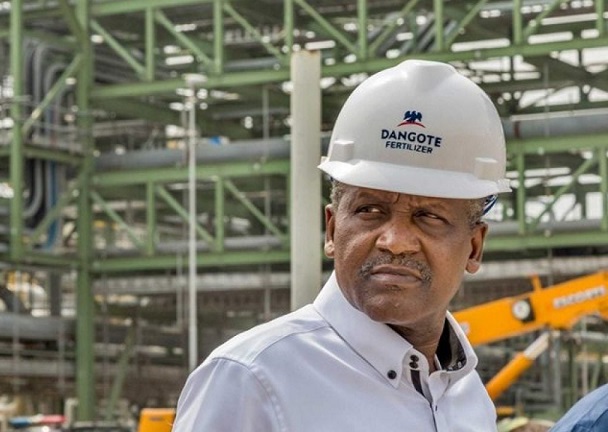
The accomplished businessman and owner of the refinery, Alhaji Aliko Dangote, gave the welcome remark at the unveiling ceremony.

He thanked President Muhammadu Buhari for his support and said he was his source of inspiration at times he felt like giving up. 

He also appreciated the Governor of the Central Bank of Nigeria, Godwin Emefiele, for ‘moving mountains’ in the course of the project. 

The billionaire also revealed that the first product of the $12 billion facility “will be in the market before the end of July, beginning of August this year”.

“Beyond today’s ceremony, our first goal is to ramp up production of the various products to ensure that within this year, we’re able to fully satisfy our nation’s demand for higher quality products,” he said.

The Dangote Petroleum Refinery and Petrochemical is the largest single-train refinery in the world and has a capacity of 650,0000 capacity a day.

Academic dream: My research, my citations, my h-index, and the “true impact”

By Prof. Abdelghaffar Amoka

Colleagues have been sharing their experiences as academics in Nigerian universities with several reactions. The essence is not to discourage people from going into academia but to know what lies ahead of you if you want to go into academia. Like most colleagues, I had no idea of the challenges in Nigeria’s academia when I was so eager to join. For example, I never knew the job is for 24 hours, and that promotion is based on research output you will fund from your pocket.

After graduating in 1999, I looked forward to being part of the academia. During my youth service in Kano, I visited the HoD of Physics, ABU Zaria, Prof I. B. Osazuwa, to discuss my “academic dream”. He directed me to the late Prof. N. I. Hariharan. I met him, and he advised that I should enrol for MSc. So, in 2001 on my way from Kano, I stopped over in Zaria, purchased the PG form, and left for Lagos.

As we were job-hunting in Lagos, I remember my friend and Brother, Yusuf Osafore, saying it appears I was not taking the job hunting seriously but was more concerned with pursuing a Master’s degree. My looking forward to becoming an academic was so apparent to people around me. Then, I eventually got hired in March 2005. It was a dream come true. I have finally joined the group of intellectuals. The “most revered” group in the society. A group of knowledge generators. A group of reservoirs of knowledge.

After a few months in the university, they revealed the reality of Nigerian academia. The fact that I had no prior knowledge of. There are, of course, viable ideas, but they die within the university walls because the political class isn’t interested in them. The ideas are published, but it is just for promotion’s sake. I paid N7,000 or so to publish my first paper in a Nigerian university-based academic journal in preparation for the next promotion to Lecturer II. These made me begin to meditate on “my academic dream”.

In 2007, I had the opportunity to visit ICTP for a two weeks workshop, and my interaction there revived my academic dream. Then, in 2009, I got lucky and left the country for my PhD, strengthening my revived “academic dream”. My joy knew no bounds when I published my first research paper in an Elsevier-indexed Q1 journal in 2011. From then on, the papers kept coming.

There are two publication options. You either publish in close access journals where publishers are paid for access to your research work, or you pay between $1,500 to $3,500 to publish as open access for everyone to have access. I remember spending some dollars in 2014 to publish the last paper from my PhD work in Elsevier’s Sustainable Materials and Products journal as open access. That money came from my salary in Norway.

We were told that research impact is based on the number of citations one has. Something they called h-index was brought to classify our research impact. I began to monitor my citations and h-index on Scopus, ResearchGate, and Google Scholar. I usually wear a smile on my face whenever I receive citation alerts. As the promotion period approached, I counted my number of publications and was excited as my number of citations grew. We began to use Scopus h-index to rate academics. Unfortunately, we get carried away so much that if you talk too much, we ask, “What is your Scopus h-index?”

The irony is that you look for money (either grant or personal fund) to do research and get it published in a reputable journal after rigorous reviews (reviewers work for free) and are excited for an additional paper to your credit. Brag that you have so many articles in indexed journals and get promoted for a peanut added to your salary. In Nigeria, you become a Professor to earn about 440 USD (N325,000) per month. You proudly go around with the title (Prof). Meanwhile, a multi-billion dollars cooperation makes money from your sweat and the knowledge you have laboured to create. And all that we are happy with are citation alerts, a growing h-index, and promotions that come with peanuts.

The best publication time is during our young age. As we grow older, our students take over the writing. Then, the university will ask why you are the paper’s first, second, or last author. They have got no idea how it was funded. The academic dream can truly be defined as spending our entire youth creating knowledge and paying a billion-dollar corporation to take it from us in exchange for career capital that you can then use to buy meaningless promotions from other exploited individuals.

Sometime back, I logged into the university network, and the research output of a senior colleague on Google Scholar was highlighted on the university webpage with thousands of citations and a high h-index. So I decided to follow the link to check mine. Mine was very much below his, but it wasn’t that bad. So then, I sat down and began to question the true impact of my research work beyond what Google Scholar has evaluated.

Do a mere citation of our publications truly translate into research impact? Research is global, but you should see your work impact your immediate environment. We have Professors with thousands of citations that can’t present an inaugural lecture, faculty colloquium, or even a departmental seminar; so, what is the impact of our research on our immediate community?

I tried to reflect on our impact, especially as Professors and Farooq Kperogi came to mind. I remember checking on him on Scopus when he became a Professor in the US. However, when I later reflected on his writeups on Nigeria’s sociopolitical scene and the healthy discussions he had generated towards repositioning the country, I began to realise that Farooq has made much more impact on Nigeria than many of us with a better presence on Google Scholar, Researchgate, and Scopus.

Let me introduce myself properly—a Professor of Physics specialising in dielectrics and high-voltage electrical insulation. I have 33 research documents indexed in Scopus and an h-index of 11, 13, and 14 in Scopus, Reseachgate, and Google Scholar, respectively. In addition, I have about 585 citations on Google Scholar. My published research articles are on high-voltage insulation. Still, the articles and the citations, put together, have not impacted our electricity network in Nigeria, which is on a breakdown spree. So, what, then, is my impact?

Universities are identified as keys to innovation, from developing new ideas to providing state-of-the-art facilities. Industrialists and managers of the countries engage them in keeping the workflow full of new ideas. But in Nigeria, our university system has been made the most insignificant institution that has been reduced to lecture rooms. We only publish to avoid perishing.

Everywhere in the world, academics are respected and heard when they talk. But in Nigeria, especially during the Buhari government, they are tagged as enemies to crush. Our universities were once places where policies evolved. Academics generated ideas that shaped the country. Discussions in academia are used to shape the policy development of our nation. The golden time of Bala Usman can never be forgotten. What happened to those intellectual discussions? Who killed it? We now chase appointments within and outside the universities, especially after we become ‘Professors’.

Nigeria has been messy for the last eight years, and universities are in the worst state ever. But the government of Buhari used eight years to run away from education stakeholders’ engagement. The political class are educated people with no value for the education of the people. The best gift that Buhari gave to the people that so loved him was to strangulate the public universities for the people. Rather than having a public engagement on how to salvage the situation he was well aware of before his appointment, the outgoing Education Minister, Adamu Adamu, described the backwardness that they have imposed on us as “self-imposed backwardness” and their idea of the solution is by approving the establishment of more substandard private universities in the North.

The incoming government of Bola Ahmed Tinubu needs to come in with a clean and open mind to engage the academia with sincerity. They should look at ASUU as partners in progress rather than enemies to crush. The solutions to our problems are right in our hands if we are willing to engage each other. On the other hand, academia needs to start looking beyond publishing, not to perish. We need to start thinking beyond journal publication impact that has no impact on our immediate constituency, Nigeria. We need to wake up and revive the golden days of Bala Usman on our university campuses.

©Amoka