President Muhammadu Buhari

Kaduna governor blames northern elites for region’s woes

By Uzair Adam 

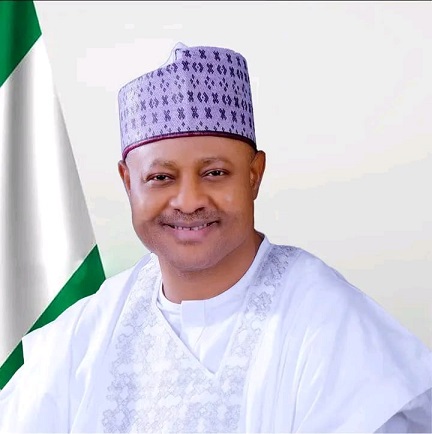
Kaduna State Governor, Uba Sani, has said political leaders from northern Nigeria have failed the region and should collectively apologise to the people for decades of underdevelopment and neglect.

Speaking during an interview with Trust TV, Sani stressed that criticism of government policies should be driven by the genuine interest of the people and not by political ambition.

“Every democracy must allow criticism, but it must be constructive, and in the interest of the Nigerian people. That’s what we did as activists — not because we wanted power,” he said.

He noted that those who have held public office in the last two decades — including himself — bear responsibility for the challenges facing the region.

“Anyone who is from northern Nigeria and held a political office in the last 20 years, we all need to look at ourselves in the mirror and apologise to the people of northern Nigeria. We let them down,” he admitted.

Reflecting on his own time in office, the governor said the region’s problems stem from long-standing structural and economic neglect.

“I’ll say it here today — all of us; I was a senator in this country, and the problems of northern Nigeria didn’t start two years ago,” he added.

Sani also criticised the outcomes of the massive social intervention programmes under former president Muhammadu Buhari, saying they failed to uplift the region due to deep-rooted financial exclusion.

“Buhari spent hundreds of billions on social interventions,” he said. “But the North became poorer even after that because 70% of the population, especially the masses, were completely financially excluded.”

He pointed out that anyone who had served as a senator, minister, governor, or vice-president from the region over the past 20 years shares in the blame.

The governor cautioned politicians against misleading the public and lauded honest critics who maintain integrity and a people-first approach.

“We must not deceive the people of northern Nigeria. We must not mislead them. I’ve no problem with people criticising the government — people like Dan Bello Galadanchi. 

“Those individuals have the moral right to speak. But those who contributed to the rot and now claim to have repented — I think that’s wrong,” he said.

_________________________________

Muhsin Ibrahim, PhD

Institute of African Studies

University of Cologne 

Blogwww.muhsin.in

From Baba “Go Slow” to Baba “Going Very Fast” 

By Bilyamin Abdulmumin, PhD

Buhari was largely viewed as reluctant, whereas Tinubu engaged in tit-for-tat responses. Tinubu has demonstrated decisiveness on many occasions. For instance, when there was a public outcry over his Kano ministerial nominee, Maryam Shettima, he swiftly replaced her with Dr. Mariya Mahmoud, who enjoyed greater public approval. Buhari likely would have retained Shettima.

A few months after the ministers assumed office, the Minister of Humanitarian Affairs, a ministry infamous for waywardness—was caught in multiple scandals. In a swift response to public outrage, Tinubu suspended Betta Edu, and from all likelihood, she has gone for good.

No situation highlights the difference between Tinubu and Buhari more than the ongoing political crisis in Rivers State involving Governor Fubara and his former benefactor, Nyesom Wike. While Buhari would have turned a deaf ear to the situation, Tinubu reacted decisively. Those who once criticised Buhari for his passive leadership should now give a standing ovation to Tinubu’s stern control and decisiveness.

Nevertheless, Tinubu’s speech during the emergency declaration was notably one-sided. He sided with his FCT Minister, Nyesom Wike, heaping blame on Fubara for demolishing national assembly structures and failing to address pipeline bombings—while completely ignoring Wike’s role in the crisis. These reinforced accusations of federal government highhandedness in Nigeria’s most populous states.

Some argue that the federal government is involved in the debacles affecting Rivers, Lagos, and Kano due to its fear of losing these key states to the opposition. However, as the APC states, the allegations of internal conflicts in the Lagos government do not hold up. Since the state is governed by the ruling party, it seems to be just another political facade from the federal government.

A major issue for Tinubu’s camp is their position on Fubara and Uba Sani. If they oppose Fubara, they should also oppose Uba Sani. You cannot support Wike in Rivers while opposing El-Rufai in Kaduna. The two scenarios bear a striking resemblance.

Reflecting on how Nigerians criticized Buhari for lacking swiftness and displaying full control as the Commander-in-Chief of the Armed Forces of Nigeria, it is fair to say that Tinubu has now met that expectation.

Bilyamin Abdulmumin, PhD wrote via bilal4riid13@gmail.com.

A call for a presidential library in memory of Alhaji Shehu Shagari

By Bilyamin Abdulmumin, PhD

On the 25th of February, the former president Mallam Alhaji Shehu Shagari posthumously celebrated his 100th birthday. To honor this significant occasion, his grandchild, Bello Shagari, wrote him a letter in heaven, where he now resides, inshallah.

In the letter, Shagari told his grandfather the entire story he had missed during the seven years since he left. He perhaps started with what would have concerned him the most: Muhammadu Buhari completed his eight-year tenure but never fulfilled the promise to honor him, even though a similar gesture was extended to MKO Abiola for recognizing June 12 and renaming the Abuja stadium after him, as well as completing a mausoleum for Dr. Nnamdi Azikiwe.

The letter continued: Bola Ahmed Tinubu has become the President of Nigeria, but surprisingly, Nigerians are now more patient with the burden of reforms than they were before when they celebrated coups.

Another piece of information shared in the letter was the launch of General Ibrahim Badamasi Babangida’s autobiography, a book surrounded by controversies on all sides. Interestingly, the book cleared Shagari of corruption.

The objective of this article was the Presidential Library the Shagari family is considering, as mentioned in the letter. The family hopes to achieve that by converting his decaying house into a historical monument.

Just before that birthday, a fatherly figure sent me a viral video of an old house belonging to Shehu Shagari, which had fallen into disrepair. The video was interestingly captioned with a suggestion: converting the house into a presidential library. The viral video may have already reached the Shagari family, who might have already contemplated it.

I think that so far, the only official presidential library we have in Nigeria is the Olusegun Obasanjo Presidential Library (OOPL). The complex is described as a mini village, featuring an open-air amphitheater, an auditorium, a hotel, an amusement park, a wildlife park, an observation point, restaurants and bars, a Jumu’at mosque, and of course, a church.

I was surprised to learn that OOPL has a Jumu’at mosque. This highlights not only the size of the village surrounding the library but also the diverse local and international users.

Ultimately, a promising archive of this significance—a repository of presidential documents, a tourist attraction, and an academic center—stands as a proud monument not only for a specific state or region but for all of Nigeria.

As the only democratically elected president of Nigeria’s Second Republic, the call to preserve his legacy for future generations cannot be overstated. Dear Nigerians, in memory of Alhaji Shehu Shagari, let’s make this dream a reality.

Buhari, El-Rufai, Amaechi absent at APC NEC meeting

By Abdullahi Mukhtar Algasgaini

The ruling All Progressives Congress (APC) leaders gathered at the party’s headquarters in Abuja for the National Executive Committee (NEC) meeting.

Armed security officers, including soldiers, in collaboration with other security agencies, barricaded all roads leading to the venue on Blantyre Street. Vehicle and pedestrian movement around the area was restricted, and journalists were denied access to the venue. 

However, APC spokesperson Felix Morka released a list of accredited journalists for the event on Wednesday morning.

Among those who arrived early for the meeting were members of the National Working Committee (NWC), state party leaders, former Zamfara State Governor Abdulaziz Yari, Minister of Budget and National Planning Atiku Bagudu, and Deputy Speaker of the House of Representatives Benjamin Kalu.

Governors from Edo, Benue, Ondo, Ekiti, Kaduna, Jigawa, Nasarawa, Yobe, Niger, Lagos, Kogi, Ogun, Imo, Deputy Governor of Ebonyi, and former governors of Kogi, Kebbi, Niger, Zamfara, and Plateau also attended.

Notable absentees at the NEC meeting included former President Muhammadu Buhari, former Kaduna State Governor Nasir El-Rufai, and former Rivers State Governor and ex-Minister of Transport Rotimi Amaechi.

Party leader, President Bola Tinubu, Vice President Kashim Shettima, Senate President Godswill Akpabio, and Speaker of the House of Representatives Tajudeen Abbas arrived at the meeting around 12 PM. The party’s national chairman, Abdullahi Ganduje, presided over the meeting.

This was the first NEC meeting since Tinubu assumed office as president in May 2023, following a party high-level meeting held at the Presidential Villa in Abuja.

Some party stalwarts, including El-Rufai and former Deputy National Chairman of the APC Salihu Lukman, have expressed concerns about the ruling party’s lack of internal democracy.

It’s exactly 16 years since I joined the deaf community

By Ibrahim Abdullahi

Tuesday, December 3rd, 2024, commemorates the 32nd International Day of Persons with Disabilities celebration worldwide.

On this very special day, several celebrations of the International Day for Persons with Disabilities will take place in different parts of the world, making it a worldwide event. 

However, for others, it is a historic occasion. This may be the first time they celebrate the day; this could be because they have recently joined the community of people with disabilities due to illness, accident, or other reasons.

 Many thanks to former Nigerian President Muhammad Buhari and the individuals involved in the tireless and backbreaking efforts to pass and implement the Disability Bill into Law 2018, which has never been in Nigeria’s history since its independence.

I want to remind us that DISABILITY is not a curse or disease. It is a condition that can be rehabilitated depending on the type of disability one is struggling with. There is always ability in disability. We should not be discouraged!

Thanks to those who, in some way, took time to celebrate with us and the good people of Nigeria and Africa in general for witnessing this special day with us. 

The world stands still for us to salute our courage and fortitude to triumph over challenges we overcame and the ones coming our way. The world celebrates our abilities despite our disabilities.

We live in a world where change has become a constant basis of our individual and collective societies. In this advanced technological modern period, technological wonders appear at regular intervals, and our lives as members of particular societies regarding persons with disabilities are clearly different from those of those without disabilities. This requires inclusion to reshape our community. 

Ending discrimination, injustice, and humiliation against people with disabilities is essential. We should embrace diversity in all its forms. Tolerance and accepting our differences are important; we must be recognized as humans. Let us unite to improve our society, Nigeria. Some scholars say that everyone is disabled in one way or another, and I agree. 

Happy International Day of Persons with Disability, everyone. 

Ibrahim Abdullahi can be contacted via ibrahimbsw23@gmail.com.

Nigerian predicament: In search for the headway

By Bilyamin Abdulmumin, PhD

Nigerians appeared to have tried several options without a glimmer, so the option to try the youth is now gathering momentum. This call comes at the heels of the ten days of the recent controversial protest. Two other options were weighed during this protest: military takeover and alliance with Russia.

 Nigeria’s (or even African) history didn’t support the clamour for a military takeover. In the 64 years since Nigerian independence, military rule (according to my arithmetic) lasted 31 years, but at best, the military—once seeming the panacea—didn’t proffer any solution.

In another desperation to find the nexus, some protesters fly Russian flags. One interpretation of this antics is that they want Nigeria to cut any ties with the U.S. and most of Europe by proposing a shift of alliance to Russia. According to this argument, Western economic policies haven’t benefited Nigeria, so perhaps a different geopolitical alignment will.

However, aligning with Russia, an equally extreme approach, is not guaranteed to yield better outcomes. Has this group of protesters heard about the Scandinavian Economic Model? This model seeks to strike a balance between the capitalist extremes of the U.S. and the state-centred economies of Russia, offering a suitable middle ground for us. Instead of Russian flags, these protestants might have flown those of Sweden, Finland, or Denmark.

The search for a better headway began in 2015 when Nigerians, for the first time, voted for a leader based on integrity and record antecedent, putting aside money, politics, and tribal loyalties to some extent. However, by the end of President Buhari’s first term, the public began to have second thoughts. After his two terms, something unthinkable happened: many staunch supporters turned critics, and now, a year into Tinubu’s presidency, the failure of seasonal veterans is sealed, hence fueling the growing clamour for young leaders.

This urge for youth takeover is a more realistic option. The youths have become tired of being used and “dumped.” given that most of those who vote are youths, they now want to take a leading role by floating a political party exclusive to the youth.

The youth proponents argue that the youth have energy, time, and health. To boot, youth leadership is characterized by pressing the button; their hands are always close to the button, just waiting for a slight opportunity to press it.

This argument came to the forefront during f-PMB leadership, when he appeared to be going too slow, hence nicknamed Baba go slow; one of my friends opined that Nigeria then was in dear need of young leaders’ vitality, speed, and urge to get us out of the mud. According to my friends, a young leader would have made several decisions faster in tune with the situation and public yearning.

However, there is a crack in the foundation; one problem with youth is unity and cooperation; we always find that we want to help fellow youths whenever the need arises. Several youths aspire to different positions in this country, but the first people to boycott them are fellow youths; it will be their fellow youths who begin to mock them. This is a similar dilemma the women face. Women worldwide decry exclusion, but when a fellow woman tries to compete with men, it would be the fellow women that bring them down. This internal counterproductivity must be addressed for the current movement to get hold.

In addition, those who side with veterans criticize youth leadership with haste, which often leads to regret; this category argues that sound decision-making comes from experience—something older leaders have in abundance. They believe leadership is a process, not an event, and that wisdom is forged through trial and error.

 By and large, if the current movement sees the light of day, to slow down the haste and reduce mistakes, please let the old guards deputize the new crops.

Escalating drug prices in Nigeria: Post-subsidy removal

By Abdullahi D. Hassan

Nigeria is described as the most populous black nation in the world, with over 200 million inhabitants, Africa’s biggest economy, and endowed with variant mineral deposits to improve the living standards of its citizens. Yet, the country is bedevilled by gross corruption. Poor governance, ethnic tension, and abject poverty threaten integrity and sovereignty.

Even though, in the past, Nigeria witnessed serial military rulers, The nation transitioned to democracy in 1999. Since then, Nigeria’s leadership has emerged; leaders have been elected from different platforms and regions. Thus, the problems lingered; most elections were marred by irregularities, political interference, and power tussles from one inch to the next.

The political parties adopt the concept of rotating power between the north and south to accommodate the plural ethno-religious groups in the country. After the two tenures of Muhammadu Buhari. Bola Tinubu was nominated by the All Progressive Congress (APC). Amidst serials of allegations labelled against him by the opposition to hinder his andidacy, The bulk of Nigerians were enthusiastic about the level of experiences and transformation built in Lagos from 1999 to 2032.

On May 29, a new Nigeria’s president, Bola, was sworn in. In his inauguration speech, he made a striking remark on Nigeria, mentioning, ‘Subsidy has gone, the controversial fuel subsidy scheme. Four decades of financial assistance were institutionalised in the 1970s by the government to minimise the excessive cost of fuel (Premium Motor Spirit) to consumers and affordability to average citizens. Within a week’s time, the prices of basic household items, transport fares, and electricity began to rise at a high pace. Thus, fuel subsidy is the direct government intervention for the common man that benefits directly, without an odd process. Subsequently, the price increment affects the pharmaceutical industry acutely.

In recent months, patients from economically deprived backgrounds with terminal illnesses and diseases have been on recommended drugs and life-support medications. They are exposed to the brunt of fuel subsidy removal principles. Patients with asthma, diabetes, cancer, hypertension, and sickle cell diseases find it hard to afford medications at exorbitant prices. Due to financial hardship, inflation, and 1000 per cent hikes in drug prices.

GlaxoSmithKline (GSK), a British pharmaceutical and biotechnological company, withdraws from Nigeria. After 51 years of operation, The pharmaceutical firm is known for producing effective drugs, anti-biotics, anti-asthma, anti-malaria, allergy relief, painkillers, pain cream, and nasal decongestion. According to the report by the International Centre for Investigative Reporting (ICIR), GlaxoSmithKline Consumer Nigeria faced a setback in sales of N7.75 billion ($9.83 million) from N14.8 billion last year. GlaxoSmithKline’s existence leads to a drug hike, patients being unable to have medication and an increase in fake drugs. Similarly, GSK faces challenges from the high cost of importation of active pharmaceutical ingredients (APIs), a lack of steady power supply, and the depreciation of the naira against the US dollar.

According to the National Bureau of Statistics (NBS), the value of pharmaceutical products imported into Nigeria rose by 68 per cent to N81.8 billion ($99.1 million) between July and September 2023. The reports revealed that most of the drugs were imported from China, India, the United States, France, and Germany.

From the price survey across the country, the drugs were selling: asthma inhalers from N4,000 ($4.86) to N12,000 ($14.57), hypertension drugs from N10,000 ($12.14) to N20,000 ($24.28), augmentin tablets from N6, 000 ($7.28) to N24, 000 ($29.14), and Glucophage from N3, 800 ($4.61) to N6, 200 ($7.53). The prices vary between cities and regions.

David Uja, 63, a retired army officer frail from prostate cancer, undergoes chemotherapy for two sessions. Each cost him $100. She said, “For almost two months. All the prescribed drugs I used have already expired. The little pension received from the government is not enough to buy medicines at a high price. The economy is bad for us; people battle deadly sickness.”

“After I complained to my doctor, who relocated to the UK, Thanks to him, he sent me an Orgovyx tablet via courier, an expensive drug over $400, said Mr David.

Dataphyte reports that in 2021, only three per cent of the Nigerian population will have health insurance. Despite the guidelines of the National Health Insurance Scheme (NHIS), it is mandatory for Nigeria to benefit from the insurance. Public servants have smooth access to it. An employer will contribute 10% of the monthly basic salary, while the employee contributes 5%. The insurance covers the contributor, spouse, and four biological children less than 18 years old. The current monthly minimum wage is $44.45. Technical non-government workers are denied access to health facilities and medication.

In October, the Central Bank of Nigeria lifted the ban on 43 items after 8 years to allow access to foreign exchange and import-listed goods in the country. Never, pharmaceuticals and medical essentials are excluded from the list.

Interestingly, oil is the mainstay of Nigeria’s economy. Even so, the country has remained poor, with its citizens living below the poverty line of $1 per day. Nigeria has been nearly six months without a fuel subsidy. The majority of Nigerians are unable to afford standard health service delivery. These led to fast and quick deaths among the vulnerable. Others reside in rural areas that lack the means to buy drugs at a high rate. Alternative to traditional medicines.

Therefore, deciding on traditional medicine, given its low cost of purchase, Such medicine lacks a scientific approach, and most traditional doctors determine the nature of an ailment by mere observation. Outwardly of any examination and sometimes depend on spiritual healings in order to detect the course of sickness. These have made life more difficult in a nation with a life expectancy of 53.87 years.

Abdullahi D. Hassan is a freelance journalist and writer from Abuja, Nigeria. His journalistic and literary pieces were published in Daily Trust, The Guardian, Triumph, Politics Today, The Daily Reality, and Kalahari Review.     

Rarara: Loyalty for sale

By Bilyamin Abdulmumin

When the former president Muhammadu Buhari’s praise singer Dauda Adamu Abdullahi Kahutu (Rarara), held a media conference some time ago, he stirred up the hornet’s nest. A press conference that initially appeared to lament about being sidelined in the current government ‘that they work hard to enthrone’ took an unexpected turn. Rarara would veer off the course to make damning allegations about the administration of his former boss. 

One of these damages, which sent shockwaves in social media, was that President Buhari did not leave the office until he brought every part of the country to a grinding halt, stating, ‘sai da ya yi dama-dama da kasar nan’. A journalist immediately posed the question that many Nigerians would be wondering: You were in the administration for eight years but haven’t raised a finger until now. Why? Rarara’s response was typical; he claimed he had been hopeful that something positive would happen, so he remained aloof during the eight-year tenure. 

However, sceptics, who don’t take things at face value, could argue that the president had an eight-year mandate. Within those years, how long would have been enough time for Rarara to raise the alarm? This was not to mention the apparent romance Rarara had had with the government during those years. This reminds me of one scandal that occurred during the Goodluck Ebele Jonathan (GEJ) government, and upon the pressure from the public, GEJ appeared determined to leave no stone unturned, so he gave two two-week ultimatum to the committee he set up to finish the investigation to bring the culprit to book.

However, to the most awe and shock, the person indicted for corruption would join the then-presidential foreign tour immediately after the order. A typical case of saying something, but body language says another. When considering the complete picture of the scenarios, the questionable timing and an unconvincing response led almost everyone to dismiss Rarara’s claims with a wave of the hand.

Rarara also launched another salvo, asserting that the 100 days of Bola Ahmed Tinubu were better than the entire eight years of Muhammadu Buhari. While the general view is that Buhari didn’t meet the messianic expectations set for him, drawing a parallel between eight years and 100 days for two different governments is like judging a sprinter’s performance in the first few meters of a marathon. For Rarara to make this shallow comparison, he must be among the Nigerians who thought 100 days was enough for the government to make substantial development. Ever since the United States president, Franklin D. Roosevelt, coined “first 100 days”, the gesture kept going wild; Nigerians have since imported and made it a ritual.

Because the mainstream media has amplified it and become embraced by the public, the newly elected Nigerian officials have become desperate to show that they could lift Zuma rock in the first 100 days in office. Assuming the new government has no serious court litigations to contend with, and the previous administration has little influence on their government, when did the busybody officials finish digesting the thousands of pages of the transition document handed over to them to decide on the administration trajectory? It is even the previous government budget that is already running. When they started to make their own, when were the projects conceived and implemented and matured for the public’s admiration? The speed at which a project is untimely executed to impress the public would go down the heel with double the speed.

In another arsenal that Rarara unleashed, he claimed to have contributed more to Buhari’s success than Buhari did himself. Following the historic dethronement of the incumbent in 2015, people pondered on the key figures that played the most significant role in paving the way for this landmark event: Rarara, President Buhari, and the Card Reader. Including Rarara in this list is a testament to his significant contribution to President Buhari’s success. However, that is not the complete story. All successful people have a tale to share; one crucial factor that defines them is consistency. They persistently push forward until circumstances align for success. So, in that moment of triumph, who rightfully claims the bragging rights?

Two theories were put forward to explain Rarara’s controversial media conference. One theory suggested that Rarara was acting based on the consent of the current administration, an indirect way of informing the public about the status quo of the country they inherited. Masses were already a block of ice waiting for an opportunity to rupture, no thanks to the ever-increasing prices of goods and services. This gave the ruling APC a conundrum: Should they give themselves excuses by condemning the previous administrations, or should they avoid self-sabotage and keep quiet? Therefore, Rarara, lacking a political appointment but commanding a Northern audience, became a strategic mouthpiece. This theory is plausible enough because, beyond the surface, the government could employ several manoeuvres to shift the public’s focus during hard times to avoid citizens’ wrath. 

The second theory shared by many, including Prof. Abdallah Uba Adamu, was that Rarara is a typical gold digger; his loyalty is not through thin and thick. He has consistently known to forsake one boss at a time of scarceness and identify with another where the abundance is emerging. From praise songs to invective ones; from Saraki Sai Allah for Shekarau to Malam yayi rawa da alkyabba, from dawa ta bare for Kwankwaso to Tsula tsilla tsilla, from uban Abba for Ganduje to hankaka.  But despite that, the nation was surprised to wake up with Rarara’s latest bombshell.  Because Rarara seems to have gone aboard when it comes to Buhari and his government, he goes all out against the critics of Buhari not only in his songs but also in several interviews he offered. 

As Rarara now courts new relationships with incumbents like Nasir Yusuf Gawuna, Dikko Umar Radda, or Bola Ahmed Tinubu, caution is advised. His track record of shifting loyalty raises questions about the depth of his commitment. These figures and their supporters should be wary of potential shifts and assess the sincerity of the newfound alliances.

Bilyamin Abdulmumin wrote via bilal4riid13@gmail.com.

Public Universities: the FG’s new revenue generation goldmine

By Prof. Abdelghaffar Amoka

The Academic Staff Union of Universities (ASUU) has been in a battle with the Federal Government of Nigeria over the funding of the public universities. The facilities that made our universities to still have a semblance of a university were products of ASUU strike. ASUU was so passionate over public universities funding to the point that the public began to think that such funds, when released, are paid into ASUU’s account. Even some journalists that are supposed to be properly informed shared in the ignorance or misinformation.

You read headlines like “FG releases 2 billion naira to ASUU for university funding”. ASUU pursued funding at the expense of its members’ welfare. The battle has been on funding to an extent that the younger generation of academics began to wonder why their welfare is not at the top of the union’s demands. The consoling words from our veterans have always been: You get true fulfillment when you have an ideal working environment.

The battle took a new dimension last year, during the reign of the ex-president Muhammadu Buhari, who had no agenda for education aside from establishing more universities without funding plans. Yeah! Buhari came to re-write the story of our university system. The number of the underfunded new tertiary institutions were listed as his major achievements. A strike on funding and the renegotiation of conditions of service that should not have lasted for more than four weeks, if sincerely handled, was dragged on for eight months and the lecturers starved. A few died and many survived and are still surviving but not an item on the demands on the needs of the universities was treated.

While ASUU was fighting for adequate funding, the FG had a hidden plan. It publicly declared that the universities will have to generate their money to partly fund themselves. The public couldn’t see the implication of the statement. The statement received support from some Nigerians whose education was funded from primary to PhD with public funds. However, besides this declaration, they are also seeing the universities as revenue generation institutions rather than institutions to be funded. They were wondering why they should keep funding these institutions when they are supposed to be generating revenue for the government.

Having conceived the idea to make federal universities an internally generated revenue (IGR) source for FG, their challenge was how to make these institutions generate revenue for FG without backlash. The only obstacle to the plan is ASUU that is always using strikes to force to unwillingly release some funds for the universities. ASUU was on strike again. They find their trouble annoying and something must be done. They engaged their friends that are former union leaders to develop the strategy to clip ASUU. Hunger strategy was found most effective and that was deployed and the rest was history.

From the experience of the last strike, call for a referendum on strike today and the members will tell you that if they will lose their salary for a one day strike, they won’t join. They are still paying their debt. So, they began starving the universities of funds.

Universities like Ahmadu Bello University (ABU) and Unilag, whose electricity bills are around 120 million naira per month, are given about 150 million naira per annum for operational expenses. How they pay their bills was left as their business. So, to keep up with the bills, the universities began to review the service charges. The universities estimated what can run the universities and appropriate charges were put together as fees for students. There were outcries on the fee increment. Some called it tuition and that got FG worried.

FG had to come out with a press release. They acknowledged the increment but that FG has not introduced tuition. The increase in fees as announced by various universities was to reflect the current economic reality; mission accomplished. However, the FG didn’t see these increased fees as service charges, they saw them as IGR by the universities and hence became interested.

As the universities were busy announcing the revised fees, the Minister of Finance suddenly remembered that there was a circular FMFBNP/OTHERS/IGR/CRF/12/2021 dated December 20, 2021 that said all partially funded FG Agencies should remit 40% of their IGR to FG. Universities are currently expected to remit 40% of the fees collected from the students to FG as revenue generation. These service charges in the universities are referred to as Gross Internally Generated Revenue. The deduction is effective from November 2023.

This means that if a student is charged N2,000 for an ID card, the university will give N800 out of it to the FG. It doesn’t matter to the FG if the cost of the ID card is truly N2,000. If a student is charged N10,000 as laboratory charges for chemicals and consumable, the university will give N4,000 out of it to the FG as revenue. If every student is charged N30,000 for electricity, water and sanitation bills, the FG will enjoy N12,000 out of it as revenue. It doesn’t matter if the remaining amount is not enough to pay those bills. If a student is charged N15,000 for a field trip or SIWES, the FG will take N6,000 out of it. If a student pay N5,000 as examination fee, the FG will take N2,000 from it as IGR for the FG. etc.

The insensitivity of the government to the needs of the people has gotten that bad. Public universities are the government’s new revenue generating agencies. This 40% revenue is expected to be paid by kids whose parents are earning less than N100,000 per month from the same FG. As they are milking the people dry, they have refused to cut off the cost of governance. The NASS members that were supposed to drive a car of 7 – 8 million naira by law got 160 million naira cars as against the law.

The bad thing is that the government will deduct 40% from the money as it is paid. It is auto-deduction. They will take their share before the universities even have access to the money. The announced fees were calculated to barely take care of the basic needs of the universities. So, how will the universities be run without the 40%?

My opinion…

Dear parents, tight your seat belt and the revised fees of your kids in any federal higher institution increased by 40%, thanks to FG quest for IGR. ASUU has done its bit for us Nigerians. It should not be a major discussion at the ongoing NEC. Nigerians should be allowed to fight their fight. The fight should now be left for the students and their parents. If they are willing to fight, ASUU members can join as parents. If they are not ready, we all MILT and move on as usual. After all, we are used to suffering and smiling.

The university managements, Senates, and Councils should find an appropriate way to introduce the 40% FG IGR from the universities into the fees. The universities that are yet to announce their revised fees should add the FG 40% university IGR to their fees. It should be separated from the university charges. It can be called “40% FG IGR charge” as a separate item. So that the students and parents will know what they are paying for. They need to know that rather than FG funding the education of their kids, something ASUU has fought for and prosecuted over, FG is now generating revenue from them as they pay their kids fees.

©Amoka

Naira-Dollar crisis: Some takeaways

By Baffa Kabiru Gwadabe

Over the past few months, Nigeria has been suffering from continuous depreciation of its currency, the naira. The naira has depreciated from barely ₦600/$ in the last three months to ₦1,300/$ today, the 27th of October 2023. This is enormous, considering the loss of value by more than 120%. Many are worried, including my little self, about this development. But the recent propositions of solutions by many provoke such a write-up.

It is good to start with some questions concerning the crisis. What is happening? What went wrong? Who is to blame? What are the ways out? What will be the lasting solutions?

The above questions may not be provided with answers, as many out there know the answers already. The focus should remain on some best practices or exchange rate regimes to hinge on. Let me start with some highlights on the developments in Nigeria’s foreign exchange market.

In 1971, when the Gold Standard was abolished under the Bretton Woods System, several foreign exchange rate management regimes were pursued in Nigeria and other parts of the world. These include the independently adjustable peg, crawling peg, independent peg, collective exchange arrangement, dual exchange and floating regimes. IMF member countries practice six (6) other exchange rate regimes, which were later compressed into three (3) regimes to include pegs, limited flexibility, and great flexibility. These were later decomposed into fifteen (15) regimes, mainly from 1975 to 1998 (see Mishkin, 2007).

All those regimes were adopted unevenly by the IMF countries. This means they practice one or more of the regimes based on their choices and persuasions. By 1999, the IMF proposed eight (8) different exchange rate regimes. They include separate legal tender, currency boards, conventional fixed (pegged against a single currency or basket of currencies or other commodities like gold), pegged within horizontal bands, crawling pegs, crawling bands, managed floating and independent floating (see Mishkin, 2007).

Still, these interchanging regimes continued in Nigeria depending on the available foreign reserves, capital inflows and current account balances. Nigeria’s forex crisis worsened in the 1980s when the US economy pursued Nigeria to devalue its currency by 10% and other scenarios. However, some attention will be given to the last ten years or so, particularly the administration of President Muhammadu Buhari or the reign of Godwin Emefiele as the CBN Governor (2014 – 2023). Some reflections would also be made on earlier antecedents before the Buhari’s and current administrations.

Nigeria has pursued two dominant exchange rate regimes: the Retail Dutch Auction System (RDAS) and the Wholesale Dutch Auction System (WDAS). The RDAS is an exchange rate regime introduced in Nigeria in 1987. It focuses on buyers (end-users or customers) of Forex (USD) to bid for the prices, and the marginal bidder is supplied with the quantities by the CBN through authorized dealers. Under the RDAS, the inept dealers are supplied less, while the highest bidders are penalized for rent-seeking and invitation for depreciation. 

The WDAS, on the other hand, is an exchange rate regime targeted at maintaining the gains of the RDAS and the continued liberalization of the forex market. The WDAS came into operation in Nigeria in February 2006 and allows authorized dealers to buy forex on their accounts rather than on behalf of end-users. Also, the authorized dealers are carefully watched by the CBN, and the dealers are also allowed to trade in the interbank forex market. During that time, the CBN pursued other special interventions of forex sales to Deposit Money Banks (DMBs) and direct sales to licensed Bureau de Change (BDCs). The CBN further mandated that DMBs increase Business Travel Allowance (BTA) and Personal Travel Allowance (PTA) from $2,500 and $2,000 to $5,000 and $4,000 per quarter, respectively. All these policies were sustained in positive directions as the naira continued to appreciate by 2.6%, 8.7% and 5.8% for 2006, 2007 and 2008, respectively.

However, at the beginning of 2009, there was an observed forex policy reversal and the reintroduction of RDAS to reduce capital outflows and depletion of foreign reserves. The interbank trading segment was suspended. This was followed by sales restriction of forex to oil companies and government agencies and sales of forex to BDCs. But towards the end of 2009, the CBN called for recapitalization of BDCs in what they call ‘Class A’, while those that did not recapitalize are called ‘Class B’ BDCs. Both ‘Class A’ and ‘Class B’ BDCs can bid a maximum of $1 million and $250,000 respectively.

Similarly, by 2016, Nigeria’s forex market was further liberalized. During the period, the average naira-dollar exchange rate was N197/$ at the interbank window, representing a depreciation of 18.7% (as the exchange rate was N160/$ before 2016). However, one worrying thing remains: the premium between the interbank and BDC sections was about 41.5%. After this, some other forex regimes were still embraced under the administration of President Buhari and Godwin Emefiele. For instance, forex primary dealers (FXPDS) and non-FXPDS were introduced into the forex market in 2017.

In addition, longer-term derivatives like forwards trading from 1 to 3 months tenor and up to 2 years were introduced. The exchange rate was relatively stabilized at averages of N231.76/$ and N351.82/$ at interbank and BDCs, respectively. This has created many arbitrage opportunities for those with access to the interbank rates to continue to worsen the forex market. Such a trend continued for 2020, 2021, 2022 and until 2023. For instance, as of March 2023, the official rate was N462/$, while in the black market, it was an average of N750/$. 

The sacking of Emefiele as the CBN Governor and the appointment of the acting CBN Governor, Mr Shunobi, in June 2023, where the latter tried to close the gap and arbitrage opportunities, moved the official rate from N474/$ to N664/$. With the appointment of substantive CBN Governor in September 2023, Mr Cardoso, the apex Bank, moved on with complete deregulation of the forex market, and this has led to incessant depreciation of the naira to a historic level of N1,300/$. However, it now appreciates an average rate of N1,000/$ and other rates depending on information and locations.

The next thing to talk about is the proposed solutions to the lingering naira-dollar crisis. However, it is important to note that the CBN’s recent and previous exchange rate policies are floating in nature or simply deregulating the forex market, and this is counterproductive as it has not provided the desired results, especially recently. This is because floating regimes are usually for export-dominant countries such as China, the United States, Japan, Germany, India, Russia and Saudi Arabia, among others, as argued by the Mundell-Fleming model. Nigeria is a predominantly import-dependent economy. As such, depreciations affect inflationary levels in the first round (exchange rate pass-through to inflation) and at the ‘second-round’, popularly known in the current literature as the ‘second-round effect’.

To end this submission, the CBN needs to do one or two things to exit from the naira-dollar crisis, and these include:

(1) Invite a small but huge ‘Conference of the Parties’ (COP) to deliberate and take appropriate decisions for implementation immediately;

(2) Under the COP, dollarization with its components; official dollarization, unofficial dollarization, partial dollarization, etc should be reviewed;

(3) Hard-peg exchange rate regime should be deliberated;

(4) Managed-floating regime should be discussed;   

(5) Most importantly, sources of the forex demand pressures must be exposed.

Baffa Kabiru Gwadabe wrote from Bayero University, Kano, via bkabirugwadabe@gmail.com.