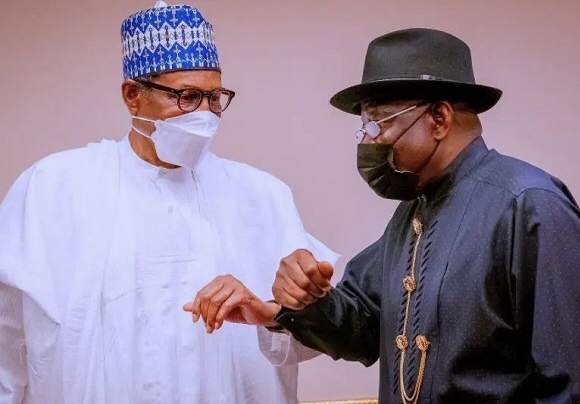
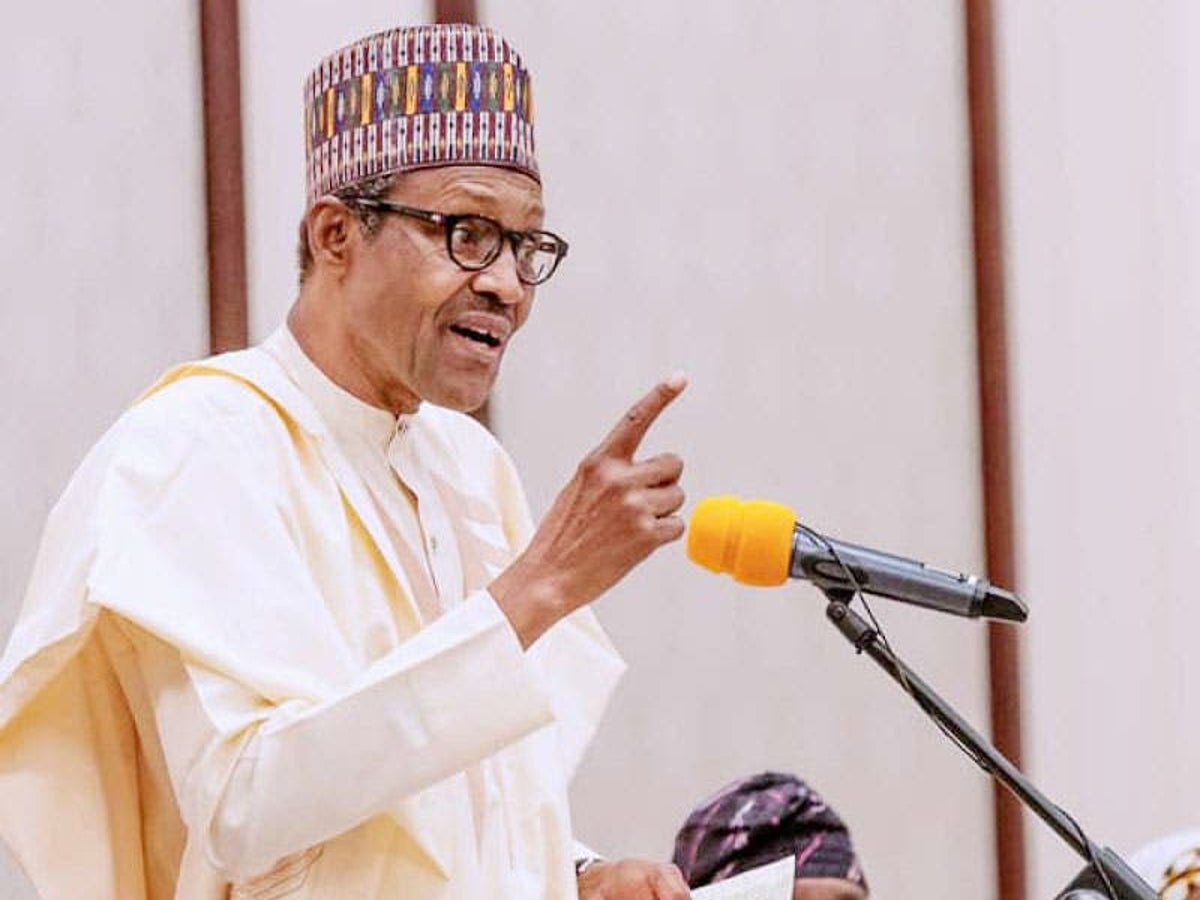
President Muhammadu Buhari

On the culture of disrespect and disregard for term limits

By Mujahid Ameen Lilo


When in 2015, the then incumbent president of Nigeria, Goodluck Jonathan, called to congratulate his opponent ahead of the announcement of the election winner, it was hailed as a heroic act. The act further cemented the country’s democratic maturation and avoided the imminent disintegration of the country had the president not accepted defeat. Moreover, it ensured a stable and successful government transition in a country on the brink of war.


The former president of the Niger Republic got the Mo Ibrahim Prize for Achievement in African Leadership because he respected term limits. Yet, nobody was found worthy of the award for eight years, which points to African leaders’  disgraceful culture of disregard for term limits and bastardising of democracy. What’s more annoying, though, is the culture of celebrating the few ones that respect the term limits.


When we understand that it’s the moral imperative of our leaders to bow to the people’s will, to respect the constitutional authority that put them there and dictate their term limits. Until then, we wouldn’t rush to make a big deal of it and lionise them, present them with awards, among other things. We tend to forget and forgive their misrule. The great disenchantment with the previous administration’s sadistic leadership style made Nigerians ready to go to any lengths to vote out that party. People were prepared for war if the election got twisted. So it’s the morally and politically correct thing to do, that is,  handover.  Most of these leaders leave behind enormous debts, worsening insecurity, cases of corruption and so on.


The recent coups in Guinea and Chad and the foiled one in Niger indicate the frightening facts that the West African countries are far from political stability. Military intervention hardly change matters. It shouldn’t be the response to a faulty democracy. The West African subregion should thoroughly shake itself off the yoke of any military powers. The democratisation of the whole subregion would go a long way in stabilising it. Not that democracy is perfect per se (what with her so-called upholders violating one of the fundamentals: periodic election), but that we can and should practice it most purely, quite distinct from the military system. There should be an atmosphere that’ll facilitate proper reforms of democracy.  A stable system of government will guarantee peace and also bring about the desired developments.


It’s on this premise that I’d now address another factor that is damaging to our democracy, threatening what little peace and stability is left in the region: electoral processes.  In my country Nigeria, once it’s time for elections, people who live away from their states of origin start rushing back to their hometowns because elections have been synonymous with violence leading to the death of many people. There should be peace for people to exercise their fundamental right of voting. Instead, thugs are paid to violate the process. Many people believe in the quote that ‘our votes do not count; otherwise, they wouldn’t let us vote’.  However, that is not where the problem lies.  I believe that we’re capable of holding free and fair elections as we’ve done in the past. We can cite many examples with Nigeria as a case study. The fourth republic election in Nigeria that put Chief Obasanjo into power was relatively free and fair. The two elections that put Buhari into power were also pretty free and fair. We cannot forget the annulled election of June 12, 1993.


I was born in the early 2000s. My generation is called the ‘golden generation’ because the Nigeria we’re born in is democratic, free from colonial and military powers. But my generation suffers from a collapsing education system (most have to attend private schools because the government ones are total craps), from frequent strikes in universities to insecurity devouring our lands like an inferno. This semester, I was looking forward to fieldwork we are supposed to go on in a literature course but have to resort to what our lecturer calls ‘mental research’ because nowhere is safe. This generation is so angry – a wave of anger manifested in the Endsars protests.


On days like this, independence day, I sit and reflect on the happenings in my nation while my fellow teenagers are out having fun, draping their bodies in the country’s colours and posting things like ‘happy independence’ on social media. Yet, the ghost of Achebe and Gimba surrounds me as I struggle to intellectualise my thoughts, building it on Achebe’s dictum (the trouble with Nigeria is simply and squarely a failure of leadership) and the Gimba’s theory that differs from Achebe’s.


I am a lover of columns. As a child, I was very socially and culturally conscious, reading my dad’s dailies. On my shelf, I have a collection of columns: Gimba’s Why am I Doing This, Tundes’s Nigeria: A Thousand Cries, A Thousand Laughs, Nda Isiah’s Nigeria: Full Disclosure, and Victor’s Excuse Me. The writings there span Nigeria from Obasanjo’s first tenure to the eventful short tenure of Yar’adua and Goodluck’s tenure. Presently, I read Kakanda, Bulama and Abubakar,  whose columns are about the present administration. All through, there is rage. There is a disappointment. These essays echo in my conscience, making it hard for me to celebrate not only Nigeria’s birthday but those supposed champions of democracy, that after much damage, step aside and respect term limits. Like Jonathan. Like Niger’s Muhammdou, winner of Ibrahim Prize for Achievement in African Leadership.


Mujahid Ameen Lilo is a winner of the Wole Soyinka Essay Competition and a student at the Department of English, Ahmadu Bello University, Zaria.
Nigeria and the need for food security

By Mukhtar Ya’u Madobi


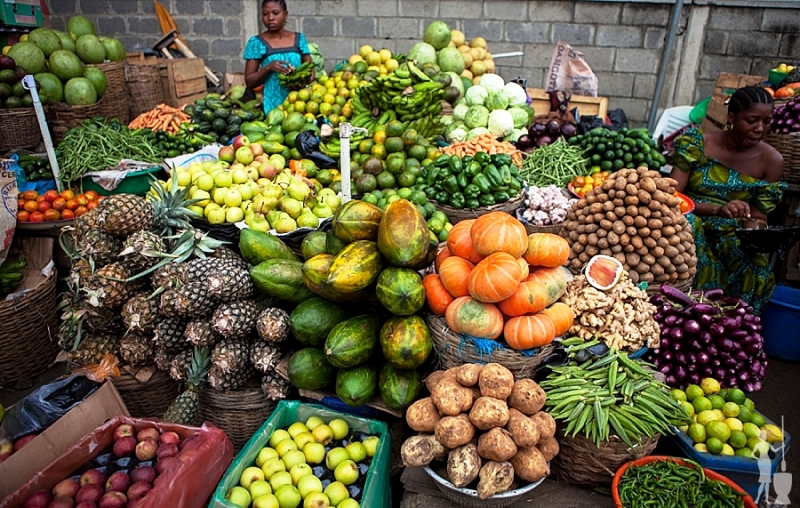
The right to sufficient food is enshrined in the Universal Declaration of Human Rights and subsequent international law. Food security is regarded as a situation whereby all people at all times have physical, social and economic access to sufficient food to meet their dietary needs for a productive and healthy life.  Food security is ensured when food becomes available, affordable and accessible.


However, it is good to note that food security is not simply having sufficient quantities of various staple foodstuffs. It also entails access to the entire citizenry to these food items at affordable prices. It further means that we must not only engage in mass food production but also ensure that Nigeria has sufficient purchasing power to acquire food items that guarantee good feeding and nutrition.
Food security has to do with the absence of threats of hunger or malnutrition people face in their lives. In a broad sense, it entails safety from basic physiological needs. The lack of safety will be manifested in chronic hunger or starvation and malnutrition.

The majority of the rural populace depends on Agricultural related activities for their livelihood. The appraisal in the past showed that successive administrations in Nigeria had initiated programs towards ensuring food availability and accessibility for the teeming population in the country.

These include; the National Accelerated Food Production Program (NAFPP) by Gen. Yakubu Gowon, Operation Feed the Nation (OFN) by Murtala/Obasanjo Administration; River Basin and Rural Development Authority (RBRDA), Green Revolution and World Bank-funded Agricultural Development Project (ADP) by Shehu Shagari and Babangida’s Directorate for Food, Road and Rural Infrastructure (DFRRI) among others.

Despite these efforts, Agriculture has been constrained by numerous challenges such as rural-urban migration, insufficient infrastructure, poor agricultural inputs, reliance on oil economy, over-dependence on rain-fed farming, environmental degradation, inadequate funding, poor socio-economic status of farmers, poor mechanization, climate change, corruption and poor commitment to the implementation of agricultural policies.

Yet, the most grievous bottleneck facing the agricultural sector today in Nigeria is the mass abandoning of arable land by farmers due to security challenges. These security threats include but are not limited to insurgency, banditry and kidnappings, killings and farmers-herders’ clashes. Consequently, all these turmoils lead to a deficit in agricultural production.

Nigeria still has the potentials to be food-secure through the adoption and implementation of strategic measures for the peasant farmers to operate in their farming activities through ensuring rural development, provision of easy access to basic farm inputs, adequate budgetary allocations to agriculture, particularly to the food crop sub-sector, enunciation of appropriate policies for food crop sub-sector, political stability, reduction in rural poverty, and peasant farmers’ education among others.

In response to that, the current administration of President Muhammadu Buhari has initiated multiple agricultural programs aimed at ensuring food security in the country. Notable among them include the Anchor Borrowers’ Programme (ABP) that commenced in 2015, which provides farm inputs both in kind and cash to smallholders farmers to boost the production of agricultural commodities. Tremendous success stories were achieved through this program, especially with breakthrough rice production in Kebbi State. The Presidential Fertilizer Initiative (PFI) was launched in 2016, a partnership between Nigeria and Morocco to make fertilizer available to the farmers. In addition, farm Youth Lab (FYL) is another Initiative of the Federal Agricultural Ministry to train Nigerian youths on livestock production and sustainable urban agriculture.

Additionally, the Presidential Economic Diversification Initiative (PEDI) was also launched in 2017 to support the revival of moribund industries, especially agro-processing ones, through facilitating investment, reducing regulatory bottlenecks, and enabling access to credit.

Moreover, in March 2018, President Muhammadu Buhari inaugurated the National Food Security Council (NFSC). The council was mandated to develop sustainable solutions to farmers and herders clashes, climate change, piracy and banditry, as well as desertification and their impacts on farmland, grazing areas, lakes and rivers. All these efforts are aimed towards increasing food production in the country.

The latest version of National Security Strategy 2019, a document released by the Office of the National Security Adviser (ONSA), Retired Major-General Babgana Monguno, noted that with the drastic reduction of food importation, the government would continue to develop agricultural potentials to attain self-sufficiency in food production as well as exportation. “The government will further consolidate investment in agricultural mechanization, irrigation and infrastructure to mitigate the risk and uncertainty occasioned by seasonal rainfall. In addition, modern techniques will be adopted to improve beef and dairy production and consolidate strategic food reserves to ensure that the nation is prepared for major emergencies and shortages”.

The latest Federal Government directives on the establishment of farm estates in 109 Senatorial districts across the nation deserves an accolade. This mandate is to be realized by the recently resuscitated National Agricultural Land Development Authority (NALDA), which has already commissioned its first integrated farm estate in Katsina and other states. Across the country, each farm is expected to engage in the rearing of poultry, fish and livestock, apiculture, crop farming, packaging and processing, respectively.

With this development, it is hopeful that the country will achieve food security and self-sufficiency in food production within the near future.

Nonetheless, even if all the policies mentioned above are implemented unless strategic measures are put in place to curtail the rising security challenges bedevilling the country, otherwise, the wish of the country to become a food-secure nation will never be realized.

Thus, peaceful environments should be created for farmers to resettle and muster more strength towards cultivating the vast abandoned arable lands in order to boost agricultural production in the country.

Mukhtar Ya’u Madobi writes from Kano. He can be contacted via ymukhtar944@gmail.com.

Atiku, Kwankwaso, Tambuwal, others shut out as PDP zones national chairmanship to North

By Ibrahim Siraj

There are indications that Nigeria’s main opposition party, the Peoples’ Democratic Party (PDP), would zone its presidential ticket to the Southern part of the country. This follows the decision of the party to zone the national chairmanship seat to the North ahead of its national convention coming up later this month. 

Although the party is yet to formally decide on the zone that will produce its flagbearer in the 2023 presidential election, the latest decision provides some clue because, based on convention, the party has never zoned the two coveted offices to the same region.

Announcing the decision Thursday, Governor Ifeanyi Ugwuanyi of Enugu State, who is also the Chairman of the party’s zoning committee, said the decision was arrived at at the end of his committee’s meeting.

He said his committee was not mandated to zone the presidential ticket. According to him, “The mandate of the committee does not include zoning of the president, vice president and other executive and legislative offices of the Federal Republic of Nigeria”.  

The decision of the party to zone the offices, the Governor adds, “is in line with the constitution of the party on zoning and rotation of party and national offices in the interest of justice, equity and fairness”.

By implication, the decision by PDP to push the national chairmanship seat to the North is likely to dash the hope of politicians eyeing the party’s presidential ticket from the North. Going by tradition, it is almost impossible for the party’s national chairman and presidential candidate to come from one zone.

Prominent among those affected by the party’s decision are former vice president Atiku Abubakar, former Senate President Bukola Saraki, Governor of Sokoto State Aminu Tambuwal and former Kano State Governor Rabi’u Musa Kwankwaso. These four politicians are among many others of Northern extraction who dominated the party’s presidential convention in 2019, with Atiku Abubakar eventually emerging as the winner. However, Mr Atiku was defeated by President Muhammadu Buhari of the ruling APC to win reelection.

Atiku unperturbed – Campaign Group

Speaking to The Daily Reality on the development, Alhaji Abdullahi Abdulkarim Gama, leader of Atiku Arewa Reporters, a campaign group rooting for the candidature of the former vice president, said his principal remains unperturbed. He said as far as they are concerned, the decision of the zoning committee is not final and only reflects the position of PDP governors. Moreso, he said, the Governor Ahmad Fintiri-led Convention committee is yet to conclude its assignment and submit its report regarding the party’s convention. He maintained that scheming for the party’s presidential ticket would continue until the last minute.


Situation sceptical yet no cause for alarm – Kwankwasiyya leader

On his part, Dr Aliyu Isa Aliyu, a leading Kwankwasiyya member in Kano, warned that the situation remains sceptical even though no cause for alarm as far as Kwankwaso’s presidential ambition is concerned given that the party has not formally taken a final position on the matter. He cited a situation in 2007 wherein late President YarAdua emerged as PDP’s presidential candidate and went ahead to win the presidency even though the national chairman at the time, Col Ahmadu Ali (Rtd), was also a Northerner. Col. Ali was replaced in 2008 by Chief Vincent Ogbulafor following the zoning of the position to the South. 

Agitation for power rotation not in the interest of Nigerian masses – Don

PDP’s decisions came when the North and the South are deeply entangled in a heated agitation for power rotation. The Southern governors have, on several occasions, made it utterly clear that power must shift to their region, and the North must shelve any thought of retaining the presidency beyond 2023. This position was, however, countered by Northern governors who consider it as “foolish”, “unconstitutional”, and “undemocratic” any attempt to dictate to the North who to vote for as president.

At the end of the governors’ meeting earlier this week which other leaders from the region also attended, the governors advised their Southern counterparts to explore dialogue and compromise as against confrontation and undemocratic tendencies if they are really interested in securing the support of the North for power to shift to the South. 

As the political tug of war between the North and the South continues over the zone that produces the next president, a university don has warned that the rotational presidency is undemocratic and thus has no place in Nigeria’s Constitution.  Answering enquiry from TDR, Dr Riyauddeen Zubairu Maitama of the Department of Political Science, Bayero Univerisity, Kano, explains that although so much importance has been attached to the issue of power rotation, what should be more significant for the citizens is justice and development. Of utmost importance to Nigerians, he said, is choosing a leader who will tackle corruption, poverty and widespread insecurity irrespective of the political party or the region such a leader comes from.

Dr Riyauddeen further lamented how politicians from both divides are becoming more preoccupied with zoning and power rotation at the expense of the welfare of the Nigerian masses who voted for them.  He described the agitation for secession championed by the likes of Sunday Igboho as Southern Nigeria’s gimmick to harass the North and to exact political concession ahead of the presidential election. 

Crucial months ahead

With less than a year and a half to Nigeria’s 2023 presidential election, the next few months will be crucial as zoning, and other issues are expected to dominate the discourse on the political scene. While the major political parties continue to gear up for their separate national conventions to choose national officers, Nigerians will continue to observe with keen interest how political events will unfold in search of President Buhari’s successor in 2023. The pertinent question for now is: can zoning succeed in ultimately sealing the fate of those presidential hopefuls from the North, or would they be able to come up with something dramatic to turn things around? Only time will tell!

Nigeria at 61

By Abba Muhammad Tawfiq

In her tattered garments, the old woman shrieks out of excruciating pains alone. Without even an iota of mercy, her progenies are malevolent to her in all aspects. There is neither honesty nor good followership or rather citizenship in a substantial number of them. Some of them have become vicious bandits, terrorists, kidnappers; some are suffering from the deleterious sickness of kleptocracy; looting from her treasury solely to attain their insatiable desire for materialism and of affluence.

These beastly pernicious whims and delights are bred into the dear hearts of her younger children as they too set their minds with the view to following the aberrant footsteps of their elders, having no sincere affection and compassion for the senile Mother by indulgence in the follies of the elders!

Albeit the kind-hearted ones amidst the children come to salvage her, kissing her forehead with intensive love, the vicious ones and their vices will never cease to drive them to distraction only to leave the fate of old weeping Mother in a doom and gloom. What a horrible fate of a mother!

The deplorable story of Nigeria today is equivalent to the analogy of the prologue mentioned above. The ineptitude of those who have had the privilege to govern our country has mercilessly caused mayhem to the country in terms of development in almost all sectors in the nation.
This, however, is not because their neural tissues are devoid of intelligence but their failure to think widely cognitive beyond their narrow interests and selfishness in rendering loyal servitude to the nation.

It is pathetic that our youth, the anticipated leaders of tomorrow, recommend spearheading embezzlement and corruption in its broadest sense which they know will further impoverish the people and weaken our economy as a country. Our youths are increasingly developing a fondness for political offices or leadership, not really because they are looking forward to promoting good governance, ameliorating and fixing broken Nigeria. Thus, alleviating the plights of her citizens who have been subjected to untold hardship. Unfortunately, they solely seek offices to get wealthy swiftly, even at the expense of the masses. Their eyes are fixed at the attendant spoils of high office in all its negative manner: riding exotic vehicles and live a life of luxury–exalting kleptocracy to the apogee.

We are not created to weep eternally. The need to equip ourselves with honesty, patriotism and the spirit of good governance for the greater glory of Nigeria starts today and precisely now. Our toils and troubles shall only strive to mend by us coming together under one umbrella of unity and harmony. Having all hands on deck and keeping our tribal sentiments, religious bigotry, and regionalism will enable us to put our potentials to optimal use to figure out our problems without much ado and efficiently climb the ladder of success in halting Nigeria from wallowing in the misfortunes of the past.

We pledge to Nigeria our dear Mother. We pledge to Nigeria to be faithful, loyal, and honest. We pledge to serve Nigeria with all our strength, vigour and zeal. We pledge to elevate her honour, glory and unity to the zenith.

Oh my God! Are we really fulfilling these obligations? Biafrans, Hausa/Fulani relatives, the Oduduwa clan, It is high time we kept our differences and strived collectively for the betterment of our dear nation. The labour of our heroes past! Shall never be in vain. One Nigeria, one people, let peace_reign. Happy Independence day.

Abba Tawfiq can be reached via abbamuhammadtawfiq@gmail.com.

Emerging intrigues in Adamawa politics

By Mohammed Zayyad

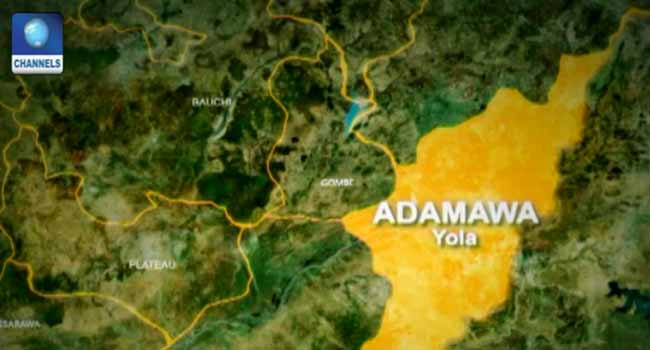
The Ward and Local Government Congresses of the All Progressive Congress (APC) and the replacements at the wards, and the preparation for the LGA congresses by the Peoples Democratic Party (PDP) have brought to the fore the emerging intrigues in Adamawa politic: The attempt to outweigh each other in the control of the two party’s structures among the party stakeholders is apparent.


The APC congresses, in most cases, were conducted based on Abuja’s directives of consensus and that the incumbents offer the Right of First Refusal, including accommodating newcomers. While for the PDP – if you have held the office for up to 8 years, death or resignation, your office is automatically vacant.


An interesting scenario in the APC is in Mubi North and Mubi South LGAs – the place has a former immediate governor – Bindow Umaru Jibrilla, and a sitting Senator, Ishaku Cliff Abbo. Abubakar Jafaru Member Representing Mubi North, Mubi South and Maiha Federal Constituency appeared to have been schemed out. For instance, while the Bindow and Cliff group were at Yazaram Cinema waiting for the election to be conducted, the actual election took place at Yelwa Primary School, with Jafar having the upper hand. What also weakened Bindow active participation was the issue of the leaked audio against President Muhammadu Buhari.


Another place of interest is Yola North, Yola South, Girei and Song LGAs- Senator Aishatu Dahiru Ahmed Binani, Adamawa Central, wanted to replace most of the Exco at those LGAs, but all her candidates lost woefully. Many people were surprised by Binani’s politics. The Excos Binani wanted to replace were those that assisted her in getting the senatorial ticket by narrowly defeating Aliyu Wakili Boya, Sarki Matasa.
In the APC congresses, three governorship hopefuls- Muhammadu Umaru Jibrill Bindow, Senator Cliff Ishaku Abbo and Senator Aishatu Dahiru Binani were casualties, while three other governorship hopefuls Modi Halilu, Nuhu Ribadu and Abdul Razak Namadaz appeared to have made their intelligent moves silently. Namdas doesn’t have any issues at his constituency.

On the other hand, Boss Mustapha was not that enthusiastic – he only showed interest in one or two places in Yola North and Hong LGA. Former Governor Murtala Nyako played the role of a stabilizer and elder. The person that called the shots the most was Comrade Mustapha Salihu, APC NorthEast Vice Chairman. He doggedly implemented the APC Caretaker Committee’s instruction of consensus, giving the incumbent the right of first refusal and accommodating newcomers. The big game will be at the state congress. In particular, the State Chairmanship position- the big picture will be more precise- the grievances, crises, and contentment from each stakeholder and the group will be more open.

The PDP, being the party in power in the state and having some considerable interest within it, its replacements at the ward level and preparations for other congresses were unique. Governor Ahmadu Umaru Fintiri made some political attempts- Most of the loyalists of Chief Joe Madaki and former Governor Boni Haruna were blocked.

An interesting place is the Numan Federation, where the Deputy Governor comes from. Crowther Seth was made ineffectual at his base; the person pulling the string is the Member Representing Numan, Demsa and Lamurde constituency, Kwamoti Laori; he is Fintiri’s right-hand man. It is still a surprise to many that Crowther Seth was made ineffective at Numan Federation. However, some pundits said it shouldn’t be surprised- Seth, as Deputy Governor, still operate from his house, of which the road to the house is not even tarred. Therefore, many people see Numan Federation as the big losers in the Fintiri government, despite being the joker for the PDP in the 2019 governorship election.

To be fair to Governor Fintiri, a sitting governor often dictates the direction of his party, and, Fintiri’s politics now goes beyond Adamawa; it has national elements in it- so he must have ‘the home’ in his control. Fintiri has some big PDP national assignments. This is also knit with his political ambition and the Wike connection. It was reported that Governor Wike flew to Yola twice or thrice in a specific week to confer with Fintiri and left within some hours. – Any political tête-à-tête that cannot be done via a cell phone is a big one.

There is a report that Fintiri will definitely try as much as he can to replace A.T. Shehu as the state chairman of the PDP. That’s why some politicians are of the view that Fintiri refuses to empower Shehu economically.


Fintiri means business, you can’t blame him. Recently, when the move to fill in the vacant position at the PDP Board of Trustee which was created by the death of former Governor Wilberforce Juta, Fintiri presented the name of Hamza Madagali Adamawa PDP Organizing Secretary, but former Vice President Atiku Abubakar and PDP former National Chairman Uche Secondus intervened, and presented the name of Boni Haruna, being a former Governor as Wilberforce Juta.


As the intrigues in both the Adamawa PDP and the APC further unfold, we will analyze it from the angle of the moment.


Zayyad I. Muhammad writes from Abuja, 08036070980, zaymohd@yahoo.com.

APC vs Goodluck Ebele Jonathan

By Mallam Musbahu Magayaki

The political calculation of the All Progressives Congress (APC) may likely lead the party to oversight if they fail to set their house to order. There is a rumour that the party is romancing former President Goodluck Ebele Jonathan. APC reportedly declared that they will allow him to recontest for the presidential race in the 2023 general elections if he joins the party.

Lo and behold! Despite this rumour, one Jonathan supporter joined the party after spending many years criticising the party on social media fiercely. Thus, Jonathan’s supporters are defecting to the APC. Will this signal his presidential ambition?

Let’s assume the presidential ticket goes to the south-south; what is the fate of the Southwest that has been promised the presidential ticket in a zoning agreement? Even though the zoning policy is not democratically based on the constitution in the country that is practising democracy.

Meanwhile, a candidate for president and his running mate from the same region sounds too odd. That is, you can not pick a president from the southeast and a vice president from the southwest. In addition, the recent party local government congress elections hindered the party, leading to factions in some states. However, this may cause the party to lose its members if decisive actions are not taken promptly while confronting the party’s national convention elections.

Any political party that gives a glimpse into the Party’s instability will eventually experience its entire tendency to fail. A few weeks ago, in the opposition PDP, the leading crisis crumbled. Many political analysts argued that the party lost its spirit as a real opposition party since there would be no political party prospering in the conflicts.

Nevertheless, when the ticket goes to the South-south, the Southwest may not vote for the party because the national leader of the party’s presidential ambitions would not realise his ambition. As a result, even though he has not declared his interest in the race yet, the APC may lose Lagos, Kano, and many other northern states.

Mallam Musbahu Magayaki writes from Sabon Fegi, Azare. He can be reached via musbahumuhammad258@gmail.com.

Where will Buhari retire to?

By Ahmadu Shehu, PhD

Since The Daily Reality has become the darling medium through which northern elites are called to task, I would instruct them to extend a short message to President Muhammad Buhari this weekend. Although Nigerians are used to the deafening silence of this administration to most of our perils and concerns, the president needs to be reminded of a few disturbing, foreseeable facts.

Let me first state that the people of this country, especially his brothers and sisters in the north, can’t wait to see the end of his rule. His ethnic group, the Hausa-Fulani, have carried his cross for too long. For over a decade, they gave their lives, wealth and resources for his candidature, and for seven years, they bore the blames, stereotypes and animosities for his presidency. What is their gain? An avoidable but seemingly inevitable genocide. If the president does not know, I will tell him that the people of this region are tired! They are no longer looking for what he can do for or to them. They are only anxious to survive the remaining days.   

I want the president to observe a few things. First, all Nigerian leaders lucky to have left the Villa alive went back to their hometowns after their tenures. For instance, Shehu Shagari, who was overthrown by then General Muhammadu Buhari, moved permanently to Shagari, securing a serene, fruitful life after that. While in retirement, Shagari remained relevant and served in various traditional positions within the Sokoto Caliphate. His love for his people, his engagements with his roots throughout his career, his pride in his people and culture and constant, persistent and proud leaning to his region endeared people to him even after his tenure. That love held him physically and psychologically intact, made him relevant and happy all through his old age.  

General Ibrahim Badamasi Babangida, who succeeded Gen. Buhari, retired to Minna, his birthplace from where he and his wife established great organizations that engendered socio-economic development. As a result, Babangida’s home became a centre of excellence in Minna metropolis, and people trooped to his doors for all kinds of support and favours.

General Abdussalami Abubakar became the Head of State after the death in office of Gen. Sani Abacha. Abdussalam followed the footsteps of his predecessors and retired in Minna, his hometown. This was possible for the two Generals only because of their good to their people and region. To date, Niger and indeed the North-Central are thankful for their service as Heads of State. They gained relevance and recorded developmental strides hitherto impossible without the emergence of their worthy sons.   

Then came Olusegun Obasanjo, who returned to power for the second time. After eight years in office, Obasanjo moved to Otta – not even Akure – to start a new life as a statesman. While Yar’adua died in office, his successor, President Goodluck Ebele Jonathan, immediately vacated Asorock for Otuoke, his birth village and assumed his gentle duty as the breadwinner of his people and region. Jonathan has was devilishly maligned as the enemy of the north, the clueless president of the country. But he ensured that the Niger Delta amnesty program succeeded, for he was conscious of life after office in the creeks. He, therefore, begot for himself and his people a place to live in peace. 

Here at home, the breadwinner of Adamawa state, former vice president, Alhaji Atiku Abubakar, ensured that the state’s economic strength is sustained. He established institutions, provided hundreds of thousands of employments, empowered businesses and established banks for entrepreneurs and start-ups. Atiku Abubakar built his retirement home in Jada and moved his business headquarters to the state. He ensured that human development services, such as education, healthcare, media and IT industries only obtainable in the cultural West are brought home to the doorsteps of his compatriots. Thus, he was able to stay at home and proceed with his political career gracefully.  

But with all the situations in the northwest, especially Katsina – his home state – and Kaduna – his preferred haven, where does President Buhari intend to retire and spend the rest of his life? For one, at 80, Buhari will be the oldest Nigerian president to leave office and probably the sickest at that weak point of human life. That is the moment he needs people the most and will undoubtedly go through the most painful retrospections of his administration’s actions and inactions. Then, he would face realities – poverty, inhumanity, misery, deprivation, etc. – that have become the norm on Nigerian streets. At that point, Buhari would need Nigerians, and Nigerians would not need him for anything.

The excoriating economic disaster in Buhari’s northwestern region today has not been seen in a long time. Thousands of people are homeless, hopeless and desperate for food and shelter. In Daura, for instance, hundreds of thousands of youth are unemployed. At the same time, his close relatives and families have bought over most farms and grazing lands around the emirate, extending the wicked hands of poverty to more people than ever. As it stands, hundreds of thousands of people are fleeing this region for safety, as kidnapping and banditry have overtaken citizens’ daily lives. Worse still, the president’s disposition and sheer lack of concern on anything “north” make it impossible for him to enjoy his cult-like mob that kept his military retirement years afloat.

Sadly, there is no going to be Buhari the messiah, Buhari Maigaskiya or Buhari jagoran talakawa. There will be only one Buhari in the world: the one who became president and failed to help his people. The one that has disappointed his most loyal supporters; the messiah that couldn’t save his people from hunger, deprivation and poverty. The Buhari who oversaw the worst economic period of his country. That Maigaskiya supervised the most criminal and cruellest regimes of corruption. The one that promised heaven but gave hell. How life looks for someone at that age in this condition will be very interesting to see.

Dr Ahmadu Shehu is a nomad cum herdsman, an Assistant Professor at the American University of Nigeria, Yola, and is passionate about the Nigerian project. You can reach him at ahmadsheehu@yahoo.com.

Nanono hands over to Dr Mahmood as new Agric and Rural Development Minister

By Sumayyah Auwal Ishaq

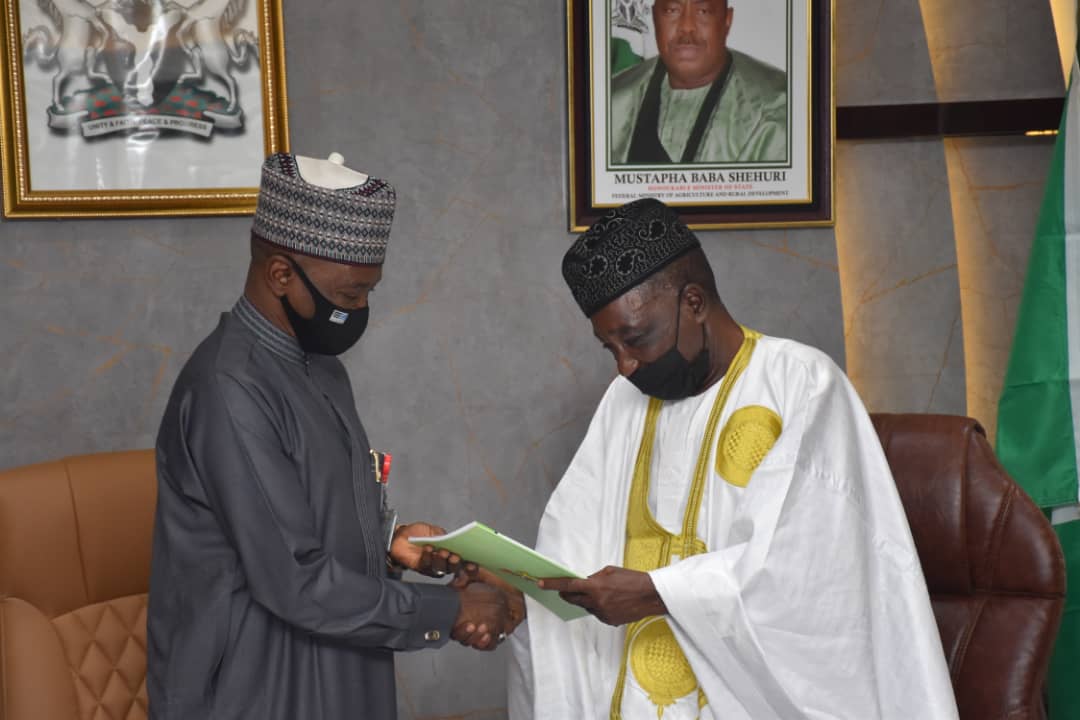
The erstwhile Minister of Agriculture and Rural Development, Alhaji Sabo Nanono, on Thursday handed over to the new Minister, Dr. Mohammad Mahmood Abubkar in a brief ceremony at the ministry’s headquarters in Abuja.

In his speech, Nanono thanked President Muhammadu Buhari for the opportunity given to him to serve the country. He also thanked the entire staff for the cordial relationship and teamwork they have had. During his remarks, Dr. Mahmood commended President Buhari for the confidence bestowed in him. He also saluted the outgoing minister for the achievements.

The Minister reiterated his commitments towards the actualization of President Buhari’s policies for the economic development of Nigeria.

Buhari relieves agriculture and power ministers of posts

President Muhammadu Buhari has fired the Ministers of Agriculture, Mohammed Sabo Nanono, and his counterpart of Power, Mamman Saleh.

Ministers of Environment, Mohammed Mahmoud Abubakar and State, Works and Housing, Abubakar Aliyu were asked to temporarily take charge of ministries of Agriculture and Power, respectively.

Their substantive replacements will be announced later.

Details later.