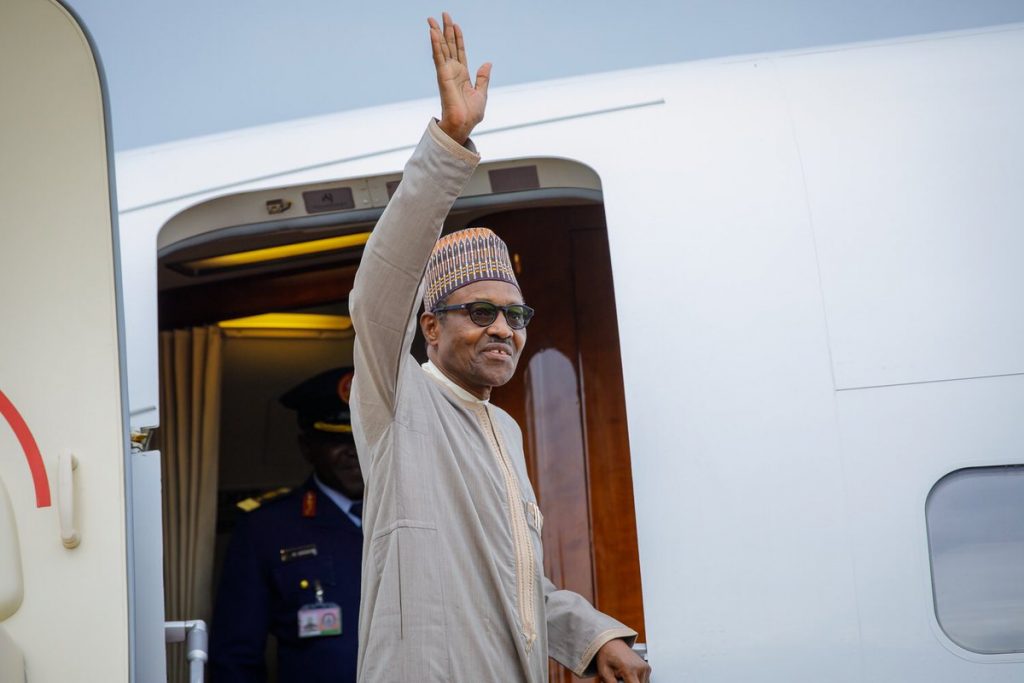
President Muhammadu Buhari

ASUU Strike: Endless negotiations and FG’s disregard for the future of Nigerian students

By Babatunde Qodri

Since Nigeria’s independence in 1960, we have never witnessed such a long and suffocating strike as it is at the moment when public tertiary institutions would be closed down, and there would be no serious move by those concerned to avert it. In two years, our universities have suffered unprecedented deterioration due to incessant industrial action by the Academic Staff Union of Universities (ASUU).

Consequently, students are often condemned to stay at home. But this is what we get any time we elect a leader that cares less about the education sector. Ministers of Education and Labour Adamu Adamu and Chris Ngige, respectively, largely contribute to this agelong industrial action. Yet, despite a series of meetings, nothing tangible has happened to facilitate the return of students to class. This is unarguably appalling. 

Professor Emmanuel Osodeke, ASUU Chairman, recently revealed the lack of readiness by the Federal Government to yield to the demands of striking lecturers when he appeared on Channels TV. Osodeke slammed the Minister of Labour for misleading the public on the development while accusing the Federal Government of insincerity in its dealing with the Union. One then wonders whether this administration actually places a premium on the future of Nigerian students. The government’s body language is symptomatic of what these abandoned students have to contend with for years.

This is not to throw a jab at the Minister of Education or the Labour Minister. Unarguably, however, I am disturbed by the carefree approach of the Federal Government to the situation that affects millions of young Nigerians. It is sad to stress that this unfortunate development has resulted in many problems.

For instance, several Nigerians affected by the industrial action have been forced into activities that negatively affect society and their future. Because they say idle hands are susceptible to devilish errands, most students are now into internet fraud and other related engagements to the country’s detriment. This is in addition to the fact that some of these students, having stayed at home for a long, have lost interest in education, thereby engaging in unprofitable endeavours.

It is necessary also to admit that the protracted strike translates to a waste of time, with students spending more time than necessary. And this puts them at a disadvantage. While their counterparts in private and state universities have seamlessly unhindered years to run and complete their programs, students in public universities are trapped. Those supposed to be used as innovation agents are abandoned to situations that delimit them. This is thoroughly depressing.

Moreover, the strike has a way it contributes to the debilitating nature of the Nigerian education system. Today, Nigerian lecturers seek opportunities outside the country to make their skills and knowledge relevant. There are cases of Nigerians in the medical fields going to countries abroad in search of better conditions. This is not good for the country as it ultimately leads to a shortage of competent lecturers in our various public tertiary institutions. Even if the industrial action is called off, the fact that it has forced talented Nigerians to opt to lose confidence in the system remains a threat.

My final take: If the Federal Government cannot meet up with the demands of the Union, at least it must identify with its clamour since it is in the best interest of public tertiary institutions. Both parties must forge a new mode of communication that recognizes the yearnings of Nigerians. Done based on sincerity, the government might agree to attend to the union’s demands in batches. Between all of these is the need for committed Ministers of Labour and Education who can drive the Government to do the needful. This is necessary to put the country on the path of steady development.

Babatunde Qodri wrote via babatundelaitan@gmail.com.

On derogatory comments and memes about ASUU members

By Kasim Isa Muhammad

Someone I will not mention by name forwarded memes written in the Hausa language to my WhatsApp number. The content reads: “Tunda naga level coordinator din mu ya sa Shadda a status, na karaya.” This means “I lost hope upon viewing the brocade on the status of our level coordinator.” At first glance, of course, one would laugh it out. But, on second and more critical thought, the memes are a deliberate attempt to ridicule members of the Academic Staff Union of Universities (ASUU), whose salaries have been stopped for the past four months or so by President Buhari-led government.

That is one of the several unhealthy memes spreading on social media about ASUU members and their predicament due to the strike. Unsurprisingly, the person who intentionally shared this meme and his likes are bent on making caricatures of ASUU members. This explains the level of irresponsibility and how mean people can be.

In the first place, a university lecturer that converted their social media page for the sole purpose of business enterprise signifies that the lecturer in question is responsible and utilizing the strike effectively. When did engaging in business become a subject of ridicule? Or a sheer violation of the code of conduct?

Let me educate the public a little. The job description of all Nigerian academics includes teaching, research, home and community service, or any other duty as assigned by the Head of the Department. The work has been made flexible to enable lecturers interested in other genuine businesses to complement the paltry salary they receive each month.

Notably, lecturers in departments that are practice-based, such as law, medicine, mass communication, theatre, fine arts, and engineering, to mention a few, have the upper hand in multiple sources of income. This is because they engage in private practice outside the university job, which serves as’ Plan B’. 

Sadly, a portion of the blame goes to the government for reducing the profession to ridicule and making it less attractive because of the absence of a decent salary and deliberate stoppage of salaries whenever members embark on strike. Nothing like this can happen in a saner society.

Kasim Isa Muhammad is a student at the Department of Mass Communication, University of Maiduguri.

Who else and where else is safe in Nigeria?

By Muhammad Rabiu Jibrin (Mr J)

The primary responsibility of any government at all levels is the protection of the lives and property of its citizens. But, with the prima facie evidence of security deterioration in this country, one would say, with certainty, that the government has failed woefully in that regard, declaring no one unsafe.

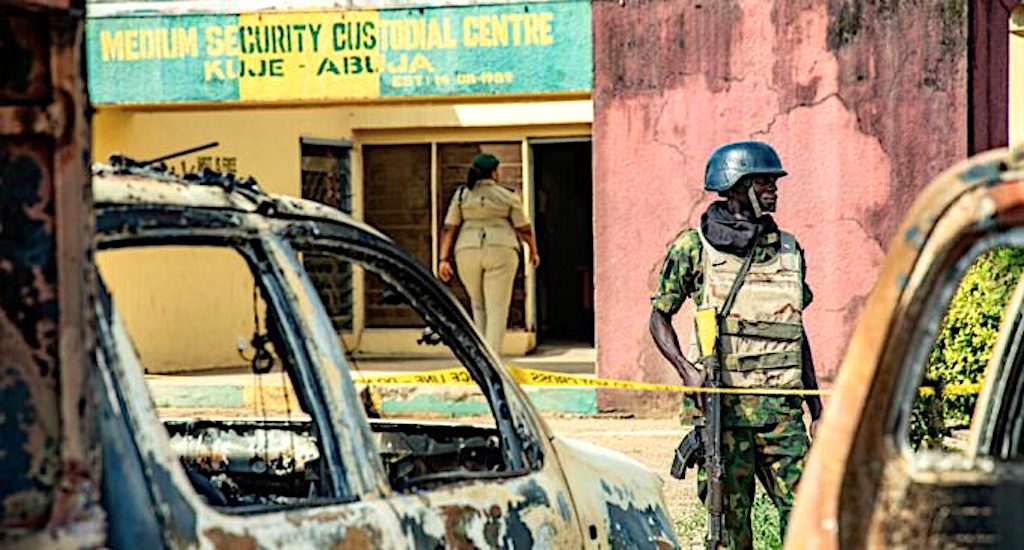
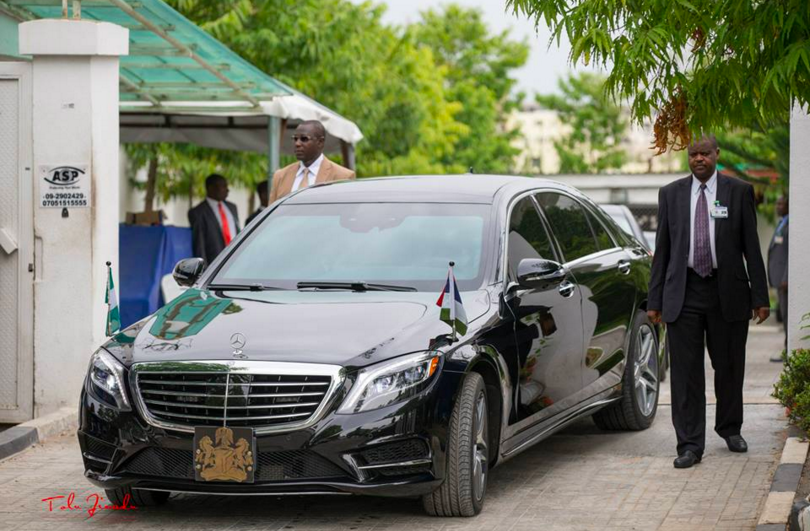
If the convoy of the Commander-in-Chief of the Armed Forces of the Federal Republic of Nigeria can be attacked and one of the main correctional centres in its capital raided, causing some of the kingpins of the “Boko Haram” to escape, who and where else do you think is safe? 

The military and paramilitary forces meant to protect the country and its citizens from external and internal threats are paying off with their dear lives due to the lack of proper training, poor personnel and good enough weapons, to mention just a few. Their families, after their departure, live in limbo with little or zero support from the government.

From another angle, the judicial apparatus saddled with the responsibility of punishing the law infringers treads to and fro wearily in an ocean of fear of intimidations from the executive arm of government when discharging its duties. This, for sure, fertilizes the roots of injustice,  shawls the neck of corruption and fans the amber of criminality and lawlessness. Until when Nigeria would be out of this mess?

The 64 escapees of the “Boko Haram” members from Kuje Prison spell doom to the country. God forbids. But the sad truth is, if the escapees return to their camps and reunite with their colleagues, they would be restrengthened. And, there would be a possibility of new forms of attacks here and there, threatening a few months away 2023 general elections. Therefore, government and the general public should be cautioned. 

To abort meeting a bleak future in the store, the government should create an enabling environment by providing means of acquiring a sound education, employment opportunities and financial support to the teeming youths. It should ensure the recruitment of enough security personnel, give them proper training and enough modern weapons and pay their remuneration. Non Governmental Organizations and traditional and religious leaders should chip in, for the insecurity is everyone’s business. May Nigeria prosper.

Muhammad Rabiu Jibrin (Mr J) wrote from Gombe via muhammadrabiujibrin@gmail.com.

APC urges Nigerians to pray for Buhari over rising insecurity

By Uzair Adam Imam 

The All Progressives Congress (APC) has urged Nigerians to pray for President Muhammadu Buhari as insecurity exacerbates in the country. 

Barr Felix Morka, the APC National Publicity Secretary, disclosed in a Sallah message to Muslims on Saturday. 

Morka said Nigerians should put the interest of the nation first, adding that Nigerians should pray for Buhari to end the security challenges bedevilling the country.

The party said, “We urge Nigerians to continue to support and pray for the government of President Muhammadu Buhari as it tackles our national security challenges just as we continue to reject insensitive and unpatriotic attempts by some partisans to politicise security breaches by enemies of our land.

“On this occasion of Eid-El-Kabir, we urge all Muslims to pray for sustained peace, security and prosperity of the country as the APC-led government continues to prioritise the wellbeing and safety of all Nigerians.

“On this occasion of Eid-El-Kabir, we urge all Nigerians to place national interest first in all dealings. We must not yield to retrogressive elements who seek to divide us through terror and hate.”

Buhari: Nigeria’s hodophile president leading the country to doom

By Ahmad Deedat Zakari

Within 48 hours, in the most populous black nation in the world, an Assistant Commissioner of Police was gruesomely murdered. Boko Haram insurgents infiltrated a prison in the country’s capital and released their members. The president’s security team and media convoy was attacked, leaving two injured.  

All these are happening amidst biting inflation that has enthroned hunger in the country. Nobody seems concerned about students of public universities in the country that have been at home for several months. Scores have already taken to cybercrime as an alternative to education.

Just like in Chinua Achebe’s Things Fall Apart, everything that holds us together as a nation is seemingly crumbling. It is unbelievable that it is happening under President Muhammadu Buhari’s watch, a man who is reputed for diligence and integrity.

It is saddening that the man Nigerians unreservedly love and elected to lead them is good at only travelling. While the nation burns and desperately needs succour, the president is on his way to Senegal.

Reports indicate that the president has made 11 international trips in five months. Sadly, the president’s official trips are not translating to anything good for Nigeria.

Buhari’s tenure ends in ten months, but will Nigeria survive these months’ hunger, insecurity and absence of education?

Deedat wrote from Lokoja, Kogi State, via ahmadzakari111@gmail.com.

Why are our leaders unable to resign even after failing to deliver?

By Abdulrahman Yunusa 

Upon all the existing factors that are enough to be the reasons for one’s resignation as an elected leader in Nigeria, I don’t know what often shields them from towing on to that path. Despite the gruesome killing, kidnappings, molestation and other unfavourable crimes thriving in our localities, they remain in power.

There is no “Resignation” in the vocabulary of Nigerian leaders. Because you hardly see them making resignations when things tend to go out of their control. Sadly, they prepare to die in power than live outside the power. 

Unlike our shabby mentality, those who have tried and failed in saner climes mostly took the most honourable decision by relieving themselves of the burden threatening their yoke. Some resign for reasons which we might eye as petty ones. Some quit for being unable to deliver the political promises they have made during the campaign. Some leave for failure to secure the lives of their people, which is one of the best reasons for one to vacate.

That silly mentality should be tamed with immediate effect. Else the next generation will suffer at the hands of evil beings who will soon assume the mantle of leadership and keep subjecting the lives of millions of people to excruciating pains. 

Enough is enough. Just tender resignation whenever conditions warrant that. Don’t subject the lives of millions of people to jeopardy for political greediness. Instead, learn to relinquish your position for the sake of your people. Maybe that will be the only positive impact you will ever make for your people.

The social, political and economic vicissitudes we are facing incessantly in Nigeria are the result of our leaders’ greediness. It’s simple to get that when you analyze and evaluate the current scenario in the country. 

Recently, Zamfara State Governor openly admitted that his govt has failed to discharge its primary responsibility, which is the protection of the lives and properties of its people. He urged them to pick firearms to defend themselves against bandits.

That pathetic scenario is enough to tell you they are more concerned about their political seats than the lives of their people, which are ideally more worthy than their useless thrones. So they can’t tender resignation later to let the better hands have the chance to try their luck. Instead, they rather remain there and keep watching their people dying mercilessly in cold blood. 

No wonder, as the saying goes, “Da na gaba ake koyi“, people learn from their elders. Buhari is the president who enjoys more power than any other person within the polity. He should therefore be the best object of emulation. But, no, he too does not care about the lives of his citizens. Hence, the governors follow suit, despite the sheer incompetence and ineptitude, coupled with the I-don’t-care attitude they exhibit at the extreme. Yet, they don’t mind resigning or taking any proactive measures. God is watching!

Until we console our greedy minds to do away with that uncultured culture of political greediness by learning how to vacate position when things tend to get out of our control, we shall find it difficult to scale through the dark ocean. 

May we scale through the dark ocean soon, amin.

Abdulrahman Yunusa is a social and political affairs analyst. He writes from Bauchi and can be reached via abdulrahmanyunusa10@gmail.com.

Insecurity: Bandits attack Buhari Security Team in Katsina

By Ahmad Deedat Zakari

Presidential Spokesperson, Garba Shehu, disclosed that the Advance Security Team of President Muhammadu Buhari was attacked near Dutsinma, Katsina State, on Tuesday, July 5, 2022.

“The Presidency has described as sad and unwelcome, the shooting incident near Dutsinma, Katsina State, at the convoy of cars carrying the Advance Team of security guards, protocol and media officers ahead of the President, Muhammadu Buhari’s trip to Daura for Sallah.” Mr Garba wrote in a statement .

Mr Garba assured Nigerians that the attack was repelled by the military, police and DSS personnel accompanying the convoy.

However, he also stated that two persons in the attacked convoy were receiving treatment after sustaining minor injuries.

“Two persons in the convoy are receiving treatment for the minor injuries they suffered. All the other personnel, staff and vehicles made it safely to Daura.” Mr Garba wrote

Breaking: OPEC Secretary General, Barkindo, is dead

By Ahmad Deedat Zakari

Hours after meeting President Muhammad Buhari, GCFR at the State House, Abuja, the outgoing Secretary General of the Organization of Petroleum Exporting Countries (OPEC), Muhammad Sanusi Barkindo has passed away.

Mele Kyari, the NNPC GMD, announced Barkindo’s demise in the early hours of Wednesday .

“We lost our esteemed Dr Muhammad Sanusi Barkindo. He died at about 11pm yesterday 5th July 2022. Certainly a great loss to his immediate family, the NNPC, our country Nigeria, the OPEC and the global energy community. Burial arrangements will be announced shortly.” Mr Kyari tweeted.

Barkindo who was received by President Muhammadu Buhari at the State House on Tuesday died at the age of 63. The president had described him as a worthy ambassador of Nigeria during Barkindo’s visit to the State House

Barkindo was appointed as OPEC Secretary General in 2016 and his tenure comes to an end on July 31.

ASUU Strike: Should students blame the Government or ASUU?

By Aliyu Idris

Anyone aware of the lingering strike in Nigeria’s public universities nationwide will sympathise with us students. Now it’s clear that students understand the government’s negligence and I-don’t-care-attitude towards the education sector because none of their sons and daughters goes to public universities.

The government that is supposed to take the necessary actions regarding the strike is showing a lackadaisical attitude towards it as if the education system is normal. Thus, the ASUU strike is not the topic of discussion today.

The government is hellbent on political affairs more than returning the students to their classes. Unfortunately, the issue of the ASUU strike has become a secondary matter to the government in national affairs, sad.

The strike has shattered the dreams of public university students. As a result, The graduation period of million students has been extended to another subsequent year(s) (I do not pray for that occurrence).

It’s an arduous task for public university students to graduate within the stipulated period allocated for their studies. Hence, almost every student’s ID card expires before they graduate.

The victims (students) of the ASUU strike have lost hope in learning and scholarship. Thus, since the government has failed to save their future, they have shifted their focus from education to other life activities such as businesses and learning skills to build their lives.

The statistics of students called up for NYSC in the camps nationwide is low compared to when public universities are not on strike.

The NYSC camps are filled with HND students, students from universities abroad, students from private universities in Nigeria and students from affiliated universities (FCE/CEO/Polytechnic graduates).

There may be the hope of fulfilling the ASUU demands soon (I pray) because I know the Nigerian politicians and INEC will need serving corps members to work for them in the 2023 general elections. However, until the strike is called off, the current corps members are insufficient for the election’s tasks.

The (our) striking lectures are not the problem but the government. May Allah put an end to this strike menace, amin.

Aliyu Idris is an undergraduate at Bayero University, Kano. He can be reached via aliyuidris063@gmail.com.

Muslim-Muslim ticket in APC: North, ethno-religious manipulations and the way forward

By Abdulhaleem Ishaq Ringim

It is the realization that Nigeria’s presidency cannot be won by the sole or combined agencies of personal fame, resources or regional influence that informed the ideation of a merger of political parties that eventually birthed the APC. 

And the essence of this merger, as it were, was the pursuit of a formidable confluence between Nigeria’s most politically active blocs – northern and south-western regional voting blocs. This resulted in the officiation of an alliance through the instrumentality of a transnational political platform capable of displacing the political hegemony of the PDP. And the central representative figures of the two voting blocs were unarguably Muhammadu Buhari and Bola Ahmed Tinubu. 

Evidently, the merger would not have been successful without the uncompromising commitment and consensus of these central figures. Lack of such a consensus was the sole reason why attempts at the merger failed in 2011. And the eventual consensus was what translated into a successful merger that ousted PDP in 2015. One could say both of them are indispensable for as far as the merger is concerned. 

In both instances, the dynamics of running mate selection constituted a major challenge; one that stalled the entire merger process in 2011 and almost jeopardized the efforts again in 2015 if not for last minute compromises. And for the purpose of this article, our referential premise would be the events that characterized the selection of a running mate for Buhari in 2015. 

The resumption of merger talks was principally premised on the assurances of improved mutual understanding and primacy of deliberation and mutual agreement on all issues before implementation. Resultantly, the issue of VP selection was agreeably deferred to the ACN side of the merger. And being the leader of the ACN and a southerner, Bola Tinubu was the first point of call. 

However, such a supposition was put to test by the concern of certain stakeholders largely from the non-ACN merging parties over the feasibility of flying a Muslim-Muslim ticket to victory against the PDP. And based on this singularity of a justification defined strictly on the bases of religious [in]compatibility questions, Tinubu was dropped for Osinbajo whose credentialed affiliation to the leadership of Nigeria’s Christian establishment was seen as a suitable match to Buhari’s perceived religious fanaticism. 

7 years later, the same political platform faces same dilemma. Tinubu, the initial choice of Buhari’s running mate in 2015 and flag-bearer of the APC for 2023 presidential elections is faced with the daunting task of choosing a running mate. The dynamics that defined his emergence was largely characterized by ethnic considerations and the process of choosing his running mate seems to be greatly saturated by the influence of the overbearing conflict of ethno-religious interests. 

Ironically, the hypocritical ultimacy of political convenience as against principle has never been this blatant. Scores of politicians who vehemently opposed the idea of a Muslim-Muslim ticket in 2015 are seen today to be championing the cause. Even more perplexing is the dismissal by some of these supporters of issues of religious affiliation(of the running mate) as irrelevant. This group’s advocacy centers around the supposed primacy of merit and capacity to deliver without deference to ethno-religious considerations. The contradiction here is that same group agitated for a Tinubu presidency in fulfillment of a zoning agreement strictly based on an ethno-regional arrangement. 

As the elite slug it out, they keep deliberately torrenting the conflict down to the level of the masses whose minds have over time fallen victim of manipulative conditioning by the elite. As a result, the Christian establishment and followership, especially in the North demand uncompromisingly that the VP be picked amongst their brethren. While the Northern Muslim establishment and followership in the usual feeling of mutual insecurity and distrust have threatened to actively oppose a ticket with a Northern Christian as VP. 

It sadly almost seems as though whoever clinches the VP slot officially and institutionally enhances the presence and validity of the religion he belongs to. But is that accurate? How is a peasant Muslim farmer going to be better off with a Muslim as VP? And how’s the Christian peasant farmer in the opposite situation? What of security? Buhari is president yet the North suffer from insecurity the most. What of Justice? 

This conflict is largely an in-house Northern conflict. And we’ve consistently been falling victim to these manipulative tendencies because we’ve failed to understand certain political and social realities. But the most important among such realities is the glaring yet often forgotten fact that the allegiance of almost every elite in Nigeria is more to the power superstructure than it is to religion.

“This game of masks!”, as Yusufu Bala Usman, of blessed memory, described it only adopts religion as a manipulative enabler and agency for continued relevance within the power cycle. That is all! Religion should not be a manipulative tool. And it is high time we understand that it is never about religion but about power and the spoils that accompany its acquisition. The Muslim community should also be able to distinguish between manipulation and genuine allegiance to religious interest. 

In his seminal work ‘Leadership and Governance in Nigeria: The Relevance of Values’ whose content is drilled in philosophical and ethical theorization of Sokoto Caliphate’s breed of leadership and public policy with an exposition of the imperative of pillaring contemporary political and social value systems on the pristine belief systems and culture of our people; Mahmud Tukur, of blessed memory, explained that affiliation and allegiance to the Islamic belief system and values formed the foundational basis of community identity during the caliphal era. He puts “working hard in co-operation with fellow members to achieve the higher values of society or service in the interest of the community’s raison d’etre” as the archetypal basis of communal belonging. 

Muhammadu Sanusi II in his review of Tukur’s work deduced Islam – as a corpus of teachings(and values) rather than of actions of persons – to be the definitive basis for identity of the Northern Muslims. To quote his deconstruction of this principle, “… the fact that a “northerner” or a “Muslim” or a “Fulani” is the subject of a political issue is not sufficient to make that issue a “northern”, “Islamic” or “Fulani” one. The bottom line is how consistent is the issue at stake with the teachings of Islam as incorporated in the value-systems underlying the caliphate. In effect, every other identity is subsumed under our Islamic identity, and the Islamic values are the ones worthy of defending. These are not to be sacrificed in the name of “nationalism” or “northern politics” or even “Muslims”.

I find these delineations very instructive for it exposes religious manipulative systems and presents us with the philosophical framework for subjecting our political actions as Northern Muslims to intellectual scrutiny. It provides the basis for validation(or not) and examination of the consistency of our collective actions with the pristine Islamic value-systems. In the context of this article, it affords us the opportunity of examining the consistency of our agitation for VP slot(supposedly in the interest of religion) to our foundational Islamic values; is having a Northern Muslim Vice President fundamentally an Islamic interest? And are the Muslim northerners considered for the slot worthy of supporting strictly based on Islamic affiliations and considerations? Will fielding them in anyway lead to achieving the higher values of the Islamic community? 

These are the fundamental questions that require our dispassionate attention. By answering them, we’d be able to realize whether or not we are yet again falling for religious manipulative machinations. It will also reveal to us those social and political realities of ours that render us susceptible to this manipulative tendencies. However, one thing is clear, that the divarication and fragmentation of the formerly United North (into Muslim and Christian North) is our greatest source of susceptibility to manipulation and even marginalization. Even as the Union was not devoid of internal skirmishes, we were presentable as a United, influential front externally. This dichotomization only weakens our influence and negotiating position of advantage. 

Our collective problems as the North do not respect such bifurcations same way the results of incompetence of both Muslim and Christian political leaders of Northern extraction do not too. And good and ethical leadership are not exclusive preserves of any of the two religions. In fact, there’s a strong convergence of both religions on issues of political values, leadership ethics and principles of good governance. Insecurity; poverty; economic underdevelopment; inefficient educational and healthcare systems; infrastructural inadequacies; etc are our collective challenges and our collective resolve should be of getting competent leaders to reverse the situation. Ours should be geared towards sustaining and consolidating the unmatched northern political negotiating base and influence and leverage that to ensure we force the leadership to stick to their side of the social contract. 

To these manipulative elites, religion is only but an agency for the sustenance of relevance and power for self-aggrandizement. We must rise above such manipulative machinations and focus on building a formidable consensus capable of enforcing on the leadership a Northern agenda for development regardless of who becomes VP. 

Abdulhaleem Ishaq Ringim is a political/public affairs analyst, he writes from Zaria and can be reached via haleemabdul1999@gmail.com.