Poverty

Nigerians and mass migration: Addressing the Japa syndrome

By Umar Yahaya Dan’inu

Mass migration is a complex and multifaceted phenomenon that affects individuals, communities, and entire countries. It is driven by factors such as economic opportunity, political instability and natural disasters as people seek to improve their lives.

In Nigerians, many people are driven to migrate for better lives, education and healthcare, and job prospects. Political instability, such as conflict, insurgency and human rights abuses, also contributes to a mass migration of Nigerians.

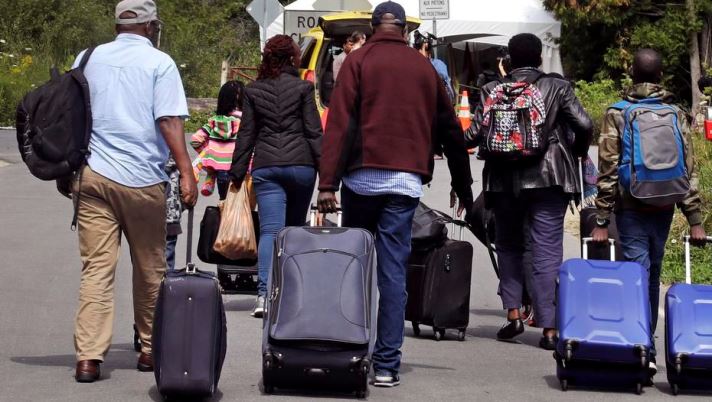
The term “Japa” refers to the migration of Nigerians to foreign countries, especially Western ones, in search of a better life. A lack of quality leadership in the country at all levels often causes this phenomenon. Several reports and writing has shown that despite their love for their home country, many Nigerians have lost trust in their leaders and feel compelled to leave in search of a better future. Moreover, the decay in leadership has caused division within the polity; every tribe or region is suspicious of one another, and there is fear of domination and marginalisation.

In the 60’s and late ’70s, Nigeria was a country that commanded respect in the global arena. Our passport is a thing of pride at any entries and departure level. The Nigerian currency and economy were in good shape. However, the challenges facing Nigeria, such as insecurity, kidnapping, banditry, corruption and political violence, have led to the decline of the country’s economy and international standing. This decline has driven many young people, skilled and unskilled, to leave in search of a better life.

In Northern Nigeria, where Islam dominates the culture, people prefer to migrate to Middle Eastern countries, such as Saudi Arabia and recently Dubai and Qatar, where they share the same religion and beliefs. In contrast, Southern Nigeria is the centre of migrants, as people seek to escape bad governance and poor leadership. Despite the differences between the North and South in terms of access to education, quality of life, job prospects and economic opportunities, many young people still feel compelled to leave.  

However, the skilled and unskilled knows what they can do to navigate their way to leaving Nigeria. In Benin, the state of Edo, people are trafficked in the name of migration to get a better life, and they mostly end up enslaved and sold to work without regard for the dignity and respect they left in their country.  

Furthermore, some skilled migrants bring positive changes to Nigeria; they are doing wonders in their new countries, such as setting up companies that employ Nigerians, impacting the economy positively. In addition, statistics have shown that Nigerians are highly skilled people in the UK and the US, contributing to the economies of the host countries.

The migrations of these groups affected Nigeria negatively because Nigeria is among the world countries with the highest numbers of out-of-school children and increased maternal mortality rates. Nigerian-trained Doctors, Engineers, Scientists, Musicians and filmmakers are all over the world doing great work. Nigerian government needed their services and contribution to help in reducing the numbers of maternal mortality and to help in actualising effective education take place at all levels.     

To address the Japa syndrome, a multi-faceted approach is needed that addresses the root causes of migration and its challenges. These involved improving economic opportunities, promoting stability and security, and increasing access to education, healthcare, and employment opportunities can help reduce migration. In addition, strengthening the democratic process, improving wages and salaries, and enhancing the country’s security architecture are also important steps that need to be taken.

Nigeria is ours, and our responsibility is to ensure a bright future for our nation and youth. We must take action to address the Japa syndrome and create a future that is worth staying for.

Umar Yahaya Dan’inu wrote from Hausari Ward, Nguru, Yobe State. He can be contacted via umarnguru2015@gmail.com.

Three ways that help Nigeria in alleviating her poverty

By Dansaleh Aliyu Yahya

Nigeria, as a country of more than two hundred million people, must get some or many ways to eradicate poverty from both angles. There is no poverty, so almost everybody in the country is employed. As a result, we will be free from hunger, with good health and well-being. For that, I’m going to point out some points that might end poverty in our blessed country of Nigeria.

They are as follows:

1. Voting for good leaders: This is the essential part of all the ways I thought of because we all have in our minds that leaders can make every impossible possible in their respective regions. Without their help, no one could do anything. The work of advisors and analysts is to tell them “this” and “that” should be done in such ways and places. Leaders are responsible for making it happen attractively. If they don’t want to do it, it will never happen. You know!

Good leaders might be the only leaders that will help give their citizens a happy atmosphere that will be good for them to live in by creating awareness, employment, and bringing out important activities close to their people. Else, the people will be maltreated. For that reason and more, we need them to take in eradicating poverty from our country.

2. Creating awareness on the importance of skills and small businesses: It is a good response for the government, educators, and entrepreneurs to help their country in bringing an end to poverty by fixing a time and date to lecture the citizens, especially the youths.

This awareness method will give people enough knowledge to understand that they need to learn some skills and start something new, to earn and live in a good conditions. From there, they will improve their lives, fight hunger, and have good health. In addition, the government should invest in giving the attendees working tools or capital so that they start immediately after they leave. To prevent losing the ideas they learned in the place, due to a long time.

3. Providing centres that will teach technical skills to people: this method will help fight poverty in our country. People will learn hand skills that will help them in building their businesses. If they have this, they will not stand redundantly without anything. I am sure that they will use the skills learned from the centres and even be able to employ others in the community.

In addition, the government can build good relationships with companies so that the companies will help them by employing some part of the community in such a way that they will put hand in hand in fighting poverty together.

These ways and many more could alleviate poverty, resulting in the sustainable development of zero hunger, good health, and well-being.

May we have peace and tranquillity in our minds, stomachs, and pockets,  amin.

Dansaleh Aliyu Yahya wrote via dansalealiyu@gmail.com.

The Nigeria of my dreams

By Abdulrazak Muktar

Dreaming big gives one a sense of accomplishment even if the dream didn’t come true. Interestingly, when people dream, they set their sights on something bigger than their imagination, even when it may seem practically impossible. This gives them the motivation and willpower to make changes and take action towards actualizing their dreams. The Nigeria of my dream should be a poverty-free, or poverty-reduced Nigeria, educated Nigeria, peaceful Nigeria, rich infrastructural Nigeria, and should be Nigeria with massive opportunities for its teeming population. A highlight of these in no particular order is given;

1.  Poverty-free or reduced poverty state: Several countries at various levels of development have shown in the last few decades that it is possible to successfully reduce the level of poverty in a country. However, with the pace of reduction slowing in recent years, poverty is becoming increasingly concentrated in tough-to-reach places. This comes amidst uncertainties that the entire world is facing. From high inequality to slow growth, from macroeconomic imbalances to trade tensions, challenges loom on the horizon that can not only make it difficult to reduce extreme poverty but threaten to reverse the gains. While we have a set of policies that can help to effectively reduce poverty, each policy intervention should be tailored to the needs of Nigerians. I want a Nigeria that is not associated with a host of health risks, including high rates of heart diseases, diabetes, hypertension, cancer, infant mortality, mental illness, malnutrition, lead poisoning, asthma, and dental problems. Obviously, poverty exerts heavy tolls upon those who fall within its traps. For example, one of the most consistent findings in epidemiology is that the quality of an individual’s health is negatively affected by lower socioeconomic status, particularly impoverishment.

There have been several attempts to quantify the cost of poverty in terms of monetary amount. However, the ability to estimate the magnitude of the costs surrounding an issue like that of poverty is exceedingly complex. Poverty affects every Nigerian, whether rich or poor. Again, issues such as crime, access to and affordability of health care, religious fanaticism, ethnic bigotry and job productivity, to name but a few, are the major concerns of all Nigerians. All these as a result of the monster – poverty. The general public winds up paying a heavy price for allowing poverty to walk naked in the streets of Nigeria.

2. Educated Nigeria: A Nigeria without lingering ASUU strike will be truly interesting. If this is achieved, there will be a greater chance of producing more capable graduates. There is also a greater chance that degree holders will have full-time jobs that will ultimately provide health insurance and retirement benefits. With an educated Nigeria, there is going to be more employment opportunities for our teeming population, especially the youth. At present, you often need to compete with hundreds of other equally qualified candidates for a single job position.

In addition to this, the lower the education level, the greater the number of people applying for the same low-paying entry-level post. However, with the right qualifications and educational background, you are likely going to increase your chances of landing a fulfilling job. Would you like to stand out from a pool of applicants? Educate yourself, graduate, get as many qualifications, and learn valuable skills as much as possible.

Also, an educated Nigeria will help in securing a higher income; people with higher education and varied experience are more likely to get high-paying jobs. Dedicate your time and effort to acquire contemporary knowledge and high-level competencies if you would like to lead a comfortable lifestyle. Your credentials are what will motivate a potential employer to choose you instead of others. Studying hard throughout your schooling shows you can handle workloads and you are able to fulfil your goals. Employers see this as a huge advantage as they prefer a responsible and knowledgeable workforce. Once you graduate, you can start searching for jobs that will give you the opportunity to practice what you have learned and, at the same time, secure sufficient pay for your needs.

An Educated Nigeria will provide problem-solving skills. One of the benefits of education is that the educational system teaches us how to develop critical thinking skills so we can be able to make independent decisions. When children become adults, they are faced with lots of challenging issues – paying off their student loans, getting a job, buying a car and a house, catering for their family, etc.

However, if one has spent years educating himself. They should be able to make sound decisions on these various quandaries. Not only are people able to form their own opinions, but also good at finding solid and reliable arguments and evidence to back up and confirm their decisions.

Literate Nigeria will help in improving the economy. People with good academic and educational backgrounds tend to get well-paid jobs. The higher their education and accomplishments, the better employment chances they get. People who grew up poor but educated themselves have a high chance to transform their lives, thus decreasing society’s poverty rates. Education helps countries grow economically since it is about getting knowledge and being able to apply it wisely in our lives and, at the same time, improving other people’s lives.

Truly, education helps in providing a prosperous and happy life. Education has always secured respect from society. In order to ensure a comfortable lifestyle, people should educate themselves to be successful and satisfied. It helps gain a better reputation and increases the chances of climbing the career ladder more easily and faster. It provides financial resources for stable lives people can afford to buy their own house or apartment, thus securing their children’s happiness and success. Furthermore, being able to own a house provides stability and increases self-confidence. It also leads to creating a positive environment for families and communities. “Children of homeowners are 116% more likely to graduate from college than children of renters of the same age, race, and income. According to research at the University of Tennessee, they are also 25% more likely to graduate from high school and have higher math and reading scores, with fewer behavioural problems.

Education contributes immensely to society. How does education benefits society? Educated people understand how valuable living in a stable and secure community is. They are more prone to taking part in projects that help improve not only their neighbourhood but also their society. In addition, when people are able to afford their own house, they are more likely to take part not only in improving their homes but in solving local problems, as well. After all, it is quite important to get involved and give a hand to the less fortunate ones in order to build a better place for all of us to live.

Education is the key to modern Nigeria. Education is the key essence of modern society. One needs to learn about culture, history and other important aspects so that they would be able to contribute to modern society. Education moulds people into leaders not only with knowledge about (college) subjects, but it also shows them how to lead with emotions and true values. Educated people can easily differentiate between right and wrong. Thus, education helps reduce the crime rate. Bad events are happening around the world only competent leaders can help guide us on the good and right path.

Digital Nigeria is possible if we become a literate society. Digital education helps connect with people and organizations around the world. Borders are no longer there. Communicating and sharing opinions with people from other countries and cultures widens horizons and helps us understand and appreciate each other.

Education creates equal opportunities. The importance of education in society has always been great as it is irrespective of caste, race, gender, or religion. Educated people are treated as equals on the basis of their knowledge and competence. In addition to this, educated people are open-minded and are able to listen and accept other people’s views regardless of the fact of how different they are. Education offers the possibility to live independently and thus be free. It is our shelter against financial storms and wrong decisions.

Education helps in initiating empowerment projects; in introducing empowerment, education is the key to turning a weakness into a strength. It offers different tools and ways to understand problems that lay ahead of us and help resolve them. More importantly, education provides us with the considerable mental agility to make the right decisions and spring into action when needed. Many types of research show that educated women can more easily stand up against gender bias and marital violence as they have improved their decision-making capabilities. Whether it is about respect, a higher position in society and a professional environment, financial security, family stability, education provides all of these and much more. Home stability provided by owning a home helps children who grew up in their own houses or apartments become more successful. They are more likely to graduate high school (25%) and finish college (116%). As Nelson Mandela said, education is the most powerful weapon you can use to change the world. Education helps people become better citizens, get better-paid jobs, and shows the difference between good and bad. Education shows us the importance of hard work and, at the same time, helps us grow and develop. Thus, we are able to shape a better society to live in by knowing and respecting rights, laws, and regulations. Learning languages through educational processes helps interact with different people in order to exchange ideas, knowledge, and good practices. It teaches us to live in harmony.

4. A peaceful Nigeria: I want a united working Nigeria where I can relate with my friends and brothers from six geopolitical zones, the North Central (NC), North East (NE), North West (NW), South West (SW), South East (SE) and South-South (SS) freely as One.

A banditry-free Nigeria

A Nigeria free from ISIS, Boko Haram, kidnapping, sara-suka, phone snatchers, IPOB and any terror group that is threatening peaceful coexistence.

A Nigeria that guarantees the safety of travelling by road and by rail as well, a Nigeria where one can hold an iPhone by the street making calls or chatting without fear of losing it to phone snatchers.

I want a Nigeria that’s free from sexual abuse, a Nigeria that’s free from domestic violence and disturbances.

5. Rich infrastructural Nigeria: I pray one day I’ll wake up to a Nigeria that has become like China economically, as it’s now the wealthiest nation in the world according to McKinsey & Co report.

I want Nigeria to be as beautiful as Italy because Italy is truly the most beautiful country. It flaunts the most inspiring cultural treasures and magnificent scenery, which you cannot find anywhere in the world, e.g., Venice, Florence and Rome; with their diverse Architecture, Tuscany, with its rolling hills, will surely mesmerize its visitors.

I have a dream that one day Nigeria will possess technological expertise like that of Japan, not even South Korea or China, the United States, or Germany, talk less of Russia, the United Kingdom (UK) or Singapore; it was ranked eighth in the list of world countries with amazing technological expertise.

6. A Nigeria with many opportunities for the youth without connection: Nigeria’s popular saying says, “it’s not what you know, it’s who you know.’’ On several accounts, many people were denied job opportunities not because they were not qualified but because they knew nobody. Even the lecturing job was denied to many finest brains and given to those with connections; it got to the extent that grades can be manipulated for some reasons; a friend of mine was almost denied first class if not because of the connection he has with school management. Such a problem is all over the country and is beyond any denial. Many people are buying offers of appointment in several ministries, and those who sell the offers do not care whether you can deliver or not, so far as the price is good.

I also hope Nigeria will one day be one of those countries that look for expertise, not only connections, as is the case today.

Finally, the Nigeria of my dreams is possible when we deliberately choose not to repeat the mistakes we made in choosing leaders for our country.

Abdurrazak Muktar wrote via prof4true1@gmail.com.

The imperatives of Nigeria’s war against poverty (II)

By Lawi Auwal Yusuf

Researchers in social policy now prefer to use the concept of social exclusion to explain multiple deprivations that prevent individuals from joining important community activities. This goes beyond commodities that can be directly purchased. For example, it’s difficult for the socially excluded to secure a job, engage in recreational activities or participate in politics beyond mere voting.

It moves beyond consumption to examine how resources affect the participation of worse-off members in society. Poverty impinges on participation in social activities that are essential to everyday life. For instance, visiting a hospitalised brother or friend. Individuals are deprived if they cannot afford even the cheapest activities.

In the same vein, controlling inequality is indispensable if poverty and social exclusion are to be combated. Any nation with a broader gap between the rich and the poor is bound to be stubbornly enmeshed in poverty. However, some scholars accept that it is not easy to uproot inequality completely. They suggest making a poverty benchmark: income below the average. Those individuals with scanty resources less than this dividing line are considered poor with an intolerable living standard. In this case, there might be inequality devoid of poverty. This idea is primarily concerned with dissipating poverty altogether and integrating people rather than making them more equal.

It is crucial to distinguish between poverty and social exclusion. Poverty refers to material fewness or the lack of means to live a happy life. While social exclusion consists of a broader range of ways whereby members of a society are disadvantaged, consequently predisposing them to poverty. It involves a lack of participation in decision-making and civil, social and cultural life. These deprivations hinder individuals from participating fully in social life. However, both portray the existence of injustice in society.

Tackling social exclusion must involve measures to deal with institutional ethnic stratification, tribalism, sex discrimination, and gender inequality and encourage stronger community cohesion. Nonetheless, institutional ethnic stratification of minority groups is more likely to cause poverty and exclusion among disadvantaged groups than all the other factors. This is because ethnic harassment does produce fear and a sense of isolation, thereby augmenting the social exclusion produced by other inequalities.

Furthermore, women and children are more vulnerable to extreme poverty than men, while lone mothers are at higher risk. This speaks to the high rate of unemployment which is also higher among women than men. This is a reason that helps to explain the high rate of women deprivation that is becoming more noticeable. To cut women’s poverty, it’s necessary to combat the underlying causes like girls’ educational disadvantage, idleness of women, gender discrimination/inequality, lack of promotion for women on low wages and deficient educational achievement for the children of impoverished households. However, a significant increase in welfare services and full employment of women would make a difference.

Disability is another relevant factor prone to poverty and exclusion. Rude attitudes of people towards disabled individuals remain a major cause of exclusion, whereas the need now is for inclusion. Stigmatisation is not only a barrier to participation in the community but also a deliberate move to distance them from the existing opportunities. Moreover, high rates of deprivation among disabled people are a result of marginalisation in the labour market.

Unfortunately, impaired persons tend to have higher living expenses than normal persons for commodities of their special needs. The extra costs for disability include healthcare, physical aid or transport. As a result, they suffer from poverty alongside exclusion, while participation in society is restricted by sensory defects or limited mobility. This results in overall deficient health, which impedes their employability and the ability to work, unlike the non-disabled.

However, poverty and social exclusion are not inevitable consequences of disability. Instead, they are due to discrimination and failure to provide the resources and facilities needed to reduce its effect. Thus, authorities must make strict laws against the harassment of persons with an impairment. Furthermore, public and private organisations must also take reasonable steps to accommodate the needs of disabled persons until the physical environment becomes completely user-friendly for them.

The major causes of poverty in Nigeria include dead-end jobs, low pay, lack of promotion of low-income workers, poor education for the children of the poor and high taxes. The government must understand that excessive taxes such as Value Added Tax and duties tend to take up a larger share of the income of average Nigerians.

Furthermore, a lack of sound education and training for the children of ordinary Nigerians is the leading force behind poverty and exclusion. Skills are increasingly becoming more valuable in the labour market, and without them, there is a high risk of redundancy.

Joblessness is a strong predisposing factor because participation in the labour market greatly reduces the risk of poverty and exclusion, while idleness is closely correlated with them. Provision of full employment with prospects is the gateway to ensuring a better and prosperous life. It also provides the poor with social networks that give a sense of inclusion. It also helps in coping with these acute situations.

Similarly, a high number of children in a family is another factor that increases the risk of poverty compared with smaller households because of the extra costs involved.

Finally, for Nigeria to win its war against poverty, good governance must be the leading force in this crusade. Stealing, embezzlement and turning public office into an instrument of creating wealth for acquaintances and tribal brethren must utterly vanish. Contrarily, transparency, providence, judicious redistribution of resources and equal treatment of all irrespective of closeness or ethnic background must prevail. 

Lawi Auwal Yusuf wrote from Kano, Nigeria

The imperatives of Nigeria’s war against poverty (I)

By Lawi Auwal Yusuf

Some say that all poverty alleviation programmes would be a failure. Unfortunately, given the dispositions of our politicians, this is to a significant extent true because it suggests that they are not genuinely committed to dispelling all forms of deprivation. And this severe material lacking happens to reach its pinnacle that the idea of affluence is a contrived mirage, compromising the economic firmament upon which everything else must rest.

Poverty is the scarcity of material resources or the meagerness of the money needed to acquire those commodities believed to be required to maintain an acceptable living standard. Its a condition of severe deprivation of the basic human needs that include food, safe drinking water, healthcare, education, housing and sanitation facilities. It depends not only on income but also on access to services.

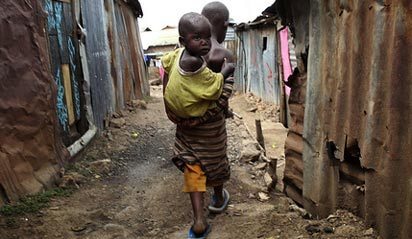
Poverty is deeply entrenched in Nigeria and ravages people’s lives devastatingly. It must be conquered because it leads to cycles of deprivation, whereas poverty is bequeathed from one generation to the other. However, any government that is not making genuine efforts to fight poverty is consciously pushing people deeper into it. This is because government policies significantly influence the extent of poverty. Therefore, impoverished Nigerians and the socially excluded must be helped to alleviate their plight.

Though welfare institutions have been designed to deal with the situations, at least on paper, the attempt to change the conditions of the poor fails because they are but dismal efforts, if not baseless paperwork. Inadequacy of the welfare state and the structure of society are responsible for poverty amid prosperity.

The welfare state is seen as the best remedy for overcoming poverty. Some social workers postulated that it helps tremendously in extirpating poverty and social exclusion and contended that it’s essential in solving many social problems. Therefore, full employment with prospects and increased welfare benefits would soon eradicate these intractable problems through redistributing wealth from the rich to the poor and significantly raising working-class living standards. However, critics argue that it does little to wipe it and even suggest it as a cause. 

Asa Briggs said that “the welfare state exists where governments decide that the private enterprise is failing to meet the needs of its citizens. The welfare state might intervene to meet such needs by providing services such as health care, education, social housing, transport and social services; or by redistributing resources to those in need through benefits system.” This means that money can be redistributed to the poor through the benefits system, and welfare services can be used to minimise poverty. 

The main problem with poverty eradication policies in this country is that they reduce the amount of poverty that truly exists. Hence, authorities attempt to deal with it through unfounded poverty alleviation programmes, frivolous economic empowerment schemes or even minor reforms. But, contrarily, its widespread are ruining Nigerians’ lives leading to social disorganisation, while deft changes are necessary to extricate it. Therefore, Nigerian policymakers must examine the problems in defining and measuring poverty and social exclusion, their causes and most importantly, the possible solutions.

Poverty is measured either in an absolute or relative term. Absolute poverty is usually based upon the notion of subsistence. This means that individuals are said to be poor if they lack the wherewithal to live decent lives. It is a judgment of basic human needs and is measured in terms of the resources needed for such living. Hence, it is much more concerned with establishing the quality and amount of food, shelter, clothing etc., deemed necessary to maintain physical, material, social and psychological wellbeing.  On the other hand, when measuring poverty in relative terms, the prosperity of that society at a particular time must be considered before fixing its threshold. 

The money needed for the subsistence level of existence must cover food, clothing, rent, schooling, fuel and light, and household and personal items. This must be adjusted according to family size.

Another contentious issue is whether poverty should be seen purely in material terms or must go beyond that. Supporters of the former view assume that poverty consists of insufficient material resources considered necessary to maintain a good everyday life. But, followers of the latter view believe it involves much more than material dearth. They see it as multiple deprivations with different dimensions.

For instance, there is a lack of educational opportunities, professional training or adverse working conditions. None of these conditions is directly related to an individual’s material possessions. It signifies radical societal changes rather than simply raising the income of the worst-off members. Tackling poverty in this sense would require a fairer redistribution of income, but also, it would require fundamental changes in the social structure.

Lawi Auwal Yusuf

Kano, Nigeria.

How to plan the prosperity of your family through Waqf  (II)

By Abdullahi Abubakar Lamido

Bleak Economic Future on Losing bread Winner

Think of it; the moment you die, the socioeconomic status of your children and wives changes. Your children (those young among them especially) become orphans, and your wives are called widows. While alive, you worked hard and earned for their feeding, clothing, shelter, education, healthcare and general wellbeing. The moment you die, they lose a breadwinner. If in your lifetime you have searched from the Islamic Sharī’ah, you would have learned the art and science of planning beyond your lifetime for these prospective widows and orphans. After relying on Allah, you would have built for them a prospect such that they would live a life of meaning, success, prosperity and contribution, insha Allah. And here comes the relevance of family waqf; waqf, in general, being the Islamic instrument for institutionalising philanthropy and ensuring perpetuity in giving!

Family Waqf as a superb socioeconomic institution enables one posthumously to maintain his parenthood and breadwinner status for his family, generates him reward permanently and preserves the dignity of his progeny everlastingly. In family waqf, you find one of the essential instruments for planning the future prosperity of your progeny.

Family Waqf as Solution

Family waqf, also called posterity waqf, is a kind of endowment created as a futuristic investment for the sustainable prosperity of the endower’s relatives or friends. It is often called a restricted waqf, distinct from a public waqf whose benefits go to an open class of beneficiaries. It can be for the immediate family; wives and children. It may also include parents. It can be made for the extended family, depending upon the financial capacity of the endower. One can make a family waqf for a child with a special need, say one with sickle-cell disease. The beneficiaries of a family waqf, in short, are those defined by the endower.    

Significantly, although the primary beneficiaries of this form of waqf are those pinpointed from the endower’s family, time may expand the scope of the recipients of its fruits. When, for example, the revenues generated from the waqf grow so large beyond the family’s need, or when the family gradually goes extinct after some long time, the waqf could be converted to a public waqf, expanding the coverage of those who enjoy its benefits. Therefore, what distinguishes a family waqf from a general public waqf is its scope of defined beneficiaries. Virtually all other rules of its governance are the same with public waqf. It can be made a direct waqf, one that creates direct benefits, on an investment waqf whose revenues are distributed to the designated recipients.   

Family waqf can be made for the provision of all forms of welfare and empowerment services for the family. It can be made for education, healthcare, feeding, clothing and other needs. It can also be made, specifically for the sponsorship of Hajj to family members. In this regard, instead of spending five million naira for two or three members of the family to perform Hajj this year, the same amount can be invested as a waqf, such that after its maturity, the proceeds from the investment waqf can be used to sponsor Hajj for a certain number of family members every year. With proper management and Allah’s barakah, instead of three family members, dozens of them can enjoy Hajj from the same seed money even long after the demise of the original donor. Waqf multiplies benefits and rewards manifold.

More often than not, you hear people complain over the demands of their family members overwhelming them even as they want to contribute. But little do they know they have a satisfactory answer in family waqf. For example, suppose you know you spend two million naira for the education of your children and extended family annually. Why not make an investment waqf so that the proceeds of the waqf relieve you of any spending in that direction in some years to come?

Form and Functioning of the Family Waqf

A person can build a rentable shopping complex, subscribe to Islamic bonds (Sukuk), buy shares of a halal company, and dedicate the same and profits thereof as a waqf for the education of his children and grandchildren. Likewise, one can build an orchard full of date trees, mango trees and other fruit-bearing trees, dedicating them as a waqf for the future specific or general financing of the needs of their children.

When the endower specifies in the waqf deed that it is only for the education of his children, then, as a rule, no part of the rentals shall be spent on other needs, just as the resources cannot be used to fund the education of children other than his, except when the yields grow far beyond the education of the designated siblings. If the endower dedicates it to education and healthcare, its proceeds cannot be diverted to feeding the family or other things except under absolute necessity. All this is to safeguard the sanctity of the waqf, ensure its sustainability, and guarantee the continuous flow of its yields in line with the overall goals and objectives for which it is created.

 The good thing is that, like all other waqfs, making it a family waqf makes the investment/asset inalienable. It prevents it from being counted among the inheritable wealth of the endower, as it will remain a separate entity that creates benefits perpetually to the entire qualified beneficiaries. The asset can neither be sold nor given as collateral. It remains a waqf asset. This way, even when the children need other things, they source them outside the waqf, allowing the waqf to maintain its defined purpose perpetually.  

The idea behind family waqf stems from Islam’s emphasis on ensuring the wellbeing of a person’s family and biological relations and the need to spend continuously on all aspects of their needs; spiritual, intellectual, biological, physiological, socio-cultural, and so on. Talking about spending, the Qur’an draws attention to prioritising spending on the family. When, for instance, the companions continued to ask the Prophet (SAW) how best to organise their spending, Allah intervened with a divine spending formula: that whatever you plan to spend for good or charity, direct it to your “parents, relatives, orphans, the needy and the traveller” (Qur’an 2: 215).

Your family, in short, occupies the first three spaces on your scale of spending preference. They are the primary beneficiaries of your giving, be it obligatory or voluntary. Now, if, as the Prophet declares, the most pleasing act in the sight of Allah is one that is perpetual and sustainable; then it becomes apparent that the most rewarding spending on the family is the “gift that keeps on giving”, that is a waqf that keeps bearing fruits to the family.

Start Early, Start Now!

It is important you begin the waqf plan early. Many people start their marital lives with moderate incomes, which, with little adjustments, a futuristic mindset and financial discipline, are sufficient to be divided into consumption, saving and little investments. However, financial shortsightedness often prevents them from allocating some portion of that “meagre income” to what would ease their financial burdens and create a sustainable flow of income – and reward- for themselves and their family in the future. Little do they realise that as their family grows, so do their financial burdens. If these are added to inflation and other economic unpredictables, the complexity of the situation worsens.

Many people do not also realise that the best immunisation from the negative socioeconomic consequences of shrinking disposable income is to begin early implementation of an effective financial plan. Many begin to regret when the regret cannot change anything; they would want to start to cry when the head is already cut off!  

So, plan for the future of your beloved wives, children and relatives. That is a Sunnah, a well-established one, for that matter. A viable and well-managed revenue-generating waqf can do that for you. You get double rewards; you safeguard your family’s future Islamically and earn rewards perpetually. Make an effective plan for their feeding, sheltering, education, medicine, and socioeconomic prosperity. Make a waqf for their Hajj, ‘umrah and general spiritual wellbeing. That is sunnatic. Do not miss the opportunity to practice this multidimensional Sunnah, the Sunnah of family waqf. Our dear mother and wife of the Noblest Prophet, Aisha, reports to us that the Prophet (peace be upon him) dedicated his seven gardens as waqf to benefit the clans of Banū Abd Muttalib and Banū Hāshim as recorded by Bayhaqi.

We also see emphasising family waqf in the guidance of the Prophet to his companions. After the revelation of the verse “By no means shall you attain righteousness/piety unless you spend of that which you love; and whatever good you spend, Allah knows it well” (3:92), Abu Talha met the Prophet and said, “This is what Allah has revealed, and the most treasured of all my wealth is this garden, Bayruhā’. I have set it aside as a adaqah to attract reward from Allah. Therefore, you should administer it the way you wish”. The Prophet was amazed by this gesture. And so he said, “Certainly your wealth is blessed. Having heard what you have said, I recommend that you dedicate it as a perpetual charity to your relatives”. Based on this Prophetic advice Abu Talhah made it a waqf for his close relatives and cousins (Bukhari and Muslim).

It is interesting also that most companions of the Prophet are reported to have implemented this Sunnah. For example, Caliph Abubakar dedicated a house as a waqf for his son, and Umar dedicated a waqf near Marwa to his son. Also, Zubayr endowed a house in Makkah, another in Egypt, and yet another in Medina as waqfs for his children. Amr b. ‘Āss endowed a house and another huge property in Mecca for his children, just as Hakīm b. Hizām also dedicated a house as a waqf in Mecca and another in Medina for his son. After reporting all of these, Ibn Qudamah says in al-Mughniy, “All this are intact till date”.

Family waqf is a Sunnah of the Prophet, his companions and generations of Muslims in the last fourteen centuries. It is a well-developed institution that grew as a robust instrument for family empowerment and societal development until it faced the orchestrated wrath of the colonial monsters. The colonialists saw it as an institution that gave families and societies independence against their mercilessness and hence officially abolished it in Muslim nations like Egypt, Morocco, and so on.

Sadly, there is hardly any evidence of its practice as enshrined in Islamic law and civilisation here in Nigeria. With the growing waqf awakening in Nigeria, one hopes that a new page would be opened for entrenching this all-important Islamic civilisational institution. The good news is that with each family doing it, we gradually build a new waqf generation. Through that, we give a big blow to poverty at family levels before we finally eject it out of our communities. The early we sow, the earlier we reap. The more we sow, the more we reap. May we begin this journey NOW.

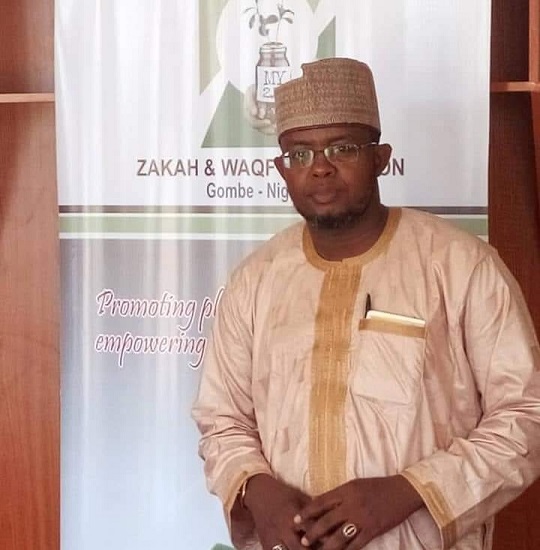
Abdullahi Abubakar Lamido, Chairman, Zakah and Waqf Foundation, Gombe . He can be reached via lamidomabudi@gmail.com.

On schooling and becoming rich

By Alkasim Harisu Alkasim

Often, the people that idolise going to school are arguably the ones who, in the long run, turn out to be stinking poor. This is to paraphrase a friend that ardently considers schooling a total waste of time. This assertion is controversial. But, is my friend spot-on or not? It is, to some extent. Still, I have my buts. 

This argument has often generated a heated debate amongst us. Whenever it comes to my mind, it reminds me of Kiyosaki’s book Rich Dad, Poor Dad. The writer dissects factors that hinder the learned from earning big bucks. Kiyosaki argues that going to school is the biggest hurdle that denies one the chance to make a bank. He opines that a person spends twenty to thirty years worshipping books, yet, over that period, he scarcely becomes a big gun. Unfortunately, in Nigeria, one ends up jobless after this long journey. 

Debunking formal education, Kiyosaki argues that a person is not taught a single subject on how to make money from primary school to university education. The conventional subjects such as chemistry, physics, literature, etc., are what one seriously enrols in. In his opinion, students should be taught topics such as financial education. Education indeed discourages one from accepting jobs that are not money-spinning. For instance, somebody with a Master’s degree or PhD will feel ashamed to sew for a living, not to talk of driving the commercial tricycle (aka A Daidaita Sahu). 

Are the graduates the only ones to blame? This is a question we should all ponder. The government is blameworthy too. Like it or not, the government cannot give everybody a job. True. But it can establish a conducive environment to doing other jobs. I have never hunted for gainful employment, thanks to my passion for academia. I know this job in Nigeria does not make you a money bag. Yet, I have for long picked interest in it.

In the developed and even some developing economies, the private sector employs a great score of people. The government creates an environment that will aid it to carry out its businesses for the sector. Private sectors pay handsomely in such countries, especially in the western world. I wondered if you know that employment is scarce even in the UK. Even the rampant lack of jobs causes deviance and other criminal acts there. (See Haralambos and Holborn’s book on Sociology).

Of course, we walk tall. We don’t want to do what society looks down on. However, some of us make an exception here. I know of a person with a First Class honours degree in engineering who humbled himself and took up a job many of us can’t do. He ekes out his livelihood from selling coals, taking pride in it. He sees the world of the little he earns from what he sells. Life goes on. Nothing reduces his charm.

I was once in India for a higher degree. There, I saw a lot of wonders. We had a cook in our university who is a master in political science. It is said that people with first degrees in India outnumber the whole population of France. Remember, India is the second-most populous country in the world. Imagine somebody in Nigeria cooking for a living. I don’t say we can’t find one. But rarely can you find more than two in your quarters. Of course, people with degrees, or even diplomas in Nigeria, feel too big to do lowly jobs. I, nevertheless, think our arrogance is reducing because you can now see graduates doing menial jobs. Why not? There is a score of jobless First Class students roaming the streets.

I submit that people with higher educational qualifications always end up jobless or not raking it. People with lower qualifications or no qualifications are the ones that are the business moguls. Jeff Bezos, Bill Gates, Elon Musk, Mark Zuckerberg and Aliko Dangote are textbook examples. Zuckerberg dropped out of Harvard, and he is now stinking rich. 

Indeed, formal education discourages and slows down creativity. It also dampens one’s enthusiasm. Honestly, the way an avid reader confines himself in his study speeds his entrepreneurial death. This is nothing but creative imprisonment. Whenever in his study, the reader seems to imprison his creative faculty in books. He brims with wishful thinking,  ideals and all what-have-yous owing to his fervent reading of all sorts of books. 

Having read a lot, he begins to idealise the world. He pictures and pores over how the world should be. But this is just his wildest dream. In his attempt to make the ancient Greece an ideal state, Socrates lost his life. He was sentenced to death for being a corrupt influence. In his book The Republic, Plato also romanticised how Greece should be,  how rulers should lead, the type of people to obtain in a state, and those exiled. After all, he died not having his dreams fulfilled.

Not very long ago, Karl Marx and Friedrich Engels conceptualised and advocated a classless society in their works. For instance, they co-authored a book titled Communist Manifesto. In the book, they discussed how the masses could emancipate themselves from the domination of the bourgeoisie. In his three-volume book Das Kapital, Marx critically studied the architecture of the economies of European societies. Unfortunately, most of the ideations and philosophies of these great thinkers flopped. For instance, Marx’s classless society idealised where all and sundry would live equally has yet to happen. Marx, who died an atheist, lacked the knowledge that such a classless state is a paradise. So said Dr. Saidu Ahmad Dukawa.

May Allah awaken and help us embrace the realities of today’s world. May we not feel too big to do the most menial jobs we can find around. The journey is long. You can start unimportant and end up important, and vice versa. Remember that Margaret Thatcher was from a lower-class family. She went through rigours to make it to the upper class. 

Wonderfully, Thatcher became the first female UK Prime Minister. She was even taught how to speak, walk, and act in an upper-class-like way when voted into office. Like the UK and other democratically capitalistic countries, Nigeria also allows social mobility. Thus, try to move up the economic ladder. Just give it your best shot. You can. I, rest assured, know you can.

Alkasim Harisu Alkasim wrote from Kano via alkasabba10@gmail.com.