PDP

A refresher for southern governors

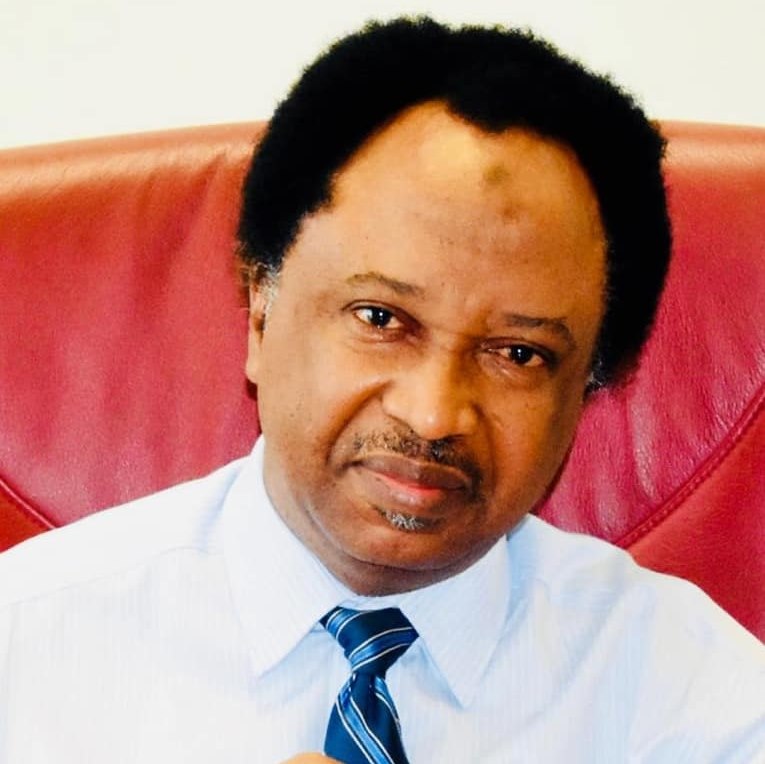
By Abu Haneef


The governors of southern Nigeria held a meeting in Lagos on Monday, July 5, 2021. They, among other things, demanded the return of the presidency to the South in 2023. They also rejected two sections of the recently passed Petroleum Industry Governance Bill (PIGB). While the governors are entitled to their opinion, the return of the presidency to the South will however require much more than a demand from the governors—it will require fielding a Southerner that can win in a free contest. As for the rejection of some sections of the PIGB, their opinion on such a legislative matter is hardly any different from that of ordinary Nigerians and indeed of no legal significance to the implementation of PIGB. Perhaps they need to summon their legislators for an honest discussion. 


Between the 4th and 9th legislative assemblies in Nigeria, the PIGB was stalled for over 20 years due to unrealistic demands by many interest groups. This has led to the inefficient utilisation of our petroleum resources and the inability to open our economy to private investments. Therefore, the passage of this bill brought a huge sigh of relief to many who appreciated the impact its delay had on our development and economy. And today, PIGB is arguably the most debated bill in Nigeria’s history. 


The two sections contended by the governors are the allocation of 3% of NNPC’s profit to host communities (they need more) and 30% of the profit to exploration activities in the basins (they need less exploration elsewhere). 


Although the situation of the host communities is something every Nigerian should be sympathetic to, such sympathy should not mean giving them everything while other regions suffer deprivation. The host communities have 13% derivation, deducted from government revenues (not just oil). They also have a federal ministry dedicated to their needs and another government parastatal, the Niger Delta Development Commission (NDDC). Although these considerations will not replace what the region has lost (and is still losing) of its livelihood to oil exploration activities, particularly those illegal activities by the locals, it nonetheless does not justify the denial of the country to increase its revenue by exploring the basins. And lest they forget, the oil in Niger Delta was explored through revenues from our erstwhile groundnut pyramids. It also does not justify the disproportionate allocation of the nation’s resources to them exclusively. 


For example, in addition to sums budgeted for the Ministry of Niger Delta and the NDDC, Delta State alone received almost N190 billion in federal allocation in 2020, which roughly equates to what was received by four North-Eastern states of Bauchi, Borno, Gombe, and Adamawa during the same period. And this will be more appreciated when the difference in population and landmass is added to the analysis. 


I’m not mentioning this to suggest that the host states (which now include Bauchi and Gombe States, by the way) do not deserve this patronage. Still, I do so to disagree that the nation has neglected them as always projected when the leaders require additional resources of those communities. And looking at the resources allocated to the host communities in the last decade alone, their leaders, rather than Federal Government, are the ones guilty of this neglect. 


But all this argument and counter-argument can only be a lamentation or justification, depending on what side of the divide you find yourself, as those saddled with the constitutional responsibility of determining the matter have done so, albeit after a very long time. And any effort to undermine the National Assembly is actually a renegotiation of this country through the back door, which any reasonable person should not contemplate at this critical period of our history. 


As for the governors’ request for the presidency to be returned to the South in 2023, they, particularly those amongst them who championed the jettisoning of zoning arrangement in 2011, such as Wike, need to be reminded that if the aggressor forgets quickly, the victim does not. 


In 2011, the South, led by President Jonathan and many of those clamouring for it today, abolished zoning in defiance of all reasons and a gentleman agreement established by the North to protect the South that is unarguably the minority in Nigeria. This is true regardless of how one chooses to look at it—either by landmass or population. 

Now that zoning has been thrown into the bin of our history by the South; the presidency shall remain open to a free contest by all. And even if this zoning arrangement will be revisited in the future, not now, if you ask me; a good lesson needs to be taught and learned on the importance of the sacrosanctity of agreements, or else, we may see a repeat of the logically fallacious arguments tossed left, right and centre in the justification of abandoning zoning by the same actors calling for its return today. 


Abu Haneef can be reached via imabuhaneef@gmail.com.

APC jubilates accepting Matawalle in bloodbath baptism

By Mubarak Ibrahim Lawan

“At least 1,126 villagers killed by bandits from January to June 2020”, reported Amnesty International on 24th August 2020. And only God knows how many people so far killed from that time to date. JUST LAST MONTH as reported by different papers, remember that many are not reported, they killed 48 people in Danko/Wasagu Local Government area of Kebbi State; 93 people in Kadawa village of Zurmi, Zamfara State; 20 people at Zungeru, Niger State; 4 and 11 people in Southern Kaduna; 7 persons including police inspector in Zandam Village, Jibia Local Government of Katsina State; 12 people at Maikujera in Rabah Local Government of Sokoto state, etc. And, how many kidnappings and Boko Haram killings? Still, only God Knows!

So as every sensible Northerner grieves over these killings, banditry and kidnappings in Zamfara, Katsina, Kaduna, Sokoto, Kebbi Niger and Borno, our leaders celebrate Governor Matawalle’s defection from PDP to APC and throw parties in Zamfara against the background of bloodbath in the State. Comparatively, great leaders mourn fewer deaths in their country, resign their position for such tragedies that outsmart them or show doubtless commitment to resolving the mystery behind the deaths, but ours turn a blind eye. I worry that their inhumane unconcernedness is diffusively affecting us as we become less and less shocked by the deaths and savagery of the human beasts around us.

Notwithstanding attacks on traditional rulers and the politicians themselves, like the attack on Ganduje’s convoy on their way back home from the Zamfara party, that particular nonchalant behaviour of the leaders is making us believe that there’s no way out of the “new normal” because of two possible reasons: (1) the ungovernability of those criminals, or, in other words, they are more powerful than the nation and, (2) the nation has decided to relinquish control of their places silently. When the army or police complain, indirectly, of being ill-equipped to win the wars with the criminals; that they are overstretched, and their number is insignificant to address the herculean task, I agree that the second hypothesis above is true, because the nation can do better.

On the inadequacy of the Nigerian army, Samuel Ogundipe of Premium Times wrote, on August 4, 2016, that “Nigeria has one of the lowest military-to-civilian ratio of nine personnel to every 10,000 people, a situation it said was alarming for the country’s security framework.” Still, as of then, Ogundipe asserted that “Nigerian military personnel can be found on active deployment in no fewer than 30 states of the federation, tackling internal security threats that ordinarily should have been left to the police and paramilitary agencies to contain.”

Then there is no need for us to know exactly how many military personnel we have today in the country. But it is good to know that from about 10,000 strong in 1966, General Yakubu Gowon then expanded Nigeria Armed Forces to about 256,000 strong before he was overthrown in 1975. So more than 40 years after, we still have a similar or less number of Armed forces strength.

After continuous retirements, deaths and below-par recruitments in years after Gowon, Buhari, in 2015, met about 205,000 strong and now expanded them to about 220,000. But, unfortunately, military politics and these years of democracy have politically bastardised the military through favouritism, nepotism, corruption, poor salary and allowances, inferior weaponry and morale.  So with the spate of incessant violence from 2010 to date, the Nigeria Army has been made the scapegoat for leaders’ failures.

Nigeria police face similar or worse political bastardisation. We have 371,800 strong in a country of about 200 million people. Still, the governments waste resources on recruiting Hizba, KAROTA, KASTELIA, Amotekun, Civil Defense and the like. If these youths were to be absorbed into the police force, no bandit and kidnapper could wander freely. But, I see the accurate picture of our chaotic country these days when, on lockdown days, I encounter people on roadblocks with different uniforms working for unnecessary organisations. I pity us!

We really need thoughtfully progressive leaders who could reduce nomenclatures, harmonise, expand and sanitise ministries, commissions, boards, services and what have you! We, “the leaders of tomorrow”, should make this a measure for picking a political candidate if he presents us with sound plans, especially on security services. Most police and military personnel are left without seminars, courses, workshops and training that would bring out their best. So we need leaders who will make that possible.

Mubarak Ibrahim writes from the Department of English, Al-Qalam University Katsina.