Northern Nigeria

Letter to late Sir Ahmadu Bello, the Sardauna of Sokoto and Premier of the defunct Northern Region

With pain and anguish, I decided to make this communication with your soul, which I believe is resting well. I must confess that I do not know you personally, as I was not born when you held sway as the Premier of the defunct Northern Region. However, I have heard so much about you from my late father. He narrated stories about how you conducted your political activities geared towards our region’s progress.

Today, things are no longer at ease in Arewa. The land of our great ancestors is in chaos and anarchy while life has become nasty, brutish and short. Arewa has been turned to a killing field by terrorists with the blood of innocent people crying for vengeance. The elites that took over the mantle of leadership from you have destroyed all that you laboured to build. They live in luxury and great comfort while most people are dying in poverty and hunger. Their children study in Ivy League schools in the West with public funds and return home to take the best jobs while the children of the poor are roaming the streets and eating from the dust bin. Many families can no longer eat three meals per day, as good food has become a luxury. The cost of living has continued to rise with stagnant wages.

Sardauna, you are known as a warrior who strived hard during your era to emancipate the poor by ensuring that parents sent their children to school, which was free those days. Your late daughter Hajiya Aishatu, whom I interviewed at her residence in Sokoto in 2013 during my stint with THISDAY Newspaper, spoke extensively on how you carried all along and worked tirelessly to ensure unity in the north irrespective of tribe or religious affiliation.

It is no longer at ease at the moment. The children of the poor that you trained free with the resources of the Northern region before Nigeria’s independence, and those who came after them, have ruined your efforts. They have become feudal lords and turned out to enslave us. They have sold all the assets that you and other great northerners toiled to build over 60 years ago, while organisations you set up like the New Nigerian and textile industries in Kaduna, among others, have all collapsed. They not only mismanaged these organisations but also destroyed your legacies. Many people in northern Nigeria have been homeless and are currently in IDP camps, frustrated and dehumanised. They have been sacked away from their villages by terrorists while vast agricultural lands have been left fallow without any farming activities.

Today our region is littered with many orphans and widows whose husbands have been hacked to death by bandits. We have so many children (Almajiris) roaming the streets without any future while the elites do not care. Some of the Almajiris, neglected by the society, lack basic education and opportunities, unleash terror on the society that neither cared for them. Your grandchildren no longer have access to what the people you earlier trained free in some foreign institutions enjoyed a few decades ago. Today the children of the poor no longer have access to quality education, as they study in dilapidated primary and secondary schools. At the same time, the political elites send their children to study in private schools both locally and overseas.

The painful aspect of this is that they now packaged a man without empathy and presented him to us as a messiah in 2015. Our people heeded the call and voted him into power, believing that he would usher us into prosperity. Since then, our region has never known any peace. Bandits have taken over our major roads in the north, especially Abuja-Kaduna road, kidnapping people for ransom. Families have been compelled to sell their properties to raise money for ransom. These hoodlums kill their victims, especially those whose families cannot pay the ransom, while their remains are thrown away in the forest.

Similarly, our farmers in rural areas can no longer go to their farms in peace for fear of being killed. Those who managed to plant their crops could not harvest them, as the crops were set ablaze by these urchins. The agricultural foundation of the region is being destroyed while those at the helm of affairs do not care.

Inequality is at its peak in Arewa. The political leaders are using politics and religion to balkanise our society. In fact, as a journalist who worked in the region for over a decade, I had it on good authority from a reliable source that some politicians are behind the killings in Arewa. I am, indeed, aware that you did not amass any wealth before your death. But the people that came after you have stolen our commonwealth and used the funds to purchase mansions and exotic houses in London, New York, Paris, Switzerland, Malaysia, Dubai and other top cities in the world. They do not care if our region goes up in flames because they believe they have a place to hide in case of an outbreak of war.

Today our people are being killed daily by primitive herdsmen while our women are raped indiscriminately in remote communities. The political elite in cahoots with the traditional rulers have neglected a large segment of the society. The clerics who are supposed to serve as a beacon of hope for the masses have been compromised. They have become silent and afraid to speak out for fear of the unknown. Those Islamic scholars, who had the courage to speak, admonished our youth not to protest but engage in fervent prayers. Allah will come down to fight our battle if our youth refuse to take action.

The painful aspect of this is that even the activists who protested a few days ago to create awareness about the ongoing genocide by Fulani bandits in rural areas of Sokoto, Zamfara, Katsina, Nigeria and other northern states have been threatened by the officials of the Department for State Security Services (DSS). So, who will fight for the poor and downtrodden and fight for the orphans and widows?

Our people have become hopeless. The issue that has been bothering me is what the Arewa dream is? Of course, it won’t be easy to answer at the moment. An average Arewa youth is just focused on marriage. That is the dream for many of our youth. Illiteracy, drug abuse, unemployment has become recurring decimal. Is our society on the brink? Are we heading towards a state failure? Who will rescue our people and wipe away our tears? Should we take the law into our hands or hearken to the voice of reason? What is the way out of this misery?

History will always be kind to you, Sardauna, as all and sundry adore you due to the sacrifice you made for the development of Arewa. However, history will not be kind to the present crop of leadership in Arewa, as they have mismanaged your legacies and our patrimony, thereby plunging millions of our people into misery. May you continue to rest in peace, and I pray Almighty Allah to forgive your mistakes and grant you Aljannah Firdaus.

Yours sincerely,

Aminu Mohammed

The writer is at the school of Sustainability, Christian-Albrechts Universität zu Kiel Schleswig Holstein, Germany. He can be reached via gravity23n@gmail.com.

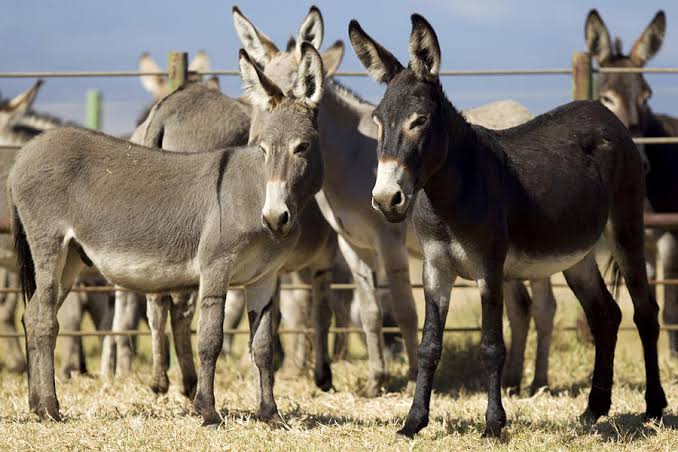
The cow does not need oil

Ahmadu Shehu, PhD.

It is true that the large chunk of Nigeria’s export comes from oil and that Nigeria depends to a great extent on this commodity for economic survival. However, this situation results from economic laziness – one of the many curses that came with crude oil to our country.

Pre-oil era, Nigeria was faring better, leading in many aspects of social and economic endeavours, especially agriculture and technical skills. This diversity of resources made our economy very resilient. Those were the days when Nigeria was a role model to the developing world.

Speaking of livestock and animal husbandry in today’s Nigeria leads to misleading insinuations that some supremacist ethnic group domiciled in the bush wants to hijack the “southern-oil-money” to rear cows.

These claims are not only wrong, but their makers are also pathetically ignorant of national and global economics. The fact is that, all over the world, animal husbandry is mainly economic and not ethnic, religious or regional. It is a matter of income, survival and sustenance. Data from butcheries, ternaries, restaurants, etc., in Enugu, Lagos and Port Harcourt can confirm this.

However, I do not squarely blame the proponents of these narratives for their lack of understanding of the fundamental economic outlook of this country. Instead, I assume that this kind of utter ignorance is also one of the curses caused by crude oil in Nigeria. Just as it killed all other viable sectors of our economy and transformed our political leadership into a set of docile, sit-and-wait set of people, it has succeeded in destroying our intellectual discourse. Today, all socio-economic conversations are viewed from the narrow prism of petrodollars.

Thus, our socio-economic and political conversation is now bereft of ideas and far from our social realities. It is sad to see many people failing to appreciate the glaring fact that six decades after the discovery of oil at commercial quantity, this country did not only fail to develop but has moved backwards in all indices of human and social development.

The topmost hierarchy of political leaders, policymakers, and civil society has failed to learn one simple, practical truth: our country’s strength, resilience, and prosperity are not in oil. They are right there under our feet and noses, at the backyards, waiting forever to be harnessed and utilised. Nigeria can take a cue from our mates, ala Malaysia, Indonesia, Brazil, India, etc.

Now, back to the “oil-money” narrative. Are herders and cattle breeders asking for “oil money”? No. In fact, herders do not care – or are not interested in crude oil in Nigeria.  Secondly, those of us advocating for the development of the livestock sector do so for the economic advancement of Nigeria, in general, and not just the herders, or “Fulani”, as would say the bigots.

For one, agriculture (livestock and crop) is the largest contributor to Nigeria’s economic growth. It contributes 40% of economic activities, employing over 60% of our country’s population – that is, one hundred and sixty million Nigerians.

You may think that the livestock sector is economically barren and that governments and other sectors of the economy do not benefit from it. You may even argue that only the “malams/awusas” benefit from the economic resources in this sector. But, you are dangerously mistaken, and I will show you why.

In Nigeria today, livestock is a multibillion-dollar business sector. Estimates by the Federal Ministry of Agriculture show that each year, Nigeria produces (and consumes) at least 18.4 million cattle, 43.4 million sheep, 76 million goats, 180 million poultry birds, among other things. Multiply these numbers to any amount of years and see the contribution of the livestock to the Nigerian economy.

For demonstration, let’s assume each of the 18.4 million heads of cattle is valued at $200 only. What you get is a staggering 6 billion dollars – three trillion naira per year – i.e. about ¼ of the country’s annual budget.

My experience in cattle businesses tells me that governments at all levels make a minimum of 10% direct revenue on each cattle, ranging from the market, local government, state, transportation, etc., levies that trail the cattle market chain.

But, this is just for cattle. These numbers multiply exponentially when other varieties of livestock come into the equation. Now, consider additional extended revenues on factories and sub-sectors that rely solely on livestock, such as leather, meat, and dairy.

While doing the maths, please remember that these raw and food materials serve Nigeria, one of the largest markets in the world, the most populous African country and the largest economy on the continent. Thus, the economic resources and taxations derived from this sector are massive!

Therefore, the question that naturally follows this arithmetic is: How much is Nigeria’s budget for the development of this sector and the millions of people it employs? 

As Nigerians, we are aware of the 12% derivation to the so-called oil-bearing states at the expense of other equal federating units. The basis for this disparity is to enhance the development of the immediate oil-bearing communities.

Similarly, a large chunk of the oil income is reinvested in the oil and gas industry development. Businesses and individuals in this industry benefit tremendously from these incentives and investments.

On the contrary, the Nigerian budgetary allocations for agriculture, particularly the livestock sector, have been very meagre and far below the lowest AU benchmark of 10%. For instance, from 2015, the allocations for agriculture have been below 2% of the budget, receiving a paltry N160 billion (1.37%) in 2020.

Obviously, this is far from commensurate to the economic and financial contributions of the sector in Nigeria’s GDP. It also negatively affects the lives of the majority of Nigerians whose livelihoods depend on agriculture.

While the government’s spending on agriculture is pathetic, the situation is even worse in the livestock sub-sector. For instance, under “promotion and development of animal production and husbandry value chain”, the 2020 budget proposes only N546, 156, 792 for the whole livestock sub-sector. Note that this amount was not budgeted for just cattle, sheep, or poultry but Nigeria’s entire livestock value chain. And that is just a proposal, not actual spending.

This, given the resources, financial and material contributions of the sector, is an insult on the human senses of any keen observer. Moreover, juxtaposing this estimate to that of the crop value chain makes the economic injustice against livestock producers even more glaring.

Therefore, it appears that livestock production and development are grossly marginalised across all three tiers of government and even within the agricultural sector. I had hypothesised elsewhere that this disparity is one of the major causes of the setbacks in Nigeria’s efforts at agricultural development.

Now, in this socio-economic reality, the governments and other Nigerians outside the economic chain of livestock anticipate a quick, sufficient, and even elegant modern livestock breeding system in Nigeria.

Worse still, the government expects these people who suffer from this severe lack of financial support, access to social development and political representation to be absolutely immune to the social consequences of this economic inequality and injustice.

This, without fear of contradiction, is an impossible mission. For, we have learned from the works of the philosopher-king, Emir Muhammad Sanusi II, that every economic situation bequeaths social reaction(s), as humans are not only social but also “economic animals”.

The points derived from the previous discussion are that herders and livestock breeders do not need oil or its by-products to grow livestock. They do not also ask for money accrued from the oil and gas industry to be invested in developing the sector.

What the livestock needs – which is legitimate and necessary – is the reinvestment of a fair portion of the wealth it creates back into the sector and the social development of the herding communities.

By and large, herders are not asking for “oil money” because the cow does not need oil to prosper. We are only saying that the money accrued from the livestock sector – a small portion of our contribution to the nation’s economic basket – be reinvested into the very sector that produces it as is done for other salient sectors of the economy. Full stop!

Dr Ahmadu Shehu is a herdsman and academic. He can be reached via ahmadsheehu@gmail.com.

Buhari’s popularity plummets to new low – survey finds

By Sumayyah Auwal Usman

President Muhammadu Buhari’s popularity has plummeted to the lowest level since he took over as the country’s leader in 2015, according to the latest Vanguard for Good Governance Initiative (VGGI) survey.

Results of the survey compiled by VGGI, show President Buhari’s popularity has declined sharply during the past two months with his approval rating dropping from 58 percent to 21 percent.

On specific issues, the survey found Nigerians, especially northerners, were unhappy over matters of heightened insecurity. Moreover, concerns about the economy, especially the cost of living and rising inflation are now seeing the president’s popularity hitting an all-time low among Nigerians.

The survey also reveals that the IPOB activities in the South-East is crippling the economy of the region.

VGGI says its survey consisted of phone calls, emails, interviews and text messages over the past three months to slightly more than 150,000 people.

Northern insecurity and politicisation of terror

By Tahir Ibrahim Tahir

It is no longer news that on December 7, 2021, 42 innocent travellers were gruesomely burnt in a bus as they moved through Gidan Bawa village of Sabon Birni local government of Sokoto state. Thirty-five died instantly, and seven survived with very severe burns. May Allah shower their souls with his mercy.

The attack is one of the most horrendous and inhumane acts of the bandits that have since visited Northwestern Nigeria with an orgy of violence. I believe this barbaric act accounts more for Sheikh Gumi excusing himself from speaking on behalf of the bandits than the reason he gave – citing their proclamation by law as terrorists. This heartless, baseless and demonic act of burning a fellow human being alive has laid bare the true nature of what Nigeria has been fighting for so many years.

Fighter jets bombarded many enclaves of the bandits, east of Dumburoum forest in Zurmi, Zamfara, and also in Sokoto and Kaduna states, as well as ISWAP locations in far away Borno state, a day before this inhuman slaughter at Gidan Bawa. It is evidently a reprisal attack and an inadvertent confirmation of the nexus between ISWAP, Boko haram and Bandits – the same hydra-headed terrorism monster.

It is no longer news that northerners are moaning beneath the anguish of the mayhem that these ‘organisations’ have visited upon their people – annihilating human lives like they were crickets. More lives are lost to terror, and there doesn’t seem to be a decline. A 100 lives are lost in a week sometimes. Northerners are increasingly livid over the fact that PMB is a northerner. As President, he ought to secure his northern constituency – letting their governors, legislators, service chiefs and other top government functionaries off the hook for the bizarre and profoundly depressing situation of the North.

It is no longer news that the FG has made massive investments in security, purchasing no less than 60 fighter jets (fighter helicopters, FJ-17s, Super-Tucano, M346 Italian jets) along with battle tanks, MWRAPS, TAVORS, Armored navy vessels, and sophisticated surveillance systems. Bases have been positioned throughout the length and breadth of the war theatre. More boots are on the ground than ever, most definitely more than the civil war. All air assets have been deployed in the North to fight terrorism. So what in God’s name could be the problem?

It is no longer news that the weaponisation of poverty, in the long term, especially in Northern Nigeria, is mainly responsible for the hell pit we’ve found ourselves in. We watched our leaders dig us in and did us in while we egged them on for as long as it favoured us. We genuflected before them, made them take bows, applauded them – and allowed them to go scot-free. The masses and the village dwellers suffered this weaponisation with years of untold hardship, weeping blood. In contrast, we, the elite and the city dwellers, enjoyed all the blood money and whatever elitist pleasures therein. Now the shoe shiner is wielding an AK-47, so is the Maiguard. The herdsman is a warlord, so is the Vectra driver an informant. One of the Northern universities’ security chiefs is a kidnap kingpin, and a Hajiya in the village is the supplier of thousands of rounds of ammunition to bandits. The questions bang your scalp like the heavy August rainfall; who is not a bandit, or a terrorist, or an informant, or a kingpin or some helper of a sort to these terrorists? The North is hardly an image of its once prestigious self, now hunched with woes and barely a shadow of its erstwhile esteem. The hypocrisy screams to the high heavens, muttering sulky and morose invectives at PMB alone as the bane of our problems. Indeed.

It is no longer news that a foreign journalist, in an article titled, “The bandit warlords of Nigeria”, navigated the nooks, crannies and alleyways of bandits in the North, unharmed by these demons; inadvertently betraying the conspiracy of banditry in the North. He waxed politics with the bandits, claiming OBJ and Jona are far better than PMB, who the bandits say stifles Islam! Lord have mercy on our souls. He also erroneously put Fulani bandits as conquest driven Islamic extremists. This faulty description only further lumps Boko haram and Bandits together.

The news headline that should be etched into our consciousness is the reality of Nigeria long being marked as a state for Balkanisation. A proxy war is being fought out with our homeland as the battlefield. Eastern merchants versus western warlords are slugging it out, punch for pound. Islamic North, its idealistic and archaic ways are a thorn in their meal. As they carve their diamonds clean, our population suffers the brunt of their steel.

What is left for us is the Sunna of the Prophet (SAW), backed by his hadith, describing the bigger Jihad as striving for one’s cleansing and towing the path of righteousness – backed by Q22:78. The strange situation in the North is the duty of every northerner to un-knot, un-tie, and crack. Prophet SAW was the last one, so we have to be messiahs unto ourselves.

We must encourage ourselves to eradicate this phenomenon that has become the new Yahoo or money bet of the North. We must expose ourselves and fight ourselves by ourselves. No war ends with a gunshot. It can only start it. So we must sit together, back-benchers, frontliners, warts and all, voodoo if you like – and do the needful. As our faith is in our hearts, so is our fate in our own hands.

Tahir is Talban Bauchi. He wrote from Bauchi via talbanbauchi@yahoo.com.

Governor Fayemi pays tribute to Malam Aminu Kano, says he was real ‘patriot’’

By Muhammad Sabiu

The governor of Ekiti State and a key figure of the All Progressives Congress (APC), Mr John Kayode Fayemi, celebrated the late Malam Aminu Kano over his patriotism, advocacy for education and support for the poor.

Delivering a speech on Saturday to commemorate the 21st anniversary of Mambayya House at the Sa’adu Zungur Auditorium Complex in Kano, Governor Fayemi said he was so delighted to be invited to give a talk at such an event, adding that “Mallam stood out in our entire post-colonial experience as the very anti-thesis of money politics.”

Mr Kayode’s speech partly reads: “Born on the 9th of August 1930, and as an early beneficiary of both Quranic and Western education, Mallam as he came to be known affectionately very quickly carved a niche for himself as the pre-eminent voice and champion of the talakawa – that mass of peasants, the urban working poor, and the déclassé.

“His emergence and growth into this role emanated from a deep-seated set of values that he embraced and honed at an early stage in his political career and held on to tenaciously for the rest of his life.

“Concerned by the reported excesses that were built into the colonially-licensed native authority system and convinced that the system needed to be overturned in order for the talakawa to be able to have a fighting chance to lead a decent and dignified life free of oppression, he committed himself to organise the mass of the people to exercise their agency to imagine and create an alternative political order.

“The principal agency through which he did this was the movement which he helped to found in 1950 and which was named the Northern Elements Progressive Union (NEPU). The establishment of NEPU was to mark a significant milestone in the history of political radicalism in Nigeria. The tradition of radicalism which it represented was carried over into the late 1970s and beyond by the Peoples’ Redemption Party (PRP), which Mallam Aminu Kano also led.”

Malam Aminu was a famous political figure, especially in Northern Nigeria. Public institutions named after him include an airport, a teaching hospital, and a college in Kano and other states.

Many dignitaries from around Nigeria graced the occasion. These include Governor of Jigawa State, Muhammad Badaru Abubakar; former Deputy Governor of Kano State, Prof. Hafizu Abubakar; Vice-Chancellor of Bayero University, Kano, Prof. Sagir Adamu Abbas, among others.

Greedy Nigerian leaders lack intellectual capacity to lead – Prof. Jega

By Uzair Adam Imam

Former Chairman of the Independent National Electoral Commission (INEC), Prof. Attahiru Jega, has described Nigerian leaders as greedy who lack the intellectual capacity and vision in terms of how to usher in developmental projects.

Jega stated this on Monday, 15th November 2021, at the Maitama Sule Leadership Lecture Series, organised by the Students Wing of Coalition of Northern Groups (SW-CNG), in Katsina.

He also added that the insecurity and economic challenges that have been bedeviling the country for a long time are as a result of the country’s bad leadership.

Jega said: “The major indices of these crises manifested themselves from the Northern part of this country, whether it is poverty, youth unemployment, security challenges, maternal mortality, out-of-school children, lack of girl-child education and early marriage as well as the challenge of reproduction of our females.

“Anything you can think of, the terrible statistics come from the Northern part of this country. And why is it so? That is the key question. Today, we remember the Maitama Sule, the Amadu Bellos, Isa Katais and many others.

“These were people who led and protected the North and ensured that the North developed in accordance with its ability and their own abilities as leaders. While we cherish the memories of what had happened in the past, what kind of leadership have we got from the Northern part of this country?

“We have so-called leaders who are selfish, who are not selfless, greedy, who have a narrow vision in terms of how this country can develop not to talk about the region where they come from. They really lack intellectual capacity to be classified as leaders,” he said.

Abductors of Zaria council workers demand 100M ransom

By Hussaina Sufyan Ahmad

On Friday, abductors of the Zaria Local Council workers in Kaduna State contacted individual families to demand ransom, ranging from N15m, N20m to N100m on each abductee.

Spokesperson of the Coalition of Northern Groups (CNG), Abdul-Azeez Suleiman, confirmed this on Saturday at Abuja. He said:

“It has come to our notice that the abductors had made contact with their families. We learnt that the captors assured their safety to the families of the captives and demanded ransom.”

“With the unfolding scenario, the CNG headquarters has resolved to direct its Kaduna State students’ wing to put its planned mass protest on hold so as not to disrupt this fresh development.”

“We assure affected families, particularly the aggrieved students, who are in solidarity with their fellows, whose parents are among the victims, that CNG would remain vigilant, concerning the direction the situation would turn, until their parents are brought back alive.”

“We, however, frown at the discouraging silence by the authorities in the past four days since the captives, who are legitimate government workers, were abducted while carrying out an official assignment,” he said. The group called for special prayers for the safe return of all victims currently in captivity anywhere.”

Katsina Government set to move tax payment and others “electronic”

By Hussaina Sufyan Ahmad

The new development by Katsina State Internal Revenue Service (KIRS) has been an immediate stoppage of all cash payments and collection of revenues, taxes and other levies due.

The Executive Chairman of KIRS, Mustapha Muhammad Sirajo, on Sunday in a statement issued to journalists added:

“The stoppage of the cash payments takes effective from Monday, November 8, 2021. As part of the modernization project of its service, Katsina State Internal Revenue Service (KIRS) is reviewing the process of collection of revenues, taxes and levies due to Katsina State’s Developments.”

“The commercial banks are First Bank, Access Bank, Eco Bank, First City Monument Bank, Fidelity Bank, Guaranty Trust Bank, Keystone Bank, Polaris Bank, Stannic Bank, Sterling Bank, Union Bank, United Bank of Africa and Zenith Bank.”

“The public is hereby informed that all cash payments and transactions have been halted and e-payment effective from Monday 8th Nove mber 2021.”

Arewa, religious intolerance and the road to Afghanistan

By Aminu Mohammed

“Aminu! I cannot travel to Afghanistan. I am afraid that the Taliban will kill me. I am not going anywhere and will rather die in Germany”.

These are the exact words by my friend and neighbour, Suroosh, who incidentally is from Afghanistan. According to him, going to Afghanistan is akin to signing his death warrant. Suroosh also narrated a gory tale about how a relative was hacked to death a few weeks ago by the Taliban just because he worked as a translator for the United States Embassy in Kabul.

This issue got me perplexed, and I became curious about why the Taliban wanted Surrosh dead. My neighbour revealed that he previously worked for an international non-governmental organisation in Kabul before moving to Germany for further studies. This alone puts him on target for elimination by the Taliban if he decides to visit Afghanistan.

I usually perform my Friday prayer at the Afghan mosque in my city here in Kiel. However, from my interaction with some Afghan nationals, I observed that feeling of hopelessness and agony. These people cannot go back to their country for fear of the unknown. Most of those I engaged in conversation with are afraid to go home for fear of being killed by religious zealots.

This article is not about the Taliban or Afghanistan; I want to draw our attention to the negative trend and how lack of proper understanding of Islamic tenets can lead to chaos and anarchy, resulting in mass suffering among the citizens. It should be noted that this discussion with my neighbour took place shortly after the Taliban took over the mantle of leadership in Afghanistan.

I have always refrained from engaging in any discussion about the myriad of challenges bedevilling Northern Nigeria. However, I realised that one could not continue to maintain silence when it comes to issues about one’s homeland. I am compelled to write this because I am worried about the current security situation in the North, especially kidnapping and banditry. The issue at home has become critical that we need to do whatever it takes in one way or the other to change the narrative.

I have observed with keen interest and dismay the incessant verbal attacks and altercation among our people, particularly our youths, over religious issues in various social media platforms and offline. We attack one another and show hatred and bitterness to our fellow Muslims just because of sectarian differences. This has degenerated to the extent that people within a particular sect will be tagging others who do not believe in their doctrine as infidels.

The Islamic scholars from various sects are not left out in this altercation and dangerous trend. Some make uncomplimentary remarks against other scholars and sects during their preaching and sermon, which always elicit amusement rather than condemnation from their audience. This has become constant and worrisome that we must try as much as possible to propagate against this; otherwise, it will not augur well for our society if we all keep quiet and refuse to act.

Let me, first of all, clarify some issues. First,  I am not an Islamic scholar, and I do not claim to have a vast knowledge of Islam. However, having been taught by Sunni Islamic scholars from Pakistan, India, and Egypt at the College of Arabic and Islamic Studies, Afikpo, Ebonyi State, I can distinguish between right and wrong in Islam. Our teachers (at Markaz) never taught us to discriminate against other sects or abuse people that do not believe in our doctrine. I still don’t understand why our people dissipate energy on religious arguments and trivial issues to the extent of cursing one another.

Today, the North is no longer secure and safe. People are being hacked to death in large numbers. Religious intolerance has become a significant challenge in our society. We derive joy in casting aspersion on people and mocking those who do not believe in our ideology.  This got me wondering whether there is something wrong with us. Why should we be fighting one another over different doctrines and sects? Is Islam in Nigeria different from the one being practised in other saner climes and countries?

Are we not concerned with the number of out-of-school children, illiteracy, industrial stagnation, high unemployment and the raging inflation in the North?  Are the incessant killings of hapless villagers perpetrated by marauders and bandits in our rural communities not enough to wake us up from our slumber? I am afraid that if we continue on this trajectory, we will wake up one day and discover that we have no place to call home because of what we have done to ourselves.

Afghanistan is in chaos and ruins today because of this religious rascality, and I am afraid the North is heading in that direction. Prayer alone without action cannot stop the calamity that may happen if we fail to take action. Therefore, it behoves us as individuals and groups to start a conversation and see how we can live in unity and harmony with our fellow Muslim brothers irrespective of their sect and ideology.

We should learn to accommodate people in our midst irrespective of the sect they belong to or the religion they practice. We should endeavour to voice out against Islamic preachers who abuse other sects or do not share their ideology.  Tolerance should be our watchword and the only key to our progress and prosperity as a people. We need peace and security for us to grow as a nation.  Silence is no longer a virtue. We cannot remain silent and continue to watch as spectators while our region degenerates into anarchy.

Aminu Mohammed is at the School of Sustainability, Christian-Albrechts-Universität zu Kiel, Schleswig Holstein, Germany. He can be reached via gravity23n@gmail.com.

Exempt the Sultan from ‘Deposition Clause’: Prof. Akintola

By Abdullahi A. Lamido

The renowned Muslim human rights activist and Director of the Muslim Rights Concern (MURIC), Prof. Ishaq Lakin Akintola, has called for exempting the Sultan of Sokoto from the “Deposition Clause” in the Nigerian laws.

Speaking as the keynote presenter at the formal opening ceremony of the 15th Anniversary of the 20th Sultan of Sokoto, His Eminence, Alhaji Muhammad Sa’ad Abubakar CFR mni, Akintola noted that Sultan Sa’ad as the head of the Nigeria Supreme Council for Islamic Affairs (NSCIA) means well for Nigeria and his council has the potentials of solving several problems that Nigerian Muslims are bedevilling with.

“By the nature and composite of the NSCIA, anyone who occupies the position of governor in Sokoto State has the power to depose the Sultan. Unfortunately, the removal of the Sultan has the bandwagon effect of removing the President General of the NSCIA. This is because, Section 6 Cap 26 of the Laws of Northern Nigeria empowers state governors to depose the Emirs and this includes the Sultan”, he said.

Akintola stressed that in addition, Article 7 of the NSCIA constitution stipulates that the Sultan of Sokoto shall be the President General of the NSCIA. “Here lays the dilemma facing the Ummah. The governor of a single state can depose the Sultan and leader of all Nigerian Muslims. This situation is capable of causing unmitigated embarrassment. It also has the capacity to trigger a religious crisis of unimaginable dimension”.

He pointed to the fact that: “Whereas even the president of Nigeria cannot interfere in the affairs of the Christian Association of Nigeria (CAN), [but unfortunately] a state governor can interfere and even depose the Sultan and President General of the NSCIA. This has far reaching comparative disadvantage vis-a-vis the bargaining power as well as pressure group influence of Christians and Muslims in Nigeria.”

The solution to this dilemma according to Akintola is to secure immunity from deposing the Sultan. “The onus is therefore on the Sokoto State House of Assembly to set the machinery in motion for the repeal of Section 6 Cap 26 of the Laws of Northern Nigeria in such a way that it will exclude the Sultan from the governor’s exercise of the power of deposition. It is a simple exercise which may not go beyond a motion in the House seeking to insert the phrase ‘except the Sultan of Sokoto’ in the dethronement clause.”

He reiterated that this is not about the present Sultan but about the progress of the Ummah and the freedom from undue executive influence.

Commenting after the speech, the Chairman of the Occasion, His Highness, the Emir of Argungu Alhaji Samaila Muhammadu Mera, stressed that this matter raised by Akintola is a serious one and Nigerian Muslims should give it utmost attention. The Sultan is the leader of the Muslims not of Sokoto. He is not the Sultan of Sokoto State but of the Sokoto Caliphate. As the leader of the entire Nigerian Muslims, the office of the Sultan deserves special provision in a manner that safeguards the overall interest of Muslim leadership.

Muhammadu Sunusi (II) was the recent emir in Northern Nigeria to be deposed by the Kano State Governor, Dr. Abdullahi Umar Ganduje by alleging that the deposed emir interfered into the state’s political matters that almost caused him to lose his second election in 2019.